You help make Hymnary.org possible. More than 10 million people from 200+ countries found hymns, liturgical resources and encouragement on Hymnary.org in 2025, including you. Every visit affirms the global impact of this ministry.

If Hymnary has been meaningful to you this year, would you take a moment today to help sustain it? A gift of any size—paired with a note of encouragement if you wish—directly supports the server costs, research work and curation that keep this resource freely available to the world.

Give securely online today, or mail a check to:
Hymnary.org
Calvin University
3201 Burton Street SE
Grand Rapids, MI 49546

Thank you for your partnership, and may the hope of Advent fill your heart.

Person Results

Topics:closing+of+service
In:person

Planning worship? Check out our sister site, ZeteoSearch.org, for 20+ additional resources related to your search.
Showing 141 - 150 of 419Results Per Page: 102050

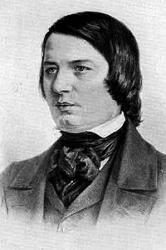
Robert Schumann

1810 - 1856 Person Name: R. Schumann Topics: Close of Service Composer of "SCHUMANN" in Laudes Domini Robert Alexander Schumann DM Germany 1810-1856. Born at Swickau, Saxony, Germany, the last child of a novelist, bookseller, and publisher, he began composing music at age seven. He received general music instruction at the local high school and worked to create his own compositions. Some of his works were considered admirable for his age. He even composed music congruent to the personalities of friends, who took note of the anomaly. He studied famous poets and philosophers and was impressed with the works of other famous composers of the time. After his father’s death in 1826, he went to Leipzig to study law (to meet the terms of his inheritance). In 1829 he continued law studies in Heidelberg, where he became a lifelong member of Corps Saxo-Borussia Heidelberg. In 1830 he left the study of law to return to music, intending to pursue a career as a virtuoso pianist. His teacher, Friedrich Wieck, assured him he could become the finest pianist in Europe, but an injury to his right hand (from a practicing method) ended that dream. He then focused his energies on composition, and studied under Heinrich Dorn, a German composer and conductor of the Leipzig opera. Schumann visited relatives in Zwickau and Schneeberg and performed at a concert given by Clara Wieck, age 13 at the time. In 1834 he published ‘A new journal for music’, praising some past composers and deriding others. He met Felix Mendelssohn at Wieck’s house in Leigzig and lauded the greatness of his compositions, along with those of Johannes Brahms. He also wrote a work, hoping to use proceeds from its sale towards a monument for Beethoven, whom he highly admired. He composed symphonies, operas, orchestral and chamber works, and also wrote biographies. Until 1840 he wrote strictly for piano, but then began composing for orchestra and voice. That year he composed 168 songs. He also receive a Doctorate degree from the University of Jena that year. An aesthete and influential music critic, he was one of the most regarded composers of the Romantic era. He published his works in the ‘New journal for music’, which he co-founded. In 1840, against the wishes of his father, he married Clara Wieck, daughter of his former teacher, and they had four children: Marie, Julie, Eugenie, and Felix. Clara also composed music and had a considerable concert career, the earnings from which formed a substantial part of her father’s fortune. In 1841 he wrote 2 of his 4 symphonies. In 1843 he was awarded a professorship in the Conservatory of Music, which Mendelssohn had founded in Leipzig that same year, When he and Clara went to Russia for her performances, he was questioned as to whether he also was a musician. He harbored resentment for her success as a pianist, which exceeded his ability as a pianist and reputation as a composer. From 1844-1853 he was engaged in setting Goethe’s Faust to music, but he began having persistent nervous prostration and developed neurasthenia (nervous fears of things, like metal objects and drugs). In 1846 he felt he had recovered and began traveling to Vienna, Prague, and Berlin, where he was received with enthusiasm. His only opera was written in 1848, and an orchestral work in 1849. In 1850 he succeeded Ferdinand Hiller as musical director at Dusseldorf, but was a poor conductor and soon aroused the opposition of the musicians, claiming he was impossible on the platform. From 1850-1854 he composed a wide variety of genres, but critics have considered his works during this period inferior to earlier works. In 1851 he visited Switzerland, Belgium, and returned to Leipzig. That year he finished his fourth symphony. He then went to Dusseldorf and began editing his complete works and making an anthology on the subject of music. He again was plagued with imaginary voices (angels, ghosts or demons) and in 1854 jumped off a bridge into the Rhine River, but was rescued by boatmen and taken home. For the last two years of his life, after the attempted suicide, Schumann was confined to a sanitarium in Endenich near Bonn, at his own request, and his wife was not allowed to see him. She finally saw him two days before he died, but he was unable to speak. He was diagnosed with psychotic melancholia, but died of pneumonia without recovering from the mental illness. Speculations as to the cause of his late term maladies was that he may have suffered from syphilis, contracted early in life, and treated with mercury, unknown as a neurological poison at the time. A report on his autopsy said he had a tumor at the base of the brain. It is also surmised he may have had bipolar disorder, accounting for mood swings and changes in his productivity. From the time of his death Clara devoted herself to the performance and interpretation of her husband’s works. John Perry

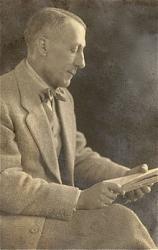
Martin Shaw

1875 - 1958 Person Name: Martin Shaw, b.1875 Topics: The Church Worship - The Close of Service Composer of "CHEERFUL" in Service Book and Hymnal of the Lutheran Church in America Martin F. Shaw was educated at the Royal College of Music in London and was organist and choirmaster at St. Mary's, Primrose Hill (1908-1920), St. Martin's in the Fields (1920-1924), and the Eccleston Guild House (1924-1935). From 1935 to 1945 he served as music director for the diocese of Chelmsford. He established the Purcell Operatic Society and was a founder of the Plainsong and Medieval Society and what later became the Royal Society of Church Music. Author of The Principles of English Church Music Composition (1921), Shaw was a notable reformer of English church music. He worked with Percy Dearmer (his rector at St. Mary's in Primrose Hill); Ralph Vaughan Williams, and his brother Geoffrey Shaw in publishing hymnals such as Songs of Praise (1925, 1931) and the Oxford Book of Carols (1928). A leader in the revival of English opera and folk music scholarship, Shaw composed some one hundred songs as well as anthems and service music; some of his best hymn tunes were published in his Additional Tunes in Use at St. Mary's (1915). Bert Polman

Jakob Hintze

1622 - 1702 Person Name: Jakob Hintze, 1622 - 1702 Topics: The Church Worship - The Close of Service Composer of "SALZBURG (ALLE MENSCHEN)" in Service Book and Hymnal of the Lutheran Church in America Partly as a result of the Thirty Years' War and partly to further his musical education, Jakob Hintze (b. Bernau, Germany, 1622; d. Berlin, Germany, 1702) traveled widely as a youth, including trips to Sweden and Lithuania. In 1659 he settled in Berlin, where he served as court musician to the Elector of Brandenburg from 1666 to 1695. Hintze is known mainly for his editing of the later editions of Johann Crüger's Praxis Pietatis Melica, to which he contributed some sixty-five of his original tunes. Bert Polman

George William Warren

1828 - 1902 Person Name: George W. Warren, 1828-1902 Topics: Close of Service; Close of Service Composer of "GUIDE ME" in Christian Worship (1993) George W. Warren (b. Albany, NY, 1828; d. New York, 1902) received his general education at Racine College in Wisconsin, but as a musician he was largely self-trained. An organist in a number of Episcopal churches, he played the organ for thirty years (1870-1900) at St. Thomas Church in New York City. Warren composed anthems and liturgical service music; his hymn tunes were collected in Warren's Hymns and Tunes as Sung in St. Thomas Church (1888). Bert Polman

Joseph P. Holbrook

1822 - 1888 Person Name: J. P. Holbrook, 1822-1888 Topics: Adoration and Praise Close of Service Composer of "REMSEN" in The Hymnal Joseph P. Holbrook was a tune writer in the parlor music style, and used the popular melodies of Mason and Hastings, Bradbury and Root, Greatorex and Kingsley in his collections. He furnished settings for the choir hymns in Songs for the Sanctuary in his Quartet and chorus Choir (New York, 1871, and sought more recogniation than had been given him in a hymnal of his own, Worship in Song (New York, 1880); a book that found no welcome. from The English hymn: its development and use in worship By Louis FitzGerald Benson

H. W. Greatorex

1813 - 1858 Person Name: Henry Wellington Greatorex (1811-1858) Topics: Opening and Closing of Service Arranger of "SEYMOUR" in Carmina Sanctorum, a selection of hymns and songs of praise with tunes Henry Wellington Greatorex United Kingdom 1813-1858. Born at Burton upon Trent, England, he received a thorough musical education from his father, Thomas Greatorex, who was for many years organist of Westminster Abbey, and conductor of the London concerts of ancient music. Henry became a composer, author, compiler, editor, and arranger of music. He emigrated to the U.S. In 1839. In 1849 he married artist Eliza Pratt, and they had four children: Elizabeth, Kathleen, Thomas, and Francis Henry. Prior to settling in New York City as a music teacher and organist at Calvary Church, he played at churches in Hartford, CT, including Center Church and St Johns Episcopal Church in West Hartford, CT. He frequently sang in oratorios and concerts. For some years he was also organist and conductor of the choir at St. Paul's Chapel. In 1853 he was an organist at St. Philip's Episcopal Church in Charleston, SC. He did much to advance the standard of sacred music in the U.S. In days when country singing school teachers imposed more rudimentary melodies on hymn books. He published a collection of “Psalm & hymn tunes, chants, anthems & sentences” (Boston 1851). He died of yellow fever in Charleston, SC. John Perry

Peter Williams

1723 - 1796 Person Name: Peter Williams, 1722-96 Topics: Close of Service; Close of Service Translator (st. 1) of "Guide Me, O Thou Great Jehovah" in Christian Worship (1993) Peter Williams (b. Llansadurnin, Carmarthanshire, Wales, 1722; d. Llandyfeilog, Wales, 1796) was converted to Christianity by the preaching of George Whitefield and was ordained in the Church of England in 1744. His evangelical convictions soon made him suspect, however, and he left the state church to join the Calvinist Methodists in 1746. He served as an itinerant preacher for many years and was a primary figure in the Welsh revival of the eighteenth century. After being expelled by the Methodists in 1791 on a charge of heresy, he ministered in his own chapel during the last years of his life. He published the first Welsh Bible commentary (1767-1770) and a Bible concordance (1773); he was also one of the annotators for John Canne's Welsh Bible (1790). In addition Williams published a Welsh hymnal, Rhai Hymnau ac Odlau Ysbrydol (1759), as well as Hymns on Various Subjects (1771). Bert Polman

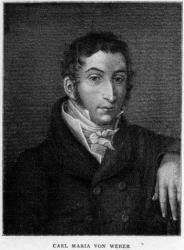
Carl Maria von Weber

1786 - 1826 Person Name: Von Weber Topics: Close of Service Arranger of "SEYMOUR" in Laudes Domini Carl Maria von Weber; b. 1786, Oldenburg; d. 1826, London Evangelical Lutheran Hymnal, 1908

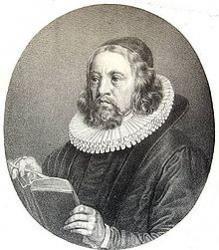
Thomas Kingo

1634 - 1703 Person Name: Thomas H. Kingo, 1634-1703 Topics: Close of Service; Close of Service Author of "On My Heart Imprint Your Image" in Christian Worship (1993)

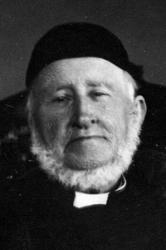
Timothy R. Matthews

1826 - 1910 Person Name: Timothy Richard Matthews, 1826 - 1910 Topics: The Church Worship - The Close of Service Composer of "MARGARET" in Service Book and Hymnal of the Lutheran Church in America Timothy Richard Matthews MusB United Kingdom 1826-1910. Born at Colmworth, England, son of the Colmworth rector, he attended the Bedford and Gonville Schools and Caius College, Cambridge. In 1853 he became a private tutor to the family of Rev Lord Wriothesley Russell, a canon of St. George’s Chapel, Windsor Castle, where he studied under organist, George Elvey, subsequently a lifelong friend. He married Margaret Mary Thompson, and they had 11 children: Norton, Mary, George, Cecil, Evelyn, Eleanor, Anne, Arthur, Wilfred, Stephen, and John. Matthews served as Curate and Curate-in-Charge of St Mary’s Church, Nottingham (1853-1869). While there, he founded the Nottingham Working Men’s Institute. He became Rector at North Coates, Lincolnshire (1869-1907). He retired in 1907 to live with his eldest son, Norton, at Tetney vicarage. He edited the “North Coates supplemental tune book” and “Village organist”. An author, arranger, and editor, he composed morning and evening services, chants, and responses, earning a reputation for simple but effective hymn tunes, writing 100+. On a request he wrote six tunes for a children’s hymnal in one day. He composed a Christmas carol and a few songs. His sons, Norton, and Arthur, were also known as hymn tune composers. He died at Tetney, Lincolnshire, England. John Perry

Pages


Export as CSV
It looks like you are using an ad-blocker. Ad revenue helps keep us running. Please consider white-listing Hymnary.org or getting Hymnary Pro to eliminate ads entirely and help support Hymnary.org.