You help make Hymnary.org possible. More than 10 million people from 200+ countries found hymns, liturgical resources and encouragement on Hymnary.org in 2025, including you. Every visit affirms the global impact of this ministry.

If Hymnary has been meaningful to you this year, would you take a moment today to help sustain it? A gift of any size—paired with a note of encouragement if you wish—directly supports the server costs, research work and curation that keep this resource freely available to the world.

Give securely online today, or mail a check to:
Hymnary.org
Calvin University
3201 Burton Street SE
Grand Rapids, MI 49546

Thank you for your partnership, and may the hope of Advent fill your heart.

Person Results

Topics:proper+6
In:people

Planning worship? Check out our sister site, ZeteoSearch.org, for 20+ additional resources related to your search.
Showing 141 - 150 of 321Results Per Page: 102050

John Barnard

b. 1948 Person Name: John Barnard (b. 1948) Topics: Proper 6 Year C Arranger (last stanza) of "LORD OF THE YEARS" in Ancient and Modern

Christopher Wordsworth

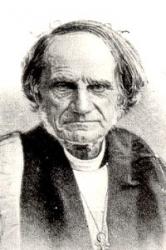
1807 - 1885 Author of "Gracious Spirit, Holy Ghost" Christopher Wordsworth--nephew of the great lake-poet, William Wordsworth--was born in 1807. He was educated at Winchester, and at Trinity College, Cambridge, where he graduated B.A., with high honours, in 1830; M.A. in 1833; D.D. in 1839. He was elected Fellow of his College in 1830, and public orator of the University in 1836; received Priest's Orders in 1835; head master of Harrow School in 1836; Canon of Westminster Abbey in 1844; Hulsean Lecturer at Cambridge in 1847-48; Vicar of Stanford-in-the-Vale, Berks, in 1850; Archdeacon of Westminster, in 1865; Bishop of Lincoln, in 1868. His writings are numerous, and some of them very valuable. Most of his works are in prose. His "Holy Year; or, Hymns for Sundays, Holidays, and other occasions throughout the Year," was published in [1862], and contains 127 hymns. --Annotations of the Hymnal, Charles Hutchins, M.A., 1872. =================== Wordsworth, Christopher, D.D., was born at Lambeth (of which parish his father was then the rector), Oct. 30, 1807, and was the youngest son of Christopher Wordsworth, afterwards Master of Trinity College, Cambridge, and Priscilla (née Lloyd) his wife. He was educated at Winchester, where he distinguished himself both as a scholar and as an athlete. In 1826 he matriculated at Trinity College, Cambridge, where his career was an extraordinarily brilliant one. He swept off an unprecedented number of College and University prizes, and in 1830 graduated as Senior Classic in the Classical Tripos, and 14th Senior Optime in the Mathematical, won the First Chancellor's Medal for classical studies, and was elected Fellow of Trinity. He was engaged as classical lecturer in college for some time, and in 1836 was chosen Public Orator for the University. In the same year he was elected Head Master of Harrow School, and in 1838 he married Susan Hatley Freere. During his head-mastership the numbers at Harrow fell off, but he began a great moral reform in the school, and many of his pupils regarded him with enthusiastic admiration. In 1844 he was appointed by Sir Robert Peel to a Canonry at Westminster; and in 1848-49 he was Hulsean lecturer at Cambridge. In 1850 he took the small chapter living of Stanford-in-the-Vale cum Goosey, in Berkshire, and for the next nineteen years he passed his time as an exemplary parish priest in this retired spot, with the exception of his four months' statutable residence each year at Westminster. In 1869 he was elevated to the bishopric of Lincoln, which he held for more than fifteen years, resigning it a few months before his death, which took place on March 20th, 1885. As bearing upon his poetical character, it may be noted that he was the nephew of the poet-laureate, William Wordsworth, whom he constantly visited at Rydal up to the time of the poet's death in 1850, and with whom he kept up a regular and lengthy correspondence. Christopher Wordsworth was a very voluminous writer, his principal works being:— (1) Athens and Attica, 1836; (2) Pompeian Inscriptions, 1837; (3) Greece Pictorial and Descriptive, 1839; (4) King Edward VIth's Latin Grammar, 1841; (5) Bentley's Correspondence, 1842; (6) Theophilus Anglicanus, 1843; (7) Memoirs of William Wordsworth, 1851; (8) Hippolytus, 1853; (9) Notes at Paris, 1854; (10) A Commentary on the whole Bible, 1856-1870; (11) The Holy Year, 1862; (12) Church History, 1881-1883; many volumes of Sermons, and an enormous amount of Pamphlets, Addresses, Letters, Speeches, on almost every subject in which the interests of the church were concerned, and also on subjects connected with classical literature. Of his many works, however, the only one which claims notice from the hynmologist's point of view is The Holy Year, which contains hymns, not only for every season of the Church's year, but also for every phase of that season, as indicated in the Book of Common Prayer. Dr. Wordsworth, like the Wesleys, looked upon hymns as a valuable means of stamping permanently upon the memory the great doctrines of the Christian Church. He held it to be "the first duty of a hymn-writer to teach sound doctrine, and thus to save souls." He thought that the materials for English Church hymns should be sought (1) in the Holy Scriptures, (2) in the writings of Christian Antiquity, and (3) in the Poetry of the Ancient Church. Hence he imposed upon himself the strictest limitations in his own compositions. He did not select a subject which seemed to him most adapted for poetical treatment, but felt himself bound to treat impartially every subject, and branch of a subject, that is brought before us in the Church's services, whether of a poetical nature or not. The natural result is that his hymns are of very unequal merit; whether his subject inspired him with poetical thoughts or not, he was bound to deal with it; hence while some of his hymns (such as "Hark! the sound of holy voices," &c, “See the Conqueror mounts in triumph," &c, "O, day of rest and gladness") are of a high order of excellence, others are prosaic. He was particularly anxious to avoid obscurity, and thus many of his hymns are simple to the verge of baldness. But this extreme simplicity was always intentional, and to those who can read between the lines there are many traces of the "ars celans artem." It is somewhat remarkable that though in citing examples of early hymnwriters he almost always refers to those of the Western Church, his own hymns more nearly resemble those of the Eastern, as may be seen by comparing The Holy Year with Dr. Mason Neale's Hymns of the Eastern Church translated, with Notes, &c. The reason of this perhaps half-unconscious resemblance is not far to seek. Christopher Wordsworth, like the Greek hymnwriters, drew his inspiration from Holy Scripture, and he loved, as they did, to interpret Holy Scripture mystically. He thought that ”the dangers to which the Faith of England (especially in regard to the Old Testament) was exposed, arose from the abandonment of the ancient Christian, Apostolic and Patristic system of interpretation of the Old Testament for the frigid and servile modern exegesis of the literalists, who see nothing in the Old Testament but a common history, and who read it (as St. Paul says the Jews do) ‘with a veil on their heart, which veil' (he adds) 'is done away in Christ.'" In the same spirit, he sought and found Christ everywhere in the New Testament. The Gospel History was only the history of what "Jesus began to do and to teach" on earth; the Acts of the Apostles and all the Epistles were the history of what he continued to do and to teach from Heaven; and the Apocalypse (perhaps his favourite book) was "the seal and colophon of all." Naturally he presents this theory, a theory most susceptible of poetical treatment, in his hymns even more prominently than in his other writings. The Greek writers took, more or less, the same view; hence the resemblance between his hymns and those of the Eastern Church. [Rev. J. H. Overton, D.D.] During the time that Bishop Wordsworth was Canon of Westminster, and Vicar of Stanford-in-the-Vale cum Goosey, he published his collection of hymns as:— The Holy Year; or Hymns for Sundays and Holy-days, And other Occasions. London, Rivingtons, 1862. This work contained an extended Preface; a Calendar of Hymns; 117 Original Compositions; and a Supplement of 82 hymns from other sources. In the 3rd edition, 1863, the Supplement was omitted, and the Original hymns were increased to 127. Several of these hymns are annotated under their respective first lines, the rest in common use are:— From The Holy Year, first edition, 1862:— 1. Five pebbles from the brook. Temptation. Stanza ix. added in 1863. 2. Giver of law is God's [Thy] dear Son. Circumcision. Doxology added in 1863. 3. Gracious Spirit, Holy Ghost. Quinquagesima. 4. Holy, holy, holy, Lord, God of Hosts, Eternal King. Holy Trinity. 5. Holy of Holies! awful name. Epistle 5th Sunday in Lent. 6. How blest are hearts which Christ the Lord. Holy Matrimony. In 1863 in two parts, Pt. ii. being "Bless these Thy servants, gracious Lord." 7. How blessed is the force of prayer. St. Peter. In 1863, in two parts, Pt. i. being "Behold! at hand is Herod's doom." 8. How wondrous and mysterious are. Holy Baptism. In the 1863 ed. it is divided into four parts:— Pt. ii. "In Jordan Thou didst sanctify"; Pt. iii. "Thee, risen in triumph from the grave"; Pt. iv." Baptized in Christ we put on Christ." The cento, "By Water and the Holy Ghost," is also from this hymn. 9. In sorrow and distress. Ash Wednesday. 10. In Thy glorious Resurrection . Easter. In the 1863 ed. it begins, "Lord, Thy glorious Resurrection," and the doxology was added. 11. Lord, may we never, save to One. Against False Worship. Stanza viii. was added in 1863. 12. Lord not with [by] poor and paltry gifts. Offertory. 13. Lord, Who didst the Prophets teach. 2nd Sunday in Advent, or, Holy Scripture. The doxology was added in 1863. 14. Man fell from grace by carnal appetite. Gospel 1st S. in Lent. 15. Mankind in Adam fell. Good Friday. In the 1863 ed. it is divided into three parts: Pt. ii. being "We fell by Adam's sin;" and Pt. iii. "Thy Cross a Trophy is." 16. Not bound by chains, nor pent in cells. The Gifts of the Holy Ghost. This hymn is preceded by a special note on the Holy Spirit and His gifts. 17. Not gifts of prophecy can save. Self Discipline, or, 8th Sunday after Trinity. 18. 0 Jerusalem beloved, joyful morn has dawned on Thee. Purification of Blessed Virgin Mary, or, The Presentation. In the 1863 edition it is divided into two parts, Pt. ii. Being “Light the Gentile world to lighten, and thy glory Israel." 19. 0 Saviour, Who at Nain's gate. The Raising of the Widow's Son. 20. 0 Son of God, the Eternal Word. The Queen's Accession. 21. Once all the nations were as one. Babel and Sion a Contrast. 22. Sing, 0 sing this blessed morn. Christmas. In the 1863 edition a doxology was added, and the hymn was divided into two parts, Pt. ii. being, "God comes down that man may rise." 23. The banner of the Cross. Missions. In the 1863 ed. it is in three parts, Pt. ii., "Now for the Lord our God"; Pt. iii. "The earth from East to West." 24. The Galilean Fishers toil. Collect 4th Sunday in Advent. From this "0 Lord, when storms around us howl" is taken. 25. Thou bidd'st us visit in distress. The Promise of the Comforter, or, Sunday before Ascension. In the 1863 edition it is in two parts, Pt. ii. being “At Thy first birth, Thou, Lord, didst wait." 26. Thou hast a Temple founded. The Christian Temple; or, Epistle 11th Sunday after Trinity. 27. To-day, 0 Lord, the Holy James. St. James. In the 1863 ed. in two parts, Pt. ii. being "God in His word does not display." 28. Today with bright effulgence shine. Conversion of St. Paul. In the 1863 ed. it begins "Today in Thine Apostle shine," and is in two parts, Pt. ii being "From East to West, from North to South." 29. Upon the sixth day of the week. Easter Eve. Stanzas x., xi. of the 1863 text were added then, and the hymn was given in two parts, Pt. ii. being "By tasting the forbidden fruit." 30. We hear the tolling bell. Burial. The doxology was added in 1863, and the hymn was divided, Pt. ii. being "0 gracious Lord, to Thee." The cento "We see the open grave" is from this hymn. 31. When from the City of our God. The Good Samaritan. From this is taken “What beams of grace and mercy, Lord." 32. When Thou, 0 Lord, didst send the Twelve. SS. Simon and Jude. In the 1863 ed. stanza x. is new, and Pt. ii. begins, "Zeal, swollen with passion's cloudy smoke." ii. From the Holy Year, 3rd ed., 1863. 33. Heavenly Father, send Thy blessing. For Schools. In extensive use. 34. Holy, holy, holy Lord, Maker of this worldly frame. Septuagesima. Based on the Epistle and Gospel of the week. 35. Lo He comes! Whom every nation. Advent. This is headed "The First Advent of Christ, coming to save." 36. 0 fear not though before thee lies. Communion of the Sick. Pt. ii. begins, "The Resurrection and the Life." 37. On every new-born babe of earth. Churching of Women. Pt. ii. begins, "Bright angels of the King of kings." 38. Peace to this house! O Thou Whose way. Visitation of the Sick. Pt. ii. "0 Conqueror by suffering; Pt. iii. "Restore us to Thine house of prayer." 39. The day is gently sinking to a close. Evening. A beautiful hymn. 40. We all, 0 God, unrighteous are. The Lord our Righteousness. Sometimes "We all, O Lord, unrighteous are." Based upon the Epistle of the Sunday next before Advent. Pt. ii. begins "Behold the day, the glorious day." In addition to many of the hymns in the 1863 edition of The Holy Year being divided into parts, the texts of most of them were revised by the author, and are authorized. -- John Julian, Dictionary of Hymnology (1907) ================ Wordsworth, Bp. C. (Lincoln) , p. 1294, i. Of his hymns, noted on p. 1294, i., ii., we find that No. 39 appeared in his Holy Year in 1864; and Nos. 34, 35, and 40 in 1862. The first edition in which the longer hymns were divided into parts was that of 1868. With regard to the date of Bp. Wordsworth's death, we find this reference thereto in his Biography: "He expired soon after midnight on Friday, March 20, or perhaps, it might be said, early on the Saturday morning." This gives the date of his death as March 21, 1885. --John Julian, Dictionary of Hymnology, New Supplement (1907) =========================== See also in: Hymn Writers of the Church

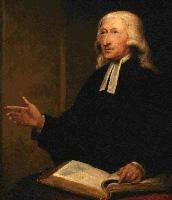
John Wesley

1703 - 1791 Topics: Christ Love of; Love God's Love Translator of "Jesus, Thy Boundless Love to Me" John Wesley, the son of Samuel, and brother of Charles Wesley, was born at Epworth, June 17, 1703. He was educated at the Charterhouse, London, and at Christ Church, Oxford. He became a Fellow of Lincoln College, Oxford, and graduated M.A. in 1726. At Oxford, he was one of the small band consisting of George Whitefield, Hames Hervey, Charles Wesley, and a few others, who were even then known for their piety; they were deridingly called "Methodists." After his ordination he went, in 1735, on a mission to Georgia. The mission was not successful, and he returned to England in 1738. From that time, his life was one of great labour, preaching the Gospel, and publishing his commentaries and other theological works. He died in London, in 1791, in his eighty-eighth year. His prose works are very numerous, but he did not write many useful hymns. It is to him, however, and not to his brother Charles, that we are indebted for the translations from the German. --Annotations of the Hymnal, Charles Hutchins, M.A., 1872 ====================== John Wesley, M.A., was born at Epworth Rectory in 1703, and, like the rest of the family, received his early education from his mother. He narrowly escaped perishing in the fire which destroyed the rectory house in 1709, and his deliverance made a life-long impression upon him. In 1714 he was nominated on the foundation of Charterhouse by his father's patron, the Duke of Buckingham, and remained at that school until 1720, when he went up, with a scholarship, from Charterhouse to Christ Church, Oxford. Having taken his degree, he received Holy Orders from the Bishop of Oxford (Dr. Potter) in 1725. In 1726 he was elected Fellow of Lincoln College, and remained at Oxford until 1727, when he returned into Lincolnshire to assist his father as curate at Epworth and Wroot. In 1729 he was summoned back to Oxford by his firm friend, Dr. Morley, Rector of Lincoln, to assist in the College tuition. There he found already established the little band of "Oxford Methodists" who immediately placed themselves under his direction. In 1735 he went, as a Missionary of the Society for the Propagation of the Gospel, to Georgia, where a new colony had been founded under the governorship of General Oglethorpe. On his voyage out he was deeply impressed with the piety and Christian courage of some German fellow travellers, Moravians. During his short ministry in Georgia he met with many discouragements, and returned home saddened and dissatisfied both with himself and his work; but in London he again fell in with the Moravians, especially with Peter Bohler; and one memorable night (May 24, 1738) he went to a meeting in Aldersgate Street, where some one was reading Luther's preface to the Epistle to the Romans. There, "About a quarter before nine, while he was describing the change which God works in the heart through faith in Christ, I felt my heart strangely warmed. I felt I did trust in Christ, Christ alone, for salvation; and an assurance was given me, that He had taken away my sins, even mine, and saved me from the law of sin and death." From that moment his future course was sealed; and for more than half a century he laboured, through evil report and good report, to spread what he believed to be the everlasting Gospel, travelling more miles, preaching more sermons, publishing more books of a practical sort, and making more converts than any man of his day, or perhaps of any day, and dying at last, March 2, 1791, in harness, at the patriarchal age of 88. The popular conception of the division of labour between the two brothers in the Revival, is that John was the preacher, and Charles the hymnwriter. But this is not strictly accurate. On the one hand Charles was also a great preacher, second only to his brother and George Whitefield in the effects which he produced. On the other hand, John by no means relegated to Charles the exclusive task of supplying the people with their hymns. John Wesley was not the sort of man to depute any part of his work entirely to another: and this part was, in his opinion, one of vital importance. With that wonderful instinct for gauging the popular mind, which was one element in his success, he saw at once that hymns might be utilized, not only for raising the devotion, but also for instructing, and establishing the faith of his disciples. He intended the hymns to be not merely a constituent part of public worship, but also a kind of creed in verse. They were to be "a body of experimental and practical divinity." "In what other publication," he asks in his Preface to the Wesleyan Hymn Book, 1780 (Preface, Oct. 20,1779), "have you so distinct and full an account of Scriptural Christianity; such a declaration of the heights and depths of religion, speculative and practical; so strong cautions against the most plausible errors, particularly those now most prevalent; and so clear directions for making your calling and election sure; for perfecting holiness in the fear of God?" The part which he actually took in writing the hymns, it is not easy to ascertain; but it is certain that more than thirty translations from the German, French and Spanish (chiefly from the German) were exclusively his; and there are some original hymns, admittedly his composition, which are not unworthy to stand by the side of his brother's. His translations from the German especially have had a wide circulation. Although somewhat free as translations they embody the fire and energy of the originals. It has been the common practice, however for a hundred years or more to ascribe all translations from the German to John Wesley, as he only of the two brothers knew that language; and to assign to Charles Wesley all the original hymns except such as are traceable to John Wesley through his Journals and other works. The list of 482 original hymns by John and Charles Wesley listed in this Dictionary of Hymnology have formed an important part of Methodist hymnody and show the enormous influence of the Wesleys on the English hymnody of the nineteenth century. -- Excerpts from John Julian, Dictionary of Hymnology (1907) =================== See also in: Hymn Writers of the Church

Shirley Erena Murray

1931 - 2020 Author of "Give Thanks for Life" Shirley Erena Murray (b. Invercargill, New Zealand, 1931) studied music as an undergraduate but received a master’s degree (with honors) in classics and French from Otago University. Her upbringing was Methodist, but she became a Presbyterian when she married the Reverend John Stewart Murray, who was a moderator of the Presbyterian Church of New Zealand. Shirley began her career as a teacher of languages, but she became more active in Amnesty International, and for eight years she served the Labor Party Research Unit of Parliament. Her involvement in these organizations has enriched her writing of hymns, which address human rights, women’s concerns, justice, peace, the integrity of creation, and the unity of the church. Many of her hymns have been performed in CCA and WCC assemblies. In recognition for her service as a writer of hymns, the New Zealand government honored her as a Member of the New Zealand Order of Merit on the Queen’s birthday on 3 June 2001. Through Hope Publishing House, Murray has published three collections of her hymns: In Every Corner Sing (eighty-four hymns, 1992), Everyday in Your Spirit (forty-one hymns, 1996), and Faith Makes the Song (fifty hymns, 2002). The New Zealand Hymnbook Trust, for which she worked for a long time, has also published many of her texts (cf. back cover, Faith Makes the Song). In 2009, Otaga University conferred on her an honorary doctorate in literature for her contribution to the art of hymn writing. I-to Loh, Hymnal Companion to “Sound the Bamboo”: Asian Hymns in Their Cultural and Liturgical Context, p. 468, ©2011 GIA Publications, Inc., Chicago

Edward Hopper

1816 - 1888 Topics: Christ Guide; Duets; Intercession; Prayer Hymns of Author of "Jesus, Savior, Pilot Me" Rv Edward Hopper DD USA 1816-1888. Born at New York City, the son of a merchant, he graduated from Union Theological Seminary, New York. He married Margaretta Wheeler. He was an author and poet and wrote several books. He pastored the Greenville Presbyterian Church, Sag Harbor Presbyterian Church on Long Island, and the Church of Sea and Land, NYC, a church for sailors, where he remained the rest of his life (for years the church building was shared with the First Chinese Presbyterian Church). Once he was asked to compose a hymn verse for the anniversary of the Seamen’s Friend’s Society meeting. Instead, he brought the verse for a hymn he had written eight years before (noted below). John Edgar Gould saw Hopper’s poem (6 stanzas) and composed a tune for it. Hopper died of a heart attack while writing a poem about heaven at his desk. John Perry =============== Hopper, Edward, D.D., was born in 1818, and graduated at Union Theological Seminary, New York, 1842. He is pastor of the Church of Sea and Land, N. Y. He is the author of 1. Jesus, Saviour, pilot me [us]. Jesus the Pilot. 2. They pray the best who pray and watch. Watching & Prayer. 3. Wrecked and struggling in mid-ocean. Wreck & Rescue. Of these No. 1 appeared in the Baptist Praise Book, 1871, and 2 & 3 in Hymns & Songs of Praise, N. Y., 1874. -- John Julian, Dictionary of Hymnology ======================= See also in: Hymn Writers of the Church

William Cowper

1731 - 1800 Topics: God the Father His Providence; liturgical Scripture Songs Author of "God Moves in a Mysterious Way" William Cowper (pronounced "Cooper"; b. Berkampstead, Hertfordshire, England, 1731; d. East Dereham, Norfolk, England, 1800) is regarded as one of the best early Romantic poets. To biographers he is also known as "mad Cowper." His literary talents produced some of the finest English hymn texts, but his chronic depression accounts for the somber tone of many of those texts. Educated to become an attorney, Cowper was called to the bar in 1754 but never practiced law. In 1763 he had the opportunity to become a clerk for the House of Lords, but the dread of the required public examination triggered his tendency to depression, and he attempted suicide. His subsequent hospitalization and friendship with Morley and Mary Unwin provided emotional stability, but the periods of severe depression returned. His depression was deepened by a religious bent, which often stressed the wrath of God, and at times Cowper felt that God had predestined him to damnation. For the last two decades of his life Cowper lived in Olney, where John Newton became his pastor. There he assisted Newton in his pastoral duties, and the two collaborated on the important hymn collection Olney Hymns (1779), to which Cowper contributed sixty-eight hymn texts. Bert Polman ============ Cowper, William, the poet. The leading events in the life of Cowper are: born in his father's rectory, Berkhampstead, Nov. 26, 1731; educated at Westminster; called to the Bar, 1754; madness, 1763; residence at Huntingdon, 1765; removal to Olney, 1768; to Weston, 1786; to East Dereham, 1795; death there, April 25, 1800. The simple life of Cowper, marked chiefly by its innocent recreations and tender friendships, was in reality a tragedy. His mother, whom he commemorated in the exquisite "Lines on her picture," a vivid delineation of his childhood, written in his 60th year, died when he was six years old. At his first school he was profoundly wretched, but happier at Westminster; excelling at cricket and football, and numbering Warren Hastings, Colman, and the future model of his versification. Churchill, among his contemporaries or friends. Destined for the Bar, he was articled to a solicitor, along with Thurlow. During this period he fell in love with his cousin, Theodora Cowper, sister to Lady Hesketh, and wrote love poems to her. The marriage was forbidden by her father, but she never forgot him, and in after years secretly aided his necessities. Fits of melancholy, from which he had suffered in school days, began to increase, as he entered on life, much straitened in means after his father's death. But on the whole, it is the playful, humorous side of him that is most prominent in the nine years after his call to the Bar; spent in the society of Colman, Bonnell Thornton, and Lloyd, and in writing satires for The Connoisseur and St. James's Chronicle and halfpenny ballads. Then came the awful calamity, which destroyed all hopes of distinction, and made him a sedentary invalid, dependent on his friends. He had been nominated to the Clerkship of the Journals of the House of Lords, but the dread of appearing before them to show his fitness for the appointment overthrew his reason. He attempted his life with "laudanum, knife and cord,"—-in the third attempt nearly succeeding. The dark delusion of his life now first showed itself—a belief in his reprobation by God. But for the present, under the wise and Christian treatment of Dr. Cotton (q. v.) at St. Albans, it passed away; and the eight years that followed, of which the two first were spent at Huntingdon (where he formed his lifelong friendship with Mrs. Unwin), and the remainder at Olney in active piety among the poor, and enthusiastic devotions under the guidance of John Newton (q. v.), were full of the realisation of God's favour, and the happiest, most lucid period of his life. But the tension of long religious exercises, the nervous excitement of leading at prayer meetings, and the extreme despondence (far more than the Calvinism) of Newton, could scarcely have been a healthy atmosphere for a shy, sensitive spirit, that needed most of all the joyous sunlight of Christianity. A year after his brother's death, madness returned. Under the conviction that it was the command of God, he attempted suicide; and he then settled down into a belief in stark contradiction to his Calvinistic creed, "that the Lord, after having renewed him in holiness, had doomed him to everlasting perdition" (Southey). In its darkest form his affliction lasted sixteen months, during which he chiefly resided in J. Newton's house, patiently tended by him and by his devoted nurse, Mrs. Unwin. Gradually he became interested in carpentering, gardening, glazing, and the tendance of some tame hares and other playmates. At the close of 1780, Mrs. Unwin suggested to him some serious poetical work; and the occupation proved so congenial, that his first volume was published in 1782. To a gay episode in 1783 (his fascination by the wit of Lady Austen) his greatest poem, The Task, and also John Gilpin were owing. His other principal work was his Homer, published in 1791. The dark cloud had greatly lifted from his life when Lady Hesketh's care accomplished his removal to Weston (1786): but the loss of his dear friend William Unwin lowered it again for some months. The five years' illness of Mrs. Unwin, during which his nurse of old became his tenderly-watched patient, deepened the darkness more and more. And her death (1796) brought “fixed despair," of which his last poem, The Castaway, is the terrible memorial. Perhaps no more beautiful sentence has been written of him, than the testimony of one, who saw him after death, that with the "composure and calmness" of the face there “mingled, as it were, a holy surprise." Cowper's poetry marks the dawn of the return from the conventionality of Pope to natural expression, and the study of quiet nature. His ambition was higher than this, to be the Bard of Christianity. His great poems show no trace of his monomania, and are full of healthy piety. His fame as a poet is less than as a letter-writer: the charm of his letters is unsurpassed. Though the most considerable poet, who has written hymns, he has contributed little to the development of their structure, adopting the traditional modes of his time and Newton's severe canons. The spiritual ideas of the hymns are identical with Newton's: their highest note is peace and thankful contemplation, rather than joy: more than half of them are full of trustful or reassuring faith: ten of them are either submissive (44), self-reproachful (17, 42, 43), full of sad yearning (1, 34), questioning (9), or dark spiritual conflict (38-40). The specialty of Cowper's handling is a greater plaintiveness, tenderness, and refinement. A study of these hymns as they stood originally under the classified heads of the Olney Hymns, 1779, which in some cases probably indicate the aim of Cowper as well as the ultimate arrangement of the book by Newton, shows that one or two hymns were more the history of his conversion, than transcripts of present feelings; and the study of Newton's hymns in the same volume, full of heavy indictment against the sins of his own regenerate life, brings out the peculiar danger of his friendship to the poet: it tends also to modify considerably the conclusions of Southey as to the signs of incipient madness in Cowper's maddest hymns. Cowper's best hymns are given in The Book of Praise by Lord Selborne. Two may be selected from them; the exquisitely tender "Hark! my soul, it is the Lord" (q. v.), and "Oh, for a closer walk with God" (q. v.). Anyone who knows Mrs. Browning's noble lines on Cowper's grave will find even a deeper beauty in the latter, which is a purely English hymn of perfect structure and streamlike cadence, by connecting its sadness and its aspiration not only with the “discord on the music" and the "darkness on the glory," but the rapture of his heavenly waking beneath the "pathetic eyes” of Christ. Authorities. Lives, by Hayley; Grimshaw; Southey; Professor Goldwin Smith; Mr. Benham (attached to Globe Edition); Life of Newton, by Rev. Josiah Bull; and the Olney Hymns. The numbers of the hymns quoted refer to the Olney Hymns. [Rev. H. Leigh Bennett, M.A.] --John Julian, Dictionary of Hymnology (1907) ================ Cowper, W. , p. 265, i. Other hymns are:— 1. Holy Lord God, I love Thy truth. Hatred of Sin. 2. I was a grovelling creature once. Hope and Confidence. 3. No strength of nature can suffice. Obedience through love. 4. The Lord receives His highest praise. Faith. 5. The saints should never be dismayed. Providence. All these hymns appeared in the Olney Hymns, 1779. --John Julian, Dictionary of Hymnology, Appendix, Part II (1907) ===================== Cowper, W., p. 265, i. Prof. John E. B. Mayor, of Cambridge, contributed some letters by Cowper, hitherto unpublished, together with notes thereon, to Notes and Queries, July 2 to Sept. 24, 1904. These letters are dated from Huntingdon, where he spent two years after leaving St. Alban's (see p. 265, i.), and Olney. The first is dated "Huntingdon, June 24, 1765," and the last "From Olney, July 14, 1772." They together with extracts from other letters by J. Newton (dated respectively Aug. 8, 1772, Nov. 4, 1772), two quotations without date, followed by the last in the N. & Q. series, Aug. 1773, are of intense interest to all students of Cowper, and especially to those who have given attention to the religious side of the poet's life, with its faint lights and deep and awful shadows. From the hymnological standpoint the additional information which we gather is not important, except concerning the hymns "0 for a closer walk with God," "God moves in a mysterious way," "Tis my happiness below," and "Hear what God, the Lord, hath spoken." Concerning the last three, their position in the manuscripts, and the date of the last from J. Newton in the above order, "Aug. 1773," is conclusive proof against the common belief that "God moves in a mysterious way" was written as the outpouring of Cowper's soul in gratitude for the frustration of his attempted suicide in October 1773. --John Julian, Dictionary of Hymnology, New Supplement (1907)

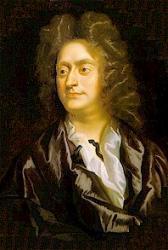
Henry Purcell

1659 - 1695 Topics: The Church in the World Commitment: Peace and Justice; Brotherhood/Sisterhood; Challenge; Christian Experience; Christian Perfecction; Church Education; Commitment; Creation; Duty; Freedom; God Images; Healing; Hope; Humility; Justice; Love for Others; Ministry; Peace (World); Race Relations; Reconciliation; Service; Social Concerns; Stewardship; Unity; World; Zeal; Advent 1 Year A; Advent 2 Year A; Baptism of Jesus Year A; Proper 11 Year A; All Saints Year B; Epiphany 7 Year C; Epiphany 9 Year C; Epiphany Last/Transfig. Year C; Easter 5 Year C; Easter 6 Year C; Thanksgiving Year C; New Year Year ABC; New Year Year ABC Composer of "WESTMINSTER ABBEY" in Voices United Henry Purcell (b. Westminster, London, England, 1659; d. Westminster, 1695), was perhaps the greatest English composer who ever lived, though he only lived to the age of thirty-six. Purcell's first piece was published at age eight when he was also a chorister in the Chapel Royal. When his voice changed in 1673, he was appointed assistant to John Hingston, who built chamber organs and maintained the king's instruments. In 1674 Purcell began tuning the Westminster Abbey organ and was paid to copy organ music. Given the position of composer for the violins in 1677, he also became organist at Westminster Abbey in 1679 (at age twenty) and succeeded Hingston as maintainer of the king's instruments (1683). Purcell composed music for the theater (Dido and Aeneas, c. 1689) and for keyboards, provided music for royal coronations and other ceremonies, and wrote a substantial body of church music, including eighteen full anthems and fifty-six verse anthems. Bert Polman

Arthur Sullivan

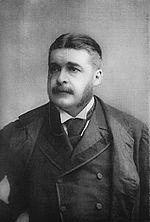
1842 - 1900 Person Name: Arthur Seymour Sullivan Topics: Proper 6 Year A Arranger of "NOËL" in Voices United Arthur Seymour Sullivan (b Lambeth, London. England. 1842; d. Westminster, London, 1900) was born of an Italian mother and an Irish father who was an army band­master and a professor of music. Sullivan entered the Chapel Royal as a chorister in 1854. He was elected as the first Mendelssohn scholar in 1856, when he began his studies at the Royal Academy of Music in London. He also studied at the Leipzig Conservatory (1858-1861) and in 1866 was appointed professor of composition at the Royal Academy of Music. Early in his career Sullivan composed oratorios and music for some Shakespeare plays. However, he is best known for writing the music for lyrics by William S. Gilbert, which produced popular operettas such as H.M.S. Pinafore (1878), The Pirates of Penzance (1879), The Mikado (1884), and Yeomen of the Guard (1888). These operettas satirized the court and everyday life in Victorian times. Although he com­posed some anthems, in the area of church music Sullivan is best remembered for his hymn tunes, written between 1867 and 1874 and published in The Hymnary (1872) and Church Hymns (1874), both of which he edited. He contributed hymns to A Hymnal Chiefly from The Book of Praise (1867) and to the Presbyterian collection Psalms and Hymns for Divine Worship (1867). A complete collection of his hymns and arrangements was published posthumously as Hymn Tunes by Arthur Sullivan (1902). Sullivan steadfastly refused to grant permission to those who wished to make hymn tunes from the popular melodies in his operettas. Bert Polman

Christopher M. Idle

b. 1938 Paraphraser of "God, We Praise You!" Christopher Martin Idle (b. Bromley, Kent, England, 1938) was educated at Elthan College, St. Peter's College, Oxford, and Clifton Theological College in Bristol, and was ordained in the Church of England. He served churches in Barrow-in-­Furness, Cumbria; London; and Oakley, Suffolk; and recently returned to London, where he is involved in various hymnal projects. A prolific author of articles on the Christian's public responsibilities, Idle has also published The Lion Book of Favorite Hymns (1980) and at least one hundred of his own hymns and biblical paraphrases. Some of his texts first appeared in hymnals published by the Jubilate Group, with which he is associated. He was also editor of Anglican Praise (1987). In 1998 Hope Publishing released Light Upon the River, a collection of 279 of his psalm and hymn texts, along with suggested tunes, scripture references, and commentary. Bert Polman

Cesáreo Gabarain

1936 - 1991 Person Name: Cesáreo Gabaraín Topics: Year B Proper 6 Author of "Camina, Pueblo de Dios (Go Forth, O People of God)" in The New Century Hymnal

Pages


Export as CSV
It looks like you are using an ad-blocker. Ad revenue helps keep us running. Please consider white-listing Hymnary.org or getting Hymnary Pro to eliminate ads entirely and help support Hymnary.org.