You help make Hymnary.org possible. More than 10 million people from 200+ countries found hymns, liturgical resources and encouragement on Hymnary.org in 2025, including you. Every visit affirms the global impact of this ministry.

If Hymnary has been meaningful to you this year, would you take a moment today to help sustain it? A gift of any size—paired with a note of encouragement if you wish—directly supports the server costs, research work and curation that keep this resource freely available to the world.

Give securely online today, or mail a check to:
Hymnary.org
Calvin University
3201 Burton Street SE
Grand Rapids, MI 49546

Thank you for your partnership, and may the hope of Advent fill your heart.

Browse People

Topics:scripture
In:people

Planning worship? Check out our sister site, ZeteoSearch.org, for 20+ additional resources related to your search.
Showing 141 - 150 of 953Results Per Page: 102050

John Cawood

1775 - 1852 Topics: Holy Scripture Author of "Almighty God, Thy word is cast" in The Evangelical Hymnal John Cawood was born in 1775, at Matlock, Derbyshire, where his father carried on a small farm. He enjoyed very limited educational advantages. At the age of eighteen he occupied a menial position. But seeking every opportunity of self improvement, and aided by those who interested themselves in his behalf, he was enabled in 1797 to enter S. Edmund Hall, Oxford, and obtained his B.A. in 1801, and his M.A. in 1807. He was ordained in 1801, and most of his life in the ministry was spent as perpetual Curate of S. Ann's Chapel of Ease, Bewdley, Worcestershire. He died in 1852. He published several prose works, but no volume of hymns or poems. His son says, "My father composed about thirteen hymns, which have one by one got into print, though never published by himself, or any one representing him." --Annotations of the Hymnal, Charles Hutchins, M.A., 1872 ======================= Cawood, John, M. A., born at Matlock, Derbyshire, March 18, 1775. His parents being in humble circumstances, he received in childhood but a limited education, and at 18 was engaged in the service of the Rev. Mr. Cursham, Sutton-in-Ashfield, Notts. Three years' study, however, under careful direction, enabled him to enter St. Edmund Hall, Oxford, in 1797. Obtaining his degree in 1801, he took Holy Orders, and became successively Curate of Ribsford and Dowles, and Incumbent of St. Ann's Chapel of Ease, Bewdley, Worcestershire. He died Nov. 7, 1852. His hymns, 17 in all, were never published by himself. Of these 9 were included in Cotterill's Selection, 8th ed., 1819, Nos. 268-276. Most of these have passed into other collections. These are :— 1. Almighty God, Thy word is cast. After a Sermon. 2. Hark! what mean those holy voices? (1819.) Christmas. 3. Begin a joyful song. (1819.) Christmas. 4. Behold yon wondrous star. (1819.) Epiphany. 5. Trembling with tenderest alarms. (1816.) Finding of Moses. 6. In Israel's fane, by silent night. (1816.) Samuel. 7. King o'er all worlds the Saviour shone. (1819.) Good Friday. 8. Christians, the glorious hope ye know. (1819.1 Plea for Missions. 9. Hark! what mean those lamentations. (1819.) Missions. In addition, Dr. Rogers pub. in his Lyra Britannica, 1867, from the author's manuscript:— 10. A child of sin and wrath I'm born. (1820.) Infant's Prayer. 11. The Sou of God, in worlds on high. (1822.) Christ's Humility. 12. Blessed Father, Great Creator. (1837.) Holy Trinity. These details are from the S. MSS., amongst which there are 5 hymns yet unpublished. --John Julian, Dictionary of Hymnology (1907)

Fred A. Challinor

1866 - 1952 Person Name: Frederick A Challinor, 1866-1952 Topics: The Church of Jesus Christ The Scriptures Composer of "STORIES OF JESUS" in Complete Mission Praise

Brent Chambers

b. 1948 Topics: Scripture Hymns and Songs Paraphraser of "In the Presence of Your People" in The Worshiping Church Brent Sinclair Chambers (b. Napier, Hawkes Bay, New Zealand, 1948) composed this song after experiencing an evening of ethnic music and dance in 1977. Chambers attended the Bible College of New Zealand and Auckland University and then became a self-employed painting contractor and song writer. He has written or co-written over five hundred songs, a number of which have been recorded or published. He based the text on Psalm 22:3, 22 and Psalm 145:7, though the words of the first line could also have been taken from Psalm 52:9b. He named his tune CELEBRATION, and both text and music were published in Scripture in Song (1977), one of the most important Scripture-chorus collections (initially from New Zealand) of the 1970s. The vocable "lai," suggested for the descant line on the repetition of the music, can be replaced with combinations of "ah" and "alleluia." Other stanzas can be added as well. --www.hymnary.org/hymn/PsH/160

John Chandler

1806 - 1876 Person Name: John Chandler, 1806-1876 Topics: Canticles and Scripture Paraphrases Alterer (translation) of "What star is this" in The Book of Praise John Chandler, one of the most successful translators of hymns, was born at Witley in Surrey, June 16, 1806. He was educated at Corpus Christi College, Oxford, B.A. 1827, M.A. 1830. Ordained deacon in 1831 and priest in 1832, he succeeded his father as the patron and vicar of Whitley, in 1837. His first volume, entitled The Hymns of the Primitive Church, now first Collected, Translated and Arranged, 1837, contained 100 hymns, for the most part ancient, with a few additions from the Paris Breviary of 1736. Four years later, he republished this volume under the title of hymns of the Church, mostly primitive, collected, translated and arranged for public use, 1841. Other publications include a Life of William of Wykeham, 1842, and Horae sacrae: prayers and meditations from the writings of the divines of the Anglican Church, 1854, as well as numerous sermons and tracts. Chandler died at Putney on July 1, 1876. --The Hymnal 1940 Companion =============== Chandler, John, M.A.,one of the earliest and most successful of modern translators of Latin hymns, son of the Rev. John F. Chandler, was born at Witley, Godalming, Surrey, June 16, 1806, and educated at Corpus Christi College, Oxford, where he graduated in 1827. He took Holy Orders in 1831, and became Vicar of Witley in 1837. He died at Putney, July 1, 1876. Besides numerous Sermons and Tracts, his prose works include Life of William of Wykeham, 1842; and Horae Sacrae; Prayers and Meditations from the writings of the Divines of the Anglican Church, with an Introduction, 1844. His translations, he says, arose out of his desire to see the ancient prayers of the Anglican Liturgy accompanied by hymns of a corresponding date of composition, and his inability to find these hymns until he says, "My attention was a short time ago directed to some translations [by Isaac Williams] which appeared from time to time in the British Magazine, very beautifully executed, of some hymns extracted from the Parisian Breviary,with originals annexed. Some, indeed, of the Sapphic and Alcaic and other Horatian metres, seem to be of little value; but the rest, of the peculiar hymn-metre, Dimeter Iambics, appear ancient, simple, striking, and devotional—in a word in every way likely to answer our purpose. So I got a copy of the Parisian Breviary [1736], and one or two other old books of Latin Hymns, especially one compiled by Georgius Cassander, printed at Cologne, in the year 1556, and regularly applied myself to the work of selection and translation. The result is the collection I now lay before the public." Preface, Hymns of the Primitive Church, viii., ix. This collection is:— (1) The Hymns of the Primitive Church, now first Collected, Translated, and Arranged, by the Rev. J. Chandler. London, John W. Parker, 1837. These translations were accompanied by the Latin texts. The trsanslations rearranged, with additional translations, original hymns by Chandler and a few taken from other sources, were republished as (2) The Hymns of the Church, mostly Primitive, Collected, Translated, and Arranged/or Public Use, by the Rev. J. Chandler, M.A. London, John W. Parker, 1841. From these works from 30 to 40 translations have come gradually into common use, some of which hold a foremost place in modern hymnals, "Alleluia, best and sweetest;" "Christ is our Corner Stone;" "On Jordan's bank the Baptist's cry;" "Jesus, our Hope, our hearts' Desire;" "Now, my soul, thy voice upraising;" "Once more the solemn season calls;" and, "O Jesu, Lord of heavenly grace;" being those which are most widely used. Although Chandler's translations are somewhat free, and, in a few instances, doctrinal difficulties are either evaded or softened down, yet their popularity is unquestionably greater than the translations of several others whose renderings are more massive in style and more literal in execution. --John Julian, Dictionary of Hymnology (1907)

Skinner Chávez-Melo

1944 - 1992 Topics: The Book of the Church : Holy Scripture Harmonizer of "PESCADOR DE HOMBRES" in The United Methodist Hymnal Skinner Chavez-Melo, an organist, conductor and composer who was music director at the St. Rose of Lima Roman Catholic Church in Manhattan, died on Saturday at New York Downtown Hospital. He was 47 years old and lived in Manhattan. He died of spinal cancer, said his brother, Juan Francisco. Mr. Chavez-Melo was born in Mexico City, but completed his musical studies in the United States, receiving degrees at Eastern Nazarene College and the Union Theological Seminary, and pursuing further studies at the Juilliard School and the Manhattan School. He toured internationally as an organist and conducted orchestras in Mexico, Brazil and the United States. As a composer, he wrote works for organ, choir and orchestra, and contributed hymn settings to several published hymnals, including those of the United Church of Christ and Yale University. He also lectured and presented workshops on Hispanic church music. Besides directing music at St. Rose, Mr. Chavez-Melo conducted the annual Singing Christmas Tree concerts at the South Street Seaport. http://www.nytimes.com/1992/01/28

Calvin Chelliah

Topics: Songs for Worship Holy Scripture Translator of "Your Word will be a lamp" in Global Praise 2

James Chepponis

b. 1956 Person Name: James J. Chepponis Topics: Service Music Prayer For Illumination / Scripture Response Author of "Come, Come Emmanuel" in More Voices

Maria Luigi Cherubini

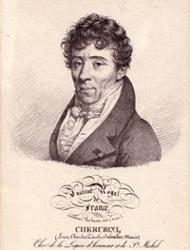
1760 - 1842 Person Name: Maria Luigi Cherubini (1760-1842) Topics: The Holy Scriptures Composer of "DALLAS" in Carmina Sanctorum, a selection of hymns and songs of praise with tunes Luigi Cherubini (Italian: [luˈiːdʒi keruˈbiːni]; 8 or 14 September 1760 – 15 March 1842) was an Italian composer who spent most of his working life in France. His most significant compositions are operas and sacred music. Beethoven regarded Cherubini as the greatest of his contemporaries. Cherubini was born Maria Luigi Carlo Zenobio Salvatore Cherubini in Florence. There is uncertainty about his exact date of birth. Although 14 September is sometimes stated, evidence from baptismal records and Cherubini himself suggests the 8th is correct. Perhaps the strongest evidence is his first name, Maria, which is traditional for a child born on 8 September, feast-day of the Nativity of the Virgin. His instruction in music began at the age of six with his father, Bartolomeo, maestro al cembalo ("Master of the harpsichord", in other words, ensemble leader from the harpsichord). Considered a child prodigy, Cherubini studied counterpoint and dramatic style at an early age. By the time he was thirteen, he had composed several religious works. In 1780, he was awarded a scholarship by the Grand Duke of Tuscany to study music in Bologna and Milan. Cherubini's early opera serie used libretti by Apostolo Zeno, Metastasio (Pietro Trapassi), and others that adhered closely to standard dramatic conventions. His music was strongly influenced by Niccolò Jommelli, Tommaso Traetta, and Antonio Sacchini, who were the leading composers of the day. The first of his two comic works, Lo sposo di tre e marito di nessuna, premiered at a Venetian theater in November 1783. Feeling constrained by Italian traditions and eager to experiment, Cherubini traveled to London in 1785 where he produced two opere serie and an opera buffa for the King's Theater. In the same year, he made an excursion to Paris with his friend Giovanni Battista Viotti, who presented him to Marie Antoinette and Parisian society. Cherubini received an important commission to write Démophon to a French libretto by Jean-François Marmontel that would be his first tragédie en musique. Except for a brief return trip to London and to Turin for an opera seria commissioned by the King of the House of Savoy, Cherubini spent the rest of his life in France where he was initiated into Grand Orient de France "Saint-Jean de Palestine" Masonic Lodge in 1784. Title page of the first edition of Cherubini's Médée, full score, 1797. Cherubini adopted the French version of his name, Marie-Louis-Charles-Zénobi-Salvador Cherubini; this appears in all extant documents that show his full name after 1790, though his Italian name is favored nowadays. Performances of Démophon were favorably received at the Grand Opéra in 1788. With Viotti's help, the Théâtre de Monsieur in the Tuileries appointed Cherubini as its director in 1789. Three years later, after a move to the rue Feydeau and the fall of the monarchy, the company became known as the Théâtre Feydeau. This position gave Cherubini the opportunity to read countless libretti and choose one that best suited his temperament. Cherubini's music began to show more originality and daring. His first major success was Lodoïska (1791), which was admired for its realistic heroism. This was followed by Eliza (1794), set in the Swiss Alps, and Médée (1797), Cherubini's best-known work. Les deux journées (1800), in which Cherubini simplified his style, was a popular success. These and other operas were premièred at the Théâtre Feydeau or the Opéra-Comique. Feeling financially secure, he married Anne Cécile Tourette in 1794 and began a family of three children. The fallout from the French Revolution affected Cherubini until the end of his life. Politics forced him to hide his connections with the former aristocracy and seek governmental appointments. Although Napoléon found him too complex, Cherubini wrote at least one patriotic work per year for more than a decade. He was appointed Napoléon's director of music in Vienna for part of 1805 and 1806, whereupon he conducted several of his works in that city. After Les deux journées, Parisian audiences began to favor younger composers such as Boieldieu. Cherubini's opera-ballet Anacréon was an outright failure and most stage works after it did not achieve success. Faniska, produced in 1806, was an exception, receiving an enthusiastic response, in particular, by Haydn and Beethoven. Les Abencérages (1813), an heroic drama set in Spain during the last days of the Moorish kingdom of Granada, was Cherubini's attempt to compete with Spontini's La vestale; it received critical praise but few performances. Disappointed with his lack of acclaim in the theater, Cherubini turned increasingly to church music, writing seven masses, two requiems, and many shorter pieces. During this period (under the restored monarchy) he was appointed Surintendant de la Musique du Roi, a position he would hold until the fall of the Bourbon Dynasty. In 1815 London's Royal Philharmonic Society commissioned him to write a symphony, an overture, and a composition for chorus and orchestra, the performances of which he went especially to London to conduct, increasing his fame. Cherubini's Requiem in C minor (1816), commemorating the anniversary of the execution of King Louis XVI of France, was a huge success. The work was greatly admired by Beethoven, Schumann and Brahms. In 1836, Cherubini wrote a Requiem in D minor to be performed at his own funeral. It is for male choir only, as the religious authorities had criticised his use of female voices in the earlier work. In 1822, Cherubini became director of the Conservatoire and completed his textbook, Cours de contrepoint et de fugue, in 1835. His role at the Conservatoire would bring him into conflict with the young Hector Berlioz, who went on to portray the old composer in his memoirs as a crotchety pedant. Some critics, such as Basil Deane, maintain that Berlioz's depiction has distorted Cherubini's image with posterity. There are many allusions to Cherubini's personal irritability among his contemporaries; Adolphe Adam wrote, "some maintain his temper was very even, because he was always angry." Nevertheless, Cherubini had many friends, including Szymanowska, Rossini, Chopin and, above all, the artist Ingres. The two had mutual interests: Cherubini was a keen amateur painter and Ingres enjoyed practising the violin. In 1841, Ingres produced the most celebrated portrait of the old composer. Although chamber music does not make up a large portion of his output, what he did write was important. Wilhelm Altmann, writing in his Handbuch für Streichquartettspieler (Handbook for String Quartet Players) about Cherubini's six string quartets, states that they are first rate and regarded Nos. 1 and 3 as masterworks. His String Quintet for two violins, viola and two cellos is also considered a first rate work. During his life, Cherubini received France's highest and most prestigious honors. These included the Chevalier de la Légion d'honneur (1814) and Membre de l'Académie des Beaux-Arts (1815). In 1841, he was made Commandeur de la Légion d'honneur, the first musician to receive that title. Cherubini died in Paris at age 81 and is buried at Père Lachaise Cemetery, just four metres from his friend Chopin. His tomb was designed by the architect Achille Leclère and includes a figure by the sculptor Augustin-Alexandre Dumont representing "Music" crowning a bust of the composer with a wreath. --en.wikipedia.org/wiki/

Barry Chevannes

1940 - 2010 Topics: Liturgical Psalms and Scriptural Texts Author of "Ruth and Naomi" in Sing a New Song Jamaica, Roman Catholic, Research Fellow, University of the West Indies Sing a New Song No. 3 by Patrick Prescod (Bridgetown, Barbados: Cedar Press, 1981)

Roy A. Cheville

b. 1897 Person Name: Roy A. Cheville, 1897-1986 Topics: Scripture Author of "Afar in Old Judea" in Community of Christ Sings

Pages


Export as CSV
It looks like you are using an ad-blocker. Ad revenue helps keep us running. Please consider white-listing Hymnary.org or getting Hymnary Pro to eliminate ads entirely and help support Hymnary.org.