You help make Hymnary.org possible. More than 10 million people from 200+ countries found hymns, liturgical resources and encouragement on Hymnary.org in 2025, including you. Every visit affirms the global impact of this ministry.

If Hymnary has been meaningful to you this year, would you take a moment today to help sustain it? A gift of any size—paired with a note of encouragement if you wish—directly supports the server costs, research work and curation that keep this resource freely available to the world.

Give securely online today, or mail a check to:
Hymnary.org
Calvin University
3201 Burton Street SE
Grand Rapids, MI 49546

Thank you for your partnership, and may the hope of Advent fill your heart.

Person Results

Topics:the+holy+scriptures
In:person

Planning worship? Check out our sister site, ZeteoSearch.org, for 20+ additional resources related to your search.
Showing 141 - 150 of 313Results Per Page: 102050

Twila LaBar

Topics: Admonition; Admonition; Admonition; Admonition; Adoration; Adoration; Adoration; Adoration; Adoration; Adoration; Adoration; Adoration; Adoration; Adoration; Adoration; Adoration; Adoration; Adoration; Adoration; Adoration; Adoration; Church Faith of; Church Fellowship and Unity; Church Fellowship and Unity; Church Fellowship and Unity; Church Fellowship and Unity; Church Fellowship and Unity; Church Fellowship and Unity; Church Fellowship and Unity; Church Militant & Trumphant; Church Militant & Trumphant; Church Militant & Trumphant; Church Militant & Trumphant; Church Militant & Trumphant; Church Militant & Trumphant; Church Militant & Trumphant; Church Militant & Trumphant; Choir; Choir; Cross of Believer; Cross of Believer; Cross of Believer; Cross of Believer; Cross of Believer; Cross of Believer; Cross of Believer; Cross of Believer; Cross of Believer; Cross of Believer; Cross of Believer; Cross of Believer; Cross of Christ; Cross of Christ; Cross of Christ; Cross of Christ; Cross of Christ; Devotional; Devotional; Devotional; Doxologies; Evening hymns; Faithfulness of the believer; Faithfulness of the believer; Faithfulness Of God; Fellowship of Believers; Fellowship with God; Fellowship with God; Fellowship with God; Funeral; God Holiness; God Holiness; God Love and Mercy; God Love and Mercy; God Majesty and Power; God Majesty and Power; God Trinity; God Trinity; Invitation for Consecration; Invitation for Consecration; Jesus Christ Deity; Jesus Christ Guide; Jesus Christ Guide; Jesus Christ Guide; Jesus Christ Guide; Jesus Christ Life and Ministry; Jesus Christ Life and Ministry; Jesus Christ Life and Ministry; Jesus Christ Light of the World; Jesus Christ Light of the World; Jesus Christ Teacher; Jesus Christ Teacher; Jesus Christ Triumphal Entry; Meditation; Meditation; Meditation; National Hymns; National Hymns; National Hymns; National Hymns; National Hymns; National Hymns; National Hymns; Hymns about Prayer; Hymns of Prayer; Hymns of Prayer; Hymns of Prayer; Hymns of Prayer; Hymns of Prayer; Hymns of Prayer; Praise of Christ; Praise of Christ; Praise of Christ; Praise of Christ; Praise of Christ; Praise of Christ; Praise of Christ; Repentance; Repentance; Scripture Songs; Scripture Songs; Scripture Songs; Scripture Songs; Scripture Songs; Scripture Songs; Scripture Songs; Scripture Songs; Scripture Songs; Scripture Songs; Scripture Songs; Scripture Songs; Scripture Songs; Scripture Songs; Thankfulness, Thanksgiving; Thankfulness, Thanksgiving; Thankfulness, Thanksgiving; Thankfulness, Thanksgiving; Thankfulness, Thanksgiving; Thankfulness, Thanksgiving; Warfare, Spiritual; Warfare, Spiritual; Warfare, Spiritual; Warfare, Spiritual; Warfare, Spiritual; Warfare, Spiritual; Warfare, Spiritual; Wedding; Worship; Worship; Worship; Worship; Worship; Worship; Worship; Worship; Worship; Worship; Worship; Worship; Worship; Worship Author of "The Final Sentence"

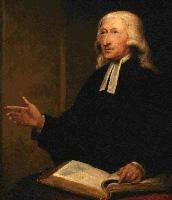
John Wesley

1703 - 1791 Person Name: J. Wesley Topics: Christian Ordinances and Institutions - The Holy Scriptures Author of "Come, O thou Prophet of the Lord" in Methodist Hymn-Book John Wesley, the son of Samuel, and brother of Charles Wesley, was born at Epworth, June 17, 1703. He was educated at the Charterhouse, London, and at Christ Church, Oxford. He became a Fellow of Lincoln College, Oxford, and graduated M.A. in 1726. At Oxford, he was one of the small band consisting of George Whitefield, Hames Hervey, Charles Wesley, and a few others, who were even then known for their piety; they were deridingly called "Methodists." After his ordination he went, in 1735, on a mission to Georgia. The mission was not successful, and he returned to England in 1738. From that time, his life was one of great labour, preaching the Gospel, and publishing his commentaries and other theological works. He died in London, in 1791, in his eighty-eighth year. His prose works are very numerous, but he did not write many useful hymns. It is to him, however, and not to his brother Charles, that we are indebted for the translations from the German. --Annotations of the Hymnal, Charles Hutchins, M.A., 1872 ====================== John Wesley, M.A., was born at Epworth Rectory in 1703, and, like the rest of the family, received his early education from his mother. He narrowly escaped perishing in the fire which destroyed the rectory house in 1709, and his deliverance made a life-long impression upon him. In 1714 he was nominated on the foundation of Charterhouse by his father's patron, the Duke of Buckingham, and remained at that school until 1720, when he went up, with a scholarship, from Charterhouse to Christ Church, Oxford. Having taken his degree, he received Holy Orders from the Bishop of Oxford (Dr. Potter) in 1725. In 1726 he was elected Fellow of Lincoln College, and remained at Oxford until 1727, when he returned into Lincolnshire to assist his father as curate at Epworth and Wroot. In 1729 he was summoned back to Oxford by his firm friend, Dr. Morley, Rector of Lincoln, to assist in the College tuition. There he found already established the little band of "Oxford Methodists" who immediately placed themselves under his direction. In 1735 he went, as a Missionary of the Society for the Propagation of the Gospel, to Georgia, where a new colony had been founded under the governorship of General Oglethorpe. On his voyage out he was deeply impressed with the piety and Christian courage of some German fellow travellers, Moravians. During his short ministry in Georgia he met with many discouragements, and returned home saddened and dissatisfied both with himself and his work; but in London he again fell in with the Moravians, especially with Peter Bohler; and one memorable night (May 24, 1738) he went to a meeting in Aldersgate Street, where some one was reading Luther's preface to the Epistle to the Romans. There, "About a quarter before nine, while he was describing the change which God works in the heart through faith in Christ, I felt my heart strangely warmed. I felt I did trust in Christ, Christ alone, for salvation; and an assurance was given me, that He had taken away my sins, even mine, and saved me from the law of sin and death." From that moment his future course was sealed; and for more than half a century he laboured, through evil report and good report, to spread what he believed to be the everlasting Gospel, travelling more miles, preaching more sermons, publishing more books of a practical sort, and making more converts than any man of his day, or perhaps of any day, and dying at last, March 2, 1791, in harness, at the patriarchal age of 88. The popular conception of the division of labour between the two brothers in the Revival, is that John was the preacher, and Charles the hymnwriter. But this is not strictly accurate. On the one hand Charles was also a great preacher, second only to his brother and George Whitefield in the effects which he produced. On the other hand, John by no means relegated to Charles the exclusive task of supplying the people with their hymns. John Wesley was not the sort of man to depute any part of his work entirely to another: and this part was, in his opinion, one of vital importance. With that wonderful instinct for gauging the popular mind, which was one element in his success, he saw at once that hymns might be utilized, not only for raising the devotion, but also for instructing, and establishing the faith of his disciples. He intended the hymns to be not merely a constituent part of public worship, but also a kind of creed in verse. They were to be "a body of experimental and practical divinity." "In what other publication," he asks in his Preface to the Wesleyan Hymn Book, 1780 (Preface, Oct. 20,1779), "have you so distinct and full an account of Scriptural Christianity; such a declaration of the heights and depths of religion, speculative and practical; so strong cautions against the most plausible errors, particularly those now most prevalent; and so clear directions for making your calling and election sure; for perfecting holiness in the fear of God?" The part which he actually took in writing the hymns, it is not easy to ascertain; but it is certain that more than thirty translations from the German, French and Spanish (chiefly from the German) were exclusively his; and there are some original hymns, admittedly his composition, which are not unworthy to stand by the side of his brother's. His translations from the German especially have had a wide circulation. Although somewhat free as translations they embody the fire and energy of the originals. It has been the common practice, however for a hundred years or more to ascribe all translations from the German to John Wesley, as he only of the two brothers knew that language; and to assign to Charles Wesley all the original hymns except such as are traceable to John Wesley through his Journals and other works. The list of 482 original hymns by John and Charles Wesley listed in this Dictionary of Hymnology have formed an important part of Methodist hymnody and show the enormous influence of the Wesleys on the English hymnody of the nineteenth century. -- Excerpts from John Julian, Dictionary of Hymnology (1907) =================== See also in: Hymn Writers of the Church

Vin Kelly

Topics: Admonition; Admonition; Admonition; Admonition; Adoration; Adoration; Adoration; Adoration; Adoration; Adoration; Adoration; Adoration; Adoration; Adoration; Adoration; Adoration; Adoration; Adoration; Adoration; Adoration; Adoration; Church Faith of; Church Fellowship and Unity; Church Fellowship and Unity; Church Fellowship and Unity; Church Fellowship and Unity; Church Fellowship and Unity; Church Fellowship and Unity; Church Fellowship and Unity; Church Militant & Trumphant; Church Militant & Trumphant; Church Militant & Trumphant; Church Militant & Trumphant; Church Militant & Trumphant; Church Militant & Trumphant; Church Militant & Trumphant; Church Militant & Trumphant; Choir; Choir; Cross of Believer; Cross of Believer; Cross of Believer; Cross of Believer; Cross of Believer; Cross of Believer; Cross of Believer; Cross of Believer; Cross of Believer; Cross of Believer; Cross of Believer; Cross of Believer; Cross of Christ; Cross of Christ; Cross of Christ; Cross of Christ; Cross of Christ; Devotional; Devotional; Devotional; Doxologies; Evening hymns; Faithfulness of the believer; Faithfulness of the believer; Faithfulness Of God; Fellowship of Believers; Fellowship with God; Fellowship with God; Fellowship with God; Funeral; God Holiness; God Holiness; God Love and Mercy; God Love and Mercy; God Majesty and Power; God Majesty and Power; God Trinity; God Trinity; Invitation for Consecration; Invitation for Consecration; Jesus Christ Deity; Jesus Christ Guide; Jesus Christ Guide; Jesus Christ Guide; Jesus Christ Guide; Jesus Christ Life and Ministry; Jesus Christ Life and Ministry; Jesus Christ Life and Ministry; Jesus Christ Light of the World; Jesus Christ Light of the World; Jesus Christ Teacher; Jesus Christ Teacher; Jesus Christ Triumphal Entry; Meditation; Meditation; Meditation; National Hymns; National Hymns; National Hymns; National Hymns; National Hymns; National Hymns; National Hymns; Hymns about Prayer; Hymns of Prayer; Hymns of Prayer; Hymns of Prayer; Hymns of Prayer; Hymns of Prayer; Hymns of Prayer; Praise of Christ; Praise of Christ; Praise of Christ; Praise of Christ; Praise of Christ; Praise of Christ; Praise of Christ; Repentance; Repentance; Scripture Songs; Scripture Songs; Scripture Songs; Scripture Songs; Scripture Songs; Scripture Songs; Scripture Songs; Scripture Songs; Scripture Songs; Scripture Songs; Scripture Songs; Scripture Songs; Scripture Songs; Scripture Songs; Thankfulness, Thanksgiving; Thankfulness, Thanksgiving; Thankfulness, Thanksgiving; Thankfulness, Thanksgiving; Thankfulness, Thanksgiving; Thankfulness, Thanksgiving; Warfare, Spiritual; Warfare, Spiritual; Warfare, Spiritual; Warfare, Spiritual; Warfare, Spiritual; Warfare, Spiritual; Warfare, Spiritual; Wedding; Worship; Worship; Worship; Worship; Worship; Worship; Worship; Worship; Worship; Worship; Worship; Worship; Worship; Worship Arranger of "AND SHE ROCK THE BABY"

Raquel Gutiérrez-Achon

1927 - 2013 Person Name: Rachel Gutiérrez-Achon Topics: The Book of the Church : Holy Scripture Translator of "Lord, You have Come to the Lakeshore" in The United Methodist Hymnal

George Burder

1752 - 1832 Topics: The Holy Scriptures Composer of "" in Hymnal Burder, George, born in London, June 5, 1752, and trained as an engraver. At the age of 24 he commenced preaching with the Calvinist Methodists, but subsequently joined the Congregationalists,and was pastor sucessively at Lancaster, Coventry, and Fetter Lane, London. He was one of the active founders of the Religious Tract, the London Missionary, and the British and Foreign Bible Societies, and some time editor of the Evangelical Magazine. He died May 29, 1832. His works include Village Sermons, 1704; Sea Sermons, 1821; Cottage Sermons, 1826, and others. He is known to hymnology by his Collection of Hymns from various Authors, intended as a Supplement to Dr. Watts, &c, 1784. (Preface dated Nov. 20, 1784.) It had attained to the 25th edition in 1827. To this collection he contributed 4 hymns, the best known being, "Sweet the time, exceeding sweet" (q.v.), sometimes altered to "Great the joy when Christians meet." The remaining three, all from the 1st edition 1784, are:— 1. Come, dear Desire of nations, come. Missions. 2. Come ye that know and fear the Lord. Love of God. In Dr. Hatfield's Church H. Bk., N.Y., 1872, 5 st. out of 9 are given as No. 236. 3. Lord, solemnize our trifling minds. Before Sermon. Altered to "Great God, impress our trifling minds," in the New Congregational Hymn Book, No. 786, &c. Burder's Collection is of importance in the history of Congregational hymnody. The 1st edition, 1784, contained 187 hymns; 2nd edition, 1784, 211; 9th edition, 1803, 257 hymns; 18th edition, 1820, 277; and the last, the 25th edition, 1827, 294. His son, Henry Foster Burder, published a Collection of Ps. & Hymns, 1826; and another son, the Rev. John Burder, also compiled a Collection published without date. To the 18th edition, 1820, of G. Burder's Collection, the wife of his son H. F. Burder contributed "And will the God Who reigns on high " (Sunday Schools), under the signature “S. M. Burder" [Sophia Maria]. -- John Julian, Dictionary of Hymnology (1907)

Albert Midlane

1825 - 1909 Topics: The Holy Scriptures Author of "Thy Word, O Lord" in Redemption Hymnal Midlane, Albert, was born at Newport, Isle of Wight, Jan. 23, 1825, and was engaged in business in that town for many years. To his Sunday school teacher he ascribes the honour of prompting him to poetic efforts: and the same teacher did much to shape his early life. His first printed hymn, "Hark! in the presence of our God," was written in September, 1842, at Carisbrooke Castle, and printed in the Youth’s Magazine in November of the same year. Since then he has written over 300, and of these a large proportion are in common use. They appeared in magazines and small mission hymn-books, including:— (1) The Youth's Magazine; (2) The British Messenger; (3) The London Messenger; (4) Trotter's Evangelical Hymn Book, 1860; (5) The Ambassador's Hymn Book, 1861; (6) Second edition of the same, 1868; (7)Hymn Book for Youth; (8) Good News for the Little Ones, 1860; (9) William Carter's Gospel Hymn Book, 1862; and several other works of a similar kind. In addition to several small works in prose, Mr. Midlane has gathered his verse together from time to time and published it as:— (1) Poetry addressed to Sabbath School Teachers, 1844; (2) Vecta Garland, 1850; (3) Leaves from Olivet, 1864; (4) Gospel Echoes, 1865; (5) Above the Bright Blue Sky, 1867; (6) Early Lispings, 1880. Of the hymns contained in these works nearly 200 have been in common use from 1861 to 1887, the most popular being "There's a Friend for little children." The hymn-books, however, in which many of them are found are usually very small, are used in what are commonly known as Gospel Missions, and have gradually given way to other and more important collections. We therefore append only those hymns which are at the present time in use in official or quasi-official hymn-books, or such collections as have a wide circulation. Those hymns which are omitted from the following list may be found in the works given above, and especially in the Gospel Echoes. The bracketed dates below are those of the composition of the hymns. i. Given in Trotter's Evangelical Hymn Book, 1860. 1. How sweet the cheering words. (Aug. 1860.) The Gospel. 2. Lord Jesus, save! (July 1860.) Lent. ii. Given in The Ambassador's Hymn Book, 1861. 3. Angels rejoice o'er sinners saved. (Aug. 1860.) Joy in Heaven over Repenting Sinners. 4. Come to the royal feast. (Aug. 1860.) The Gospel Feast. 5. Father, bless the heavenly message. (Aug. 1860.) Divine blessing implored. 6. How vast, how full, how free. (Aug. 1860.) Divine Mercy. 7. I am not told to labour. (June 25, 1860.) Salvation by Faith. 8. Jesus died upon the tree. (Aug. 13, 1860.) Good Friday. 9. Lord, prepare the hearts of sinners. (Aug. 28, 1861.) Preparation of the heart. 10. Not all the gold of all the world. Peace through Jesus. 11. Now we'll render to the Saviour. (Sept. 1, 1861.) Praise for Salvation. 12. O what a gift the Father gave. (Aug. 22, 1860.) The Gift of The Son. 13. O what a Saviour is Jesus the Lord. (Aug. 29, 1861.) Jesus the Saviour. 14. Passing onward, quickly passing. (Sept. 10, 1861.) Prepared? 15. Salvation, Lord, is Thine. (Aug., 1860.) Salvation through Jesus. 16. Sinner, where is room for doubting? (Sept., 1861.) Expostulation. 17. Soft the voice of mercy sounded. Grace. 18. The perfect righteousness of God. (Sept. 21, 1861.) God our Righteousness. 19. There is a throne of grace. (Sept. 14, 1860.) The Throne of Grace. 20. We speak of the mercy of God. (Sept. 19, 1861.) Divine Mercy. iii. Given in W. Carter's Gospel Hymn Book, 1863. 21. Can any say, I do believe ? (Aug., 1860.) Assurance in Christ. 22. If Jesus came to seek and save. (Oct., 1861.) Salvation in Jesus. iv. Given in Leaves from Olivet, 1864. 23. See the blessed Saviour dying. (Oct. 5, 1860.) Good Friday. 24. Sweet the theme of Jesus' love. (April 22, 1862.) The Love of Jesus. v. Given in Gospel Echoes, 1865. 25. Come and welcome to the Saviour. (June 8, 1862) Invitation. 26. God be gracious to a sinner. (May 21, 1861.) Lent. 27. God speaks from heaven; in love He speaks. (July, 1860.) Love and Mercy of God. 28. Hark! the cry, Behold He cometh. (June 8, 1862.) Advent. 29. He saves because He will. (April 20, 1862.) The "I Wills" of Jesus. 30. How solemn are the words. (Aug. 1, 1865.) The New Birth. 31. Himself He could not save. (Sept. 1861.) Good Friday. 32. I once was bound in Satan's chains. Pardon. 33. Jesus lived. He lived for sinners. (Jan. 4, 1862.) Easter. 34. Jesus never answered "Nay." (May 13, 1862.) Jesus always the same. 35. Jesus the blessed centre is. (June 8, 1862). Father glorified in the Son. 36. Jesus, the risen Saviour. (July 31, 1862.) Easter. 37. Jesus, the soul that trusts in Thee. (May 7, 1864.) Salvation through Jesus. 38. Look, poor sinner, look to Calvary. Good Friday. 39. Lord, when I think upon the love. (Oct. 1, 1860.) The Love of Jesus. 40. Peace with God ! How great a treasure (Oct. 18, 1861.) Peace. 41. Salvation! What a precious word. (Nov. 22, 1861.) Salvation. 42. Scripture says Where sin abounded. (March 3, 1862.) Abounding Grace. 43. Shall Jesus' love be spoken? (May 4, 1862.) Love of Jesus. 44. The Lamb was slain, the blood was brought. (Aug. 24,1862.) The Passover. 45. The silver trumpets sounding. (May 7, 1862.) The Year of Jubilee. 46. There is a rest for weary souls. (Dec. 4, 1863.) Rest. Peace in Jesus. 47. 'Tis the voice of mercy calls thee. (Nov. 5, 1861.) Mercy. 48. When the Saviour said "'Tis finished" (Oct. 1861.) Good Friday. 49. When God begins His gracious work. (Dec. 27, 1860.) God Unchangeable. 50. Who can praise the blessed God ? (Oct. 1861.) Praise for Salvation. 51. Why those fears, poor trembling sinner. Safety in Jesus. vi. Given in the Ambassador's Hymn Book, 2nd ed., 1868. 52. Life from the dead, eternal life. (Oct. 11, 1867.) Work of the Holy Spirit. 53. Stern justice cries for blood. (March 2, 1867.) The Atonement. vii. Various. 54. Apart from every worldly care. (June 1866.) Prayer Meetings. Written for Spurgeon's Our Own Hymn Book 1866. 55. Be not weary, toiling Christian. (Feb. 1857.) Encouragement. In the British Messenger, Sept. 1857. 56. Eighteen hundred years ago. (Aug. 1859.) Fulness of Time. In the London Messenger, April, 1861. 57. Father, for Thy promised blessing. (Feb. 20, 1860.) Outpouring of the Spirit desired. In The Revival, July, 1860. 58. God bless our Sunday School. Sunday School Anniversary. First printed in the Baptist Children's Magazine, July, 1844. It has passed into numerous collections for children, but usually st. ii. is omitted, thus reducing it to 3 st. 59. He comes! He comes! the Bridegroom comes. (Sept. 9, 1850.) Advent. In The Present Testimony, 1851. 60. Kept by the power of God. (May 6 ,1858.) Security in God. In the London Messenger, Sept., 1860. 61. Let the waves of blessing roll. (Jan. 6, 1868.) Missions. In the Enlarged London Hymn Book, 1873. 62. Lord, 'our waiting spirits bow. (June, 1866.) Prayer Meetings. Written for Spurgeon's Our Own Hymn Book 1866. 63. Love us freely, blessed Jesus. (July 2, 1858.) Lent. In the Churchman's Penny Magazine. Oct., 1858. 64. Never perish! words of mercy. Mercy in Christ. Printed in the monthly Girdle, June, 1857, and in the British Messenger, Aug. 1857, in 4 double st. In the collections it is reduced to the first two stanzas. 65. No separation, O my soul. (May 6, 1863.) Perseverance. In the British Herald, Aug., 1863. 66. Nought but the voice of God can speak. (Jan. 29, 1863.) All things are of God. In the 1873 Appendix to Snepp's Songs of Grace & Glory. 67. Now, O joy, my sins are pardoned. Pardon and Peace. (Nov. 9, 1860). Printed in the London Messenger, March, 1861, then in the Gospel Echoes, 1865; and then in several hymn-books. The original began, "Once I sang, but not in earnest." Usually st. ii., iii., of 8 l, are given as "Now, O joy, &c." 68. O art thou an heir of glory? (June 4, 1861.) Cautions. In Hymn Book for Youth, 1862. 69. O what a glorious truth is this. (Aug. 3, 1860.) Jesus Died. In the London Messenger, Sept., 1860. 70. Once it was mine, the cup of wrath. (Aug. 8, 1860.) Wrath and Pardon. In the London Messenger, Oct., 1861. 71. Onward, upward, heavenward. (Feb. 7, 1860.) Pressing Onward. In the London Messenger, March, 186l. 72. Perennial spring of pure delight. (March 17, 1864.) Jesus All in All. In the London Messenger, Jan., 1865. 73. Sheltered by the [Thy] sprinkled blood. (Sept. 23, 1863.) Safety in Jesus. In the London Messenger, Feb. 1864. 74. Showers of blessing, gracious promise. (April 19, 1862.) Missions. In the London Messenger, Aug., 1862, and Leaves from Olivet, 1864. 75. The Church of God, amazing, precious thought. (July 6, 1857.) The Church. In The Present Testimony, 1858, and Leaves from Olivet, 1864. 76. The whispers of Thy love divine. (May 3, 1868.) Love of God. In the Island Greeting, Oct., 1872. 77. Though billows round me roll. (April 2, 1853.) Trust. In Food for Christ's Flock, 1853. 78. 'Tis finished, cried the dying Lamb. (Feb. 21, 1850.) Good Friday. In the Baptist Children's Magazine, 1850). 79. Tis heaven where Jesus is. (Oct. 23, 1862.) Joy and Peace in Jesus. In the Enlarged London Hymn Book, 1873. 80. Together all things work for good. (Aug. 14, 1860.) All work for Good. In the Enlarged London Hymn Book, 1813. 81. Waiting for Jesus, and loving while waiting. (Jan. 9, 1872.) Second Advent desired. In the 1873 Appendix to Snepp's Songs of Grace & Glory. 82. Without a cloud between. (Mar. 18,1862.) Jesus, Face to Face. In the London Messenger, June, 1862. 83. Yet awhile; how sweet the thought. (Dec, 1864.) Second Advent desired. In theLondon Messenger, 1865. The collections in which these hymns are mainly found are Spurgeon's Our Own Hymn Book, 1866; Snepp's Songs of Grace & Glory, 1872-3; Hurditch's Enlarged London Hymn Book, 1873, and smaller books for Evangelical mission work. Of Mr. Midlane's hymns as a whole, Miher's estimate that "His hymns are full of spiritual thought, careful in their wording, and often very pleasing without reaching the highest form of poetical excellence " (Singers and Songs, p. 572), is just. A marked feature of these hymns is the constant and happy use of Scripture phraseology. --John Julian, Dictionary of Hymnology (1907) ======================== Midlane, A., p. 733, ii. Mr. Midlane published in 1901 The Bright Blue Sky Hymn Book, of 315 of his hymns, and the same year The Gospel Hall Hymn Book, for use in the Gospel Hall, Newport, I.W., with 218 additional, making 533 original compositions. A broad-sheet of seven special hymns for Jewish children, in connection with the Mildmay Mission to the Jews, was also issued in December, 1904. Other publications previously noticed give, with these, over 800 hymns to Mr. Midlane as his contribution to the hymnody of the Church. --John Julian, Dictionary of Hymnology, New Supplement (1907)

Robert Wainwright

1748 - 1782 Person Name: Robert Wainwright, 1748 - 1782 Topics: God: His Being, Word and Works The Holy Scriptures Composer of "ST. GREGORY" in The Book of Praise baptized Sep. 17, 1748, Stockport; d. July 15, 1782, Liverpool; organist and composer

Samuel Smith

1821 - 1917 Topics: Scriptures The Holy Arranger of "HOLY CROSS" in Hymnal and Liturgies of the Moravian Church

G. Currie Martin

1865 - 1937 Person Name: George Currie Martin, 1865-1937 Topics: The Holy Scriptures Author of "Your words to me are life and health" in Singing the Faith

John Cole

1774 - 1855 Topics: Admonition; Admonition; Admonition; Admonition; Adoration; Adoration; Adoration; Adoration; Adoration; Adoration; Adoration; Adoration; Adoration; Adoration; Adoration; Adoration; Adoration; Adoration; Adoration; Adoration; Adoration; Church Faith of; Church Fellowship and Unity; Church Fellowship and Unity; Church Fellowship and Unity; Church Fellowship and Unity; Church Fellowship and Unity; Church Fellowship and Unity; Church Fellowship and Unity; Church Militant & Trumphant; Church Militant & Trumphant; Church Militant & Trumphant; Church Militant & Trumphant; Church Militant & Trumphant; Church Militant & Trumphant; Church Militant & Trumphant; Church Militant & Trumphant; Choir; Choir; Cross of Believer; Cross of Believer; Cross of Believer; Cross of Believer; Cross of Believer; Cross of Believer; Cross of Believer; Cross of Believer; Cross of Believer; Cross of Believer; Cross of Believer; Cross of Believer; Cross of Christ; Cross of Christ; Cross of Christ; Cross of Christ; Cross of Christ; Devotional; Devotional; Devotional; Doxologies; Evening hymns; Faithfulness of the believer; Faithfulness of the believer; Faithfulness Of God; Fellowship of Believers; Fellowship with God; Fellowship with God; Fellowship with God; Funeral; God Holiness; God Holiness; God Love and Mercy; God Love and Mercy; God Majesty and Power; God Majesty and Power; God Trinity; God Trinity; Invitation for Consecration; Invitation for Consecration; Jesus Christ Deity; Jesus Christ Guide; Jesus Christ Guide; Jesus Christ Guide; Jesus Christ Guide; Jesus Christ Life and Ministry; Jesus Christ Life and Ministry; Jesus Christ Life and Ministry; Jesus Christ Light of the World; Jesus Christ Light of the World; Jesus Christ Teacher; Jesus Christ Teacher; Jesus Christ Triumphal Entry; Meditation; Meditation; Meditation; National Hymns; National Hymns; National Hymns; National Hymns; National Hymns; National Hymns; National Hymns; Hymns about Prayer; Hymns of Prayer; Hymns of Prayer; Hymns of Prayer; Hymns of Prayer; Hymns of Prayer; Hymns of Prayer; Praise of Christ; Praise of Christ; Praise of Christ; Praise of Christ; Praise of Christ; Praise of Christ; Praise of Christ; Repentance; Repentance; Scripture Songs; Scripture Songs; Scripture Songs; Scripture Songs; Scripture Songs; Scripture Songs; Scripture Songs; Scripture Songs; Scripture Songs; Scripture Songs; Scripture Songs; Scripture Songs; Scripture Songs; Scripture Songs; Thankfulness, Thanksgiving; Thankfulness, Thanksgiving; Thankfulness, Thanksgiving; Thankfulness, Thanksgiving; Thankfulness, Thanksgiving; Thankfulness, Thanksgiving; Warfare, Spiritual; Warfare, Spiritual; Warfare, Spiritual; Warfare, Spiritual; Warfare, Spiritual; Warfare, Spiritual; Warfare, Spiritual; Wedding; Worship; Worship; Worship; Worship; Worship; Worship; Worship; Worship; Worship; Worship; Worship; Worship; Worship; Worship Harmonization of "AND SHE ROCK THE BABY" John Cole, author of "Geneva," was born in Tewksbury, Eng., 1774, and came to the United States in his boyhood (1785). Baltimore, Md. became his American home, and he was educated there. Early in life he became a musician and music publisher. At least twleve of his principle song collections from 1800 to 1832 are mentioned by Mr. Hubert P. Main, most of them sacred and containing many of his own tunes. He continued to compose music till his death, Aug. 17, 1855. Mr. Cole was leader of the regimental band known as "The Independent Blues," which played in the War of 1812, and was present at the "North Point" fight, and other battles. The story of hymns and tunes; by Theron Brown and Hezekiah Butterworth, New York: The American Track Society, 1906

Pages


Export as CSV
It looks like you are using an ad-blocker. Ad revenue helps keep us running. Please consider white-listing Hymnary.org or getting Hymnary Pro to eliminate ads entirely and help support Hymnary.org.