You help make Hymnary.org possible. More than 10 million people from 200+ countries found hymns, liturgical resources and encouragement on Hymnary.org in 2025, including you. Every visit affirms the global impact of this ministry.

If Hymnary has been meaningful to you this year, would you take a moment today to help sustain it? A gift of any size—paired with a note of encouragement if you wish—directly supports the server costs, research work and curation that keep this resource freely available to the world.

Give securely online today, or mail a check to:
Hymnary.org
Calvin University
3201 Burton Street SE
Grand Rapids, MI 49546

Thank you for your partnership, and may the hope of Advent fill your heart.

Person Results

Topics:works+of+god+
In:people

Planning worship? Check out our sister site, ZeteoSearch.org, for 20+ additional resources related to your search.
Showing 141 - 150 of 692Results Per Page: 102050

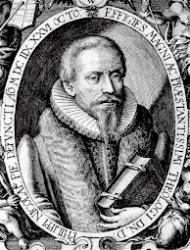
Philipp Nicolai

1556 - 1608 Topics: Christ as Bridegroom; The Church on Earth; Heaven; Jerusalem; Lamb Of God; Music; Praise for Blessings; Praise for God's Works; Presence of Christ; Second Coming of Christ Author of "Wake, Awake, for Night is Flying" in Psalter Hymnal (Red) Philipp Nicolai (b. Mengeringhausen, Waldeck, Germany, 1556; d. Hamburg, Germany, 1608) lived an eventful life–he fled from the Spanish army, sparred with Roman Catholic and Calvinist opponents, and ministered to plague-stricken congregations. Educated at Wittenberg University, he was ordained a Lutheran pastor in 1583 in the city of Herdecke. However, he was soon at odds with the Roman Catholic town council, and when Spanish troops arrived to reestablish Roman dominance, Nicolai fled. In 1588 he became chief pastor at Altwildungen and court preacher to Countess Argaretha of Waldeck. During that time Nicolai battled with Calvinists, who disagreed with him about the theology of the real presence of Christ in the Lord's Supper. These doctrinal controversies were renewed when he served the church in Unna, Westphalia. During his time as a pastor there, the plague struck twice, and Nicolai wrote both "How Bright Appears the Morning Star" and "Wake, Awake." Nicolai's last years were spent as Pastor of St. Katherine's Church in Hamburg. Bert Polman ===================== Nicolai, Philipp, D.D., son of Dieterich Nicolai, sometime Lutheran pastor at Herdecke, in Westphalia, and after 1552, at Mengeringhausen in Waldeck, was born at Mengeringhausen, August 10, 1556. (The father was son of Nicolaus Rafflenbol, of Rafflenbol, near Hagen, in Westphalia, and in later life had adopted the Latinised form Nicolai of his father's Christian name as his own surname.) In 1575 Nicolai entered the University of Erfurt, and in 1576 he went to Wittenberg. After completing his University course in 1579 (D.D. at Wittenberg July 4, 1594), he lived for some time at Volkliardinghausen, near Mengeringhausen, and frequently preached for his father. In August, 1583, he was appointed Lutheran preacher at Herdecke, but found many difficulties there, the members of the Town Council being Roman Catholics. After the invasion by the Spanish troops in April, 1586, his colleague re-introduced the Mass, and Nicolai resigned his post. In the end of 15S6 he was appointed diaconus at Niederwildungen, near Waldeck, and in 1587 he became pastor there. He then became, in Nov. 1588, chief pastor at Altwildungen, and also court preacher to the widowed Countess Margafetha of Waldeck, and tutor to her son, Count Wilhelm Ernst. Here he took an active part on the Lutheran side in the Sacramentarian controversy, and was, in Sept. 1592, inhibited from preaching by Count Franz of Waldeck, but the prohibition was soon removed, and in the Synod of 1593 held at Mengeringhausen, he found all the clergy of the principality of Waldeck willing to agree to the Formula of Concord. In October, 1596, he became pastor at Unna, in Westphalia, where he again became engaged in heated controversy with the Calvinists; passed through a frightful pestilence (see below); and then on Dec. 27, 1598, had to flee before the invasion of the Spaniards, and did not return till the end of April, 1599. Finally, in April 1601, he was elected chief pastor of St. Katherine's Church, at Hamburg, where he entered on his duties Aug. 6, 1601. On Oct. 22, 1608, he took part in the ordination of a colleague in the St. Katherine's Church, the diaconus Penshora, and returned home feeling unwell. A violent fever developed itself, under which he sank, and died Oct. 26, 1608 (D. Philipp Nicolai’s Leben und Lieder, by L. Curtze, 1859; Koch, ii. 324; Allgemeine Deutsche Biographie xxiii. 607, &c). In Hamburg Nicolai was universally esteemed, was a most popular and influential preacher, and was regarded as a "pillar" of the Lutheran church. In his private life he seems to have been most lovable and estimable. Besides his fame as a preacher, his reputation rests mainly on his hymns. His printed works are mostly polemical, often very violent and acrid in tone, and such as the undoubted sincerity of his zeal to preserve pure and unadulterated Lutheranism may explain, but cannot be said to justify. Of his hymns only four seem to have been printed. Three of Nicolai's hymns were first published in his devotional work entitled Frewden-Spiegel dess ewigen Lebens, published at Frankfurt-am-Main, 1599 (see further below). The two noted here ("Wachet auf” and “Wie schon") rank as classical and epoch-making. The former is the last of the long series of Watchmen's Songs. The latter marks the transition from the objective churchly period to the more subjective and experimental period of German hymn writing; and begins the long series of Hymns of Love to Christ as the Bridegroom of the Soul, to which Franck and Scheffler contributed such beautiful examples. Both are also worthy of note for their unusual and perfect rhythms, and for their splendid melodies. They are:— i. Wachet auf, ruft uns die Stimme. Eternal Life. This beautiful hymn, one of the first rank, is founded on St. Matt. xxv. 1-13; Rev. xix. 6-9, and xxi. 21; 1 Cor. ii. 9; Ezek. iii. 17; and Is. lii. 8. It first appeared in the Appendix to his Frewden-Spiegel, 1599, in 3 st. of 10 1., entitled "Of the Voice at Midnight, and the Wise Virgins who meet their Heavenly Bridegroom. Matt. 25." Thence in Wackernagel v. p. 259, the Unverfälschter Liedersegen, 1851, No. 690, and most German collections. It is a reversed acrostic, W. Z. G. for the Graf zu Waldeck, viz. his former pupil Count Wilhelm Ernst, who died at Tübingen Sept. 16, 1598, in his fifteenth year. It seems to have been written in 1597 at Unna, in Wesphalia, where Nicolai was then pastor; and during the terrible pestilence which raged there from July, 1597, to January, 1598, to which in July 300, in one week in August 170, and in all over 1300 fell victims. Nicolai's parsonage overlooked the churchyard, and there daily interments took place, often to the number of thirty. In these days of distress, when every household was in mourning, Nicolai's thoughts turned to Death, and thence to God in Heaven, and to the Eternal Fatherland. Jn the preface (dated Aug. 10, 1598) to his Frewden-Spiegel he says: "There seemed to me nothing more sweet, delightful and agreeable, than the contemplation of the noble, sublime doctrine of Eternal Life obtained through the Blood of Christ. This I allowed to dwell in my heart day and night, and searched the Scriptures as to what they revealed on this matter, read also the sweet treatise of the ancient doctor Saint Augustine [De Civitate Dei]. ..... Then day by day I wrote out my meditations, found myself, thank God! wonderfully well, comforted in heart, joyful in spirit, and truly content; gave to my manuscript the name and title of a Mirror of Joy, and took this so composed Frewden-Spiegel to leave behind me (if God should call me from this world) as the token of my peaceful, joyful, Christian departure, or (if God should spare me in health) to comfort other sufferers whom He should also visit with the pestilence .... Now has the gracious, holy God most mercifully preserved me amid the dying from the dreadful pestilence, and wonderfully spared me beyond all my thoughts and hopes, so that with the Prophet David I can say to Him "0 how great is Thy goodness, which Thou hast laid up for them that fear Thee," &c. The hymn composed under these circumstances (it may be stated that Curtze thinks both hymns were written in 1596, while Nicolai was still at Alt-Wildungen) soon became popular, and still retains its place, though often altered in the 3rd stanza. Probably the opening lines; "Wachet auf! ruft uns die Stimme Der Wachter sehr hoch auf der Zinne" are borrowed from one of the Wächter-Lieder, a form of lyric popular in the Middle Ages, introduced by Wolfram von Eschenbach. (See K. Goedeke's Deutsche Dichtung im Mittelalter, 1871, p. 918.) But while in the Songs the voice of the Watchman from his turret summons the workers of darkness to flee from discovery, with "Nicolai it is a summons to the children of light to awaken to their promised reward and full felicity. The melody appeared first along with the hymn, and is also apparently by Nicolai, though portions of it (e.g. 1. 1 by the Gregorian Fifth Tone) may have been suggested by earlier tunes. It has been called the King of Chorales, and by its majestic simplicity and dignity it well deserves the title. Since its use by Mendelssohn in his St. Paul it has become well known in England, and, in its original form, is given in Miss Winkworth's Chorale Book for England, 1863 (see below). Translations in common use:— 1. Sleepers wake, a voice is calling. This is an unrhymed translation of st. i. by W. Ball in his book of words to Mendelssohn's oratorio of St. Paul, 1836. This form is in Horder's Congregational Hymns, 1884, and others. In the South Place [London] Collection, 1873, it is a recast by A. J. Ellis, but opens with the same first line. In the Parish Hymn Book, 1875, a translation of st. ii., also unrhymed, is added. 2. "Wake ye holy maidens, wake ye. A good translation contributed by Philip Pusey to A. R. Reinagle's Collection of Psalm and Hymn Tunes, Oxford, 1840, p. 134. It was considerably altered, beginning "Wake, ye holy maidens, fearing" in the Salisbury Hymn Book, 1857, and this is repeated, with further alterations, in Kennedy, 1863, and the Sarum Hymnal, 1868. 3. Wake, arise! the call obeying. A good translation by A. T. Russell, as No. 110 in the Dalston Hospital Hymn Book 1848. 4. Wake, oh wake; around are flying. This is a recast, by A. T. Russell, not for the better, from his 1848 translation, as No. 268 in his Psalms & Hymns. 1851, st. iii. being omitted. Thence, unaltered, in the New Zealand Hymnal, 1872. 5. Wake, awake, for night is flying. A very good translation by Miss Winkworth, in her Lyra Germanica, 2nd Ser., 1858, p. 225, repeated in her Chorale Book for England, 1863, No. 200, with st. ii., 11. 7, 8, rewritten. Included in the English Presbyterian Psalms & Hymns, 1867; Scottish Presbyterian Hymnal, 1876, &c.; and in America, in Laudes Domini, 1884, and others. In the Cantate Domino, Boston, U. S., 1859, it begins "Awake, awake, for night is flying." 6. Wake! the startling watch-cry pealeth. By Miss Cox, in Lyra Messianica, 1864, p. 4, and her Hymns from the German, 1864, p. 27; repeated in W. F. Stevenson's Hymns for Church and Home, 1873. The version in J. L. Porter's Collection, 1876, takes st. i., 11. 1-4 from Miss Cox. The rest is mainly from R. C. Singleton's translation in the Anglican Hymn Book, but borrows lines also from Miss Winkworth, and from the Hymnary text. 7. Wake! the watchman's voice is sounding. By R. C.Singleton. This is No. 259 in the Anglican Hymn Book, 1868, where it is marked as a "versification by R. C. Singleton, 1867." 8. Wake, awake, for night is flying. This is by Canon W. Cooke, in the Hymnary, 1871, and signed A. C. C. In the edition of 1872, 11. 7, 8 of st. ii. are recast, and the whole is marked as " based on E. A. Dayman." It is really a cento, four lines of the 1872 text (i., 1. 5; ii., 11. 7, 8; iii., 1. 9) being by Canon Cooke; and the rest being adapted from the versions of P. Pusey as altered in the Sarum Hymnal, of Miss Winkworth, of Miss Cox, and of R. C. Singleton. It may be regarded as a success, and as passed into the Society for Promoting Christian Knowledge Church Hymns, 1871; the 1874 Appendix to the New Congregational Hymn Book; Horder's Congregational Hymns, 1884, and others. 9. Wake, arise! the voice is calling. This is an anonymous translation in the Ohio Lutheran Hymnal, 1880. 10. Slumberers, wake, the Bridegroom cometh. A spirited version, based on Miss Winkworth (and with an original st. as iv.), by J. H. Hopkins in his Carols, Hymns & Songs, 3rd ed., 1882. p. 88, and dated 1866. Repeated in the Hymnal Companion (Reformed Episcopal) Philadelphia, U.S., 1885. Other translations are:— (1) “Awake, the voice is crying." In Lyra Davidica, 1108, p. 73. (2) "Awake! awake! the watchman calls." By Miss Fry, 1845, p. 33. (3) "Hark! the trump of God is sounding." By Dr. H. Mills, 1845 (1856, p. 269. This is from the altered form by F. G. Klopstock, in his Geistliche Lieder, 1758, p. 246, as further altered in Zollikofer's Gesang-Buch, 1766, No. 303, where it begins "Wachet auf! so ruft." (4) "Awake, arise, the voice gives warning." In the United Presbyterian Juvenile Missionary Magazine, 1857, p. 193; repeated in 1859, p. 171, beginning, “Awake, arise, it is the warning." (5) “Waken! From the tower it soundeth." By Mrs. Bevan, 1858, p. 1. (6) Up! awake! his summons hurried." By J. D.Burns, in the Family Treasury, 1860, p. 84, and his Memoir & Remains, 1869, p. 234. 11. Wie schön leuchtet der Morgenstern, Voll Gnad und Wahrheit von dem Herrn. Love to Christ. First published in theAppendix to his Frewden-Spiegel, 1599, in 7 stanzas of 10 lines entitled "A spiritual bridal song of the believing soul concerning Jesus Christ, her heavenly Bridegroom, founded on the 45th Psalm of the prophet David." Lauxmann, in Koch, viii. 271, thus gives an account of it as written during the Pestilence of 1597. He says Nicola was "One morning in great distress and tribulation in his quiet study. He rose in spirit from the distress and death which surrounded him to his Redeemer and Saviour, and while he clasped Him in ardent love there welled forth from the inmost depths of his heart this precious hymn of the Saviour's love and of the joys of Heaven. He was so entirely absorbed in this holy exaltation that he forgot all around him, even his midday meal, and allowed nothing to disturb him in his poetical labours till the hymn was completed "—-three hours after midday. As Nicolai was closely connected with Waldeck he formed with the initial letters of his stanzas the acrostic W. E. G. U. H. Z. W., viz. Wilhelm Ernst Graf Und Herr Zn Waldeck— his former pupil. The hymn has reminiscences of Eph. v., of Canticles, and of the Mediaeval Hymns to the Blessed Virgin Mary. It became at once a favourite in Germany, was reckoned indispensable at weddings, was often sung around death beds, &c. The original form is in Wackernagel v. p. 258, and the Unverfälschter Liedersegen, 1851, No. 437; but this (as will be seen by comparing Miss Winkworth's version of 1869) is hardly suited for present day congregational use. In Bunsen's Versuch, 1833, No. 554, it is slightly altered. The form in Knapp's Evangelischer Lieder-Schatz, 1837, No. 2074 (1865, No. 1810) is a recast by Knapp made on Jan. 14, 1832, and published in his Christoterpe, 1833, p. 285, preceded by a recast of "Wachet auf!"; both being marked as “rewritten according to the requirements of our times." The popularity of the hymn was greatly aided by its beautiful chorale (named by Mr. Mercer, Frankfort), which has been called "The Queen of Chorales," and to which many city chimes in Germany were soon set. It was published with the hymn, and is probably an original tune by Nicolai, though portions may have been suggested by earlier melodies, especially by the "Resonet in laudibus," which is probably of the 14th cent. (Bäumker i., No. 48, cites it from the Obsequiale, Ingolstadt, 1570. In Alton's Congregational Psalmist named Arimathea). Translations in common use:— 1. How bright appears the Morning Star! This is a full and fairly close version by J. C. Jacobi, in his Psalter Germanica, 1722, p. 90 (1732, p. 162); repeated, with alterations, in the Moravian Hymn Book, 1754, pt. i., No. 317 (1886, No. 360). The versions of st. v., vii. beginning, "The Father from eternity," are included in Aids to the Service of Song, Edinburgh N.D., but since 1860. In 1855 Mercer gave in his The Church Psalter & Hymn Book., as No. 15, a hymn in 4 stanzas of 10 lines, of which five lines are exactly from Jacobi. St. i., l1. 1-3; ii., .11. 8, 9 ; iii., 11. 2, 3, 6 ; iv., 1. 10, are exactly; and i., 1. 9; ii., 11. 2, 3, 6, 10; iii., II. 1, 4, 5; iv., 11. 7, 9 are nearly from the Moravian Hymn Book, 1801. The interjected lines are by Mercer, but bear very slight resemblance either to Nicolai's original text, or to any version of the German that we have seen. In his 1859 edition he further recast it, leaving only the first line unaltered from Jacobi; and this form is in his Oxford edition, 1864, No. 121, in the Irish Church Hymnal, 1869 and 1873, and in the Hymnal Companion 1870 and 1876. In Kennedy, 1863, the text of 1859 is given with alterations, and begins "How brightly dawns the Morning Star;" and this form is in the People's Hymnal, 1867; Dale's English Hymn Book 1874, &c. 2. How graciously doth shine afar. By A. T. Russell, as No. 8 in the Dalston Hospital Hymn Book, 1848, and repeated in the Cheltenham College Hymn Book, No. 37. It is a free translation of st. i., vi., v. 3. How lovely shines the Morning Star! A good and full translation by Dr. H. Harbaugh (from the text in Dr. Schaff’s Deutsches Gesang-Buch, 1860), in the German Reformed Guardian, May, 1860, p. 157. Repeated in full in Schaff's Christ in Song, 1869, and abridged in Adams's Church Pastorals, Boston, U.S.A., 1864. 4. 0 Morning Star! how fair and bright. A somewhat free translation of st. i., iii., iv., vii., by Miss Winkworth, as No.149 in her Chorale Book for England, 1863. Repeated in the Pennsylvania Lutheran Church Book, 1868; Ohio Lutheran Hymnal,1880, &c. 5. How brightly shines the Morning Star, In truth and mercy from afar. A translation of st. i., iii., iv., vii., by Miss Borthwick, as No. 239 in Dr. Pagenstecher's Collection, 1864. 6. How brightly glows the Morning Star. In full, from Knapp's German recast, by M. W. Stryker, in his Hymns & Verses, 1883, p. 52; repeated, omitting st. ii., iv., in his Christian Chorals, 1885, No. 145. Other translations are:— (1) "How fairly shines the Morning Star." In Lyra Davidica, 1708, p. 40. (2) "As bright the star of morning gleams" (st. i.) By W. Bartholomew, in his book of words to Mendelssohn's oratorio of Christus, 1852, p. 11. (3) "How lovely now the Morning Star." By Miss Cox, 1864, p. 229. (4) "How beauteous shines the Morning Star." By Miss Burlingham, in the British Herald, Oct. 1865, p. 152, and Reid's Praise Book, 1872. (5) "0 Morning Star, how fair and bright." By MissWinkworth, 1869, p. 160. (6) "How bright appears our Morning Star." By J. H. Hopkins, in his Carols, Hymns and Songs, 3rd ed., 1882, p. 168, and dated 1866. There are also three hymns in common use, which have generally been regarded as translations from Nicolai. They are noted as follows:—i. "Behold how glorious is yon sky" (see p. 127, ii.). ii. "How beautiful the Morning Star". iii. "How brightly shines the Morning Star! What eye descries it from afar". [Rev. James Mearns, M.A.] --John Julian, Dictionary of Hymnology (1907)

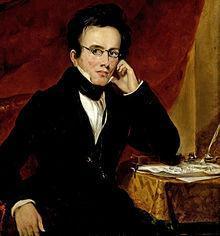
Frances Ridley Havergal

1836 - 1879 Person Name: Frances R. Havergal, 1836-1879 Topics: Consecration; Good Works; Christ as King; Christ as Lord; Love for Christ; Love for God; Post-Communion; Profession of Faith; Service; Stewardship; Will of God; Witnessing; Christian Work Author of "Take My Life, and Let It Be" in Psalter Hymnal (Red) Havergal, Frances Ridley, daughter of the Rev. W. H. Havergal, was born at Astley, Worcestershire, Dec. 14, 1836. Five years later her father removed to the Rectory of St. Nicholas, Worcester. In August, 1850, she entered Mrs. Teed's school, whose influence over her was most beneficial. In the following year she says, "I committed my soul to the Saviour, and earth and heaven seemed brighter from that moment." A short sojourn in Germany followed, and on her return she was confirmed in Worcester Cathedral, July 17, 1853. In 1860 she left Worcester on her father resigning the Rectory of St. Nicholas, and resided at different periods in Leamington, and at Caswall Bay, Swansea, broken by visits to Switzerland, Scotland, and North Wales. She died at Caswell Bay, Swansea, June 3, 1879. Miss Havergal's scholastic acquirements were extensive, embracing several modern languages, together with Greek and Hebrew. She does not occupy, and did not claim for herself, a prominent place as a poet, but by her distinct individuality she carved out a niche which she alone could fill. Simply and sweetly she sang the love of God, and His way of salvation. To this end, and for this object, her whole life and all her powers were consecrated. She lives and speaks in every line of her poetry. Her poems are permeated with the fragrance of her passionate love of Jesus. Her religious views and theological bias are distinctly set forth in her poems, and may be described as mildly Calvinistic, without the severe dogmatic tenet of reprobation. The burden of her writings is a free and full salvation, through the Redeemer's merits, for every sinner who will receive it, and her life was devoted to the proclamation of this truth by personal labours, literary efforts, and earnest interest in Foreign Missions. [Rev. James Davidson, B.A.] Miss Havergal's hymns were frequently printed by J. & R. Parlane as leaflets, and by Caswell & Co. as ornamental cards. They were gathered together from time to time and published in her works as follows:— (1) Ministry of Song, 1869; (2) Twelve Sacred Songs for Little Singers, 1870; (3) Under the Surface, 1874; (4) Loyal Responses, 1878; (5) Life Mosaic, 1879; (6) Life Chords, 1880; (7) Life Echoes, 1883. About 15 of the more important of Miss Havergal's hymns, including "Golden harps are sounding," "I gave my life for thee," "Jesus, Master, Whose I am," "Lord, speak to me," "O Master, at Thy feet," "Take my life and let it be," "Tell it out among the heathen," &c, are annotated under their respective first lines. The rest, which are in common use, number nearly 50. These we give, together with dates and places of composition, from the Havergal mss. [manuscript], and the works in which they were published. Those, and they are many, which were printed in Parlane's Series of Leaflets are distinguished as (P., 1872, &c), and those in Caswell’s series (C., 1873, &c). 1. A happy New Year! Even such may it be. New Year. From Under the Surface, 1874. 2. Certainly I will be with thee. Birthday. Sept. 1871, at Perry Barr. (P. 1871.) Published in Under the Surface, 1874, and Life Mosaic, 1879. 3. Church of God, beloved and chosen. Sanctified in Christ Jesus, 1873. (P. 1873.) Published in Under the Surface, 1874, and Life Mosaic, 1879. 4. God Almighty, King of nations. Sovereignty of God. 1872. Published in Under the Surface, 1874, and Life Mosaic, 1879. 5. God doth not bid thee wait. God faithful to His promises. Oct. 22, 1868, at Oakhampton. (P. 1869.) Published in Ministry of Song, 1869, and Life Mosaic, 1879. 6. God of heaven, hear our singing. A Child's hymn for Missions. Oct. 22, 1869, at Leamington. Published in her Twelve Sacred Songs for Little Singers, 1870, and her Life Chords, 1880. 7. God will take care of you, All through the day. The Good Shepherd. In Mrs. Brock's Children's Hymn Book, 1881. 8. God's reiterated all. New Year. 1873, at Winterdyne. (C. 1873.) Published in Loyal Responses, 1878, and Life Mosaic, 1879. 9. Have you not a word for Jesus? Boldness for the Truth. Nov. 1871, at Perry Barr. (P. 1872.) Published in Under the Surface, 1874, and Life Mosaic, 1879. 10. He hath spoken in the darkness. Voice of God in sorrow. June 10,1869, at Neuhausen. (P. 1870.) Published in Under the Surface, 1874, and in Life Mosaic, 1879. 11. Hear the Father's ancient promise. Promise of the Holy Spirit. Aug. 1870. Published in Under the Surface, 1874, and Life Mosaic, 1879. 12. Holy and Infinite! Viewless, Eternal. Infinity of God. 1872. Published in Under the Surf ace, 1874, and L. Mosaic, 1879. 13. Holy brethren, called and chosen. Election a motive for Earnestness. 1872. Published in Snepp's Songs of Grace & Glory, 1876. 14. I am trusting Thee, Lord Jesus. Faith. Sept. 1874, at Ormont Dessona. (P. 1874.) Published in Loyal Responses, 1878, and Life Chords, 1880. Miss Havergal’s tune, Urbane (Snepp's Songs of Grace & Glory, 1048), was composed for this hymn. The hymn was the author's "own favourite," and was found in her pocket Bible after her death. 15. I bring my sins to Thee. Besting all on Jesus. June, 1870. (P. 1870.) Printed in the Sunday Magazine, 1870, and Home Words, 1872. Published in Under the Surface, 1874, and Life Chords, 1880. 16. I could not do without Thee. Jesus All in All. May 7, 1873. (P. 1873.) Printed in Home Words, 1873, and published in Under the Surface, 1874, and Life Mosaic, 1879. 17. In full and glad surrender. Confirmation. Miss Havergal's sister says this hymn was “The epitome of her [Miss F. R. H.'s] life and the focus of its sunshine." It is a beautiful hymn of personal consecration to God at all times. 18. In the evening there is weeping. Sorrow followed by Joy. June 19, 1869, at the Hotel Jungfraublick, Interlaken. "It rained all day, except a very bright interval before dinner. Curious long soft white clouds went slowly creeping along the Scheinige Platte; I wrote “Evening Tears and Morning Songs” (Marg. reading of Ps. xxx. 5.)" (P. 1870.) Published in Under the Surface, 1874. 19. Increase our faith, beloved Lord. Increase of Faith desired. In Loyal Responses, 1878, in 11 stanzas of 4 lines, on St. Luke xvii. 5. It is usually given in an abridged form. 20. Is it for me, dear Saviour? Heaven anticipated. Nov. 1871, at Perry Barr. (P. 1872.) Published in Under the Surface, 1874, and Life Mosaic, 1879. 21. Israel of God, awaken. Christ our Righteousness. May, 1871, at Perry Barr. (P. 1872.) Published in Under the Surface, 1874, and Life Mosaic, 1879. 22. Jehovah's covenant shall endure. The Divine Covenant, 1872. Published in Snepp's Songs of Grace & Glory, 1876. 23 Jesus, blessed Saviour. New Year, Nov. 25, 1872, at Leamington. (P. 1873.) Printed in the Dayspring Magazine, Jan. 1873, and published in Life Chords, 1880. 24. Jesus only! In the shadow. Jesus All in All. Dec. 4, 1870, at Pyrmont Villa. (P. & C. 1871.) Published in Under the Surface, 1874, and in Life Mosaic, 1879. 25. Joined to Christ by [in] mystic union. The Church the Body of Christ. May, 1871, at Perry Barr. (P. 1872.) Published in Under the Surface, 1874, Life Mosaic, 1879. 26. Just when Thou wilt, 0 Master, call. Resignation. In Loyal Responses, 1878, in 5 stanzas of 4 lines, and Whiting's Hymns for the Church Catholic, 1882. 27. King Eternal and Immortal. God Eternal. Written at Perry Villa, Perry Barr, Feb. 11, 1871, and Published in Snepp's Songs of Grace & Glory, 1876; Under the Surface, 1874 ; and Life Mosaic, 1879. 28. Light after darkness, Gain after loss. Peace in Jesus, and the Divine Reward. In Sankey's Sacred Songs and Solos, from her Life Mosaic, 1879. 29. Like a river glorious, Is God's perfect Peace. Peace. In her Loyal Responses, 1878, in 3 st. of 8 1., with the chorus, "Stayed upon Jehovah." In several collections. 30. Master, speak! Thy servant heareth. Fellowship with and Assistance from Christ desired. Sunday evening, May 19, 1867, at Weston-super-Mare. Published in Ministry of Song, 1869, and L. Mosaic, 1879. It is very popular. 31. New mercies, new blessings, new light on thy way. New Life in Christ. 1874, at Winterdyne. (C. 1874.) Published in Under His Shadow, 1879, Life Chords, 1880. 32. Not your own, but His ye are. Missions. Jan. 21, 1867. (C. 1867.) Published in Ministry of Song, 1869; Life Mosaic, 1879; and the Hymnal for Church Missions, 1884. 33. Now let us sing the angels' song. Christmas. In her Life Mosaic, 1879; and W. B. Stevenson's School Hymnal, 1880. 34. Now the daylight goes away. Evening. Oct. 17, 1869, at Leamington. Published in Songs for Little Singers, 1870, and Life Chords, 1880. It originally read, " Now the light has gone away." 35. Now the sowing and the weeping. Sorrow followed by Joy. Jan. 4, 1870, at Leamington. Printed in Sunday at Home, 1870 ; and published in Under the Surface, 1874, and L. Mosaic, 1879. 36. 0 Glorious God and King. Praise to the Father, Feb. 1872. Published in Under the Surface, 1874, and Life Mosaic, 1879. 37. 0 Saviour, precious [holy] Saviour. Christ worshipped by the Church. Nov. 1870, at Leamington. (P. 1870.) Published in Under the Surface, 1874, and Life Mosaic, 1879. 38. O thou chosen Church of Jesus. Election. April 6, 1871. Published in Under the Surface, 1874, and L. Mosaic, 1879. 39. O what everlasting blessings God outpoureth on His own. Salvation everlasting. Aug. 12, 1871, at Perry Barr. (P. 1871.) Published in Under the Surface, 1874, and L. Mosaic, 1879. 40. Our Father, our Father, Who dwellest in light. The blessing of the Father desired. May 14, 1872. Published in Under the Surface, 1874, and Life Mosaic, 1879. Miss Havergal's tune, Tertius, was composed for this hymn. 41. Our Saviour and our King. Presentation of the Church to the Father. (Heb. ii. 13.) May, 1871, at Perry Barr. (P. 1871.) Published in Under the Surface, 1874, and L. Mosaic, 1879. 42. Precious, precious blood of Jesus. The precious Blood. Sept. 1874, at Ormont Dessons. (C.) Published in Loyal Responses, 1878, and Life Chords, 1880. 43. Sing, O heavens, the Lord hath done it. Redemption. In her Life Mosaic, 1879, and the Universal Hymn Book, 1885. 44. Sit down beneath His shadow. Holy Communion. Nov. 27, 1870, at Leamington. (P. 1870.) Published in Under the Surface, 1874, and Life Mosaic, 1879. 45. Sovereign Lord and gracious Master. Grace consummated in Glory. Oct. 22, 1871. (P. 1872.) Published in Under the Surface, 1874, and Life Mosaic, 1879. 46. Standing at the portal of the opening year. New Year. Jan. 4, 1873. Published in Under the Surface, 1874, and Life Chords, 1880. 47. To Thee, 0 Comforter divine. Praise to the Holy Spirit. Aug. 11, 1872, at Perry Barr. Published in Under the Surface 1874, and Life Mosaic, 1879. Miss Havergal's tune, Tryphosa, was written for this hymn. 48. True-hearted, whole-hearted, faithful and loyal. Faithfulness to the Saviour. In her Loyal Responses, 1878, and the Universal Hymn Book, 1885. 49. What know we, Holy God, of Thee? God's Spirituality, 1872. Published in Under the Surface, 1874, and Life Mosaic, 1879. 50. Who is on the Lord's side? Home Missions. Oct. 13, 1877. Published in Loyal Responses, 1878, andLife Chords, 1880. 51. With quivering heart and trembling will. Resignation. July, 10, 1866, at Luccombe Rectory. (P. 1866.) Published in Ministry of Song, 1869, and Life Mosaic, 1879. 52. Will ye not come to Him for life? The Gospel Invitation. 1873. Published in Snepp's Songs of Grace and Glory, 1876. 53. Worthy of all adoration. Praise to Jesus as the Lamb upon the throne. Feb. 26 1867, at Oakhampton. Published in Ministry of Song, 1869, and Life Mosaic, 1874. It is pt. iii. of the "Threefold Praise," and was suggested by the "Worthy is the Lamb," the "Hallelujah" and "Amen" choruses in Handel's Messiah. 54. Ye who hear the blessed call. The Invitation of the Spirit and the Bride. March, 1869, at Leamington. (P. 1869.) Published in Ministry of Song, 1869, and Life Mosaic, 1879. Suggested by, and written for, the Young Men's Christian Association. 55. Yes, He knows the way is dreary. Encouragement. 1867. Published in Ministry of Song, 1869. Most of these hymns are given in Snepp's Songs of Grace and Glory, 1872]and 1876, his Appendix, 1874, and the Musical edition, 1880, and many of them are also in several other hymnbooks, including Hymns Ancient & Modern, Thring, Church Hymns, Hymnal Companion, &c, and some of the leading American collections. --John Julian, Dictionary of Hymnology (1907) ============================== Havergal, Frances Ridley, p. 496, i. Miss Havergal's Poetical Works were published in 2 vols. in 1884 (Lond., J. Nisbet); and the hymns therein are accompanied by notes. From these volumes, and the Havergal manuscript, we gather the following facts concerning additional hymns in common use: 1. In God's great field of labour. Work for Christ. Written Feb. 27, 1867, and published in her Ministry of Song, I860, and later works. In Snepp's Songs of Grace and Glory, 1872, it begins with stanza ii., "Sing to the little children." “The poem expresses her own life-ministry of song, and relates true incidents" in that life. [Hav. mss.] 2. Only a mortal's power. Consecration of Self to Christ. Published in her Loyal Responses, 1878, in 7 stanzas of 4 lines, and headed "Only.” In Common Praise, 1879, stanzas ii.-vi., are given for Confirmation as, "Only one heart to give." 3. Through the yesterday of ages. Jesus always the same. Written at Leamington, Nov. 1876, and published in her Loyal Responses, 1878. 4. What hast Thou done for me, 0 Thou my mighty Friend. Good Friday. Written at Leamington, Jan. 1877, and pub. in Loyal Responses, 1878. 5. Yes, He knows the way is dreary, p. 498, i. 55. This hymn was written at Shareshill Parsonage, Nov. 17, 1865, and first printed as one of Parlane's leaflets; then in Lyra Britannica, 1867; and later, in several of her books. It was "suggested by a letter from her niece, A. M. S., at school, and written to console her when weary, lonely, and the only absentee at the rejoicings for her brother J. H. S.'s coming of age." [Hav. mss.] --John Julian, Dictionary of Hymnology, Appendix, Part II (1907) =================== Havergal, Frances R., pp. 426, ii., 1569, ii. During the past fifteen years Miss Havergal's hymns have been in great request by compilers of hymnals for Missions and Conventions. In addition to the large number already annotated in this Dictionary, the following are also in common use:— 1. Begin at once! in the pleasant days. [Temperance.] From her Poetical Works, vol. i., p. 303, into The Sunday School Hymnary, 1905. In her Poetical Works. It is given as a "Band of Hope Song," and dated "May, 1876." 2. God in heaven, hear our singing. An altered form of her "God of heaven, hear our singing," p. 497, i. 6. 3. Holy Father, Thou hast spoken. [Holy Spirit desired.] Written May 5, 1876. P. Works, 1874, ii., p. 261. 4. I love. I love my Master. [Jesus the object of love.] Written at Fins, Hants., July 16, 1876. In her Loyal Responses, 1878, and her Poetical Works, 18S4, ii., p. 274. 5. I love to feel that I am taught. [Love of Divine Teaching.] Written at Morecambe Bay, Aug., 1867, for her Ministry of Song, 1869. Included in her Poetical Works, 1884, i., p. 36. 6. Jesus, Thy life is mine. [Union with Christ.] Written June 2, 1876. Poetical Works, 1884, ii., p. 268. 7. Looking unto Jesus, Never need we yield. [Jesus, All in All.] Dated 1876. P. Works, 1884, ii., p. 253. 8. Master, how shall I bless Thy Name! [Holy Service.] Written at Whitby, Sept. 27, 1875. A long hymn of 17 stanzas of 6 lines. P. Works, 1884, ii., p. 280. 9. Resting on the faithfulness. [Union with Christ.] A metrical epitome of a dozen or more of the attributes of Our Lord and His manifestation of loving kindness towards men, in which the word "Resting" is used eighteen times. Written June 11, 1876. Poetical Works, 1884, ii., p. 260. 10. Singing for Jesus, our Saviour and King. [Praise of Jesus.] Written at Winterdyne, June 12. 1872; published in her Under the Surface, 1874, p. 94, and her P. Works, 1884, ii., p. 70. 11. Unfurl the Christian Standard with firm and fearless hand. [Courage for the Christian Warfare. This begins with st. iv. of her hymn, "Unfurl the Christian Standard, lift it manfully on high," written at Perry Barr, Sep. 23, 1872 ; published in her Under the Surface, 1874; and her Poetical Works, 1884, ii. 12. Unto him that hath Thou givest. [Growth in Grace.] Written at Leasowes, April 12, 1876. P. Works, 1884, ii. 259. Of these hymns Nos. 3, 4, 6, 7, 8, 9, and 12 were published in the first instance in J. Mountain's Hymns of Consecration and Faith, 1876. At the present time (1907) the number of Miss Havergal's hymns in common use reaches nearly one hundred. --John Julian, Dictionary of Hymnology, New Supplement (1907)

John J. Husband

1760 - 1825 Topics: Church Renewal; Praise of God; Saving Work of Christ Composer of "REVIVE US AGAIN" in The Worshiping Church Rv John Jenkins Husband United Kingdom 1760-1825. Born in Plymouth, England, he worked as a clerk at Surrey Chapel. He emigrated to the U.S. in 1809 and taught music in Philadelphia, PA. It is surmised that he married Anna Elizabeth Kirkhum, but no other family information was found. An author and composer, he also worked as a clerk at St. Paul’s Protestant Episcopal Church. In 1807 he published “A collection of hymns & Psalms for the use of singing school & musical societies”. He died in Philadelphia, PA. John Perry

Rowland Hugh Prichard

1811 - 1887 Person Name: Rowland Hugh Pritchard, 1812 - 1887 Topics: Christ, the Lord Jesus Kingdom of; God: His Being, Word and Works God the Son: His Nativity: Advent Composer of "HYFRYDOL" in The Book of Praise Rowland H. Prichard (sometimes spelled Pritchard) (b. Graienyn, near Bala, Merionetshire, Wales, 1811; d. Holywell, Flintshire, Wales, 1887) was a textile worker and an amateur musician. He had a good singing voice and was appointed precentor in Graienyn. Many of his tunes were published in Welsh periodicals. In 1880 Prichard became a loom tender's assistant at the Welsh Flannel Manufacturing Company in Holywell. Bert Polman

John Goss

1800 - 1880 Person Name: John Goss, 1800 - 1880 Topics: Christ, the Lord Jesus Kingly Office of; Christ, the Lord Jesus Mercy of; God Faithfulness of; God Fatherhood of; God: His Being, Word and Works God the Son: His Praise; Sun Composer of "PRAISE, MY SOUL" in The Book of Praise John Goss (b. Fareham, Hampshire, England, 1800; d. London, England, 1880). As a boy Goss was a chorister at the Chapel Royal and later sang in the opera chorus of the Covent Garden Theater. He was a professor of music at the Royal Academy of Music (1827-1874) and organist of St. Paul Cathedral, London (1838-1872); in both positions he exerted significant influence on the reform of British cathedral music. Goss published Parochial Psalmody (1826) and Chants, Ancient and Modern (1841); he edited William Mercer's Church Psalter and Hymn Book (1854). With James Turle he published a two-volume collection of anthems and Anglican service music (1854). Bert Polman

Erik Routley

1917 - 1982 Person Name: Erik Reginald Routley, 1917-82 Topics: Daily Work; Eternity of God; Evening; Family Life; God's Love to Us; Humility; Inner Peace; Jesus Christ Coming today; Jesus Christ Friend and Companion; Jesus Christ Lordship; Joy; Justice; Morning; Name/s of God; Name/s of Jesus; Trust in God Harmonizer of "SLANE (2)" in Together in Song

William F. Sherwin

1826 - 1888 Topics: Children; Image Of God; Dignity of Man; Name Of God; God in Nature; Praise for God's Works Composer of "EVENING PRAISE" in Psalter Hymnal (Red) Sherwin, William Fisk, an American Baptist, was born at Buckland, Massachusetts, March 14,1826. His educational opportunities, so far as schools were concerned, were few, but he made excellent use of his time and surroundings. At fifteen he went to Boston and studied music under Dr. Mason: In due course he became a teacher of vocal music, and held several important appointments in Massachusetts; in Hudson and Albany, New York County, and then in New York City. Taking special interest in Sunday Schools, he composed carols and hymn-tunes largely for their use, and was associated with the Rev. R. Lowry and others in preparing Bright Jewels, and other popular Sunday School hymn and tune books. A few of his melodies are known in Great Britain through I. D. Sankey's Sacred Songs and Solos, where they are given with his signature. His hymnwriting was limited. The following pieces are in common use:— 1. Grander than ocean's story (1871). The Love of God. 2. Hark, bark, the merry Christmas bells. Christmas Carol. 3. Lo, the day of God is breaking. The Spiritual Warfare. 4. Wake the song of joy and gladness. Sunday School or Temperance Anniversary. 5. Why is thy faith, 0 Child of God, so small. Safety in Jesus. Mr. Sherwin died at Boston, Massachusetts, April 14, 1888. -- John Julian, Dictionary of Hymnology (1907) ================== Sherwin, W. F., p. 1055, i. Another hymn from his Bright Jewels, 1869, p. 68, is "Sound the battle cry" (Christian Courage), in the Sunday School Hymnary, 1905, and several other collections. --John Julian, Dictionary of Hymnology, New Supplement (1907)

Ernest Warburton Shurtleff

1862 - 1917 Person Name: Rev. Ernest W. Shurtleff Topics: Work; The Kingdom of God on Earth Discipleship and Service; Christ Captain, Our; Christ Leader, Our; Courage and Loyalty; Discipleship and Service; Ordination Services; Processionals Author of "Lead on, O King Eternal" in The Hymnal Before studying at Andover, Ernest W. Shurtleff (Boston, MA, 1862; d. Paris, France, 1917) attended Harvard University. He served Congregational churches in Ventura, California; Old Plymouth, Massachusetts; and Minneapolis, Minnesota, before moving to Europe. In 1905 he established the American Church in Frankfurt, and in 1906 he moved to Paris, where he was involved in student ministry at the Academy Vitti. During World War I he and his wife were active in refugee relief work in Paris. Shurtleff wrote a number of books, including Poems (1883), Easter Gleams (1885), Song of Hope (1886), and Song on the Waters (1913). Bert Polman =============== Shurtleff, Ernest Warburton, b. at Boston, Mass., April 4, 1862, and educated at Boston Latin School, Harvard University, and Andover Theo. Seminary (1887). Entering the Congregational Ministry, he was Pastor at Palmer and Plymouth, Mass., and is now (1905) Minister of First Church, Minneapolis, Minn. His works include Poems, 1883, Easter Gleams, 1883, and others. His hymn, "Lead on, O King Eternal" (Christian Warfare), was written as a parting hymn to his class of fellow students at Andover, and was included in Hymns of the Faith, Boston, 1887. It has since appeared in several collections. [M. C. Hazard, Ph.D]. --John Julian, Dictionary of Hymnology, New Supplement (1907)

Theodore Baker

1851 - 1934 Topics: The Praise of God In his works Translator of "We gather together to ask the Lord's blessing" in The Hymnal of the Protestant Episcopal Church in the United States of America 1940 Theodore Baker (b. New York, NY, 1851; d. Dresden, Germany, 1934). Baker is well known as the compiler of Baker's Biographical Dictionary of Musicians (first ed. 1900), the first major music reference work that included American composers. Baker studied music in Leipzig, Germany, and wrote a dissertation on the music of the Seneca people of New York State–one of the first studies of the music of American Indians. From 1892 until his retirement in 1926, Baker was a literary editor and translator for G. Schirmer, Inc., in New York City. In 1926, he returned to Germany. Psalter Hymnal Handbook, 1987

Thomas Olivers

1725 - 1799 Person Name: Thomas Olivers, 1725 - 1799 Topics: Christ, the Lord Jesus Advent of; Christians Triumph of; God: His Being, Word and Works God the Son: His Coming in Power; Resurrection of Believers Adapter (Melody) of "HELMSLEY" in The Book of Praise Thomas Olivers was born in Tregonan, Montgomeryshire, in 1725. His youth was one of profligacy, but under the ministry of Whitefield, he was led to a change of life. He was for a time apprenticed to a shoemaker, and followed his trade in several places. In 1763, John Wesley engaged him as an assistant; and for twenty-five years he performed the duties of an itinerant ministry. During the latter portion of his life he was dependent on a pension granted him by the Wesleyan Conference. He died in 1799. --Annotations of the Hymnal, Charles Hutchins, M.A., 1872. ================== Olivers, Thomas, was born at Tregynon, near Newtown, Montgomeryshire, in 1725. His father's death, when the son was only four years of age, followed by that of the mother shortly afterwards, caused him to be passed on to the care of one relative after another, by whom he was brought up in a somewhat careless manner, and with little education. He was apprenticed to a shoemaker. His youth was one of great ungodliness, through which at the age of 18 he was compelled to leave his native place. He journeyed to Shrewsbury, Wrexham, and Bristol, miserably poor and very wretched. At Bristol he heard G. Whitefield preach from the text "Is not this a brand plucked out of the fire?" That sermon turned the whole current of his life, and he became a decided Christian. His intention at the first was to join the followers of Whitefield, but being discouraged from doing so by one of Whitefield's preachers, he subsequently joined the Methodist Society at Bradford-on-Avon. At that town, where he purposed carrying on his business of shoemaking, he met John Wesley, who, recognising in him both ability and zeal, engaged him as one of his preachers. Olivers joined Wesley at once, and proceeded as an evangelist to Cornwall. This was on Oct. 1, 1753. He continued his work till his death, which took place suddenly in London, in March 1799. He was buried in Wesley's tomb in the City Road Chapel burying ground, London. Olivers was for some time co-editor with J. Wesley of the Arminian Magazine, but his lack of education unfitted him for the work. As the author of the tune Helmsley, and of the hymn “The God of Abraham praise," he is widely known. He also wrote “Come Immortal King of glory;" and "O Thou God of my salvation," whilst residing at Chester; and an Elegy on the death of John Wesley. His hymns and the Elegy were reprinted (with a Memoir by the Rev. J. Kirk) by D. Sedgwick, in 1868. --John Julian, Dictionary of Hymnology (1907)

Pages


Export as CSV
It looks like you are using an ad-blocker. Ad revenue helps keep us running. Please consider white-listing Hymnary.org or getting Hymnary Pro to eliminate ads entirely and help support Hymnary.org.