

 My Starred Hymns
 My FlexScores
 My Hymnals
 My Purchased Files
Planning worship?
Check out our sister site, ZeteoSearch.org,
for 20+ additional resources related to your search.
- |
User Links
Person Results
Christopher Webber
b. 1932 Person Name: Christopher L. Webber Topics: Assurance; Biblical Names and Places Israel; Biblical Names and Places Jacob; Church Year Good Friday; Church Year Passion/Palm Sunday; Cry to God; Despair; Doubt; Elements of Worship Lord's Supper; God Trust in; God's Nearness; God's Presence; Jesus Christ Cross and Crucifiction; Lament General; Lament Individual; Life Stages Death; Loneliness; Longing for God; Mission; Mocking; Pain; People of God / Church Suffering; Prayer Answer to; Prayer; Questioning; Sorrow; Suffering; Victory; Vows; Year A, B, C, Holy Week, Good Friday; Year B, Easter, 5th Sunday; Year B, Lent, 2nd Sunday; Year B, Ordinary Time after Pentecost, October 9-15; Year C, Ordinary Time after Pentecost, June 19-25 (if after Trinity Sunday) Author of "Lord, Why Have You Forsaken Me" in Psalms for All Seasons CHRISTOPHER LAWRENCE WEBBER was born 5 January 1932 in Cuba, New York, son of the Rev. Roy Lawrence Webber and Hortense Marie Basquin. He graduated from South Kent School (South Kent, CT) in 1949, Princeton University in 1953, and General Theological Seminary (NYC) in 1956. He is the author of A New Metrical Psalter (1986), Hymns from the Bible (2000), and Songs of Justice, Peace, and Love: The Sharon Hymnal (2022).
Chris Fenner
Christopher Webber
Samuel Wesley
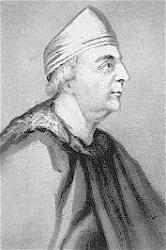
1662 - 1735 Person Name: Samuel Wesley, 1662-1735 Topics: Christ's Gracious Life Passion and Death; Prevenient Grace Repentance; Christian Year Lent; Christian Year Holy Week; Heritage; Jesus Christ; Jesus Christ Atonement Author of "Behold the Savior of Mankind" in The United Methodist Hymnal Father of Samuel Wesley, John Wesley, and Charles Wesley.
See also in: Hymn Writers of the Church
======================================================================================================
Samuel Wesley, M.A., the elder, was born in 1662 at Whitchurch in Dorsetshire, of which parish his father, John Wesley, was Vicar until the Act of Uniformity caused him to resign his living. He was educated at a Dissenting academy by a Mr. Morton, and was designed for the Nonconformist Ministry. But having been, on account of his talents, selected as a champion to defend the dissenters against some severe invectives, and having commenced a course of controversial reading for this purpose, he was led by his studies to embrace the opposite views, and became, and continued through life, a pronounced churchman. With the impetuosity which was a family trait, he set forth on foot to Oxford, and entered himself at Exeter College. In spite of his straitened means, he managed to keep his terms and take his degrees at the University.
He then received Holy Orders and took a curacy of £28 a year. Having held this curacy for a year, he obtained a naval chaplaincy, and then took another curacy in London. About the year 1690 he married Susanna, daughter of Dr. Annesley, a famous Nonconformist minister, and a scion of the noble house of Anglesey. The wife, like the husband, had been brought up as a dissenter, but at the early age of 13 she had come over to the Church of England, and was afterwards a Jacobite in politics. In 1693 Mr. Wesley was presented to the living of South Ormsby in Lincolnshire. He was also chaplain to the Marquis of Normandy, afterwards Duke of Buckingham. In 1697 he was appointed by the Crown to the Rectory of Epworth, and there he spent the remainder of his life, nearly forty years. The first part of his residence at Epworth was marked by a series of troubles arising partly from his pecuniary embarrassments, which increased with his increasing family, partly from the animosity of his parishioners, who resented the part which he felt it his duty to take, as a staunch churchman, in politics, and partly from unfortunate accidents. These troubles reached their climax in 1705, when he was thrown into Lincoln gaol for debt. They are graphically described by his own pen.
"I have been thrown behind," he writes to his good friends at Oxford, "by a series of misfortunes. My Parsonage Barn was blown down ere I had recovered the Taking my Living; My House great part of it burnt down about 2 years since. My Flax, great part of my Income now in my own Hands, I doubt wilfully fir'd and burnt in ye night, whilst I was last in London. My Income sunk about one half by the low price of Grain and my credit lost by the taking away my Regiment. I was brought to Lincoln Castle June 23rd last past. About 3 weeks since my very unkind People, thinking they had not yet done enough, have in ye night stabbed my 3 cows, wch were a great part of my poor Numerous Family's Subsistence.—For wch God forgive them."
Some points in this letter require explanation. When he speaks of being in London, he means on Convocation business; for he was elected Proctor for the Diocese, and in one of his absences Mrs. Wesley instituted those religious meetings at the Rectory which are thought by some to have been the precursors of the Wesleyan Society Meetings. “His Regiment" was a Chaplaincy in the army which had been given him in reward for a poem in praise of the Duke of Marlborough. The last and worst of the many fires through which he suffered was in 1709, when the rectory was entirely burnt down, and the present house erected in its place. The latter part of his time at Epworth was more free from troubles. He met with many generous friends who enabled him to emerge from his pecuniary difficulties, the firmest and most constant of these friends being the admirable Archbishop of York, Dr. John Sharp; his sons grew up to be a comfort and a credit to him; his income was slightly increased by the addition of the neighbouring living of Wroot; and his parishioners gradually became more tractable. The annoyance caused by the famous Epworth Ghost can scarcely be reckoned among his serious troubles. In 1731 he met with an accident which probably hastened his end, and in 1735 he passed away and was buried in Epworth churchyard, leaving behind him the character of an excellent parish priest, a good husband and father, and a man of very considerable abilities and attainments.
Mr. Wesley was a somewhat voluminous writer. His first publication was a volume of poems bearing the unpromising, not to say repulsive, title of Maggots. It appeared in 1685. In 1691 he became the clerical correspondent to the Athenian Gazette (afterwards Mercury) published by his brother-in-law, John Dunton. In 1693 appeared an Heroic Poem on the Life of Our Blessed Lord and Saviour Jesus Christ. This was dedicated to Queen Mary, and led to his appointment to the living of Epworth. In 1695 he published Elegies on Queen Mary and Archbishop Tillotson; and in 1698 A Sermon preached before the Society for the Reformation of Manners. The Elegies are rather fulsome and in bad taste according to the standard of the present day; but it should be remembered that high-flown panegyrics were the fashion of the age. The Sermon is a spirited and energetic defence of the "Societies," which were regarded with some suspicion by many high-churchmen, but of which Mr. Wesley, like his friend Robert Nelson, was a warm supporter. In 1700 he published The Pious Communicant rightly prepared; or a Discourse concerning the Blessed Sacrament, &c, With Prayers and Hymns suited to the several parts of that holy office. To which is added A short Discourse of Baptism. In this work appeared his version of the "Great Hallel" or "Paschal Hymn." In 1704 he published The History of the Old and New Testaments in Verse, in three volumes, which he dedicated to Queen Anne. This, like his Life of Christ, was illustrated with numerous and costly engravings. In 1705 he published a poem of nearly 600 lines on the "Battle of Blenheim," entitled Maryborough, or The Fate of Europe. For this he was rewarded with the Chaplaincy of Colonel Lepell's regiment; but his political enemies at Epworth soon succeeded in getting him deprived of this office. In 1707 appeared A Reply to Mr. Palmer's Vindication of the Learning, Loyalty, Morals, and most Christian Behaviour of the Dissenters towards the Church of England. This originated in the publication, without his consent or knowledge, of a Letter he wrote to a friend Concerning the Education of the Dissenters in their Private Academies. The letter was attacked anonymously and defended by Mr. Wesley in a pamphlet (1704). The pamphlet was answered by Mr. Palmer. After this, Mr. Wesley's pen seems to have rested for some time; but during the last ten years of his life he was engaged in his elaborate Dissertation on the Book of Job, his incessant labours upon which are said to have hastened his end. This work was dedicated to Queen Caroline, the wife of George II., and presented to her by John Wesley some months after the author's death.
Perhaps if he had written less, and spent more time in elaborating what he did write, he might have been more successful; but, after all, the "Divine afflatus" must have been wanting; and the best service which he rendered to sacred poetry was in being father of his children.
Two of his hymns are in common use:—
1. Behold the Saviour of mankind.
2. 0 Thou Who, when I did complain.
-- Excerpts from John Julian, Dictionary of Hymnology (1907)
Samuel Wesley
Susan Sayers
b. 1946 Topics: Assurance; Biblical Names and Places Israel; Biblical Names and Places Jacob; Church Year Good Friday; Church Year Passion/Palm Sunday; Cry to God; Despair; Doubt; Elements of Worship Lord's Supper; God Trust in; God's Nearness; God's Presence; Jesus Christ Cross and Crucifiction; Lament General; Lament Individual; Life Stages Death; Loneliness; Longing for God; Mission; Mocking; Pain; People of God / Church Suffering; Prayer Answer to; Prayer; Questioning; Sorrow; Suffering; Victory; Vows; Year A, B, C, Holy Week, Good Friday; Year B, Easter, 5th Sunday; Year B, Lent, 2nd Sunday; Year B, Ordinary Time after Pentecost, October 9-15; Year C, Ordinary Time after Pentecost, June 19-25 (if after Trinity Sunday) Author of "My God, My God, Why Have You Forsaken Me?" in Psalms for All Seasons
Susan Sayers
Ellen Jane Lorenz
1907 - 1996 Topics: Christ's Gracious Life Passion and Death; Christian Year Lent; Christian Year Holy Week; Jesus Christ Adapter of "O the Lamb" in The United Methodist Hymnal Ellen Jane Lorenz (Ellen Jane Lorenz Porter) was born in 1907 in Dayton, OH. A descendant of the well known publishing family of Lorenz, she served as editor for the company for 36 years. She earned a Masters of Sacred Music degree from Wittenberg University in 1971. Her PhD thesis was transformed into the book Glory, Hallelujah: the Story of the Campmeeting Spiritual published by Abingdon Press in 1980. She was well known as a composer and received many commissions for anthems, cantatas, vocal and instrumental works. See also the Ellen Jane Lorenz Porter archival collection at Wright State University Special Collections and Archives.
Also used pseudonyms:
Hadler, Rosemary, 1907-1996
James, Allen, 1907-1996
Mary Louise VanDyke
Ellen Jane Lorenz
Rubén Ruiz Ávila
b. 1945 Person Name: Rubén Ruiz Avila Topics: Christ's Gracious Life Passion and Death; Children's Choir Selections; Christian Year Lent; Christian Year Passion/Palm Sunday; Christian Year Holy Week; Jesus Christ; Opening Hymns; Responses, Antiphonal Author of "Filled With Excitement" in The United Methodist Hymnal The author and composer Rubén Ruíz Avila's (b. Cuautla, Morelos, Mexico, 1945) father was a Methodist bishop in Mexico. Mr. Ruíz received his education at Insituto Mexicano Madero where he also served as choir director.
Sing! A New Creation!
Rubén Ruiz Ávila
Alvin Schutmaat
1921 - 1988 Topics: Christ's Gracious Life Passion and Death; Children's Choir Selections; Christian Year Lent; Christian Year Passion/Palm Sunday; Christian Year Holy Week; Jesus Christ; Opening Hymns; Responses, Antiphonal Arranger of "HOSANNA" in The United Methodist Hymnal Alvin Schutmaat (b. 1921; d. 1988). Using arts to communicate the gospel, Columbian Alvin Schutmaat studied Latin American literature and education in Edinburgh, returning to Colombia to teach theology and music at the Presbyterian Seminary in Bogata; he also taught at the Latin American Biblical Seminary in Costa Rica.
Sing! A New Creation!
Alvin Schutmaat
Mary Kay Beall
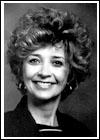
b. 1943 Topics: Lent/Holy Week Author of "Go Tell the World" in New Hymns of Hope Mary Kay Beall was born in Akron, Ohio in 1943. She holds a B.M. degree from Ohio Wesleyan University, an M.A. from Ohio State University, and a Masters in Theological Studies from Trinity Seminary in Columbus, Ohio. She was ordained in the American Baptist church and ministers to church musicians and choirs as well as conducting clinics and reading sessions in the United States and Canada.
NN, Hymnary editor. Source: www.hopepublishing.com/
Mary Kay Beall
David Lee
b. 1956 Topics: Church Year Lent; Enemies; God's Name; God's Power; Gratitude; People of God / Church Suffering; Prayer; Temptation And Trial; The Needy; Witness; Year A, B, C, Holy Week, Wednesday of Holy Week; Year A, Ordinary Time after Pentecost, November 6-12 Author of "Psalm 70 (A Responsorial Setting)" in Psalms for All Seasons LEE, DAVID (b. 1956): B.Sc. Geology with Geophysics, University of Durham; M.Sc. Computing Science, University of Newcastle upon Tyne. Working life in I. T. Support in university and scientific research. He has been active in church music since his early teens. He is member of the Hymn Society of Great Britain and Ireland, and in 2007 was elected to serve on its executive committee.Hymn, song and anthem settings appear in (amongst others) Singing the Faith, RSCM (Royal School of Church Music) collections, Lutheran Service Book (LCMS), Psalms for All Seasons., In Melody and Songs
David Lee(from In Melody and Song, Darcey Press, 2014, and previous (uncited) bio
David Lee
Damian Lundy
Person Name: Damian Lundy, 1944-1997 Topics: Pentecost; The Pilgrim Community; Year A Lent 5; Year A Proper 10; Year B Easter 2; Year C Fourth Sunday Before Advent; Years A, B, and C Tuesday of Holy Week Author of "The Spirit lives to set us free (Walk in the light)" in Complete Anglican Hymns Old and New
Damian Lundy
Isao Koizumi
1907 - 1992 Person Name: Isao Koizumi, 1907-1992 Topics: Biblical Names and Places Israel; Church Year Lent; Cruelty; Elements of Worship Baptism; Faith; God Daily Experience of; God Trust in; God as Rock; God's Love; God's Presence; God's Strength; Hope; Jesus Christ Mind of; Jesus Christ Teacher; Lament General; Life Stages Birth; Life Stages Old Age; Life Stages Youth; Loneliness; Mercy; Musical Instruments; Occasional Services Funerals; Occasional Services New Year; Remembering; Remnant of Isarel; Trust; Witness; Year A, B, C, Holy Week, Tuesday of Holy Week; Year C, Ordinary Time after Epiphany, 4th Sunday; Year C, Ordinary Time after Pentecost, August 21-27 Composer of "TOKYO" in Psalms for All Seasons Isao Koizumi (b. 1907; d. 1992) graduated from the Osaka University of Commerce in 1932. For the next ten years he taught at that school, was an organist in Tokyo, and then went on to work in the import-export business. He has served as the conductor of the Tokyo Choral Society and edited various hymnals, including The Hymnal 1954 for the United Church of Christ in Japan, The Sunday School Hymnal (1954), and Hymns of Praise (1967 edition). A writer and translator of books and articles on church music, Koizumi has also composed and arranged hymn tunes. He is considered a leading figure in modern Japanese hymnody.
Bert Polman
Isao Koizumi
Pages




