You help make Hymnary.org possible. More than 10 million people from 200+ countries found hymns, liturgical resources and encouragement on Hymnary.org in 2025, including you. Every visit affirms the global impact of this ministry.

If Hymnary has been meaningful to you this year, would you take a moment today to help sustain it? A gift of any size—paired with a note of encouragement if you wish—directly supports the server costs, research work and curation that keep this resource freely available to the world.

Give securely online today, or mail a check to:
Hymnary.org
Calvin University
3201 Burton Street SE
Grand Rapids, MI 49546

Thank you for your partnership, and may the hope of Advent fill your heart.

Person Results

Topics:house+of+god+
In:people

Planning worship? Check out our sister site, ZeteoSearch.org, for 20+ additional resources related to your search.
Showing 151 - 160 of 350Results Per Page: 102050

Bartholomäus Gesius

1555 - 1613 Person Name: Bartholomaeus Gesius, c.1555 - 1613 Topics: The Church The House of God Composer of "DANK SEI GOTT IN DER HOHE" in Service Book and Hymnal of the Lutheran Church in America Bartholomaeus Gesius; b. 1555, Muencheberg, near Frankfort; d. 1613 or 14, Wittenberg Evangelical Lutheran Hymnal, 1908

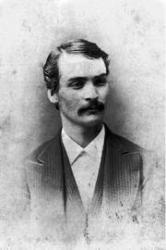
Chas. H. Gabriel

1856 - 1932 Person Name: Charles H. Gabriel Topics: House of God Longed for and Loved Composer of "KATHRINE" in The Psalter Pseudonyms: C. D. Emerson, Charlotte G. Homer, S. B. Jackson, A. W. Lawrence, Jennie Ree ============= For the first seventeen years of his life Charles Hutchinson Gabriel (b. Wilton, IA, 1856; d. Los Angeles, CA, 1932) lived on an Iowa farm, where friends and neighbors often gathered to sing. Gabriel accompanied them on the family reed organ he had taught himself to play. At the age of sixteen he began teaching singing in schools (following in his father's footsteps) and soon was acclaimed as a fine teacher and composer. He moved to California in 1887 and served as Sunday school music director at the Grace Methodist Church in San Francisco. After moving to Chicago in 1892, Gabriel edited numerous collections of anthems, cantatas, and a large number of songbooks for the Homer Rodeheaver, Hope, and E. O. Excell publishing companies. He composed hundreds of tunes and texts, at times using pseudonyms such as Charlotte G. Homer. The total number of his compositions is estimated at about seven thousand. Gabriel's gospel songs became widely circulated through the Billy Sunday­-Homer Rodeheaver urban crusades. Bert Polman

Nicholas Brady

1659 - 1726 Person Name: N. Brady Topics: House of God Author of "Oh, with due reverence let us all" in The Hymnal, Revised and Enlarged, as adopted by the General Convention of the Protestant Episcopal Church in the United States of America in the year of our Lord 1892 Nicholas Brady, the son of an officer in the Royalist army, was born in Brandon, Ireland, 1659. He studied at Westminster School, and at Christ Church College, oxford, and graduated at Trinity College, Dublin. He held several positions in the ministry, but later in life retired to Richmond Surrey, where he established a school. Here he translated some of the Psalms. Several volumes of his sermons and smaller works were published, but his chief work, like that of his co-colabourer Tate, was the "Metrical Version of Psalms." This version was authorized by King William in 1696, and has, since that time, taken the place of the earlier translation by Sternhold and Hopkins, which was published in 1562. The whole of the Psalms, with tunes, appeared in 1698, and a Supplement of Church Hymns in 1703. Of this version, which has little poetic merit, Montgomery says "It is nearly as inanimate as the former, though a little more refined." None of the "Metrical Psalms" are to be compared with the Psalms of the Prayer Book Psalter, and very few of them are worthy a place in a collection of hymns. --Annotations of the Hymnal, Charles Hutchins, 1872.

William H. Parker

1845 - 1929 Person Name: William Henry Parker (1845-1929) Topics: Our Response to God in the worship of God's house Author of "Holy Spirit, hear us" in Church Hymnary (4th ed.) Parker, William Henry, was born at New Basford, Nottingham, March 4th, 1845. Early in life he began to write verses, and having joined a General Baptist church and become interested in Sunday schools was led to compose hymns for use at anniversaries. Three of these were introduced by his pastor, the Rev. W. R. Stevenson, M.A., into The School Hymnal, 1880, and passed into The Children's Book of Praise, 1881, and other collections. In 1882 Mr. Parker published a small volume entitled, The Princess Alice and Other Poems. His hymns in common use are:—1. "Children know but little.” (God’s condescension to the Little Ones) 2. “Holy Spirit, hear us!” (Hymn to the Holy Ghost). 3. “Jesus, I so often need thee” (A Child’s Prayer to Christ). [Rev. W. R. Stevenson, M.A.] --John Julian, Dictionary of Hymnology, Appendix, Part II (1907) ====================== Parker, W. H., p. 1585, ii, The following additional hymns are in the Sunday School Hymnary, 1905. 1. Gaily come the hours of gladness. Summer. (1905.) 2. How sweet is the message which Jesus has sent. Christ's love to Children. (1892.) 3. I love to hear you tell. Boyhood of Jesus. (1901.) 4. I want to be a hero. Christian Courage. (1895.) 5. Just in the harbour sailing are we. Sailors. (1893.) 6. Tell me the stories of Jesus. Life of Christ. (1885.) 7. The world may beckon from every bide. Of Home. (1905.) 8. There are voices all around us. The Angels. (1881.) 9. Where the rushes bowed and quivered. God's Servants. (1902.) 10. Wilt thou "Show us the Father." God the Father. (1880.) Mr. Parker's hymns were mostly first printed in the sheets used for Sunday School Anniversaries of the Chelsea Street Baptist Church, New Basford, Nottingham. The three hymns noted at p. 1585, ii., were written in March 1880. [Rev. James Mearns, M.A.] --John Julian, Dictionary of Hymnology, New Supplement (1907)

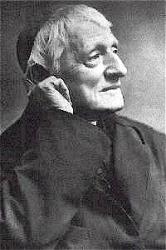
John Henry Newman

1801 - 1890 Person Name: John Henry Newman, 1801-90 Topics: Approach to God The House of God Translator of "S.M." in The Church Hymnary (3rd Ed.) Newman, John Henry , D.D. The hymnological side of Cardinal Newman's life and work is so small when compared with the causes which have ruled, and the events which have accompanied his life as a whole, that the barest outline of biographical facts and summary of poetical works comprise all that properly belongs to this work. Cardinal Newman was the eldest son of John Newman, and was born in London, Feb. 21, 1801. He was educated at Ealing under Dr. John Nicholas, and at Trinity College, Oxford, where he graduated in honours in 1820, and became a Fellow of Oriel in 1822. Taking Holy Orders in 1824, he was for a short time Vice-Principal of St. Alban's Hall, and then Tutor of Oriel. His appointment to St. Mary's, Oxford, was in the spring of 1828. In 1827 he was Public Examiner, and in 1830 one of the Select University Preachers. His association with Keble, Pusey, and others, in what is known as "The Oxford Movement," together with the periodical publication of the Tracts for the Times, are matters of history. It is well known how that Tract 90, entitled Bernards on Certain Passages in the Thirty-nine Articles, in 1841, was followed by his retirement to Littlemore; his formal recantation, in February, 1843, of all that he had said against Rome; his resignation in September of the same year of St. Mary's and Littlemore; and of his formal application to be received into the communion of the Church of Rome, Oct. 8, 1845. In 1848 he became Father Superior of the Oratory of St. Philip Neri, at Birmingham; in 1854 Rector of the newly founded Roman Catholic University at Dublin; and in 1858 he removed to the Edgbaston Oratory, Birmingham. In 1879 he was created a Cardinal, and thus received the highest dignity it is in the power of the Pope to bestow. Cardinal Newman's prose works are numerous, and his Parochial Sermons especially being very popular. His Apologia pro Vita Sua, 1864, is a lucid exposition and masterly defence of his life and work. Cardinal Newman's poetical work began with poems and lyrical pieces which he contributed to the British Magazine, in 1832-4 (with other pieces by Keble and others), under the title of Lyra Apostolica. In 1836 these poems were collected and published under the same title, and Greek letters were added to distinguish the authorship of each piece, his being δ. Only a few of his poems from this work have come into use as hymns. The most notable is, "Lead, kindly Light". His Tract for the Times, No. 75, On the Roman Breviary, 1836, contained translations of 14 Latin hymns. Of these 10 were repeated in his Verses on Religious Subjects, 1853, and his Verses on Various Occasions, 1865, and translations of 24 additional Latin hymns were added. Several of these translations are in common use, the most widely known being "Nunc Sancte nobis" ("Come, Holy Ghost, Who ever One"). His collection of Latin hymns from the Roman and Paris Breviaries, and other sources was published as Hymni Ecclesiae, in 1838, and again in 1865. His Dream of Gerontius, a poem from which his fine hymn, "Praise to the Holiest in the height," is taken, appeared in his Verses on Various Occasions, in 1868. Cardinal Newman's influence on hymnology has not been of a marked character. Two brilliant original pieces, and little more than half a dozen translations from the Latin, are all that can claim to rank with his inimitable prose. --John Julian, Dictionary of Hymnology (1907) ================= Newman, John Henry, p. 822, ii. He died at Edgbaston, Birmingham, Aug. 11, 1890. --John Julian, Dictionary of Hymnology, Appendix, Part II (1907) ============== Newman, Card. J. H., pp. 802, ii.; 1581, ii. The following are also in use at the present time, but, except No. 13, almost exclusively in R. C. collections. The dates in brackets are those given in Newman's Verses, 1868; all thus marked were composed in the Birmingham Oratory at these dates:— i. In the Rambler, 1850. 1. In the far North our lot is cast. [S. Philip Neri.] (1850.) March, 1850, p. 250. In the Birmingham Oratory Hymn Book, 1857 and 1906, it begins, " On Northern coasts," and in the Parochial Hymn Book, 1880, with st. ii. " Founder and Sire! to mighty Rome." 2. The Angel-lights of Christmas morn. [Candlemas.] (1849.) March, 1850, p. 251. 3. There sat a Lady all on the ground. [B. V. M.] (1849.) May, 1850, p. 425. ii. Verses, 1853. 4. All is Divine which the Highest has made. [For an inclement May.] (1850.) 1853, p. 128. 5. Green are the leaves, and sweet the flowers. [May.] (1850.) 1853, p. 125. 6. My oldest friend, mine from the hour. [Guardian Angel] (1853.) 1853, p. 12. 7. The holy monks conceal'd from men. [S. Philip Neri.] (1850.) 1853, p. 134. 8. The one true Faith, the ancient Creed. [The Catholic Faith.] 1853, p. 140. 9. This is the saint of sweetness and compassion. [S. Philip Neri.] 1853, p. 136. Rewritten (1857) as "This is the saint of gentleness and kindness" in the Birmingham Oratory Hymn Book, 1857, No. 49. iii. Birmingham Oratory Hymn Book, 1857. 10. Help, Lord, the souls which Thou hast made. [The Faithful Departed.] (1857.) 1857, No. 76. iv. Birmingham Oratory H. Book, 1862. 11. I ask not for fortune, for silken attire. [S. Philip Neri.] (1857.) 1862, No. 54. 12. Thou champion high. [S. Michael.] (1862.) 1862, No. 41. v. Dream of Gerontius, 1866. 13. Firmly I believe and truly. [The Faith of a Christian.] 1866, p. 9; Verses, 1868, p. 318; The English Hymnal 1906. [Rev. James Mearns, M.A.] --John Julian, Dictionary of Hymnology, New Supplement (1907) ----- John Henry Newman was born in London, in 1801. He studied at Trinity College, Oxford, graduating B.A. in 1820, and was subsequently Fellow of Oriel College. In 1825, he became Vice Principal of S. Alban's Hall, and was Tutor of his college for several years. In 1828, he became incumbent of S. Mary's, Oxford, with the chaplaincy of Littlemore. In 1842, he went to preside over a Brotherhood he had established at Littlemore. He was the author of twenty-four of the "Tracts for the Times," amongst them the celebrated Tract No. 90, which brought censure upon its author. In 1845, he left the Church of England and entered the Church of Rome. He was appointed Father Superior of the Oratory of S. Philip Neri, at Birmingham, and in 1854, Rector of the new Roman Catholic University at Dublin, an office he filled till 1858. He has published a large number of works. --Annotations of the Hymnal, Charles Hutchins, M.A. 1872. ====================

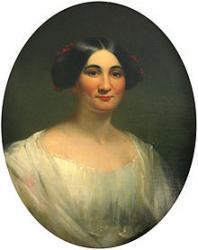
Phoebe Cary

1824 - 1871 Person Name: Phoebe Cary, 1824-1871 Topics: Christ Sun of Righteousness; The Church and the Kingdom of God Evening; Heaven A House ; Heaven Hope of; Heaven Our Home; Home Heaven our; Hope Of Heaven Author of "One sweetly solemn thought " in Methodist Hymn and Tune Book Phoebe Cary, (1824-1871) was born and raised in Mount Healthy in Hamilton County, Ohio. Her family came from Lyme, New Hampshire to Ohio when her grandfather was given land in return for his service in the Continental Army. She was the younger sister of Alice Cary (1820-1871). She and Alice submitted poetry to religious periodicals. Phoebe remained in Ohio and continued to write many hymns, including, "One sweetly solemn thought." Mary Louise VanDyke =========================================== Cary, Phoebe, sister of Alice Cary, born near Cincinnati, Ohio, Sept. 4, 1824, and died within six months of the death of the same sister at Newport, July 31, 1871. Her works include Poems and Parodies, 1854; and Poems of Faith, Hope and Love, 1868. With Dr. Charles F. Deems she compiled Hymns for all Christians, 1869. Her hymns are:— 1. One sweetly solemn thought. Anticipation of Heaven. This piece was not intended for public use, nor is it a suitable metre for musical treatment, yet it has won universal acceptance and popularity. In some instances this has been attained by change of metre as in the Supplement to the Baptist Psalms & Hymns 1880, No. 1185. Johnson's Encyclopedia is in error in saying it was "written at the age of 17." The Congregational Quarterly for Oct., 1874, says, "it was written, she tells us, in the little back third story bedroom, one Sabbath morning in 1852, on her return from church." This statement shows that it was composed when she was 28, and not 17. The popularity of the hymn in Great Britain arose mainly through its use in the Evangelistic services of Messrs. Moody and Sankey. In the Protestant Episcopal Hymns for Church and Home, Phila., 1860, No. 383, it is given as "A sweetly solemn thought." The following additional pieces by this author are in the Lyra Sacra Americana, 1868:— 2. Go and sow beside all waters. Seed Sowing. 3. Great waves of plenty rolling up. Gratitude. 4. I had drunk, with lips unsated. Living Waters. [Rev. F. M. Bird, M.A.] --John Julian, Dictionary of Hymnology (1907)

Dean B. McIntyre

Person Name: Dean McIntyre Topics: House of God ; House of God Adapter of "Built on a Rock" in Worship and Song

Jean Tisserand

? - 1494 Topics: he Church of God | The House of God Author of "O sons and daughters, let us sing!" in The Hymnary of the United Church of Canada Died: 1494, Par­is, France. A Fran­cis­can monk, Tis­ser­and found­ed an or­der for pen­i­tent wo­men. He is al­so said to have writ­ten a wor­ship ser­vice com­mem­o­rat­ing Fran­cis­cans mar­tyred in Mo­roc­co in 1220. Lyrics: O FILII ET FILIAE, Rex coe­les­tis, Rex glor­i­ae O Sons and Daugh­ters, Let Us Sing! Young Men and Maids, Re­joice and Sing www.hymntime.com/tch

Ernest Edwin Ryden

1886 - 1981 Person Name: Ernest E. Ryden, b. 1886 Topics: The House of God Author of "How Blessed Is This Place, O Lord" in Lutheran Worship Ernest Edwin Ryden is a distinguished Lutheran clergyman who has been a life-long student of hymns. At present he is pastor of Emanuel Lutheran Church in North Grosvenordale, Connecticut. This is the latest of a long series of services he has rendered in the Lutheran Church. For twenty-seven years he was editor of "The Lutheran Companion," the official organ of the former Augustana Lutheran Church. His contributions to hymnody were many. He was a member of the Committee which created the Augustana Hymnal of 1925 to which he contributed eight original hymns and translations. He was co-editor of the Junior Hymnal for which he wrote a number of hymns. He was secretary of the committee which prepared the Service Book and Hymnal. Here again he has contributed new hymns and translations. He is the author of two volumes, "The Story of Our Hymns," and "The Story of Christian Hymnody." In 1949 he was made a Knight of the Royal Order of the North Star by the King of Sweden for his work in the field of hymnological research. He is the author of one of the Children's Hymns published by the Hymn Society. ----Twelve New Lord’s Day Hymns, 1968. Used by permission. ============================== In 1948 [Ryden] was one of the official representatives of his Church at the constituting Assembly of the World Council of Churches in Amsterdam. --Twelve New Hymns for Children, 1965. Used by permission.

George Herbert Palmer

1846 - 1926 Topics: The Church at Worship Scripture; liturgical Songs of Illumination; Baptism; Bible; Church Education; God House, Home; Holy Spirit Illumination; Jesus Christ Lord of Life; Jesus Christ Prophet; Jesus Christ Teacher/Teachings; Light; Opening Hymns; Praise; Service Music Gathering, Call to Worship, Greeting; Service Music Prayer for Illumination; Service Music Litany Prayer; Word of God; Epiphany 3 Year A; Proper 9 Year A; Epiphany 2 Year B; Lent 4 Year B; Proper 21 Year B; Epiphany 2 Year C; Easter 3 Year C Harmonizer of "LIEBSTER JESU" in Voices United Palmer, George Herbert, B.A., of Trinity College, Cambridge, B.A. 1868, curate of St. Margaret's, Toxteth Park, Liverpool, 1869-76, and St. Barnabas, Pimlico, 1876-83. Has published The Antiphoner and Grail, 1881; Harmonies of the Office Hymn-Book, 1891; The Sarum Psalter, 1894, &c. Several of his translations from the Latin are in The Hymner, 1904. --John Julian, Dictionary of Hymnology, New Supplement (1907)

Pages


Export as CSV
It looks like you are using an ad-blocker. Ad revenue helps keep us running. Please consider white-listing Hymnary.org or getting Hymnary Pro to eliminate ads entirely and help support Hymnary.org.