You help make Hymnary.org possible. More than 10 million people from 200+ countries found hymns, liturgical resources and encouragement on Hymnary.org in 2025, including you. Every visit affirms the global impact of this ministry.

If Hymnary has been meaningful to you this year, would you take a moment today to help sustain it? A gift of any size—paired with a note of encouragement if you wish—directly supports the server costs, research work and curation that keep this resource freely available to the world.

Give securely online today, or mail a check to:
Hymnary.org
Calvin University
3201 Burton Street SE
Grand Rapids, MI 49546

Thank you for your partnership, and may the hope of Advent fill your heart.

Person Results

Topics:safety+-+security
In:person

Planning worship? Check out our sister site, ZeteoSearch.org, for 20+ additional resources related to your search.
Showing 151 - 160 of 322Results Per Page: 102050

Virgil P. Brock

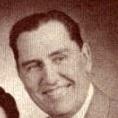
1887 - 1978 Person Name: Virgil P. Brock (1887-1978) Topics: La Vida Christian Confianza y seguridad; The Christian Life Trust and safety Author of "Mira hacia Dios" in Himnario Adventista del Séptimo Día Brock, Virgil Prentiss. (Celina, Mercer County, Ohio, January 6, 1887--March 12, 1978, Rives Junction, Michigan). Son of Orlando H. and Elmira Brock. Education: Fairmount Friends Academy; Earlham College, B.A.; Cleveland Bible Institute and Training School; Trinity College, Honarary D.Sac.Mus. Member of the Quaker (Friends) Fellowship in the early years, but later was an evangelist in the Christian Church with membership in the First Christian Church of Warsaw, Indiana. In 1914, he married Blanche Kerr, who was his co-worker and collaborator for 43 years. They had one son, Dr. James Wilson Brock, professor of theatre at California State University, Northridge. Blanch Brock died January 3, 1958. In 1959, he married Martha Anderson, and they continued in church work until her death in 1969. He pastored several Quaker churches in the early years of his ministry, but most of his life's ministry was given to evangelistic endeavor. He authored more than 500 hymns and gospel songs, and one book, an autobiography, entitled You Asked for It. His two best-known hymns are: "He's a Wonderful Saviour to Me," published in 1918 by the Rodeheaver Co., and "Beyond the Sunset," published in 1936. Other hymns include "Sing and Smile and Pray," "Resting in His Love," "If You Could Know," "Keep Looking Up," "Men of God, Awake, Arise," and "I'll Still Live On." He resided at Winona Lake, Indiana, for many years, and was closely associate with Homer Rodeheaver; most of his hymns were published by the Rodeheaver Company. During the last six years of his life, he lived at Youth Haven Ranch, Rives Junction, Michigan. At the time of his death at 91, he was still being called upon to present programs. He is buried by this first wife in Warsaw-Winona Lake Cemetary, and engraved on the large memorial monument are the words and music of their most famous hymn, "Beyond the Sunset." --Carlton C. Buck, DNAH Archives

Samuel W. Beazley

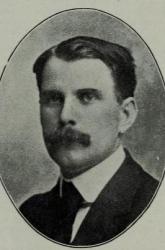
1873 - 1944 Topics: Safety Composer of "[Oh, how precious is the tho't that God is nigh]" in The King's Message Samuel W. Beazley was born in Sparta, Virginia in 1873. He was a music scholar and taught music at Shenandoah College for five years. He composed over 4,000 gospel songs during his lifetime. Samuel W. Beazley maintained a successful publishing business in Chicago, Illinois. He died in Chicago on September 16, 1944. He was inducted into the Gospel Music Hall of Fame in 1992. NN, Hymnary editor. Source: Gospel Music Hall of Fame

William C. Poole

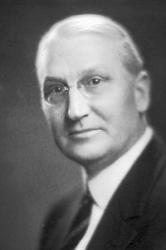
1875 - 1949 Person Name: William C. Poole (1875-1949) Topics: La Vida Christian Confianza y seguridad; The Christian Life Trust and safety Author of "Cuando te quiero" in Himnario Adventista del Séptimo Día William C. Poole was born and raised on a farm in Maryland. His parents belonged to the Methodist church. He graduated from Washington College and became a Methodist minister in Wilmington, Delaware area. He was pastor of McCabe Memorial, Richardson Park and other churches. In 1913 he was superintendent of the Anti-Saloon League of Delaware. He wrote about five hundred hymns. The writing was done as recreation and a diversion from his pastoral work. His goal in writing as well as in being a minister was to help people. Dianne Shapiro, from "The Singers and Their Songs: sketches of living gospel hymn writers" by Charles Hutchinson Gabriel (Chicago: The Rodeheaver Company, 1916)

George Matheson

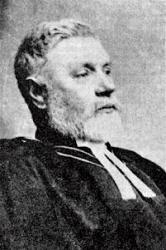
1842 - 1906 Topics: Safety and Comfort Author of "Strength for the Day" in The Pilgrim Hymnal Matheson, George, D.D., was born at Glasgow, March 27, 1842, and although deprived of his eyesight in youth he passed a brilliant course at the University of Edinburgh, where he graduated M.A. in 1862. In 1868 he became the parish minister at Innellan; and subsequently of St. Bernard's, Edinburgh. He was the Baird Lecturer in 1881, and St. Giles Lecturer in 1882. He has published several important prose works. His poetical pieces were collected and published in 1890 as Sacred Songs, Edinburgh: W. Blackwood. In addition to his hymn "O Love that wilt not let me go" (q. v.), four others from his Sacred Songs are in Dr. A. C. Murphey's Book of Common Song, Belfast, 1890. --John Julian, Dictionary of Hymnology, Appendix, Part II (1907) ======================= Matheson, G., p. 1579, i. In addition to Dr. Matheson's hymn, "O Love, that wilt not let me go," p. 1583, i,, the following from his Sacred Songs, 1890, have come into common use since 1892:— 1. Come, let us raise a common song. Brotherhood. 2. Father divine, I come to Thee. Strength for Life. This, in Horder's Worship Song, 1905, is altered to”Saviour divine, I come to Thee." 3. Gather us in, Thou Love that fillest all. One in Christ. 4. Jesus, Fountain of my days. Christian's Polestar. 5. Lend me, O Lord, Thy softening cloud. The Fire and the Cloud. In the Sunday Magazine, 1875. 6. Lord, Thou hast all my frailty made. Strength for the Day. 7. Make me a captive, Lord. Christian Freedom. 8. There are coming changes great. The Glad New Time. 9. Three doors there are in the temple. Prayer. Dr. Matheson informed us that these hymns, together with the rest of his Sacred Songs, 1890, were written at Bow, Dumbartonshire, in 1890. The 3rd ed. of the Sacred Songs was published in 1904. He died suddenly at Avenelle, North Berwick, Aug. 28, 1906. --John Julian, Dictionary of Hymnology, New Supplement (1907)

Shirley Erena Murray

1931 - 2020 Topics: Affliction and Tribulation; Anger; Body of Christ; Bread; Church; Creation; Creator; Devotion; Earth and Environment; Ecumenism; Fears; Forgiveness; Freedom and Liberation; Grace; Growth; Hospitality; Inclusion; Joy; Justice; Life; Love (Human); Men and Women; Mercy; Old and Young; Power and Might; Safety; Shalom; Sharing; Shelter; Space; Speech; Steps; Systems; Table; Water; Welcome; Wisdom; Witness; Women and Men; Work; Worship; Young and Old; Affliction and Tribulation; Anger; Body of Christ; Bread; Christian Year and Observances Pentecost; Church; Creation; Creator; Devotion; Earth and Environment; Ecumenism; Fears; Forgiveness; Freedom and Liberation; Grace; Growth; Hospitality; Inclusion; Joy; Justice; Life; Love (Human); Men and Women; Mercy; Old and Young; Power and Might; Safety; Shalom; Sharing; Shelter; Space; Speech; Steps; Systems; Table; Water; Welcome; Wisdom; Witness; Women and Men; Work; Worship; Young and Old Author of "A Place at the Table" in Worship and Song Shirley Erena Murray (b. Invercargill, New Zealand, 1931) studied music as an undergraduate but received a master’s degree (with honors) in classics and French from Otago University. Her upbringing was Methodist, but she became a Presbyterian when she married the Reverend John Stewart Murray, who was a moderator of the Presbyterian Church of New Zealand. Shirley began her career as a teacher of languages, but she became more active in Amnesty International, and for eight years she served the Labor Party Research Unit of Parliament. Her involvement in these organizations has enriched her writing of hymns, which address human rights, women’s concerns, justice, peace, the integrity of creation, and the unity of the church. Many of her hymns have been performed in CCA and WCC assemblies. In recognition for her service as a writer of hymns, the New Zealand government honored her as a Member of the New Zealand Order of Merit on the Queen’s birthday on 3 June 2001. Through Hope Publishing House, Murray has published three collections of her hymns: In Every Corner Sing (eighty-four hymns, 1992), Everyday in Your Spirit (forty-one hymns, 1996), and Faith Makes the Song (fifty hymns, 2002). The New Zealand Hymnbook Trust, for which she worked for a long time, has also published many of her texts (cf. back cover, Faith Makes the Song). In 2009, Otaga University conferred on her an honorary doctorate in literature for her contribution to the art of hymn writing. I-to Loh, Hymnal Companion to “Sound the Bamboo”: Asian Hymns in Their Cultural and Liturgical Context, p. 468, ©2011 GIA Publications, Inc., Chicago

Mary Ann Baker

1832 - 1925 Person Name: Mary Ann Baker (1831-1921) Topics: La Vida Christian Confianza y seguridad; The Christian Life Trust and safety Author of "¡Oh, buen Maestro, despierta!" in Himnario Adventista del Séptimo Día Baker, Mary A.. Miss Baker, who is a member of the Baptist denomination, and a resident in Chicago, Illinois, is an active worker in the temperance cause, and the author of various hymns and temperance songs.    Her most popular hymn:-— 1. Master, the tempest is raging, Peace, was written in 1874 at the request of Dr. H. R. Palmer, who desired of her several songs on the subjects of a series of Sunday School Lessons for that year. Its theme is "Christ stilling the tempest."   During the same year it was set to music by Dr. Palmer, and pub. in his Songs of Love for the Bible School, 1874. It is found in other collections, including I. D. Sankey's Sacred Songs and Solos, London, 1881. Its home popularity was increased by its republication and frequent use during the illness of Pres. Garfield. It was sung at several of the funeral services held in his honour throughout the States. 2. Why perish with cold and with hunger? Invitation. This is another of her hymns set to music by I. D. Sankey, and included in his Sacred Songs and Solos, Lond., 1881. --John Julian, Dictionary of Hymnology (1907) _______ Mary Ann Baker (sometimes known as Mary Eddy Baker), daughter of Joshua Baker and Catherine Eddy, was born 16 Sept. 1832 in Orwell, Oswego, NY. As a young child, her family moved to Branch County, Michigan. Her father died there in 1839 at age 39. A few years later, in 1843, her mother married David Ripley and had two more children, but by 1850, her mother was a single parent again with five children, living in Kinderhook, Branch, Michigan. By 1855, her mother had remarried to Ephraim Potter, and they were living in Boonville, Oneida, New York. In 1860, she and her sister Rhoda Ripley were living in Kalamazoo, Michigan, where she found work as a compositor. Some time between 1867 and 1868 (her sister Rhoda married George Ely in 1868 in Kalamazoo), she moved to Chicago, where she similarly worked as a compositor for Horton & Leonard. While in Chicago, she met composer Horatio R. Palmer and was associated with the Second Baptist Church. In 1900, she was still living in Chicago. Mary never married. In her final years, she was living in the Baptist Old People's Home in nearby Maywood, Cook County, Illinois, where she died at age 93 on 29 Sept. 1925. by Chris Fenner, 14 Feb. 2022

H. R. Palmer

1834 - 1907 Person Name: Horatio R. Palmer (1834-1917) Topics: La Vida Christian Confianza y seguridad; The Christian Life Trust and safety Composer of "PEACE, BE STILL!" in Himnario Adventista del Séptimo Día Palmer, Horatio Richmond, MUS. DOC, was born April 26, 1834. He is the author of several works on the theory of music; and the editor of some musical editions of hymnbooks. To the latter he contributed numerous tunes, some of which have attained to great popularity, and 5 of which are in I. D. Sankey's Sacred Songs and Solos, London, 1881. His publications include Songs of Love for the Bible School; and Book of Anthems, the combined sale of which has exceeded one million copies. As a hymnwriter he is known by his "Yield not to temptation," which was written in 1868, and published in the National Sunday School Teachers' Magazine, from which it passed, with music by the author, into his Songs of Love, &c, 1874, and other collections. In America its use is extensive. Dr. Palmer's degree was conferred by the University of Chicago in 1880. -- John Julian, Dictionary of Hymnology (1907) =============== Palmer, H. R., p. 877, i. The hymn "Would you gain the best in life" (Steadfastness), in the Congregational Sunday School Supplement, 1891, the Council School Hymn Book, 1905, and others, is by this author. --John Julian, Dictionary of Hymnology, New Supplement (1907)

Frank M. Davis

1839 - 1896 Topics: Safety From Temporal Ills Composer of "PERFECT SECURITY" in Bible Songs Frank Marion Davis USA 1839-1896. Born at Marcellus, NY, he became a teacher and professor of voice, a choirmaster and a good singer. He traveled extensively, living in Marcellus, NY, Vicksburg, MS, Baltimore, MD, Cincinnati, OH, Burr Oak and Findley, MI. He compiled and published several song books: “New Pearls of Song” (1877), “Notes of Praise” (1890), “Crown of gold” (1892), “Always welcome” (1881), “Songs of love and praise #5” (1898), “Notes of praise”, and “Brightest glory”. He never married. John Perry

E. J. Hopkins

1818 - 1901 Person Name: Edward John Hopkins, 1818-1901 Topics: Christians Safety of; Church Militant; Church Prayer for; Church Protection and Defence of; Church Triumphant Composer of "WEST HEATH" in Hymnal and Liturgies of the Moravian Church Dr Edward John Hopkins MusDoc United Kingdom 1818-1901. Born at Westminster, England, the son of a clarinetist with the Royal Opera House orchestra, he became an organist (as did two of his brothers) and a composer. In 1826 he became a chorister of the Chapel Royal and sang at the coronation of King William IV in Westminster Abbey. He also sang in the choir of St. Paul’s Cathedral, a double schedule requiring skill and dexterity. On Sunday evenings he would play the outgoing voluntary at St. Martin’s in-the-field. He left Chapel Royal in 1834 and started studying organ construction at two organ factories. He took an appointment at Mitcham Church as organist at age 16, winning an audition against other organists. Four years later he became organist at the Church of St. Peter, Islington. In 1841 he became organist at St. Luke’s, Berwick St., Soho. Two Years later he was organist at Temple Church, which had a historic organ (built in 1683). He held this position for 55 years. In 1845 he married Sarah Lovett, and they had four sons and five daughters. He was closely associated with the Bach Society and was organist for the first English performances of Bach’s St. Matthew Passion. In 1855 he collaborated with Edward Rimbault publishing “The organ, its history and construction” (3 editions 1855-70-77). In 1864 he was one of the founders of the “College of organists”. In 1882 he received an honorary Doctorate of Music from the Archbishop of Canterbury. He composed 30+ hymn tunes and some psalm chants, used by the Church of England. He died in London, England. John Perry

A. H. Ackley

1887 - 1960 Person Name: Alfred H. Ackley (1887-1960) Topics: La Vida Christian Confianza y seguridad; The Christian Life Trust and safety Author of "Cuando en la lucha" in Himnario Adventista del Séptimo Día Alfred Henry Ackley was born 21 January 1887 in Spring Hill, Pennsylvania. He was the youngest son of Stanley Frank Ackley and the younger brother of B. D. Ackley. His father taught him music and he also studied at the Royal Academy of Music in London. He graduated from Westminster Theological Seminary in Maryland and was ordained as a Presbyterian minister in 1914. He served churches in Pennsylvania and California. He also worked with the Billy Sunday and Homer Rodeheaver evangelist team and for Homer Rodeheaver's publishing company. He wrote around 1500 hymns. He died 3 July 1960 in Los Angeles. Dianne Shapiro (from ackleygenealogy.com by Ed Ackley and Allen C. Ackley)

Pages


Export as CSV
It looks like you are using an ad-blocker. Ad revenue helps keep us running. Please consider white-listing Hymnary.org or getting Hymnary Pro to eliminate ads entirely and help support Hymnary.org.