

 My Starred Hymns
 My FlexScores
 My Hymnals
 My Purchased Files
Planning worship?
Check out our sister site, ZeteoSearch.org,
for 20+ additional resources related to your search.
- |
User Links
Person Results
William Hammond
1719 - 1783 Person Name: William Hammond, 1719-1783 Topics: Scriptures The Holy Author of "Jesus, thy word is my delight" in Hymnal and Liturgies of the Moravian Church Hammond, William, B.A, born at Battle, Sussex, Jan. 6, 1719, and educated at St. John's College, Cambridge. In 1743 he joined the Calvinistic Methodists; and in 1745, the Moravian Brethren. He died in London, Aug. 19, 1783, and was buried in the Moravian burial-ground, Sloane Street, Chelsea. He left an Autobiography in Greek, which remains unpublished. His original hymns, together with his translations from the Latin, were published in his:—
Psalms, Hymns, and Spiritual Songs. To which is prefix'd A Preface, giving some Account of a Weak Faith, and a Full Assurance of Faith; and briefly stating the Doctrine of Sanctification; and shewing a Christian's Completeness, Perfection, and Happiness in Christ. By William Hammond, A.B., late of St. John's College, Cambridge. London: Printed by W. Strahan; and sold by J. Oswald, at the Rose and Crown in the Poultry, mdccxlv.
A few of his original hymns from scriptural fidelity and earnestness have attained to a foremost position amongst English hymns. These include, "Awake, and sing the song," and "Lord, we come before Thee now." His translations of Latin hymns were amongst the earliest published after those contained in the Primers and other devotional works of 16th and 17th centuries. They are of merit, and worthy of attention. Greater use might also be made of his original compositions. In addition to those named above, the following are also in common use:—
1. Brightness of the Father's Face. God the Son.
2. How great the Christian's portion is. Possession of All in Christ.
3. If Jesus is yours. God's unchangeable Love.
4. In Thine own appointed way. Divine Worship.
5. Jesus, Who died the [a] world to save. Easter.
6. Lord, if on earth the thought of Thee. Heaven anticipated.
1. Now with joint consent we sing. Divine Worship.
8. O Lord, how little do we know. Quinquagesima.
9. Would you win a soul to God ? The Gospel Message.
--John Julian, Dictionary of Hymnology (1907)
William Hammond
James Drummond Burns
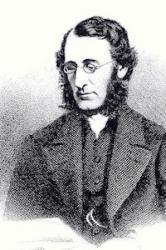
1823 - 1864 Person Name: Rev. James Drummond Burns (1823-1864) Topics: The Holy Scriptures Author of "Hushed was the evening hymn" in Carmina for the Sunday School and Social Worship Burns, James Drummond, M.A., was born at Edinburgh, February 18, 1823. He studied and graduated M.A. at the University of Edinburgh. In 1845 he became Free Church minister of Dunblane, but resigned through failing health, in 1848, and took charge of the Presbyterian Church at Funchal, Madeira. In 1855 he became minister of Hampstead Presbyterian Church, London. Died at Mentone, Nov. 27, 1864, and was buried in Highgate Cemetery, London.
His hymns appeared in:—
(l) The Vision of Prophecy: and other Poems (Edin., Edmonston and Douglas). This was originally published in 1854, and enlarged in 1858. The Poems are distinguished by vivid colouring and poetic imagination, along with directness, delicacy of execution, pensive sweetness, and tenderness. They have never however become widely popular. Included are 29 "Hymns and Meditations," many of which rank among the very best of our modern hymns for beauty, simplicity of diction, and depth of religious feeling. (2) The Evening Hymn (Lond., T. Nelson & Sons), 1857. This consists of an original hymn and an original prayer for every evening in the month— 31 in all. The Hymns and Prayers alike are characterised by reverence, beauty, simplicity, and pathos. Some of the hymns in this volume are now well known; e.g. "Still with Thee, 0 my God," "Hushed was the evening hymn," "As helpless as a child who clings." (3) Memoir and Remains of the late Rev. James D. Burns, M.A., of Hampstead. By the late Rev. James Hamilton, D.D. (London, J. Nisbet & Co.), 1869. Besides 13 Sermons and the Memoir, this work includes 40 “Hymns and Miscellaneous Pieces." A number of these had appeared in periodicals. Some of them are very good though not equal to those previously published. Also 39 translations of German hymns, which appeared in the Family Treasury, &c., are rendered exactly in the metres of the originals and many had not previously been translated. The translations are generally very good. (4) Burns also wrote the article Hymn in the 8th edition of the Encyclopedia Britannica. [Rev. James Mearns, M.A.]
-- John Julian, Dictionary of Hymnology (1907)
=====================
Burns, James Drummond, p, 197, i. Additional hymns in common use are:—
1. Not, Lord, unto that mount of dread. Safety in Christ. From Vision of Prophecy, 1st ed., 1854, p. 266.
2. O Thou whose tender [sacred] feet have trod. Resignation. From Vision of Prophecy, 1st ed., 1854, p. 227.
3. Thou, Lord, art love, and everywhere. Divine Love. From Vision of Prophecy, 2nd ed., 1858, p. 275.
--John Julian, Dictionary of Hymnology, Appendix, Part II (1907)
See also in:
Hymn Writers of the Church
James Drummond Burns
Meyer Lyon

1751 - 1797 Person Name: Meyer Lyon, 1751-1797 Topics: Scriptures Arranger of "LEONI" in Hymns of the Saints Died: 1797, Kingston, Jamaica.
Pseudonym: Leoni.
Lyon was a chorister at the Great Synagogue, Duke’s Place, London, and a public singer either at Drury Lane or Covent Garden. Subsequently he became the first qualified chazan of the English and German Synagogue in Jamaica.
Sources:
Julian, p. 1151
McCutchan, pp. 27-28
Music: LEONI
http://www.hymntime.com/tch/bio/l/y/o/lyon_m.htm
================
http://en.wikipedia.org/wiki/Myer_Lyon
Meyer Lyon
William Jones
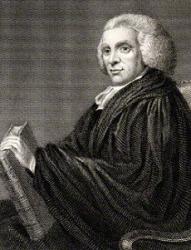
1726 - 1800 Person Name: William Jones, 1726-1800 Topics: God: His Being, Word and Works The Holy Scriptures Composer of "NEWINGTON" in The Book of Praise Born: July 30, 1726, Lowick, Northamptonshire, England.
Died: January 6, 1800, Hollingbourne, Kent, England.
Pseudonym: Jones of Nayland.
Jones was educated at Charterhouse and University College, Oxford. He became Vicar of Bethersden, Kent (1764); Pluckley, Kent; and Paston, Northamptonshire; perpetual Curate of Nayland, Suffolk (1777); and Rector of Hollingbourne, Kent (1798). He became a Fellow of the Royal Society in 1775. His works include:
The Catholic Doctrine of the Trinity, 1756
Fairchild Discourses, 1775
Physiological Disquisitions, 1781
A Treatise on the Art of Music, 1784
Church Pieces for the Organ with Four Anthems in Score, 1789
Jones was a descendant of the Col. J. Jones, who was one of the signatories to the death warrant of King Charles I of England. He used to regularly observe January 30 as a day of fasting and humiliation for his ancestor’s sin.
Music:
ST. STEPHEN
--www.hymntime.com/tch/
William Jones
Robert Keen
Person Name: "K" Topics: Scripture Author of "How Firm a Foundation" in Glory to God Robert Keen (or Keene) was the leader of music and the Carter Lane Baptist Church in London when John Rippon was the pastor. It was during this time that Rippon collected and published his Selections in 1787. He is the likely author of "How Firm a Foundation."
Robert Keen
Alexander Groves
1842 - 1909 Person Name: Alexander Groves, 1843-1909 Topics: The Church of Jesus Christ The Scriptures Author of "Break Thou the bread of life" in Complete Mission Praise
Alexander Groves
Brian A. Wren
b. 1936 Person Name: Brian Wren Topics: The Community of Faith The Book of the Church: Holy Scripture Author of "Deep in the Shadows of the Past" in The Faith We Sing Brian Wren (b. Romford, Essex, England, 1936) is a major British figure in the revival of contemporary hymn writing. He studied French literature at New College and theology at Mansfield College in Oxford, England. Ordained in 1965, he was pastor of the Congregational Church (now United Reformed) in Hockley and Hawkwell, Essex, from 1965 to 1970. He worked for the British Council of Churches and several other organizations involved in fighting poverty and promoting peace and justice. This work resulted in his writing of Education for Justice (1977) and Patriotism and Peace (1983). With a ministry throughout the English-speaking world, Wren now resides in the United States where he is active as a freelance lecturer, preacher, and full-time hymn writer. His hymn texts are published in Faith Looking Forward (1983), Praising a Mystery (1986), Bring Many Names (1989), New Beginnings (1993), and Faith Renewed: 33 Hymns Reissued and Revised (1995), as well as in many modern hymnals. He has also produced What Language Shall I Borrow? (1989), a discussion guide to inclusive language in Christian worship.
Bert Polman
Brian A. Wren
Ralph Vaughan Williams
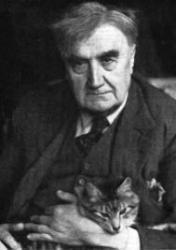
1872 - 1958 Topics: The Community of Faith The Book of the Church: Holy Scripture Arranger of "KINGSFOLD" in The Faith We Sing Through his composing, conducting, collecting, editing, and teaching, Ralph Vaughan Williams (b. Down Ampney, Gloucestershire, England, October 12, 1872; d. Westminster, London, England, August 26, 1958) became the chief figure in the realm of English music and church music in the first half of the twentieth century. His education included instruction at the Royal College of Music in London and Trinity College, Cambridge, as well as additional studies in Berlin and Paris. During World War I he served in the army medical corps in France. Vaughan Williams taught music at the Royal College of Music (1920-1940), conducted the Bach Choir in London (1920-1927), and directed the Leith Hill Music Festival in Dorking (1905-1953). A major influence in his life was the English folk song. A knowledgeable collector of folk songs, he was also a member of the Folksong Society and a supporter of the English Folk Dance Society. Vaughan Williams wrote various articles and books, including National Music (1935), and composed numerous arrangements of folk songs; many of his compositions show the impact of folk rhythms and melodic modes. His original compositions cover nearly all musical genres, from orchestral symphonies and concertos to choral works, from songs to operas, and from chamber music to music for films. Vaughan Williams's church music includes anthems; choral-orchestral works, such as Magnificat (1932), Dona Nobis Pacem (1936), and Hodie (1953); and hymn tune settings for organ. But most important to the history of hymnody, he was music editor of the most influential British hymnal at the beginning of the twentieth century, The English Hymnal (1906), and coeditor (with Martin Shaw) of Songs of Praise (1925, 1931) and the Oxford Book of Carols (1928).
Bert Polman
Ralph Vaughan Williams
Wilhelm A. F. Schulthes
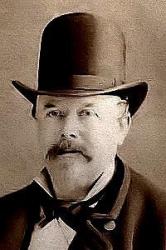
1816 - 1879 Person Name: William Schulthes Topics: The Scripture Composer of "LAMBETH" in The Hymnal of Praise Wilhelm August Ferdinand Schulthes Germany 1816-1879. Born at Hesse Castle, Germany, son of a German army officer, he was raised Lutheran, but turned to Roman Catholicism around 1852. He directed the Brompton Oratory choir (1852-1872). He taught music at the Convent of the Sacred Heart, Roehampton (1868-1879). He also wrote poetry. No information found regarding family or other life events. He died at Bois-de-Colombes, France.
John Perry
Wilhelm A. F. Schulthes
William Tans'ur

1699 - 1783 Person Name: William Tansur, 1700-1783 Topics: Scriptures Inspired; Holy Spirit Inspirer of Scripture; Inspiration Of Scriptures Composer of "ST. MARTIN'S" in Methodist Hymn and Tune Book William Tansur, b. about 1700, Dunchurch of Barnes; d. 1783, St. Neots Evangelical Lutheran Hymnal, 1908
Also known as Tansur; Tanzer; le Tansur
William Tans'ur
Pages




