You help make Hymnary.org possible. More than 10 million people from 200+ countries found hymns, liturgical resources and encouragement on Hymnary.org in 2025, including you. Every visit affirms the global impact of this ministry.

If Hymnary has been meaningful to you this year, would you take a moment today to help sustain it? A gift of any size—paired with a note of encouragement if you wish—directly supports the server costs, research work and curation that keep this resource freely available to the world.

Give securely online today, or mail a check to:
Hymnary.org
Calvin University
3201 Burton Street SE
Grand Rapids, MI 49546

Thank you for your partnership, and may the hope of Advent fill your heart.

Person Results

Topics:proper+5
In:people

Planning worship? Check out our sister site, ZeteoSearch.org, for 20+ additional resources related to your search.
Showing 161 - 170 of 357Results Per Page: 102050

James Quinn

1919 - 2010 Person Name: James Quinn, SJ Topics: The Church at Worship Opening and Morning Hymns; liturgical Opening Hymns; Angels; God Protection; Heaven(s)/Paradise; Jesus Christ Friend; Opening Hymns; Service Music Gathering, Call to Worship, Greeting; Sun; Trinity; Wisdom; Worship; Lent 5 Year A; Proper 22 Year C Adapter of "This Day God Gives Me" in Voices United James Quinn (b. Glasgow, Scotland, April 21, 1919; d. Edinburgh, Scotland, April 8, 2010) was a Roman Catholic Jesuit priest who was ordained in 1950. As a consultant for the International Commission on English in the Liturgy, sparked by Vatican II, he has exerted influence far beyond his native Scotland. A collection of his hymn texts is available from Selah Publishing company. Sing a New Creation

George Washington Doane

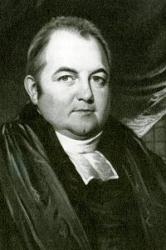
1799 - 1859 Person Name: George W. Doane Topics: Adoration and Praise Jesus Christ; Jesus Christ Guide and Leader; Year A Lent 5; Year B Proper 16 Author of "You Are the Way" in The New Century Hymnal Doane, George Washington, D.D. Bishop Doane was born at Trenton, New Jersey, May 27, 1799, and graduated at Union College, Schenectady, New York. Ordained in 1821, he was Assistant Minister at Trinity Church, New York, till 1824. In 1824 he became a Professor at Trinity College, Hartford, Conn.; in 1828 Rector of Trinity Church, Boston; and, in 1832, Bishop of New Jersey. He founded St. Mary's Hall, Burlington, 1837, and Burlington College, Burlington, 1846. Died April 27, 1859.  Bishop Doane's exceptional talents, learning, and force of character, made him one of the great prelates of his time. His warmth of heart secured devoted friends, who still cherish his memory with revering affection. He passed through many and severe troubles, which left their mark upon his later verse. He was no mean poet, and a few of his lyrics are among our best. His Works, in 4 volumes with Memoir by his son, were published in 1860. He issued in 1824 Songs by the Way, a small volume of great merit and interest. This edition is now rare. A second edition, much enlarged, appeared after his death, in 1859, and a third, in small 4to, in 1875. These include much matter of a private nature, such as he would not himself have given to the world, and by no means equal to his graver and more careful lyrics, on which alone his poetic fame must rest.The edition of 1824 contains several important hymns, some of which have often circulated without his name. Two of these are universally known as his, having been adopted by the American Prayer Book Collection, 1826:-- 1. Softly now the light of day. Evening. This, in addition to its use in American hymnals, is also found in the English Collections, including Snepp's Songs of Grace & Glory.   Written in 1824. 2. Thou art the way, to Thee alone. Christ the Way. This, in the judgment of many, is the first of American hymns, and one of the most admirable and useful in the English language. In the United States its use is most extensive, and since its introduction into the English Collections by Bickersteth in 1833, Hall in his Mitre, in 1836, and others, it has grown in favour until it ranks with the most popular of the great English hymns. Near in merit to the foregoing stands a companion piece in the same work, which deserves to be better known :— 3.  Lord, should we leave Thy hallowed feet. The next three have been overlooked at home, but have obtained considerable circulation in English Collections. 4.  Father of mercies hear,  Thy pardon we implore.    Ash Wednesday or Lent.    A translation of "Audi, benigne Conditor" q.v.), published in his Songs by the Way, 1824, together with several other translations, thus anticipating by twelve years the great English movement in that direction.   Original translation in his Songs by the Way, 1875Miller (S. & S., p. 12) attributes this translation to Dr. Neale in error. 5.  Return and come to God.   Invitation.   In his Songs, &c, 1824.   It is found in  Hall’s Mitre, 1836; the Baptist Hymnal, 1879, and several others. 6.  To thee, 0 Lord, with dawning light.  Morning.    This hymn is attributed to Heber by Miller (S. & S. , p. 381) in error.  It is included in the Society for Promoting Christian Knowledge Hymns, 1852; in Windle and others.    It is from the Songs, &c, 1824. His later hymns, the dates of which are generally preserved in the last edition of his Songs by the Way, include the following, which are more or less in use :— 7.  Beloved, it is well.   All well in Christ.   This is entitled "To my wife"; is dated Mar. 12, 1833, and was written in a copy of Dr. Bedell's "It is well."    It is given in Kennedy, 1863. 8.  Broken-hearted, weep no more.    Assurance of Peace.    The date of this hymn is not preserved. It is found as early as 1829, when it appeared in the 2nd edition of Cleland's (Baptist) Hymns. 9.  Fling out the banner, let it float.    Missions, Home & Foreign.    This hymn, sometimes dated 1824 in error, was written at Riverside, 2nd Sunday in Advent, 1848, and is one of the author's latest effusions.    It is in extensive use both in Great Britain and America. 10.  He came not with His heavenly crown.   The two Advents. In his Songs by the Way, edition 1875, this poem is dated Dec. 1827.    In Dale's English Hymnbook, 1879, it is given with the omission of stanza iii., and in the American Protestant Episcopal  Hymnal,   1871,  it begins  with stanza iv., "Once more, O Lord, Thy sign shall be."    Full text in Lyra Sac. Amer., p. 92. 11.  Lift not thou the wailing voice.   Burial.   A funeral hymn, adopted by the Anglican Hymnbook, but dated 1826 in error, for 1830. 12.  What is that, mother?  The lark, my child. This is not a hymn, but a familiar and long popular song. 13.  "When darkness erst [once] at God's command. Israel in Egypt.    In Kennedy, 1863, No. 722. 14.  Young and happy while thou art.    Youth for Christ.   A favourite piece in many juvenile collections.   It is dated Sept., 1827, and is given in Songs by the Way, 1875. The Lyra Sacra Americana also contains the following:— 15.  Brightness of the Father's glory.    Morning. A tr. of "Consors Paterni luminis " (q.v.).   It is from the Songs, &c, 1824. 16.  Child that kneelest meekly there.     Child at Prayer.    Suggested by a cast from a piece of sculpture by Greenough representing a child at prayer. 17.  Grant me, Lord, Thy graces three.    Faith, Hope, and Charity desired. 18.  Perfect through suffering may it be.     Uses of suffering.    Dated in Songs by the Way, "The Breakers, June 1, 1853." 19.  Yes, it is a faithful saying.   Redemption. In his Songs, &c, 1824.             [Rev. F. M. Bird, M.A.] -- John Julian, Dictionary of Hymnology (1907)

Louis Bourgeois

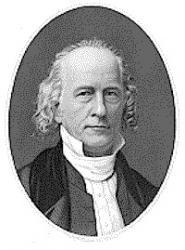
1510 - 1561 Person Name: Louis Bourgeois, c. 1510-1561 Topics: Joy, Praise and Thanksgiving; Year A Christmas 1; Year A Proper 18; Year B Christmas 1; Year C All Saints; Year C Christmas 1; Year C Easter 2; Year C Easter 5 Composer of "RENDEZ À DIEU" in Complete Anglican Hymns Old and New Louis Bourgeois (b. Paris, France, c. 1510; d. Paris, 1561). In both his early and later years Bourgeois wrote French songs to entertain the rich, but in the history of church music he is known especially for his contribution to the Genevan Psalter. Apparently moving to Geneva in 1541, the same year John Calvin returned to Geneva from Strasbourg, Bourgeois served as cantor and master of the choristers at both St. Pierre and St. Gervais, which is to say he was music director there under the pastoral leadership of Calvin. Bourgeois used the choristers to teach the new psalm tunes to the congregation. The extent of Bourgeois's involvement in the Genevan Psalter is a matter of scholar­ly debate. Calvin had published several partial psalters, including one in Strasbourg in 1539 and another in Geneva in 1542, with melodies by unknown composers. In 1551 another French psalter appeared in Geneva, Eighty-three Psalms of David, with texts by Marot and de Beze, and with most of the melodies by Bourgeois, who supplied thirty­ four original tunes and thirty-six revisions of older tunes. This edition was republished repeatedly, and later Bourgeois's tunes were incorporated into the complete Genevan Psalter (1562). However, his revision of some older tunes was not uniformly appreciat­ed by those who were familiar with the original versions; he was actually imprisoned overnight for some of his musical arrangements but freed after Calvin's intervention. In addition to his contribution to the 1551 Psalter, Bourgeois produced a four-part harmonization of fifty psalms, published in Lyons (1547, enlarged 1554), and wrote a textbook on singing and sight-reading, La Droit Chemin de Musique (1550). He left Geneva in 1552 and lived in Lyons and Paris for the remainder of his life. Bert Polman

Basil Harwood

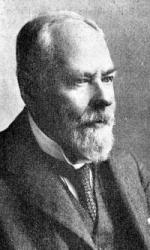
1859 - 1949 Person Name: Basil Harwood (1859-1949) Topics: Proper 5 Year C Composer of "THORNBURY" in Ancient and Modern Basil Harwood (11 April 1859 – 3 April 1949) was an English organist and composer. Basil Harwood was born in Woodhouse, Gloucestershire (the second youngest of 12 children) on 11 April 1859. His mother died in 1867 when Basil was eight. His parents were Quakers but his elder sister Ada, on reaching 21 in 1867, converted to the Anglican Church. Basil was allowed to attend the ceremony at the Church of England in Almondsbury and this is where he was first drawn to organ music and choral singing. His father, Edward, remarried two years later in 1869 to a lady from an Anglican family. Basil was now sent to the Montpellier School in Weston-super-Mare for a year. In 1871, at 12 he was enrolled in Clevedon, the preparatory school for Charterhouse where he was first to formally study music. He went up to Charterhouse in 1874 and left in 1876 having won a leaving Exhibition to Trinity College, Oxford where he initially studied Classics (1879) and Modern History (1880). He then studied for a further two years, 1881–1882, at the Leipzig Conservatory under Carl Reinecke and Salomon Jadassohn. It was here in 1882, Basil composed his first anthem for chorus and organ "O Saving Grace." He returned from Leipzig to realise that he had now passed the age limit to study music formally. In 1883, Basil became organist of St. Barnabas Church, Pimlico completing his Sonata in C# Minor here in 1885, selling the copyright to the publisher Schott for one shilling a year or two later. After this success, he then moved to Ely Cathedral in 1887 where he wrote the bulk of Dithyramb, possibly his greatest organ work. His final appointment was as organist at Christ Church, Oxford and as precentor of Keble College, Oxford from 1892 to 1909. Whilst there he co-founded and conducted the Oxford Bach Choir which helped to earn him his degree as Doctor of Music. He conducted the Oxford Orchestral Association (1892–1898). He was musical editor of the 1908 Oxford Hymn Book and Examiner for Musical Degrees (1900–1925). During this time, he met and married Mabel Ada Jennings (the daughter of George Jennings) (who had become a pupil of his in 1896) at All Souls St. Marylebone, London (27 December 1899). Mabel had studied music herself, piano and composition, and was also a writer. She may well have composed lyrics for some of his lesser known tunes. At an advanced age she wrote a small volume of collected poems named Questing Soul. He retired early at 50 (in 1909) after the death of his father, Edward Harwood, from whom he inherited the family estate of Woodhouse having outlived his seven older brothers. Soon after moving in he had a three manual chamber organ built in the library by Bishop & Sons of Ipswich (now in Minehead Parish Church), on which he promptly finished his Sonata in F# Minor. He continued to compose prolifically. He was a keen walker, and named many of his hymn tunes after local places that he loved to visit, the most notable being the hymn tunes such as Tockington, Olveston, Almondsbury and Thornbury. In 1936 advancing in years, he let the Woodhouse estate and moved to Bournemouth. Part of the estate, Woodhouse Down, was later sold to his contemporary Robert Baden-Powell who was two years older than he was and who had also attended Charterhouse School, and is used as a Scout Camp to this day. In 1939, at eighty, he moved to London, taking a flat in Fleet Street. After a long life, he died on 3 April 1949, eight days short of his 90th birthday, at Courtfield Gardens in the Royal Borough of Kensington, London. A memorial service was held in St Paul's Cathedral on 22 April 1949. Mabel survived him, dying shortly before her 103rd birthday on 20 July 1974. He was survived by two sons; Major John Edward Godfrey Harwood (1900–1996) and Basil Antony Harwood (1903–1990) Senior Master of the Supreme Court, Q.B.D. and Queen's Remembrancer. His remains are interred in St. Barnabas Church, Pimlico and marked by a plaque inset in floor of the chancel, close to where he would have stood to conduct the choir. He composed cantatas, church music and works for the organ; his Service in A flat, the anthem O how Glorious and the hymn tunes LUCKINGTON ("Let all the world in every corner sing") and THORNBURY ("Thy hand O God has guided"), first used during a festival of the London Church Choir Association, remain in the Anglican repertory. --en.wikipedia.org/wiki

Christopher M. Idle

b. 1938 Author of "Freedom and Life Are Ours" Christopher Martin Idle (b. Bromley, Kent, England, 1938) was educated at Elthan College, St. Peter's College, Oxford, and Clifton Theological College in Bristol, and was ordained in the Church of England. He served churches in Barrow-in-­Furness, Cumbria; London; and Oakley, Suffolk; and recently returned to London, where he is involved in various hymnal projects. A prolific author of articles on the Christian's public responsibilities, Idle has also published The Lion Book of Favorite Hymns (1980) and at least one hundred of his own hymns and biblical paraphrases. Some of his texts first appeared in hymnals published by the Jubilate Group, with which he is associated. He was also editor of Anglican Praise (1987). In 1998 Hope Publishing released Light Upon the River, a collection of 279 of his psalm and hymn texts, along with suggested tunes, scripture references, and commentary. Bert Polman

Alan Gray

1855 - 1935 Person Name: Alan Gray, 1855-1935 Topics: Proper 5 Year B Composer (descant) of "DARWALL'S 148TH" in Common Praise Born: December 23, 1855, York, England. Died: September 27, 1935, Cambridge, England. Buried: Trinity College, Cambridge, England. Alan Gray (23 December 1855, York – 27 September 1935, Cambridge) was a British organist and composer. Born in York, he attended St Peter's School in York and Trinity College, Cambridge. From 1883 until 1893 he was Director of Music at Wellington College. In 1893 he returned to Cambridge to be organist at Trinity College, and remained organist there until 1930. Among his compositions are liturgical music for Morning and Evening Prayer and the Office of Holy Communion for use in the Church of England according to the Book of Common Prayer, including an Evening Service in f minor, a setting of Holy Communion in G, several anthems, including 'What are these that glow from afar?', and a collection of descants to various hymn tunes, several of which are still in use today (Common Praise (2000) includes four). He also composed a number of items for organ, for violin solo, and for voice and orchestra to religious and secular texts. --en.wikipedia.org/wiki/

Gracia Grindal

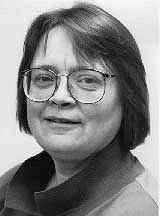
b. 1943 Topics: Year A Proper 5 Versifier of "There Was Jesus by the Water" in The New Century Hymnal Gracia Grindal (b. Powers Lake, ND, 1943). Grindal was educated at Augsburg College, Minneapolis, Minnesota; the University of Arkansas; and Luther-Northwestern Seminary, St. Paul, Minnesota, where she has served since 1984 as a professor of pastoral theology and communications. From 1968 to 1984 she was a professor of English and poet-in-residence at Luther College, Decorah, Iowa. Included in her publications are Sketches Against the Dark (1981), Scandinavian Folksongs (1983), Lessons in Hymnwriting (1986, 1991), We Are One in Christ: Hymns, Paraphrases, and Translations (1996), Good News of Great Joy: Advent Devotions for the Home (1994 with Karen E. Hong), Lina Sandell, the Story of Her Hymns (2001 with John Jansen), and A Revelry of Harvest: New and Selected Poems (2002). She was instrumental in producing the Lutheran Book of Worship (1978) and The United Methodist Hymnal (1989). Bert Polman

Edward Cooper

1770 - 1833 Person Name: Edward Cooper, 1770-1833 Topics: Year C Proper 5 Author of "Father of heaven, whose love profound" in Complete Anglican Hymns Old and New Edward Cooper, B.A. of Queen's College, and sometime Fellow of All Souls' College, Oxford, was Rector of Hamstall-Ridware from 1799 to 1833, and of Yoxall, Staffordshire, from 1809 to 1833. He published several volumes of Sermons, and edited a small Collection of Hymns. b. 1770, d. 1833. --John Julian, Dictionary of Hymnology

Nicholas Brady

1659 - 1726 Person Name: Nicholas Brady, 1659-1726 Topics: Proper 5 Year A Author of "Through all the changing scenes of life" in Common Praise Nicholas Brady, the son of an officer in the Royalist army, was born in Brandon, Ireland, 1659. He studied at Westminster School, and at Christ Church College, oxford, and graduated at Trinity College, Dublin. He held several positions in the ministry, but later in life retired to Richmond Surrey, where he established a school. Here he translated some of the Psalms. Several volumes of his sermons and smaller works were published, but his chief work, like that of his co-colabourer Tate, was the "Metrical Version of Psalms." This version was authorized by King William in 1696, and has, since that time, taken the place of the earlier translation by Sternhold and Hopkins, which was published in 1562. The whole of the Psalms, with tunes, appeared in 1698, and a Supplement of Church Hymns in 1703. Of this version, which has little poetic merit, Montgomery says "It is nearly as inanimate as the former, though a little more refined." None of the "Metrical Psalms" are to be compared with the Psalms of the Prayer Book Psalter, and very few of them are worthy a place in a collection of hymns. --Annotations of the Hymnal, Charles Hutchins, 1872.

Frederick C. Atkinson

1841 - 1896 Topics: Holy Spirit Praise and Invocation; Assurance; Christian Year Pentecost; Commitment; Consecration; Doubt; Faith; God Love for; Holy Spirit; Holy Spirit Indwelling; Holy Spirit Presence; Holy Spirit Work; Inner Life; Jesus Christ Teacher/Teachings; Love for God/Christ; Prayer; Renewal; Seeking God; Baptism of Jesus Year A; Epiphany 2 Year A; Epiphany 6 Year A; Lent 5 Year A; Proper 9 Year A; Proper 10 Year A; Proper 25 Year A; Proper 7 Year B; Proper 21 Year B; Baptism of Jesus Year C; Easter 7 Year C; Proper 22 Year C; Proper 26 Year C Composer of "MORECAMBE" in Voices United Born: Au­gust 21, 1841, Nor­wich, Nor­folk, Eng­land. Died: No­vem­ber 30, 1896, East Dere­ham, Nor­folk, Eng­land. As a boy Atkinson was a chorister and assistant organist at Norwich Cathedral. In 1867 he graduated with a Bachelor of Music degree from Cambridge and then served as organist and choirmaster in St. Luke's Church, Manningham, Bradford. He also held that position at Norwich Cathedral and at St. Mary's Parish Church in Lewisham. Atkinson wrote hymn tunes, anthems, and complete Anglican services, as well as songs and piano pieces. Psalter Hymnal Handbook, 1988

Pages


Export as CSV
It looks like you are using an ad-blocker. Ad revenue helps keep us running. Please consider white-listing Hymnary.org or getting Hymnary Pro to eliminate ads entirely and help support Hymnary.org.