You help make Hymnary.org possible. More than 10 million people from 200+ countries found hymns, liturgical resources and encouragement on Hymnary.org in 2025, including you. Every visit affirms the global impact of this ministry.

If Hymnary has been meaningful to you this year, would you take a moment today to help sustain it? A gift of any size—paired with a note of encouragement if you wish—directly supports the server costs, research work and curation that keep this resource freely available to the world.

Give securely online today, or mail a check to:
Hymnary.org
Calvin University
3201 Burton Street SE
Grand Rapids, MI 49546

Thank you for your partnership, and may the hope of Advent fill your heart.

Person Results

Topics:closing+of+service
In:person

Planning worship? Check out our sister site, ZeteoSearch.org, for 20+ additional resources related to your search.
Showing 161 - 170 of 419Results Per Page: 102050

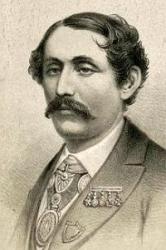
Louis M. Gottschalk

1829 - 1869 Topics: Closing of Service Hymns and Songs Composer of "MERCY" in The Hymnal for Worship and Celebration Louis Moreau Gottschalk USA 1829-1869. Born in New Orleans, LA, to a Jewish father and Creole mother, he had six siblings and half-siblings. They lived in a small cottage in New Orleans. He later moved in with relatives (his grandmother and a nurse). He played the piano from an early age and was soon recognized as a prodigy by new Orleans bourgeois establishments. He made a performance debut at the new St. Charles Hotel in 1840. At 13 he left the U.S. And went to Europe with his father, as they realized he needed classical training to fulfill his musical ambitions. The Paris Conservatory rejected him without hearing him play on the grounds of his nationality. Chopin heard him play a concert there and remarked, “Give me your hand, my child, I predict that you will become the king of pianists. Franz Liszt and Charles Valentin Alkan also recognized his extreme talent. He became a composer and piano virtuoso, traveling far and wide performing, first back to the U.S., then Cuba, Puerto Rico, Central and South America. He was taken with music he heard in those places and composed his own. He returned to the States, resting in NJ, then went to New York City. There he mentored a young Venezuelan student, Carreno, and became concerned that she succeed. He was only able to give her a few lessons, yet she would remember him fondly and play his music the rest of her days. A year after meeting Gottschalk, she performed for President Lincoln and went on to become a renowned concern pianist, earning the nickname “Valkyrie of the Piano”. Gottschalk was also interested in art and made connections with notable figures of the New York art world. He traded one of his compositions to his art friend, Frederic Church, for one of Church's landscape paintings. By 1860 Gootschalk had established himself as the best known pianist in the New World. He supported the Union cause during the Civil War and returned to New Orleans only occasionally for concerts. He traveled some 95,000 miles and gave 1000 concerts by 1865. He was forced to leave the U.S. later that year as a result of a scandelous affair with a student at Oakland Female Seminary in Oakland, CA. He never came back to the U.S. He went to South America giving frequent concerts. At one, in Rio de Janeiro, Brazil, he collapsed from yellow fever as he played a concert. He died three weeks later, never recovering from the collapse, possibly from an overdose of quinine or an abdominal infection. He was buried in Brooklyn, NY. Though some of his works were destroyed or disappeared after his death, a number of them remain and have been recorded by various artists. John Perry

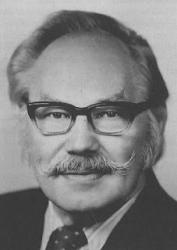
Omer Westendorf

1916 - 1997 Person Name: Omer Westendorf, b. 1916 Topics: Close of Service Author of "Sent Forth by God's Blessing" in Lutheran Worship Omer Westendorf, one of the earliest lyricists for Roman Catholic liturgical music in English, died on October 22, 1997, at the age of eighty-one. Born on February 24, 1916, Omer got his start in music publishing after World War II, when he brought home for his parish choir in Cincinnati some of the Mass settings he had discovered in Holland. Interest in the new music being published in Europe led to his creation of the World Library of Sacred Music, initially a music-importing firm that brought much of this new European repertoire to U.S. parishes. Operating out of a garage in those early years, Omer often joked about the surprised expressions of visitors who stopped by and found a wide range of sheet music in various states of “storage” (read disarray). Later, as World Library Publications, the company began publishing some of its own music, including new works with English texts by some of those same Dutch composers, for example, Jan Vermulst. In 1955 World Library published the first edition of The Peoples Hymnal, which would become the People's Mass Book in 1964, one of the first hymnals to reflect the liturgical reforms proposed by Vatican II. Omer also introduced the music of Lucien Deiss to Catholic parishes through the two volumes of Biblical Hymns and Psalms. Using his own name and several pen names, Omer composed numerous compositions for liturgical use, though his best-known works may be the texts for the hymns “Where Charity and Love Prevail,” “Sent Forth by God’s Blessing,” and especially “Gift of Finest Wheat.” As he lay dying, his family and friends gathered around his bed to sing his text “Shepherd of Souls, in Love, Come, Feed Us.” NPM honored Omer as its Pastoral Musician of the Year in 1985. --liturgicalleaders.blogspot.com/2008 =========================== Pseudonyms: Paul Francis Mark Evans J. Clifford Evers --Letter from Tom Smith, Executive Director of The Hymn Society, to Leonard Ellinwood, 6 February 1980. DNAH Archives.

Nikolaus Herman

1500 - 1561 Person Name: Nicolaus Hermann Topics: Close of Service; Worship in General Close of Service; Close of Service Composer of "[O happy day when we shall stand]" in The Lutheran Hymnary Herman, Nicolaus, is always associated with Joachimsthal in Bohemia, just over the mountains from Saxony. The town was not of importance till the mines began to be extensively worked about 1516. Whether Herman was a native of this place is not known, but he was apparently there in 1518, and was certainly in office there in 1524. For many years he held the post of Master in the Latin School, and Cantor or Organist and Choirmaster in the church. Towards the end of his life he suffered greatly from gout, and had to resign even his post as Cantor a number of years before his death. He died at Joachimsthal, May 3, 1561. (Koch, i. 390-398; Allgemeine Deutsche Biographie, xii. 186-188, &c.) He was a great friend and helper of J. Mathesius (q.v.) (who in 1532 became rector of the school, but in 1541 diaconus and in 1545 pastor of the church), and it was said that whenever Mathesius preached a specially good sermon Herman straightway embodied its leading ideas in a hymn. His hymns, however, were not primarily written for use in church, but were intended for the boys and girls in the schools, to supplant profane songs in the mouths of the young men and women, or for the daily life of the “housefathers and housemothers" in Joachimsthal, at home, and in their work in the mines. He is a poet of the people, homely, earnest, and picturesque in style; by his naiveté reminding us of Hans Sachs. He was an ardent lover of music and a very good organist. The chorales which he published with his hymns are apparently all of his own composition, and are among the best of the Reformation period. Many of Herman's hymns soon passed into Church use in Germany, and a number are found in almost all books in present use. About 190 in all, they appeared principally in:— (1) Die Sontags Evangelia uber des gantze Jar, in Gesenge verfasset, für die Kinder und christlichen Haussvetter, &c, Wittenberg, 1560 (dedication by Herman dated Trinity Sunday, 1559), with 101 hymns and 17 melodies. The best are those interspersed specially meant for children and not directly founded on the Gospel for the day. (2) Die Historien von der Sindfludt, Joseph, Mose, Helia, Elisa und der Susanna, sampt etlichen Historien aus den Evangelisten, &c., Wittenberg, 1562 (preface by Herman dated St. Bartholomew's Day, 1560), with 73 hymns and 20 melodies. In this case also the general hymns are the best. A selection of 60 (really 61) of his hymns, with a memoir by K. F. Ledderhose, was published at Halle, 1855. One of Herman's hymns is noted under “Wenn mein Stündlein vorhanden ist." The others which have passed into English are:— i. Bescher uns, Herr, das täglioh Brod. Grace before Meat. 1562, as above, and thence in Wackernagel, iii. p. 1228, in 6 stanzas of 4 lines; in Ledderhose, p. 70; and in the Berlin Geistliche Lieder, ed. 1863, No. 1133. Translated as:— 1. Thou art our Father and our God. This, by P. H. Molther, a translation of stanza vi., as No. 180 in the Moravian Hymn Book, 1789 (1849, No. 220, st. v.). 2. As children we are owned by Thee, a translation of stanza vi., as st. iii. of No. 191 in the Moravian Hymn Book, 1801 (1849, No. 220, stanza iii.). ii. Die helle Sonn leucht jetzt herfür. Morning. 1560, as above, and thence in Wackernagel, iii. p. 1184, in 4 stanzas of 4 lines, in Ledderhose, p. 87; and in the Unverfälschter Liedersegen, 1851, No. 450. Translated as:— The morning beam revives our eyes, a good and full translation by. A. T. Russell, as No. 71 in the Dalston Hospital Hymn Book 1848. iii. Erschienen ist der herrliche Tag. Easter. 1560, as above, in 14 stanzas of 4 lines, entitled, "A new Spiritual Song of the Joyful Resurrection of our Saviour Jesus Christ; for the maidens of the girls' school in Joachimsthal”; and thence in Wackernagel, iii. p. 1175; in Ledderhose p. 23, and Unverfälschter Liedersegen, 1851, No. 134. It has reminiscences of the "Erstanden ist der heil'ge Christ". Translated as:— The day hath dawn'd—-the day of days, a good translation by A. T. Russell of stanzas i., ii., xiii., xiv., as No. 113 in his Psalms & Hymns, 1851. Another tr. is, "At length appears the glorious day," by Dr. G. Walker, 1860, p. 28. iv. Hinunter ist der Sonnen Schein. Evening. 1560, as above, and thence in Wackernagel, iii. p. 1184, in 4 stanzas of 4 lines; in Ledderhose, p. 88; and in the Unverfälschter Liedersegen1851, No. 523. Some of the phrases may have been suggested by the "Christe qui lux es et dies" (q. v.). Translated as:— 1. Sunk is the sun's last beam of light, a full and good translation by Miss Cox in her Sacred Hymns from the German, 1841, p. 57. Included in Alford's Psalms & Hymns, 1844, and Tear of Praise, 1867; in Dale's English Hymn Book, 1875; in the Pennsylvania Lutheran Church Book, 1868, and others. It is also given considerably altered and beginning, "Sunk is the Sun! the daylight gone," in W. J. Blew's Church Hymn and Tune Book, 1851-55. 2. The happy sunshine all is gone, in full, by Miss Winkworth in her Lyra Germanica, 1st Ser., 1855, p. 225; repeated in her Chorale Book for England, 1863, and the Ohio Lutheran Hymnal, 1880. Other translations are: (1) "Did I perhaps Thee somewhat grieve," a translation of stanza iii. in the Moravian Hymn Book, 1789, No. 756. In the 1801 and later eds. (1886, No. 1181, st. iii.), it begins, "Where'er I Thee this day did grieve." (2) "The sun’s fair sheen is past and gone," by H. J. Buckoll, 1842, p. 68. (3) "The sun hath run his daily race," by Lady E. Fortescue, 1843, p. 14. v. Lobt Gott, ihr Christen alle gleich. Christmas. Written c. 1554, but first published 1560 as above, as the first of "Three Spiritual Christmas Songs of the new-born child Jesus, for the children in Joachimsthal." Thence in Wackernagel iii. p. 1169, in 8 stanzas of 4 lines; in Ledderhose, p. 1; and in the Unverfälschter Liedersegen, 1851, No. 47. It is one of the most popular German Christmas hymns. The melody set to it in 1560 is also by Herman; in 1554 to his "Kommt her ihr liebsten Schwesterlein" [in the Hymnal Companioncalled "St. George's (old)"]. Translated as :— 1. Let all together praise our God, a good translation of stanzas i., iii., vi., viii., by A. T. Russell, as No. 52 in his Psalms & Hymns, 1851. Repeated in Kennedy, 1863, adding a translation of st. ii., and beginning, "Let all creation praise our God." 2. Praise ye the Lord, ye Christians I yea, in full, by E. Cronenwett, as No. 31 in the Ohio Lutheran Hymnal 1880. Other translations are: (1) "A wondrous change He with us makes," a tr. of stanza viii., ix. as No. 438 in pt. i. of the Moravian Hymn Book, 1754, repeated 1789-1826. (2) "Come, brethren, lets the song arise," by Dr. G. Walker, 1860, p. 26. (3) "Praise God, now Christians, all alike," by Miss Manington, 1864, p. 9. (4) "Praise God, upon His throne on high," in the Sunday Magazine, 1874, p. 384, signed "P. J." The hymn “Shepherds rejoice, lift up your eyes," given by J. C. Jacobi in his Psalmodia Germanica, 1722, p. 8, to Herman's melody (which was first published 1554) is, as stated in his Preface, taken from Bk. i. of Isaac Watts's Horse Lyricae vi. So wahr ich leb, spricht Gott der Herr. Absolution. 1560, as above, in 11 stanzas of 4 lines, entitled "A hymn on the power of the keys and the virtue of holy absolution; for the children in Joachimsthal." Thence in Wackernagel, iii. p. 1183; in Ledderhose, p. 47; and the Unverfälschter Liedersegen, 1851, No. 429. It probably suggested the better known hymn, "So wahr ich lebe," q. v., by Johann Heermann. Translated as:— Yea, as I live, Jehovah saith, I do not wish the sinner's death, in full, by Dr. M. Loy, as No. 245, in the Ohio Lutheran Hymnal, 1880. [Rev. James Mearns, M.A.] --John Julian, Dictionary of Hymnology (1907)

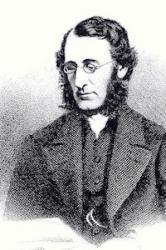
John Hampden Gurney

1802 - 1862 Person Name: John Hampden Gurney, 1802 - 62 Topics: The Church Worship - The Close of Service Author of "Ye holy angels bright" in Service Book and Hymnal of the Lutheran Church in America Gurney, John Hampden, M.A., eldest son of Sir John Gurney, a Baron of the Exchequer, was born in Serjeants’ Inn, London, Aug. 15, 1802, and educated at Trinity College, Cambridge, where he graduated in 1824. On taking Holy Orders he became Curate of Lutterworth (1827-1844), and subsequently Rector of St. Mary's, Marylebone, and Prebendary of St. Paul's Cathedral. He died in London, March 8, 1862. The Society for Promoting Christian Knowledge and other religious societies had his cordial sympathy, and received his active support. His publications include several small volumes in prose, and the following:— (1) Church Psalmody; Hints for the improvement of a Collection of Hymns published by the Society for Promoting Christian Knowledge, 1853; (2) A Collection of Hymns for Public Worship. Lutterworth, 1838. This contains 300 hymns, and is known as his Lutterworth Collection; (3) Psalms and Hymns for Public Worship, selected for some of the Churches of Marylebone. London, 1851. This collection of 300 hymns and psalm versions is known as his Marylebone Collection. The Preface is signed by "Charles Baring," "Thomas Garnier," and "John Hampden Gurney," but the work was practically done by Gurney. To the Lutterworth Collection 1838, he contributed :— 1. Earth to earth, and dust to dust. Burial. 2. Great King of nations, hear our prayer. Fast Day. 3. Lord, as to Thy dear Cross we flee. Lent. 4. Lord, at Thy word the constant sun. Harvest. 5. Saviour, what wealth was Thine. Passiontide. 6. Soon to the dust we speed. Heaven anticipated. 7. Thou God of mercy and of might. Good Friday. 8. Thou plenteous source of light and love. Advent. 9. Thou Who of old didst raise. Ascension. 10. Through centuries of sin and woe. For Peace. 11. We praise Thee, everlasting God. Te Deum. These hymns were all signed "J. H. G.," and Nos. 1, 2, 3, 7, 8, 9 and 11, were repeated in the Marylebone Collection, 1851; and to these were added:— 12. Fair waved the golden corn. Child's Hymn. 13. How vast the debt we owe. Offertory. 14. Lord of the Harvest, Thee we hail. Harvest. This is No. 4 above rewritten. 15. Lord, we lift our eyes above. Love of Christ. In addition to these we are specially indebted to Gurney for, "We saw Thee not when Thou didst come" (q.v.), and "Yes, God is good," &c. (q.v.). Several of the above-named hymns are in extensive use in Great Britain and America. The most popular are annotated under their respective first lines. -- John Julian, Dictionary of Hymnology (1907)

James Walch

1837 - 1901 Topics: Close of Service Composer of "SAWLEY" in Christian Youth Hymnal James Walch was a musician and composer, born near Bolton, Lancashire, England in 1837. He spent his early life in the town and was organist in several churches there, including the parish church of St George’s. From 1870-1877, he was conductor for the Bolton Philharmonic Society. He also composed at least four published hymn tunes, the best known of which is called “Tidings”. Written in 1875, it’s usually used as the tune to a hymn called “O Zion Haste”. James Walch was a musical instrument dealer by trade, and moved to Barrow-in-Furness in 1877. He later moved to Llandudno Junction in North Wales, where he died in August 1901 and was buried locally. His wife later donated money to pay for the organs in two local churches, St Paul's Llandudno and All Saints Deganwy, in his memory. Three decades later, an article in the London Gazette reported on a dispute arising from his will, and mentioned that he had a son, Harry West Walch, who was a pianist and lived in Hereford. St Paul's Church, Llandudno newsletter; used by permission of Christ Dearden (Walch's wife paid for the organ at St. Paul's Church)

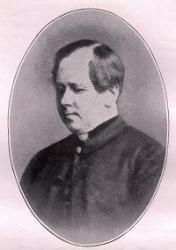
James Drummond Burns

1823 - 1864 Person Name: James D. Burns Topics: Close of Service Author of "Still, still with thee, my God" in The New Laudes Domini Burns, James Drummond, M.A., was born at Edinburgh, February 18, 1823. He studied and graduated M.A. at the University of Edinburgh. In 1845 he became Free Church minister of Dunblane, but resigned through failing health, in 1848, and took charge of the Presbyterian Church at Funchal, Madeira. In 1855 he became minister of Hampstead Presbyterian Church, London. Died at Mentone, Nov. 27, 1864, and was buried in Highgate Cemetery, London. His hymns appeared in:— (l) The Vision of Prophecy: and other Poems (Edin., Edmonston and Douglas). This was originally published in 1854, and enlarged in 1858. The Poems are distinguished by vivid colouring and poetic imagination, along with directness, delicacy of execution, pensive sweetness, and tenderness. They have never however become widely popular. Included are 29 "Hymns and Meditations," many of which rank among the very best of our modern hymns for beauty, simplicity of diction, and depth of religious feeling. (2) The Evening Hymn (Lond., T. Nelson & Sons), 1857. This consists of an original hymn and an original prayer for every evening in the month— 31 in all. The Hymns and Prayers alike are characterised by reverence, beauty, simplicity, and pathos. Some of the hymns in this volume are now well known; e.g. "Still with Thee, 0 my God," "Hushed was the evening hymn," "As helpless as a child who clings." (3) Memoir and Remains of the late Rev. James D. Burns, M.A., of Hampstead. By the late Rev. James Hamilton, D.D. (London, J. Nisbet & Co.), 1869. Besides 13 Sermons and the Memoir, this work includes 40 “Hymns and Miscellaneous Pieces." A number of these had appeared in periodicals. Some of them are very good though not equal to those previously published. Also 39 translations of German hymns, which appeared in the Family Treasury, &c., are rendered exactly in the metres of the originals and many had not previously been translated. The translations are generally very good. (4) Burns also wrote the article Hymn in the 8th edition of the Encyclopedia Britannica. [Rev. James Mearns, M.A.] -- John Julian, Dictionary of Hymnology (1907) ===================== Burns, James Drummond, p, 197, i. Additional hymns in common use are:— 1. Not, Lord, unto that mount of dread. Safety in Christ. From Vision of Prophecy, 1st ed., 1854, p. 266. 2. O Thou whose tender [sacred] feet have trod. Resignation. From Vision of Prophecy, 1st ed., 1854, p. 227. 3. Thou, Lord, art love, and everywhere. Divine Love. From Vision of Prophecy, 2nd ed., 1858, p. 275. --John Julian, Dictionary of Hymnology, Appendix, Part II (1907) See also in: Hymn Writers of the Church

Ignaz Pleyel

1757 - 1831 Person Name: Ignace Pleyel Topics: Close of Service Arr. from of "ST. POLYCARP" in The New Baptist Praise Book Ignaz Joseph Pleyel; b. Ruppertstahl, near Vienna, 1757; d. Parice France, 1831 Evangelical Lutheran Hymnal, 1908

H. W. Baker

1821 - 1877 Person Name: Sir H. W. Baker Topics: Close of Service Author of "Lord, Thy word abideth" in The Lutheran Hymnary Baker, Sir Henry Williams, Bart., eldest son of Admiral Sir Henry Loraine Baker, born in London, May 27, 1821, and educated at Trinity College, Cambridge, where he graduated, B.A. 1844, M.A. 1847. Taking Holy Orders in 1844, he became, in 1851, Vicar of Monkland, Herefordshire. This benefice he held to his death, on Monday, Feb. 12, 1877. He succeeded to the Baronetcy in 1851. Sir Henry's name is intimately associated with hymnody. One of his earliest compositions was the very beautiful hymn, "Oh! what if we are Christ's," which he contributed to Murray's Hymnal for the Use of the English Church, 1852. His hymns, including metrical litanies and translations, number in the revised edition of Hymns Ancient & Modern, 33 in all. These were contributed at various times to Murray's Hymnal, Hymns Ancient & Modern and the London Mission Hymn Book, 1876-7. The last contains his three latest hymns. These are not included in Hymns Ancient & Modern. Of his hymns four only are in the highest strains of jubilation, another four are bright and cheerful, and the remainder are very tender, but exceedingly plaintive, sometimes even to sadness. Even those which at first seem bright and cheerful have an undertone of plaintiveness, and leave a dreamy sadness upon the spirit of the singer. Poetical figures, far-fetched illustrations, and difficult compound words, he entirely eschewed. In his simplicity of language, smoothness of rhythm, and earnestness of utterance, he reminds one forcibly of the saintly Lyte. In common with Lyte also, if a subject presented itself to his mind with striking contrasts of lights and shadows, he almost invariably sought shelter in the shadows. The last audible words which lingered on his dying lips were the third stanza of his exquisite rendering of the 23rd Psalm, "The King of Love, my Shepherd is:"— Perverse and foolish, oft I strayed, But yet in love He sought me, And on His Shoulder gently laid, And home, rejoicing, brought me." This tender sadness, brightened by a soft calm peace, was an epitome of his poetical life. Sir Henry's labours as the Editor of Hymns Ancient & Modern were very arduous. The trial copy was distributed amongst a few friends in 1859; first ed. published 1861, and the Appendix, in 1868; the trial copy of the revised ed. was issued in 1874, and the publication followed in 1875. In addition he edited Hymns for the London Mission, 1874, and Hymns for Mission Services, n.d., c. 1876-7. He also published Daily Prayers for those who work hard; a Daily Text Book, &c. In Hymns Ancient & Modern there are also four tunes (33, 211, 254, 472) the melodies of which are by Sir Henry, and the harmonies by Dr. Monk. He died Feb. 12, 1877. --John Julian, Dictionary of Hymnology (1907)

Sarah Doudney

1841 - 1926 Topics: Times and Seasons At the Close of Service Author of "Saviour, now the day is ending" in Common Service Book of the Lutheran Church Doudney, Sarah, daughter of Mr. George E. Doudney, of Cosham, Hants, was born near Portsmouth, but removed into a remote village in Hampshire at an early age. Her first efforts in literature were made when she was quite young, her poem, "The Lessons of the Water-Mill," a popular song, especially in America, having been written when she was only fifteen. Known mainly to the reading public through her stories, A Woman's Glory, Stepping Stones, and others, and through her contributions to the Sunday Magazine, Good Words, and other serials, her works, including fiction, and sacred and secular poems, have been widely read and appreciated. Her sacred poems are the least numerous of her writings. Some of these, as, "The Master hath come, and He calls us to follow," and "Saviour, now the day is ending," for use at the close of Evening Service, and of more than usual merit, create the desire for more of a like kind. Greater use, however, may be made of what she has written than has been done. By being buried in magazine literature, her hymns are somewhat difficult to trace. Her Psalms of Life was published by Houlston in 1871. In the Sunday School Union Songs of Gladness, 1871, the following were given;— 1. He hath gone into His garden. The Vineyard of the Lord. 2. In Thy holy garden ground. The Vineyard of the Lord. 3. Land of peace, and love, and brightness. Heaven. 4. Saviour, now the day is ending. Sunday Evening. 5. The Master hath come, and He calls us to follow. Jesus and Mary of Bethany. 6. We praise our Lord to-day. Sunday. 7. We sing a loving Jesus. Praise of Jesus. Of these, Nos. 1, 2, 3, are in her Psalms of Life, 1871, and all have passed from the Songs of Gladness into other collections. Her:— 8. Room for the wanderer, room. Christ's Invitation. is in W. B. Stevenson's School Hymnal, 1880. -- John Julian, Dictionary of Hymnology (1907) ================== Doudney, Sarah, p. 307, i. Other hymns in common use:— 1. For all Thy care we bless Thee. Morning. 2. Lord of the golden harvest. Harvest. 3. Now the solemn shadows darken. Evening. Nos. 1, 2, are from Miss Doudney's Psalms of Life, 1871, and No. 3 is in Mrs. Brock's Children's Hymn Book, 1881. --John Julian, Dictionary of Hymnology, Appendix, Part II (1907)

Edward Henry Bickersteth

1825 - 1906 Person Name: Edward H. Bickersteth, 1825-1906 Topics: Peace Spiritual; Service Music Closing Sentences; Service Music Response to Prayer; The Christian Way of Life Peace and Contentment Author of "Peace, Perfect Peace" in Worship and Service Hymnal Bickersteth, Edward Henry, D.D., son of Edward Bickersteth, Sr. born at Islington, Jan. 1825, and educated at Trinity College, Cambridge (B.A. with honours, 1847; M.A., 1850). On taking Holy Orders in 1848, he became curate of Banningham, Norfolk, and then of Christ Church, Tunbridge Wells. His preferment to the Rectory of Hinton-Martell, in 1852, was followed by that of the Vicarage of Christ Church, Hampstead, 1855. In 1885 he became Dean of Gloucester, and the same year Bishop of Exeter. Bishop Bickersteth's works, chiefly poetical, are:— (l) Poems, 1849; (2) Water from the Well-spring, 1852; (3) The Rock of Ages, 1858 ; (4) Commentary on the New Testament, 1864; (5) Yesterday, To-day, and For Ever, 1867; (6) The Spirit of Life, 1868; (7) The Two Brothers and other Poems, 1871; (8) The Master's Home Call, 1872 ; (9) The Shadowed Home and the Light Beyond, 1874; (10) The Beef and other Parables, 1873; (11) Songs in the House of Pilgrimage, N.D.; (12) From Year to Year, 1883. As an editor of hymnals, Bp. Bickersteth has also been most successful. His collections are:— (1) Psalms & Hymns, 1858, based on his father's Christian Psalmody, which passed through several editions; (2) The Hymnal Companion, 1870; (3) The Hymnal Companion revised and enlarged, 1876. Nos. 2 and 3, which are two editions of the same collection, have attained to an extensive circulation.   [Ch. of England Hymnody.] About 30 of Bp. Bickersteths hymns are in common use. Of these the best and most widely known are:—" Almighty Father, hear our cry"; "Come ye yourselves apart and rest awhile"; "Father of heaven above"; "My God, my Father, dost Thou call"; "O Jesu, Saviour of the lost"; "Peace, perfect peace"; "Rest in the Lord"; "Stand, Soldier of the Cross"; " Thine, Thine, for ever"; and "Till He come.” As a poet Bp. Bickersteth is well known. His reputation as a hymn-writer has also extended far and wide. Joined with a strong grasp of his subject, true poetic feeling, a pure rhythm, there is a soothing plaintiveness and individuality in his hymns which give them a distinct character of their own. His thoughts are usually with the individual, and not with the mass: with the single soul and his God, and not with a vast multitude bowed in adoration before the Almighty. Hence, although many of his hymns are eminently suited to congregational purposes, and have attained to a wide popularity, yet his finest productions are those which are best suited for private use. -John Julian, Dictionary of Hymnology (1907) ================= Bickersteth, Edward Henry, p. 141, ii. Bishop Bickersteth's 1890 edition of his Hymnal Companion is noted on p. 1312, i., and several of his own hymns and translations, which appear therein for the first time, are annotated in this Appendix. One of these, "All-merciful, Almighty Lord," for the Conv. of St. Paul, was written for the 1890 edition of Hymnal Companion. --John Julian, Dictionary of Hymnology, Appendix, Part II (1907) ================== Bickersteth, B. H., p. 141, ii. Bp. Bickersteth died in London, May 16, 1906. --John Julian, Dictionary of Hymnology, New Supplement (1907)

Pages


Export as CSV
It looks like you are using an ad-blocker. Ad revenue helps keep us running. Please consider white-listing Hymnary.org or getting Hymnary Pro to eliminate ads entirely and help support Hymnary.org.