You help make Hymnary.org possible. More than 10 million people from 200+ countries found hymns, liturgical resources and encouragement on Hymnary.org in 2025, including you. Every visit affirms the global impact of this ministry.

If Hymnary has been meaningful to you this year, would you take a moment today to help sustain it? A gift of any size—paired with a note of encouragement if you wish—directly supports the server costs, research work and curation that keep this resource freely available to the world.

Give securely online today, or mail a check to:
Hymnary.org
Calvin University
3201 Burton Street SE
Grand Rapids, MI 49546

Thank you for your partnership, and may the hope of Advent fill your heart.

Person Results

Topics:doubts
In:person

Planning worship? Check out our sister site, ZeteoSearch.org, for 20+ additional resources related to your search.
Showing 161 - 170 of 370Results Per Page: 102050

Claude Goudimel

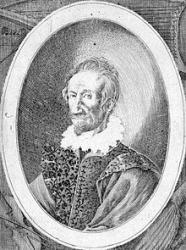
1514 - 1572 Topics: Doubt; Doubt Harmonizer of "GENEVAN 77" in Psalter Hymnal (Gray) The music of Claude Goudimel (b. Besançon, France, c. 1505; d. Lyons, France, 1572) was first published in Paris, and by 1551 he was composing harmonizations for some Genevan psalm tunes-initially for use by both Roman Catholics and Protestants. He became a Calvinist in 1557 while living in the Huguenot community in Metz. When the complete Genevan Psalter with its unison melodies was published in 1562, Goudimel began to compose various polyphonic settings of all the Genevan tunes. He actually composed three complete harmonizations of the Genevan Psalter, usually with the tune in the tenor part: simple hymn-style settings (1564), slightly more complicated harmonizations (1565), and quite elaborate, motet-like settings (1565-1566). The various Goudimel settings became popular throughout Calvinist Europe, both for domestic singing and later for use as organ harmonizations in church. Goudimel was one of the victims of the St. Bartholomew's Day massacre of Huguenots, which oc­curred throughout France. Bert Polman

Frank M. Davis

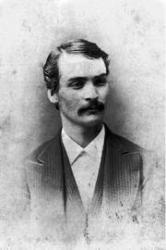
1839 - 1896 Person Name: Frank M. Davis, 1839-1897 Topics: Doubt Author of "Alone in prayer" in The Sunday School Hymnal Frank Marion Davis USA 1839-1896. Born at Marcellus, NY, he became a teacher and professor of voice, a choirmaster and a good singer. He traveled extensively, living in Marcellus, NY, Vicksburg, MS, Baltimore, MD, Cincinnati, OH, Burr Oak and Findley, MI. He compiled and published several song books: “New Pearls of Song” (1877), “Notes of Praise” (1890), “Crown of gold” (1892), “Always welcome” (1881), “Songs of love and praise #5” (1898), “Notes of praise”, and “Brightest glory”. He never married. John Perry

Chas. H. Gabriel

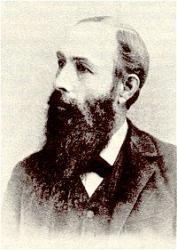
1856 - 1932 Person Name: Charles H. Gabriel, 1856-1932 Topics: Doubt Composer of "ASPINWALL" in Trinity Psalter Hymnal Pseudonyms: C. D. Emerson, Charlotte G. Homer, S. B. Jackson, A. W. Lawrence, Jennie Ree ============= For the first seventeen years of his life Charles Hutchinson Gabriel (b. Wilton, IA, 1856; d. Los Angeles, CA, 1932) lived on an Iowa farm, where friends and neighbors often gathered to sing. Gabriel accompanied them on the family reed organ he had taught himself to play. At the age of sixteen he began teaching singing in schools (following in his father's footsteps) and soon was acclaimed as a fine teacher and composer. He moved to California in 1887 and served as Sunday school music director at the Grace Methodist Church in San Francisco. After moving to Chicago in 1892, Gabriel edited numerous collections of anthems, cantatas, and a large number of songbooks for the Homer Rodeheaver, Hope, and E. O. Excell publishing companies. He composed hundreds of tunes and texts, at times using pseudonyms such as Charlotte G. Homer. The total number of his compositions is estimated at about seven thousand. Gabriel's gospel songs became widely circulated through the Billy Sunday­-Homer Rodeheaver urban crusades. Bert Polman

Communauté de Taizé

Person Name: The Community of Taize Topics: Doubt Author of "Psalm 37:1-11, 39-40 (A Responsorial Reading)" in Psalms for All Seasons

Annabel Morris Buchanan

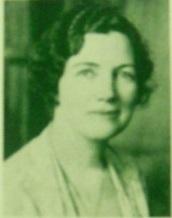
1888 - 1983 Topics: Doubts Harmonizer of "LAND OF REST" in The Worshiping Church Born: October 22, 1888, Groesbeck, Texas. Died: January 6, 1983, Paducah, Kentucky. Buried: Round Hill Cemetery, Marion, Virginia. Daughter of William Caruthers Morris and Anna Virginia Foster, and wife of John Preston Buchanan, Anna received her musical training at the Landon Conservatory of Music, Dallas, Texas (to which she received a scholarship at age 15); the Guilmant Organ School, New York; and studying with Emil Liebling, William Carl, and Cornelius Rybner, among others. She taught music in Texas; at Halsell College, Oklahoma (1907-08); and at Stonewall Jackson College, Abingdon, Virginia (1909-12). In 1912, she married John Preston Buchanan, a lawyer, writer, and senator, from Marion, Virginia; they moved to their home, Roseacre, in Marion, where they had four children. Buchanan served as president of the Virginia Federation of Music Clubs in 1927, and helped organize the first Virginia State Choral Festival in 1928, and White Top Folk Festivals (1931-41). After her husband’s death in 1937, she sold Roseacre and moved to Richmond, Virginia, with her two youngest children. She taught music theory and composition and folk music at the University of Richmond (1939-40); during the summers, at the New England Music Camp, Lake Messalonskee, Oakland, Maine (1938-40); and at the Huckleberry Mountain Artists Colony near Hendersonville, North Carolina, in 1941. She later moved to Harrisonburg, Virginia, and taught at Madison College (1944-48). In 1951, she moved to Paducah, Kentucky. She later became the archivist of the folk music collecting project of the National Federation of Music Clubs, serving until 1963. Buchanan’s works include: Folk-Hymns of America (New York: J. Fischer, 1938) American Folk Music, 1939 Sources: Findagrave, accessed 15 Nov 2016 Hughes, pp. 329-30 Hustad, p. 213 © The Cyber Hymnal™. Used by permission. (www.hymntime.com

Jacques Berthier

1923 - 1994 Topics: Doubts; Doubts Author of "Lord, Jesus Christ, Your Light shines (Jésus le Christ)" in Worship and Song Jacques Berthier (b. Auxerre, Burgundy, June 27, 1923; d. June 27, 1994) A son of musical parents, Berthier studied music at the Ecole Cesar Franck in Paris. From 1961 until his death he served as organist at St. Ignace Church, Paris. Although his published works include numerous compositions for organ, voice, and instruments, Berthier is best known as the composer of service music for the Taizé community near Cluny, Burgundy. Influenced by the French liturgist and church musician Joseph Gelineau, Berthier began writing songs for equal voices in 1955 for the services of the then nascent community of twenty brothers at Taizé. As the Taizé community grew, Berthier continued to compose most of the mini-hymns, canons, and various associated instrumental arrangements, which are now universally known as the Taizé repertoire. In the past two decades this repertoire has become widely used in North American church music in both Roman Catholic and Protestant traditions. Bert Polman

John Reynell Wreford

1800 - 1891 Person Name: John R. Wreford Topics: Doubt Author of "Lord, I believe; Thy power I own" in The Hymnal Wreford, John Reynell, an English Unitarian minister, was born December 12, 1800, at Barnstaple; educated at Manchester College, and in 1826 became pastor of a Church in Birmingham. In 1831, on account of the failure of his voice, he withdrew from the active work of the ministry and, in conjunction with Rev. Hugh Hutton, established a school at Edgbaston. He wrote a History of Presbyterian Nonconformity in Birmingham, 1832, and Lays of Loyalty, 1837. He contributed fifty-five hymns to Rev. J. R. Beard's Collection, 1837. His most popular and valuable hymn is the one given in this book. The last years of his life were spent in retirement at Bristol, where he died in 1891. —Hymn Writers of the Church by Charles Nutter ================= Wreford, John Keynell, D.D., born Dec. 12, 1800, educated at Manchester College, York, and in 1826 succeeded the Rev. James Yates as co-pastor to the Rev. John Kentish at the New Meeting, Birmingham. In 1830 he published a translation of Cellerier's Discourse on the Authenticity and Divine Origin of the Old Testament. In the following year, in consequence of failure of voice, he withdrew from the Ministry, and in conjunction with the Rev. Hugh Hutton, Minister of the Old Meeting, opened a school at Edgbaston. In 1832 he published a Sketch of the History of Presbyterian Nonconformity in Birmingham; and in 1837, Lays of Loyalty, in celebration of the Queen's accession. He also contributed, in 1837, to the Rev. J. R. Beard's Collection of Hymns for Public and Private Worship 55 hymns, of which the following are still in common use:— 1. God of the ocean, earth, and sky. God seen in His Works. In various collections, including those by Page Hopps, G. Dawson, and others. 2. Lord, I believe; Thy power I own. For increase of Faith. In Martineau's Hymns, &c, 1840. 3. Lord, while for all mankind we pray. National Hymn. This is in a large number of collections of various denominations, and is by far the most popular of his hymns. Sometimes it begins with stanza iii., "O! guard our shores from every foe." 4. When my love to Christ[God]grows weak. Passiontide. In Longfellow and Johnson's Unitarian Hymns of the Spirit, Boston, U. S. A., 1864, "When my love to God grows weak." This is repeated in Martineau's Hymns, &c, 1873. Dr. Wreford was also the author of several volumes of verse, chiefly devotional. The latter years of his life he spent in retirement at Bristol, and died there in 1881. [Rev. Valentine D. Davis, B.A.] -- John Julian, Dictionary of Hymnology (1907)

L. Tuttiett

1825 - 1897 Person Name: Lawrence Tuttiett Topics: Doubt Author of "O grant us light, that we may know" in The Hymnal Laurence Tuttiett was born at Colyton, Devon, in 1825; was educated at Christ Hospital, and at King's College, London; ordained Deacon, 1848, Priest, 1849; entered upon the living of Lea Marston, Coleshill, 1854, and subsequently was appointed Curate of S. Paul's, Knightsbridge, London. He is the author of several volumes and tracts. --Annotations of the Hymnal, Charles Hutchins, M.A. 1872. ================== Tuttiett, Lawrence, son of John Tuttiett, surgeon in the R.N., was born at Cloyton, Devonshire, in 1825, and educated at Christ's Hospital, and King's College, London. It was originally purposed that he should follow the medical profession, but, abandoning it for the ministry, he took Holy Orders in 1848. In 1854 he became vicar of Lea Marston, Warwickshire; and in 1870 incumbent of the Episcopal Church of St. Andrews, Scotland. He was also preferred to a prebendaryship in St. Ninian's Cathedral, Perth, in 1880. He is the author of several manuals of prayers, published by the Society for Promoting Christian Knowledge and other prose works, and also of:— (1) Hymns for Churchmen, 1854; (2) Counsels of a Godfather, 1861; (3) Hymns for the Children of the Church, 1862; (4) Germs of Thought on the Sunday Services, 1864; (5) Through the Clouds; Thoughts in Plain Verse, 1866. From those works and other sources the following hymns have come into common use:— 1. As calmly in the glowing west. Evening. 2. Come, our Father's voice is calling. Confirmation. Appeared in his Hymns for the Children of the Church, 1862, in 6 stanzas of 4 lines. It passed into Mrs. C. Brock's Children's Hymn Book, 1881. 3. Grant us Thy light that we may know. Divine Guidance. Included in his Germs of Thought, &c, 1864, in 6 stanzas of 4 lines. In Horder's Congregational Hymn Book, 1884; the Universal Hymn Book, 1885, it begins, “O grant us light that we may know." 4. I come, 0 Father kind. Holy Communion. 5. Lo, like a bride, in pure array. Septuagesima. 6. No sign we ask from heaven above. After Holy Baptism. Published in his Hymns for Churchmen, 1854, in 4 stanzas of 6 lines. It has passed into several collections, includ¬ing the S. P. C. K. Church Hymns, 1871, Thring's Collection, 1882, &c. 7. Now, eternal Father, bless. Holy Baptism. In his Hymns for the Children of the Church, 1862, in 3 stanzas of 6 lines, and Mrs. Brock's Children's Hymn Book, 1881. In the latter it is attributed to Bishop Maclagan in error. 8. 0 happy Christian children. Divine Protection. From his Hymns for the Children of the Church, 1862, into Mrs. Brock's Children's Hymn Book, 1881, &c. 9. 0 Jesu, ever present. The Good Shepherd. Published in his Germs of Thought, 1864; the S. P.C. K. Church Hymns, 1871, and many others. 10. Shepherd, good and gracious. The Good Shepherd. In his Hymns for the Children of the Church, 1862; Mrs. Brock's Children's Hymn Book, 1881, &c. 11. Sometimes o'er our pathway. In time of Trouble. From his Hymns for the Children of the Church, 1862, in 3 st. of 8 1., into Mrs. Brock's Children's Hymn Book, 1881. 12. When the world is brightest. Litany to the Saviour. Published in his Through the Clouds, &c, 1866, in 10 stanzas of 8 lines, with the note :—"Those words were written for the music of a Roman Litany 'Ave Stella Maria.'" This Litany is in extensive use. 13. Who is this? the long expected. Advent. In addition to these, several of Mr. Tuttiett's hymns are annotated under their respective first lines, the most popular of which are, "Father, let me dedicate"; "Go forward, Christian soldier"; and "0 quickly come, dread Judge of all." Mr. Tuttiett's hymns are characterised by smoothness of rhythm, directness of aim, simplicity of language, and deep earnestness. Those for special services and seasons are of great merit. He died May 21, 1897. -- John Julian, Dictionary of Hymnology (1907) ================== Tuttiett, L., p. 1188, ii. He was born at Colyton, not Cloyton, Devonshire, in 1825. His hymns "As now Thy children lowly kneel (For the Young), and "Give light. O Lord, that we may learn" (The Light of Life) are in Hymns Ancient & Modern, 1904. --John Julian, Dictionary of Hymnology, New Supplement (1907) ===================== See also in: Hymn Writers of the Church

Edward F. Rimbault

1816 - 1876 Person Name: Edward F. Rimbault, 1816-1876 Topics: Assurance in Doubt Composer of "RUTHERFORD" in The Covenant Hymnal Edward Francis Rimbault PhD LLD United Kingdom 1816-1876. Born in Soho, London, England, son of an organist and composer of French descent, he was taught music by his father., Samuel Wesley, and Wiliam Crotch. At age 16 he became organist of the Swiss Church in Soho. He later became organist at various churches, including St Peter’s, Vere Street, and St John’s Wood Presbyterian Church. He edited many collections of music, journals, and publications of music, and arranged music compositions. In addition to editing or arranging contemporary operas, he had a strong interest in editing or arranging earlier English music. He studied the musical treatises in the library of Archbishop Tenison, one of the oldest public libraries in London. In 1838, At age 22 he began lecturing about the history of English music, and was in much demand due to the interest aroused. He did editorial work for the Percy Society, the Camden Society, the Motet Society, and the Handel Society. For the latter he edited the “Messiah”, “Saul”, and “Samson” He was elected a Fellow of the Society of Antiquaries, and was granted membership in the Academy of Music in Stockholm, Sweden. Gottingen University also conferred upon him a PhD. His reputation was such that he was offered a teaching position at Harvard University in the U.S., which he turned down. In 1848 he was given an honorary degree by the University of Oxford. In 1849 he published a collection of English nursery rhymes and the tunes to which they were sung. Rimbault authored 76 books, a few named here include : “Bibliotheca madrigaliana” (1847); “The pianoforte” (1860); “Early English organ builders and their works” (1865). In 1855 he co-authored “The organ- its history and construction” with John Hopkins. He did a small amount of composing as well. He wrote an operetta in 1838, and a musical drama. He also composed a large number of pianoforte scores for operas by others. He was an admirable harmonium player. Traveling to various auctions for years, he accumulated a rare collection of books. After his death his extensive collection was auctioned off in 1877, with many items going to the British Library. About 300 items were sold to an individual, and upon his death in 1888, the ‘Drexel collection’ was bequeathed to the Lenox Library (precursor of the New York Public Library). Today, the collection is part of the Music Division of the NY Public Library for the Performing Arts. He was an author, editor, arranger, composer, lithographer, translator, scribe, adapter, and bookseller. He died at London, England. No information found regarding a family. John Perry

Freeman Lewis

1780 - 1859 Topics: Doubt Composer (attributed to) of "BOURBON" in Christian Worship Freeman Lewis USA 1780-1859. Born at Basking Ridge, NJ, he became a surveyor, writer, and traveling school teacher who played the organ and wrote music on the side. His family moved to Fayette, PA, in 1796. In 1809 he married Rebecca A Craft, and they had 11 children: Runyan, David, George, James, John, William, Levi. Alpheus, Thomas, Margaret, and Mary Ann. Three died young (of flux and scarlet fever). He compiled and published a book of camp meeting hymns and other sacred music:”The beauties of harmony” (1813-16-18), which included some of his own compositions. An appendix to it contained explanations of musical terms amd rules and principles of composition. These were sometimes used in singing schools. He also served as county surveyor of Fayette County, PA (1823-36) and helped Jonathan Knight survey and find a route for the Chesapeake & Ohio Canal. He served as organist for the Presbyterian Church in Uniontown, PA. His wife died in 1844, after which he moved to Knox. OH. His works include a 300 page family history, attesting to his being well-educated and having interest in many subjects. He died at Knox, OH. John Perry

Pages


Export as CSV
It looks like you are using an ad-blocker. Ad revenue helps keep us running. Please consider white-listing Hymnary.org or getting Hymnary Pro to eliminate ads entirely and help support Hymnary.org.