

 My Starred Hymns
 My FlexScores
 My Hymnals
 My Purchased Files
Planning worship?
Check out our sister site, ZeteoSearch.org,
for 20+ additional resources related to your search.
- |
User Links
Person Results
Charles H. Purday
1799 - 1885 Person Name: Charles H. Purday, 1790-1885 Topics: Holy Scripture Composer of "SANDON" in African Methodist Episcopal Church Hymnal Charles H. Purday (1799-1885) A publisher, composer, lecturer, and writer, Purday had a special interest in church music. He published Crown Court Psalmody (1854), Church and Home Metrical Psalter and Hymnal (1860), which included SANDON, and, with Frances Havergal, Songs of Peace and Joy (1879). A precentor in the Scottish Church in Crown Court, London, Purday sang at the coronation of Queen Victoria. In the publishing field he is known as a strong proponent of better copyright laws to protect the works of authors and publishers.
Bert Polman
Charles H. Purday
John Wesley
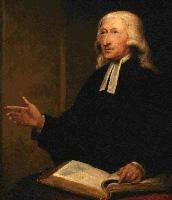
1703 - 1791 Person Name: J. Wesley Topics: Christian Ordinances and Institutions - The Holy Scriptures Author of "Come, O thou Prophet of the Lord" in Methodist Hymn-Book John Wesley, the son of Samuel, and brother of Charles Wesley, was born at Epworth, June 17, 1703. He was educated at the Charterhouse, London, and at Christ Church, Oxford. He became a Fellow of Lincoln College, Oxford, and graduated M.A. in 1726. At Oxford, he was one of the small band consisting of George Whitefield, Hames Hervey, Charles Wesley, and a few others, who were even then known for their piety; they were deridingly called "Methodists." After his ordination he went, in 1735, on a mission to Georgia. The mission was not successful, and he returned to England in 1738. From that time, his life was one of great labour, preaching the Gospel, and publishing his commentaries and other theological works. He died in London, in 1791, in his eighty-eighth year. His prose works are very numerous, but he did not write many useful hymns. It is to him, however, and not to his brother Charles, that we are indebted for the translations from the German.
--Annotations of the Hymnal, Charles Hutchins, M.A., 1872
======================
John Wesley, M.A., was born at Epworth Rectory in 1703, and, like the rest of the family, received his early education from his mother. He narrowly escaped perishing in the fire which destroyed the rectory house in 1709, and his deliverance made a life-long impression upon him. In 1714 he was nominated on the foundation of Charterhouse by his father's patron, the Duke of Buckingham, and remained at that school until 1720, when he went up, with a scholarship, from Charterhouse to Christ Church, Oxford. Having taken his degree, he received Holy Orders from the Bishop of Oxford (Dr. Potter) in 1725. In 1726 he was elected Fellow of Lincoln College, and remained at Oxford until 1727, when he returned into Lincolnshire to assist his father as curate at Epworth and Wroot. In 1729 he was summoned back to Oxford by his firm friend, Dr. Morley, Rector of Lincoln, to assist in the College tuition. There he found already established the little band of "Oxford Methodists" who immediately placed themselves under his direction. In 1735 he went, as a Missionary of the Society for the Propagation of the Gospel, to Georgia, where a new colony had been founded under the governorship of General Oglethorpe. On his voyage out he was deeply impressed with the piety and Christian courage of some German fellow travellers, Moravians. During his short ministry in Georgia he met with many discouragements, and returned home saddened and dissatisfied both with himself and his work; but in London he again fell in with the Moravians, especially with Peter Bohler; and one memorable night (May 24, 1738) he went to a meeting in Aldersgate Street, where some one was reading Luther's preface to the Epistle to the Romans. There, "About a quarter before nine, while he was describing the change which God works in the heart through faith in Christ, I felt my heart strangely warmed. I felt I did trust in Christ, Christ alone, for salvation; and an assurance was given me, that He had taken away my sins, even mine, and saved me from the law of sin and death." From that moment his future course was sealed; and for more than half a century he laboured, through evil report and good report, to spread what he believed to be the everlasting Gospel, travelling more miles, preaching more sermons, publishing more books of a practical sort, and making more converts than any man of his day, or perhaps of any day, and dying at last, March 2, 1791, in harness, at the patriarchal age of 88.
The popular conception of the division of labour between the two brothers in the Revival, is that John was the preacher, and Charles the hymnwriter. But this is not strictly accurate. On the one hand Charles was also a great preacher, second only to his brother and George Whitefield in the effects which he produced. On the other hand, John by no means relegated to Charles the exclusive task of supplying the people with their hymns. John Wesley was not the sort of man to depute any part of his work entirely to another: and this part was, in his opinion, one of vital importance. With that wonderful instinct for gauging the popular mind, which was one element in his success, he saw at once that hymns might be utilized, not only for raising the devotion, but also for instructing, and establishing the faith of his disciples. He intended the hymns to be not merely a constituent part of public worship, but also a kind of creed in verse. They were to be "a body of experimental and practical divinity." "In what other publication," he asks in his Preface to the Wesleyan Hymn Book, 1780 (Preface, Oct. 20,1779), "have you so distinct and full an account of Scriptural Christianity; such a declaration of the heights and depths of religion, speculative and practical; so strong cautions against the most plausible errors, particularly those now most prevalent; and so clear directions for making your calling and election sure; for perfecting holiness in the fear of God?" The part which he actually took in writing the hymns, it is not easy to ascertain; but it is certain that more than thirty translations from the German, French and Spanish (chiefly from the German) were exclusively his; and there are some original hymns, admittedly his composition, which are not unworthy to stand by the side of his brother's. His translations from the German especially have had a wide circulation. Although somewhat free as translations they embody the fire and energy of the originals.
It has been the common practice, however for a hundred years or more to ascribe all translations from the German to John Wesley, as he only of the two brothers knew that language; and to assign to Charles Wesley all the original hymns except such as are traceable to John Wesley through his Journals and other works.
The list of 482 original hymns by John and Charles Wesley listed in this Dictionary of Hymnology have formed an important part of Methodist hymnody and show the enormous influence of the Wesleys on the English hymnody of the nineteenth century.
-- Excerpts from John Julian, Dictionary of Hymnology (1907)
===================
See also in:
Hymn Writers of the Church
John Wesley
Kathrina von Schlegel
1697 - 1777 Person Name: Catharina A. von Schlegel Topics: Admonition; Admonition; Admonition; Admonition; Adoration; Adoration; Adoration; Adoration; Adoration; Adoration; Adoration; Adoration; Adoration; Adoration; Adoration; Adoration; Adoration; Adoration; Adoration; Adoration; Adoration; Church Faith of; Church Fellowship and Unity; Church Fellowship and Unity; Church Fellowship and Unity; Church Fellowship and Unity; Church Fellowship and Unity; Church Fellowship and Unity; Church Fellowship and Unity; Church Militant & Trumphant; Church Militant & Trumphant; Church Militant & Trumphant; Church Militant & Trumphant; Church Militant & Trumphant; Church Militant & Trumphant; Church Militant & Trumphant; Church Militant & Trumphant; Choir; Choir; Cross of Believer; Cross of Believer; Cross of Believer; Cross of Believer; Cross of Believer; Cross of Believer; Cross of Believer; Cross of Believer; Cross of Believer; Cross of Believer; Cross of Believer; Cross of Believer; Cross of Christ; Cross of Christ; Cross of Christ; Cross of Christ; Cross of Christ; Devotional; Devotional; Devotional; Doxologies; Evening hymns; Faithfulness of the believer; Faithfulness of the believer; Faithfulness Of God; Fellowship of Believers; Fellowship with God; Fellowship with God; Fellowship with God; Funeral; God Holiness; God Holiness; God Love and Mercy; God Love and Mercy; God Majesty and Power; God Majesty and Power; God Trinity; God Trinity; Invitation for Consecration; Invitation for Consecration; Jesus Christ Deity; Jesus Christ Guide; Jesus Christ Guide; Jesus Christ Guide; Jesus Christ Guide; Jesus Christ Life and Ministry; Jesus Christ Life and Ministry; Jesus Christ Life and Ministry; Jesus Christ Light of the World; Jesus Christ Light of the World; Jesus Christ Teacher; Jesus Christ Teacher; Jesus Christ Triumphal Entry; Meditation; Meditation; Meditation; National Hymns; National Hymns; National Hymns; National Hymns; National Hymns; National Hymns; National Hymns; Hymns about Prayer; Hymns of Prayer; Hymns of Prayer; Hymns of Prayer; Hymns of Prayer; Hymns of Prayer; Hymns of Prayer; Praise of Christ; Praise of Christ; Praise of Christ; Praise of Christ; Praise of Christ; Praise of Christ; Praise of Christ; Repentance; Repentance; Scripture Songs; Scripture Songs; Scripture Songs; Scripture Songs; Scripture Songs; Scripture Songs; Scripture Songs; Scripture Songs; Scripture Songs; Scripture Songs; Scripture Songs; Scripture Songs; Scripture Songs; Scripture Songs; Thankfulness, Thanksgiving; Thankfulness, Thanksgiving; Thankfulness, Thanksgiving; Thankfulness, Thanksgiving; Thankfulness, Thanksgiving; Thankfulness, Thanksgiving; Warfare, Spiritual; Warfare, Spiritual; Warfare, Spiritual; Warfare, Spiritual; Warfare, Spiritual; Warfare, Spiritual; Warfare, Spiritual; Wedding; Worship; Worship; Worship; Worship; Worship; Worship; Worship; Worship; Worship; Worship; Worship; Worship; Worship; Worship Author of "The Final Sentence" Schlegel, Catharina Amalia Dorothea von. Little is known of this lady. According to Koch, iv., p. 442, she was born Oct. 22, 1697, and was "Stiftsfräulein" in the Evangelical Lutheran Stift (i.e. Protestant nunnery) at Cöthen. On applying to Cöthen, however, her name did not occur in the books of the Stift; and from the correspondence which she carried on, in 1750-52, with Heinrich Ernst, Count Stolberg, it would rather seem that she was a lady attached to the little ducal court at Cöthen. (manuscript from Dr. Eduard Jacobs, Wernigerode, &c.) Further details of her life it has been impossible to obtain.
The only one of her hymns which has passed into English is:—
Stille, mein Wille, dein Jesus hilft siegen. Cross and Consolation. A fine hymn on waiting for God. It appeared in 1752, as above, No. 689, in 6 stanzas of 6 lines; and is included in Knapp's Evangelischer Lieder-Schatz, 1837, No. 2249 (1865, No. 2017). The translation in common "Be still my soul!—-the Lord is on thy side." This is a good translation, omitting stanzas iii., by Miss Borthwick, in Hymns from the Land of Luther, 2nd Ser., 1855, p. 37 (1884, p. 100). [Rev. James Mearns, M.A.]
--Excerpts from John Julian, Dictionary of Hymnology (1907)
==========
For a detailed biography of Schlegel, see James R. Eggert, “Catharina von Schlegel and Be Still, My Soul,” Logia, vol. 34, no. 2 (Eastertide 2025), pp. 37–44.
Kathrina von Schlegel
Frederick C. Atkinson
1841 - 1896 Topics: liturgical Scripture Songs; Assurance; Christian Year Pentecost; Commitment; Consecration; Doubt; Faith; God Love for; Holy Spirit Indwelling; Holy Spirit Presence; Holy Spirit Work; Inner Life; Jesus Christ Teacher/Teachings; Love for God/Christ; Prayer; Renewal; Seeking God Composer of "[Spirit of God, descend upon my heart]" in Voices United Born: August 21, 1841, Norwich, Norfolk, England. Died: November 30, 1896, East Dereham, Norfolk, England. As a boy Atkinson was a chorister and assistant organist at Norwich Cathedral. In 1867 he graduated with a Bachelor of Music degree from Cambridge and then served as organist and choirmaster in St. Luke's Church, Manningham, Bradford. He also held that position at Norwich Cathedral and at St. Mary's Parish Church in Lewisham. Atkinson wrote hymn tunes, anthems, and complete Anglican services, as well as songs and piano pieces.
Psalter Hymnal Handbook, 1988
Frederick C. Atkinson
John Burton
1773 - 1822 Person Name: John Burton, 1773-1822 Topics: The Holy Scriptures; Holy Scripture; Holy Scripture Author of "Holy Bible, Book Divine" in African Methodist Episcopal Church Hymnal Burton, John, born 1773, in Nottingham, where he resided until 1813, when he removed to Leicester, at which town he died in 1822. He was a Baptist, a very earnest Sunday School teacher, and one of the compilers of the Nottingham Sunday School Union Hymn Book, 1812. This book reached the 20th edition in 1861. The 1st edition contains 43 hymns which have his signature. He is known almost exclusively by one hymn, "Holy Bible, book divine" (q.v.). He was also author of The Youth's Monitor, and other similar productions for the young. Robert Hall wrote a recommendatory preface to one of his works. [Rev. W. R. Stevenson, M. A.]
-- John Julian, Dictionary of Hymnology (1907)
John Burton
James G. Walton
1821 - 1905 Person Name: James George Walton Topics: The Holy Scriptures Composer of "ST. CATHERINE" in Redemption Hymnal Born: February 19, 1821, Clitheroe, Lancashire, England.
Died: September 1, 1905, Bradford, New York.
Little is known of Walton’s life. His works include:
Plain Song Music for the Holy Communion Office, 1874 (editor)
Music: ST. CATHERINE
--www.hymntime.com/tch
James G. Walton
James Walch
1837 - 1901 Topics: Holy Scripture Composer of "SAWLEY" in The Evangelical Hymnal James Walch was a musician and composer, born near Bolton, Lancashire, England in 1837. He spent his early life in the town and was organist in several churches there, including the parish church of St George’s. From 1870-1877, he was conductor for the Bolton Philharmonic Society. He also composed at least four published hymn tunes, the best known of which is called “Tidings”. Written in 1875, it’s usually used as the tune to a hymn called “O Zion Haste”.
James Walch was a musical instrument dealer by trade, and moved to Barrow-in-Furness in 1877. He later moved to Llandudno Junction in North Wales, where he died in August 1901 and was buried locally. His wife later donated money to pay for the organs in two local churches, St Paul's Llandudno and All Saints Deganwy, in his memory.
Three decades later, an article in the London Gazette reported on a dispute arising from his will, and mentioned that he had a son, Harry West Walch, who was a pianist and lived in Hereford.
St Paul's Church, Llandudno newsletter; used by permission of Christ Dearden (Walch's wife paid for the organ at St. Paul's Church)
James Walch
Brian A. Wren
b. 1936 Person Name: Brian Wren Topics: The Community of Faith The Book of the Church: Holy Scripture Author of "Deep in the Shadows of the Past" in The Faith We Sing Brian Wren (b. Romford, Essex, England, 1936) is a major British figure in the revival of contemporary hymn writing. He studied French literature at New College and theology at Mansfield College in Oxford, England. Ordained in 1965, he was pastor of the Congregational Church (now United Reformed) in Hockley and Hawkwell, Essex, from 1965 to 1970. He worked for the British Council of Churches and several other organizations involved in fighting poverty and promoting peace and justice. This work resulted in his writing of Education for Justice (1977) and Patriotism and Peace (1983). With a ministry throughout the English-speaking world, Wren now resides in the United States where he is active as a freelance lecturer, preacher, and full-time hymn writer. His hymn texts are published in Faith Looking Forward (1983), Praising a Mystery (1986), Bring Many Names (1989), New Beginnings (1993), and Faith Renewed: 33 Hymns Reissued and Revised (1995), as well as in many modern hymnals. He has also produced What Language Shall I Borrow? (1989), a discussion guide to inclusive language in Christian worship.
Bert Polman
Brian A. Wren
Frances Ridley Havergal
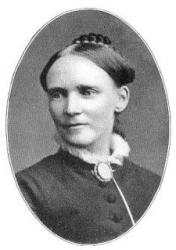
1836 - 1879 Person Name: Frances R. Havergal Topics: Evangelism; Holy Spirit; Jesus Christ Mind of; Mission; Occasional Services Dedication of Holy Living; Occasional Services Ordination/Installation; Hymns That Are Prayer; Responses To Scripture; Stewardship of Life; Testimony/Witness; Elements of Worship Hearing the Word Author of "Lord, Speak to Me that I May Speak" in Lift Up Your Hearts Havergal, Frances Ridley, daughter of the Rev. W. H. Havergal, was born at Astley, Worcestershire, Dec. 14, 1836. Five years later her father removed to the Rectory of St. Nicholas, Worcester. In August, 1850, she entered Mrs. Teed's school, whose influence over her was most beneficial. In the following year she says, "I committed my soul to the Saviour, and earth and heaven seemed brighter from that moment." A short sojourn in Germany followed, and on her return she was confirmed in Worcester Cathedral, July 17, 1853. In 1860 she left Worcester on her father resigning the Rectory of St. Nicholas, and resided at different periods in Leamington, and at Caswall Bay, Swansea, broken by visits to Switzerland, Scotland, and North Wales. She died at Caswell Bay, Swansea, June 3, 1879.
Miss Havergal's scholastic acquirements were extensive, embracing several modern languages, together with Greek and Hebrew. She does not occupy, and did not claim for herself, a prominent place as a poet, but by her distinct individuality she carved out a niche which she alone could fill. Simply and sweetly she sang the love of God, and His way of salvation. To this end, and for this object, her whole life and all her powers were consecrated. She lives and speaks in every line of her poetry. Her poems are permeated with the fragrance of her passionate love of Jesus.
Her religious views and theological bias are distinctly set forth in her poems, and may be described as mildly Calvinistic, without the severe dogmatic tenet of reprobation. The burden of her writings is a free and full salvation, through the Redeemer's merits, for every sinner who will receive it, and her life was devoted to the proclamation of this truth by personal labours, literary efforts, and earnest interest in Foreign Missions.
[Rev. James Davidson, B.A.]
Miss Havergal's hymns were frequently printed by J. & R. Parlane as leaflets, and by Caswell & Co. as ornamental cards. They were gathered together from time to time and published in her works as follows:—
(1) Ministry of Song, 1869; (2) Twelve Sacred Songs for Little Singers, 1870; (3) Under the Surface, 1874; (4) Loyal Responses, 1878; (5) Life Mosaic, 1879; (6) Life Chords, 1880; (7) Life Echoes, 1883.
About 15 of the more important of Miss Havergal's hymns, including "Golden harps are sounding," "I gave my life for thee," "Jesus, Master, Whose I am," "Lord, speak to me," "O Master, at Thy feet," "Take my life and let it be," "Tell it out among the heathen," &c, are annotated under their respective first lines. The rest, which are in common use, number nearly 50. These we give, together with dates and places of composition, from the Havergal mss. [manuscript], and the works in which they were published. Those, and they are many, which were printed in Parlane's Series of Leaflets are distinguished as (P., 1872, &c), and those in Caswell’s series (C., 1873, &c).
1. A happy New Year! Even such may it be. New Year. From Under the Surface, 1874.
2. Certainly I will be with thee. Birthday. Sept. 1871, at Perry Barr. (P. 1871.) Published in Under the Surface, 1874, and Life Mosaic, 1879.
3. Church of God, beloved and chosen. Sanctified in Christ Jesus, 1873. (P. 1873.) Published in Under the Surface, 1874, and Life Mosaic, 1879.
4. God Almighty, King of nations. Sovereignty of God. 1872. Published in Under the Surface, 1874, and Life Mosaic, 1879.
5. God doth not bid thee wait. God faithful to His promises. Oct. 22, 1868, at Oakhampton. (P. 1869.) Published in Ministry of Song, 1869, and Life Mosaic, 1879.
6. God of heaven, hear our singing. A Child's hymn for Missions. Oct. 22, 1869, at Leamington. Published in her Twelve Sacred Songs for Little Singers, 1870, and her Life Chords, 1880.
7. God will take care of you, All through the day. The Good Shepherd. In Mrs. Brock's Children's Hymn Book, 1881.
8. God's reiterated all. New Year. 1873, at Winterdyne. (C. 1873.) Published in Loyal Responses, 1878, and Life Mosaic, 1879.
9. Have you not a word for Jesus? Boldness for the Truth. Nov. 1871, at Perry Barr. (P. 1872.) Published in Under the Surface, 1874, and Life Mosaic, 1879.
10. He hath spoken in the darkness. Voice of God in sorrow. June 10,1869, at Neuhausen. (P. 1870.) Published in Under the Surface, 1874, and in Life Mosaic, 1879.
11. Hear the Father's ancient promise. Promise of the Holy Spirit. Aug. 1870. Published in Under the Surface, 1874, and Life Mosaic, 1879.
12. Holy and Infinite! Viewless, Eternal. Infinity of God. 1872. Published in Under the Surf ace, 1874, and L. Mosaic, 1879.
13. Holy brethren, called and chosen. Election a motive for Earnestness. 1872. Published in Snepp's Songs of Grace & Glory, 1876.
14. I am trusting Thee, Lord Jesus. Faith. Sept. 1874, at Ormont Dessona. (P. 1874.) Published in Loyal Responses, 1878, and Life Chords, 1880. Miss Havergal’s tune, Urbane (Snepp's Songs of Grace & Glory, 1048), was composed for this hymn. The hymn was the author's "own favourite," and was found in her pocket Bible after her death.
15. I bring my sins to Thee. Besting all on Jesus. June, 1870. (P. 1870.) Printed in the Sunday Magazine, 1870, and Home Words, 1872. Published in Under the Surface, 1874, and Life Chords, 1880.
16. I could not do without Thee. Jesus All in All. May 7, 1873. (P. 1873.) Printed in Home Words, 1873, and published in Under the Surface, 1874, and Life Mosaic, 1879.
17. In full and glad surrender. Confirmation. Miss Havergal's sister says this hymn was “The epitome of her [Miss F. R. H.'s] life and the focus of its sunshine." It is a beautiful hymn of personal consecration to God at all times.
18. In the evening there is weeping. Sorrow followed by Joy. June 19, 1869, at the Hotel Jungfraublick, Interlaken. "It rained all day, except a very bright interval before dinner. Curious long soft white clouds went slowly creeping along the Scheinige Platte; I wrote “Evening Tears and Morning Songs” (Marg. reading of Ps. xxx. 5.)" (P. 1870.) Published in Under the Surface, 1874.
19. Increase our faith, beloved Lord. Increase of Faith desired. In Loyal Responses, 1878, in 11 stanzas of 4 lines, on St. Luke xvii. 5. It is usually given in an abridged form.
20. Is it for me, dear Saviour? Heaven anticipated. Nov. 1871, at Perry Barr. (P. 1872.) Published in Under the Surface, 1874, and Life Mosaic, 1879.
21. Israel of God, awaken. Christ our Righteousness. May, 1871, at Perry Barr. (P. 1872.) Published in Under the Surface, 1874, and Life Mosaic, 1879.
22. Jehovah's covenant shall endure. The Divine Covenant, 1872. Published in Snepp's Songs of Grace & Glory, 1876.
23 Jesus, blessed Saviour. New Year, Nov. 25, 1872, at Leamington. (P. 1873.) Printed in the Dayspring Magazine, Jan. 1873, and published in Life Chords, 1880.
24. Jesus only! In the shadow. Jesus All in All. Dec. 4, 1870, at Pyrmont Villa. (P. & C. 1871.) Published in Under the Surface, 1874, and in Life Mosaic, 1879.
25. Joined to Christ by [in] mystic union. The Church the Body of Christ. May, 1871, at Perry Barr. (P. 1872.) Published in Under the Surface, 1874, Life Mosaic, 1879.
26. Just when Thou wilt, 0 Master, call. Resignation. In Loyal Responses, 1878, in 5 stanzas of 4 lines, and Whiting's Hymns for the Church Catholic, 1882.
27. King Eternal and Immortal. God Eternal. Written at Perry Villa, Perry Barr, Feb. 11, 1871, and Published in Snepp's Songs of Grace & Glory, 1876; Under the Surface, 1874 ; and Life Mosaic, 1879.
28. Light after darkness, Gain after loss. Peace in Jesus, and the Divine Reward. In Sankey's Sacred Songs and Solos, from her Life Mosaic, 1879.
29. Like a river glorious, Is God's perfect Peace. Peace. In her Loyal Responses, 1878, in 3 st. of 8 1., with the chorus, "Stayed upon Jehovah." In several collections.
30. Master, speak! Thy servant heareth. Fellowship with and Assistance from Christ desired. Sunday evening, May 19, 1867, at Weston-super-Mare. Published in Ministry of Song, 1869, and L. Mosaic, 1879. It is very popular.
31. New mercies, new blessings, new light on thy way. New Life in Christ. 1874, at Winterdyne. (C. 1874.) Published in Under His Shadow, 1879, Life Chords, 1880.
32. Not your own, but His ye are. Missions. Jan. 21, 1867. (C. 1867.) Published in Ministry of Song, 1869; Life Mosaic, 1879; and the Hymnal for Church Missions, 1884.
33. Now let us sing the angels' song. Christmas. In her Life Mosaic, 1879; and W. B. Stevenson's School Hymnal, 1880.
34. Now the daylight goes away. Evening. Oct. 17, 1869, at Leamington. Published in Songs for Little Singers, 1870, and Life Chords, 1880. It originally read, " Now the light has gone away."
35. Now the sowing and the weeping. Sorrow followed by Joy. Jan. 4, 1870, at Leamington. Printed in Sunday at Home, 1870 ; and published in Under the Surface, 1874, and L. Mosaic, 1879.
36. 0 Glorious God and King. Praise to the Father, Feb. 1872. Published in Under the Surface, 1874, and Life Mosaic, 1879.
37. 0 Saviour, precious [holy] Saviour. Christ worshipped by the Church. Nov. 1870, at Leamington. (P. 1870.) Published in Under the Surface, 1874, and Life Mosaic, 1879.
38. O thou chosen Church of Jesus. Election. April 6, 1871. Published in Under the Surface, 1874, and L. Mosaic, 1879.
39. O what everlasting blessings God outpoureth on His own. Salvation everlasting. Aug. 12, 1871, at Perry Barr. (P. 1871.) Published in Under the Surface, 1874, and L. Mosaic, 1879.
40. Our Father, our Father, Who dwellest in light. The blessing of the Father desired. May 14, 1872. Published in Under the Surface, 1874, and Life Mosaic, 1879. Miss Havergal's tune, Tertius, was composed for this hymn.
41. Our Saviour and our King. Presentation of the Church to the Father. (Heb. ii. 13.) May, 1871, at Perry Barr. (P. 1871.) Published in Under the Surface, 1874, and L. Mosaic, 1879.
42. Precious, precious blood of Jesus. The precious Blood. Sept. 1874, at Ormont Dessons. (C.) Published in Loyal Responses, 1878, and Life Chords, 1880.
43. Sing, O heavens, the Lord hath done it. Redemption. In her Life Mosaic, 1879, and the Universal Hymn Book, 1885.
44. Sit down beneath His shadow. Holy Communion. Nov. 27, 1870, at Leamington. (P. 1870.) Published in Under the Surface, 1874, and Life Mosaic, 1879.
45. Sovereign Lord and gracious Master. Grace consummated in Glory. Oct. 22, 1871. (P. 1872.) Published in Under the Surface, 1874, and Life Mosaic, 1879.
46. Standing at the portal of the opening year. New Year. Jan. 4, 1873. Published in Under the Surface, 1874, and Life Chords, 1880.
47. To Thee, 0 Comforter divine. Praise to the Holy Spirit. Aug. 11, 1872, at Perry Barr. Published in Under the Surface 1874, and Life Mosaic, 1879. Miss Havergal's tune, Tryphosa, was written for this hymn.
48. True-hearted, whole-hearted, faithful and loyal. Faithfulness to the Saviour. In her Loyal Responses, 1878, and the Universal Hymn Book, 1885.
49. What know we, Holy God, of Thee? God's Spirituality, 1872. Published in Under the Surface, 1874, and Life Mosaic, 1879.
50. Who is on the Lord's side? Home Missions. Oct. 13, 1877. Published in Loyal Responses, 1878, andLife Chords, 1880.
51. With quivering heart and trembling will. Resignation. July, 10, 1866, at Luccombe Rectory. (P. 1866.) Published in Ministry of Song, 1869, and Life Mosaic, 1879.
52. Will ye not come to Him for life? The Gospel Invitation. 1873. Published in Snepp's Songs of Grace and Glory, 1876.
53. Worthy of all adoration. Praise to Jesus as the Lamb upon the throne. Feb. 26 1867, at Oakhampton. Published in Ministry of Song, 1869, and Life Mosaic, 1874. It is pt. iii. of the "Threefold Praise," and was suggested by the "Worthy is the Lamb," the "Hallelujah" and "Amen" choruses in Handel's Messiah.
54. Ye who hear the blessed call. The Invitation of the Spirit and the Bride. March, 1869, at Leamington. (P. 1869.) Published in Ministry of Song, 1869, and Life Mosaic, 1879. Suggested by, and written for, the Young Men's Christian Association.
55. Yes, He knows the way is dreary. Encouragement. 1867. Published in Ministry of Song, 1869.
Most of these hymns are given in Snepp's Songs of Grace and Glory, 1872]and 1876, his Appendix, 1874, and the Musical edition, 1880, and many of them are also in several other hymnbooks, including Hymns Ancient & Modern, Thring, Church Hymns, Hymnal Companion, &c, and some of the leading American collections.
--John Julian, Dictionary of Hymnology (1907)
==============================
Havergal, Frances Ridley, p. 496, i. Miss Havergal's Poetical Works were published in 2 vols. in 1884 (Lond., J. Nisbet); and the hymns therein are accompanied by notes. From these volumes, and the Havergal manuscript, we gather the following facts concerning additional hymns in common use:
1. In God's great field of labour. Work for Christ.
Written Feb. 27, 1867, and published in her Ministry of Song, I860, and later works. In Snepp's Songs of Grace and Glory, 1872, it begins with stanza ii., "Sing to the little children." “The poem expresses her own life-ministry of song, and relates true incidents" in that life. [Hav. mss.]
2. Only a mortal's power. Consecration of Self to Christ. Published in her Loyal Responses, 1878, in 7 stanzas of 4 lines, and headed "Only.” In Common Praise, 1879, stanzas ii.-vi., are given for Confirmation as, "Only one heart to give."
3. Through the yesterday of ages. Jesus always the same. Written at Leamington, Nov. 1876, and published in her Loyal Responses, 1878.
4. What hast Thou done for me, 0 Thou my mighty Friend. Good Friday. Written at Leamington, Jan. 1877, and pub. in Loyal Responses, 1878.
5. Yes, He knows the way is dreary, p. 498, i. 55. This hymn was written at Shareshill Parsonage, Nov. 17, 1865, and first printed as one of Parlane's leaflets; then in Lyra Britannica, 1867; and later, in several of her books. It was "suggested by a letter from her niece, A. M. S., at school, and written to console her when weary, lonely, and the only absentee at the rejoicings for her brother J. H. S.'s coming of age." [Hav. mss.]
--John Julian, Dictionary of Hymnology, Appendix, Part II (1907)
===================
Havergal, Frances R., pp. 426, ii., 1569, ii. During the past fifteen years Miss Havergal's hymns have been in great request by compilers of hymnals for Missions and Conventions. In addition to the large number already annotated in this Dictionary, the following are also in common use:—
1. Begin at once! in the pleasant days. [Temperance.] From her Poetical Works, vol. i., p. 303, into The Sunday School Hymnary, 1905. In her Poetical Works. It is given as a "Band of Hope Song," and dated "May, 1876."
2. God in heaven, hear our singing. An altered form of her "God of heaven, hear our singing," p. 497, i. 6.
3. Holy Father, Thou hast spoken. [Holy Spirit desired.] Written May 5, 1876. P. Works, 1874, ii., p. 261.
4. I love. I love my Master. [Jesus the object of love.] Written at Fins, Hants., July 16, 1876. In her Loyal Responses, 1878, and her Poetical Works, 18S4, ii., p. 274.
5. I love to feel that I am taught. [Love of Divine Teaching.] Written at Morecambe Bay, Aug., 1867, for her Ministry of Song, 1869. Included in her Poetical Works, 1884, i., p. 36.
6. Jesus, Thy life is mine. [Union with Christ.] Written June 2, 1876. Poetical Works, 1884, ii., p. 268.
7. Looking unto Jesus, Never need we yield. [Jesus, All in All.] Dated 1876. P. Works, 1884, ii., p. 253.
8. Master, how shall I bless Thy Name! [Holy Service.] Written at Whitby, Sept. 27, 1875. A long hymn of 17 stanzas of 6 lines. P. Works, 1884, ii., p. 280.
9. Resting on the faithfulness. [Union with Christ.] A metrical epitome of a dozen or more of the attributes of Our Lord and His manifestation of loving kindness towards men, in which the word "Resting" is used eighteen times. Written June 11, 1876. Poetical Works, 1884, ii., p. 260.
10. Singing for Jesus, our Saviour and King. [Praise of Jesus.] Written at Winterdyne, June 12. 1872; published in her Under the Surface, 1874, p. 94, and her P. Works, 1884, ii., p. 70.
11. Unfurl the Christian Standard with firm and fearless hand. [Courage for the Christian Warfare. This begins with st. iv. of her hymn, "Unfurl the Christian Standard, lift it manfully on high," written at Perry Barr, Sep. 23, 1872 ; published in her Under the Surface, 1874; and her Poetical Works, 1884, ii.
12. Unto him that hath Thou givest. [Growth in Grace.] Written at Leasowes, April 12, 1876. P. Works, 1884, ii. 259.
Of these hymns Nos. 3, 4, 6, 7, 8, 9, and 12 were published in the first instance in J. Mountain's Hymns of Consecration and Faith, 1876. At the present time (1907) the number of Miss Havergal's hymns in common use reaches nearly one hundred.
--John Julian, Dictionary of Hymnology, New Supplement (1907)
Frances Ridley Havergal
Carl Bernhard Garve
1763 - 1841 Person Name: Carl Bernhard Garve, 1763-1841 Topics: The Holy Scriptures Author of "Thy Word, O Lord, Like Gentle Dews" in Hymnal and Liturgies of the Moravian Church Garve, Carl Bernhard, was born Jan. 24, 1763, at Jeinsen, near Hannover, where his father was a farmer. He was educated at the Moravian schools in Zeist, and Neuwied, at their Pädagogium at Niesky, and their Seminary at Barby. In 1784 he was appointed one of the tutors at Niesky, and in 1789 at Barby; but as his philosophical lectures were thought rather unsettling in their tendency, he was sent, in 1797, to arrange the documents of the archive at Zeist. After his ordination as diaconus of the Moravian church, he was appointed, in 1799, preacher at Amsterdam; in 1801 at Ebersdorf (where he was also inspector of the training school); in 1809 at Berlin; and in 1816 at Neusalza on the Oder. Feeling the burden of years and infirmities he resigned the active duties of the ministry in 1836, and retired to Herrnhut, where he died June 21, 1841. (Koch, vii. 334-342; (Allgemeine Deutsche Biographie, viii. 392-94, &c.)
Garve ranks as the most important of recent Moravian hymnwriters, Albertini being perhaps his superior in poetical gifts, but certainly not in adaptability to church use. His better productions are almost entirely free from typically Moravian features; and in them Holy Scripture is used in a sound and healthful spirit. They are distinguished by force and at the same time elegance of style, and are full of deep love and devotion to the Saviour. Many of them have passed into the German Evangelical hymnbooks, no less than 36 being included in the Berlin Gesange-Buch 1829; and of those noted below No. i. is to be found in almost all recent German collections. They appeared mostly in the two following collections, both of which are to be found in the Town Library, Hamburg: (1) Christliche Gesänge, Görlitz, 1825, with 303 hymns, a few being recasts from other authors. (2) Brüdergesange, Gnadau, 1827, with 65 hymns intended principally for use in the Moravian Communion.
Garve's hymns in English common use are:—
i. Dein Wort, 0 Herr, ist milder Thau. Holy Scripture. Perhaps his finest hymn. 1825, as above, p. 51, in 7 st. of 8 l. Included, as No. 410, in the Berlin Geistliche Lieder S., ed. 1863, and in the German hymnbooks for Hannover, 1883, for the kingdom of Saxony, 1883, for the province of Saxony, 1882, &c." Translated as:—
1. Thy Word, 0 Lord, like gentle dews. A good translation of st. i.-iii, by Miss Winkworth, in the first Ser., 1855, of her Lyra Germanica, p. 36. In the Pennsylvania Lutheran Church Book, 1868, it is No. 314 in full, but rewritten to D.C.M. In 1864 it was included, altered, and with 11. 5-8 of each stanza omitted, as No. 681 in Hymns of the Spirit, Boston, U. S., and this has been repeated in Dr. Martineau's Hymns of Praise & Prayer, 1873, and Dr. Allon's Children's Worship, 1878.
2. Thy Word, 0 Lord, is gentle dew. A good translation of st. i.-iii., based on the Lyra Germanica, by Miss Winkworth, as No. 102 in her Chorale Book for England, 1863, and thence, in the Ohio Lutheran Hymnal, 1880.
ii. Hallelujah, Christus lebt. Easter. 1825, as above, p. 105, in 8 st. of 6 1. Included in Knapp's Evangelical Lutheran Songbook, 1850, No. 565. Translated as:—
Hallelujah! Jesus lives! A good translation (omitting st. iv., vi.) by Miss Borthwick, in the 4th Ser., 1862, of the Hymns from the Land of Luther, p. 30 (1884, p. 201). In Lyra Messianica, 1864, p. 295, and in G. S. Jellicoe's Collection, 1867, No. 103, it begins, "Alleluia ! Jesus lives."
iii. O Vater der Gemeine. Trinity Sunday. 1825, as above, p. 18, in 3 st. of 7 l. Included as No. 107 in Knapp's Evangelischer Lieder-Schatz, 1837. Translated as: --
Father of all created. In full, as No. 159, in Dr. Pagenstecher's Collection, 1864, signed " F. C. C."
Another translation is, "0 Father, we adore Thee," in the British Herald, Oct. 1866, p. 324, repeated as No. 416 in Reid's Praise Book, 1872.
Hymns not in English common use:— «
iv. Der Herr ist treu, Der Herr ist ewig treu. God's Faithfulness. 1825, p. 5, in 6 st., repeated in the Berlin Gesang-Buch, 1829, No. 60, beginning "Gott ist treu." Translated by N. L. Frothingham, 1870, p. 253.
v. Geduld! Geduld! ob's stürmisch weht. Trust in God. 1825, p. 180, in 3 st., repeated in the Berlin Gesang-Buch 1829, No. 593, beginning "Geduld! wie sehr der Sturm auch weht." Translated by N. L. Frothingham, 1870, p. 265.
vi. Sagt was hat die weite Welt. Holy Scripture. 1825, p 49, in 6 st. Translated as “Tell me, can the world display," in the British Herald, Nov. 1866, p. 360, repeated as No. 420 in Reid's Praise Book, 1872.
vii. Wer bin ich, Herr, in deinem Licht. Self-Examination, 1825, p. 216, in 15 st. Translated by N. L. Frothingham, 1870, p. 258.
viii. Zur Arbeit winkt mir mein Beruf. Before Work, 1825, p. 233, in 9 st. Translated by E. Massie, l861.
A hymn sometimes ascribed to Garve is noted under "Gib deinen Frieden uns." [Rev. James Mearns, M.A.]
-- John Julian, Dictionary of Hymnology (1907)
Carl Bernhard Garve
Pages




