You help make Hymnary.org possible. More than 10 million people from 200+ countries found hymns, liturgical resources and encouragement on Hymnary.org in 2025, including you. Every visit affirms the global impact of this ministry.

If Hymnary has been meaningful to you this year, would you take a moment today to help sustain it? A gift of any size—paired with a note of encouragement if you wish—directly supports the server costs, research work and curation that keep this resource freely available to the world.

Give securely online today, or mail a check to:
Hymnary.org
Calvin University
3201 Burton Street SE
Grand Rapids, MI 49546

Thank you for your partnership, and may the hope of Advent fill your heart.

Person Results

Topics:guidance+in+pilgrimage
In:person

Planning worship? Check out our sister site, ZeteoSearch.org, for 20+ additional resources related to your search.
Showing 171 - 180 of 202Results Per Page: 102050

John Logan

1748 - 1788 Person Name: John Logan, 1748-1788 Topics: Canticles and Scripture Paraphrases; Church Covenant People of God; God Shelter / Shield; Guidance; Journey / Pilgrimage / Pilgrims; One Life in Christ Discipleship Author of "O God of Bethel, by whose hand" in The Book of Praise Logan, John, son of a farmer, born at Fala, Midlothian, 1748, and educated at Edinburgh University, in due course entering the ministry of the Church of Scotland and becoming the minister of South Leith in 1770. During the time he held this charge he delivered a course of lectures on philosophy and history with much success. While he was thus engaged, the chair of Universal History in the University became vacant; but as a candidate he was unsuccessful. A tragedy, entitled Runnamede, followed. He offered it to the manager of Covent Garden Theatre, but it was interdicted by the Lord Chamberlain "upon suspicion of having a seditious tendency." It was subsequently acted in Edinburgh. In 1775 he formed one of the Committee by whom the Translations and Paraphrases of the Church of Scotland was prepared. In 1782 he was compelled to resign his charge at Leith in order to prevent deposition, and finally, having passed on to London, he supported himself partly by his pen, and died there, Dec. 28, 1788. [Also, see Bruce, Michael] The names of Michael Bruce and John Logan are brought together because of the painful controversy which has long prevailed concerning the authorship of certain Hymns and Paraphrases of Holy Scripture which are in extensive use in the Christian Church both at home and abroad. During the latter years of Bruce's short life he wrote various Poems, and also Hymns for a singing class at Kinnesswood, which were well known to his family and neighbours, and were eventually copied out by Bruce himself in a quarto MS. book, with the hope that some day he might see them in print. Immediately upon his death, in 1767, Logan called upon his father and requested the loan of this book that he might publish the contents for the benefit of the family. This was granted. Not till three years afterwards did a certain work, containing seventeen poems, and entitled Poems on Several Occasions, by Michael Bruce, 1770, appear, with a Preface in which it was stated that some of the Poems were by others than Bruce. Bruce's father immediately pointed out the absence from the volume of certain hymns which he called his son's "Gospel Sonnets," and members of the singing class at Kinnesswood also noted the absence of hymns with which they were familiar. Letters of remonstrance and demands for the return of the quarto manuscript book of Bruce by the father remaining unanswered, led him eventually to see Logan in person. No book was forthcoming, a few scraps of manuscript only were returned, and Logan accounted for the absence of the book by saying he feared "that the servants had singed fowls with it." For a time the matter rested here, only to be revived with renewed interest by the publication, in 1781 (14 years after the death of Bruce, and 11 after the Poems, &c, were issued), of Poems. By the Rev. Mr. Logan, One of the Ministers of Leith. In this volume, an "Ode to the Cuckoo," a poem of exquisite beauty, and other poetical pieces which appeared in the Poems on Several Occasions, by Michael Bruce, were repeated, and claimed as his own by Logan. In addition, certain Hymns and Paraphrases were included, most of which were of sterling merit, and poetical excellence. It has been shown, we think, most conclusively by Dr. Mackelvie in his Life of Bruce prefixed to the Poems, 1837 and by Dr. Grosart in his Works of M. Bruce, 1865, that the "Ode to the Cuckoo," "Lochleven," and other poetical pieces were taken from MS. book of M. Bruce. The Hymns and Paraphrases, most of which were included in the Translations and Paraphrases during the same year, were also claimed for Bruce. Until clearer evidence is brought forward on behalf of Bruce, the hymns, or paraphrases, following must be ascribed to John Logan: — "Who can resist th'Almighty arm"; "In streets and op'nings of the gates”; "Thus speaks the heathen: How shall man"; "Take comfort, Christians, when your friends"; "The hour of my departure's come." The following, which are found only in the Translations and Paraphrases of 1781, are claimed by W. Cameron for Logan, and have never been seriously disputed by the friends of Bruce, the second being original, the first a revise from the Translations and Paraphrases of 1745; and the third a revise of Doddridge and Dr. Hugh Blair:— "Let Christian faith and hope dispel"; “Thus speaks the high and lofty One"; "What though no flowers the fig-tree clothe." In addition, we see no cause to deny to Logan the few changes, and new stanza, which are found in Doddridge's "0 God of Bethel, by Whose hand." Of the above hymns 5 are recasts of hymns in the Scottish Translations and Paraphrases of 1745. Those are: "Behold the mountain of the Lord " (see "In latter days the mount of God "); "When Jesus by the Virgin brought" (see "Now let Thy servant die in peace"); "Behold the Ambassador divine" (see "Behold my Servant, see Him rise"); "Let Christian faith and hope dispel" (see “Now let our souls ascend above"); and "What though no flowers the fig-tree clothe" (see "So firm the saints' foundation stands"). …It is curious to note that every hymn which we have ascribed to M. Bruce has come into more or less extensive use outside of the Translations and Paraphrases, and that not one which we have ascribed to Logan, except "Let Christian faith and hope dispel," and “Take comfort, Christians," &c, is found beyond that work, unless we give to Logan the plaintive "The hour of my departure's come" (which Dr. Grosart claims for Bruce), and the recast "O God of Bethel, by Whose hand," whose success is due to Doddridge. This is the verdict of 100 years' use of those hymns, and shows conclusively the poetic strength of Bruce and the weakness of Logan. --John Julian, Dictionary of Hymnology (1907) ================ http://en.wikipedia.org/wiki/John_Logan_%28minister%29

Jessie Seymour Irvine

1836 - 1887 Person Name: Jessie S. Irvine, 1836-1887 Topics: Guidance in Pilgrimage Composer of "CRIMOND" in The Covenant Hymnal Jessie Seymour Irvine United Kingdom 1836-1887. Born at Dunnottar, Kincardineshire, Scotland, the daughter of a parish minister of the Church of Scotland who served at Dunottar, Peterhead, and Crimond in Aberdeenshire, she became an organist, in training at the town of Banff. In 1871, while living in Crimond, she composed a tune for the metrical version of Psalm 23 as an exercise for a composition class. It was first performed at evening worship at Auchterless Parish Church. Not satisfied with her own work, she asked for help to reharmonize it from musician, David Grant, from Aberdeen. At the time, Grant was collaborating with associates compiling hymns and metrical Psalms from across north Scotland intending to publish them in a new hymnal. “The Northern Psalter” was published in 1872, became popular, and over 70,000 copies were sold. For years the hymn tune was credited to Grant, but Jessie’s sister wrote a letter to the hymnal editors claiming her sister wrote the tune, harmonized by Grant. She is now credited by most as the original composer. She died in Aberdeen, Scotland. She is commemorated by a set of four etched glass panels installed inside Crimond Parish Church in 2002. The hymn was played at Princess Elizabeth’s wedding (later Queen Elizabeth) to Philip Mountbatten in 1947. John Perry

W. Baird Ross

1871 - 1950 Person Name: W. Baird Ross, 1871-1950 Topics: Guidance in Pilgrimage Composer (descant) of "CRIMOND" in The Covenant Hymnal

John Zundel

1815 - 1882 Person Name: John Zundel, 1815 - 1882 Topics: The Life in Christ Pilgrimage, Protection, and Guidance Composer of "BEECHER" in The Hymnary of the United Church of Canada John Zundel; b. 1815, near Stuttgart, Germany; organist in Brooklyn, N. Y., from 1847 to 1878; d. Cannstadt, Germany, 1882 Evangelical Lutheran Hymnal, 1908

Isabella S. Stephenson

1843 - 1890 Person Name: Isabella Stephenson Topics: The Life in Christ Pilgrimage, Protection, and Guidance Author of "Holy Father, in Thy mercy" in The Hymnary Born: Ju­ly 1843, Chel­ten­ham, Glou­ces­ter­shire, Eng­land. Died: Ap­ril 1890, Chel­ten­ham, Glou­ces­ter­shire, Eng­land. Daughter of an ar­my of­fi­cer in Chel­ten­ham, Is­a­bel­la was an in­va­lid most of her life. ===================== Stephenson, Isabella S. , is the author of "Holy Father! in Thy mercy" (For Absent Friends), in the 1889 Supplemental Hymns to Hymns Ancient & Modern --John Julian, Dictionary of Hymnology, Appendix, Part II (1907)

Christopher Willcock

b. 1947 Person Name: Christopher Willcock, 1947- Topics: Commandments; Commitment; Courage; Devotion; Education; Faithfulness of God; Friendship; God's Love to Us; Guidance; Humility; New Life in Christ; New Year; Pilgrimage; Prayer for Illimination; Saints Days and Holy Days Doctors and Confessors; Truth Composer of "PSALM 25" in Together in Song

Henry Alford

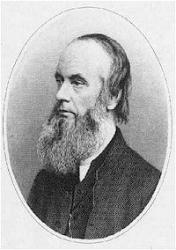
1810 - 1871 Person Name: Henry Alford, 1810 - 1871 Topics: The Life in Christ Pilgrimage, Protection, and Guidance Author of "'Forward!' be our watchword" in The Hymnary of the United Church of Canada Alford, Henry, D.D., son of  the Rev. Henry Alford, Rector of Aston Sandford, b. at 25 Alfred Place, Bedford Row, London, Oct. 7, 1810, and educated at Trinity College, Cambridge, graduating in honours, in 1832. In 1833 he was ordained to the Curacy of Ampton. Subsequently he held the Vicarage of Wymeswold, 1835-1853,--the Incumbency of Quebec Chapel, London, 1853-1857; and the Deanery of Canterbury, 1857 to his death, which took. place  at  Canterbury, Jan. 12, 1871.  In addition he held several important appointments, including that of a Fellow of Trinity, and the Hulsean Lectureship, 1841-2. His literary labours extended to every department of literature, but his noblest undertaking was his edition of the Greek Testament, the result of 20 years' labour.    His hymnological and poetical works, given below, were numerous, and included the compiling of collections, the composition of original hymns, and translations from other languages.    As a hymn-writer he added little to his literary reputation. The rhythm of his hymns is musical, but the poetry is neither striking, nor the thought original.   They are evangelical in their teaching,   but somewhat cold  and  conventional. They vary greatly in merit, the most popular being "Come, ye thankful  people, come," "In token that thou  shalt  not fear," and "Forward be our watchword." His collections, the Psalms and Hymns of 1844, and the Year of Praise, 1867, have not achieved a marked success.  His poetical and hymnological works include— (1) Hymns in the Christian Observer and the Christian Guardian, 1830. (2) Poems and Poetical Fragments (no name), Cambridge, J.   J.  Deighton, 1833.  (3) The School of the Heart, and other Poems, Cambridge, Pitt Press, 1835. (4) Hymns for the Sundays and Festivals throughout the Year, &c.,Lond., Longman ft Co., 1836. (5) Psalms and Hymns, adapted for the Sundays and Holidays throughout the year, &c, Lond., Rivington, 1844. (6) Poetical Works, 2 vols., Lond., Rivington, 1845. (7) Select Poetical Works, London, Rivington, 1851. (8) An American ed. of his Poems, Boston, Ticknor, Reed & Field, 1853(9) Passing away, and Life's Answer, poems in Macmillan's Magazine, 1863. (10) Evening Hexameters, in Good Words, 1864. (11) On Church Hymn Books, in the Contemporary Review, 1866. (12) Year of Praise, London, A. Strahan, 1867. (13) Poetical Works, 1868. (14) The Lord's Prayer, 1869. (15) Prose Hymns, 1844. (16) Abbot of Muchelnaye, 1841. (17) Hymns in British Magazine, 1832.   (18) A translation of Cantemus cuncti, q.v. -- John Julian, Dictionary of Hymnology (1907) ================== Alford, Henry, p. 39, ii. The following additional hymns by Dean Alford are in common use:— 1. Herald in the wilderness. St. John Baptist. (1867.) 2. Let the Church of God rejoice. SS. Simon and Jude. (1844, but not in his Psalms & Hymns of that year.) 3. Not in anything we do. Sexagesima. (1867.) 4. O Thou at Whose divine command. Sexagesima. (1844.) 5. 0 why on death so bent? Lent. (1867.) 6. Of all the honours man may wear. St. Andrew's Day. (1867.) 7. Our year of grace is wearing to a close. Close of the Year. (1867.) 8. Saviour, Thy Father's promise send. Whit-sunday. (1844.) 9. Since we kept the Saviour's birth. 1st Sunday after Trinity. (1867.) 10. Thou that art the Father's Word. Epiphany. (1844.) 11. Thou who on that wondrous journey. Quinquagesima. (1867.) 12. Through Israel's coasts in times of old. 2nd Sunday after Epiphany. (1867.) 13. Thy blood, O Christ, hath made our peace. Circumcision . (1814.) 14. When in the Lord Jehovah's name. For Sunday Schools. (1844.) All these hymns are in Dean Alford's Year of Praise, 1867, and the dates are those of their earliest publication, so far as we have been able to trace the same. --Excerpts from John Julian, Dictionary of Hymnology, Appendix, Part II (1907)

Joy F. Patterson

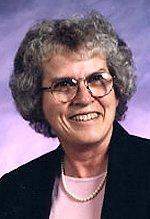
b. 1931 Person Name: Joy F. Patterson, 1931- Topics: Guidance in Pilgrimage Author of "Along the Roads of Daily Life" in The Covenant Hymnal Joy F. Patterson (b. 1931), of Wassau, Wisconsin, is an elder in the Presbyterian Church who has written many texts and tunes; twenty-nine are collected in Come, You People of the Promise (Hope Publishing, Co., 1994); another collection, Teach Our Eyes New Ways of Seeing, was published in 2005 (Selah). Patterson has enjoyed a varied career as a French professor, homemaker, and claim representative for the Social Security Administration. Sing! A New Creation

John Roberts

1822 - 1877 Person Name: John Roberts (Ieuan Gwylit) Topics: Life in Christ Pilgrimage and Guidance of Life Composer of "MOAB" in The Hymnbook Used Ieuan Gwyllt as his bardic name. See also Ieuan Gwyllt, 1822-1877.

Marsha Foxgrover

b. 1939 Person Name: Marsha Foxgrover, 1939- Topics: Guidance in Pilgrimage Arranger of "PRECIOUS LORD" in The Covenant Hymnal

Pages


Export as CSV
It looks like you are using an ad-blocker. Ad revenue helps keep us running. Please consider white-listing Hymnary.org or getting Hymnary Pro to eliminate ads entirely and help support Hymnary.org.