You help make Hymnary.org possible. More than 10 million people from 200+ countries found hymns, liturgical resources and encouragement on Hymnary.org in 2025, including you. Every visit affirms the global impact of this ministry.

If Hymnary has been meaningful to you this year, would you take a moment today to help sustain it? A gift of any size—paired with a note of encouragement if you wish—directly supports the server costs, research work and curation that keep this resource freely available to the world.

Give securely online today, or mail a check to:
Hymnary.org
Calvin University
3201 Burton Street SE
Grand Rapids, MI 49546

Thank you for your partnership, and may the hope of Advent fill your heart.

Person Results

Topics:house+of+god+
In:person

Planning worship? Check out our sister site, ZeteoSearch.org, for 20+ additional resources related to your search.
Showing 171 - 180 of 350Results Per Page: 102050

Johann Rudolf Ahle

1625 - 1673 Person Name: Johann Rudolph Ahle Topics: The Church at Worship Scripture; liturgical Songs of Illumination; Baptism; Bible; Church Education; God House, Home; Holy Spirit Illumination; Jesus Christ Lord of Life; Jesus Christ Prophet; Jesus Christ Teacher/Teachings; Light; Opening Hymns; Praise; Service Music Gathering, Call to Worship, Greeting; Service Music Prayer for Illumination; Service Music Litany Prayer; Word of God; Epiphany 3 Year A; Proper 9 Year A; Epiphany 2 Year B; Lent 4 Year B; Proper 21 Year B; Epiphany 2 Year C; Easter 3 Year C Composer (melody) of "LIEBSTER JESU" in Voices United Johann Rudolph Ahle, b. Mühlhausen, 1625; Ahle studied theology at Erfurt University. Little is known about his musical education, but be became well known as an organist while he was in Erfurt. He returned to Mühlhausen and became an organist at St. Blasius Church, he composed organ music but is know for his sacred choral music. He was the father of Johann Georg, who was also a composer and succeeded his father as organist at St. Blasius Church. Johann Rudolf became mayor of Mühlhausen late in his life and died there in 1673. Dianne Shapiro (from Bach Cantatas Website www.bach-cantatas.com/Lib/Ahle-Johann-Rudolf.htm)

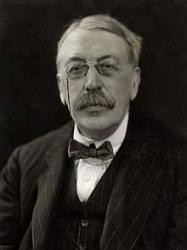
Charles V. Stanford

1852 - 1924 Person Name: Charles Villiers Stanford (1852-1924) Topics: Our Response to God in the worship of God's house Composer of "ENGELBERG" in Church Hymnary (4th ed.) Sir Charles Villiers Stanford (30 September 1852 – 29 March 1924) was an Irish composer, teacher and conductor. Born to a well-off and highly musical family in Dublin, Stanford was educated at the University of Cambridge before studying music in Leipzig and Berlin. He was instrumental in raising the status of the Cambridge University Musical Society, attracting international stars to perform with it. While still an undergraduate, Stanford was appointed organist of Trinity College, Cambridge. In 1882, aged 29, he was one of the founding professors of the Royal College of Music, where he taught composition for the rest of his life. From 1887 he was also the professor of music at Cambridge. As a teacher, Stanford was sceptical about modernism, and based his instruction chiefly on classical principles as exemplified in the music of Brahms. Among his pupils were rising composers whose fame went on to surpass his own, such as Gustav Holst and Ralph Vaughan Williams. As a conductor, Stanford held posts with the Bach Choir and the Leeds triennial music festival. Stanford composed a substantial number of concert works, including seven symphonies, but his best-remembered pieces are his choral works for church performance, chiefly composed in the Anglican tradition. He was a dedicated composer of opera, but none of his nine completed operas has endured in the general repertory. Some critics regarded Stanford, together with Hubert Parry and Alexander Mackenzie, as responsible for a renaissance in English music. However, after his conspicuous success as a composer in the last two decades of the 19th century, his music was eclipsed in the 20th century by that of Edward Elgar as well as former pupils. Stanford was born in Dublin, the only son of John James Stanford and his second wife, Mary, née Henn. John Stanford was a prominent Dublin lawyer, Examiner to the Court of Chancery in Ireland and Clerk of the Crown for County Meath. His wife was the third daughter of William Henn, Master of the High Court of Chancery in Ireland. Both parents were accomplished amateur musicians; John Stanford was a cellist and a noted bass singer who was chosen to perform the title role in Mendelssohn's Elijah at the Irish premiere in 1847. Mary Stanford was an amateur pianist, capable of playing the solo parts in concertos at Dublin concerts. The young Stanford was given a conventional education at a private day school in Dublin run by Henry Tilney Bassett, who concentrated on the classics to the exclusion of other subjects. Stanford's parents encouraged the boy's precocious musical talent, employing a succession of teachers in violin, piano, organ and composition. Three of his teachers were former pupils of Ignaz Moscheles, including his godmother Elizabeth Meeke, of whom Stanford recalled, "She taught me, before I was twelve years old, to read at sight. … She made me play every day at the end of my lesson a Mazurka of Chopin: never letting me stop for a mistake. … By the time I had played through the whole fifty-two Mazurkas, I could read most music of the calibre my fingers could tackle with comparative ease." One of the young Stanford's earliest compositions, a march in D♭ major, written when he was eight years old, was performed in the pantomime at the Theatre Royal, Dublin three years later. At the age of nine, Stanford gave a piano recital for an invited audience, playing works by Beethoven, Handel, Mendelssohn, Moscheles, Mozart and Bach. One of his songs was taken up by the University of Dublin Choral Society and was well received. In the 1860s Dublin received occasional visits from international stars, and Stanford was able to hear famous performers such as Joseph Joachim, Henri Vieuxtemps and Adelina Patti. The annual visit of the Italian Opera Company from London, led by Giulia Grisi, Giovanni Matteo Mario and later Thérèse Tietjens, gave Stanford a taste for opera that remained with him all his life. When he was ten, his parents took him to London for the summer, where he stayed with his mother's uncle in Mayfair. While there he took composition lessons from the composer and teacher Arthur O'Leary, and piano lessons from Ernst Pauer, professor of piano at the Royal Academy of Music (RAM). On his return to Dublin, his godmother having left Ireland, he took lessons from Henrietta Flynn, another former Leipzig Conservatory pupil of Moscheles, and later from Robert Stewart, organist of St Patrick's Cathedral, as well as from a third Moscheles pupil, Michael Quarry. During his second spell in London two years later, he met the composer Arthur Sullivan and the musical administrator and writer George Grove, who later played important parts in his career. John Stanford hoped that his son would follow him into the legal profession but accepted his decision to pursue music as a career. However, he stipulated that Stanford should have a conventional university education before going on to musical studies abroad. Stanford tried unsuccessfully for a classics scholarship at Trinity Hall, Cambridge, but gained an organ scholarship, and later a classics scholarship, at Queens' College. By the time he went up to Cambridge he had written a substantial number of compositions, including vocal music, both sacred and secular, and orchestral works (a rondo for cello and orchestra and a concert overture). Stanford immersed himself in the musical life of the university to the detriment of his Latin and Greek studies. He composed religious and secular vocal works, a piano concerto, and incidental music for Longfellow's play A Spanish Student. In November 1870 he appeared as piano soloist with the Cambridge University Musical Society (CUMS), and quickly became its assistant conductor and a committee member. The society had declined in excellence since its foundation in 1843. Its choir consisted solely of men and boys; the lack of women singers severely limited the works that the society could present. Stanford was unable to persuade the members to admit women, and so he staged what The Musical Times called "a bloodless revolution." In February 1872 he co-founded a mixed choir, the Amateur Vocal Guild, whose performances immediately put those of the CUMS singers in the shade. The members of CUMS rapidly changed their minds, and agreed to a merger of the two choirs, with women given associate membership of the society. The conductor of the combined choir was John Larkin Hopkins, who was also organist of Trinity College. He became ill, and handed over the conductorship to Stanford in 1873. Stanford was also appointed Hopkins's deputy organist at Trinity, and moved from Queens' to Trinity in April 1873. In the summer of that year Stanford made his first trip to continental Europe. He went to Bonn for the Schumann Festival held there, where he met Joachim and Brahms. His growing love of the music of Schumann and Brahms marked him as a classicist at a time when many music-lovers were divided into the classical or the modernist camps, the latter represented by the music of Liszt and Wagner. Stanford was not constrained by the fashion for belonging to one camp or the other; he immensely admired Die Meistersinger though he was unenthusiastic about some of Wagner's other works. After leaving Bonn he returned home by way of Switzerland and then Paris, where he saw Meyerbeer's Le prophète. Hopkins's illness proved fatal, and after his death the Trinity authorities invited Stanford to take over as organist of the college. He accepted with the proviso that he was to be released each year for a spell of musical study in Germany. The fellows of the college resolved on 21 February 1874: Two days after his appointment, Stanford took the final examinations for his classics degree. He ranked 65th of 66, and was awarded a third-class degree. On the recommendation of Sir William Sterndale Bennett, former professor of music at Cambridge and now director of the Royal Academy of Music, Stanford went to Leipzig in the summer of 1874 for lessons with Carl Reinecke, professor of composition and piano at the Leipzig Conservatory. The composer Thomas Dunhill commented that by 1874 it was "the tail-end of the Leipzig ascendancy, when the great traditions of Mendelssohn had already begun to fade." Nevertheless, Stanford did not seriously consider studying anywhere else. Neither Dublin nor London offered any comparable musical training; the most prestigious British music school, the RAM, was at that time hidebound and reactionary. He was dismayed to find in Leipzig that Bennett had recommended him to a German pedant no more progressive than the teachers at the RAM. Stanford said of Reinecke, "Of all the dry musicians I have ever known he was the most desiccated. He had not a good word for any contemporary composer… He loathed Wagner … sneered at Brahms and had no enthusiasm of any sort." Stanford's biographer Paul Rodmell suggests that Reinecke's ultra-conservatism may have been unexpectedly good for his pupil "as it may have encouraged Stanford to kick against the traces." During his time in Leipzig Stanford took piano lessons from Robert Papperitz (1826–1903), organist of the city's Nikolaikirche, whom he found more helpful. Among Stanford's compositions in 1874 was a setting of part one of Longfellow's poem "The Golden Legend." He intended to set the entire poem, but gave up, defeated by Longfellow's "numerous but unconnected characters." Stanford ignored this and other early works when assigning opus numbers in his mature years. The earliest compositions in his official list of works are a four-movement Suite for piano and a Toccata for piano, which both date from 1875. After a second spell in Leipzig with Reinecke in 1875, which was no more productive than the first, Stanford was recommended by Joachim to study in Berlin the following year with Friedrich Kiel, whom Stanford found "a master at once sympathetic and able … I learnt more from him in three months, than from all the others in three years." Returning to Cambridge in the intervals of his studies in Germany, Stanford had resumed his work as conductor of CUMS. He found the society in good shape under his deputy, Eaton Faning, and able to tackle demanding new works. In 1876 the society presented one of the first performances in Britain of the Brahms Requiem. In 1877 CUMS came to national attention when it presented the first British performance of Brahms's First Symphony. During the same period, Stanford was becoming known as a composer. He was composing prolifically, though he later withdrew some of his works from these years, including a violin concerto which, according to Rodmell, suffered from "undistinguished thematic material." In 1875 his First Symphony won the second prize in a competition held at the Alexandra Palace for symphonies by British composers, although he had to wait a further two years to hear the work performed. In the same year Stanford directed the first performance of his oratorio "The Resurrection," given by CUMS. At the request of Alfred Tennyson, he wrote incidental music for Tennyson's drama Queen Mary, performed at the Lyceum Theatre, London in April 1876. In April 1878, despite the disapproval of his father, Stanford married Jane Anna Maria Wetton, known as Jennie, a singer whom he had met when she was studying in Leipzig. They had a daughter, Geraldine Mary, born in 1883 and a son, Guy Desmond, born in 1885. In 1878 and 1879 Stanford worked on his first opera, The Veiled Prophet, to a libretto by his friend William Barclay Squire. It was based on a poem by Thomas Moore with characters including a virgin priestess and a mystic prophet, and a plot that culminates in poisoning and stabbing. Stanford offered the work to the opera impresario Carl Rosa, who refused it and suggested that the composer should try to have it staged in Germany: "Its success will (unfortunately) have much greater chances here if accepted abroad." Referring to the enormous popularity of Sullivan's comic operas, Rosa added, "If the work was of the Pinafore style it would be quite another matter." Stanford had greatly enjoyed Sullivan's Cox and Box, but The Veiled Prophet was intended to be a serious work of high drama and romance. Stanford had made many useful contacts during his months in Germany, and his friend the conductor Ernst Frank got the piece staged at the Königliches Schauspiel in Hanover in 1881. Reviewing the premiere for The Musical Times, Stanford's friend J A Fuller Maitland wrote, "Mr. Stanford's style of instrumentation … is built more or less on that of Schumann; while his style of dramatic treatment bears more resemblance to Meyerbeer than to that of any other master." Other reviews were mixed, and the opera had to wait until 1893 for its English premiere. Stanford nevertheless continued to seek operatic success throughout his career. In his lifelong enthusiasm for opera he differed strikingly from his contemporary Hubert Parry, who made one attempt at composing opera and then renounced the genre. By the early 1880s, Stanford was becoming a major figure in the British musical scene. His only major rivals were seen as Sullivan, Frederic Hymen Cowen, Parry, Alexander Mackenzie and Arthur Goring Thomas. Sullivan was by this time viewed with suspicion in high-minded musical circles for composing comic rather than grand operas; Cowen was regarded more as a conductor than as a composer; and the other three, though seen as promising, had not so far made a clear mark as Stanford had done. Stanford helped Parry in particular to gain recognition, commissioning incidental music from him for a Cambridge production of Aristophanes' The Birds and a symphony (the "Cambridge") for the musical society. At Cambridge Stanford continued to raise the profile of CUMS, as well as his own, by securing appearances by leading international musicians including Joachim, Hans Richter, Alfredo Piatti and Edward Dannreuther. The society attracted further attention by premiering works by Cowen, Parry, Mackenzie, Goring Thomas and others. Stanford was also making an impression in his capacity as organist of Trinity, raising musical standards and composing what his biographer Jeremy Dibble calls "some highly distinctive church music" including a Service in B♭ (1879), the anthem "The Lord is my shepherd" (1886) and the motet Justorum animae (1888). In the first half of the 1880s, Stanford collaborated with the author Gilbert à Beckett on two operas, Savonarola, and The Canterbury Pilgrims. The former was well received at its premiere in Hamburg in April 1884, but received a critical savaging when staged at Covent Garden in July of the same year. Parry commented privately, "It seems very badly constructed for the stage, poorly conceived and the music, though clean and well-managed, is not striking or dramatic." The most severe public criticism was in The Theatre, whose reviewer wrote, "The book of Savonarola is dull, stilted, and, from a dramatic point of view, weak. It is not, however, so crushingly tiresome as the music fitted to it. Savonarola has gone far to convince me that opera is quite out of [Stanford's] line and that the sooner he abandons the stage for the cathedral, the better for his musical reputation." The Canterbury Pilgrims had been premiered in London in April 1884, three months before Savonarola was presented at Covent Garden. It had a better reception than the latter, though reviews pointed out Stanford's debt to Die Meistersinger, and complained of a lack of emotion in the love music. George Grove agreed with the critics, writing to Parry, "Charlie's music contains everything but sentiment. Love not at all – that I heard not a grain of. … And I do think that there might be more tune. Melody is not a thing to be avoided surely." In 1896 a critic wrote that the opera had "just such a 'book' as would have suited the late Alfred Cellier. He would probably have made of it a charming light English opera. But Dr. Stanford has chosen to use it for the exemplification of those advanced theories which we know him to hold, and he has given us music which would incline us to think that Die Meistersinger had been his model. The effect of the combination is not happy." In 1883, the Royal College of Music was set up to replace the short-lived and unsuccessful National Training School for Music (NTSM). Neither the NTSM nor the longer-established Royal Academy of Music had provided adequate musical training for professional orchestral players, and the founder-director of the college, George Grove, was determined that the new institution should succeed in doing so. His two principal allies in this undertaking were the violinist Henry Holmes and Stanford. In a study of the founding of the college, David Wright notes that Stanford had two main reasons for supporting Grove's aim. The first was his belief that a capable college orchestra was essential to give students of composition the chance to experience the sound of their music. His second reason was the severe contrast between the competence of German orchestras and the performance of their British counterparts. He accepted Grove's offer of the posts of professor of composition and (with Holmes) conductor of the college orchestra. He held the professorship for the rest of his life; among the best known of his many pupils were Samuel Coleridge-Taylor, Gustav Holst, Ralph Vaughan Williams, John Ireland, Frank Bridge and Arthur Bliss. Stanford was never an easy-going teacher. He insisted on one-to-one tutorials, and worked his pupils hard. One of them, Herbert Howells, recalled, "Corner any Stanford pupil you like, and ask him to confess the sins he most hated being discovered in by his master. He will tell you 'slovenliness' and 'vulgarity.' When these went into the teacher's room they came out, badly damaged. Against compromise with dubious material or workmanship Stanford stubbornly set his face." Another pupil, Edgar Bainton, recalled: Stanford's teaching seemed to be without method or plan. His criticism consisted for the most part of "I like it, my boy," or "It's damned ugly, my boy" (the latter in most cases). In this, perhaps, lay its value. For in spite of his conservatism, and he was intensely and passionately conservative in music as in politics, his amazingly comprehensive knowledge of musical literature of all nations and ages made one feel that his opinions, however irritating, had weight. To Stanford's regret, many of his pupils who achieved eminence as composers broke away from his classical, Brahmsian precepts, as he had himself rebelled against Reinecke's conservatism. The composer George Dyson wrote, "In a certain sense the very rebellion he fought was the most obvious fruit of his methods. And in view of what some of these rebels have since achieved, one is tempted to wonder whether there is really anything better a teacher can do for his pupils than drive them into various forms of revolution." The works of some of Stanford's pupils, including Holst and Vaughan Williams, entered the general repertory in Britain, and to some extent elsewhere, as Stanford's never did. For many years after his death it seemed that Stanford's greatest fame would be as a teacher. Among his achievements at the RCM was the establishment of an opera class, with at least one operatic production every year. From 1885 to 1915 there were 32 productions, all of them conducted by Stanford. In 1887 Stanford was appointed professor of music at Cambridge in succession to Sir George Macfarren who died in October of that year. Up to this time, the university had awarded music degrees to candidates who had not been undergraduates at Cambridge; all that was required was to pass the university's music examinations. Stanford was determined to end the practice, and after six years he persuaded the university authorities to agree. Three years' study at the university became a prerequisite for sitting the bachelor of music examinations. During the last decades of the 19th century, Stanford's academic duties did not prevent him from composing or performing. He was appointed conductor of the Bach Choir, London, in 1885, succeeding its founding conductor Otto Goldschmidt. He held the post until 1902. Hans von Bülow conducted the German premiere of Stanford's Irish Symphony in Hamburg in January 1888, and was sufficiently impressed by the work to programme it in Berlin shortly afterwards. Richter conducted it in Vienna, and Mahler later conducted it in New York. For the Theatre Royal, Cambridge, Stanford composed incidental music for productions of Aeschylus's The Eumenides (1885), and Sophocles' Oedipus Tyrannos (1887). The Times said of the former, "Mr. Stanford's music is dramatically significant, as well as beautiful in itself. It has, moreover, that quality so rare among modern composers – style." In both sets of music Stanford made extensive use of leitmotifs, in the manner of Wagner; the critic of The Times noted the Wagnerian character of the prelude to Oedipus. In the 1890s, Bernard Shaw writing as "Corno di Bassetto", music critic of The World, voiced mixed feelings about Stanford. In Shaw's view, the best of Stanford's works displayed an uninhibited, Irish, character. The critic was dismissive of the composer's solemn Victorian choral music. In July 1891, Shaw's column was full of praise for Stanford's capacity for spirited tunes, declaring that Richard D'Oyly Carte should engage him to succeed Sullivan as the composer of Savoy operas. In October of the same year, Shaw attacked Stanford's oratorio Eden, bracketing the composer with Parry and Mackenzie as a mutual admiration society, purveying "sham classics": [W]ho am I that I should be believed, to the disparagement of eminent musicians? If you doubt that Eden is a masterpiece, ask Dr Parry and Dr Mackenzie, and they will applaud it to the skies. Surely Dr Mackenzie’s opinion is conclusive; for is he not the composer of Veni Creator, guaranteed as excellent music by Professor Stanford and Dr Parry? You want to know who Parry is? Why, the composer of "Blest Pair of Sirens," as to the merits of which you only have to consult Dr Mackenzie and Professor Stanford. To Fuller Maitland, the trio of composers lampooned by Shaw were the leaders of an English musical renaissance (although neither Stanford nor Mackenzie was English). This view persisted in some academic circles for many years. Stanford returned to opera in 1893, with an extensively revised and shortened version of The Veiled Prophet. It had its British premiere at Covent Garden in July. His friend Fuller Maitland was by this time the chief music critic of The Times, and the paper's review of the opera was laudatory. According to Fuller Maitland The Veiled Prophet was the best novelty of an opera season that had also included Leoncavallo's Pagliacci, Bizet's Djamileh and Mascagni's I Rantzau. Stanford's next opera was Shamus O'Brien (1896), a comic opera to a libretto by George H. Jessop. The conductor was the young Henry Wood, who recalled in his memoirs that the producer, Sir Augustus Harris, managed to quell the dictatorial composer and prevent him from interfering with the staging. Stanford attempted to give Wood lessons in conducting, but the young man was unimpressed. The opera was successful, running for 82 consecutive performances. The work was given in German translation in Breslau in 1907; Thomas Beecham thought it "a colourful, racy work", and revived it in his 1910 opéra comique season at His Majesty's Theatre, London. At the end of 1894, Grove retired from the Royal College of Music. Parry was chosen to succeed him, and although Stanford wholeheartedly congratulated his friend on his appointment, their relations soon deteriorated. Stanford was known as a hot-tempered and quarrelsome man. Grove had written of a board meeting at the Royal College "where somehow the spirit of the d----l himself had been working in Stanford all the time – as it sometimes does, making him so nasty and quarrelsome and contradictious as no one but he can be! He is a most remarkably clever and able fellow, full of resource and power – no doubt of that – but one has to purchase it often at a very dear price." Parry suffered worse at Stanford's hands with frequent rows, deeply upsetting to the highly-strung Parry. Some of their rows were caused by Stanford's reluctance to accept the authority of his old friend and protégé, but on other occasions Parry seriously provoked Stanford, notably in 1895 when he reduced the funding for Stanford's orchestral classes. In 1898, Sullivan, ageing and unwell, resigned as conductor of the Leeds triennial music festival, a post which he had held since 1880. He believed that Stanford's motive for accepting the conductorship of the Leeds Philharmonic Society the previous year was to position himself to take over the festival. Stanford later felt obliged to write to The Times, denying that he had been party to a conspiracy to oust Sullivan. Sullivan was by then thought to be a dull conductor of other composers' music, and although Stanford's work as a conductor was not without its critics, he was appointed in Sullivan's place. He remained in charge until 1910. His compositions for the festival included "Songs of the Sea" (1904), "Stabat Mater" (1907) and "Songs of the Fleet (1910)." New works by other composers presented at Leeds during Stanford's years in charge included pieces by Parry, Mackenzie, and seven of Stanford's former pupils. The best-known new work from Stanford's time is probably Vaughan Williams's A Sea Symphony, premiered in 1910. In 1901 Stanford returned once again to opera, with a version of Much Ado About Nothing, to a libretto by Julian Sturgis that was exceptionally faithful to Shakespeare's original. The Manchester Guardian commented, "Not even in the Falstaff of Arrigo Boito and Giuseppe Verdi have the characteristic charm, the ripe and pungent individuality of the original comedy been more sedulously preserved." Despite good notices for the opera, Stanford's star was waning. In the first decade of the century, his music became eclipsed by that of a younger composer, Edward Elgar. In the words of the music scholar Robert Anderson, Stanford "had his innings with continental reputation in the latter decades of the nineteenth century, but then Elgar bowled him out." When Elgar was struggling for recognition in the 1890s, Stanford had been supportive of his younger colleague, conducting his music, putting him forward for a Cambridge doctorate, and proposing him for membership of the exclusive London club, the Athenaeum. He was, however, put out when Elgar's success at home and abroad eclipsed his own, with Richard Strauss (whom Stanford detested) praising Elgar as the first progressive English composer. When Elgar was appointed professor of music at Birmingham University in 1904, Stanford wrote him a letter that the recipient found "odious". Elgar retaliated in his inaugural lecture with remarks about composers of rhapsodies, widely seen as denigrating Stanford. Stanford later counter-attacked in his book A History of Music, writing of Elgar, "Cut off from his contemporaries by his religion and his want of regular academic training, he was lucky enough to enter the field and find the preliminary ploughing done." Though bitter about being sidelined, Stanford continued to compose. Between the turn of the century and the outbreak of the First World War in 1914 his new works included a violin concerto (1901), a clarinet concerto (1902), a sixth and a seventh (and last) symphony (1906 and 1911), and his second piano concerto (1911). In 1916 he wrote his penultimate opera, The Critic. It was a setting of Sheridan's comedy of the same name, with the original text left mostly intact by the librettist, Lewis Cairns James. The work was well received at the premiere at the Shaftesbury Theatre, London, and was taken up later in the year by Beecham, who staged it in Manchester and London. The First World War had a severe effect on Stanford. He was frightened by air-raids, and had to move from London to Windsor to avoid them. Many of his former pupils were casualties of the fighting, including Arthur Bliss, injured, Ivor Gurney, gassed, and George Butterworth, killed. The annual RCM operatic production, which Stanford had supervised and conducted every year since 1885, had to be cancelled. His income declined, as the fall in student numbers at the college reduced the demand for his services. After a serious disagreement at the end of 1916, his relationship with Parry deteriorated to the point of hostility. Stanford's magnanimity, however, came to the fore when Parry died two years later and Stanford successfully lobbied for him to be buried in St Paul's Cathedral. After the war, Stanford handed over much of the direction of the RCM's orchestra to Adrian Boult, but continued to teach at the college. He gave occasional public lectures, including one on "Some Recent Tendencies in Composition", in January 1921 which was belligerently hostile to most of the music of the generation after his own. His last public appearance was on 5 March 1921 conducting the Royal Choral Society in his new cantata, At the Abbey Gate. Reviews were polite but unenthusiastic. The Times said, "we could not feel that the music had enough emotion behind it", The Observer thought it "quite appealing even though one feels it to be more facile than powerful." In September 1922, Stanford completed the sixth Irish Rhapsody, his final work. Two weeks later he celebrated his 70th birthday; thereafter his health declined. On 17 March 1924 he suffered a stroke and on 29 March he died at his home in London, survived by his wife and children. He was cremated at Golders Green Crematorium on 2 April and his ashes were buried in Westminster Abbey the following day. The orchestra of the Royal College of Music, conducted by Boult, played music by Stanford, ending the service with a funeral march that he had written for Tennyson's Becket in 1893. The grave is in the north choir aisle of the Abbey, near the graves of Henry Purcell, John Blow and William Sterndale Bennett. The Times said, "the conjunction of the music of Stanford with that of his great predecessors showed how thoroughly as composer he belonged to their line." Stanford's last opera, The Travelling Companion, composed during the war, was premiered by amateur performers at the David Lewis Theatre, Liverpool in 1925 with a reduced orchestra. The work was given complete at Bristol in 1928 and at Sadler's Wells Theatre, London, in 1935. Stanford received many honours, including honorary doctorates from Oxford (1883), Cambridge (1888), Durham (1894), Leeds (1904), and Trinity College, Dublin (1921). He was knighted in 1902 and in 1904 was elected a member of the Royal Academy of Arts, Berlin. In Stanford's music the sense of style, the sense of beauty, the feeling of a great tradition is never absent. His music is in the best sense of the word Victorian, that is to say it is the musical counterpart of the art of Tennyson, Watts and Matthew Arnold. Stanford composed about 200 works, including seven symphonies, about 40 choral works, nine operas, 11 concertos and 28 chamber works, as well as songs, piano pieces, incidental music, and organ works. He suppressed most of his earliest compositions; the earliest of works that he chose to include in his catalogue date from 1875. Throughout his career as a composer, Stanford's technical mastery was rarely in doubt. The composer Edgar Bainton said of him, "Whatever opinions may be held upon Stanford's music, and they are many and various, it is, I think, always recognised that he was a master of means. Everything he turned his hand to always 'comes off.'" On the day of Stanford's death, one former pupil, Gustav Holst, said to another, Herbert Howells, "The one man who could get any one of us out of a technical mess is now gone from us." After Stanford's death most of his music was quickly forgotten, with the exception of his works for church performance. His Stabat Mater and Requiem held their place in the choral repertoire, the latter championed by Sir Thomas Beecham. Stanford's two sets of sea songs and the song "The Blue Bird" were still performed from time to time, but even his most popular opera, Shamus O'Brien came to seem old fashioned with its "stage-Irish" vocabulary. However, in his 2002 study of Stanford Dibble writes that the music, increasingly available on disc if not in live performance, still has the power to surprise. In Dibble's view, the frequent charge that Stanford is "Brahms and water" was disproved once the symphonies and concertos, much of the chamber music and many of the songs became available for reappraisal when recorded for compact disc. In 2002, Rodmell's study of Stanford included a discography running to 16 pages. The criticism most often made of Stanford's music by writers from Shaw onwards is that his music lacks passion. Shaw praised "Stanford the Celt" and abominated "Stanford the Professor", who reined in the emotions of the Celt. In Stanford's church music, the critic Nicholas Temperley finds "a thoroughly satisfying artistic experience, but one that is perhaps lacking in deeply felt religious impulse." In his operas and elsewhere, Grove, Parry and later commentators found music that ought to convey love and romance failing to do so. Like Parry, Stanford strove for seriousness, and his competitive streak led him to emulate Sullivan not in comic opera, for which Stanford had a real gift, but in oratorio in what Rodmell calls grand statements that "only occasionally matched worthiness with power or profundity." --excerpts from en.wikipedia.org

Venantius Honorius Clementianus Fortunatus

540 - 600 Person Name: Venantius Fortunatus, 530-609 Topics: The Church of God The House of Worship Author of "'Welcome, happy morning!' age to age shall say" in The Hymnary Venantius Honorius Clematianus Fortunatus (b. Cenada, near Treviso, Italy, c. 530; d. Poitiers, France, 609) was educated at Ravenna and Milan and was converted to the Christian faith at an early age. Legend has it that while a student at Ravenna he contracted a disease of the eye and became nearly blind. But he was miraculously healed after anointing his eyes with oil from a lamp burning before the altar of St. Martin of Tours. In gratitude Fortunatus made a pilgrimage to that saint's shrine in Tours and spent the rest of his life in Gaul (France), at first traveling and composing love songs. He developed a platonic affection for Queen Rhadegonda, joined her Abbey of St. Croix in Poitiers, and became its bishop in 599. His Hymns far all the Festivals of the Christian Year is lost, but some of his best hymns on his favorite topic, the cross of Jesus, are still respected today, in part because of their erotic mysticism. Bert Polman ================== Fortunatus, Venantius Honorius Clementianus, was born at Ceneda, near Treviso, about 530. At an early age he was converted to Christianity at Aquileia. Whilst a student at Ravenna he became almost blind, and recovered his sight, as he believed miraculously, by anointing his eyes with some oil taken from a lamp that burned before the altar of St. Martin of Tours, in a church in that town. His recovery induced him to make a pilgrimage to the shrine of St. Martin, at Tours, in 565, and that pilgrimage resulted in his spending the rest of his life in Gaul. At Poitiers he formed a romantic, though purely platonic, attachment for Queen Rhadegunda, the daughter of Bertharius, king of the Thuringians, and the wife, though separated from him, of Lothair I., or Clotaire, king of Neustria. The reader is referred for further particulars of this part of the life of Fortunatus to Smith and Wace's Dictionary of Christian Biography, vol. ii. p. 552. It is sufficient to say here that under the influence of Rhadegunda, who at that time lived at Poitiers, where she had founded the convent of St. Croix, Fortunatus was ordained, and ultimately, after the death of Rhadegunda in 597, became bishop of Poitiers shortly before his own death in 609. The writings, chiefly poetical, of Fortunatus, which are still extant, are very numerous and various in kind; including the liveliest Vers de Societé and the grandest hymns; while much that he is known to have written, including a volume of Hymns for all the Festivals of the Christian Year, is lost. Of what remains may be mentioned, The Life of St. Martin of Tours, his Patron Saint, in four books, containing 2245 hexameter lines. A complete list of his works will be found in the article mentioned above. His contributions to hymnology must have been very considerable, as the name of his lost volume implies, but what remains to us of that character, as being certainly his work, does not comprise at most more than nine or ten compositions, and of some of these even his authorship is more than doubtful. His best known hymn is the famous "Vexilla Regis prodeunt," so familiar to us in our Church Hymnals in some English form or other, especially, perhaps, in Dr. Neale's translation, "The Royal Banners forward go." The next most important composition claimed for him is "Pange, lingua, gloriosi praelium certaminis," but there would seem to be little doubt according to Sirmond (Notis ad Epist. Sidon. Apollin. Lib. iii., Ep. 4), that it was more probably written by Claudianus Mamertus. Besides these, which are on the Passion, there are four hymns by Fortunatus for Christmas, one of which is given by Daniel, "Agnoscat omne saeculum," one for Lent, and one for Easter. Of "Lustra sex qui jam peregit," of which an imitation in English by Bishop. Mant, "See the destined day arise," is well-known, the authorship is by some attributed to Fortunatus, and by some to St. Ambrose. The general character of the poetry of Venantius Fortunatus is by no means high, being distinguished neither for its classical, nor, with very rare exceptions, for its moral correctness. He represents the "last expiring effort of the Latin muse in Gaul," to retain something of the "old classical culture amid the advancing tide of barbarism." Whether we look at his style, or even his grammar and quantities, we find but too much that is open to criticism, whilst he often offends against good taste in the sentiments he enunciates. Occasionally, as we see in the "Vexilla Regis," he rises to a rugged grandeur in which he has few rivals, and some of his poems are by no means devoid of simplicity and pathos. But these are the exceptions and not the rule in his writings, and we know not how far he may have owed even these to the womanly instincts and gentler, purer influence of Rhadegunda. Thierry, in his Récits des Temps Mérovingiens, Récit 5, gives a lively sketch of Fortunatus, as in Archbishop Trench's words (Sacred Latin Poetry, 1874,p. 132), "A clever, frivolous, self-indulgent and vain character," an exaggerated character, probably, because one can hardly identify the author of "Vexilla Regis," in such a mere man of the world, or look at the writer of "Crux benedicta nitet, Dominus qua carne pependit" q.v., as being wholly devoid of the highest aspirations after things divine. A quarto edition of his Works was published in Rome in 1786. [Rev. Digby S. Wrangham, M.A.] - John Julian, Dictionary of Hymnology (1907) ==================== Fortunatus, V. H. C., p. 384, i. The best edition of his poems is F. Leo's edition of his Opera Poetica, Berlin, 1881 (Monumenta Germaniae, vol. iv.). --John Julian, Dictionary of Hymnology, Appendix, Part II (1907)

Samuel Longfellow

1819 - 1892 Person Name: Samuel Longfellow, 1819-1892 Topics: The Church of God The House of Worship Author of "Again, as evening's shadow falls" in The Hymnary Longfellow, Samuel, B. A., brother of the Poet, was born at Portland, Maine, June 18, 1819, and educated at Harvard, where he graduated in Arts in 1839, and in Theology in 1846. On receiving ordination as an Unitarian Minister, he became Pastor at Fall River, Massachusetts, 1848; at Brooklyn, 1853; and at Germantown, Pennsylvania, 1860. In 1846 he edited, with the Rev. S. Johnson (q. v.), A Book of Hymns for Public and Private Devotion. This collection was enlarged and revised in 1848. In 1859 his Vespers was published, and in 1864 the Unitarian Hymns of the Spirit , under the joint editorship of the Rev. S. Johnson and himself. His Life of his brother, the Poet Longfellow, was published in 1886. To the works named he contributed the following hymns:— i. To A Book of Hymns , revised ed., 1848. 1. Beneath the shadow of the Cross. Love. 2. 0 God, thy children gathered here. Ordination. ii. To the Vespers 1859. 3. Again as evening's shadow falls. Evening. 4. Now on land and sea descending. Evening. iii. To the Hymns of the Spirit, 1864. 5. A voice by Jordan's shore. Advent. 6. Father, give Thy benediction. Ordination. 7. Go forth to life, 0 child of earth. Life's Mission. 8. God of ages and of nations. Holy Scriptures. 9. Holy Spirit, Truth divine. The Holy Spirit desired. 10. I look to Thee in every need. Trust in God. 11. In the beginning was the Word. The Word. 12. Love for all, and can it be? Lent. The Prodigal Son. 13. 0 God, in Whom we live and move. God's Law and Love. 14. 0 God, Thou Giver of all good. Prayer for Food. 15. O still in accents sweet and strong. Missions. 16. 0 Thou, Whose liberal sun and rain. Anniversary of Church dedication. 17. One holy Church of God appears. The Church Universal. 18. Out of the dark, the circling sphere. The Outlook. 19. Peace, peace on earth! the heart of man for ever. Peace on Earth. 20. The loving Friend to all who bowed. Jesus of Nazareth. 21. ’Tis winter now, the fallen snow. Winter. Of these, hymn No. 2 was written for the Ordination of E. E. Hale (q. v.), at Worcester, 1846. Several are included in Martineau's Hymns, 1873. Died Oct. 3, 1892. [Rev. F. M. Bird, M.A.] --John Julian, Dictionary of Hymnology (1907), p. 685 =============== Longfellow, S., p. 685, i. Since Mr. Longfellow's death on Oct. 3, 1892, his hymns have been collected by his niece, Miss Alice Longfellow, as Hymns and Verses(Houghton, Mifflin & Co., 1904.) From this work we find many of the hymns signed Anon, in the Index to Longfellow and Johnson's Hymns of the Spirit, 1864, were his; several of these, including E. Osier's "O God unseen, yet ever near," were popular English hymns which he rewrote from his own theological standpoint. These re¬written hymns are very widely used by Unitarians and others. During the last ten years the following additional hymns by S. Long¬fellow have come into common use:— 1. Eternal One, Thou living God. Faith in God. 2. God of the earth, the sky, the sea. God in Nature. 3. God's trumpet wakes the slumbering world. Call to duty. 4. Light of ages and of nations. God in and through all time. 5. Lo, the earth is risen again. Spring. (1876.) 6. Now while we sing our closing psalm. Close of Worship. 7. O Life that maketh all things new. Unity. (1874.) 8. O Thou in Whom we live and move. The Divine Law. 9. The summer days are come again. Summer. From his hymn,"The sweet[bright] June days are come again." 10. Thou Lord of lite, our saving health. In Sickness. (1886.) Of these hymns Nos. 2, 3 appeared in the Hymns of the Spirit, 1864, and all with the dates appended in Hymns and Verses, 1904. --John Julian, Dictionary of Hymnology, New Supplement (1907) ================== http://en.wikipedia.org/wiki/Samuel_Longfellow

Frederick William Faber

1814 - 1863 Person Name: Frederick William Faber , 1814-1863 Topics: The Church of God The House of Worship Author of "O Saviour, bless us ere we go" in The Hymnary Raised in the Church of England, Frederick W. Faber (b. Calverly, Yorkshire, England, 1814; d. Kensington, London, England, 1863) came from a Huguenot and strict Calvinistic family background. He was educated at Balliol College, Oxford, and ordained in the Church of England in 1839. Influenced by the teaching of John Henry Newman, Faber followed Newman into the Roman Catholic Church in 1845 and served under Newman's supervision in the Oratory of St. Philip Neri. Because he believed that Roman Catholics should sing hymns like those written by John Newton, Charles Wesley, and William Cowpe, Faber wrote 150 hymns himself. One of his best known, "Faith of Our Fathers," originally had these words in its third stanza: "Faith of Our Fathers! Mary's prayers/Shall win our country back to thee." He published his hymns in various volumes and finally collected all of them in Hymns (1862). Bert Polman ================= Faber, Frederick William, D.D., son of Mr. T. H. Faber, was born at Calverley Vicarage, Yorkshire, June 28, 1814, and educated at Balliol College, Oxford, graduating B.A. in 1836. He was for some time a Fellow of University College, in the same University. Taking Holy Orders in 1837, he became Rector of Elton, Huntingdonshire, in 1843, but in 1846 he seceded to the Church of Rome. After residing for some time at St. Wilfrid's, Staffordshire, he went to London in 1849, and established the London "Oratorians," or, "Priests of the Congregation of St. Philip Neri," in King William Street, Strand. In 1854 the Oratory was removed to Brompton. Dr. Faber died Sept. 26, 1863. Before his secession he published several prose works, some of which were in defence of the Church of England; and afterwards several followed as Spiritual Conferences, All for Jesus, &c. Although he published his Cherwell Waterlily and Other Poems, 1840; The Styrian Lake, and Other Poems, 1842; Sir Lancelot, 1844; and The Rosary and Other Poems, 1845; and his Lives of the Saints, in verse, before he joined the Church of Rome, all his hymns were published after he joined that communion. They were included in his:— (1) A small book of eleven Hymns1849, for the School at St. Wilfrid's, Staffordshire. (2) Jesus and Mary: or, Catholic Hymns for Singing and Reading, London 1849. In 1852 the 2nd edition was published with an addition of 20 new hymns. (3) Oratory Hymns, 1854; and (4) Hymns, 1862, being a collected edition of what he had written and published from time to time. Dr. Faber's account of the origin of his hymn-writing is given in his Preface to Jesus & Mary. After dwelling on the influence, respectively, of St. Theresa, of St. Ignatius, and of St. Philip Neri, on Catholicism; and of the last that "sanctity in the world, perfection at home, high attainments in common earthly callings…was the principal end of his apostolate," he says:— “It was natural then that an English son of St. Philip should feel the want of a collection of English Catholic hymns fitted for singing. The few in the Garden of the Soul were all that were at hand, and of course they were not numerous enough to furnish the requisite variety. As to translations they do not express Saxon thought and feelings, and consequently the poor do not seem to take to them. The domestic wants of the Oratory, too, keep alive the feeling that something of the sort was needed: though at the same time the author's ignorance of music appeared in some measure to disqualify him for the work of supplying the defect. Eleven, however, of the hymns were written, most of them, for particular tunes and on particular occasions, and became very popular with a country congregation. They were afterwards printed for the Schools at St. Wilfrid's, and the very numerous applications to the printer for them seemed to show that, in spite of very glaring literary defects, such as careless grammar and slipshod metre, people were anxious to have Catholic hymns of any sort. The manuscript of the present volume was submitted to a musical friend, who replied that certain verses of all or nearly all of the hymns would do for singing; and this encouragement has led to the publication of the volume." In the same Preface he clearly points to the Olney Hymns and those of the Wesleys as being the models which for simplicity and intense fervour he would endeavour to emulate. From the small book of eleven hymns printed for the schools at St. Wilfrid's, his hymn-writing resulted in a total of 150 pieces, all of which are in his Hymns, 1862, and many of them in various Roman Catholic collections for missions and schools. Few hymns are more popular than his "My God, how wonderful Thou art," "O come and mourn with me awhile," and "Sweet Saviour, bless us ere we go." They excel in directness, simplicity, and pathos. "Hark, hark, my soul, angelic songs are swelling," and "O Paradise, O Paradise," are also widely known. These possess, however, an element of unreality which is against their permanent popularity. Many of Faber's hymns are annotated under their respective first lines; the rest in common use include:— i. From his Jesus and Mary, 1849 and 1852. 1. Fountain of love, Thyself true God. The Holy Ghost. 2. How shalt thou bear the Cross, that now. The Eternal Years. 3. I come to Thee, once more, O God. Returning to God. 4. Joy, joy, the Mother comes. The Purification. 5. My soul, what hast thou done for God? Self-Examination 6. O how the thought of God attract. Holiness Desired. 7. O soul of Jesus, sick to death. Passiontide. Sometimes this is divided into two parts, Pt. ii. beginning, “My God, my God, and can it be." ii. From his Oratory Hymns, 1854. 8. Christians, to the war! Gather from afar. The Christian Warfare. 9. O come to the merciful Saviour that calls you. Divine Invitation. In many collections. 10. O God, Thy power is wonderful. Power and Eternity of God. 11. O it is sweet to think, Of those that are departed. Memory of the Dead. 12. O what are the wages of sin? The Wages of Sin. 13. O what is this splendour that beams on me now? Heaven. 14. Saint of the Sacred Heart. St. John the Evangelist. iii. From his Hymns, 1862. 15. Father, the sweetest, dearest Name. The Eternal Father. 16. Full of glory, full of wonders, Majesty Divine. Holy Trinity. 17. Hark ! the sound of the fight. Processions. 18. How pleasant are thy paths, 0 death. Death Contemplated. 19. O God, Whose thoughts are brightest light. Thinking no Evil. 20. O why art thou sorrowful, servant of God? Trust in God. 21. Souls of men, why will ye scatter? The Divine Call. 22. The land beyond the sea. Heaven Contemplated. 23. The thought of God, the thought of thee. Thoughts of God. 24. We come to Thee, sweet Saviour. Jesus, our Rest. In addition to these there are also several hymns in common use in Roman Catholic hymn-books which are confined to those collections. In the Hymns for the Year, by Dr. Rawes, Nos. 77, 110, 112, 117, 120, 121, 122, 125, 127, 128, 131, 140, 152, 154,169, 170, 174, 179, 180, 192, 222, 226, 230, 271, 272, are also by Faber, and relate principally to the Blessed Virgin Mary. Several of these are repeated in other Roman Catholic collections. --John Julian, Dictionary of Hymnology (1907 ================== Faber, Frederick William, p. 361, i. To this article the following additions have to be made:— 1. Blood is the price of heaven. Good Friday. (1862.) 2. Exceeding sorrowful to death. Gethsemane. This in the Scottish Ibrox Hymnal, 1871, is a cento from "O soul of Jesus, sick to death," p. 362, i., 7. 3. From pain to pain, from woe to woe. Good Friday. (1854.) 4. I wish to have no wishes left. Wishes about death. (1862.) 5. Why is thy face so lit with smiles? Ascension. (1849.) The dates here given are those of Faber's works in which the hymns appeared. In addition to these hymns there are also the following in common use:— 6. Dear God of orphans, hear our prayer. On behalf of Orphans. This appeared in a miscellaneous collection entitled A May Garland, John Philip, n.d. [1863], No. 1, in 7 stanzas of 4 lines. In the Roman Catholic Parochial Hymn Book, 1880, it begins, "O God of orphans, hear our prayer." 7. Sleep, sleep my beautiful babe. Christmas Carol. This carol we have failed to trace. 8. By the Archangel's word of love. Pt. i. Life of our Lord. This, and Pt. ii., “By the blood that flowed from Thee"; Pt. iii., "By the first bright Easter day"; also, "By the word to Mary given"; "By the name which Thou didst take"; in The Crown Hymn Book and other Roman Catholic collections, we have seen ascribed to Dr. Faber, but in the Rev. H. Formby's Catholic Hymns, 1853, they are all signed "C. M. C," i.e. Cecilia M. Caddell (p. 200, i.). --John Julian, Dictionary of Hymnology, Appendix, Part II (1907) ====================== Faber, F. W., pp. 361, i.; 1562, ii. We are informed by members of Dr. Faber's family that his father was Mr. Thomas Henry Faber, sometime Lay Secretary of the Bishop of Durham. In addition to his hymns already noted in this Dictionary, the following are found in various Roman Catholic collections, viz.:— i. From St. Wilfrid's Hymns, 1849:— 1. Dear Father Philip, holy Sire. S. Philip Neri. 2. Hail, holy Joseph, hail. S. Joseph. 3. Mother of Mercy, day by day. Blessed Virgin Mary. ii. Jesus and Mary, 1849:— 4. Ah ! dearest Lord! I cannot pray. Prayer. 5. Dear Husband of Mary. S. Joseph. 6. Dear Little One, how sweet Thou art. Christmas. 7. Father and God! my endless doom. Predestination. 8. Hail, holy Wilfrid, hail. S. Wilfrid. 9. O Jesus, if in days gone by. Love of the World. 10. O turn to Jesus, Mother, turn. B. V. M. 11. Sing, sing, ye angel bands. Assum. B. V. M. iii. Jesus and Mary, 1852:— 12. All ye who love the ways of sin. S. Philip Neri. 13. Day set on Rome! its golden morn. S. Philip Neri. 14. Hail, bright Archangel! Prince of heaven. S. Michael. 15. Hail, Gabriel, hail. S. Gabriel. 16. O Flower of Grace, divinest Flower. B. V. M. 17. Saint Philip! 1 have never known. S. Philip Neri. 18. Sweet Saint Philip, thou hast won us. S. Philip Neri. Previously in the Rambler, May, 1850, p. 425. iv. Oratory Hymns, 1854:— 19. Day breaks on temple roofs and towers. Expect. of B. V. M. 20. How gently flow the silent years. S. Martin and S. Philip. 21. How the light of Heaven is stealing. Grace. 22. Like the dawning of the morning. Expect. of B. V. M. 23. Mother Mary ! at thine altar. For Orphans. 24. My God! Who art nothing but mercy and kindness. Repentance. 25. O blessed Father! sent by God. S. Vincent of Paul. 26. O do you hear that voice from heaven? Forgiveness. 27. The chains that have bound me. Absolution. 28. The day, the happy day, is dawning. B. V. M. 29. The moon is in the heavens above. B. V. M. 30. Why art thou sorrowful, servant of God? Mercy. v. Hymns, 1862:— 31. At last Thou art come, little Saviour. Christmas. 32. By the spring of God's compassions. S. Raphael. 33. Fair are the portals of the day. B. V. M. 34. Father of many children. S. Benedict. 35. From the highest heights of glory. S. Mary Magdalene. 36. Like the voiceless starlight falling. B. V. M. 37. Mary! dearest mother. B. V. M. 38. Mother of God, we hail thy heart. B. V. M. 39. O Anne! thou hadst lived through those long dreary years. S. Anne. Previously in Holy Family Hymns, 1860. 40. O balmy and bright as moonlit night. B. V. M. 41. O Blessed Trinity! Thy children. Holy Trinity. 42. O dear Saint Martha, busy saint. S. Martha 43. O Mother, will it always be. B. V. M. 44. O vision bright. B. V. M. 45. Summer suns for ever shining. B. V. M. 46. There are many saints above. S. Joseph. Previously in Holy Family Hymns, 1860. vi. Centos and altered forms:— 47. Confraternity men to the fight. From "Hark the sound of the fight," p. 362, i. 48. Hail, sainted Mungo, hail. From No. 8. 49. I bow to Thee, sweet will of God. From "I worship Thee," p. 559, ii. 50. They whom we loved on earth. From "0 it is sweet to think," p. 362, i. 51. Vincent! like Mother Mary, thou. From No. 25. When Dr. Faber's hymns which are in common use are enumerated, the total falls little short of one hundred. In this respect he outnumbers most of his contemporaries. [Rev. James Mearns] --John Julian, Dictionary of Hymnology, New Supplement (1907) -------------- See also in: Hymn Writers of the Church

John Fawcett

1740 - 1817 Person Name: John Fawcett, 1740-1817 Topics: The Church of God The House of Worship Author of "Lord, dismiss us with Thy blessing" in The Hymnary An orphan at the age of twelve, John Fawcett (b. Lidget Green, Yorkshire, England, 1740; d. Hebden Bridge, Yorkshire, 1817) became apprenticed to a tailor and was largely self-educated. He was converted by the preaching of George Whitefield at the age of sixteen and began preaching soon thereafter. In 1765 Fawcett was called to a small, poor, Baptist country church in Wainsgate, Yorkshire. Seven years later he received a call from the large and influential Carter's Lane Church in London, England. Fawcett accepted the call and preached his farewell sermon. The day of departure came, and his family's belongings were loaded on carts, but the distraught congregation begged him to stay. In Singers and Songs of the Church (1869), Josiah Miller tells the story associated with this text: This favorite hymn is said to have been written in 1772, to commemorate the determination of its author to remain with his attached people at Wainsgate. The farewell sermon was preached, the wagons were loaded, when love and tears prevailed, and Dr. Fawcett sacrificed the attraction of a London pulpit to the affection of his poor but devoted flock. Fawcett continued to serve in Wainsgate and in the nearby village of Hebden Bridge for the remainder of his active ministry. Bert Polman =============== Fawcett, John, D.D., was born Jan. 6, 1739 or 1740, at Lidget Green, near Bradford, Yorks. Converted at the age of sixteen under the ministry of G. Whitefield, he at first joined the Methodists, but three years later united with the Baptist Church at Bradford. Having begun to preach he was, in 1765, ordained Baptist minister at Wainsgate, near Hebden Bridge, Yorks. In 1772 he was invited to London, to succeed the celebrated Dr. J. Gill, as pastor of Carter's Lane; the invitation had been formally accepted, the farewell sermon at Wainsgate had been preached and the wagons loaded with his goods for removal, when the love and tears of his attached people prevailed and he decided to remain. In 1777 a new chapel was built for him at Hebden Bridge, and about the same time he opened a school at Brearley Hall, his place of residence. In 1793 he was invited to become President of the Baptist Academy at Bristol, but declined. In 1811 he received from America the degree of D.D., and died in 1817, at the age of 78. Dr. Fawcett was the author of a number of prose works on Practical Religion, several of which attained a large circulation. His poetical publications are:— (1) Poetic Essays, 1767; (2) The Christian's Humble Plea, a Poem, in answer to Dr. Priestley against the Divinity of our Lord Jesus Christ, 1772; (3) Three hymns, in the Gospel Magazine, 1777; (4) The Death of Eumenio, a Divine Poem, 1779; (5) Another poem, suggested by the decease of a friend, The Reign of Death, 1780; and (6) Hymns adapted to the circumstances of Public Worship and Private Devotion, Leeds, G. Wright & Son. 1782. They are 166 in number, and were mostly composed to be sung after sermons by the author. Whilst not attaining a high degree of excellence as poetry, they are "eminently spiritual and practical," and a number of them are found in all the Baptist and Congregational hymn-books that have appeared during the last 100 years. The best known of these are, “Infinite excellence is Thine;" "How precious is the Book divine;" "Thus far my God hath led me on;" "Religion is the chief concern;" "Blest be the tie that binds;" “I my Ebenezer raise;" and "Praise to Thee, Thou great Creator." These hymns, together with others by Fawcett, are annotated under their respective first lines. [Rev. W. R. Stevenson, M.A.] In addition the following hymns, also by Fawcett, but of less importance, are in common use: 1. Behold the sin-atoning Lamb. Passiontide. No. 60 of his Hymns, 1782, in 7 stanzas of 4 lines. In several hymnals in Great Britain and America. 2. I my Ebenezer raise. Birthday. No. 102 of his Hymns, in 10 stanzas of 4 lines. Usually given in an abbreviated form. 3. Infinite excellence is Thine. Jesus the Desire of Nations. No. 42 of his Hymns, in 12 stanzas of 4 lines. In several hymn-books in Great Britain and America in an abridged form. 4. Jesus, the heavenly Lover, gave. Redemption in Christ. No. 10 of his Hymns, &c., 1782, in 7 stanzas of 4 lines, and headed, "The marriage between Christ and the Soul." In Snepp's Songs of Grace & Glory, 1872, it reads, “Jesus, the heavenly Bridegroom, gave," and stanza v. is omitted. 5. Lord, hast Thou made me know Thy ways? Perseverance. No. 122 of his Hymns, &c., 1782, in 8 stanza of 4 lines. In the Baptist Hymnal, 1879, No. 451, stanzas iv.-vii. are omitted. 6. 0 God, my Helper, ever near. New Year. No. 108 of his Hymns, &c., 1782, in 6 stanzas of 4 lines. The New Congregational Hymn Book, 1859-69 omits st. vi. 7. 0, my soul, what means this sadness? Sorrow turned to Joy. No. 111 of his Hymns, &c., 1782, in 5 stanzas of 6 lines, and based upon the words, "Why art Thou cast down, O my soul?" &c. It is in common use in America, and usually with the omission of stanza ii. as in Dr. Hatfield's Church Hymn Book, 1872. 8. Sinners, the voice of God regard. Invitation to Repentance. No. 63 of his Hymns, &c., 1782, in 7 stanzas of 4 lines on Isaiah lv. 7, "Let the wicked forsake his way," &c. It is in common use in America, but usually in an abbreviated form. 9. Thy presence, gracious God, afford. Before Sermon. No 165 in his Hymns, &c., in 4 stanzas of 4 lines, and a chorus of two lines. In Dr. Hatfield's Church Hymnbook, 1872, No. 126, the chorus is omitted. Fawcett has another hymn on the same subject (No. 79) and beginning, "Thy blessing, gracious God, afford," but this is not in common use. 10. Thy way, 0 God, is in the sea. Imperfect Knowledge of God. No. 66 in his Hymns, &c., 1782, in 7 stanzas of 4 lines on 1 Corinthians xiii. 9, "We know in part," &c. It is in several American collections, usually abbreviated, and sometimes as, "Thy way, O Lord, is in the sea." In this form it is in The Sabbath Hymn Book, 1858, &c. 11. With humble heart and tongue. Prayer for Guidance in Youth. No. 86 in his Hymns, &c., 1782, in 7 stanzas of 4 lines on Psalms cxix. 9. "Wherewith shall a young man cleanse his way." It is No. 954 in the Baptist Psalms and Hymns, 1858-80. About 20 of Fawcett's hymns are thus still in common use. Two hymns which have been ascribed to him from time to time, but concerning which there are some doubts, are fully annotated under their respective first lines. These are," Humble souls that seek salvation," and "Lord, dismiss us with Thy blessing." -- John Julian, Dictionary of Hymnology (1907)

Thomas Hastings

1784 - 1872 Person Name: Thomas Hastings, 1784 - 1872 Topics: The Church of God The House of Worship Composer of "ORTONVILLE" in The Hymnary Hastings, Thomas, MUS. DOC., son of Dr. Seth Hastings, was born at Washington, Lichfield County, Connecticut, October 15, 1784. In 1786, his father moved to Clinton, Oneida Co., N. Y. There, amid rough frontier life, his opportunities for education were small; but at an early age he developed a taste for music, and began teaching it in 1806. Seeking a wider field, he went, in 1817, to Troy, then to Albany, and in 1823 to Utica, where he conducted a religious journal, in which he advocated his special views on church music. In 1832 he was called to New York to assume the charge of several Church Choirs, and there his last forty years were spent in great and increasing usefulness and repute. He died at New York, May 15, 1872. His aim was the greater glory of God through better musical worship; and to this end he was always training choirs, compiling works, and composing music. His hymn-work was a corollary to the proposition of his music-work; he wrote hymns for certain tunes; the one activity seemed to imply and necessitate the other. Although not a great poet, he yet attained considerable success. If we take the aggregate of American hymnals published duriug the last fifty years or for any portion of that time, more hymns by him are found in common use than by any other native writer. Not one of his hymns is of the highest merit, but many of them have become popular and useful. In addition to editing many books of tunes, Hastings also published the following hymnbooks:— (1) Spiritual Songs for Social Worship: Adapted to the Use of Families and Private Circles in Seasons of Revival, to Missionary Meetings, &c, Utica, 1831-2, in which he was assisted by Lowell Mason; (2) The Mother's Hymn-book, 1834; (3) The Christian Psalmist; or, Watts's Psalms and Hymns, with copious Selections from other Sources, &c, N. Y., 1836, in connection with "William Patton; (4) Church Melodies, N. Y., 1858, assisted by his son, the Rev. T. S. Hastings; (5) Devotional Hymns and Poems, N. Y., 1850. The last contained many, but not all, of his original hymns. (6) Mother's Hymn-book, enlarged 1850. The authorship of several of Hastings's hymns has been somewhat difficult to determine. All the hymns given in the Spiritual Songs were without signatures. In the Christian Psalmist some of his contributions were signed "Anon." others "M. S.," whilst others bore the names of the tune books in which they had previously appeared; and in the Church Melodies some were signed with his name, and others were left blank. His MSS [manuscript] and Devotional Hymns, &c, enable us to fix the authorship of over 50 which are still in common use. These, following the chronological order of his leading work, are:— i. From the Spiritual Songs, 1831:— 1. Before Thy footstool kneeling. In Sickness. No. 358, in 3 stanzas of 8 lines. 2. Bleeding hearts defiled by sin. Fulness of Christ. No. 261, in 5 stanzas of 4 lines. 3. Child of sin and sorrow, Filled with dismay. Lent. No. 315, in 2 stanzas of 8 lines. It is sometimes given as "Child of sin and sorrow, Where wilt thou flee?" It is in extensive use. 4. Delay not, delay not, 0 sinner draw near. Exhortation to Repentance. No. 145, in 5 stanzas of 4 lines. Given in several important collections. 5. Forgive us, Lord, to Thee we cry. Forgiveness desired. No. 165, in 4 stanzas of 4 lines. 6. Gently, Lord, 0 gently lead us. Pilgrimage of Life. No. 29, in 2 stanzas of 8 lines. It is given in several collections. The first two lines are taken from a hymn which appeared in the Christian Lyre, 1830. 7. Go forth on wings of fervent prayer. For a blessing on the distribution of Books and Tracts. No. 250, in 4 stanzas of 5 lines. It is sometimes given as “Go forth on wings of faith and prayer," as in the Baptist Praise Book, N. Y., 1871, No. 1252; but the alterations are so great as almost to constitute it a new hymn. 8. Hail to the brightness of Zion's glad morning. Missionary Success. No. 239, in 4 stanzas of 4 lines. In several hymnbooks in Great Britain and America. 9. How calm and beautiful the morn. Easter. No. 291, in 5 stanzas of 6 lines. Very popular. 10. In this calm, impressive hour. Early Morning. No. 235, pt. i. in 3 stanzas of 6 lines. In several collections. 11. Jesus, save my dying soul. Lent. No. 398, in 4 stanzas of 4 lines. A deeply penitential hymn. 12. Now be the gospel banner. Missions. No. 178, in 2 stanzas of 8 lines. In several collections (see below). 13. Now from labour, and from care. Evening. No. 235. Pt. ii. in 3 stanzas of 6 lines. This hymn, with No. 10 above, "In this calm," &c, constitute one hymn of 6 st. in the Spiritual Songs, but divided into two parts, one for Morning and the other for Evening. Both parts are popular as separate hymns. 14. 0 God of Abraham, hear. Prayer on behalf of Children. No. 288, in 5 stanzas of 4 lines. In use in Great Britain. 15. 0 tell me, Thou Life and delight of my soul. Following the Good Shepherd. No. 151, in 5 stanzas of 4 lines, on Cant. i. 7, 8. 16. Return, O wanderer, to thy home. The Prodigal recalled. No. 183, in 3 stanzas of 4 lines, with the refrain, " Return, return " (see below). 17. Soft and holy is the place. Public Worship. No. 351, in 4 stanzas of 4 lines. In Dr. Hatfield's Church Hymn Book, N. Y., 1872, and some other collections, the opening line is altered to "Sweet and holy is the place." 18. That warning voice, 0 sinner, hear. Exhortation to Repentance. No. 231, in 4 stanzas of 6 lines. 19. To-day the Saviour calls. Lent. No. 176, in 4 stanzas of 4 lines. Dr. Hastings says, in a communication to Dr. Stevenson (Hymns for Church and Home, 1873), this hymn “was offered me in a hasty sketch which I retouched." The sketch was by the Rev. S. F. Smith. 20. Why that look of sadness. Consolation. No. 268, in 3 stanzas of 8 lines. 21. Zion, dreary and in anguish. The Church Comforted. No. 160, in 4 stanzas of 4 lines. Concerning the two hymns, No. 12, "Now be the gospel banner"; and No. 16, "Beturn, O wanderer, to thy home," Dr. Stevenson has the following note in his Hymns for Church and Home, London, 1873:— "In a letter to the Editor, Dr. Hastings wrote, not more than a fortnight before his death, 'These two hymns of mine were earlier compositions, the former ["Now be," &c.] for a Utica Sunday School celebration, the latter ["Return, 0 wanderer," &c.] after hearing a stirring revival sermon on the Prodigal Son, by the Rev. Mr. Kint, at a large union meeting in the Presbyterian Church, where two hundred converts were present. The preacher at the close eloquently exclaimed with tender emphasis, "Sinner, come home! come home! come home!" It was easy afterwards to write, "Return, 0 wanderer."'" Several additional hymns in the Spiritual Songs, 1831, have been ascribed to Dr. Hastings, but without confirmation. The sum of what can be said on his behalf is that the hymns are in his style, and that they have not been claimed by others. They are:— 22. Drooping souls, no longer mourn. Pardon promised. No. 40, in 3 stanzas of 8 1., of which st. i., ii. are altered from J. J. Harrod's Public, Parlour, and Cottage Hymns, Baltimore, 1823, that is, 8 years before the Spiritual Songs were published. 23. Dying souls, fast bound in sin. Pardon offered. No. 41, in 5 stanzas of 8 lines. It is usually given in an abridged form. ii. From his Mother's Hymn Book, 1834:—- 24. Forbid them not, the Saviour cried. Holy Baptism. No. 44. 25. God of mercy, hear our prayer. On behalf of Cliildrcn, No. 48, in 5 stanzas of 4 lines. It was included in J. Campbell's Comprehensive Hymn Book, Lond., 1837, and subsequently in several collections. 26. God of the nations, bow Thine ear. Missions. No. 115, in 4 stanzas of 6 lines. In several collections. 27. How tender is Thy hand. Affliction. No. 99, in 5 stanzas of 41. 28. Jesus, while our hearts are bleeding. Death. Resignation. No. 95, in 5 stanzas of 4 lines. This is in extensive use and is one of his best and most popular hymns. 29. Lord, I would come to Thee. Self-dedication of a Child. No. 72, in 4 stanzas of 4 lines. 30. 0 Lord, behold us at Thy feet. Lent. No. 59, in 4 stanzas of 4 lines. It is doubtful if this is by Hastings. It is sometimes signed "Mrs. T." 31. The rosy light is dawning. Morning. No. 11, in 3 stanzas of 8 lines. 32. The Saviour bids us [thee] watch and pray. Watch and Pray. No. 119, in 4 stanzas of 4 lines. 33. Thou God of sovereign grace. On behalf of Children. No. 66, in 6 stanzas of 4 lines. 34. Wherever two or three may meet. Divine Service. No. 56. 35. Within these quiet walls, 0 Lord. Mothers' Meetings. No. 58, in 5 stanzas of 4 lines. In Spurgeon's Our Own Hymn Book, 1866, No. 1010, it begins, "Within these peaceful walls." This reading is from J. Campbell's Comprehensive Hymn Book, London, 1837. It is very doubtful if this is by Hastings. iii. From the Christian Psalmist, 1836:— 36. Children, hear the melting story. On the life of Christ. No. 430, in 3 stanzas of 6 lines. It is given as from the Union Minstrel, and the statement that it is by Hastings is very doubtful, no evidence to that effect being in the possession of his family. Dr. Hatfield, in his Church Hymn Book, dates it 1830, and gives it as "Anon." 37. Go, tune thy voice to sacred song. Praise No. 190, in 5 stanzas of 5 lines, and given as from "ms." 38. He that goeth forth with weeping. Missions No. 212, in 2 stanzas of 8 lines, and given as from "ms." It is in several collections. 39. I love the Lord, Whose gracious ear. Ps. cxvi. Page 186, in 4 stanzas of 6 lines, as from "ms." 40. Lord of the harvest, bend Thine ear. For the Increase of the Ministry. No. 407, in 6 stanzas of 4 lines, as from "ms." This hymn Dr. Hastings altered for his Devotional Hymns & Poems, 1850, but it has failed to replace the original in the hymnbooks. iv. From the Reformed Dutch Additional Hymns, 1846:— 41. Child of sorrow, child of care [woe]. Trust. No. 168, in 2 stanzas of 8 lines, appeared in W. Hunter's Minstrel of Zion, 1845. 42. Heirs of an immortal crown. Christian Warfare. No. 136, in 2 stanzas of 8 lines. 43. O Saviour, lend a listening ear. Lent. No. 175. Stanzas vi., i., iv., v., altered. 44. The Lord Jehovah lives. Ps. xviii. No. 26, in 4 stanzas of 6 lines. These three hymns, together with many others, are given in the Dutch Reformed Hymns of the Church, N. Y., 1869. In the 1847 Psalms & Hymns there were, including these, 38 hymns by Hastings, and 2 which are doubtful. v. From Dr. Hastings's Devotional Hymns and Religious Poems, 1850:— 45. In time of fear, when trouble's near. Encouragement in Trial. Page 95, in 3 stanzas of 4 lines. In use in Great Britain. vi. From Church Melodies, 1858:—- 46. For those in bonds as bound with them. Missions. No. 416, in 5 stanzas of 4 lines, on Heb. xiii. 3. 47. Forget thyself, Christ bids thee come. Holy Communion. No. 683, in 3 stanzas of 6 lines. 48. Jesus, Merciful and Mild. Leaning on Christ. No. 585, in 4 stanzas of 8 1. In several collections. 49. Pilgrims in this vale of sorrow. Self-denial. No. 397, in 4 stanzas of 4 lines. 50. Saviour, I look to Thee. Lent. In time of Trouble. No. 129, in 4 stanzas of 7 lines. 51. Saviour of our ruined race. Holy Communion. No. 379, in 3 stanzas of 6 lines. 52. Why that soul's commotion? Lent. No. 211, in 3 stanzas of 8 lines. It is doubtful if this is by Hastings. vii. In Robinson's Songs of the Church, 1862: 53. Be tranquil, 0 my soul. Patience in Affliction. No. 519, in 4 stanzas of 4 lines. Altered in Robinson's Songs for the Sanctuary, 1865. 54. Peace, peace, I leave with you. Peace, the benediction of Christ. No. 386, in 3 stanzas of 7 lines. 55. Saviour, Thy gentle voice. Christ All in All. No. 492, in 3 stanzas of 7 lines. viii. In Bobinson's Songs for the Sanctuary, 1865:— 56. God of the morning ray. Morning. No. 53, in 2 stanzas of 7 lines. Of Hastings's hymns about 40 are in the Reformed Dutch Psalms & Hymns, 1847; 39 in Robinson's Songs for the Sanctuary, 1865; 15 in Hatfield's Church Hymn Book, 1872; and 13 in the Lyra Sacra Americana, 1868. They are also largely represented in other collections. Many other of his compositions are found in collections now or recently in common use, but these are not of the highest merit. [Rev. F. M. Bird, M.A.] --John Julian, Dictionary of Hymnology (1907) ======================== Hastings, T., p. 494, i. Additional hymns are:— 1. Children hear the wondrous story; and "Sinners, hear the melting story," are altered forms of No. 36, on p. 495, i. 2. Father, we for our children plead. On behalf of Children. 3. Forgive my folly, O Lord most holy. Lent. 4. Hosanna to the King, That for, &c. Praise to Jesus. 5. I look to Thee, O Lord, alone. Pardon desired. 6. Jesus, full of every grace. Pardon desired. 7. O why should gloomy thoughts arise? The Mourner Encouraged. 8. Peace to thee, O favoured one. Peace in Jesus. 9. Saviour, hear us through Thy merit. Forgiveness. Of these hymns, No. 3 is in Hasting’s Spiritual Songs, 1831; No. 9 in his Mother's Hymn Book, 1834, and his Devotional Hymns, 1850; and Nos. 4, 5 & 8 in his Devotional Hymns, 1850. --John Julian, Dictionary of Hymnology, Appendix, Part II (1907)

Henry Alford

1810 - 1871 Person Name: Henry Alford, 1810 - 71 Topics: The Church The House of God Author of "Forward! be our watch-word" in Service Book and Hymnal of the Lutheran Church in America Alford, Henry, D.D., son of  the Rev. Henry Alford, Rector of Aston Sandford, b. at 25 Alfred Place, Bedford Row, London, Oct. 7, 1810, and educated at Trinity College, Cambridge, graduating in honours, in 1832. In 1833 he was ordained to the Curacy of Ampton. Subsequently he held the Vicarage of Wymeswold, 1835-1853,--the Incumbency of Quebec Chapel, London, 1853-1857; and the Deanery of Canterbury, 1857 to his death, which took. place  at  Canterbury, Jan. 12, 1871.  In addition he held several important appointments, including that of a Fellow of Trinity, and the Hulsean Lectureship, 1841-2. His literary labours extended to every department of literature, but his noblest undertaking was his edition of the Greek Testament, the result of 20 years' labour.    His hymnological and poetical works, given below, were numerous, and included the compiling of collections, the composition of original hymns, and translations from other languages.    As a hymn-writer he added little to his literary reputation. The rhythm of his hymns is musical, but the poetry is neither striking, nor the thought original.   They are evangelical in their teaching,   but somewhat cold  and  conventional. They vary greatly in merit, the most popular being "Come, ye thankful  people, come," "In token that thou  shalt  not fear," and "Forward be our watchword." His collections, the Psalms and Hymns of 1844, and the Year of Praise, 1867, have not achieved a marked success.  His poetical and hymnological works include— (1) Hymns in the Christian Observer and the Christian Guardian, 1830. (2) Poems and Poetical Fragments (no name), Cambridge, J.   J.  Deighton, 1833.  (3) The School of the Heart, and other Poems, Cambridge, Pitt Press, 1835. (4) Hymns for the Sundays and Festivals throughout the Year, &c.,Lond., Longman ft Co., 1836. (5) Psalms and Hymns, adapted for the Sundays and Holidays throughout the year, &c, Lond., Rivington, 1844. (6) Poetical Works, 2 vols., Lond., Rivington, 1845. (7) Select Poetical Works, London, Rivington, 1851. (8) An American ed. of his Poems, Boston, Ticknor, Reed & Field, 1853(9) Passing away, and Life's Answer, poems in Macmillan's Magazine, 1863. (10) Evening Hexameters, in Good Words, 1864. (11) On Church Hymn Books, in the Contemporary Review, 1866. (12) Year of Praise, London, A. Strahan, 1867. (13) Poetical Works, 1868. (14) The Lord's Prayer, 1869. (15) Prose Hymns, 1844. (16) Abbot of Muchelnaye, 1841. (17) Hymns in British Magazine, 1832.   (18) A translation of Cantemus cuncti, q.v. -- John Julian, Dictionary of Hymnology (1907) ================== Alford, Henry, p. 39, ii. The following additional hymns by Dean Alford are in common use:— 1. Herald in the wilderness. St. John Baptist. (1867.) 2. Let the Church of God rejoice. SS. Simon and Jude. (1844, but not in his Psalms & Hymns of that year.) 3. Not in anything we do. Sexagesima. (1867.) 4. O Thou at Whose divine command. Sexagesima. (1844.) 5. 0 why on death so bent? Lent. (1867.) 6. Of all the honours man may wear. St. Andrew's Day. (1867.) 7. Our year of grace is wearing to a close. Close of the Year. (1867.) 8. Saviour, Thy Father's promise send. Whit-sunday. (1844.) 9. Since we kept the Saviour's birth. 1st Sunday after Trinity. (1867.) 10. Thou that art the Father's Word. Epiphany. (1844.) 11. Thou who on that wondrous journey. Quinquagesima. (1867.) 12. Through Israel's coasts in times of old. 2nd Sunday after Epiphany. (1867.) 13. Thy blood, O Christ, hath made our peace. Circumcision . (1814.) 14. When in the Lord Jehovah's name. For Sunday Schools. (1844.) All these hymns are in Dean Alford's Year of Praise, 1867, and the dates are those of their earliest publication, so far as we have been able to trace the same. --Excerpts from John Julian, Dictionary of Hymnology, Appendix, Part II (1907)

S. J. Stone

1839 - 1900 Person Name: Samuel John Stone, 1839 - 1900 Topics: The Church The House of God Author of "The Church's one foundation" in Service Book and Hymnal of the Lutheran Church in America Stone, Samuel John, a clergyman of the Church of England, the son of Rev. William Stone, was born at Whitmore, Staffordshire, April 25, 1839. He was educated at Pembroke College, Oxford, where he was graduated B.A. in 1862. Later he took orders and served various Churches. He succeeded his father at St. Paul's, Haggerstown, in 1874. He was the author of many original hymns and translations, which were collected and published in 1886. His hymns are hopeful in spirit and skillfully constructed. He published several poetic volumes. He died November 19, 1900 --Hymn Writers of the Church, 1915 (Charles Nutter) ============================ Stone, Samuel John, M.A., son of the Rev. William Stone, M.A., was born at Whitmore, Staffordshire, April 25, 1839, and educated at the Charterhouse; and at Pembroke College, Oxford, B.A. 1862; and M.A. 1872. On taking Holy Orders he became Curate of Windsor in 1862, and of St. Paul's, Haggerston, 1870. In 1874 he succeeded his father, at St. Paul's, Haggerston. Mr. Stone's poetical works are (1) Lyra Fidelium, 1866; (2) The Knight of Intercession and Other Poems, 1872, 6th edition, 1887; (3) Sonnets of the Christian Year, first printed in the Leisure Hour, and then published by the R. T. Society, 1875; (4) Hymns, a collection of his original pieces and translations, 1886. He has also published Order of The Consecutive Church Service for Children, with Original Hymns, 1883. Mr. Stone's hymns, most of which are in common use, and several of which have a wide popularity, include:— 1. A sower went to sow his seed. The Sower. In his Hymns, 1886, the author says this hymn was ”Written specially in allusion to the sixteen years' work of the first Vicar [his Father] of St. Paul's, Haggerston, to whom the Parish was given in 1858, without Church, or School, or "Vicarage, or Endowment." 2. Bear the troubles of thy life. Patience. A translation of Thomas a Kempis's “Ad versa mundi tolera" (p. 23, ii.) made for the Rev. S. Kettlewell's Thomas á Kempis, 1882. 3. By Paul at war in Gentile lands. St. Mark. Written at Windsor in 1870, and published in his Knight of Intercession, 1872. 4. By Shepherds first was heard. Carol. Written in 1885, and published in the Parochial Magazine, 1885. 5. By Thy love which shone for aye. Litany of the Love of God. Written at Haggerston in 1883, and printed in the Monthly Packet, 1884. 6. Christ the Wisdom and the Power. For Church Workers. Written for the Church Society of St. Paul's, Haggerston in 1812, and published in The Knight of Intercession, 1872. 7. Dark is the sky that overhangs my soul. Sorrow succeeded by Joy. Written at Windsor in 1869 for the Monthly Packet, and printed therein 1869. Published in The Knight of Intercession, 1872, under the title of "Light at Eventide." 8. Deeply dark and deeply still. The Transfiguration. Written in 1871 and published in The Knight of Intercession, 1872. 9. Eastward, ever eastward. Processional for Sunday Morning. Written at Haggerston in 1876, and published in the Monthly Packet, 1884. 10. Faith, who sees beyond the portal. Faith, Hope, and Charity. Written at Windsor in 1869, and published in the Monthly Packet, 1869, and The Knight of Intercession, 1872. 11. Far off our brethren's voices. Missions. Written for the First Day of Intercession for Foreign Missions, 1871, and published in The Knight of Intercession, 1872. "For Colonial Missions." 12. Give the word, Eternal King. Missions. Written for the First Day of Intercession for Foreign Missions, 1871. 13. Glory in heaven to God. Christmas Carol. Written in 1882 for G. H. Leslie's Cantata The First Christmas Morn, 1882. 14. God the Father, All, and One. For Unity. Written in 1883 for Canon G. Venables's Service for Unity, and appeared in the Monthly Packet, 1884. 15. God the Father's Only Son. Offices of Christ. Published in his Lyra Fidelium, 1866, on Article ii.of the Apostles' Creed, "And in Jesus Christ His Only Son our Lord." 16. God the Spirit, we adore Thee. The Holy Ghost. Published in his Lyra Fidelium, 1866, or) Article viii. of the Apostles' Creed, "I believe in the Holy Ghost." 17. Great Captain of God's armies. For Purity. Written in 1884 for the Church of England Purity Society, and printed in Church Bells, April 10, 1885. 18. Homeward we pass in peace. Close of Divine Service. Written in 1884 at Haggerston; and included in the author's Hymns, 1886, as a "Hymn after Benediction." 19. How can we praise Thee, Father? For the Fatherless. Written by request for "The Church of England Central Home for Waifs and Strays," 1882, and printed in the Monthly Packet, 1884. 20. Is there no hope for those who lie? Missions. Written in 1870 for the Monthly Packet; and also included in The Knight of Intercession, 1872. 21. Jesu, to my heart most precious. Jesus, All in All. A translation of Thomas á Kempis's "De dulcedine Jesu," made for the Rev. S. Kettlewell's Thomas á Kempis, 1882. 22. Lo! They were, and they are, and shall be. St. Michael and All Angels. Written in 1875 for The Scottish Guardian, in which it was given in 1875. 23. Lord Christ, my Master dear. For Church Workers. Written for the Sunday School Teachers of St. Paul's, Haggerston, 1885, and given in his Hymns, 1886. 24. Lord of the harvest, it is right and meet. Missions, Thanksgiving. Written for the Second Day of Intercession for Foreign Missions, 1871, and published in The Knight of Intercession, 1872. In the 1889 Appendix to Hymns Ancient & Modern it is somewhat altered. 25. Most true, most High; O Trinity. Holy Trinity. A translation of Thomas á Kempis's "O vera summa Trinitas" made for the Rev. S. Kettlewell's Thomas á Kempis, 1882. 26. My Saviour! I behold Thy life. Passiontide. Published in his Lyra Fidelium, 1866, on Article iv. of the Apostles' Creed, "Suffered under Pontius Pilate, was Crucified, Dead, and Buried." 27. Need hath the golden city none. Evening. Written at Windsor in 1869, and was published in the Monthly Packet in 1870. Also in The Knight of Intercession, 1872. 28. None else but Thee for evermore. God the Father. The opening hymn of his Lyra Fidelium, 1866, on Article i. of the Apostles' Creed, "I believe in God the Father Almighty, Maker of Heaven and Earth." 29. 0 joy, the purest, noblest. Evening. A translation in two parts of Thomas á Kempis's "O qualis quantaque laetitia" made for the Rev. S. Kettlewell's Thomas á Kempis, 1882. Pt. ii. begins "State of divinest splendour!" 30. 0 Thou by Whom the saints abide. Litany of the Holy Spirit. Written for a Confirmation at Haggerston, 1875, and included in the 3rd edition of The Knight of Intercession, 1875. 31. 0 Thou Whose love paternal. Holy Matrimony. Written at Windsor in 1863. 32. On Olivet a little band. Ascension. Published in his Lyra Fidelium, 1866, on Article vi. of the Apostles’ Creed, “He ascended into Heaven," &c. 33. Peace: legacy of mystic power. Peace . Written in 1882 for The Society of St. Katharine for Invalids, and published in the Monthly Packet, 1884. 34. Remember Me, show forth My death. Holy Communion. Written at Windsor for the Monthly Packet, in 1870; and included in The Knight of Intercession, 1872. 35. The Son forsook the Father's home. Christmas. Published in his Lyra Fidelium, 1866, on Art. iii. of the Apostles' Creed, “Who was conceived by the Holy Ghost, Born of the Virgin Mary." 36. The old year's long campaign is o'er. The New Year. Written at Windsor in 1868, and published in The Knight of Intercession, 1872. 37. The whole creation groans and cries. Travail of the Creation. Written at Windsor for the Monthly Packet, 1869, and included in The Knight of Intercession, 1872. 38. The world is sad with hopes that die. Everlasting Life. Published in his Lyra Fidelium, 1866, on Art. xii. of the Apostles' Creed, "The Life Everlasting." 39. Their names are names of Kings. Saints Days. Written at Windsor for the Monthly Packet in 1869, and included in The Knight of Intercession, 1872. 40. There is an ancient river. The Spiritual River. Written at Windsor for the Monthly Packet, in 1870; and given in The Knight of Intercession, 1872. 41. Thou Who hast charged Thine elder sons. For School Teachers. Written in 1881 for St. Katharine's Training College for Mistresses; and subsequently adapted for use by teachers of both sexes. 42. Thou Who didst love us when our woes began. Temperance. Written for the Church of England Temperance Society Magazine, 1866. 43. Through midnight gloom from Macedon. Missions. Written for the First Day of Intercession for Foreign Missions, 1871. 44. Unchanging God, hear from eternal heaven. On behalf of the Jews. Written for the East London Mission to the Jews, 1885. It is included in an abridged form in the 1889 Appendix to Hymns Ancient & Modern. 45. While the Shepherds kept their vigil. Christmas Carol. Written at Windsor in 1868. 46. Winter in his heart of gloom. The Resurrection of the Body. Published in his Lyra Fidelium, 1866, on Article xi. of the Apostles' Creed, "The Resurrection of the Body." 47. Wistful are our waiting eyes. The Judgment. Published in his Lyra Fidelium, 1866, on Art. vii. of the Apostles' Creed, "From thence He shall come to judge the quick and the dead." 48. Ye faithful few of Israel's captive days. Holy Scriptures. Written at Windsor for the Monthly Packet, in 1869. Some of Mr. Stone's finer hymns, including "Round the Sacred City gather;" "The Church's One Foundation;" "Weary of earth and laden with my sin," and others, are annotated under their respective first lines. These, together with the 48 above, are given in his Hymns, 1886, some of the translations being recast. Additional translations from Thomas á Kempis are also noted under his name. Another hymn, inseparably associated with Mr. Stone's name is:— 49. Lord of our Soul's salvation. National Thanksgiving. This was ordered by command of Her Majesty the Queen to be sung at the Thanksgiving for the recovery of H. R. H. The Prince of Wales, on Feb. 27, 1872. In its original form it was in 7 stanzas of 8 lines, and was thus sung throughout the country. Owing however to the necessary restrictions as to time in the Cathedral service, a selection of four verses only--the First, a combination of the 2nd and 4th, the 6th, and the 7th--was adapted by the author for use in St. Paul's." The full text was included in The Knight of Intercession, 1872. Mr. Stone's hymns vary considerably in metre and subject, and thus present a pleasing variety not always found in the compositions of popular hymnwriters. His best hymns are well designed and clearly expressed. The tone is essentially dogmatic and hopeful. The absence of rich poetic thought and graceful fancy is more than atoned for by a masterly condensation of Scripture facts and of Church teaching given tersely and with great vigour. His changes and antitheses are frequently abrupt, in many instances too much so for congregational purposes, and his vocabulary is somewhat limited. His rhythm, except where broken either by long or by compound words, is rarely at fault, and his rhyme is usually perfect. A few of his hymns are plaintive and pathetic, as the tender "Weary of earth and laden with my sin;" others are richly musical, as "Lord of the harvest! it is right and meet:" but the greater part are strongly outspoken utterances of a manly faith, where dogma, prayer, and praise are interwoven with much skill. Usually the keynote of his song is Hope. He died Nov. 19, 1900. -- John Julian, Dictionary of Hymnology (1907) ===================== Stone, S. J. , p. 1095, i. Of his hymns noted there the following appeared in Mission Life, 1872, vol. iii., pt. ii., pp. 685-88. No. 11, "Far off our brethren's voices," for Church Missionary Hymn Book, Colonial Missions, and No. 12, "Give the word, Eternal King," and No. 43, "Through midnight gloom from Macedon," for "Foreign Missions." In addition the following are also in common use:— 1. Awake, 0 Lord, the zeal of those who stand. Intercession for the Clergy. In the Church Missionary Hymn Book, 1899. 2. England, by thine own Saint Alban. St. Alban. In C. W. A. Brooke's Additional Hymns, 1903. 3. Our God of love Who reigns above. For Children. Appeared in the Church Monthly, July 1899, and Hymns Ancient & Modern, 1904. --John Julian, Dictionary of Hymnology, New Supplement (1907)

Edward Caswall

1814 - 1878 Person Name: Edward Caswall, 1814-1878 Topics: The Church of God | The House of God Translator of "When morning gilds the skies" in The Hymnary of the United Church of Canada Edward Caswall was born in 1814, at Yately, in Hampshire, where his father was a clergyman. In 1832, he went to Brasenose College, Oxford, and in 1836, took a second-class in classics. His humorous work, "The Art of Pluck," was published in 1835; it is still selling at Oxford, having passed through many editions. In 1838, he was ordained Deacon, and in 1839, Priest. He became perpetural Curate of Stratford-sub-Castle in 1840. In 1841, he resigned his incumbency and visited Ireland. In 1847, he joined the Church of Rome. In 1850, he was admitted into the Congregation of the Oratory at Birmingham, where he has since remained. He has published several works in prose and poetry. --Annotations of the Hymnal, Charles Hutchins, M.A. 1872 ===================== Caswall, Edward, M.A., son of the Rev. R. C. Caswall, sometime Vicar of Yately, Hampshire, born at Yately, July 15, 1814, and educated at Brasenose College, Oxford, graduating in honours in 1836. Taking Holy Orders in 1838, he became in 1840 Incumbent of Stratford-sub-Castle, near Salisbury, and resigned the same in 1847. In 1850 (Mrs. Caswall having died in 1849) he was received into the Roman Catholic communion, and joined Dr. Newman at the Oratory, Edgbaston. His life thenceforth, although void of stirring incidents, was marked by earnest devotion to his clerical duties and a loving interest in the poor, the sick, and in little children. His original poems and hymns were mostly written at the Oratory. He died at Edgbaston, Jan. 2, 1878, and was buried on Jan. 7 at Redwall, near Bromsgrove, by his leader and friend Cardinal Newman. Caswall's translations of Latin hymns from the Roman Breviary and other sources have a wider circulation in modern hymnals than those of any other translator, Dr. Neale alone excepted. This is owing to his general faithfulness to the originals, and the purity of his rhythm, the latter feature specially adapting his hymns to music, and for congregational purposes. His original compositions, although marked by considerable poetical ability, are not extensive in their use, their doctrinal teaching being against their general adoption outside the Roman communion. His hymns appeared in:— (1) Lyra Catholica, which contained 197 translations from the Roman Breviary, Missal, and other sources. First ed. London, James Burns, 1849. This was reprinted in New York in 1851, with several hymns from other sources added thereto. This edition is quoted in the indices to some American hymn-books as Lyra Cath., as in Beecher's Plymouth Collection, 1855, and others. (2) Masque of Mary, and Other Poems, having in addition to the opening poem and a few miscellaneous pieces, 53 translations, and 51 hymns. 1st ed. Lon., Burns and Lambert, 1858. (3) A May Pageant and Other Poems, including 10 original hymns. Lon., Burns and Lambert, 1865. (4) Hymns and Poems, being the three preceding volumes embodied in one, with many of the hymns rewritten or revised, together with elaborate indices. 1st ed. Lon., Burns, Oates & Co., 1873. Of his original hymns about 20 are given in the Roman Catholic Crown of Jesus Hymn Book, N.D; there are also several in the Hymns for the Year, N.D., and other Roman Catholic collections. --John Julian, Dictionary of Hymnology (1907) ====================== Caswall, E. , p. 214, ii. Additional original hymns by Caswall are in the Arundel Hymns, 1902, and other collections. The following are from the Masque of Mary, &c, 1858:— 1. Christian soul, dost thou desire. After Holy Communion. 2. Come, let me for a moment cast. Holy Communion. 3. O Jesu Christ [Lord], remember. Holy Communion. 4. Oft, my soul, thyself remind. Man's Chief End. 5. Sleep, Holy Babe. Christmas. Appeared in the Rambler, June 1850, p. 528. Sometimes given as "Sleep, Jesus, sleep." 6. The glory of summer. Autumn. 7. This is the image of the queen. B. V. M. His "See! amid the winter's snow,” p. 1037, i., was published in Easy Hymn Tunes, 1851, p. 36. In addition the following, mainly altered texts or centos of his translations are also in common use:— 1. A regal throne, for Christ's dear sake. From "Riches and regal throne," p. 870, ii. 2. Come, Holy Ghost, Thy grace inspire. From "Spirit of grace and union," p. 945, i. 3. Hail! ocean star, p. 99, ii,, as 1873. In the Birmingham Oratory Hymn Book, 1850, p. 158. 4. Lovely flow'rs of martyrs, hail. This is the 1849 text. His 1873 text is "Flowers of martyrdom," p. 947, i. 5. None of all the noble cities. From "Bethlehem! of noblest cities," p. 946, ii. 6. O Jesu, Saviour of the World. From “Jesu, Redeemer of the world," p. 228, ii. 7. 0 Lady, high in glory raised. From "O Lady, high in glory, Whose," p. 945, i. The Parochial Hymn Book, 1880, has also the following original hymns by Caswall. As their use is confined to this collection, we give the numbers only:— IS os. 1, 2, 3, 159 (Poems, 1873, p. 453), 209 (1873, p. 288), 299, 324 (1873, p. 323), 357, 402, 554, 555, 558, 569 (1873, p. 334). These are from his Masque of Mary 1858. Nos. 156, 207 (1873, p. 296), 208 (1873, p. 297), 518. These are from his May Pageant, 1865. As several of these hymns do not begin with the original first lines, the original texts are indicated as found in his Poems, 1873. [Rev. James Mearns, M.A.] --John Julian, Dictionary of Hymnology, New Supplement (1907)

Pages


Export as CSV
It looks like you are using an ad-blocker. Ad revenue helps keep us running. Please consider white-listing Hymnary.org or getting Hymnary Pro to eliminate ads entirely and help support Hymnary.org.