

 My Starred Hymns
 My FlexScores
 My Hymnals
 My Purchased Files
Planning worship?
Check out our sister site, ZeteoSearch.org,
for 20+ additional resources related to your search.
- |
User Links
Person Results
Anna Letitia Waring
1823 - 1910 Person Name: Anna L. Waring Topics: God Immutable; God Safety in; God Shepherd; God Trust in; Saints Confidence of; Saints Trust of Author of "I will fear no change" in Hymnal of the Methodist Episcopal Church See also in:
Hymn Writers of the Church
================
Waring, Anna Laetitia, daughter of Elijah Waring, and niece of Samuel Miller Waring, was born at Neath, Glamorganshire, in 1820. In 1850 she published her Hymns and Meditations, by A. L. W., a small book of 19 hymns. The 4th edition was published in 1854. The 10th edition, 1863, is enlarged to 38 hymns. She also published Additional Hymns, 1858, and contributed some pieces to the Sunday Magazine, 1871. Her most widely known hymns are: "Father, I know that all my life," "Go not far from me, O my Strength," and "My heart is resting, O my God." The rest in common use include:—
1. Dear Saviour of a dying world. Resurrection. (1854.)
2. In heavenly love abiding. Safety in God. (1850.)
3. Jesus, Lord of heaven above. Love to Jesus desired. (1854.)
4. Lord, a happy child of Thine. Evening. (1850.)
5. My Saviour, on the [Thy] words of truth. Hope in the Word of God. (1850.) Sometimes stanza iv., "It is not as Thou wilt with me," is given separately.
6. O this is blessing, this is rest. Rest in the Love of Jesus. (1854.)
7. O Thou Lord of heaven above. The Resurrection.
8. Source of my life's refreshing springs. Rest in God. (1850.)
9. Sunlight of the heavenly day. New Year (1854.)
10. Sweet is the solace of Thy love. Safety and Comfort in God. (1850.)
11. Tender mercies on my way. Praise of Divine Mercies. (1850.)
12. Thanksgiving and the voice of melody. New Year (1854).
13. Though some good things of lower worth. Love of God in Christ, (1860.)
These hymns are marked by great simplicity, concentration of thought, and elegance of diction. They are popular, and deserve to be so. [George Arthur Crawford, M.A.]
-- John Julian, Dictionary of Hymnology (1907)
===============
Waring, Anna L., p. 1233, ii. Of her hymns we have found the following in Lovell Squire's Selection of Scriptural Poetry, 3rd ed., 1848:
1. Father, I know that all my life, p. 367, ii.
2. Sweet is the solace of Thy love, p. 1233, ii. 10.
3. Though some good things of, &c., p. 1233, ii. 13.
The statement in J. Telford's The Methodist Hymn Book Illustrated, 1906, p. 271, that Miss Waring contributed to her uncle's (S. M. Waring's) Sacred Melodies, 182G, cannot be correct, as she was then only six years old. [Rev. James Mearns, M.A.]
--John Julian, Dictionary of Hymnology, New Supplement (1907)
Anna Letitia Waring
W. C. Martin
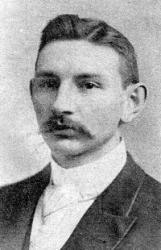
1864 - 1914 Topics: Safety Author of "His Presence Lights the Way" in The King's Message Rv William Clark Martin USA 1864-1914. Born at Hightstown, NJ, he graduated from the Peddie Institute in Hightstown in 1884, and in 1891 from the Crozer Theological Seminary, Upland, PA. He became minister of the Grace Baptist Church, Camden, NJ,(1891-1894); Noank Baptist Church, Noank, CT (1894-1900); Tabernacle Baptist Church, New Albany, IN (1902-1904); First Baptist Church, Seymour, IN (1902-1904); First Baptist Church, Bluffton, IN (1904-1909); Grace Baptist Church, Somerville, MA (1909-1912); and First Baptist Church, Fort Myers, FL (1912-1914). In 1891 he married Euretta (Etta) May Wilcox, and they had at least three children (no names found). He penned many hymn lyrics. He died of heart failure at his farm in Rialto, FL.
John Perry
W. C. Martin
César Malan
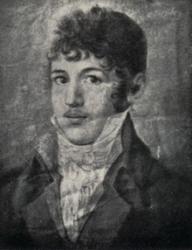
1787 - 1864 Person Name: H. A. César Malan Topics: Almsgiving; Benevolence; Character Good and Bad Contrasted; Character Value of Good; Christian Charity; Christians Conscious of Safety; Christians Graces of; Enemies Destruction of; Enemies Restrained; Godly Fear Blessedness of; Fearlessness; Heart Good, Perfect, Pure and Upright; Home Life; Liberality; Love For Man; Parents and Children; Patience; Pity For Others; The Poor Duty Towards; Providence of God Over Saints; The Christian's Reward; The Righteous Blessedness of; The Righteous Character of; Safety Enjoyed; Steadfastness; The Wicked Fate of Composer of "WELTON" in The Psalter Rv Henri Abraham Cesar Malan, 1787-1864. Born in Geneva, Switzerland, into a bourgeois family that moved to Switzerland to escape religious persecution during the French Revolution, he attended the university in Marseilles, France, intending to become a businessman. Although having some grounding in religious faith by his mother, he decided to attend the Academy at Geneva (founded by Calvin) in preparation for ministry. He was ordained in 1810, after being appointed a college master (teaching Latin) in 1809. Malan was in accord with the National Church of Geneva as a Unitarian, but the Reveil Movement caused him to become a dissident (evangelical) instead of a proponent of the Reformed Church (believing works, not faith, was what mattered). In 1811 he married (wife’s name not found). They had at least two children (one son was Solomon, referenced below). From 1813 on Malan slowly became an evangelical, after being given an understanding of true salvation through grace (not works) in 1816 by two German Lutherans from Geneva. He became saved upon this realization and was so changed that he burned his prized collection of classical authors and manuscripts. In 1817 he preached around Geneva, and one sermon in particular, “Man only justified by faith alone” created a firestorm and brought him into conflict with religious authorities of the region. From then on he wished to help reform the national church from within, but the forces of the Venerable Company were too strong for him and excluded him from the pulpits and caused his dismissal from his regentsship at the college in 1818. Others in agreement with Malan were Charles Spurgeon, Robert Wilcox, Robert Haldane, and Henry Drummond. In 1820 he built a chapel in his garden and obtained the license of the State for it as a separatist place of worship. He preached in that chapel 43 years. In 1823 he was formally deprived of his status as a minister of the national Church. Various events caused his congregation to diminish over the next few years, and he began long tours of evangelization subsidized by religious friends in his land, Belgium, France, England and Scotland. He often preached to large congregations. Malan also authorized a hymn book, “Chants de Sion” (1841). A strong Calvinist, Malan lost no opportunity to evangelize. On one occasion an old man he visited pulled Malan’s hymnal out and told him he had prayed to see the author of it before he died. On a visit to England Malan also inspired author, Charlotte Elliott, to write the hymn lyrics for “Just as I am”, when seeking an answer to her conversion she asked and he advised her to come to Christ ‘just as she was’. Malan published a score of books and also produced many religious tracts and pamphlets largely on questions in dispute between the National and evangelical churches of Rome. He also wrote articles in the “Record” and in American reviews. His hymns were set to his own melodies. He was an artist, a mechanic, a carpenter, a metal forger, and a printer. He had his own workshop, forge and printing press. One of his greatest joys was the meeting of the evangelical alliance at Geneva in 1861 which helped change church views. He retired to his home, Vandoeuvres, in the countryside near Geneva in 1857, dying there seven years later.. He was honored by a visit from the Queen of Holland two years before his death. He is mainly remembered as a hymn writer, having written 1000+ hymn lyrics and tunes. One son, Solomon, a gifted linguist and theologian, became Vicar of Broadwindsor. About a dozen of his hymns appeared translated in the publication “Friendly visitor” (1826). He was an author, creator, composer, editor, correspondent, contributor, translator, owner, and performer.
John Perry
=================
Malan, Henri Abraham César. The family of Malan traces its origin to the valleys of Piedmont. A branch of it settled at Mérindol, in Dauphiné, but was driven from France by the persecutions that followed the Revocation of the Edict of Nantes. Pierre Malan [Cesar's father], after seeing his sister fall a victim to persecution, left Mérindol (1714), and arrived at Geneva (1722). Henri Abraham César Malan was born at Geneva in 1787. After an education at the College, he went to Marseilles, with the intention of learning business: but, soon after, entered the Academy at Geneva, as a preparation for the ministry, to which he was ordained in 1810. He had been appointed one of the masters at the College in the previous year. The National Church of Geneva was at that time almost Unitarian, and Malan's convictions were in accord with it. But the great movement known as the Réveil, of which the first products were the dissident church of Bourg de Four and at a later date that founded by Malan himself, and which finally imbued the whole Swiss Church with its spirit, was silently preparing itself. The germ of the movement may be traced in the Société des Amis (1810), of which Empeytaz and A. Bost were leaders; and in Malan's independent attainment to the doctrines of the Divinity of the Saviour and the free gifts of salvation through Him (1816). But the human agency, which gave it force, and determined its Calvinistic direction, was the visit of Robert Haldane (in the autumn of 1816), to whom not only these pioneers of the movement, but F. Monod, E. Rieu, Guers, Gonthier, Merle d'Aubigné, and others, always pointed as their spiritual father. Empeytaz and others sought to attain enfranchisement by the establishment of the "petite Eglise of Bourg de Four." Malan wished to reform the national Church from within: and a sermon at Geneva, which brought on him the obloquy of the professors and theologians that composed his audience, and which Haldane characterized as a republication of the Gospel, was his first overt act (Jan. 19, 1817). But the opposing forces were far too strong for him. The Venerable Company excluded him from the pulpits, and achieved his dismissal from his regentship at the College (1818). In 1820 he built a chapel (Chapelle du Temoignage) in his garden, and obtained the licence of the State for it, as a separatist place of worship. In 1823 he was formally deprived of his status as a minister of the national Church. The seven years that succeeded were the palmy days of the little chapel. Strangers, especially from England, mingled with the overflowing Swiss congregation. But (in 1830) a secession to Bourg de Four, and then the foundation of the Oratoire and the Société Evangelique, which in 1849 absorbed the congregation of Bourg de Four under the title of the Église Evangélique, thinned more and more the number of his adherents. His burning zeal for the conversion of souls found a larger outlet in long tours of evangelization, subsidized by religious friends, in his own land and Belgium and France, and also in Scotland and England, where he had friends among many religious bodies, and where he preached to large congregations. The distinguishing characteristic of these tours was his dealing with individuals. On the steamboat or the diligence, in the mountain walk, at the hotel, no opportunity was lost. On one occasion an old,man whom he visited drew from under his pillow a copy of his great hymnbook, Chants de Sion, 1841, and told him how he had prayed to see the author of it before he died.
It is as the originator of the modern hymn movement in the French Reformed Church that Malan's fame cannot perish. The spirit of his hymns is perpetuated in the analysis of Christian experience, the never-wearied delineation of the hopes and fears, the joys and sorrows of the believer's soul, which are still the staple of French Protestant hymns. To this was added, in Malan himself, a marked didactic tone, necessitated by the great struggle of the Réveil for Evangelical doctrine; and an emphatic Calvinism, expressing itself with all the despondency of Newton and Cowper, but, in contrast with them, in bright assurance, peace and gladness. French criticism has pronounced his hymns unequal, and full of literary defects; but their unaffected freshness and fervent sincerity are universally allowed. In the Chants de Sion, hymns 20, ”Hosanna! Béni soit"; 165, “Mon coeur joyeux, plein d'espérance"; 199, "Du Rocher de Jacob"; 200, "Agneau de Dieu"; 239, "Trois fois Jehovah," are in every Protestant French hymnbook; and several others are very widely used.
Besides his hymns Malan produced numberless tracts and pamphlets on the questions in dispute between the National and Evangelical Churches and the Church of Rome, as well as articles in the Record and in American reviews. He was a man of varied acquirements. His hymns were set to his own melodies. He was an artist, a mechanic: his little workshop had its forge, its carpenter's bench, its printing press. To the end of his life his strong Calvinism, and his dread of mere external union in church government, kept him distinct from all movements of church comprehension, though freely joining in communion with all the sections of Evangelical thought in Geneva and Scotland. At one time there seemed a prospect of his even rejoining the national Church, which had driven him from her. One of his greatest joys was the meeting of the Evangelical Alliance at Geneva (1861). He left no sect; one of his latest orders was the demolition of his decayed chapel, in which he had preached for 43 years. He died at Vandoeuvres, near Geneva, in 1864, leaving a numerous family, one of whom, the Rev. S. C. Malan, D.D., sometime Vicar of Broadwindsor, is well known as a linguist and a theologian of the English Church. To English readers Malan is chiefly known as a hymn-writer through translations of his "Non, ce n'est pas mourir" (q.v.): "It is not death to die", &c. About a dozen of his hymns appear in a translated form in the Friendly Visitor for 1826. [Rev. H. Leigh Bennett, M.A.]
-- John Julian, Dictionary of Hymnology (1907)
=================
http://en.wikipedia.org/wiki/César_Malan
César Malan
I-to Loh
b. 1936 Person Name: I-to Loh, b. 1936 Topics: Daily Prayer Evening Prayer; Despair; Earth; Elements of Worship Call to Confession; Elements of Worship Call to Worship; Elements of Worship Lord's Supper; Elements of Worship Offering; Elements of Worship Praise and Adoration; Enemies; Freedom; God's Safety; God's Sovereignty; God's Sustaining Power; God's Wonders; God's Deeds; God's Love; God's Name; God's Promise of Redemption; God's Strength; Gratitude; Hymns of Praise; Joy; Love for God; Mercy; Occasional Services New Year; Offering of Sacrifice; Peace; Prayer Answer to; Prayer; Remembering; Remnant of Isarel; Rest; Salvation; Victory; Vows; Witness; Worship; Year A, Easter, 6th Sunday; Year C, Ordinary Time after Pentecost, July 3-9; Year C, Ordinary Time after Pentecost, October 9-15; Texts in Languages Other than English Shona Translator of "Come, All You People" in Psalms for All Seasons
I-to Loh
A. Ewing
1830 - 1895 Person Name: Alexander Ewing Topics: Afflictions Comfort under; Aspirations For Christ; Aspirations For Heaven; Assurance Declared; Assurance Enjoyed; Christ Communion with; Christ Preciousness of; Christ Providences of; Christians Blessedness of; Christians Conscious of Safety; Christians Heirs of Heaven; Christians Saved by Grace; Comfort in Trials; Contentment; Death Comfort In; Death Of Saints; Etermal Life; Faith Confidence of; Faith Walking by; Glory of God In Providence; God Our Guardian; God Our Guide; God Love and Mercy; Gospel Freeness of ; Grace Restoring; Heaven; Immortality; Lord's Supper; Nature An Emblem of Grace; Prayer For Christ's Sake; Preservation; Resurrection; The Righteous Honor and Safety of; Worship Grace Needed for Composer of "EWING" in The Psalter Alexander C (Rex) Ewing United Kingdom 1830-1895. Born at Aberdeen,Scotland, he studied music and German at Heidelberg University and law in Aberdeen. However, he did not qualify as a lawyer. A member of the Aberdeen Harmonic Choir and the Hadyn Society of Aberdeen, he was regarded as the most talented young musician in the city. He became an author, musician, editor, composer, and translator. He married Juliana Horatia Gatty in 1867. She died in 1885, and he remarried Elizabeth Margaret Cumby in 1886. He was a career officer in the British Army's Commissariat Department and subsequently the Army Pay Corps. He served at Constantinople during the Crimean War, thereafter in China for six years, then in Ireland during the Fenian Uprising. He was then in New Brunswick just after England created the British North American Act, creating the Dominion of Canada. He then went to Fredericton, where he played the organ and sang at Christ Church Cathedral. He was transferred to Aldershot. In 1879 he went to Malta, then served in Ceylon before returning to England. He reached the rank of Lt. Col. He translated several works by other authors. He retired and spent the last six years of his life in Taunton, England, where he died.
John Perry
A. Ewing
Francis Rous
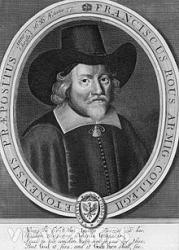
1579 - 1659 Topics: Death Confidence in; Death Overcome fear of; God Goodness of; God Guide; God Safety in; God Shepherd; Saints Confidence of Author of "The twenty-third Psalm" in Hymnal of the Methodist Episcopal Church Rous, Francis (Rouse), was born at Halton, Cornwall, in 1579, and educated at Oxford. He adopted the legal profession, and way M.P. for Truro during the reigns of James and of Charles I. He also represented Truro in the Long Parliament, and took part against the King and the Bishops. He was appointed a member of the Westminster Assembly; of the High Commission; and of the Triers for examining and licensing candidates for the ministry. He also held other appointments under Cromwell, including that of Provost of Eton College. He died at Acton, Jan. 7, 1659, and was buried in the Chapel of Eton College. Wood, in his Athenae Oxmienses, gives a list of his numerous works.
--Excerpts from John Julian, Dictionary of Hymnology (1907)
====================
Rous, Francis, pp. 918, ii.; 927, ii.; 979, i., 1023, i. The.history of the Rous version of the Psalms is still rather obscure. At p. 918, ii., it is said to have been first published 1641, and reprinted with "further changes" in 1643. The present writer has been allowed to compare the—
Booke of Psalmes in English Meeter. Printed for Henry Tutill, Bookseller at Rotterdam, 1638, with the Psalmes of David in English Meeter, set forth by Francis Rous . . . London, Printed by James Young, for Philip Nevill, at the signe of the Gun in Ivie-lane, 1643.
The preface is the same in both, and a careful collation of a considerable number of the versions showed no variations except in spelling, the only variation observed being that the ed. of 1643 adds, after Ps. 150, a supplement of—
Psalmes of harder and lesse usuall Tunes corrected, and the Tunes not altered; with versions of Pss. 51, 111, 112, 113, 120, 121, 122, 124, 125, 126, 127, 130, and 148.
The Psalter of 1647, said to be in the B. M. by Mr. Glass, p. 85 (see p. 926, ii.), is not by Rous, but is a reprint of the Bay Psalm Book noted by Glass at p. 82. [Rev. James Mearns, M.A.]
--John Julian, Dictionary of Hymnology, New Supplement (1907)
Francis Rous
Carrie Ellis Breck

1855 - 1934 Person Name: Mrs. Frank A. Breck Topics: Safety Author of "God is Watching" in The King's Message Carrie Ellis Breck was born 22 January 1855 in Vermont and raised in a Christian home. She later moved to Vineland, New Jersey, and then to Portland, Oregon. She wrote verse and prose for religious and household publications, In 1884 she married Frank A. Breck. She has written between fourteen and fifteen hundred hymns.
Dianne Shapiro, from "The Singers and Their Songs: sketches of living gospel hymn writers" by Charles Hutchinson Gabriel (Chicago: The Rodeheaver Company, 1916)
See also Mrs. Frank A. Breck.
Carrie Ellis Breck
William Knapp
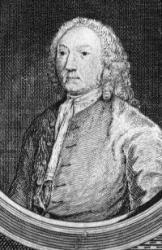
1698 - 1768 Topics: Affliction; Angels; Church Year Lent; Comfort and Encouragement; Daily Prayer Night Prayer; Darkness; Enemies; Fear; Freedom from Fear; God Trust in; God as Refuge; God's Safety; God's Wings; God's Love; God's Name; God's Power; God's Protection; Hope; Love for God; Occasional Services Funerals; Occasional Services New Year; People of God / Church Suffering; Prayer Answer to; Prayer; Temptation And Trial; Trust; Year B, Ordinary Time after Pentecost, October 16-22; Year C, Lent, 1st Sunday; Year C, Ordinary Time after Pentecost, September 25-October 1 Composer of "WAREHAM" in Psalms for All Seasons Born: 1698, Wareham, Dorsetshire, England.
Died: September 26, 1768, Poole, Dorsetshire, England.
Buried: Poole, Dorsetshire, England.
William Knapp
Samuel Webbe
1770 - 1843 Topics: Safety and Comfort Composer of "MELCOMBE" in The Pilgrim Hymnal Samuel Webbe, Jr. (1770-1843), adapted the tune RICHMOND. He was organist at Paradise Street Unitarian Church, Liverpool (1798). Later he succeeded his father as organist at the Spanish Ambassador’s Chapel, London (1817), and then St. Nicholas’ Church and St. Patrick’s Roman Catholic Chapel, Liverpool.
--The Presbyterian Hymnal Companion, 1993
Samuel Webbe
Chrétien Urhan
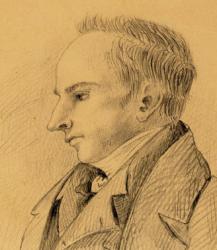
1790 - 1845 Topics: Afflictions For sin; Afflictions Refuge in; Blessedness Of Those Chosen of God; Christians Believers; Christians Conflicts of; Christians Saved by Grace; Deliverance From Sin; God Hearer of Prayer; God Love and Mercy; Gospel Invitations of ; Gospel Privileges of; Heart Good, Perfect, Pure and Upright; Joy Divinely Bestowed; Joy Reasons for; Pardon Set Forth; Penitence; Prayer Complaint in; Prayer Confession in; Prayer For Pardon; Prayer Sincerity in; Repentance; Safety Assured; Salvation God's Gift; Sickness From God; Sin Confession of; Sin Conviction of; Sin Salvation from Composer of "RUTHERFORD" in The Psalter Chrétien Urhan (Baptised as Christian Urhan; 16 February 1790, Montjoie - 2 November 1845, Belleville) was a French violinist, organist, composer and player of the viola and the viola d'amore.
His father first introduced him to the violin. He was first mentioned in 1804 by Joséphine de Beauharnais that he had replaced a violinist for a performance of Haydn's The Creation, at the young age of 14. From there he was sent to work in Paris, where he took instruction from Jean-François Lesueur, master of the chapel of the Tuileries. He also learned from prominent teachers such as François-Antoine Habeneck, Rodolphe Kreutzer and Pierre Rode. He was invited to join the imperial chapel as a violinist in 1810.
In this period the young Urhan shared lodgings with his friends the harpist Franz Anton Stockhausen (father of Julius Stockhausen) and the painter Carl Begas the elder (who was studying with Antoine Jean Gros, 1813-15). In 1815, through a Quartermaster in the Prussian army of occupation, Urhan and Stockhausen (who corresponded with Beethoven) obtained a score of Beethoven's Eroica Symphony and set it before Habeneck, with the result that the work was introduced to Paris. The two were among Amis de Beethoven, or Beethoven-Bruder in Paris, together with Wilhelm Mangold and others. In the early 1820s the violinist Sina, a member of the string quartet led by Schuppanzigh for Andreas Razumovsky, with Urhan gave new encouragement to Habeneck to continue with the master's works. Until Stockhausen's marriage to the singer Margarethe Schmuck, a member of their circle, in 1825, he lived with Urhan, who remained a lifelong friend.
In 1816, Urhan was appointed solo viola at the Opéra de Paris, and became solo violinist in 1825. Strongly Catholic, he was also appointed the organist at the Church of Saint-Vincent-de-Paul in Paris in 1827, a position that he held until his death. In this position he met the young Franz Liszt, with whom he played chamber music, and also the Beethoven Kreutzer Sonata in a mass. A number of composers wrote prominent parts for Urhan. Meyerbeer composed for him solo viola and solo viola d'amore parts in his opera Les Huguenots, and Rudolph Kreutzer, the solo viola d'amore part in his opera Le Paradis de Mahomet. In 1834, Berlioz wrote his Harold en Italie for orchestra with viola obbligato at the request of Niccolò Paganini, who refused to play the work. Berlioz offered the solo viola part to Urhan and the premiere was given on 23 November 1834 at the Paris Conservatory.
According to Ernest Legouvé, he was both entirely religious and entirely devoted to music. He lived like a medieval ascetic, abstaining from almost everything except his daily visit to the Café des Anglais. His love for theatre music created a severe inner conflict, which he overcame by asking the permission of the Archbishop to play in the orchestra of the Opéra (of which he was Leader), being told it was a matter for his own conscience. He accepted this by always being seated with his back to the stage, so that he never saw the singers or dancers for whom he played, even when providing solo accompaniment for a dancer.
Legouvé thought there were several greater violin virtuousi in Paris than Urhan, but that he outshone them through his profound knowledge of the masters and respect for their music, and through the indefinable quality of style which he brought to them. He often differed with Habeneck, when the conductor wanted to make cuts, and actually published and signed an article against Habeneck when he withdrew some double-basses from Beethoven's Choral Symphony. He did not merely guard the reputation of the old masters, but he was also a fierce advocate and defender of the new, and of those of the future. He was the first to introduce a song of Schubert's into France ('L'Adieu'). For Legouvé, to see him play was like watching Fra Angelico painting in his cell, a medieval mystic at work.
The Stockhausens visited Urhan in his fifth-floor Paris apartment in 1839, and found him living in great simplicity in two rooms, with a piano and five stools in his bedroom, where they sat and were made very welcome. In 1843 Urhan encouraged their son Julius while he was in Paris. In November 1845 Julius wrote to inform his parents of Urhan's death. He had been living in pitiable conditions in Belleville, and began to refuse his food: thoughts of suicide made him resolve to starve himself to death. He suffered agonies of pain and descended into a frenzy, giving terrible grief to his friends, none of whom could talk him out of it. All interventions failed, and Urhan, whom the Stockhausen and Legentil families considered their dear friend, and who had formerly taken communion every Sunday, lost his faith in God and his desire for life. Thus he died, quietly at last with friends at his bedside, on 2 November 1845.
--en.wikipedia.org/wiki/ (excerpts)
Chrétien Urhan
Pages




