

 My Starred Hymns
 My FlexScores
 My Hymnals
 My Purchased Files
Planning worship?
Check out our sister site, ZeteoSearch.org,
for 20+ additional resources related to your search.
- |
User Links
Person Results
J. Albert Jeffery
1855 - 1929 Topics: God our help Composer of "ANCIENT OF DAYS" in Elmhurst Hymnal Born: October 26, 1855, Plymouth, England.
Died: June 4, 1929, Brookline, Massachusetts.
Jeffery (sometimes misspelled as Jeffrey) began playing the organ at St. Anne’s Cathedral in Plymouth at age 14, taking over his father’s position. He emigrated to America in 1876 and settled in Albany, New York. He developed a chorus and directed the music at St. Agnes School, and played the organ at the Protestant Episcopal Cathedral. He left for Yonkers, New York, in 1893, and served at the First Presbyterian Church. Later, he taught music at the New England Conservatory.
--www.hymntime.com/tch
J. Albert Jeffery
Henry Burton
1840 - 1930 Topics: Helpfulness Author of "Pass It On" in The Endeavor Hymnal Rv Alfred Henry Burton DD United Kingdom 1840-1930. Born at Swannington, Leicestershire, he emigrated with family to America and became a student at Beloit College, WI, graduating with honours. After a pastorate in the Methodist Episcopal Church at Monroe, WI, he returned to England and entered the Wesleyan Ministry in 1865. He married Ellen Pearse. He then ministered mostly in Lanca-shire and London. Published works include ”Gleanings in the gospels:, “Wayside songs”, “St. Luke in Expositor's Bible”.
John Perry
=====================
Burton, H. In I. D. Sankey's Sacred Songs and Solos, 1878, the hymns, "Come, for the feast is spread," (The Gospel Invitation), and "Look away to Jesus" (Looking unto Jesus) are attributed to the "Rev. H. Burton”
--John Julian, Dictionary of Hymnology, Appendix, Part II (1907)
=====================
Burton, Henry, D.D., p. 1555, i., born at Swannington, Leicestershire, in 1840. His parents having emigrated to America, he became a student at Beloit College, and graduated in honours. After labouring as a minister of the Methodist Episcopal Church for a time he returned to England, entered the Wesleyan Ministry in 1865, and has since laboured chiefly in Lanca¬shire and London. His published works include Gleanings in the Gospels, Wayside Songs, 1886, St. Luke in the Expositor's Bible, &c. His hymns in common use, in addition to those named on p. 1555, i., include:—
1. Break, day of God, 0 break. [Second Advent.] Written at Blundell Sauds, near Liverpool, on Christmas Eve, 1900, and included in The Methodist Hymn Book, 1904. "The opening stanza was composed on the Railway Bridge where I lingered on my way home" (Author's MS!.).
2. In the secret of His presence. [Peace in Christ.] Written at Acton, London, published in his Wayside Songs, 1886, and included in the Epworth Hymnal, U.S.A.
3. 0 King of Kings, 0 Lord of hosts. [National Hymn.] Dr. Burton's history of this hymn is: "In the late Queen's Jubilee year, 1887, I composed an Ode which was set to music by Sir J. Stainer, and sung at a Jubilee Festival in the Royal Albert Hall, London. As the Ode could not be sung at any other time, Sir J. Stainer requested me to compose a hymn to which the same music should be set [and of a national character]. This led me to write the hymn" Author's MS.). It is No. 975 in The Methodist Hymn Book, 1904.
4. Have you had a kindness shown? Pass it on. [Kind Deeds.] "This is based on a little incident in the life of my brother-in-law, the Rev. Mark Guy Pearse. When a boy returning home from a Moravian school in Holland, the steward of the boat on which he sailed from Bristol to Hayle showed him marked attention and kindness, because Mr. Pearse's father, years before, had proved a great friend to his mother. And so he was simply 'passing on' the kindness." (Author's MS.). The hymn was written at Acton on April 8, 1885, and first printed in The Christian Advocate, N.Y., 1886, and again in Wayside Songs, 1886, p. 81. The first stanza has been adopted as a motto by the "International Sunshine Society," of New York.
--John Julian, Dictionary of Hymnology, New Supplement (1907)
==========================
See also in:
Hymn Writers of the Church
Henry Burton
James Langran
1835 - 1909 Topics: Help in Afflictions Composer of "LANGRAN" in Psalter Hymnal (Red) James Langran (b. St. Pancras, London, England, November 10, 1835; d. Tottenham, London, England, June 8, 1909) studied organ as a youth but did not receive his Bachelor of Music degree from Oxford until he was forty-nine years old. He had several organist positions–the longest was at St. Paul's Church, Tottenham, England, from 1870 to 1909. He also taught music at St. Katherine's Training College for Schoolmistresses (1878-1909). Music editor of theNew Mitre Hymnal (1875), Langran composed around fifty hymn tunes and contributed several of them to early editions of Hymns Ancient and Modern.
Bert Polman
James Langran
Frederick A. J. Hervey
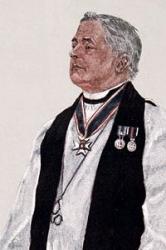
1846 - 1910 Person Name: F. A. J. Hervey Topics: Helpfulness Composer of "LANDON" in The Endeavor Hymnal Born: May 18, 1846, Westminster, Middlesex, England.
Died: August 8, 1910, Norwich, England.
Buried: St. Mary Magdalene’s Church, Sandringham, Norfolk, England.
Son of Alfred, Lord Hervey, Frederick was educated at Marlborough and Trinity College, Cambridge (BA 1868, MA 1872). He was ordained a deacon in 1869, and priest in 1870. He served as Rector of Upton-Pyne, Devon (1876); Sandringham (1878-1907); Canon of Norwich (1897); and Domestic Chaplain to King Edward VII (1901).
--www.hymntime.com/tch/
Frederick A. J. Hervey
Paul A. Tate
Person Name: Paul Tate Topics: God as Help Composer of "[Lord, you have been our dwelling place]" in Christian Worship
Paul A. Tate
W. O. Perkins
1831 - 1902 Person Name: William O. Perkins Topics: Help in Afflictions Composer of "AMARA" in Psalter Hymnal (Red) William Oscar Perkins DMus USA 1831-1902. Born at Stockbridge, VT, older brother of Henry, and the son of musical parents (both singers) he was trained musically, primarly by his father. He attended the Kimball Union Academy, Meriden, NH, then studied music in Boston, MA, London, England, and Milan, Italy. He settled in Boston, MA, and founded a music academy, where he taught music. He published a number of hymnals in Boston, then moved to New York City. He was awarded an honorary doctorate of music degree in 1879 by Hamilton College. He wrote 19 books (1861-1897), including a history of the war in South Africa (1900). He published 33 hymnals 1859-1882). In 1870 he published ”The Chorister”, his 400-page music collection for choirs, schools, and conventions. He was an author, composer, editor, compiler, and originator. He died at Boston, MA.
John Perry
W. O. Perkins
Peter Cutts
1937 - 2024 Person Name: Peter Cutts (b. 1937) Topics: God--in Jesus Christ His Love, Help, Healing Composer of "BRIDEGROOM" in New Church Praise
Peter Cutts
Bertus Frederick Polman
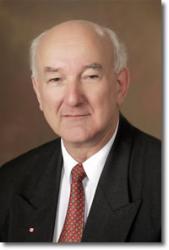
1945 - 2013 Person Name: Bert Polman Topics: God as Help Author of "Come Quickly, LORD, to Rescue Me" in Christian Worship Bert Frederick Polman (b. Rozenburg, Zuid Holland, the Netherlands, 1945; d. Grand Rapids, Michigan, July 1, 2013) was chair of the Music Department at Calvin College and senior research fellow for the Calvin Institute of Christian Worship. Dr. Polman studied at Dordt College (BA 1968), the University of Minnesota (MA 1969, PhD in musicology 1981), and the Institute for Christian Studies. Dr. Polman was a longtime is professor of music at Redeemer College in Ancaster, Ontario, and organist at Bethel Christian Reformed Church, Waterdown, Ontario. His teaching covered a wide range of courses in music theory, music history, music literature, and worship, and Canadian Native studies. His research specialty was Christian hymnody. He was also an organist, a frequent workshop leader at music and worship conferences, and contributor to journals such as The Hymn and Reformed Worship. Dr. Polman was co-editor of the Psalter Hymnal Handbook (1989), and served on the committees that prepared Songs for Life (1994) and Sing! A New Creation (2001), both published by CRC Publications.
Emily Brink
Bertus Frederick Polman
Henry Hart Milman
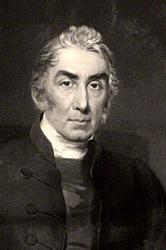
1791 - 1868 Person Name: H. H. Milman Topics: Praying for Divine Help Author of "O help us Lord each hour of need" in Hymns for Christian Devotion Milman, Henry Hart, D.D., the youngest son of Sir Francis Milman (who received his Baronetage as an eminent Court physician), was born Feb. 10th, 1791, and educated at Dr. Burney's at Greenwich, and subsequently at Eton. His career at B. N. C. Oxford, was brilliant. He took a first class in classics, and carried off the Newdigate, Latin Verse, Latin Essay, and English Essay. His Newdigate on the Apollo Belvedere, 1812, is styled by Dean Stanley "the most perfect of Oxford prize poems." His literary career for several years promised to be poetical. His tragedy Fazio was played at Covent Garden, Miss O'Neill acting Bianca. Samor was written in the year of his appointment to St. Mary's, Reading (1817); The Fall of Jerusalem (1820); Belshazzar and The Martyr of Antioch (1822), and Anne Boleyn, gained a brilliant reception from the reviewers and the public. He was appointed Poetry Professor at Oxford in 1821, and was succeeded ten years after by Keble. It must have been before 1823, the date of Heber's consecration to Calcutta, that the 13 hymns he contributed to Heber's Hymns were composed. But his poetry was only the prelude to his larger work.
The Bampton Lectures (1827) mark his transition to theological study, and the future direction of it was permanently fixed by his History of the Jews (1829). This book raised a storm of obloquy. It was denounced from the University pulpit, and in the British Critic. "It was the first decisive inroad of German theology into England, the first palpable indication that the Bible could be studied like another book, that the characters and events of the sacred history could be treated at once critically and reverently" (Dean Stanley).
In 1835 he was presented by Sir Robert Peel to a Canonry at Westminster and the Rectory of St. Margaret's. In 1839 appeared his valuable edition of Gibbon's Decline and Fall; and in 1840 his History of Christianity to the Abolition of Paganism in the Roman Empire. Among his minor works in a different field were his Life of Keats and his edition and Life of Horace. It was not till 1854 that his greatest work—-for "vast and varied learning, indefatigable industry, calm impartiality, and subtle and acute criticism, among the most memorable in our language" (Quart Rev.)—-Latin Christianity—-appeared. He had been appointed Dean of St. Paul's in 1849. The great services under the dome originated in his tenure of the Deanery. His latest work, published after his death, Sept. 24, 1868, was The Annals of St. Paul’s. Though one of the most illustrious in the school of English liberal theology, he had no sympathy with the extreme speculations of Germany. The "criticism" of Tübingen "will rarely bear criticism." He "should like an Ewald to criticise Ewald." "Christianity will survive the criticism of Dr. Strauss," and the "bright flashing artillery" of Rénan. His historical style has been compared to Gibbon in its use of epigram and antithesis. His narrative is full of rapidity of movement. His long complex paragraphs have often a splendour of imagination as well as wealth of thought. All the varied powers of his mind found vent in his conversation; he was called, after his death, "the last of the great converters." The catalogue of his friends from the days of Heber, "his early friend," to those of Hallam, Macaulay, and Dean Stanley, was long and distinguished.
Milman's 13 hymns were published in Heber's posthumous Hymns in 1827, and subsequently in his own Selection of Psalms & Hymns, 1837. The fine hymn for The Burial of the Dead, in Thring's Collection, "Brother, thou art gone before us," is from The Martyr of Antioch (1822). Like Heber's, they aim at higher literary expression and lyric grace. He makes free use of refrains. The structure is often excellent. His style is less florid and fuller of burning, sometimes lurid force than Heber's. His hymn for the 16th Sunday after Trinity, "When our heads are bowed with woe," has no peer in its presentation of Christ's human sympathy; the hymn for the 2nd Sunday in Lent, “Oh! help us, Lord! each hour of need," is a piece of pure deep devotion. "Ride on, ride on in majesty," the hymn for Palm Sunday, is one of our best hymns. And the stanzas for Good Friday, "Bound upon the accursed tree," form one of the finest meditations on the Passion. All his hymns are still in common use. [Rev.H.Leigh Bennett, M.A.]
--John Julian, Dictionary of Hymnology (1907)
Henry Hart Milman
P. P. Van Arsdale
Topics: Pastor Helping your Composer of "MISSION SONG" in The Sunday School Hymnal
P. P. Van Arsdale
Pages




