You help make Hymnary.org possible. More than 10 million people from 200+ countries found hymns, liturgical resources and encouragement on Hymnary.org in 2025, including you. Every visit affirms the global impact of this ministry.

If Hymnary has been meaningful to you this year, would you take a moment today to help sustain it? A gift of any size—paired with a note of encouragement if you wish—directly supports the server costs, research work and curation that keep this resource freely available to the world.

Give securely online today, or mail a check to:
Hymnary.org
Calvin University
3201 Burton Street SE
Grand Rapids, MI 49546

Thank you for your partnership, and may the hope of Advent fill your heart.

Person Results

Topics:safety+-+security
In:people

Planning worship? Check out our sister site, ZeteoSearch.org, for 20+ additional resources related to your search.
Showing 181 - 190 of 322Results Per Page: 102050

May Whittle Moody

1870 - 1963 Person Name: Mary Whittle Moody (1870-1963) Topics: La Vida Christian Confianza y seguridad; The Christian Life Trust and safety Composer of "[Cristo me ayuda por él a vivir]" in Himnario Adventista del Séptimo Día Mary (May) Jennette Whittle Moody 1870-1963. Born at Chicago, IL, daughter of hymnwriter, Daniel Webster Whittle (El Nathan), and, upon marrying, daughter-in-law to Dwight Lyman Moody, she attended Northfield School in MA (one of two schools founded there by D L Moody), after which she attended Oberlin College, Oberlin, OH. She then attended the Royal Academy of Music in London, England (1890-91). She became a singer, organist, composer, and hymn editor. She assisted her father and Dwight L Moody in their evangelistic work. In 1894 she married William Revell Moody, and they had four children: Irene, Dwight, Beatrice, and Virginia. Only Beatrice lived to adulthood, the others died before age six. She and her husband returned to Northfield, MA, where her husband headed the schools founded by his father. She had an organ in her home, and she collaborated with her father by composing some of the tunes for his hymn lyrics. The last year of his life, her father, Daniel, lived with them (he died in 1901). She died at East Northfield, MA. John Perry

F. Venua

1788 - 1872 Person Name: Fred. M. A. Venua Topics: Safety and Comfort Composer of "PARK STREET" in The Pilgrim Hymnal Frederic Marc Antoine Venua; English composer Evangelical Lutheran Hymnal, 1908 Born to an Ital­i­an fa­mi­ly in France, Ve­nua at­tend­ed the Pa­ris Con­ser­va­to­ry, and stu­died com­po­sition in Lon­don. He di­rect­ed and com­posed for the ball­et or­ches­tra at the King’s The­a­ter, and be­longed the Bri­tish Roy­al So­ci­e­ty of Mu­si­cians. He re­tired to Ex­e­ter in 1858. © The Cyber Hymnal™ (http://www.hymntime.com/tch/bio/v/e/n/u/venua_fma.htm">Frederick Marc Antoine Venua)

Gerard Francis Cobb

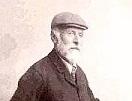
1838 - 1904 Person Name: Gerard F. Cobb Topics: Safety and Comfort Composer of "MOULTRIE" in The Pilgrim Hymnal Gerard Francis Cobb was born at Nettlestead (near Maidstone), Kent, on 15 October 1838, the youngest of five children of the Reverend William Francis Cobb (1795-1862) - the rector of Nettlestead - and his wife, Mary Blackburn. The five children were:- 1. Mary (1826-1906), 2. Clement Francis (1821-1896), 3. William Francis (1831-1916), 4. Francis (1834-1920), and 5. Gerard Francis (1838-1904). (The patronymic ‘Francis' occurs in several generations. Gerard's grandfather was Francis Cobb (1759-1831), a brewer and banker of Margate, whose sons were William Francis (Gerard's father), John Francis and Thomas Francis. Gerard's brother Clement also had a son Francis William (1872-1938). The parents were both musical, the mother being a pianist (and latterly organist at Nettlestead) and the father a ’cellist. Gerard early showed an aptitude for music and was able to pick out a tune on the piano while still a child, and without any formal instruction. Gerard Francis Cobb was educated at Marlborough College from 1849 to 1857. (His brothers William and Clement were also educated there.) He was a bright pupil, reaching the Sixth Form in September 1854 (still aged 15) and winning several prizes - the Divinity Prize (Summer 1853), the Upper Fifth Prize (Summer 1854), the Lower Sixth Prize (Christmas 1854) and the English Essay Prize (1856). He was also appointed a College Prefect and (when he left school) donated a cup as an inter-house singing trophy. (Inter-house singing competitions continue to be popular at Marlborough to this day.) Two concert programmes from Marlborough College (Christmas 1854 and Christmas 1856) show his active involvement as singer, pianist and harmonium player, although in neither programme is there any indication of a composition by him. From Marlborough Cobb went up to Trinity College, Cambridge, matriculating in 1857. He was elected a Scholar in 1860, and graduated B.A. in 1861 with a double first in the Classical and Moral Science Triposes. He then went to Dresden for a short time, to study music. While there, he perfected his knowledge of German, later providing English translations for three of the texts of his own Lieder und Gesang (1885); he was also proficient in French and Italian, as well as being an excellent classical scholar. (Cobb wrote the words of at least one of his own songs - "Reconciliation" (c.1891) - and inserted a verse of his own into another song - "Drawbacks" (1892), words by Henry S. Leigh.) It may have been at this time that he decided not to make music his profession: he returned to Cambridge, where he spent the rest of his life. He was elected a Fellow of Trinity in 1863, proceeding M.A. in 1864, and in 1869 was appointed Junior Bursar of his college. This office, which he held for twenty-five years and in which he showed great business capacity, seems to have centered around the day-to-day running of the college, which included looking after the accommodation of some six hundred students (Trinity was the largest of all the Oxbridge colleges) and even making sure that the brewery horse had the correct number of nails in his shoes! (The college had a small brewery). Cobb's interests were many and varied. There was music, of course, but (appropriately, as the son, brother and uncle of rectors) he was also much interested in Church matters: he was in sympathy with the Tractarian movement (associated with Newman, Pusey, Keble, Forbes and Froude) and at one time contemplated (but finally declined) holy orders. He actively advocated union between the Anglican and Roman communities, and published an elaborate treatise which caused a sensation in ecclesiastical circles. A second edition (with a sequel) followed and this, in turn, was followed by two short tracts. Even as late as the 1860s there was a form of religious intolerance which although not life-threatening (as in the reigns of earlier monarchs) nevertheless ensured that a career in the Church would no longer be an option for Cobb. His appointment at Trinity was timely, and his energies were then directed towards the running of the College and to the pursuit of music. Cobb was a fine organist, and gave occasional recitals at Trinity. His writings include a history of the organ and an account of the choir which, apparently, he also trained. He was, too, the University’s representative on municipal affairs and produced pamphlets on rather more mundane matters than were normally dealt with in "the olive-grove of Academe". When Cobb went up to Trinity in 1857 the Professor of Music was the recently appointed (1856) William Sterndale Bennett (1816-1875). Cobb enjoyed Bennett's friendship and was helpful to him in dealing with the Faculty of Music. In the last years of his life, Bennett made use of two bound octavo music note-books in which he jotted down sketches and ideas; these books had been brought to him from Germany by Cobb. On Bennett's death, the Professorship passed to the blind George Macfarren (1813-1887). Cobb proved equally helpful to the new incumbent, particularly in the reform of the Faculty. He had been elected President of the Cambridge University Musical Society in 1874 and became Chairman of the University Board of Musical Studies in 1877, serving in that capacity for fifteen years. Aside from his work at Trinity, and his musical, religious, and municipal interests, there is yet one more facet of this Victorian polymath which must command our attention. He was, perhaps surprisingly, a great lover of outdoor activities - swimming, walking, hill climbing, and - above all - cycling. He was one of the founders - and first President (1878) - of the National Cyclists' Union (originally the Bicycle Union) and was also President of the Cambridge University Cycling Club. For the International Health Exhibition (1884) he contributed a chapter on 'Cycling' to the handbook on athletics, part 11. Cobb thought so much of cycling that his enthusiasm induced not only undergraduates but even many of the Dons to take to it (33). He celebrated his sixtieth birthday by undertaking a cycle run of sixty miles in company with one of his nephews. Cobb was not very tall and was almost equalled in height by his earlier high cycle, although in later years he rode what was then called a 'safety cycle' (which was smaller) and, eventually a 'free wheel bicycle'. (The cycle which features in the accompanying photograph is presumably a 'safety' or 'free wheel' machine.) Little is known of Cobb's life outside Cambridge. His duties at Trinity would have kept him there for most of the year, and his dealings with his London publishers were probably conducted by letter. His name appears on the invitation lists of several of the Royal Society of Musicians' annual dinners in the 1880s and, although he did not attend any of these, he is recorded as having made several donations to the Society. In 1893 Cobb married Elizabeth Lucy Parkinson, widow of Stephen Parkinson, Fellow and Tutor of St. John’s College, Cambridge, and (in accordance with the custom of the time) resigned his offices at Trinity. He continued to reside in Cambridge - at The Hermitage Silver Street - and devoted himself mainly to musical composition. From this last period of his life came the second (1893) and third (1897) sets of Barrack-Room Ballads (the first having appeared in 1892) and his delightful Twenty-four Songs for Little People (1897) to words by Norman Gale (d. 1942), as well as works on a larger canvas, including his most ambitious work - A Song of Trafalgar Op. 41, a Ballad for men's voices (solo and chorus) and orchestra (1900), to words by Edith Nesbit (1858-1924) - remembered today as the author of The Railway Children (1906). Among Cobb's large-scale works is reputed to be a Symphony although no trace of this has yet come to light. What can be stated with certainty, however, is that on 27 November 1902 a concert was held at the Winter Gardens, Bournemouth, given by the Municipal Orchestra under the direction of Dan Godfrey, jun. - later Sir Dan Godfrey (1868-1939) - and Gerard Cobb, who conducted "For the first time in Bournemouth" (and probably the first time anywhere) three of his own works - Introduction and Allegro Giocoso in B flat, Valse Pathétique 'Niobe', and Romanza for Orchestra, in E flat (performed at a Prom in 1901); two of Cobb's earlier songs - "I wish to tune my quivering lyre" (written in 1868) and "Mount, Gallants all!" (published c.1890 were sung by Henry Corner. (An orchestral score and band parts for "Mount, Gallants all!" were available for hire from the publishers, and it must be assumed that both songs were given with orchestral accompaniment.) Cobb's last-known compositions were three further settings of poems by Kipling - not from the Barrack-Room Ballads this time, but from a similar collection, Service Songs. The three songs. - "M.I." (Mounted Infantry of the Line), "The Married Man" (Reservist of the Line), and "Lichtenberg" (New South Wales Contingent) - had been commissioned by Charles Sheard, who had published his settings of the Barrack-Room Ballads and they were completed just a few days before his death. Sheard published them later that year. Gerard Francis Cobb died at The Hermitage on 31 March 1904. having succumbed to an attack of pneumonia. He was cremated at Woking on 5 April at 12.00 noon, at which precise time a memorial service was held at Trinity College Chapel; the music was all by Cobb. His ashes were laid to rest on 8 April in the churchyard at Nettlestead, where his widow erected a handsome cross in his memory. http://www.musicweb-international.com/classrev/2004/oct04

George Thomas Caldbeck

1852 - 1918 Person Name: George T. Caldbeck Topics: Christian Living Safety and Peace Composer of "PAX TECUM" in The Sanctuary Hymnal, published by Order of the General Conference of the United Brethren in Christ George Thomas Caldbeck United Kingdom 1852-1918. Born in Waterford, Ireland, he attended the National Model School, Waterford, and Islington Theological College. His desire to be a missionary was thwarted by his poor health. He returned to Cork and became a schoolmaster and evangelist in ireland. In 1888 he moved to London as an independent itinerant preacher. He was arrested in 1912 for selling scripture cards door to door without a license. The judge dismissed the case upon learning he was composer of the hymn tune” Pax Tecum.”. At the time he was living in a church hostel. He died in Epsom, Surrey. John Perry

Martin E. Leckebusch

b. 1962 Person Name: Martin Leckebusch Topics: Affliction; Angels; Church Year Lent; Comfort and Encouragement; Daily Prayer Night Prayer; Darkness; Enemies; Fear; Freedom from Fear; God Trust in; God as Refuge; God's Safety; God's Wings; God's Love; God's Name; God's Power; God's Protection; Hope; Love for God; Occasional Services Funerals; Occasional Services New Year; People of God / Church Suffering; Prayer Answer to; Prayer; Temptation And Trial; Trust; Year B, Ordinary Time after Pentecost, October 16-22; Year C, Lent, 1st Sunday; Year C, Ordinary Time after Pentecost, September 25-October 1 Author of "Within the Shelter of the Lord" in Psalms for All Seasons

Michael Morgan

b. 1948 Topics: Difficult Times; God's Judgment; God's Justice; God As Refuge/Safety/Shelter Author of "O Lord, Be Our Refuge" in Lift Up Your Hearts Michael Morgan (b. 1948) is a church musician, Psalm scholar, and collector of English Bibles and Psalters from Atlanta, Georgia. After almost 40 years, he now serves as Organist Emeritus for Atlanta’s historic Central Presbyterian Church, and as Seminary Musician at Columbia Theological Seminary. He holds degrees from Florida State University and Atlanta University, and did post-graduate study with composer Richard Purvis in San Francisco. He has played recitals, worship services, and master classes across the U. S., and in England, France, Spain, Switzerland, and Germany. He is author of the Psalter for Christian Worship (1999; rev. 2010), and a regular contributor in the field of psalmody (most recently to the Reformed collections Psalms for All Seasons and Lift Up Your Hearts, and the new Presbyterian hymnal, Glory to God). Michael Morgan

J. W. Elliott

1833 - 1915 Person Name: James W. Elliott Topics: Adoration; Christ Exaltation of; Christians Conscious of Safety; Faith Walking by; Glory of God In Creation; God Adored and Exalted; Heart Good, Perfect, Pure and Upright; Mercy of God Celebrated; Missions Prayer for; Morning Psalms; Prayer confidence in; Prayer Sincerity in; Royalty of Christ Providential; Royalty of Christ Universal Domain of; Steadfastness; Trust in God Expression of; Trust in God Expression of; Truth; The Wicked Self-Destroyed; Worship Acts of Composer of "CHURCH TRIUMPHANT" in The Psalter J.W. Elliott was a popular composer of the Victorian period, and is best known for his nursery rhyme music and for his work on hymnals in the 1870s. He was born James William Elliott, in Warwick, England, on February 13, 1833. As a child, he sang as a chorister in the Leamington Parish Church. In those days, choristers were given lessons in all facets of church music, including organ lessons, counterpoint studies, and more in exchange for providing an extraordinary level of service to their parish church (services throughout the week, all holidays, extra services, etc.). The result is that most choristers who completed their studies received an excellent music education, and James was no exception. After starting his career as an organist and choirmaster for a countryside church, his talent became obvious. He moved to London, where he assisted Sir Arthur Sullivan (of Gilbert and Sullivan fame) in editing Church Hymns. In addition, James worked for a music publisher. His compositions include two operettas, numerous anthems, service music, works for instruments including the very popular harmonium, and most particularly for Nursery Rhymes and Nursery Songs, his children’s music score that sets many of the Nursery Rhymes to delightful music. Several of his hymn tunes are still in use today in many hymnals, most notably his hymn tune “Day of Rest.” He was heavily involved in the preparation of the musical edition of Church Hymns in 1874, the Choral Service Book of 1892, and transcriptions of hymn tunes using harmonies different than the traditional ones found in hymnals. He died in St. Marylebone, London, on February 5, 1915. --www.nursery-songs.com/

George Rawson

1807 - 1889 Topics: Comfort and Safety; Holy Spirit; Penitence; Praise General; Worship Author of "Comforter Divine" in The Praise Book Born: June 5, 1807, Leeds, England. Died: March 25, 1889, Clifton, England. Buried: Arno’s Vale Cemetery, Bristol, England. Pseudonym: A Leeds Layman. Rawson, George, was born June 5, 1807, at Leeds, in which town he practised for many years as a solicitor. In 1853 he assisted the Congregational ministers of Leeds in the compilation of Psalms, Hymns, and Passages of Scripture for Christian Worship, a volume commonly known as the Leeds Hymn-book. Mr. Rawson was a member of the Congregational body. In 1858 he also assisted Rev. Dr. Green and other Baptist ministers in the preparation of Psalms and Hymns for the use of the Baptist Denomination. A number of Mr. Rawson's own compositions first appeared in this and in the Leeds Hymn-book In 1876 he published his Hymns, Verses and Chants (Hodder and Stoughton, London), including his previously published hymns, and containing (exclusive of chants) 80 original pieces. In 1885 most of these, with several additional hymns, were published by the R. T. S. under the title Songs of Spiritual Thought. Mr. Rawson died March 25, 1889. His hymns are distinguished by refinement of thought, and delicacy and propriety of language; and if they do not attain the first rank among the songs of the Christian Church, many are of great excellence. The most widely known are, "By Christ redeemed, in Christ restored;" "Come to our poor nature's night;" "Father in high heaven dwelling;" "In the dark and cloudy day;" and "Reaper, behold the fields are white." In the Leeds Hymn-book, 1853, and the Baptist Psalms & Hymns, 1858, there are also several recasts of and additions to the hymns of other writers. In addition to Mr. Rawson's hymns which are annotated under their respective first lines, the following are also in common use:- i. From the Leeds Hymn-book, 1853. 1. Captain and Saviour of the host. Burial. 2. Give dust to dust: and here we leave. Burial. 3. God the Lord is King-—before him. Ps. xcix. 4. In the dark and cloudy day. Consolation. 5. Soul, thy week of toil is ended. Saturday Evening. 6. Though the night be very long. Resignation. ii. From the Baptist Psalms & Hymns, 1858. 7. Beautiful, desired, and dear. Public Worship. 8. Blessed are they who have not seen. Faith. 9. Blessed is the faithful heart. Faithfulness. 10. Christ to heaven is gone before. Ascension. 11. God the Father, be Thou near. Evening. 12. He fell asleep in Christ the Lord. Burial. 13. Immersed beneath the closing wave. Holy Baptism. 14. Lord, we bless Thee, Who hast given. Holy Communion. 15. My Father God, with filial awe. Abiding in God. 16. Our eyes we lift up to the hills. The Lord the Pastor's Keeper. 17. Reaper, behold the fields are ripe [white] . Missions. 18. Rise, heart, thy Lord arose. Sunday. 19. Upon the holy mountains high. Security of the Church. iii. From the Leeds Sunday School Hymn Book, 1858. 20. And will [How shall] the mighty God. The Holy Ghost. 21. Jesus, the Lord, our Righteousness. Jesus, the children's Friend. 22. O Thou Good Shepherd. The Good Shepherd. iv. From Dr. Allon's Supplemental Hymns, 1868. 23. My Father, it is good for me. Trust. 24. Thou Who hast known the careworn breast. Evening. 25. Walking with Thee, my God. Walking with God. v. From Mr. Rawson's Hymns, Verses, &c. 1876. 26. God is our Refuge; God our Strength. Ps. xlvi. 27. Lo, a voice from heaven hath said. Burial. 28. Lord, let me pray. I know not how. The Holy Spirit desired. 29. O pallid, gentle, grief-worn face. Easter Eve. 30. Out of the depths, the gulfs, the night. Ps. cxxx. 31. This, the old world's day of rest. Saturday Evening. [1854-7.] 32. Thou who Thyself didst sanctify. Ordination. [1854-7.] 33. Voices of the deep blue night. The Heavenly Call. 34. With gladness we worship. Public Worship. Mr. Rawson is represented by about 50 hymns in the collections of the present day. It must be noted that in the Hymns, &c, 1876, and in the Songs, &c, 1885, the texts of the hymns have been revised, and in several instances been weakened thereby. [Rev.W. R. Stevenson, M.A.] --John Julian, Dictionary of Hymnology (1907) ================ Rawson, George, p. 952, i. Additional hymns by this author in common use include:— 1. Come, Spirit of the Lord. From his “How shall the mighty God," in his Hymns, Verses, &c, 1876, No. 43. 2. Each trial hath a gentle voice. Patience and Hope. In the 1880 Supplement to the Baptist Psalms and Hymns. This is dated 1857. It is not in the author's Hymns, 1876. 3. Stand up before your God. All Saints. In the 1880 Baptist Psalms and Hymns this is dated 1865. It is not in Rawson's Hymns, 1876. --John Julian, Dictionary of Hymnology, Appendix, Part II (1907)

Dale Grotenhuis

1931 - 2012 Person Name: Dale Grotenhuis, 1931-2012 Topics: Difficult Times; God's Judgment; God's Justice; God As Refuge/Safety/Shelter Harmonizer of "FOUNDATION" in Lift Up Your Hearts Dale Grotenhuis (b. Cedar Grove, WI, 1931; d. Jenison, Mi, August 17, 2012) was a member of the 1987 Psalter Hymnal 1987 Revision Committee, and was professor of music and director of choral music at Dordt College, Sioux Center, Iowa, from 1960 until he retired in 1994 to concentrate on composition. Educated at Calvin College; Michigan State University, Lansing; and Ohio State University, Columbus; he combined teaching with composition throughout his career and was a widely published composer of choral music. He also directed the Dordt choir in a large number of recordings, including many psalm arrangements found in the 1959 edition of the Psalter Hymnal. Before coming to Dordt, Grotenhuis taught music at Christian high schools in Washington and Michigan. Under his direction, the Dordt College concert choir participated in annual tours that took members throughout the United States, Canada and Europe. He loved the church and the music of the church. His favorite song was "All Glory Be to God on High". Bert Polman (last two sentences from Joy Grotenhuis, daughter-in-law)

Thomas Sternhold

1449 - 1549 Topics: Safety and Comfort Author of "O God, my strength and fortitude" in The Pilgrim Hymnal Thomas Sternhold was Groom of the Robes to Henry VIII and Edward VI. With Hopkins, he produced the first English version of the Psalms before alluded to. He completed fifty-one; Hopkins and others composed the remainder. He died in 1549. Thirty-seven of his psalms were edited and published after his death, by his friend Hopkins. The work is entitled "All such Psalms of David as Thomas Sternhold, late Groome of the King's Majestye's Robes, did in his Lyfetime drawe into Englyshe Metre." Of the version annexed to the Prayer Book, Montgomery says: "The merit of faithful adherence to the original has been claimed for this version, and need not to be denied, but it is the resemblance which the dead bear to the living." Wood, in his "Athenae Oxonlenses" (1691, vol. I, p. 62), has the following account of the origin of Sternhold's psalms: "Being a most zealous reformer, and a very strict liver, he became so scandalized at the amorous and obscene songs used in the Court, that he, forsooth, turned into English metre fifty-one of David's psalms, and caused musical notes to be set to them, thinking thereby that the courtiers would sing them instead of their sonnets; but they did not, some few excepted. However, the poetry and music being admirable, and the best that was made and composed in these times, they were thought fit to be sung in all parochial churches." Of Sternhold and Hopkins, old Fuller says: "They were men whose piety was better than their poetry, and they had drunk more of Jordan than of Helicon." Sternhold and Hopkins may be taken as the representatives of the strong tendency to versify Scripture that came with the Reformation into England--a work men eagerly entered on without the talent requisite for its successful accomplishment. The tendency went so far, that even the "Acts of the Apostles" was put into rhyme, and set to music by Dr. Christopher Tye. --Annotations of the Hymnal, Charles Hutchins, M.A. 1872.

Pages


Export as CSV
It looks like you are using an ad-blocker. Ad revenue helps keep us running. Please consider white-listing Hymnary.org or getting Hymnary Pro to eliminate ads entirely and help support Hymnary.org.