You help make Hymnary.org possible. More than 10 million people from 200+ countries found hymns, liturgical resources and encouragement on Hymnary.org in 2025, including you. Every visit affirms the global impact of this ministry.

If Hymnary has been meaningful to you this year, would you take a moment today to help sustain it? A gift of any size—paired with a note of encouragement if you wish—directly supports the server costs, research work and curation that keep this resource freely available to the world.

Give securely online today, or mail a check to:
Hymnary.org
Calvin University
3201 Burton Street SE
Grand Rapids, MI 49546

Thank you for your partnership, and may the hope of Advent fill your heart.

Person Results

Topics:works+of+god+
In:people

Planning worship? Check out our sister site, ZeteoSearch.org, for 20+ additional resources related to your search.
Showing 181 - 190 of 692Results Per Page: 102050

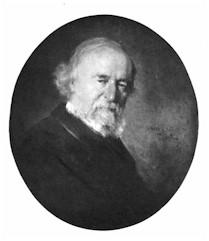
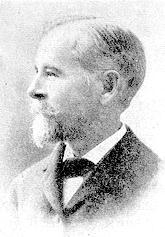
Walter C. Smith

1824 - 1908 Person Name: Walter Chalmers Smith Topics: The Praise of God In his works Author of "Immortal, invisible, God only wise" in The Hymnal of the Protestant Episcopal Church in the United States of America 1940 Smith, Walter Chalmer, D.D., was born at Aberdeen Dec. 5, 1824, and educated at the Grammar School and University of that City. He pursued his Theological studies at Edinburgh, and was ordained Pastor of the Scottish Church in Chad well Street, Islington, London, Dec. 25, 1850. After holding several pastorates he became, in 1876, Minister of the Free High Church, Edinburgh. His contributions to poetical literature have been many and of great merit. His principal works are:— (1) The Bishop's Walk, 1860; (2) Olrig Grange, 1872; (3) Borland Hall, 1874; (4) Hilda among the Broken Gods, 1878; (5) North Country Folk, 1883; (6) Kildrostan, 1884; (7) Hymns of Christ and Christian Life, 1876. From his Hymns of Christ, &c, 1876, the following, after revision, were included in Horder's Congregational Hymns, 1884 :— 1. Immortal, Invisible, God only wise. God, All in All. 2. Lord, God, Omnipotent. Omnipotence. 3. Our portion is not here. Treasure in Heaven. 4. There is no wrath to be appeased. God is Love. In Horder's Congregational Hymns a new opening stanza was added to this hymn by Dr. Smith at the request of the editor, and in that collection the hymn begins "I vexed me with a troubled thought." Dr. Smith's hymns are rich in thought and vigorous in expression. They deserve and probably will receive greater notice than hitherto at the hands of hymnal compilers. [Rev. W. Garrett Horder] --John Julian, Dictionary of Hymnology (1907) ================= Smith, W. C., p. 1064, i. The following additional hymns by Dr. Smith have come into common use, mainly through The Baptist Church Hymnal, 1900:— 1. Earth was waiting, spent and restless. Christmas. 2. Faint and weary Jesus stood. Our Lord's Temptation. 3. If any to the feast have come. Holy Communion. 4. The Lord hath hid His face from us. Providence. 5. To me to live is Christ. Union with Christ. These hymns appeared in his Hymns of Christ and the Christian Life, 1867, pp. Ill, 122, 241, 10, and 36, respectively. A collected ed. of his Poetical Works (not including his hymns) appeared in 1902. Other hymns that have come into use are:— 1. Gird your loins about with truth. Manliness. 2. Jesus, unto Whom we pray. Christ the Way. 3. One thing I of the Lord desire. Consecration. Nos. 1, 3 are from his Thoughts and Fancies for Sunday Evenings, 1887, pp. 3, 84. No. 2 is from his Hymns of Christ, 1867, p. 31. --John Julian, Dictionary of Hymnology, New Supplement (1907)

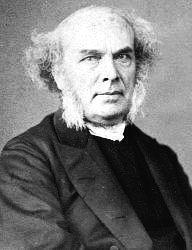
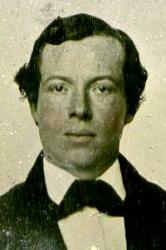
Thomas H. Gill

1819 - 1906 Person Name: Thomas Hornblower Gill Topics: The Praise of God In his works Author of "We come unto our fathers' God" in The Hymnal of the Protestant Episcopal Church in the United States of America 1940 Gill, Thomas Hornblower, was born at Bristol Road, Birmingham, Feb. 10th, 1819. His parents belonged to English Presbyterian families which, like many others, had become Unitarian in their doctrine. He was educated at King Edward's Grammar School under Dr. Jeune, afterwards Bishop of Peterborough. He left the school in 1838, and would have proceeded to the University of Oxford, but was prevented by his hereditary Unitarianism (long since given up), which forbade subscription to the Articles of the Church of England then necessary for entrance to the University. This constrained him to lead the life of an isolated student, in which he gave himself chiefly to historical and theological subjects. Hence his life has been singularly devoid of outward incident; and its interest gathers about his hymns, and the seasons of overmastering thought and feeling which gave them birth. The only events that can be chronicled are the publications of his books (see below). It is in the singular combination of influences which has formed his character and determined his thinking that the real interest of his life consists. Here is to be found the true key to the understanding of his hymns. To his Puritan ancestry may be traced their deep religiousness; to his Unitarian training their ethical earnestness; and to his poetical temperament their freeness from conventionality. Delight in the divine songs of Watts was his earliest intellectual enjoyment; and in after years the contrast between their native force and fulness and their dwindled presentation in Unitarian hymnbooks began that estrangement from his hereditary faith which gradually became complete. These various influences mingled in his own hymns and have conspired to render him what Dr. Freeman Clarke calls him, "a more intellectual Charles Wesley." He belongs to the small company of really original hymnists. His hymns are marked by a remarkable absence of, and even opposition to, all antiquarian and sacerdotal ideas of Christianity, a keen discernment of the spirit rather than the mere letter of the Gospel; and profound thought on Scripture themes, so that some of his hymns are too subtle for use in the ordinary worship of the Church. Their style is characterized by a certain quaintness of expression reminding one of George Wither or John Mason, but modified by the influence of Watts's warmth of feeling. They have great sweetness of melody, purity of diction, and happy adaptation of metre and of style to the subject of each hymn. They are almost exclusively used by Nonconformists. Dale's English Hymnbook contains 39; the Baptist Hymnal, 19; Horder's Congregational Hymns, 11; Martineau's Hymns of Praise & Prayer, 11; and the Congregational Church Hymnal, 14. The following are Mr. Gill's published works:— (1) The Fortunes of Faith, 1841; (2) The Anniversaries (Poems in commemoration of great Men and great Events), 1858; (3) The Papal Drama (an historical essay), 1866; (4) The Golden Chain of Praise Hymns by Thomas H. Gill, 1869; (5) Luther's Birthday (Hymns), 1883; (6) The Triumph of Christ (Memorials of Franklin Howard), 1883. Mr. Gill's hymns number nearly 200. Of these, over 80 are in common use in Great Britain and America. The most widely used of these:— "Everlasting, changing never"; "O mean may seem this house of clay"; "O wherefore, Lord, doth Thy dear praise"; “Our God, our God, Thou shinest here"; "The glory of the spring, how sweet"; and "Thou biddest, Lord, Thy sons be bold"; are annotated under their respective first lines, the rest are noted below. [Rev. W. Garrett Horder] The 75 hymns which follow are all annotated from the author's manuscript notes, kindly supplied for use in this work:— 1. Ah tremblers, fainting and forlorn. Eternal Youth. Written in 1868, and first published in his Golden Chain, &c, 1869, p. 149, in 9 stanzas of 4 lines. In 1873 Martineau gave stanzas iv.-ix. in his Hymns, &c, No. 256, as, "Young souls, so strong the race to run." These were repeated in the Baptist Hymnal, 1879, as No. 862. 2. Alas the outer emptiness. Consecration of the Heart. Contributed to G. Dawson's Psalms & Hymns, 1846, No. 121, in 7 stanzas of 4 lines. It was introduced to the American Unitarian collections through Hedge & Huntington's Hymns for the Church of Christ, 1853, No. 619. 3. Alas these pilgrims faint and worn. Whitsuntide. Written in 1853, and first published in his Anniversaries, 1858, p. 73, in 11 stanzas of 4 lines, then in G. Dawson's Psalms & Hymns, 1862, the Golden Chain, &c, 1869, p. 107, &c. 4. Alone with Thee, with Thee alone. Worship in Solitude. Written in 1856, and first published in his Golden Chain , &c, 1869, p. 26, in 8 stanzas of 4 lines. 5. And didst thou, Lord, our sorrows take? Passiontide. Written in 1849, and published in his Golden Chain, &c, 1869, p. 45, in 6 stanzas of 4 lines. It is in several English collections. 6. Behold the everlasting Son. Ascension. Written in 1862, and first printed in the Hagley Magazine, and then in G. Dawson's Psalms & Hymns, 1862, and the Golden Chain, 1869, p. 47, in 8 stanzas of 4 lines. 7. Break, newborn year, on glad eyes break. New Year. Written in 1855, and first published in his Golden Chain, &c, 1869, p. 144, in 6 stanzas of 4 lines. It is one of the most popular of the author's hymns, and is found in many collections. 8. Bright Presence! may my soul have part. Witness of the Spirit. Written in 1849, and first published in his Golden Chain, &c, 1869, p. 100, in 8 stanzas of 8 lines. It is repeated in The Songs of the Spirit, N. Y., 1871. 9. Bright Thy presence when it breaketh. Public Worship. Written in 1856, and first publised in his Golden Chain, &c, 1869, p. 27, in 6 stanzas of 6 lines. In the Baptist Hymnal, 1879, and in Dale's English Hymnbook it is in an abridged form. 10. Day divine! when sudden streaming. Whit-Sunday. Written on Whit-Sunday, 1850, and first published in G. Dawson's Psalms & Hymns, 1859, and again in the Golden Chain, &c, 1869, p. 97, in 3 stanzas of 8 lines. In some American collections, as the Dutch Reformed Hymns of the Church, 1869, it is given as "Day divine, when in the temple." 11. Dear Lord and Master mine. Resignation. Written in 1868, and first published in his Golden Chain, &c, 1869, p. 162, in 7 stanzas of 4 lines. It is in somewhat extensive use both in Great Britain and America. 12. Dear Lord, Thou art not sorry. Passiontide. Written in 1866, and first published in his Golden Chain, &c, 1869, p. 58, in 5 stanzas of 8 lines. 13. Dear Lord, Thy light Thou dost not hide . Christian Labours . No. 125 in the Golden Chain, &c, 1869, p. 178, in 8 stanzas of 4 lines on the text, "Let your light so shine before men," &c, and was written in 1855. 14. Do we only give Thee heed . Jesus the Gladdener of Life. Written in 1849, and first published in G. Dawson's Psalms & Hymns, 1853; and again in the Golden Chain, &c, No. 145, in 6 stanzas of 6 lines. In use in Great Britain and America. 15. Embrace your full Salvation. Heaven. Written in 1870, and first printed in The Congregationalist, 1873, in 9 stanzas of 8 lines. On including it in his English Hymnbook, 1874, Dr. Dale transposed some of the stanzas. 16. Farewell, delightful day. Sunday Evening . Written in 1867, and published in his Golden Chain, &c, 1869, No. 19, in 9 stanzas of 4 lines. In the Church Praise Book, N. Y., 1882, st. i., viii., ix., are given with the alteration of the opening line as, "Holy, delightful day." Dr. Hatfield, in his Church Hymnbook, N. Y., 1872, has the same opening, but he omits stanzas iv.-vi. of the original. 17. Father, glorious with all splendour. Holy Trinity. This hymn of great merit was written in 1860, and published in the Golden Chain, &c, in 1869, No. 4, in 7 stanzas of 8 lines. In some American collections, including Hymns & Songs of Praise, N. Y., 1874, No. 17, stanzas iv., vi., vii., are given as "Father, Thine elect who lovest." 18. Father, hast Thou not on me. Eternal Love . A Trinitarian hymn on eternal love, composed in 1867, and published in his Golden Chain, &c, 1869, No. 139, in 7 stanzas of 8 lines. In 1869, stanzas v.-vii. were given in the Supplement to the New Congregational Hymn Book, as "Mighty Quickener, Spirit blest." 19. Full many a smile, full many a song. Joy in God the Father. Written in 1854, and first published in his Golden Chain, &c, 1869, No. 8, in 9 stanzas of 4 lines. In Dale's English Hymn Book, 1874, No. 21, st. ii., which applied personally to the author alone, was omitted. 20. How can I, Lord, abide with Thee? Prayer. “Produced in 1856. Struck with the didactic character of Cowper's and Montgomery's hymns, ‘What various hindrances we meet,’ and ‘Prayer is the soul's sincere desire,’ I greatly wished to set forth the soul's view of prayer, simply, naturally, poetically, and achieved this hymn with much aspiration and satisfaction." Printed in the Golden Chain, &c, 1869, No. 119, in 8 stanzas of 4 lines, and headed "Pray without ceasing." 21. How, Lord, shall vows of ours be sweet? Public Worship. The author's earliest hymn. It was written in 1845, and first published in G. Dawson's Psalms & Hymns, 1846, No. 114, in 6 stanzas of 4 lines, and again in the Golden Chain, &c, 1869, No. 2. It is in several American hymnbooks. 22. Is earth too fair, is youth too bright? Consecration of Youth to God. Written in 1848, and first pub. in his Golden Chain, &c, 1869, No. 102, in 13 stanzas of 4 lines, and entitled "The Hymn of Youth." 23. Is not my spirit filled with Thine. God glorious in His works. "Written in the summer of 1846 among the hills and streams of Derbyshire," and first published in the Golden Chain, &c, 1869, No. 15, in 9 stanzas of 4 lines, and entitled "God glorious in His works." 24. Let bolder hearts the strife require. Prayer against Temptation. No. 218 in Martineau's Hymns of Praise and Prayer, 1873. It was written in 1851, and first published in the Golden Chain, &c, 1869, in 7 stanzas of 4 lines. 25. Lift thy song among the nations. National Hymn. Written in 1853, and first published in G. Dawson's Psalms & Hymns, 1853, in 4 stanzas of 8 lines. When repeated in the Golden Chain, &c, 1869, No. 62, an additional stanza (iii.) was given, and it was entitled "England's Hymn." It is a spirited hymn and worthy of greater circulation than it now has. The 1869 text is given in Dale's English Hymn Book, 1874, No. 1239. 26. Lord, am I precious in Thy sight. Grieve not the Holy Spirit. Composed in 1850, and first published in G. Dawson's Psalms & Hymns, 1853. In 1869 it was included in the Golden Chain , &c, No. 70, in 7 stanzas of 4 lines. It is in common in America. A cento is also in the Supplement to the New Congregational, 1869, No. 1095. It is composed of stanzas iii., v., vi. much altered, and not improved, and begins, "O Holy Spirit, dost thou mourn?" 27. Lord, comes this bidding strange to us ? Invitation to Rejoice. Written in 1849, and first published in his Golden Chain, &c, 1869, No. 144, in 11 stanzas of 4 lines. 28. Lord, dost Thou ne'er Thy servants bless? Free Grace. Written in 1855, on the words of Oliver Cromwell as used by him in a letter to his "beloved cousin Mrs. St. John," dated "Ely, 13th October, 1638. "Truly no poor creature hath more cause to put him self forth in the cause of his God than I. I have had plentiful wages beforehand; and I am sure I shall never earn the least mite." (Carlyle's Oliver Cromwell's Letters and Speeches, &c, Letter ii.) The hymn was first published in the Golden Chain, &c, 1869, in 9 stanzas of 4 lines. 29. Lord, from Thee, what grace and glory. National Hymn. This cento in Vince's Collection, 1870, No. 450, is from the poem, on St. George's Day, written in 1853, and published in the author'sAnniversaries, 1858, p. 47. 30. Lord, from these trembling souls of ours. Praise. Composed in 1859, and first published in his Golden Chain, &c, 1869, No. 3, in 10 stanzas of 4 lines. 31. Lord God, by Whom all change is wrought. God Eternal. Written in 1869, the keynote being the words of St. Augustine, "Immutabilis mutans omnia," and first printed in the Songs of the Spirit, N. Y., 1871. In 1874 it was included in Dale's English Hymn Book; and, in 4 stanzas, in the Baptist Hymnal, 1879. 32. Lord God of old, who wentest. Public Worship. Composed in 1868, and first published in his Golden Chain, &c, 1869, No. 30, in 5 stanzas of 8 lines. 33. Lord, if our dwelling place thou art Communion of Saints. Written in 1856, and first published in his Golden Chain, &c, 1869, No. 150, in 8 stanzas of 4 lines. The hymn, "Death has no bidding to divide," in Dale's English Hymn Book, 1874, begins with stanzas ii., and omits stanzas i., iv. of this hymn. 34. Lord, in this awful fight with sin. Victory through Christ. Written in 1857, and first published in his Golden Chain, &c., 1869, No. 128, in 7 stanzas of 8 lines. 35. Lord, in Thy people Thou dost dwell. Unity of Christ and His people. Written in 1864, and first published in his Golden Chain, &c, 1869, in 12 stanzas of 4 lines. 36. Lord, Thou hast been our dwelling place. National Hymn. "Begun among the Waldenses, 1864," and first published in his Golden Chain, &c, 1869, No. 59, in 8 stanzas of 7 lines, entitled, "The hymn of the Waldenses," and supplemented with the note, "This hymn as a whole belongs to the Waldenses only, among whom it was begun, but all the people of God have an interest in the first two and the last verses." Acting upon this suggestion of the author, these stanzas were given in the Supplement to the New Congregational, 1869, as No. 1025. 37. Lord, Thou wouldst have us like to Thee. Holiness desired. Written in 1846, and first published in G. Dawson's Psalms & Hymns, 1846, No. 120, in 8 stanzas of 4 lines. It is in several American collections. 38. Lord, Thy gracious voice hath spoken. Christ our Caesar. Written in 1849, and first published in G. Dawson's Psalms & Hymns, 1853; and again in the Golden Chain, &c, 1869, in 3 stanzas of 8 lines. 39. Lord, when I all things would possess. Humility. Written in 1850, and first published in his Golden Chain, &c, 1869, No. 111, in 8 stanzas of 4 lines. In Martineau's Hymns, &c, 1873, No. 304, stanzas ii., iv., vii. are omitted. This hymn is also in common use in America. 40. Lord, when we come at Thy dear call. The Holy Ghost, the Sanctifier. No. 72 in his Golden Chain, 1869, in 7 stanzas of 4 lines, was written in 1856, and is given in the Songs of the Spirit, N. Y., 1871. 41. May we not, Father, meetly mourn? Burial. No. 151 in his Golden Chain, &c, 1869, in 9 st. of 4 lines, was written in 1855. 42. Methought my soul had learned to love. Resignation. "Composed in 1852 and first printed in Golden Chain, 1869. It came from the very depths of my own heart, was inspired by a suppressed trouble which turned out one of the greatest blessings of my life." In the Golden Chain, &c, No. 114, it is given in 7 st. of 4 lines, and is headed, "Not my will but Thine be done." 43. My God, I do not flee from Thee. Joy. Written in 1849, and first published in his Golden Chain, &c., 1869, No. 10, in 7 stanzas of 4 lines. The New Congregational, 1369, No. 1119, begins with stanza ii., "Father, Redeemer, Quickener mine," and also omits stanza iv. 44. My God, my Majesty divine. Child of God. Written in 1845, and first published in G. Dawson's Psalms & Hymns, 1846, No. 116, in 8 stanzas of 4 lines, and again, after revision, in the Golden Chain, &c, 1869, No. 135. The original text is in common use in America. 45. Not, Lord, Thine ancient works alone. Public Worship. Written in 1874, and first printed in The Congregational, in 6 stanzas of 6 lines, and entitled, "The Living God." In Dale's English Hymn Book, 1874, st. iii. is omitted. 46. Not yet I love my Lord. Lent. Written in 1868, and first published in his Golden Chain, &c, 1869, No. 86, in 9 stanzas of 4 lines. It is in several collections, including Martineau's Hymns, &c, 1873, No. 199. 47. Not yet, ye people of His grace. Here and Hereafter. A hymn on the "The Vision Beatific," No. 165, in his Golden Chain, &c, 1869, in 11 stanzas of 4 lines. It was written in 1866, and is in American common use. 48. 0 height that doth all height excel. Written in 1853, and "was born of the words of Augustine in the outset of the Confessions, ‘Secretissime et Praesentissime,' and was the first of several hymns inspired by his wonderful antitheses about God." It was first published in G. Dawson's Psalms & Hymns, 1853, and again in the Golden Chain, &c, 1869, No. 13, in 9 stanzasof 4 lines. It is in English and American common use. 49. 0 Holy Ghost, Who down dost come. Whitsuntide. "Written at Malvern on Whitsunday, 1863; a day of singular spiritual enjoyment, and outward loveliness." It was first published in the Golden Chain, &c, 1869, No. 74, in 1 stanza of 4 lines, and headed, "A Breathing after the Holy Spirit," and is in several collections. In Martineau's Hymns, &c, 1873, No. 251, it begins with st. ii., "Spirit of Truth, Who makest bright," st. i. and vi. being omitted. 50. 0 not alone in saddest plight. Divine Guidance desired. Composed in 1856, and first published in his Golden Chain, &c, 1869, No. 120, in 9 stanzas of 4 lines. 51. 0 not to fill the mouth of fame. A Servant of Christ. "Composed in 1849, and printed first in a small collection of poems entitled, I think, “The Violet." In 1853 it was given in G. Dawson's Psalms & Hymns; and in 1869, in the Golden Chain, &c, No. 121, in 6 stanzas of 4 lines. Its use is mainly confined to America. 52. 0 not upon our waiting eyes. Divine Love. Written in 1849, and first published in his Golden Chain, &c, 1869, No. 29, in 5 stanzas of 4 lines. 53. 0 saints of old, not yours alone. Seeking God. Written in 1848, and first published in G. Dawson's Psalms & Hymns, 1853; and again, after revision, in the Golden Chain, &c, 1869, No. 126, in 10 stanzas of 4 lines. The American hymnbooks have usually the original text, but in Dale's English Hymn Book , 1875, and Holder's Congregational Hymn Book1884, the text is abridged from the Golden Chain. 54. 0 smitten soul that cares and conflicts wring. Heaven desired. Written in 1854, and first published in his Golden Chain, &c, 1869. No. 75, in 8 stanzas of 4 lines. 55. 0 Spirit, sweet and pure. Constant Presence of the Holy Spirit desired. Written in 1868, and given in his Golden Chain, &c, 1869, as No. 127, in 7 stanzas of 8 lines. 56. 0 time, ne'er resteth thy swift wing. Worth of Time. Written in 1855, and first published in his Golden Chain, &c, 1869, No. 98, in 9 stanzas of 4 lines. 57. 0 wherefore hath my spirit leave? Spiritual Changes. "Composed with great ardour and stir of soul in 1847, and first printed in the Golden Chain, 1869," No. 85, in 7 stanzas of 4 lines. 58. O'er fulness of grace, blest Britain rejoice. National Hymn. Composed in 1868, and first published in his Golden Chain, &c, 1869, No. 61, in 11 stanzas of 4 lines, and entitled, "The Thanksgiving Song of Protestant Britain”; to which was added the words of Milton: "Let us all go, every true Protestant Briton, throughout the three kingdoms, and render thanks to God the Father of Light, and to His Son, Jesus Christ our Lord." 59. Saviour, needs the world no longer! Christ All in All. "Written in 1847... it was inspired partly by my contemplation of Shelley's hapless, Christless life." It was first published in G. Dawson's Psalms & Hymns 1853, and again in the Golden Chain, &c, 1869, No. 35, in 7 stanzas of 6 lines, and headed, "Lord, to whom shall we go." Its use is limited, and far less than its merits deserve. 60. Saviour, Who from death didst take. The Resurrection of Christ, a cause of Confidence. Written in 1856, and first published in his Golden Chain, &c, 1869, No. 96, in 5 stanzas of 6 lines. 61. Sweet Spirit, would Thy breath divine. The Holy Ghost, the Purifier, desired. Written in 1856, and given as No. 71 in his Golden Chain, &c, 1869, in 10 stanzas of 4 lines. 62. The happy fields, the heavenly host. Heaven. Written in 1848, first published in G. Dawson's Psalms & Hymns, 1853, and again in the Golden Chain, &c, 1869, No. 157, in 10 stanzas of 4 lines. 63. Thy happy ones a strain begin. Joy in God. Written in 1846, and published in G. Dawson's Psalms & Hymns, 1846, No. 118, in 5 stanzas of 4 lines. In the Golden Chain, &c, 1869, No. 146, the text is slightly changed. The text in common use in Great Britain and America is from the original. 64. Too dearly, Lord, hast Thou redeemed. Lent. Written in 1855, and first published in his Golden Chain, &c, 1869, No. 97, in 9 stanzas of 4 lines. 65. Unto thy rest return. Lent. Written in 1866, and first published in his Golden Chain, &c, 1869, No. 92, in 6 stanzas of 8 lines. 66. We come unto our fathers'God. God our Abode. "The birthday of this hymn, November 22nd, 1868 (St. Cecilia's Day), was almost the most delightful day of my life. Its production employed the whole day and was a prolonged rapture.....It was produced while the Golden Chain was being printed, just in time to be a link therein, and was the latest, as ‘How, Lord, shall vows of ours be sweet?' was the earliest song included therein." In the Golden Chain, &c, 1869, it is No. 129, in 7 stanzas of 7 lines, and is entitled, "The People of God." 67. We triumph in the glorious grace. Citizens of Heaven. Written in 1855, and first published in his Anniversaries, 1858, and again in his Golden Chain, &c, 1869, No. 153, in 12 stanzas of 4 lines. 68. What sweetness on Thine earth doth dwell. Nature revealing God. [Summer.] Written in 1850, and first published in his Golden Chain, &c, 1869, in 8 stanzas of 4 lines. 69. When shall I, Lord, a journey take. Lent. Written in 1856, and first published in his Golden Chain, &c, 1869, No. 80, in 8 stanzas of 4 lines. It is in common use in Great Britain and America. 70. Whence this naming joy that maketh! The Prodigal's Return. "Written in 1853 just before the hymn beginning 'Thrice blessed soul, who still hath made,' with the text 'Son, thou art ever with me' (Golden Chain, No. 134), which is its completement; and first printed in the Golden Chain," 1869, No. 81, in 6 stanzas of 6 lines. 71. Would the Spirit more completely? The Gifts of the Spirit. Written in 1849, and first published in G. Dawson's Psalms & Hymns, 1853; and again in the Golden Chain, &c, 1869, No. 67. in 3 stanzas of 8 lines. 72. Ye children of the Father. Spiritual Worship. Written in 1867, and first published in his Golden Chain. &c, 1869, No. 23, in 6 stanzas of 8 lines. 73. Ye of the Father loved. Praise. Written in 1862, and first published in the Golden Chain, &c, 1869, No. 5, in 8 stanzas of 8 lines. 74. Ye people of the Lord, draw near. Holy Communion. Written in 1855, and first published in his Golden Chain, &c, 1869, No. 127, in 7 stanzas of 4 lines. 75. Ye souls, the Father's very own. Holy Diligence. Composed in 1867, and first published in his Golden Chain, &c, 1869, No. 142, in 9 stanzas of 4 lines. These hymns are usually abridged in the hymnbooks, the length of most of them being against their use in their full form. Although they are gradually growing in popular esteem, the extent of their use is much more limited than their merits deserve. -- John Julian, Dictionary of Hymnology (1907) ==================== Gill, T. H. , pp. 421-3. Additional hymns to those annotated are in common use:—(l) "O dreadful glory that doth make," a cento from No. 48, p. 423, ii.; (2) "O mystery of Love Divine " (The Love of Christ); (3) " Ye souls for whom the Saviour died" (Electing Love). These are all from his Golden Chain of Praise, 1869. --John Julian, Dictionary of Hymnology, Appendix, Part II (1907) ======================== Gill, T. H. , pp. 421, i.; 1565, ii. &c. During the past ten years Mr. Gill's hymns have been widely used, especially in America, the result being that the following have to be added to the long lists already annotated as above:— 1. Ah! wherefore fall my tears so fast? [The World Overcome.] Published in his Golden Chain of Praise, 1869, p. 167. The hymn, "O Thou for Whom the strife was strong," in the American Hymns for Church and Home, 1895, is composed of sts. iii.-vii. of this hymn. 2. Dear Lord, Thou bringest back the morn. [Morning.] From his Golden Chain of Praise, 1869, p. 145. 3. I would not give the world my heart. This, in the Amer.Baptist Sursum Corda, 1898, No. 379, is a cento from "With sin I would not make abode," p. 1288, ii. 4. Not only when ascends the song. This in the Amer. Hymns of the Ages, 1904, No. 80, is a cento from “0 Saints of old, not yours alone," p. 423, i. 53. 5. Walk with the Lord! along the road. Composed of sts. v., vii.-ix., of "Ah ! tremblers, fainting and for¬lorn," p. 421, ii. 1. Included in the American Unitarian Hymns for Church and Home, 1895. 6. We would not dare their bliss to mourn. This in the Amer.Unit. Hymns for Church and Home, 1895 is composed of sts. v.-viii. of "May we not, Father, meetly mourn?" p. 422, ii. 41. 7. Wherefore faint and fearful ever. [ God is for us.] Published in the 2nd edition of his Golden Chain of Praise, 1894, No. xiii., in 7 stanzas of 6 lines, and dated 1880. In Hymns Ancient & Modern, 1904, in 5 stanzas. The cento "He Who suns and worlds upholdeth," is composed of stanzas ii., iii., and vii. of the original hymn. Mr. Gill died in 1906. --John Julian, Dictionary of Hymnology, New Supplement (1907)

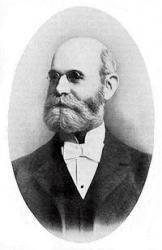
Horatius Bonar

1808 - 1889 Person Name: Horatius Bonar, 1808-1889 Topics: God Divine Perfections of; God Praise of; God: His Being, Word and Works God the Trinity Author of "Glory be to God the Father" in The Book of Praise Horatius Bonar was born at Edinburgh, in 1808. His education was obtained at the High School, and the University of his native city. He was ordained to the ministry, in 1837, and since then has been pastor at Kelso. In 1843, he joined the Free Church of Scotland. His reputation as a religious writer was first gained on the publication of the "Kelso Tracts," of which he was the author. He has also written many other prose works, some of which have had a very large circulation. Nor is he less favorably known as a religious poet and hymn-writer. The three series of "Hymns of Faith and Hope," have passed through several editions. --Annotations of the Hymnal, Charles Hutchins, M.A. 1872 ================================ Bonar, Horatius, D.D. Dr. Bonar's family has had representatives among the clergy of the Church of Scotland during two centuries and more. His father, James Bonar, second Solicitor of Excise in Edinburgh, was a man of intellectual power, varied learning, and deop piety. Horatius Bonar was born in Edinburgh, Dec. 19th, 1808; and educated at the High School and the University of Edinburgh. After completing his studies, he was "licensed" to preach, and became assistant to the Rev. John Lewis, minister of St. James's, Leith. He was ordained minister of the North Parish, Kelso, on the 30th November, 1837, but left the Established Church at the "Disruption," in May, 1848, remaining in Kelso as a minister of the Free Church of Scotland. The University of Aberdeen conferred on him the doctorate of divinity in 1853. In 1866 he was translated to the Chalmers Memorial Church, the Grange, Edinburgh; and in 1883 he was chosen Moderator of the General Assembly of of the Free Church of Scotland. Dr. Bonar's hymns and poems were, he tells us, composed amid a great variety of circumstances; in many cases he cannot himself recall these circumstances; they also appeared in several publications, but nearly all have boen published or republished in the following:— (i) Songs for the Wilderness, 1843-4. (2) The Bible Hymn Book, 1845. (3) Hymns, Original and Selected, 1846. (4) Hymns of Faith and Hope, First Series, 1857; Second Series, 1861; Third Series, 1866. (5) The Song of the New Creation, 1872. (6) My Old Letters, a long poem, 1877. (7) Hymns of the Nativity, 1879. (8) Communion Hymns, 1881. In addition to numerous prose works, he has also edited The New Jerusalem; a Hymn of the Olden Time, 1852, &c. Dr. Bonar's poems—-including many beautiful lyrics, several psalm versions, and translations from the Greek and Latin, a large number of hymns, and a long meditative poem—-are very numerous, too numerous, perhaps, for their permanent fame as a whole. Dr. Bonar's scholarship is thorough and extensive; and his poems display the grace of style and wealth of allusion which are the fruit of ripe culture. Affected very slightly by current literary moods, still less by the influence of other religious poetry, they reveal extreme susceptibility to the emotional power which the phases of natural and of spiritual life exercise; the phases of natural life being recognised chiefly as conveying and fashioning spiritual life, used chiefly for depicting spiritual life, and handled for this purpose with greater delicacy of touch than in the Olney Hymns, and with less conscious purpose than in the Christian Year. As a result of this susceptibility, and from habitual contemplation of the Second Advent as the era of this world's true bliss, his hymns and poems are distinguished by a tone of pensive reflection, which some might call pessimism. But they are more than the record of emotion; another element is supplied by his intellectual and personal grasp of Divine truth, these truths particularly:—The gift of a Substitute, our Blessed Saviour; Divine grace, righteous, yet free and universal in offer; the duty of immediate reliance upon the privilege of immediate assurance through that grace; communion with God, especially in the Lord's Supper, respecting which he insists on the privilege of cherishing the highest conceptions which Scripture warrants; and finally, the Second Advent of our Lord: by his vigorous celebration of these and other truths as the source and strength of spiritual life, his hymns are protected from the blight of unhealthy, sentimental introspection. To sum up: Dr. Bonar's hymns satisfy the fastidious by their instinctive good taste; they mirror the life of Christ in the soul, partially, perhaps, but with vivid accuracy; they win the heart by their tone of tender sympathy; they sing the truth of God in ringing notes; and although, when taken as a whole, they are not perfect ; although, in reading them, we meet with feeble stanzas, halting rhythm, defective rhyme, meaningless Iteration; yet a singularly large number have been stamped with approval, both in literary circles and by the Church. In Great Britain and America nearly 100 of Dr. Bonar's hymns are in common use. They are found in almost all modern hymnals from four in Hymns Ancient & Modern to more than twenty in the American Songs for the Sanctuary, N. Y., 1865-72. The most widely known are, "A few more years shall roll;" "Come, Lord, and tarry not;" "Here, O my Lord, I see Thee face to face;" "I heard the Voice of Jesus say;" "The Church has waited long;" and "Thy way, not mine, O Lord." In addition to these and others which are annotated under their respective first lines, the following are also in common use:— From Songs for the Wilderness, No. 1, 1843. 1. For Thee we long and pray. Sunday Morning. 2. Holy Father, hear my cry. A Child's Prayer. 3. I thought upon my sins and I was sad. Christ our Peace. 4. Peace to the world, our Lord is come. A Millennial Song. 5. Spirit of everlasting grace. The Vision of Dry Bones. ii. From Songs for the Wilderness, No. 2,1844. 6. Ho, ye thirsty, parched and fainting. Invitation. 7. 0 'tis not what we fancied it. The world renounced. 8. Sing them, my children, sing them still. Children exhorted to Praise. 9. Time's sun is fast setting. Advent. 10. Weep, pilgrim, weep, yet 'tis not for the sorrow. Faith. 11. Yes, for me, for me He careth. Christ the Elder Brother . iii. From The Bible Hymn Book, 1845. 12. Jesus, my sorrow lies too deep. Jesus, the Great High Priest. 13. There is a Morning Star, my soul. The Morning Star. 14. This is not my place of resting. Pressing towards heaven. iv. From Hymns, Original and Selected, 1845. 15. Let there be light, Jehovah said. Creation. v. From Hymns of Faith and Hope, 1st series, 1857. 16. Be brave, my brother. The Fight of Faith. 17. Blessed be God, our God. Good Friday. 18. Everlasting praises. Doxology. 19. Go up, go up, my heart. Heavenly aspirations desired. 20. I close my heavy eye. Evening. Sometimes given as "We close our heavy eyes." 21. I see the crowd in Pilate's hall. Good Friday. 22. Jesus, while this rongh desert soil. Strength by the Way. 23. Jesus, Whom angel-hosts adore. The Word made Flesh. From "The Son of God, in mighty love." 24. Make haste, 0 man, to live. Exhortation to lay hold of Life. 25. No seas again shall sever. Heaven. 26. Oppressed with noonday's scorching heat. Shadow of the Cross. 27. Rest for the toiling hand. Burial. From "Lie down, frail body, here." 28. Shall this life of mine be wasted? Exhortation to Duty. 29. These are the crowns that we shall wear. Heaven. 30. Thy works, not mine, O Christ [Lord]. The Sin-bearer. 31. Where the faded flower shall freshen. Heaven. vi. From Hymns of Faith and Hope. 2nd series, 1861. 32. Be still, my soul, Jehovah loveth Thee. Rest in the Love of God. 33. Christ has done the mighty work. Good Friday. 34. Come, mighty Spirit, penetrate. Whitsuntide. 35. Deep down beneath the unresting surge. Burial at Sea. 36. Fear not the foe, thou flock of God [thou little flock]. Battle-Song of the Church. 37. For lack of love I languish. Lent. 38. From this bleak hill of storms. Eternal Rest desired. 39. He liveth long who liveth well. The True Life. 40. Here shall death's triumph end: the rock-barred door. Easter. From "The tomb is empty: wouldst thou have it full." 41. Jesus, Sun and Shield art Thou. Jesus the First and Last. 42. Jesus, the Christ of God. Praise to Christ. 43. Light of the world, for ever, ever shining. Christ the Light of the World. From "Why walk in darkness? Has the dear light vanished?" 44. Make use of me, my God. Duty desired. 45. Not what I am, 0 Lord, but what Thou art. The Love of God. 46. 0 Light of Light, shine in. Cry of the Weary. 47. 0 love of God, how strong and true. Love of God. 48. 0 love that casts out fear. Love of God. 49. 0 strong to save and bless. Lent. 50. 0 this soul, how dark and blind. Lent. 51. Safe across the waters. Thanksgiving at end of a journey. 52. Silent, like men in solemn haste. Pressing onwards. 53. Speak, lips of mine. Exhortation to Praise. 54. The Bridegroom comes. Advent. vii. From Hymns of Faith and Hope. 3rd series, 1866. 55. Bear Thou my burden, Thou Who bar'st my sin. Lent or Passiontide. 56. Done is the work that saves. Easter. 57. Father, our children keep. Prayer on behalf of Children. 58. Fill Thou my life, 0 Lord my God. Life's Praise. 59. Finish Thy work, the time is short. Earnest labour to the end. 60. From the Cross the blood is falling. Good Friday. 61. He called them, and they left. Obedience. 62. Help me, my [0] God to speak. Truth desired. 63. Holy Father, Mighty God. Holy Trinity. 64. How are my troubles multiplied. Ps. iii. 65. How sweetly doth He show His face Flower Service. 66. Light hath arisen, we walk in its brightness. Sustaining power of Faith. 67. Lo, God, our God has come. Christmas. 68. Lord, give me light to do Thy work. Divine guidance desired. 69. No, not despairingly. Lent. 70. Not to ourselves again. Life in Christ, or, Living unto God. 71. Now in parting, Father, bless us. Post Communion. 72. Sounds the trumpet from afar. Battle-Song of the Church. 73. Thee in the loving bloom of morn. God in all. 74. Through good report and evil, Lord. Faithfulness. 75. To Jehovah, God of might. Praise to the Father. 76. To the name of God on high. Doxology. 77. Upward, where the stars are burning. Heavenward Aspirations. 78. We take the peace which He hath won. The Gift of Peace. 79. When the weary, seeking rest. Intercession for all Conditions of Men. viii. From The Song of the New Creation,1872. 80. For the Bread and for the Wine. Holy Communion. 81. Light of life so softly shining. Light of Life. 82. Yet there is room. The Lamb's bright hall of song. Home Missions. ix. From Hymns of the Nativity, 1879. 83. Great Ruler of the land and sea. Sailors' Liturgy. From Communion Hymns, 1881. 84. Beloved, let us love. Brotherly Love. In several instances these hymns are given in an abbreviated form, and sometimes alterations are also introduced. In this latter respect however Dr. Bonar has suffered less than most modern hymn-writers. [Rev. James Mearns, M.A.] -- John Julian, Dictionary of Hymnology (1907) ==================== Bonar, Horatius, p. 161, i. He died at Edinburgh, July 31, 1889. In 1890 his son published a posthumous volume of his poetical pieces as Until the Day Break and other Hymns and Poems left behind. The following additional hymns are in common use:— 1. Almighty Comforter and Friend. (1866.) Whitsuntide. 2. Father, make use of me. An altered form of No. 44, p. 162, ii. 3. I ask a perfect creed. (1861.) Creed not Opinions. From this is also taken "O True One, give me truth." 4. Long, long deferred, now come at last. Marriage of the Lamb. Part of "Ascend, Beloved, to the joy." (1861.) 5. Nay 'tis not what we fancied it. (1857.) Vanity of the World. 6. No blood, no altar now. (1861.) The Finished Sacrifice. 7. No shadows yonder. (1857.) Heaven Anticipated. 8. Not with the light and vain. (1857.) Godly Companionship. 9. O Love invisible, yet infinite. (1866.) Divine Love. 10. On the great love of God I lean. (1866.) Love of God our Resting-place. 11. On Thee, O Jesus, strongly leaning. (1866.) Fellowship with Christ. 12. Peace upon peace, like wave on wave. (1866.) Divine Peace. 13. Sower divine, sow the good seed in me. (1857.) Heavenly Sowing. 14. Speaketh the sinner's sin within my heart. (1866.) Ps. xxxvi. 15. Still one in life and one in death. (1857.) Communion of Saints. Part of "'Tis thus they press the hand and part." 16. Surely, yon heaven, where angels see God's face. (1857.) Heaven Anticipated. 17. That city with the jewelled crest. (1857.) Heaven. Part of "These are the crowns that we shall wear." Another cento from the same is "Yon city, with the jewelled crest." 18. That clime is not like this dull clime of ours. (1843.) Heaven. 19. The Free One makes you free: He breaks the rod. (1857.) Freedom in Christ. From "Of old they sang the song of liberty." 20. There is a Morning-star, my soul. (1357.) Christ the Morning Star. 21. This is the day of toil. (1866.) Pressing Onwards. 22. Thy thoughts are here, my God. (1866.) Holy Scripture. 23. Till the day dawn. (1857.) Life's Journey. 24. To Him Who spread the skies. (1866.) Creation's Song. 25. Trustingly, trustingly. (1866.) Trust. 26. Unto th' eternal hills. (1866.) Ps. cxxi. The above dates are: 1843, Songs in the Wilderness; 1857, Hymns of Faith and Hope, 1st Series; 1861, same, 2nd Ser. (not 1864); 1866, same, 3rd Ser. (not 1867), The dates 1857, 1864,1867, were given by Dr. Bonar, but the British Museum copies are 1857, 1861, 1866 respectively. --John Julian, Dictionary of Hymnology, Appendix, Part II (1907) ============== Bonar, H., pp. 161, i.; 1554, i. The Rev. H. N. Bonar, Dr. Bonar's son, published in 1904, Hymns by Horatius Bonar, Selected and Arranged by his Son H. N. Bonar, With a brief History of some of the Hymns, &c. (London: H. Frowde). From this work we must correct the date of his Song of the New Creation to 1872. We have also enriched our pages by additional and expanded notes on several of Dr. Bonar's most widely used hymns. In his biographical notes, Mr. Bonar refers to Dr. Bonar's work as editor of the Quarterly Journal of Prophecy, begun in 1848, to which he contributed a hymn for each number. We find that the number of hymns contributed thereto is 101. With Dr. Bonar's poetical productions great difficulty has been encountered by the historian and annotator because of his absolute indifference to dates and details. It was enough for him that he had written, and that the Church of Christ approved and gladly used what, out of the fulness of his heart, he had given her. --Excerpt from John Julian, Dictionary of Hymnology, New Supplement (1907)

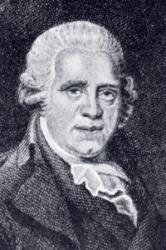
Frances Elizabeth Cox

1812 - 1897 Person Name: Frances E. Cox Topics: Works of God Transaltor of "Sing praise to God who reigns above" in Book of Worship with Hymns and Tunes Cox, Frances Elizabeth, daughter of Mr. George V. Cox, born at Oxford, is well known as a successful translator of hymns from the German. Her translations were published as Sacred Hymns from the German, London, Pickering. The 1st edition, pub. 1841, contained 49 translations printed with the original text, together with biographical notes on the German authors. In the 2nd edition, 1864, Hymns from the German, London, Rivingtons, the translations were increased to 56, those of 1841 being revised, and with additional notes. The 56 translations were composed of 27 from the 1st ed. (22 being omitted) and 29 which were new. The best known of her translations are "Jesus lives! no longer [thy terrors] now" ; and ”Who are these like stars appearing ?" A few other translations and original hymns have been contributed by Miss Cox to the magazines; but they have not been gathered together into a volume. -- John Julian, Dictionary of Hymnology (1907)

Johann Jakob Schütz

1640 - 1690 Person Name: Johann J. Schütz Topics: Works of God Author of "Sing praise to God who reigns above" in Book of Worship with Hymns and Tunes Schütz, Johann Jakob, was born Sept. 7, 1640, at Frankfurt am Main. After studying at Tübingen (where he became a licentiate in civil and canon law), he began to practise as an advocate in Frankfurt, and in later years with the title of Rath. He seems to have been a man of considerable legal learning as well as of deep piety. He was an intimate friend of P. J. Spener; and it was, in great measure, at his suggestion, that Spener began his famous Collegia Pietatis. After Spener left Frankfurt, in 1686, Schütz came under the influence of J. W. Petersen; and carrying out Petersen's prin¬ciples to their logical conclusion, he became a Separatist, and ceased to attend the Lutheran services or to communicate. He died at Frankfurt, May 22, 1690 (Koch, iv. 220; Blätter fur Hymnologie, Feb. 1883). Schütz is known as an author by two tractates; one being his Christliche Lebensregeln, Frankfurt, 1677; the other, that which contains his hymns, Christliches Gedenckbüchlein, zu Beforderung eines anfangenden neuen Lebens, &c, Frankfurt am Main, 1675 [Library of the Predigerministerium at Frankfurt]. This work includes 5 hymns, in a separate section, which is headed, “Hierauf folgen etliche Gesänge." These hymns are:— i. Die Wollust dieser Welt. ii. Was inich auf dieser Welt betrübt. iii. So komm, geliebte Todes-Stund. iv. Scheuet ihr, ihr matten Glieder. v. Sei Lob und Ehr dem höchsten Gut. Of these No. v. is undoubtedly by Schütz, and the other four exhibit much the same style of thought as, and frequent parallels to, the prose portions of the work. None of these have been traced earlier than 1675; and until this has been done, it is pretty safe to ascribe them all to Schütz. Three of these hymns have passed into English, viz.:— i. Sei Lob und Ehr dem höchsten Gut. Praise and Thanksgiving. First published in 1675, as above, No. v. It is founded on Deut. xxxii. 3; entitled, "Hymn of Thanksgiving ;" and is in 9 stanzas of 6 lines, and the refrain, "Gebt unserm Gott die Ehre”. Koch, iv. 220, speaks of this hymn as "outweighing many hundred others; and a classical hymn, which, from its first appearance, attracted unusual attention." And Lauxmann, in Koch, viii. 334-339, relates how delighted J. J. Moser was, when, on entering church the first Sunday after his captivity at Hohentwiel, he heard this hymn, and how heartily he joined in it; how it comforted the dying G. C. Rieger, of Stuttgart, on Tuesday, in Easter Week, 1743, and many other incidents. Translations in common use:— 1. All Glory to the Sov'reign Good. This is a full and good translation by J. OJacobi, in his Psalter Germanica, 2nd ed., 1732, p. 151, where it is entitled, "The Malabarian Hymn." 2. All glory be to God most high. A good translation by A. T. Russell, of st. i., iv., viii., for the Dalston Hospital Hymn Book, 1848, No. 59. 3. All praise and thanks to God most high. This is a good tr., omitting st. ix., by Miss Winkworth, in her Lyra Germanica, 2nd Ser., 1858, p. 146. 4. Sing praise to God Who reigns above. A good tr., omitting st. ix., contributed by Miss Cox to Lyra Eucharistica, 1864, p. 33, and included in her Hymns from the German, 1864, p. 235. 5. To God a joyful anthem raise. A good tr. of st. i., ii., iv., v., viii., by J. M. Sloan, as No. 314, in J. H. Wilson's Service of Praise, 1865. The following are also translated into English:— ii. So komm, geliebte Todes-Stund. For the Dying. First published in 1675, as above, No. iii., in 11 st. of 8 1., entitled, "The thoughts on Death of a Royal Princess, after the usual interpretation of Job xix. 25." This Princess was Sophie Elisabethe. daughter of Duke Philipp Ludwig, of Holstein-Sonderburg (b. at Homburg vor der Hohe, May 4, 1653; married, in 1676. to Duke Moritz, of Sachse-Zeitz; d. at Schleusingen, Aug. 19, 1684), who had been a regular attender at Spener's conferences at Frankfurt, and thus associated with Schütz. This hymn has often been ascribed to her; and she had already chosen Job xix. 25, as the text of her funeral sermon. But it is more probable that both hymns were written by Schütz for her use, or in her honour. The trs. are :—(1) "Come, happy hour of death, and close." By Dr. G. Walker, 1860, p. 56. (2) "O come, delightful hour of death." By Dr. G. Walker, 1860, p. 106. iii. Was mich auf dieser Welt betriibt. Earthly Vanities. This hymn, on Renunciation of the World, first appeared in 1675, as above, No. ii., in 4 st. of 10 1., and entitled "From the World to God." It has sometimes been erroneously ascribed to Michael Franck. It is tr. as "The woes that weigh my body down." By Miss Manington, 1863, p. 32. [Rev. James Mearns, M.A.] --Excerpts from John Julian, Dictionary of Hymnology (1907)

William Shrubsole

1760 - 1806 Topics: Works of God Composer of "MILES LANE" in Psalter Hymnal (Red) William Shrubsole (bap. 1760, d. 1806), organist. United Kingdom.When young, he sang in the choir at Canterbury Cathedral, He became organist at Bangor Cathedral, when he was dismissed for attending non-comformist meetings. He then became organist of Spa Fields Chapel, London, holding that post until his death. He was a successful teacher. He was an alto singer and sung at Westminster Abbey and Drury Lane churches. He knew Edward Perronet, who wrote the words to the hymn he composed music for. Perronet left Schrubsole property in his will. John Perry Not to be confused with W. (William) Shrubsole 1759-1829, bank clerk and hymn writer.

William J. Kirkpatrick

1838 - 1921 Person Name: William J. Kirkpatrick, 1838-1921 Topics: God's Work Creation; Decrees of God; God Glory of; God Praise of Composer of "PRAISE JEHOVAH" in Trinity Hymnal (Rev. ed.) William J. Kirkpatrick (b. Duncannon, PA, 1838; d. Philadelphia, PA, 1921) received his musical training from his father and several other private teachers. A carpenter by trade, he engaged in the furniture business from 1862 to 1878. He left that profession to dedicate his life to music, serving as music director at Grace Methodist Church in Philadelphia. Kirkpatrick compiled some one hundred gospel song collections; his first, Devotional Melodies (1859), was published when he was only twenty-one years old. Many of these collections were first published by the John Hood Company and later by Kirkpatrick's own Praise Publishing Company, both in Philadelphia. Bert Polman

Edward Miller

1735 - 1807 Person Name: Edward Miller, Mus. Doc. Topics: The Catechism Works and Attributes of God Composer of "ROCKINGHAM (Old)" in Evangelical Lutheran hymnal Edward Miller, Born in the United Kingdom. The son of a pavior (stone paver), Miller left home to study music at King's Lynn. He was a flautist in Handel's orchestra. In 1752 he published “Six Solos for the German Flute”. In 1756 he was appointed organist of St. George Minster Doncaster, continuing in that post for 50 years. He also gave pianoforte lessons. He published hymns and sonatas for harpsichord, 16 editions of “The Institues of Music”, “Elegies for Voice & Pianoforte”, and Psalms of David set to music, arranged for each Sunday of the year. That work had over 5000 subscribers. He published his thoughts on performance of Psalmody in the Church of England, addressed to clergy. In 1801 he published the Psalms of Watts and Wesley for use by Methodists, and in 1804 the history and antiques of Doncaster with a map. John Perry

Frederick Lucian Hosmer

1840 - 1929 Person Name: Rev. Frederick L. Hosmer Topics: The Kingdom of God on Earth Discipleship and Service; Discipleship and Service; Kingdom, Christ's Prayer for; Work Author of ""Thy kingdom come," on bended knee" in The Hymnal Hosmer, Frederick Lucian, B.A., was born at Framingham, Mass., in 1840, and educated at Harvard, where he graduated B.A. in 1869. Entering the Unitarian Ministry in 1872 he has held charges in Quincy, Ill., 1872-77; Cleveland, Ohio, 1878-92; St. Louis, 1894-99; and since 1899, at Berkeley, Cal. His Way of Life, 1877, was a compilation of Prayers and Responsive Services for Sunday Schools. Of Unity Hymns and Carols, 1880, he was joint editor with W. C. Gannett and J. V. Blake. His hymns were published jointly by him and W. C. Gannett (q.v.), as The Thought of God in Hymns and Poems (Boston: Little, Brown & Co.), 1st Series, 1885; 2nd Series, 1894. Of his 56 hymns in this work the following have come into common use, for the most part during the past ten years:— 1. Father, to Thee we look in all our sorrow. [Trust in God.] Written in 1881 upon the death of a member of the author's congregation, and published in The Thought of God, 1st Series, 1885. 2. From age to age how grandly rise. [Unity.] Written for the annual festival of the Free Religious Assoc, Boston, June 2, 1899, and first published in Souvenir Festival Hymns, 1899. Subsequently altered by the author to "From age to age the prophet's vision." 3. From age to age they gather, all the brave of heart and strong. [Victory of Truth.] "Written in 1891 for the Dedication of Unity Church, Decorah, Iowa, and published in The Thought of God, 2nd Series, 1894. 4. From many ways and wide apart. [College or School Reunion.] Dated in The Thought of God, 2nd Series, 1894, as having been written in 1890. 5. Go not, my soul, in search of Him. [God Within.] Written in 1879, printed in the Boston Christian Register, May 31, 1879, and included in The Thought of God, 1st Series, 1885, with the title, "The Indwelling God." 6. I cannot think of them as dead. [Eternal Life.] Written in 1882, and first published in The Thought of God, 1st Series, 1885, and entitled "My Dead." in the English collections it is usually given as "We cannot think of them as dead." 7. I little see, I little know. [Trust.] "A Psalm of Trust," written in 1883, first appeared in the Boston Christian Register, and again in The Thought of God, 1st Series, 1885. 8. Immortal by their deed and word. [The Spirit of Jesus.] Written in 1880, and first published in Unity Hymns and Carols, Chicago, Ill., 1880, and then in The Thought of God, 1st Series, 1885. 9. Many things in life there are. [Mystery in all Things.] Written in 1885, and first published in The Thought of God, 1st Series, 1885, with the title "Passing Understanding," and the quotation "The Peace of God which passeth all understanding." 10. Not always on the mount may we. [On the Mount.] This lesson from the Transfiguration was written in 1882, and published in the Chicago Unity, April 1, 1884. After revision by the author, it was included in the 1st Series of The Thought of God, 1885. 11. Not when, with self dissatisfied. [Lent.] Written in 1891, and given in The Thought of God, 2nd series, 1894, p. 33. It is in The Public School Hymn Book, 1903, and others. 12. O beautiful, my country. [National Hymn.] As “Our Country," written in 1884, and published in the Chicago Unity Festivals, 1884; and again in The Thought of God, 1885. 13. O Light, from age to age the same. [Dedication Anniversary.] Written in 1890 for the fiftieth anniversary of the Second Congregational Church (Unitarian), Quincy, 111. Included in The Thought of God, 2nd Series, 1894, and entitled "From Generation to Generation." 14. O Lord of Life, where'er they be. [Life in God.] "Written in 1888 for Easter service in Author's own church," and first published in the Chicago Unit, and again in The Thought of God, 2nd Series, 1894. The "Alleluia!" refrain, which is added in some collections to each verse, is appended, in the original, to the last verse only. 15. O Name, all other names above. [Trust in God.] Under the title "Found. 'They that know Thy name will put their trust in Thee!’ this hymn, written in 1878, was given in The Thought of God, 1st Series, 1885. 16. O Prophet souls of all the years. [Unity.] “Written in 1893 for, and sung at, the Unitarian gathering in connection with The World's Parliament of Religions (World's Fair), Chicago, Sep., 1893," and included in The Thought of God, 2nd Series, 1894, and entitled "One Law, One Life, one Love." 17. O Thou, in all Thy might so far. [God All in All.] This hymn, given in The Thought of God, 1st Series, 1885, with the title "The Mystery of God," was written in 1876, and first published in the New York Inquirer. 18. O thou in lonely vigil led. This encouragement for lonely workers was written for the "Emerson Commemoration, W. U. C, 1888," and included in The Thought of God, 2nd Series, 1894. 19. O Thou, Who art of all that is. [Divine Guidance.] Under the title "Through unknown paths," this hymn was included in The Thought of God, 1st Series, 1885. It was written in 1877. 20. O Thou, Whose Spirit witness bears. [Dedication of a Place of Worship.] Written for the Dedication of First Unitarian Church, Omaha, Feb. 6, 1891, and published in The Thought of God, 2nd Series, 1894, with the title "The Inward Witness," and the subscription "For T. K., Omaha, 1801." 21. On eyes that watch through sorrow's night. [Easter] A Carol for Easter Morn, written in 1890 for the author's congregation, and published in The Thought of God, 2nd Series, 1894. 22. One thought I have, my ample creed. [The Thought of God.] This is the initial hymn to the collection The Thought of God, 1st Series, 1885, and supplies the title to the work. It was written in 1880, and first published in the Chicago Unity Hymns and Carols, 1880, and then in The Thought of God, 1885. 23. The rose is queen among the flowers. [Flower Service.] "Written in 1875, first published in The Sunnyside, a song book for Sunday Schools, and again in The Thought of God, 1st Series, 1885, under the title "Flower Sunday." 24. Thy kingdom come, — on bended knee. [Missions.] "Written in 1891 for the Commencement of the Meadville Theological School (Meadville, Pa.), June 12, 1891, and published in The Thought of God, 2nd Series, 1894," under the title "The Day of God," and the subscription, "M. T. S., June 12, 1891." 25. We pray no more, made lowly wise, For miracle and sign. [Greater Faith Desired.] Written in 1879, and first published in The Christian Register (Boston), Mar. 22 of that year, under the title 'The Larger Faith.'" Included under the same title in The Thought of God, 1st Series, 1885. Sometimes given as "Made lowly wise, we pray no more." 26. When courage fails, and faith burns low. [Victory of Truth.] Under the title "Loyalty," this hymn was given in The Thought of God, 1st Series, 1885. It was written in 1881. 27. Where men on mounts of vision Have passed the veil within. [Dedication of a Place of Worship.] "Written in 1891 for the Dedication of First Unitarian Church, Oakland, California." Included in The Thought of God, 2nd Series, 1894, entitled "Holy Places," and subscribed " For C. W. W., Oakland, Cal., 1891." These annotations are from manuscript notes supplied to us by the author. Of these hymns all are in common use in America, and more than one half in Great Britain, mainly by Unitarians and Congregationalists. Amongst Unitarian hymn-writers of the last twenty years Mr. Hosmer is the most powerful and original known to us. --John Julian, Dictionary of Hymnology, New Supplement (1907)

Ithamar Conkey

1815 - 1867 Topics: Angels; Glory And Majesty Of God; God as King; Kingdom of God; Obedience; Praise for God's Perfections; Praise for God's Works; Will of God Composer of "RATHBUN" in Psalter Hymnal (Red) Ithamar D. Conkey USA 1815-1867. Born of Scottish ancestry in Shutesbury, MA, he became a wool merchant. He married Elizabeth Billings, and they had a daughter and two sons. He was organist at Central Baptist Church,Norwich, CN. After that, he went to NewYork City and served as bass soloist at Calvary Episcopal church and Grace Church. Later, he served as bass soloist and choir director of Madison Avenue Baptist Church. His famous hymn was written in 1849. Two years later, William Howard Doane was baptized in the same church. John Perry

Pages


Export as CSV
It looks like you are using an ad-blocker. Ad revenue helps keep us running. Please consider white-listing Hymnary.org or getting Hymnary Pro to eliminate ads entirely and help support Hymnary.org.