

 My Starred Hymns
 My FlexScores
 My Hymnals
 My Purchased Files
Planning worship?
Check out our sister site, ZeteoSearch.org,
for 20+ additional resources related to your search.
- |
User Links
Person Results
Carolina Sandell
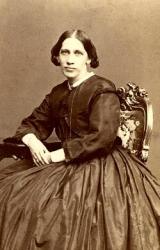
1823 - 1903 Person Name: Carolina Sandell Berg Topics: Trust in God Author of "Day by Day" in Lift Up Your Hearts Caroline W. Sandell Berg (b. Froderyd, Sweden, 1832; d. Stockholm, Sweden, 1903), is better known as Lina Sandell, the "Fanny Crosby of Sweden."
"Lina" Wilhelmina Sandell Berg was the daughter of a Lutheran pastor to whom she was very close; she wrote hymns partly to cope with the fact that she witnessed his tragic death by drowning. Many of her 650 hymns were used in the revival services of Carl O. Rosenius, and a number of them gained popularity particularly because of the musical settings written by gospel singer Oskar Ahnfelt. Jenny Lind, the famous Swedish soprano, underwrote the cost of publishing a collection of Ahnfelt's music, Andeliga Sänger (1850), which consisted mainly of Berg's hymn texts.
Bert Polman
Carolina Sandell
T. Tertius Noble
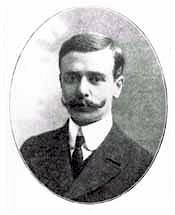
1867 - 1953 Person Name: Thomas Tertius Noble Topics: God Trust in; God Trust in Composer of "ST. THEODULPH (VALET WILL ICH DIR GEBBEN) (fragment)" in Psalms for All Seasons Thomas Tertius Nobel (1867-1953) was born in Bath, England, educated at the Royal College of Music, and was a noted composer and organist. He served as a church organist in Cambridge and Colchester. He moved to Ely Cathedral in 1892 as organist and choirmaster, and in 1898 to York Minster, where he founded the York Symphony Orchestra, directed the York Musical Society, conducted the York Pageant, and revived the York Musical Festival after a lapse of 75 years. He became an honorary fellow of the Royal College of Organists in 1905. In 1913, he moved to New York City, where he was organist at St. Thomas’ Episcopal Church, and established its choir school and a boys’ choir. In addition to composing, he wrote about music education, and helped edit the 1916 Protestant Episcopal hymnal, and served on the music committee that prepared its 1940 successor. He wrote a wide range of music, but only his services, anthems and hymn tunes are still performed regularly. Died: May 4, 1953, Rockport, Massachusetts.
http://www.hymntime.com/tch/
T. Tertius Noble
Matthias Greiter
1495 - 1550 Person Name: Matthäus Greiter, ca. 1500-1552 Topics: God Trust in Composer of "OLD 113TH" in Psalms for All Seasons Greitter, Matthäus, was a monk and chorister of Strassburg Cathedral, but in 1524 espoused the cause of the Reformation. In 1528 he was appointed assistant pastor of St. Martin's Church, and afterwards at St. Stephen's. When the Interim [Agricola] was forced on Strassburg, he was the only one of the Lutheran pastors that sought to further it, a course which he afterwards deeply regretted. His death is dated by Wetzel, i. 349, as Dec. 20, 1550; by the Allgemeine Deutsche Biographie, ix. 636, as Nov. 20, 1550; while Koch, ii. 104, says he died of the pestilence in 1552.
Greitter was a distinguished musician, and with his friend Dachstein (q.v.) edited the Strassburg Kirchen ampt, 1524-5. Four psalm tunes by Greitter, and one by Dachstein were inserted by Calvin in his first Hymnbook published at Strassburg, 1539. All these were transferred to the first edition of the French-Genevan Psalter in 1542, and two of them, both by Greitter (the tunes to psalms 36 and 91), were retained in the final edition of 1562. Of his seven Psalm versions 4 have been translated into English :—
i. Ach Gott, wie lang vergissest mein. Ps. xiii. 1524. Wackernagel, iii. p. 89, in 4 st. Translated as, "O Lord, how lang forever wil thow foirget," in the Gude and Godly Ballates, ed. 1568, folio 46 (1868, p. 78).
ii. Da Israel aus Egypten zog. Ps. cxiv. In Die Zwen Psalmen: In exitu Israel, &c, Strassburg, 1527, thence in Wackernagel, iii. p. 93, in 2 stanzas. Translated as, "Quhen, fra Egypt departit Israeli," In the Gude & Godly Ballates, ed. 1568, folio 56 (1868, p. 95).
iii. Nicht uns, nicht uns, o ewiger Herr. Ps. cxv, 1527, as ii., and Wackernagel, iii. p. 93, in 4 st. Translated as, “Not unto us, not unto us, O Lord," in the G. & G. Ballates, ed. 1568, folio 56 (1868, p. 95).
iv. 0 Herre Gott, begnade mich. Ps. li. 1525. Wackernagel, iii. p. 90, in 5 st. Translated as, "O Lorde God, have mercy on me," by Bishop Coverdale, 1539 (Remains, 1846, p. 574). [Rev.James Mearns, M.A.]
--John Julian, Dictionary of Hymnology (1907)
Matthias Greiter
Henry Purcell
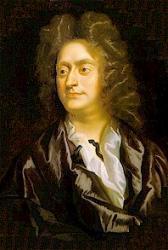
1659 - 1695 Person Name: Henry Purcell, 1659-1695 Topics: Affirmation of Baptism; Anniversary, Church; Church; Comfort; Community in Christ; Dedication of a Church; Eternal Life; Holy Baptism; Jesus Christ; Lent; Life, Everlasting; Love of God for Us; Praise, Adoration; Trust; Unity; Witness Composer of "WESTMINSTER ABBEY" in Hymnal Supplement 1991 Henry Purcell (b. Westminster, London, England, 1659; d. Westminster, 1695), was perhaps the greatest English composer who ever lived, though he only lived to the age of thirty-six. Purcell's first piece was published at age eight when he was also a chorister in the Chapel Royal. When his voice changed in 1673, he was appointed assistant to John Hingston, who built chamber organs and maintained the king's instruments. In 1674 Purcell began tuning the Westminster Abbey organ and was paid to copy organ music. Given the position of composer for the violins in 1677, he also became organist at Westminster Abbey in 1679 (at age twenty) and succeeded Hingston as maintainer of the king's instruments (1683). Purcell composed music for the theater (Dido and Aeneas, c. 1689) and for keyboards, provided music for royal coronations and other ceremonies, and wrote a substantial body of church music, including eighteen full anthems and fifty-six verse anthems.
Bert Polman
Henry Purcell
Henry Burton
1840 - 1930 Topics: Trust in God Exhortation to Arranger of "[God of my righteousness, reply]" in Bible Songs Rv Alfred Henry Burton DD United Kingdom 1840-1930. Born at Swannington, Leicestershire, he emigrated with family to America and became a student at Beloit College, WI, graduating with honours. After a pastorate in the Methodist Episcopal Church at Monroe, WI, he returned to England and entered the Wesleyan Ministry in 1865. He married Ellen Pearse. He then ministered mostly in Lanca-shire and London. Published works include ”Gleanings in the gospels:, “Wayside songs”, “St. Luke in Expositor's Bible”.
John Perry
=====================
Burton, H. In I. D. Sankey's Sacred Songs and Solos, 1878, the hymns, "Come, for the feast is spread," (The Gospel Invitation), and "Look away to Jesus" (Looking unto Jesus) are attributed to the "Rev. H. Burton”
--John Julian, Dictionary of Hymnology, Appendix, Part II (1907)
=====================
Burton, Henry, D.D., p. 1555, i., born at Swannington, Leicestershire, in 1840. His parents having emigrated to America, he became a student at Beloit College, and graduated in honours. After labouring as a minister of the Methodist Episcopal Church for a time he returned to England, entered the Wesleyan Ministry in 1865, and has since laboured chiefly in Lanca¬shire and London. His published works include Gleanings in the Gospels, Wayside Songs, 1886, St. Luke in the Expositor's Bible, &c. His hymns in common use, in addition to those named on p. 1555, i., include:—
1. Break, day of God, 0 break. [Second Advent.] Written at Blundell Sauds, near Liverpool, on Christmas Eve, 1900, and included in The Methodist Hymn Book, 1904. "The opening stanza was composed on the Railway Bridge where I lingered on my way home" (Author's MS!.).
2. In the secret of His presence. [Peace in Christ.] Written at Acton, London, published in his Wayside Songs, 1886, and included in the Epworth Hymnal, U.S.A.
3. 0 King of Kings, 0 Lord of hosts. [National Hymn.] Dr. Burton's history of this hymn is: "In the late Queen's Jubilee year, 1887, I composed an Ode which was set to music by Sir J. Stainer, and sung at a Jubilee Festival in the Royal Albert Hall, London. As the Ode could not be sung at any other time, Sir J. Stainer requested me to compose a hymn to which the same music should be set [and of a national character]. This led me to write the hymn" Author's MS.). It is No. 975 in The Methodist Hymn Book, 1904.
4. Have you had a kindness shown? Pass it on. [Kind Deeds.] "This is based on a little incident in the life of my brother-in-law, the Rev. Mark Guy Pearse. When a boy returning home from a Moravian school in Holland, the steward of the boat on which he sailed from Bristol to Hayle showed him marked attention and kindness, because Mr. Pearse's father, years before, had proved a great friend to his mother. And so he was simply 'passing on' the kindness." (Author's MS.). The hymn was written at Acton on April 8, 1885, and first printed in The Christian Advocate, N.Y., 1886, and again in Wayside Songs, 1886, p. 81. The first stanza has been adopted as a motto by the "International Sunshine Society," of New York.
--John Julian, Dictionary of Hymnology, New Supplement (1907)
==========================
See also in:
Hymn Writers of the Church
Henry Burton
A. L. Skoog
1854 - 1934 Person Name: Andrew L. Skoog Topics: Trust in God Translator of "Day by Day" in Lift Up Your Hearts Skoog, Andrew L. (Gunnarskog, Sweden, December 17, 1856 [sic]--October 30, 1934, Minneapolis, Minnesota). Evangelical Covenant. Son of pietists. Tailor's apprentice at 10. Family emigrated to St. Paul, Minn., when Andrew was 13. Only formal music training was 12 lessons on a melodeon. Organist, choir director, and Sunday School superintendent in Swedish Tabernacle, Minneapolis, 1886-1916. Co-editor of hymnals: Evangelii Basun I & II, 1881-1883; Lilla Basunen, 1890; and Jubelklangen, 1896. Was in editorial committee of Covenant's first three hymnals: Sions Basun, 1908; De Ungas Sångbok, 1914; and Mission Hymns, 1921. Editor and publisher of Gittit 1892-1908, a monthly choir journal with music; a series of ten bound volumes of choir selections; and many hymns.
--J. Irving Erickson, DNAH Archives
A. L. Skoog
Michael Bruce
1746 - 1767 Person Name: Michael Bruce, 1746-67 Topics: Trust in God Paraphraser of "Where high the heavenly temple stands" in Together in Song Bruce, Michael, son of a Scottish weaver, was born at Kinnesswood, Portmoak, Kinrossshire, Scotland, March 27,1746, and educated at the village school, Edinburgh University (where he first became acquainted with John Logan), and the Theological Hall of the Associate Synod, held at Kinross, under the Rev. John Swanston, intending ultimately to enter the ministry, a hope which was frustrated by his untimely death. To assist in procuring University fees and maintenance he for some time conducted a school, during the recess, at Gairney Bridge, and subsequently at Forrest Mill, near Tillicoultry. Whilst yet a student he died at Kinnesswood, July 5th, 1767.
[Also, see Logan, John]
The names of Michael Bruce and John Logan are brought together because of the painful controversy which has long prevailed concerning the authorship of certain Hymns and Paraphrases of Holy Scripture which are in extensive use in the Christian Church both at home and abroad. During the latter years of Bruce's short life he wrote various Poems, and also Hymns for a singing class at Kinnesswood, which were well known to his family and neighbours, and were eventually copied out by Bruce himself in a quarto MS. book, with the hope that some day he might see them in print. Immediately upon his death, in 1767, Logan called upon his father and requested the loan of this book that he might publish the contents for the benefit of the family. This was granted. Not till three years afterwards did a certain work, containing seventeen poems, and entitled Poems on Several Occasions , by Michael Bruce, 1770, appear, with a Preface in which it was stated that some of the Poems were by others than Bruce.
-- John Julian, Dictionary of Hymnology (1907)
Michael Bruce
Henry Kirke White
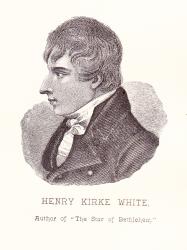
1785 - 1806 Person Name: Henry Kirke White, 1785-1806 Topics: Living the Christian Life Faith and Trust in God Author of "Oft in danger, oft in woe" in Complete Mission Praise White, Henry Kirke, a gifted English poet who died early in life, was born in Nottingham, England, March 21, 1785. Very early he manifested a remarkable love for books and a decided talent for composition. But his parents were poor, and he was apprenticed in early boyhood to a stocking weaver, from which uncongenial servitude he escaped as soon as he could and began the study of law; but later he was converted and felt called to the ministry. The story of his conversion from deism to Christianity is briefly but beautifully told in the poem titled "The Star of Bethlehem." He entered St. John's College, Cambridge, in 1805 as a servitor; but died October 19, 1806, in the second year of his college course, when only twenty-one years of age. In 1803 he published a small volume of poems. Some of them are very fine, but no doubt he would have produced others far better if he had lived to the ordinary age of man. His rare poetic genius, his victory over skepticism and subsequent faith and piety, his hard struggle with poverty and early death invest the story of his life with more than ordinary pathos. His hymns, ten in number, appeared in Collyer's Collection, 1812.
Oft in danger, oft in woe 412
The Lord our God is clothed with 99
When marshaled on the mighty 124
Hymn Writers of the Church, 1911
============================
White, Henry Kirk, remarkable both for the early development of his genius and for the untimely termination of his brief life of splendid promise, was born at Nottingham, March 21, 1785. His father was a butcher, but his mother must have been a superior woman, since for a number of years she successfully conducted a boarding-school for girls. The writing-master in her establishment was for some time Henry's teacher, and under his instruction he made remarkable progress in Latin and other subjects. At the age of 13 he composed the lines "To an early Primrose," which were subsequently printed with his poems. At 14 he left school, and was put to the stocking-frame in order to learn prac¬tically the business of a hosier; but, disliking the employment, he was removed to an attorney's office in Nottingham, with a view to the legal profession. All his spare time was now devoted to literary pursuits, the acquisition of languages, and the composition of poetical and other contributions for the periodicals of the day. At the age of 15 he obtained from the Monthly Preceptor a silver medal for a translation from Horace, and a pair of globes for the best description of an imaginary tour from London to Edinburgh. When only 17 he was encouraged to publish his Clifton Grove and other Poems, which were certainly excellent as the compositions of a mere boy. About this time he was inclined to scepticism, but. through the perusal of Scott's Force of Truth and the arguments and appeals of a young friend, R. W. Almond (afterwards Rector of St. Peter's, Nottingham), he was led to earnest faith in Christianity. His well-known hymn "When marshall'd on the nightly plain" is understood to be a figurative description of his spiritual experience at this period.
He now desired to become a Christian minister, and through the generosity of his employers he was released from his articles in 1804. With the help of the Rev. C. Simeon and other friends, he became a student of St. John's College, Cambridge. There he speedily distinguished himself, and the highest honours seemed within his grasp; but over application to study destroyed his health, and he fell ill and died Oct. 19, 1806, in the 22nd year of his age. Universal regret was expressed at his untimely end. Southey published his Remains, accompanied by a short memoir. Lord Byron composed some beautiful lines on the sad event. Josiah Conder and others wrote commemorative verses. The entire literary young manhood of England and America seemed moved with sympathy. A monumental tablet, with a medallion by Chantrey, was erected in All Saints Church, Cambridge, at the expense of a citizen of Boston, in the United States. Ten hymns are ascribed to H. K. White, which were printed by the Rev. Dr. W. B. Collyer in his Supplement to Dr. Watts's Psalms & Hymns, London, 1812. Of these four of the most popular are annotated as follows: "Awake, sweet harp of Judah, wake"; "Christians, brethren, ere we part"; "Much in sorrow, oft in woe"; “When marshalled on the nightly plain." These are all in extensive use. The rest, all in common use at the present time, are:—
1. 0 Lord, another day has flown. Evening. From this the hymn "0 let Thy grace perform its part" is taken.
2. 0 Lord, my God, in mercy turn. Penitence and Faith.
3. The Lord our God is full [clothed in] of might. Divine Sovereignty.
4. The Lord our God is Lord of all. Divine Sovereignty.
5. Through sorrow's night and danger's path. The Resurrection. Sometimes given as "When sorrow's path and danger's road."
6. What is this passing scene? Human Frailty. This hymn consists of selected stanzas from his “Ode on Disappointment." [Rev. W. R. Stevenson, M.A.]
-- John Julian, Dictionary of Hymnology (1907)
Henry Kirke White
Bernard Barton
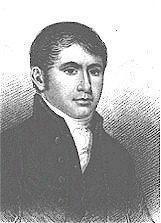
1784 - 1849 Topics: Trust In God Author of "We journey through a vale of tears" in Book of Worship with Hymns and Tunes Barton, Bernard, commonly known as the "Quaker Poet," was born in London Jan. 31, 1784, and educated at a Quaker school at Ipswich. In 1798 he was apprenticed to Mr. S. Jesup, a shopkeeper at Halstead, Essex, with whom he remained until 1806, when he removed to Woodbridge, Suffolk, and entered into business with his brother, as a coal and corn merchant. On the death of his wife at the end of the first year of their married life, he proceeded to Liverpool, where he acted as a private tutor for a short time. He returned to Woodbridge in 1810, where he secured an engagement in the local bank of the Messrs. Alexander. This appointment he held for 40 years. He died at Woodbridge, Feb. 19, 1849. During the same year his daughter published his Poems and Letters, with a Memoir. His poetical works were numerous, including:—
(1) Metrical Effusions , 1812; (2) Poems by an Amateur, 1818; (3) Poems , 1820; (4) Napoleon, and other Poems, 1822; (5) Poetic Vigils, 1824; (6) Devotional Verses founded on Select Texts of Scripture, 1826; (7) A Widow's Tale, 1S27; (8) New Year's Eve, 1829; (9) The Reliquary, 1836; (10) Household Verses, 1845. A complete list of his works is given in Joseph Smith's Descriptive Catalogue of Friends' Books, Lond., J. Smith, 1867, vol. i. pp. 196-200.
From these works about 20 pieces have come into common use as hymns. These are found principally in the Scottish Evangelical Union Hymnal, on the one hand, and various American Unitarian collections on the other. The best known are, “Lamp of our feet, whereby we trace," and "Walk in the light, so shalt thou know." From his Devotional Poems, &c, 1826, the following have passed into the Scottish Evangelical Union Hymnal, 1878:—
1. Fear not, Zion's sons and daughters. Gracious Promises. This is part of a poem on Isaiah xliii. 1, “Fear not, Jacob, tabulated."
2. Hath the invitation ended? Invitation.
3. See we not beyond the portal? Present vision Imperfect. This is part of the poem on 1 Cor. xiii. 12, “Dim and dark our present vision."
4. Those who live in love shall know. Peace.
5. Would'st thou share this benediction! Poor in Spirit.
In addition, there are also in various collections:—
6. Around Bethesda's healing wave. Consolation. This is on pp. 182-185, in his Napoleon, and other Poems, 1822, in 10 stanzas of 6 lines. A cento therefrom is given in a few American hymnals, including Mr. Beecher's Plymouth Collection, No. 746, as, "The waters of Bethesda's pool."
7. There is a life more dear. Spiritual Life. From the Devotional Verses, 1826, p. 96, into Kennedy, 1863, No. 1177, with the omission of stanza v.
8. Say not the law divine. Spiritual Law. Also from the Devotional Verses, 1826, p. 34, into various American hymnals, generally Unitarian, as the Hymn and Tune Book, Boston, 1868, No. 342, &c, where, however, it is rewritten from an irregular metre to S.M. This had previously appeared in Hedge and Huntington's Hymns for the Church of Christ, Boston, U.S., 1853.
Other hymns, given in great part in American Unitarian collections, are annotated under their respective first lines.
-- John Julian, Dictionary of Hymnology (1907)
======================
Barton, Bernard, p. 116, i. Other hymns in common use:—
1. God made the country, yet in scenes. Country Life. This begins with stanza iii. of a poem "Addressed to a Friend in London" in The Reliquary, 1836, p. 83.
2. Lamp of our feet! whereby we trace. Holy Scriptures, published in The Reliquary, 1836, p. 116, in 11 stanzas of 4 lines. It is in common use in its full form, and also abbreviated as (1) "Word of the ever-living God"; and (2) "Word of the everlasting God." In extensive use.
3. There is a Friend more tender, true. Jesus, the Friend. This begins with stanza iii. of "But yet, however cheerless seem," in his Poems & Letters, 1853, p. 254.
4. Walk in the light! So shalt thou know. (Walking in the Light.) Published in his Devotional Verses, 1826, p. 242, in 6 stanzas of 4 lines. It is found in many modern collections, and is one of the most popular of his hymns.
5. We journey through a vale of tears. Heaven Anticipated. In his Poems & Letters, 1853, p. 193.
Of these hymns, Nos. 3, 5, are of an earlier date than the Poems & Letters of 1853; but we have failed to find them in Barton's earlier works.
--John Julian, Dictionary of Hymnology, Appendix, Part II (1907)
Bernard Barton
Graham Maule
1958 - 2019 Person Name: Graham Maule, 1958- Topics: Trust in God Paraphraser of "Just as a lost and thirsty deer" in Together in Song
Graham Maule
Pages




