You help make Hymnary.org possible. More than 10 million people from 200+ countries found hymns, liturgical resources and encouragement on Hymnary.org in 2025, including you. Every visit affirms the global impact of this ministry.

If Hymnary has been meaningful to you this year, would you take a moment today to help sustain it? A gift of any size—paired with a note of encouragement if you wish—directly supports the server costs, research work and curation that keep this resource freely available to the world.

Give securely online today, or mail a check to:
Hymnary.org
Calvin University
3201 Burton Street SE
Grand Rapids, MI 49546

Thank you for your partnership, and may the hope of Advent fill your heart.

Person Results

Topics:unity+of+the+church
In:people

Planning worship? Check out our sister site, ZeteoSearch.org, for 20+ additional resources related to your search.
Showing 191 - 200 of 509Results Per Page: 102050

John Geyer

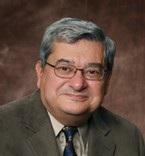
1932 - 2020 Person Name: John B. Geyer Topics: Unity of the Church Author of "We Know that Christ Is Raised" in Lift Up Your Hearts

Basil Harwood

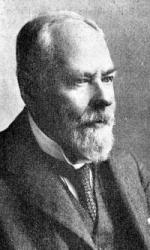
1859 - 1949 Person Name: Basil Harwood, 1859-1949 Topics: Unity of the Church Composer of "THORNBURY" in Together in Song Basil Harwood (11 April 1859 – 3 April 1949) was an English organist and composer. Basil Harwood was born in Woodhouse, Gloucestershire (the second youngest of 12 children) on 11 April 1859. His mother died in 1867 when Basil was eight. His parents were Quakers but his elder sister Ada, on reaching 21 in 1867, converted to the Anglican Church. Basil was allowed to attend the ceremony at the Church of England in Almondsbury and this is where he was first drawn to organ music and choral singing. His father, Edward, remarried two years later in 1869 to a lady from an Anglican family. Basil was now sent to the Montpellier School in Weston-super-Mare for a year. In 1871, at 12 he was enrolled in Clevedon, the preparatory school for Charterhouse where he was first to formally study music. He went up to Charterhouse in 1874 and left in 1876 having won a leaving Exhibition to Trinity College, Oxford where he initially studied Classics (1879) and Modern History (1880). He then studied for a further two years, 1881–1882, at the Leipzig Conservatory under Carl Reinecke and Salomon Jadassohn. It was here in 1882, Basil composed his first anthem for chorus and organ "O Saving Grace." He returned from Leipzig to realise that he had now passed the age limit to study music formally. In 1883, Basil became organist of St. Barnabas Church, Pimlico completing his Sonata in C# Minor here in 1885, selling the copyright to the publisher Schott for one shilling a year or two later. After this success, he then moved to Ely Cathedral in 1887 where he wrote the bulk of Dithyramb, possibly his greatest organ work. His final appointment was as organist at Christ Church, Oxford and as precentor of Keble College, Oxford from 1892 to 1909. Whilst there he co-founded and conducted the Oxford Bach Choir which helped to earn him his degree as Doctor of Music. He conducted the Oxford Orchestral Association (1892–1898). He was musical editor of the 1908 Oxford Hymn Book and Examiner for Musical Degrees (1900–1925). During this time, he met and married Mabel Ada Jennings (the daughter of George Jennings) (who had become a pupil of his in 1896) at All Souls St. Marylebone, London (27 December 1899). Mabel had studied music herself, piano and composition, and was also a writer. She may well have composed lyrics for some of his lesser known tunes. At an advanced age she wrote a small volume of collected poems named Questing Soul. He retired early at 50 (in 1909) after the death of his father, Edward Harwood, from whom he inherited the family estate of Woodhouse having outlived his seven older brothers. Soon after moving in he had a three manual chamber organ built in the library by Bishop & Sons of Ipswich (now in Minehead Parish Church), on which he promptly finished his Sonata in F# Minor. He continued to compose prolifically. He was a keen walker, and named many of his hymn tunes after local places that he loved to visit, the most notable being the hymn tunes such as Tockington, Olveston, Almondsbury and Thornbury. In 1936 advancing in years, he let the Woodhouse estate and moved to Bournemouth. Part of the estate, Woodhouse Down, was later sold to his contemporary Robert Baden-Powell who was two years older than he was and who had also attended Charterhouse School, and is used as a Scout Camp to this day. In 1939, at eighty, he moved to London, taking a flat in Fleet Street. After a long life, he died on 3 April 1949, eight days short of his 90th birthday, at Courtfield Gardens in the Royal Borough of Kensington, London. A memorial service was held in St Paul's Cathedral on 22 April 1949. Mabel survived him, dying shortly before her 103rd birthday on 20 July 1974. He was survived by two sons; Major John Edward Godfrey Harwood (1900–1996) and Basil Antony Harwood (1903–1990) Senior Master of the Supreme Court, Q.B.D. and Queen's Remembrancer. His remains are interred in St. Barnabas Church, Pimlico and marked by a plaque inset in floor of the chancel, close to where he would have stood to conduct the choir. He composed cantatas, church music and works for the organ; his Service in A flat, the anthem O how Glorious and the hymn tunes LUCKINGTON ("Let all the world in every corner sing") and THORNBURY ("Thy hand O God has guided"), first used during a festival of the London Church Choir Association, remain in the Anglican repertory. --en.wikipedia.org/wiki

Nikolaus Herman

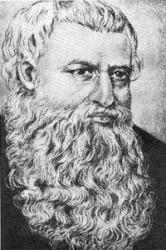
1500 - 1561 Person Name: Nikolaus Herman, 1480-1561 Topics: Biblical Names and Places Jacob; Blessing; Church Year Advent; Church Year All Saints' Day; Church Year Ascension of the Lord; Church Year Christ the King; Church Year Passion/Palm Sunday; Church Year Transfiguration; Earth; Elements of Worship Call to Worship; Elements of Worship Gathering; Elements of Worship Lord's Supper; Elements of Worship Preparation for Worship; Enthronement Psalms; Faith; Freedom; God Trust in; God as Creator; God as King; God's Sovereignty; God's Armor; God's Face; God's Majesty; God's Strength; Guilt; Hope; Idols and Idolatry; Innocence; Processions; Temple; Ten Commandments 2nd Commandment (do not make graven emages); The Creation; Unity and Fellowship; Worship; Year A, B, C, Presentation of the Lord, February 2; Year B, All Saints' Day, November 1; Year B, Ordinary Time after Pentecost, July 10-16 Adapter of "LOBT GOTT, IHR CHRISTEN" in Psalms for All Seasons Herman, Nicolaus, is always associated with Joachimsthal in Bohemia, just over the mountains from Saxony. The town was not of importance till the mines began to be extensively worked about 1516. Whether Herman was a native of this place is not known, but he was apparently there in 1518, and was certainly in office there in 1524. For many years he held the post of Master in the Latin School, and Cantor or Organist and Choirmaster in the church. Towards the end of his life he suffered greatly from gout, and had to resign even his post as Cantor a number of years before his death. He died at Joachimsthal, May 3, 1561. (Koch, i. 390-398; Allgemeine Deutsche Biographie, xii. 186-188, &c.) He was a great friend and helper of J. Mathesius (q.v.) (who in 1532 became rector of the school, but in 1541 diaconus and in 1545 pastor of the church), and it was said that whenever Mathesius preached a specially good sermon Herman straightway embodied its leading ideas in a hymn. His hymns, however, were not primarily written for use in church, but were intended for the boys and girls in the schools, to supplant profane songs in the mouths of the young men and women, or for the daily life of the “housefathers and housemothers" in Joachimsthal, at home, and in their work in the mines. He is a poet of the people, homely, earnest, and picturesque in style; by his naiveté reminding us of Hans Sachs. He was an ardent lover of music and a very good organist. The chorales which he published with his hymns are apparently all of his own composition, and are among the best of the Reformation period. Many of Herman's hymns soon passed into Church use in Germany, and a number are found in almost all books in present use. About 190 in all, they appeared principally in:— (1) Die Sontags Evangelia uber des gantze Jar, in Gesenge verfasset, für die Kinder und christlichen Haussvetter, &c, Wittenberg, 1560 (dedication by Herman dated Trinity Sunday, 1559), with 101 hymns and 17 melodies. The best are those interspersed specially meant for children and not directly founded on the Gospel for the day. (2) Die Historien von der Sindfludt, Joseph, Mose, Helia, Elisa und der Susanna, sampt etlichen Historien aus den Evangelisten, &c., Wittenberg, 1562 (preface by Herman dated St. Bartholomew's Day, 1560), with 73 hymns and 20 melodies. In this case also the general hymns are the best. A selection of 60 (really 61) of his hymns, with a memoir by K. F. Ledderhose, was published at Halle, 1855. One of Herman's hymns is noted under “Wenn mein Stündlein vorhanden ist." The others which have passed into English are:— i. Bescher uns, Herr, das täglioh Brod. Grace before Meat. 1562, as above, and thence in Wackernagel, iii. p. 1228, in 6 stanzas of 4 lines; in Ledderhose, p. 70; and in the Berlin Geistliche Lieder, ed. 1863, No. 1133. Translated as:— 1. Thou art our Father and our God. This, by P. H. Molther, a translation of stanza vi., as No. 180 in the Moravian Hymn Book, 1789 (1849, No. 220, st. v.). 2. As children we are owned by Thee, a translation of stanza vi., as st. iii. of No. 191 in the Moravian Hymn Book, 1801 (1849, No. 220, stanza iii.). ii. Die helle Sonn leucht jetzt herfür. Morning. 1560, as above, and thence in Wackernagel, iii. p. 1184, in 4 stanzas of 4 lines, in Ledderhose, p. 87; and in the Unverfälschter Liedersegen, 1851, No. 450. Translated as:— The morning beam revives our eyes, a good and full translation by. A. T. Russell, as No. 71 in the Dalston Hospital Hymn Book 1848. iii. Erschienen ist der herrliche Tag. Easter. 1560, as above, in 14 stanzas of 4 lines, entitled, "A new Spiritual Song of the Joyful Resurrection of our Saviour Jesus Christ; for the maidens of the girls' school in Joachimsthal”; and thence in Wackernagel, iii. p. 1175; in Ledderhose p. 23, and Unverfälschter Liedersegen, 1851, No. 134. It has reminiscences of the "Erstanden ist der heil'ge Christ". Translated as:— The day hath dawn'd—-the day of days, a good translation by A. T. Russell of stanzas i., ii., xiii., xiv., as No. 113 in his Psalms & Hymns, 1851. Another tr. is, "At length appears the glorious day," by Dr. G. Walker, 1860, p. 28. iv. Hinunter ist der Sonnen Schein. Evening. 1560, as above, and thence in Wackernagel, iii. p. 1184, in 4 stanzas of 4 lines; in Ledderhose, p. 88; and in the Unverfälschter Liedersegen1851, No. 523. Some of the phrases may have been suggested by the "Christe qui lux es et dies" (q. v.). Translated as:— 1. Sunk is the sun's last beam of light, a full and good translation by Miss Cox in her Sacred Hymns from the German, 1841, p. 57. Included in Alford's Psalms & Hymns, 1844, and Tear of Praise, 1867; in Dale's English Hymn Book, 1875; in the Pennsylvania Lutheran Church Book, 1868, and others. It is also given considerably altered and beginning, "Sunk is the Sun! the daylight gone," in W. J. Blew's Church Hymn and Tune Book, 1851-55. 2. The happy sunshine all is gone, in full, by Miss Winkworth in her Lyra Germanica, 1st Ser., 1855, p. 225; repeated in her Chorale Book for England, 1863, and the Ohio Lutheran Hymnal, 1880. Other translations are: (1) "Did I perhaps Thee somewhat grieve," a translation of stanza iii. in the Moravian Hymn Book, 1789, No. 756. In the 1801 and later eds. (1886, No. 1181, st. iii.), it begins, "Where'er I Thee this day did grieve." (2) "The sun’s fair sheen is past and gone," by H. J. Buckoll, 1842, p. 68. (3) "The sun hath run his daily race," by Lady E. Fortescue, 1843, p. 14. v. Lobt Gott, ihr Christen alle gleich. Christmas. Written c. 1554, but first published 1560 as above, as the first of "Three Spiritual Christmas Songs of the new-born child Jesus, for the children in Joachimsthal." Thence in Wackernagel iii. p. 1169, in 8 stanzas of 4 lines; in Ledderhose, p. 1; and in the Unverfälschter Liedersegen, 1851, No. 47. It is one of the most popular German Christmas hymns. The melody set to it in 1560 is also by Herman; in 1554 to his "Kommt her ihr liebsten Schwesterlein" [in the Hymnal Companioncalled "St. George's (old)"]. Translated as :— 1. Let all together praise our God, a good translation of stanzas i., iii., vi., viii., by A. T. Russell, as No. 52 in his Psalms & Hymns, 1851. Repeated in Kennedy, 1863, adding a translation of st. ii., and beginning, "Let all creation praise our God." 2. Praise ye the Lord, ye Christians I yea, in full, by E. Cronenwett, as No. 31 in the Ohio Lutheran Hymnal 1880. Other translations are: (1) "A wondrous change He with us makes," a tr. of stanza viii., ix. as No. 438 in pt. i. of the Moravian Hymn Book, 1754, repeated 1789-1826. (2) "Come, brethren, lets the song arise," by Dr. G. Walker, 1860, p. 26. (3) "Praise God, now Christians, all alike," by Miss Manington, 1864, p. 9. (4) "Praise God, upon His throne on high," in the Sunday Magazine, 1874, p. 384, signed "P. J." The hymn “Shepherds rejoice, lift up your eyes," given by J. C. Jacobi in his Psalmodia Germanica, 1722, p. 8, to Herman's melody (which was first published 1554) is, as stated in his Preface, taken from Bk. i. of Isaac Watts's Horse Lyricae vi. So wahr ich leb, spricht Gott der Herr. Absolution. 1560, as above, in 11 stanzas of 4 lines, entitled "A hymn on the power of the keys and the virtue of holy absolution; for the children in Joachimsthal." Thence in Wackernagel, iii. p. 1183; in Ledderhose, p. 47; and the Unverfälschter Liedersegen, 1851, No. 429. It probably suggested the better known hymn, "So wahr ich lebe," q. v., by Johann Heermann. Translated as:— Yea, as I live, Jehovah saith, I do not wish the sinner's death, in full, by Dr. M. Loy, as No. 245, in the Ohio Lutheran Hymnal, 1880. [Rev. James Mearns, M.A.] --John Julian, Dictionary of Hymnology (1907)

Frederick William Faber

1814 - 1863 Person Name: Frederick W. Faber Topics: Church in the World D; Brotherhood/Sisterhood; Calling and Response; Church Community in Christ; Commitment; Confirmation; Courage; Faith; Faithfulness; Freedom; Heritage; Jesus Christ Cross; Joy; Men; Nation; Oppression; Sacrifice; Saints; Suffering; Trials; Trust; Unity; Witness; Women; Word of God; World; Zeal; Lent 2 Year A; Proper 5 Year A; Proper 8 Year A; Proper 14 Year A; Proper 24 Year A; Proper 10 Year B; Proper 16 Year B; Lent 2 Year C; Proper 14 Year C; Proper 15 Year C; Proper 21 Year C; All Saints Year C; New Year Year ABC Author, v. 1 of "Faith of Our Fathers" in Voices United Raised in the Church of England, Frederick W. Faber (b. Calverly, Yorkshire, England, 1814; d. Kensington, London, England, 1863) came from a Huguenot and strict Calvinistic family background. He was educated at Balliol College, Oxford, and ordained in the Church of England in 1839. Influenced by the teaching of John Henry Newman, Faber followed Newman into the Roman Catholic Church in 1845 and served under Newman's supervision in the Oratory of St. Philip Neri. Because he believed that Roman Catholics should sing hymns like those written by John Newton, Charles Wesley, and William Cowpe, Faber wrote 150 hymns himself. One of his best known, "Faith of Our Fathers," originally had these words in its third stanza: "Faith of Our Fathers! Mary's prayers/Shall win our country back to thee." He published his hymns in various volumes and finally collected all of them in Hymns (1862). Bert Polman ================= Faber, Frederick William, D.D., son of Mr. T. H. Faber, was born at Calverley Vicarage, Yorkshire, June 28, 1814, and educated at Balliol College, Oxford, graduating B.A. in 1836. He was for some time a Fellow of University College, in the same University. Taking Holy Orders in 1837, he became Rector of Elton, Huntingdonshire, in 1843, but in 1846 he seceded to the Church of Rome. After residing for some time at St. Wilfrid's, Staffordshire, he went to London in 1849, and established the London "Oratorians," or, "Priests of the Congregation of St. Philip Neri," in King William Street, Strand. In 1854 the Oratory was removed to Brompton. Dr. Faber died Sept. 26, 1863. Before his secession he published several prose works, some of which were in defence of the Church of England; and afterwards several followed as Spiritual Conferences, All for Jesus, &c. Although he published his Cherwell Waterlily and Other Poems, 1840; The Styrian Lake, and Other Poems, 1842; Sir Lancelot, 1844; and The Rosary and Other Poems, 1845; and his Lives of the Saints, in verse, before he joined the Church of Rome, all his hymns were published after he joined that communion. They were included in his:— (1) A small book of eleven Hymns1849, for the School at St. Wilfrid's, Staffordshire. (2) Jesus and Mary: or, Catholic Hymns for Singing and Reading, London 1849. In 1852 the 2nd edition was published with an addition of 20 new hymns. (3) Oratory Hymns, 1854; and (4) Hymns, 1862, being a collected edition of what he had written and published from time to time. Dr. Faber's account of the origin of his hymn-writing is given in his Preface to Jesus & Mary. After dwelling on the influence, respectively, of St. Theresa, of St. Ignatius, and of St. Philip Neri, on Catholicism; and of the last that "sanctity in the world, perfection at home, high attainments in common earthly callings…was the principal end of his apostolate," he says:— “It was natural then that an English son of St. Philip should feel the want of a collection of English Catholic hymns fitted for singing. The few in the Garden of the Soul were all that were at hand, and of course they were not numerous enough to furnish the requisite variety. As to translations they do not express Saxon thought and feelings, and consequently the poor do not seem to take to them. The domestic wants of the Oratory, too, keep alive the feeling that something of the sort was needed: though at the same time the author's ignorance of music appeared in some measure to disqualify him for the work of supplying the defect. Eleven, however, of the hymns were written, most of them, for particular tunes and on particular occasions, and became very popular with a country congregation. They were afterwards printed for the Schools at St. Wilfrid's, and the very numerous applications to the printer for them seemed to show that, in spite of very glaring literary defects, such as careless grammar and slipshod metre, people were anxious to have Catholic hymns of any sort. The manuscript of the present volume was submitted to a musical friend, who replied that certain verses of all or nearly all of the hymns would do for singing; and this encouragement has led to the publication of the volume." In the same Preface he clearly points to the Olney Hymns and those of the Wesleys as being the models which for simplicity and intense fervour he would endeavour to emulate. From the small book of eleven hymns printed for the schools at St. Wilfrid's, his hymn-writing resulted in a total of 150 pieces, all of which are in his Hymns, 1862, and many of them in various Roman Catholic collections for missions and schools. Few hymns are more popular than his "My God, how wonderful Thou art," "O come and mourn with me awhile," and "Sweet Saviour, bless us ere we go." They excel in directness, simplicity, and pathos. "Hark, hark, my soul, angelic songs are swelling," and "O Paradise, O Paradise," are also widely known. These possess, however, an element of unreality which is against their permanent popularity. Many of Faber's hymns are annotated under their respective first lines; the rest in common use include:— i. From his Jesus and Mary, 1849 and 1852. 1. Fountain of love, Thyself true God. The Holy Ghost. 2. How shalt thou bear the Cross, that now. The Eternal Years. 3. I come to Thee, once more, O God. Returning to God. 4. Joy, joy, the Mother comes. The Purification. 5. My soul, what hast thou done for God? Self-Examination 6. O how the thought of God attract. Holiness Desired. 7. O soul of Jesus, sick to death. Passiontide. Sometimes this is divided into two parts, Pt. ii. beginning, “My God, my God, and can it be." ii. From his Oratory Hymns, 1854. 8. Christians, to the war! Gather from afar. The Christian Warfare. 9. O come to the merciful Saviour that calls you. Divine Invitation. In many collections. 10. O God, Thy power is wonderful. Power and Eternity of God. 11. O it is sweet to think, Of those that are departed. Memory of the Dead. 12. O what are the wages of sin? The Wages of Sin. 13. O what is this splendour that beams on me now? Heaven. 14. Saint of the Sacred Heart. St. John the Evangelist. iii. From his Hymns, 1862. 15. Father, the sweetest, dearest Name. The Eternal Father. 16. Full of glory, full of wonders, Majesty Divine. Holy Trinity. 17. Hark ! the sound of the fight. Processions. 18. How pleasant are thy paths, 0 death. Death Contemplated. 19. O God, Whose thoughts are brightest light. Thinking no Evil. 20. O why art thou sorrowful, servant of God? Trust in God. 21. Souls of men, why will ye scatter? The Divine Call. 22. The land beyond the sea. Heaven Contemplated. 23. The thought of God, the thought of thee. Thoughts of God. 24. We come to Thee, sweet Saviour. Jesus, our Rest. In addition to these there are also several hymns in common use in Roman Catholic hymn-books which are confined to those collections. In the Hymns for the Year, by Dr. Rawes, Nos. 77, 110, 112, 117, 120, 121, 122, 125, 127, 128, 131, 140, 152, 154,169, 170, 174, 179, 180, 192, 222, 226, 230, 271, 272, are also by Faber, and relate principally to the Blessed Virgin Mary. Several of these are repeated in other Roman Catholic collections. --John Julian, Dictionary of Hymnology (1907 ================== Faber, Frederick William, p. 361, i. To this article the following additions have to be made:— 1. Blood is the price of heaven. Good Friday. (1862.) 2. Exceeding sorrowful to death. Gethsemane. This in the Scottish Ibrox Hymnal, 1871, is a cento from "O soul of Jesus, sick to death," p. 362, i., 7. 3. From pain to pain, from woe to woe. Good Friday. (1854.) 4. I wish to have no wishes left. Wishes about death. (1862.) 5. Why is thy face so lit with smiles? Ascension. (1849.) The dates here given are those of Faber's works in which the hymns appeared. In addition to these hymns there are also the following in common use:— 6. Dear God of orphans, hear our prayer. On behalf of Orphans. This appeared in a miscellaneous collection entitled A May Garland, John Philip, n.d. [1863], No. 1, in 7 stanzas of 4 lines. In the Roman Catholic Parochial Hymn Book, 1880, it begins, "O God of orphans, hear our prayer." 7. Sleep, sleep my beautiful babe. Christmas Carol. This carol we have failed to trace. 8. By the Archangel's word of love. Pt. i. Life of our Lord. This, and Pt. ii., “By the blood that flowed from Thee"; Pt. iii., "By the first bright Easter day"; also, "By the word to Mary given"; "By the name which Thou didst take"; in The Crown Hymn Book and other Roman Catholic collections, we have seen ascribed to Dr. Faber, but in the Rev. H. Formby's Catholic Hymns, 1853, they are all signed "C. M. C," i.e. Cecilia M. Caddell (p. 200, i.). --John Julian, Dictionary of Hymnology, Appendix, Part II (1907) ====================== Faber, F. W., pp. 361, i.; 1562, ii. We are informed by members of Dr. Faber's family that his father was Mr. Thomas Henry Faber, sometime Lay Secretary of the Bishop of Durham. In addition to his hymns already noted in this Dictionary, the following are found in various Roman Catholic collections, viz.:— i. From St. Wilfrid's Hymns, 1849:— 1. Dear Father Philip, holy Sire. S. Philip Neri. 2. Hail, holy Joseph, hail. S. Joseph. 3. Mother of Mercy, day by day. Blessed Virgin Mary. ii. Jesus and Mary, 1849:— 4. Ah ! dearest Lord! I cannot pray. Prayer. 5. Dear Husband of Mary. S. Joseph. 6. Dear Little One, how sweet Thou art. Christmas. 7. Father and God! my endless doom. Predestination. 8. Hail, holy Wilfrid, hail. S. Wilfrid. 9. O Jesus, if in days gone by. Love of the World. 10. O turn to Jesus, Mother, turn. B. V. M. 11. Sing, sing, ye angel bands. Assum. B. V. M. iii. Jesus and Mary, 1852:— 12. All ye who love the ways of sin. S. Philip Neri. 13. Day set on Rome! its golden morn. S. Philip Neri. 14. Hail, bright Archangel! Prince of heaven. S. Michael. 15. Hail, Gabriel, hail. S. Gabriel. 16. O Flower of Grace, divinest Flower. B. V. M. 17. Saint Philip! 1 have never known. S. Philip Neri. 18. Sweet Saint Philip, thou hast won us. S. Philip Neri. Previously in the Rambler, May, 1850, p. 425. iv. Oratory Hymns, 1854:— 19. Day breaks on temple roofs and towers. Expect. of B. V. M. 20. How gently flow the silent years. S. Martin and S. Philip. 21. How the light of Heaven is stealing. Grace. 22. Like the dawning of the morning. Expect. of B. V. M. 23. Mother Mary ! at thine altar. For Orphans. 24. My God! Who art nothing but mercy and kindness. Repentance. 25. O blessed Father! sent by God. S. Vincent of Paul. 26. O do you hear that voice from heaven? Forgiveness. 27. The chains that have bound me. Absolution. 28. The day, the happy day, is dawning. B. V. M. 29. The moon is in the heavens above. B. V. M. 30. Why art thou sorrowful, servant of God? Mercy. v. Hymns, 1862:— 31. At last Thou art come, little Saviour. Christmas. 32. By the spring of God's compassions. S. Raphael. 33. Fair are the portals of the day. B. V. M. 34. Father of many children. S. Benedict. 35. From the highest heights of glory. S. Mary Magdalene. 36. Like the voiceless starlight falling. B. V. M. 37. Mary! dearest mother. B. V. M. 38. Mother of God, we hail thy heart. B. V. M. 39. O Anne! thou hadst lived through those long dreary years. S. Anne. Previously in Holy Family Hymns, 1860. 40. O balmy and bright as moonlit night. B. V. M. 41. O Blessed Trinity! Thy children. Holy Trinity. 42. O dear Saint Martha, busy saint. S. Martha 43. O Mother, will it always be. B. V. M. 44. O vision bright. B. V. M. 45. Summer suns for ever shining. B. V. M. 46. There are many saints above. S. Joseph. Previously in Holy Family Hymns, 1860. vi. Centos and altered forms:— 47. Confraternity men to the fight. From "Hark the sound of the fight," p. 362, i. 48. Hail, sainted Mungo, hail. From No. 8. 49. I bow to Thee, sweet will of God. From "I worship Thee," p. 559, ii. 50. They whom we loved on earth. From "0 it is sweet to think," p. 362, i. 51. Vincent! like Mother Mary, thou. From No. 25. When Dr. Faber's hymns which are in common use are enumerated, the total falls little short of one hundred. In this respect he outnumbers most of his contemporaries. [Rev. James Mearns] --John Julian, Dictionary of Hymnology, New Supplement (1907) -------------- See also in: Hymn Writers of the Church

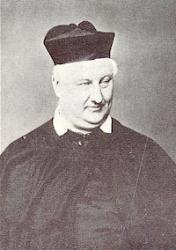
Robert J. Batastini

b. 1942 Person Name: Robert J. Batastini, b. 1942 Topics: Rites of the Church Christian Initiation/Baptism; Ritos de la Iglesia Christiana/Bautismo; Rites of the Church Penance; Ritos de la Iglesia Penitencia; Amor Para Otros; Love for Others; Christian Life; Vida Cristiana; Confianza; Trust; Dios el Padre Creador; God the Father Creator; Ecumenism; Ecumenismo; Esperanza; Hope; Faith; Fe; Humildad; Humility; Jesucristo; Jesus Christ; Paciencia; Patience; Preocupación Social; Social Concern; Unidad; Unity Adapter of "There Is One Lord (Hay un Señor)" in Oramos Cantando = We Pray In Song Robert J. Batastini is the retired vice president and senior editor of GIA Publications, Inc., Chicago. Bob has over fifty-five years of service in pastoral music ministry, having served several parishes in the Archdiocese of Chicago and one in the Diocese of Joliet. He served as executive editor and project director for the Worship hymnals (three editions), Gather hymnals (three editions), Catholic Community Hymnal, and as executive editor of RitualSong. In 1993 he became the first recipient of the Father Lawrence Heimann Citation for lifetime contribution to church music and liturgy in the U.S., awarded by St. Joseph's College, Rensselaer, Indiana, and was named "Pastoral Musician of the Year-2000" by the National Association of Pastoral Musicians (NPM). At its 2006 conference, he was named a Fellow of the Hymn society in the United States and Canada. In his retirement he is active in the music ministry of St. Francis de Sales Parish, Holland, MI. Nancy Naber, from www.giamusic.com/bios/

Michael Haydn

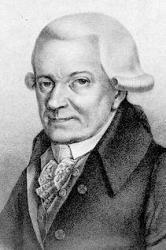
1737 - 1806 Person Name: Johann Michael Haydn (1737-1806) Topics: The Living God Our Response to God - in intercession and petition; Our Response to God in intercession and petition; Church unity and ecumenism; God Protection of; Pilgrimage Composer of "SALZBURG (HAYDN)" in Church Hymnary (4th ed.) Johann Michael Haydn Austria 1737-1806. Born at Rohrau, Austria, the son of a wheelwright and town mayor (a very religious man who also played the harp and was a great influence on his sons' religious thinking), and the younger brother of Franz Joseph Haydn, he became a choirboy in his youth at the Cathedral of St. Stephen in Vienna, as did his brother, Joseph, an exceptional singer. For that reason boys both were taken into the church choir. Michael was a brighter student than Joseph, but was expelled from music school when his voice broke at age 17. The brothers remained close all their lives, and Joseph regarded Michael's religious works superior to his own. Michael played harpsichord, violin, and organ, earning a precarious living as a freelance musician in his early years. In 1757 he became kapellmeister to Archbishop, Sigismund of Grosswardein, in Hungary, and in 1762 concertmaster to Archbishop, Hieronymous of Salzburg, where he remained the rest of his life (over 40 years), also assuming the duties of organist at the Church of St. Peter in Salzburg, presided over by the Benedictines. He also taught violin at the court. He married the court singer, Maria Magdalena Lipp in 1768, daughter of the cathedral choir-master, who was a very pious women, and had such an affect on her husband, trending his inertia and slothfulness into wonderful activity. They had one daughter, Aloysia Josepha, in 1770, but she died within a year. He succeeded Wolfgang Amadeus Mozart, an intimate friend, as cathedral organist in 1781. He also taught music to Carl Maria von Weber. His musical reputation was not recognized fully until after World War II. He was a prolific composer of music, considered better than his well-known brother at composing religious works. He produced some 43 symphonies,12 concertos, 21 serenades, 6 quintets, 19 quartets, 10 trio sonatas, 4 due sonatas, 2 solo sonatas, 19 keyboard compositions, 3 ballets, 15 collections of minuets (English and German dances), 15 marches and miscellaneous secular music. He is best known for his religious works (well over 400 pieces), which include 47 antiphons, 5 cantatas, 65 canticles, 130 graduals, 16 hymns, 47 masses, 7 motets, 65 offertories, 7 oratorios, 19 Psalms settings, 2 requiems, and 42 other compositions. He also composed 253 secular vocals of various types. He did not like seeing his works in print, and kept most in manuscript form. He never compiled or cataloged his works, but others did it later, after his death. Lothar Perger catalogued his orchestral works in 1807 and Nikolaus Lang did a biographical sketch in 1808. In 1815 Anton Maria Klafsky cataloged his sacred music. More complete cataloging has been done in the 1980s and 1990s by Charles H Sherman and T Donley Thomas. Several of Michael Haydn's works influenced Mozart. Haydn died at Salzburg, Austria. John Perry

Henri F. Hemy

1818 - 1888 Person Name: Henri Frederick Hemy Topics: Church in the World D; Brotherhood/Sisterhood; Calling and Response; Church Community in Christ; Commitment; Confirmation; Courage; Faith; Faithfulness; Freedom; Heritage; Jesus Christ Cross; Joy; Men; Nation; Oppression; Sacrifice; Saints; Suffering; Trials; Trust; Unity; Witness; Women; Word of God; World; Zeal; Lent 2 Year A; Proper 5 Year A; Proper 8 Year A; Proper 14 Year A; Proper 24 Year A; Proper 10 Year B; Proper 16 Year B; Lent 2 Year C; Proper 14 Year C; Proper 15 Year C; Proper 21 Year C; All Saints Year C; New Year Year ABC Composer of "ST CATHERINE" in Voices United Henri F. Hemy, born in the United Kingdom. Hemy spent time at sea as a young man, emigrating to Australia in 1850 with his family. Unable to make a decent living in Melbourne, he returned to Newcastle England. He was organist at St. Andrews Roman Catholic Church in Newcastle, later teaching professor of music at Tynemouth and at St. Cuthbert's College in Durham. He was pianist to Lord Ravensworth, Music Director of Ushaw College, and his orchestra played at fashionable venues in the region. He sang baritone as well. He composed waltzes, polkas, quadrilles, and galops. 3 music works: Easy Hymn Tunes for Catholic Schools; Royal Modern Tutor for Pianoforte; Crown of Jesus. He was active in local politics and published a manifesto in the daily newspaper. He lost a ward election. He also painted artwork. He set most of Longfellow's works to music. John Perry

Is. Smith

1734 - 1805 Person Name: I. Smith (1734-1805) Topics: Christ the Friend of Sinners; Christ the Healer; Easter 1 The Upper Room; God's Church Penitence and Prayer; Lent 3, The King and the Kingdom Suffering; Pentecost 2 The Church's Unity and Fellowship; The Remnant of Israel Composer of "ABRIDGE" in Hymns for Today's Church (2nd ed.) Isaac Smith; published "A Collection of Psalm Tunes" about 1770 Evangelical Lutheran Hymnal, 1908

John E. Bowers

1923 - 2019 Person Name: John Edward Bowers, 1923- Topics: Unity of the Church Author of "Christians, lift up your hearts" in Together in Song

Skinner Chávez-Melo

1944 - 1992 Person Name: Skinner Chávez-Melo, 1944-1992 Topics: Pentecost Sunday; Domingo de Pentecostés; Rites of the Church Confirmation; Ritos de la Iglesia Confirmación; Amor Para Otros; Love for Others; Church; Iglesia; Espíritu Santo; Holy Spirit; Faith; Fe; Healing; Sanación; Imágenes de Dios; Images of God; Paz; Peace; Petition/Prayer; Súplica/Oración; Presence of God; Presencia de Dios; Reconciliación; Reconciliation; Unidad; Unity Paraphraser of "Like the Murmur of the Dove's Song (Cual Murmullo de Paloma)" in Oramos Cantando = We Pray In Song Skinner Chavez-Melo, an organist, conductor and composer who was music director at the St. Rose of Lima Roman Catholic Church in Manhattan, died on Saturday at New York Downtown Hospital. He was 47 years old and lived in Manhattan. He died of spinal cancer, said his brother, Juan Francisco. Mr. Chavez-Melo was born in Mexico City, but completed his musical studies in the United States, receiving degrees at Eastern Nazarene College and the Union Theological Seminary, and pursuing further studies at the Juilliard School and the Manhattan School. He toured internationally as an organist and conducted orchestras in Mexico, Brazil and the United States. As a composer, he wrote works for organ, choir and orchestra, and contributed hymn settings to several published hymnals, including those of the United Church of Christ and Yale University. He also lectured and presented workshops on Hispanic church music. Besides directing music at St. Rose, Mr. Chavez-Melo conducted the annual Singing Christmas Tree concerts at the South Street Seaport. http://www.nytimes.com/1992/01/28

Pages


Export as CSV
It looks like you are using an ad-blocker. Ad revenue helps keep us running. Please consider white-listing Hymnary.org or getting Hymnary Pro to eliminate ads entirely and help support Hymnary.org.