You help make Hymnary.org possible. More than 10 million people from 200+ countries found hymns, liturgical resources and encouragement on Hymnary.org in 2025, including you. Every visit affirms the global impact of this ministry.

If Hymnary has been meaningful to you this year, would you take a moment today to help sustain it? A gift of any size—paired with a note of encouragement if you wish—directly supports the server costs, research work and curation that keep this resource freely available to the world.

Give securely online today, or mail a check to:
Hymnary.org
Calvin University
3201 Burton Street SE
Grand Rapids, MI 49546

Thank you for your partnership, and may the hope of Advent fill your heart.

Person Results

Topics:closing+of+service
In:person

Planning worship? Check out our sister site, ZeteoSearch.org, for 20+ additional resources related to your search.
Showing 191 - 200 of 419Results Per Page: 102050

David Peacock

b. 1949 Person Name: David Christopher Peacock, b. 1949 Topics: The Temple Close of Service Arranger of "COME TOGETHER" in The Irish Presbyterian Hymnbook

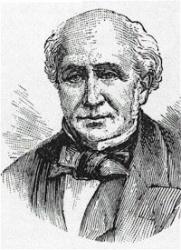
John Bakewell

1721 - 1819 Person Name: John Bakewell, 1721 - 1819 Topics: The Church Worship - The Close of Service Author of "Hail, thou once despised Jesus!" in Service Book and Hymnal of the Lutheran Church in America Bakewell, John, born at Brailsford, Derbyshire, 1721. At about the age of eighteen his mind was turned towards religious truths by reading Boston's Fourfold State. From that date he became an ardent evangelist, and in 1744 (the year of the first Methodist Conference) he begun to preach. Removing to London some short time after, he became acquainted with the Wesleys, M. Madan, A. M. Toplady, J. Fletcher, and other earnest evangelical men. After conducting for some years the Greenwich Royal Park Academy, he resigned in favour of his son-in-law, Dr. James Egau, and employed much of his time in preaching at various places for the Wesleyans. He died at Lewisham, near Greenwich, March 18, 1819, aged 98, and was buried in the Wesleyan burying ground connected with the City Road Chapel, London. Mr. Bakewell was the author of a few hymns, the best known being, "Hail Thou once despised Jesus," the abbreviations of the same, "Paschal Lamb, by God appointed," and “Jesus, hail, enthroned in glory." A short memoir of him was published by Mr. Stelfox, Belfast, 1864. - John Julian, Dictionary of Hymnology (1907) See also in: Hymn Writers of the Church

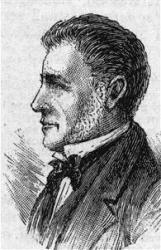
George Rawson

1807 - 1889 Person Name: George L. Rawson Topics: Public Worship Closing of Service Author of "Father of Love and Power" in Church Hymnal, Mennonite Born: June 5, 1807, Leeds, England. Died: March 25, 1889, Clifton, England. Buried: Arno’s Vale Cemetery, Bristol, England. Pseudonym: A Leeds Layman. Rawson, George, was born June 5, 1807, at Leeds, in which town he practised for many years as a solicitor. In 1853 he assisted the Congregational ministers of Leeds in the compilation of Psalms, Hymns, and Passages of Scripture for Christian Worship, a volume commonly known as the Leeds Hymn-book. Mr. Rawson was a member of the Congregational body. In 1858 he also assisted Rev. Dr. Green and other Baptist ministers in the preparation of Psalms and Hymns for the use of the Baptist Denomination. A number of Mr. Rawson's own compositions first appeared in this and in the Leeds Hymn-book In 1876 he published his Hymns, Verses and Chants (Hodder and Stoughton, London), including his previously published hymns, and containing (exclusive of chants) 80 original pieces. In 1885 most of these, with several additional hymns, were published by the R. T. S. under the title Songs of Spiritual Thought. Mr. Rawson died March 25, 1889. His hymns are distinguished by refinement of thought, and delicacy and propriety of language; and if they do not attain the first rank among the songs of the Christian Church, many are of great excellence. The most widely known are, "By Christ redeemed, in Christ restored;" "Come to our poor nature's night;" "Father in high heaven dwelling;" "In the dark and cloudy day;" and "Reaper, behold the fields are white." In the Leeds Hymn-book, 1853, and the Baptist Psalms & Hymns, 1858, there are also several recasts of and additions to the hymns of other writers. In addition to Mr. Rawson's hymns which are annotated under their respective first lines, the following are also in common use:- i. From the Leeds Hymn-book, 1853. 1. Captain and Saviour of the host. Burial. 2. Give dust to dust: and here we leave. Burial. 3. God the Lord is King-—before him. Ps. xcix. 4. In the dark and cloudy day. Consolation. 5. Soul, thy week of toil is ended. Saturday Evening. 6. Though the night be very long. Resignation. ii. From the Baptist Psalms & Hymns, 1858. 7. Beautiful, desired, and dear. Public Worship. 8. Blessed are they who have not seen. Faith. 9. Blessed is the faithful heart. Faithfulness. 10. Christ to heaven is gone before. Ascension. 11. God the Father, be Thou near. Evening. 12. He fell asleep in Christ the Lord. Burial. 13. Immersed beneath the closing wave. Holy Baptism. 14. Lord, we bless Thee, Who hast given. Holy Communion. 15. My Father God, with filial awe. Abiding in God. 16. Our eyes we lift up to the hills. The Lord the Pastor's Keeper. 17. Reaper, behold the fields are ripe [white] . Missions. 18. Rise, heart, thy Lord arose. Sunday. 19. Upon the holy mountains high. Security of the Church. iii. From the Leeds Sunday School Hymn Book, 1858. 20. And will [How shall] the mighty God. The Holy Ghost. 21. Jesus, the Lord, our Righteousness. Jesus, the children's Friend. 22. O Thou Good Shepherd. The Good Shepherd. iv. From Dr. Allon's Supplemental Hymns, 1868. 23. My Father, it is good for me. Trust. 24. Thou Who hast known the careworn breast. Evening. 25. Walking with Thee, my God. Walking with God. v. From Mr. Rawson's Hymns, Verses, &c. 1876. 26. God is our Refuge; God our Strength. Ps. xlvi. 27. Lo, a voice from heaven hath said. Burial. 28. Lord, let me pray. I know not how. The Holy Spirit desired. 29. O pallid, gentle, grief-worn face. Easter Eve. 30. Out of the depths, the gulfs, the night. Ps. cxxx. 31. This, the old world's day of rest. Saturday Evening. [1854-7.] 32. Thou who Thyself didst sanctify. Ordination. [1854-7.] 33. Voices of the deep blue night. The Heavenly Call. 34. With gladness we worship. Public Worship. Mr. Rawson is represented by about 50 hymns in the collections of the present day. It must be noted that in the Hymns, &c, 1876, and in the Songs, &c, 1885, the texts of the hymns have been revised, and in several instances been weakened thereby. [Rev.W. R. Stevenson, M.A.] --John Julian, Dictionary of Hymnology (1907) ================ Rawson, George, p. 952, i. Additional hymns by this author in common use include:— 1. Come, Spirit of the Lord. From his “How shall the mighty God," in his Hymns, Verses, &c, 1876, No. 43. 2. Each trial hath a gentle voice. Patience and Hope. In the 1880 Supplement to the Baptist Psalms and Hymns. This is dated 1857. It is not in the author's Hymns, 1876. 3. Stand up before your God. All Saints. In the 1880 Baptist Psalms and Hymns this is dated 1865. It is not in Rawson's Hymns, 1876. --John Julian, Dictionary of Hymnology, Appendix, Part II (1907)

F. F. Flemming

1778 - 1813 Person Name: Friedrich F. Flemming, 1778 - 1813 Topics: The Church Worship - The Close of Service Composer of "FLEMMING (INTEGER VITAE)" in Service Book and Hymnal of the Lutheran Church in America Friedrich Ferdinand Flemming Germany 1778-1813. Born in Neuhausen, Erzgebirge, Germany, he studied medicine at Wittenberg, 1796-1800, Jena, Vienna, and Trieste. He practiced as a physician in Berlin until his death, but, musically, is remembered for his setting of Horace's ode beginning “Integer Vitae”, from which the tune “Flemming” is adapted. He was active in musical circles and composed many songs for a male vocal ensemble, “Liedertafel”. He died in Berlin. John Perry

Fred Kaan

1929 - 2009 Person Name: Fred Kaan, b. 1929 Topics: Close of Service Author of "Let Us Talents And Tongues Employ" in Hymnal Supplement 1991 Fred Kaan Hymn writer. His hymns include both original work and translations. He sought to address issues of peace and justice. He was born in Haarlem in the Netherlands in July 1929. He was baptised in St Bavo Cathedral but his family did not attend church regularly. He lived through the Nazi occupation, saw three of his grandparents die of starvation, and witnessed his parents deep involvement in the resistance movement. They took in a number of refugees. He became a pacifist and began attending church in his teens. Having become interested in British Congregationalism (later to become the United Reformed Church) through a friendship, he was attended Western College in Bristol. He was ordained in 1955 at the Windsor Road Congregational Church in Barry, Glamorgan. In 1963 he was called to be minister of the Pilgrim Church in Plymouth. It was in this congregation that he began to write hymns. The first edition of Pilgrim Praise was published in 1968, going into second and third editions in 1972 and 1975. He continued writing many more hymns throughout his life. Dianne Shapiro, from obituary written by Keith Forecast in Independent (http://www.independent.co.uk/news/obituaries/fred-kaan-minister-and-celebrated-hymn-writer-1809481.html)

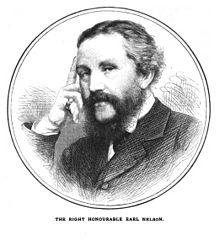
Horatio Nelson

1823 - 1913 Person Name: Earl Horatio Nelson (1823- ) Topics: Opening and Closing of Service Translator of "As the sun doth daily rise" in Carmina Sanctorum, a selection of hymns and songs of praise with tunes Earl Nelson was born in 1823. He was educated at Eton, and Trinity College, Cambridge. He is a relative of England's greatest naval hero. An active layman, he has been of service to the Church in many of her religious and benevolent enterprises. In hymnology he has taken a prominent position; his own hymns are most creditable, and he has been foremost in compiling the Sarum Hymnal, a work of the best character. This hymnal was compiled in 1857, with the assistance of John Keble, at the request of the Bishop of Salisbury. Its first title was The Salisbury Hymn Book. Its popularity was very great. In 1868 it was revised and is now known as The Sarum Hymnal. Earl Nelson has also published a few other works, mostly of a devotional character. --Annotations of the Hymnal, Charles Hutchins, M.A., 1872 Nelson, Horatio, 3rd Earl Nelson, son of Mr. Thomas Bolton, of Burnham, Norfolk (nephew of the celebrated Admiral Viscount Nelson, whose name he assumed on succeeding to the title as 2nd Earl); was born Aug. 7, 1823, and educated at Eton, and at Trinity College, Cambridge. He succeeded to the title Nov. 1, 1835. In 1857 he edited the Salisbury Hymn-Book. In this work he was assisted by J. Keble, who re-wrote some of the older hymns and translated others from the Latin. This collection was remodelled and published as the Sarum Hymnal in 1868. In the preparation of this work Earl Nelson was assisted by the Revs. J. R. Woodford (afterwards Bishop of Ely) and E. A. Dayman. In 1864 he published his Hymn for Saint’s Day, and other Hymns. In this appeared the hymn by which he is most widely known, “From all Thy saints in warfare, for all Thy saints at rest" (p. 398, ii.). He has also published A Form of Family Prayer, with Special Offices for the Seasons, 1852; and A Calendar of Lessons for Every Day in the Year, 1857. He was also an active member of the Home Reunion Society, and wrote extensively on the subject. --John Julian, Dictionary of Hymnology (1907)

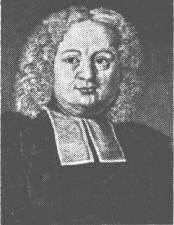
Christian Friedrich Witt

1660 - 1717 Person Name: Christian F. Witt, 1660-1716 Topics: Close of Service; Close of Service Composer of "STUTTGART" in Christian Worship (1993) Christian F. Witt (b. Altenburg, Germany, d. 1660; d. Altenburg, 1716) was an editor and compiler of Psalmodia Sacra (1715); about 100 (of the 774) tunes in that collection are considered to be composed by him, including STUTTGART, which was set to the text "Sollt' es gleich." Witt was chamber organist and later Kapellmeister at the Gotha court. He composed vocal and instrumental music, including some sixty-five cantatas. Bert Polman

Clarence A. Walworth

1820 - 1900 Topics: Close of Service Translator of "Holy God, We Praise Thy Name" in Christian Youth Hymnal Walworth, Clarence Alphonsus, born in 1820, graduated at Union College, 1838, admitted to the Bar 1841, studied for the ministry of Protestant Episcopal Church, but subsequently was ordained as a priest of the Roman Catholic communion, and became Rector of St. Mary's, Albany, in 1864. He was one of the founders of the Order of the Paulists in the U.S.A. He published The Gentle Skeptic, N.Y., 1863, and Andiatoroctè, or the Eve of Lady Day, &c, N.Y., 1888. His paraphrase of the Te Deum, "Holy God, we. praise Thy name," p. 1133, ii. 7, is in the Catholic Psalmist, Dublin, 1858, p. 170. In the American Episcopal Hymnal, 1892, it begins with stanza ii., slightly altered, as "Hark, the loud celestial hymn." He died in 1900. [Rev. L. F. Benson, D.D.] --John Julian, Dictionary of Hymnology, New Supplement (1907)

Benjamin Schmolck

1672 - 1737 Person Name: B. Schmolk Topics: Close of Service; Worship in General Close of Service Author of "O how holy is this place" in The Lutheran Hymnary Schmolck, Benjamin, son of Martin Schmolck, or Schmolcke, Lutheran pastor at Brauchitschdorf (now Chrόstnik) near Liegnitz in Silesia (now Poland) was born at Brauchitschdorf, Dec. 21, 1672. He entered the Gymnasium at Lauban in 1688, and spent five years there. After his return home he preached for his father a sermon which so struck the patron of the living that he made Benjamin an allowance for three years to enable him to study theology. He matriculated, at Michaelmas, 1693, at the University of Leipzig, where he came under the influence of J. Olearius, J. B. Carpzov, and others, and throughout his life retained the character of their teaching, viz. a warm and living practical Christianity, but Churchly in tone and not Pietistic. In the autumn of 1697, after completing his studies at Leipzig (during his last year there he supported himself mainly by the proceeds of occasional poems written for wealthy citizens, for which he was also, crowned as a poet), he returned to Brauchitzchdorf to help his father, and, in 1701, was ordained as his assistant. On Feb. 12, 1702, he married Anna Rosina, daughter of Christoph Rehwald, merchant in Lauban and in the end of the same year was appointed diaconus of the Friedenskirche at Schweidnitz in Silesia. As the result of the Counter-Reformation in Silesia, the churches in the principality of Schweidnitz had been taken from the Lutherans, and for the whole district the Peace of Westphalia (1648) allowed only one church (and that only of timber and clay, without tower or bells), which the Lutherans had to build at Schweidnitz, outside the walls of the town; and the three clergy attached to this church had to minister to a population scattered over some thirty-six villages, and were moreover hampered by many restrictions, e.g. being unable to communicate a sick person without a permit from the local Roman Catholic priest. Here Schmolck remained till the close of his life, becoming in 1708 archidiaconus, in 1712 senior, and in 1714 pastor primarius and inspector. Probably as the result of his exhausting labours he had a stroke of paralysis on Laetare (Mid-Lent) Sunday, 1730, which for a time laid him aside altogether, and after which he never recovered the use of his right hand. For five years more he was still able to officiate, preaching for the last time on a Fastday in 1735. But two more strokes of paralysis followed, and then cataract came on, relieved for a time by a successful operation, but returning again incurably. For the last months of his life he was confined to bed, till the message of release came to him, on the anniversary of his wedding, Feb. 12, 1737. (Koch, v. 463; Bode, p. 144; Goedeke's Grundriss, vol. iii., 1887, p. 306; sketch prefixed to Ledderhose's edition of Schmolck's Geistliche Lieder, Halle, 1857, &c.) Schmolck was well known in his own district as a popular and useful preacher, a diligent pastor, and a man of wonderful tact and discretion. It was however his devotional books, and the original hymns therein contained, that brought him into wider popularity, and carried his name and fame all over Germany. Long lists of his works and of the various editions through which many of them passed are given by Koch, Bode and Goedehe. It is rather difficult to trace the hymns, as they are copied from one book of his into another, &c. Schmolck was the most popular hymnwriter of his time, and was hailed as the "Silesian Rist," as the "second Gerhardt," &c. Nor was he altogether unworthy of such praise. It is true that he did not possess the soaring genius of Gerhardt. Nor had he even Gerhardt's concise, simple style, but instead was too fond of high-sounding expressions, of plays upon words, of far-fetched but often recurring contrasts, and in general of straining after effect, especially in the pieces written in his later years. In fact he wrote a great deal too much, and latterly without proper attention to concentration or to proportion. Besides Cantatas, occasional pieces for weddings, funerals, &c, he is the author of some 900 hymns, properly so called. These were written for all sorts of occasions, and range over the whole field of churchly, family, and individual life. Naturally they are not all alike good; and those in his first three collections are decidedly the best. A deep and genuine personal religion, and a fervent love to the Saviour, inspire his best hymns; and as they are not simply thought out but felt, they come from the heart to the heart. The best of them are also written in a clear, flowing, forcible, natural, popular style, and abound in sententious sayings, easily to be remembered. Even of these many are, however, more suited for family use than for public worship. Nevertheless they very soon came into extensive use, not only in Silesia, but all over Germany. A number of Schmolck's hymns [that] have passed into English are:— i. Der beste Freund ist in dem Himmel. Love of Jesus. First published in his Heilige Flammen (ed. 1709, p. 100), in 6 stanzas of 6 lines, entitled "The best Friend." The translation in common use is:— A faithful friend is waiting yonder. This is a good translation, omitting stanza v., as No. 293, in Kennedy, 1863. ii. Die Woche geht zum Ende. Saturday Evening. In his Andächtige Hertze, 1714, p. 116, in 10 stanzas of 8 lines, entitled "Evening Hymn," and appointed for Evening Prayer on Saturday. In the Berlin Geistliche Lieder, ed. 1863, No. 1158. Translated as:— The week draws near its ending. This is a good translation of stanzas i., vi., vii., x., marked as by "A. G.," as No. 81 in the Dalston Hospital Hymn Book 1848. Other trs. are: (1) “Though now the week is ending," by H. J. Buckoll, 1842, p. 107. (2) “The week at length is over," by Miss Manington, 1863, p. 137. iii. Gott du hist selbst die Liehe. Holy Matrimony. Translated as:— O God, "Who all providest. This is a good translation, omitting stanza iii., by J. M. Sloan, as No. 312 in J. H. Wilson's Service of Praise, 1865. iv. Halleluja! Jesus lebt. Easter. In his Bochim und Elim, 1731, p. 67, in 5 stanzas of 6 lines, entitled "Hallelujah! at the grave of Jesus." In the Berlin Geistliche Lieder, ed. 1863, No. 296. Tr. as:— Hallelujah! Lo, He wakes. By E. Cronenwett, omitting st. iv., as No. 79 in the Ohio Lutheran Hymnal 1880. Another translation is: "Hallelujah! Jesus lives! Life, immortal life, He gives." This is a full and good translation, by Miss Warner, 1858, p. 486, repeated in the Treasury of Sacred Song, Kirkwall, n.d. v. Heute mir und Morgen dir. Funeral Hymn. In his Schmuck und Asche, 1717, p. 252, in 6 stanzas of 6 lines, entitled "Daily Dying". The tr. in common use is:— Today mine, tomorrow thine. This is a good and full translation, by Miss Warner, in her Hymns of the Church Militant, 1858, p. 260. vi. Je grösser Kreuz, je näher Himmel. Cross and Consolation. In his Andächtige Hertz, 1714, p. 273, in 9 stanzas of 6 lines, entitled "Hymn of Cross and Consolation." By its sententiousness and its manifold illustrations of the power of the Cross it has been a favourite with many. Translated as:— 1. Greater the Cross, the nearer heaven. 2. The more the cross, the nearer heaven. Another translation is: "The heavier the cross, the nearer heaven," by J. D. Burns, in the Family Treasury, 1859, p. 160. vii. Jesus soil die Losung sein. New Year. The translation in common use is:— Jesus shall the watchword he. Another translation is: "Jesu's name shall be our watchword," by J. Kelly, in the Family Treasury, 1868, p. 689. viii. Licht vom Licht, erleuchte mich. Sunday Morning. Translated as:— Light of Light, enlighten me. This is a very good tr. omitting stanza vii., by Miss Winkworth, in her Lyra Germanica, 2nd Ser., 1858, p. 66, and thence in her Chorale Book for England, 1863, No. 17. Other translations are: (1) "Light of Light! illumine me," by H. J. Buckoll, 1842, p. 6. (2) "O thou blessed Light of Light," by Miss Dunn, 1857, p. 74. ix. Meinen Jesum lass ich nicht, Ach was wollt ich hessres haben. Love to Christ. Translated as:— I'll with Jesus never part. This is a translation of st. i., ii., iv., as stanzas iii.-v. of No. 378 in the Moravian Hymn Book, 1789. In the ed. of 1886, No. 452 (see p. 614, i.), the part from Schmolck begins, "He is mine and I am His" (the translation of stanza ii.). Another tr. is: "I'll not leave Jesus—-never, never," by Miss Warner, 1858, p. 509. x. Mein Gott, ich weiss wohl dass ich sterbe. For the Dying. Translated as:— My God! I know that I must die, My mortal. Other trs. are: (1) "That I shall die full well 1 know," by Dr. H. Mills, 1845 (1856, p. 232). (2) "My God! I know full well that I must die," by Miss Warner, 1858, p. 344. (3) "My God, I know that I must die; I know," by G. Moultrie, in his Espousals of S. Dorothea, 1870. xi. Mein Jesus lebt! was soil ich sterben. Easter. Translated as:— My Saviour lives; I shall not perish. xii. 0 wie fröhlich, o wie selig. Eternal Life. Translated as:— Oh how joyous, oh how blessed. Another tr. is: "Oh, how blest beyond our telling." xiii. Schmückt das Fest mit Maien. Whitsuntide. Translated as:— Come, deck our feast today. xiv. Thut mir auf die schöne Pforte. Sunday. Translated as:— 1. Open now thy gates of beauty. This is a good tr., omitting stanza iii., vii., by Miss Winkworth, in her Chorale Book for England, 1863, No. 15. 2. Open wide the gates of beauty. This is a translation of stanzas i., ii., iv., vi.-vii., by H. L. Hastings, dated 1885, as No. 1076, in his Songs of Pilgrimage, 1886. Another tr. is: "Throw the glorious gates wide open," by Miss Manington, 1863, p. 146. xv. Weine nicht, Gott lebet noch. Cross and Consolation. Tr. as:— "Weep not,-—Jesus lives on high. Another tr. is: "Weep not, for God, our God, doth live," by Dr. R. Maguire, 1883, p. 59. xvi. Willkommen, Held im Streite. Easter. The translation in common use is:— Welcome Thou victor in the strife. This is a good translation omitting st. ii.—iv., by Miss Winkworth, in her Lyra Germanica, 1st Ser., 1855, p. 91. Hymns not in English common use:-- xvii. Ach wenn ich dich, mein Gott, nur habe. Love to God. Founded on Ps. lxxiii. 25, 26. Translated as "My God, if I possess but Thee," by G. Moultrie, in his Espousals of S. Dorothea, 1870. xviii. An Gott will ich gedenken. Remembering God's Love and Care. In his Heilige Flammen (ed. 1707, p. 59; ed. 1709, p. 131), in 6 stanzas of 8 lines, and Burg's Gesang-Buch, Breslau, 1746, No. 112. Translated as "My God will I remember," by J. Kelly, in the Family Treasury, 1868. xix. Der Sabbath ist vergangen. Sunday Evening. Tr. as "The Sabbath now is over," by Dr. H. Mills, 1856, p. 226. xx. Du angenehmer Tag. Sunday. In his Lustige Sabbath, 1712, p. 1, in 8 stanzas of 6 lines. Tr. as “Thou ever welcome day," by J. Kelly, in the Family Treasury, 1868, p. 688. xxi. Endlich, endlich, muss es doch. Cross and Consolation. Translated as "Yes, at last, our God shall make," in the Christian Examiner, Boston, U.S., Sept., 1860, p. 251. xxii. Gedenke mein, mein Gott, gedenke mein. For the Dying. Translated as "Remember me, my God! remember me," by Miss Borthwick, in Hymns from the Land of Luther 1854, p. 9. xxiii. Geh, müder Leib, zu deiner Euh. Evening. Translated as "Go, wearied body, to thy rest," by J. Kelly, in the Family Treasury, 1868. In his Lustige Sabbath, 1712, p. 35, in 10 stanzas of 6 lines, and Burg’s Gesang-Buch, Breslau, 1746, No. 403. Translated as "King, to Jews and Gentiles given," by Dr. H. Mills, 1845. xxiv. Gott der Juden,Gott der Heiden. Epiphany. Translated as “King, to Jews and Gentiles given,” by Dr. H. Mills, 1845. xxv. Gott lebt, wie kann ich traurig sein. Trust in God. Translated as "God lives! Can I despair," by Miss Warner, 1869, p. 44. xxvi. Gott mit uns, Immanuel. New Year. Translated as "God with us! Immanuel, Open with the year before us," by Dr. R. P. Dunn, in Sacred Lyrics from the German, Philadelphia, U.S., 1859, p. 166. xxvii. Hier ist Immanuel! New Year. Translated as "Here is Immanuel!" by Miss Manington, 1864, p. 24. xxviii. Hilf, Heifer, hilf! ich muss verzagen. Cross and Consolation. Translated as "Help, Saviour, help, I sink, I die,” in the Monthly Packet, vol. xviii., 1859, p. 664. xix. Ich habe Lust zu scheiden. For the Dying. Tr. as "Weary, waiting to depart," by Mrs. Findlater, in Hymns from the Land of Luther, 1855, p 130. xxx. Ich sterbe täglich, und mein Leben. For the Dying. Translated as "Both life and death are kept by Thee" (st. iv.), by J. Kelly, in the Family Treasury, 1868, p. 689. xxxi. Mein Gott, du hast mich eingeladen. Sunday. Translated as "My God, Thou hast the invite given," by Miss Manington, 1863, p. 150. xxxii. Mein Gott! du wohnst in einem Lichte. Holy Scripture. Translated as "In glory bright, O God, Thou dwellest," by Dr. H. Mills, 1845. xxxiii. Mein Gott, ich klopf an deine Pforte. Supplication. Tr.Translated as "given as "Mein Gott, mein Erstes und mein Alles." Translated as "My God! the Source of all my blessing," in the British Herald, August, 1866, p. 312; repeated in Reid's Praise Book, 1872. xxxv. Mein Gott, weil ich in meinem Leben. The ChristiaWho, Lord, has any good whatever," by Dr. H. Mills, 1845, p. 91. xxxiv. Mein Gott, mein Alles Uber Alles. Trust in God. Sometimes n Life. Translated as "Most High! with reverence to fear Thee," by Dr. H. Mills, 1845, p. 114.). xxxvi. Nun hab ich überwunden; Zu guter Nacht, o Welt. For the Dying. Translated as "Now soon I shall have conquer'd," by Miss Manington, 1863, p. 87. xxxvii. Seht welch ein Mensch ist das. Passiontide. The translations are (1) "See, what a man is this! How tearful is His glance," by J. Kelly, in the British Messenger, Feb., 1S68; repeated in the Family Treasury, 1868, p. 691. (2) "See what a man is this, O glances," by Miss Warner, 1869, p. 32. xxxviii. Sei getreu bis in den Tod. Christian Faithfulness. Translated as "Be thou faithful unto death! Let not troubles nor distresses," by R. Massie, in the Day of Rest, 1878, vol. ix. p. 219. xxxix. Theures Wort aus Gottes Munde. Holy Scripture. Translated as "Word by God the Father spoken," by Miss Manington, 1863. xl. Was Gott thut das ist wohlgethan! Er giebt und nimmt auch wieder. On the Death of a Child. The trs. are (1) "What God does is well done, "Who takes what He gave," by W. Graham, in his The Jordan and the Rhine, London, 1854, p. 251. (2) "Whatever God doth is well done, He gives, &c," by J. Kelly, in the Family Treasury, 1868, p. 688. xli. Wer will mich von der Liebe scheiden. Faith. Translated as "Who can my soul from Jesus sever," by Miss Manington, 1863, p. 39. [Rev. James Mearns, M.A.] --Excerpts from John Julian, Dictionary of Hymnology (1907)

Josiah Conder

1789 - 1855 Topics: Close of Service Author of "Doxology" in Laudes Domini Josiah Conder was born in London, in 1789. He became a publisher, and in 1814 became proprietor of "The Eclectic Review." Subsequently to 1824, he composed a series of descriptive works, called the "Modern Traveller," which appeared in thirty volumes. He also published several volumes of poems and hymns. He was the author of the first "Congregational Hymn Book" (1836). He died in 1855. --Annotations of the Hymnal, Charles Hutchins, M.A. 1872. ========================== Conder, Josiah, fourth son of Thomas Conder, engraver and bookseller, and grandson of the Rev. John Conder, D.D., first Theological Tutor of Homerton College, was born in Falcon Street (City); London, Sept. 17, 1789, and died Dec. 27, 1855. As author, editor and publisher he was widely known. For some years he was the proprietor and editor of the Eclectic Review, and also editor of the Patriot newspaper. His prose works were numerous, and include:— The Modern Traveller, 1830; Italy, 1831; Dictionary of Ancient and Modern Geography, 1834; Life of Bunyan, 1835; Protestant Nonconformity, 1818-19; The Law of the Sabbath, 1830; Epistle to the Hebrews (a translation), 1834; Literary History of the New Testament, 1845, Harmony of History with Prophecy, 1849, and others. His poetical works are:— (1) The Withered Oak,1805; this appeared in the Athenceum. (2) The Reverie, 1811. (3) Star in the East, 1824. (4) Sacred Poems, Domestic Poems, and Miscellaneous Poems, 1824. (5) The Choir and the Oratory; or, Praise and Prayer, 1837. Preface dated Nov. 8, 1836. (6) Hymns of Praise, Prayer, and Devout Meditation, 1856. This last work was in the press at the time of his death, and was revised and published by his son, the Rev. E. R. Conder, M.A. He also contributed many pieces to the magazines and to the Associated Minstrels, 1810, under the signature of " C." In 1838, selections from The Choir and Oratory were published with music by Edgar Sanderson, as Harmonia Sacra. A second volume was added in 1839. To Dr. Collyer’s (q.v.) Hymns, &c, he contributed 3 pieces signed "C"; and to Dr. Leifchild's Original Hymns, 1843, 8 hymns. As a hymn-book editor he was also well known. In 1836 he edited The Congregational Hymn Book: a Supplement to Dr. Watts’s Psalms and Hymns (2nd ed. 1844). To this collection he contributed fifty-six of his own hymns, some of which had previously appeared in The Star in the East, &c. He also published in 1851 a revised edition of Dr. Watts's Psalms and Hymns, and in the game year a special paper on Dr. Watte as The Poet of the Sanctuary, which was read before the Congregational Union at Southampton. The value of his work as Editor of the Congregational Hymn Book is seen in the fact that eight out of every ten of the hymns in that collection are still in use either in Great Britain or America. As a hymn writer Conder ranks with some of the best of the first half of the present century. His finest hymns are marked by much elevation of thought expressed in language combining both force and beauty. They generally excel in unity, and in some the gradual unfolding of the leading idea is masterly. The outcome of a deeply spiritual mind, they deal chiefly with the enduring elements of religion. Their variety in metre, in style, and in treatment saves them from the monotonous mannerism which mars the work of many hymn writers. Their theology, though decidedly Evangelical, is yet of a broad and liberal kind. Doubtless Conder's intercourse with many phases of theological thought as Editor of the Eclectic Review did much to produce this catholicity, which was strikingly shewn by his embodying many of the collects of the Book of Common Prayer, rendered into verse, in his Choir and Oratory. Of his versions of the Psalms the most popular are "How honoured, how dear" (84th), and "O be joyful in the Lord" (100th). His hymns in most extensive use are," Bread of heaven, on Thee I feed; " “Beyond, beyond that boundless sea;" "The Lord is King, lift up thy voice" (this last is one of his best); "Day by day the manna fell;" "How shall I follow him I serve;" "Heavenly Father, to whose eye" (all good specimens of his subdued and pathetic style); and "O shew me not my Saviour dying." This last is full of lyric feeling, and expresses the too often forgotten fact that the Church has a living though once crucified Lord. The popularity of Conder's hymns may be gathered from the fact that at the present time more of them are in common use in Great Britain and America than those of any other writer of the Congregational body, Watts and Doddridge alone excepted. [Rev. W. Garrett Horder] In addition to the hymns named above and others which are annotated under their respective first lines, the following, including two already named (4,16), are also in common use:— i. From Dr. Collyer's Hymns, &c, 1812. 1. When in the hours of lonely woe. Lent. ii. From The Star in the East, &c, 1824. 2. Be merciful, O God of grace. Ps. lxvii. 3. For ever will I bless the Lord. Ps. xxxiv. 4. How honoured, how dear. Ps. lxxxiv. 5. Now with angels round the throne. Doxology. 6. O Thou God, Who hearest prayer. Lent. Dated Sept. 1820. Usually abbreviated. iii. From The Congregational Hymn Book, 1836. 7. Blessed be God, He is not strict. Longsuffering of God. 8. Followers of Christ of every name. Communion of Saints. 9. Grant me, heavenly Lord, to feel. Zeal in Missions desired. 10. Grant, 0 Saviour, to our prayers. Collect 5th S. after Trinity. 11. Head of the Church, our risen Lord. Church Meetings. 12. Holy, holy, holy Lord, in the highest heaven, &c. Praise to the Father. 13. Jehovah's praise sublime. Praise. 14. Leave us not comfortless. Holy Communion. 15. Lord, for Thv Name's sake! such the plea. In National Danger. 16. O be joyful in the Lord. Ps. c. 17. 0 breathe upon this languid frame. Baptism of Holy Spirit desired. 18. 0 give thanks to Him Who made. Thanksgiving for Daily Mercies. 19. 0 God, Protector of the lowly. New Year. 20. 0 God, to whom the happy dead. Burial. 21. 0 God, Who didst an equal mate. Holy Matrimony. 22. 0 God, Who didst Thy will unfold. Holy Scriptures. 23. 0 God, Who dost Thy sovereign might. Prayer Meetings. 24. 0 how shall feeble flesh and blood. Salvation through Christ. 25. 0 how should those be clean who bear. Purity desired for God's Ministers. 26. 0 say not, think not in thy heart. Pressing Onward. 27. 0 Thou divine High Priest. Holy Communion. 28. 0 Thou Who givest all their food. Harvest. 29. 0 Thou Whose covenant is sure. Holy Baptism. 30. Praise on Thee, in Zion-gates. Sunday. 31. Praise the God of all creation. Doxology 32. See the ransomed millions stand. Praise to Christ. 33. The heavens declare His glory. Ps. xix. 34. Thou art the Everlasting Word. Praise to Christ. 35. Thy hands have made and fashioned me. Thanks for Daily Mercies. 36. To all Thy faithful people, Lord. For Pardon. 37. To His own world He came. Ascension. 38. To our God loud praises give. Ps. cxxxvi. 39. Upon a world of guilt and night. Purification of B.V.M. 40. Welcome, welcome, sinner, hear. Invitation to Christ. 41. Wheresoever two or three. Continued Presence of Christ desired. iv. From The Choir and the Oratory, 1837. 42. Baptised into our Saviour's death. Holy Baptism. 43. In the day of my [thy] distress. Ps. xx. 44. 0 comfort to the dreary. Christ the Comforter. v. From Leifchild's Original Hymns, 1843. 45. I am Thy workmanship, 0 Lord. God the Maker and Guardian. 46. 0 Lord, hadst Thou been here! But when. The Resurrection of Lazarus. 47. 'Tis not that I did choose Thee. Chosen of God. This is altered in the Church Praise Book, N. Y., 1882, to “Lord, 'tis not that I did choose Thee," thereby changing the metre from 7.6 to 8.5. vi. From Hymns of Praise, Prayer, &c, 1856. 48. Comrades of the heavenly calling. The Christian race. When to these 48 hymns those annotated under their respective first lines are added, Conder’s hymns in common use number about 60 in all. --John Julian, Dictionary of Hymnology (1907) =================== Conder, Josiah, p. 256, i. Other hymns are:— 1. O love beyond the reach of thought. The love of God. 2. O Thou, our Head, enthroned on high. Missions. 3. Son of David, throned in light. Divine Enlightenment desired. 4. Thou Lamb of God for sinners slain. Christ the Head of the Church. From "Substantial Truth, 0 Christ, Thou art." These hymns are all from his Hymns of Praise, &c, 1856. --John Julian, Dictionary of Hymnology, Appendix, Part II (1907)

Pages


Export as CSV
It looks like you are using an ad-blocker. Ad revenue helps keep us running. Please consider white-listing Hymnary.org or getting Hymnary Pro to eliminate ads entirely and help support Hymnary.org.