

 My Starred Hymns
 My FlexScores
 My Hymnals
 My Purchased Files
Planning worship?
Check out our sister site, ZeteoSearch.org,
for 20+ additional resources related to your search.
- |
User Links
Person Results
Harry Webb Farrington
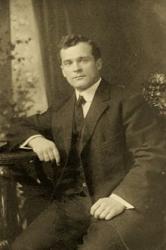
1880 - 1930 Topics: Jesus Christ Example Author of "Strong, Righteous Man of Galilee" in Baptist Hymnal (1975 ed)
Harry Webb Farrington
Samuel Longfellow
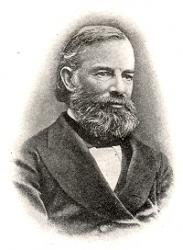
1819 - 1892 Topics: Example of Christ Author of "A voice by Jordan's shore" in The Hymnal Longfellow, Samuel, B. A., brother of the Poet, was born at Portland, Maine, June 18, 1819, and educated at Harvard, where he graduated in Arts in 1839, and in Theology in 1846. On receiving ordination as an Unitarian Minister, he became Pastor at Fall River, Massachusetts, 1848; at Brooklyn, 1853; and at Germantown, Pennsylvania, 1860. In 1846 he edited, with the Rev. S. Johnson (q. v.), A Book of Hymns for Public and Private Devotion. This collection was enlarged and revised in 1848. In 1859 his Vespers was published, and in 1864 the Unitarian Hymns of the Spirit , under the joint editorship of the Rev. S. Johnson and himself. His Life of his brother, the Poet Longfellow, was published in 1886. To the works named he contributed the following hymns:—
i. To A Book of Hymns , revised ed., 1848.
1. Beneath the shadow of the Cross. Love.
2. 0 God, thy children gathered here. Ordination.
ii. To the Vespers 1859.
3. Again as evening's shadow falls. Evening.
4. Now on land and sea descending. Evening.
iii. To the Hymns of the Spirit, 1864.
5. A voice by Jordan's shore. Advent.
6. Father, give Thy benediction. Ordination.
7. Go forth to life, 0 child of earth. Life's Mission.
8. God of ages and of nations. Holy Scriptures.
9. Holy Spirit, Truth divine. The Holy Spirit desired.
10. I look to Thee in every need. Trust in God.
11. In the beginning was the Word. The Word.
12. Love for all, and can it be? Lent. The Prodigal Son.
13. 0 God, in Whom we live and move. God's Law and Love.
14. 0 God, Thou Giver of all good. Prayer for Food.
15. O still in accents sweet and strong. Missions.
16. 0 Thou, Whose liberal sun and rain. Anniversary of Church dedication.
17. One holy Church of God appears. The Church Universal.
18. Out of the dark, the circling sphere. The Outlook.
19. Peace, peace on earth! the heart of man for ever. Peace on Earth.
20. The loving Friend to all who bowed. Jesus of Nazareth.
21. ’Tis winter now, the fallen snow. Winter.
Of these, hymn No. 2 was written for the Ordination of E. E. Hale (q. v.), at Worcester, 1846. Several are included in Martineau's Hymns, 1873.
Died Oct. 3, 1892. [Rev. F. M. Bird, M.A.]
--John Julian, Dictionary of Hymnology (1907), p. 685
===============
Longfellow, S., p. 685, i. Since Mr. Longfellow's death on Oct. 3, 1892, his hymns have been collected by his niece, Miss Alice Longfellow, as Hymns and Verses(Houghton, Mifflin & Co., 1904.) From this work we find many of the hymns signed Anon, in the Index to Longfellow and Johnson's Hymns of the Spirit, 1864, were his; several of these, including E. Osier's "O God unseen, yet ever near," were popular English hymns which he rewrote from his own theological standpoint. These re¬written hymns are very widely used by Unitarians and others. During the last ten years the following additional hymns by S. Long¬fellow have come into common use:—
1. Eternal One, Thou living God. Faith in God.
2. God of the earth, the sky, the sea. God in Nature.
3. God's trumpet wakes the slumbering world. Call to duty.
4. Light of ages and of nations. God in and through all time.
5. Lo, the earth is risen again. Spring. (1876.)
6. Now while we sing our closing psalm. Close of Worship.
7. O Life that maketh all things new. Unity. (1874.)
8. O Thou in Whom we live and move. The Divine Law.
9. The summer days are come again. Summer. From his hymn,"The sweet[bright] June days are come again."
10. Thou Lord of lite, our saving health. In Sickness. (1886.)
Of these hymns Nos. 2, 3 appeared in the Hymns of the Spirit, 1864, and all with the dates appended in Hymns and Verses, 1904.
--John Julian, Dictionary of Hymnology, New Supplement (1907)
==================
http://en.wikipedia.org/wiki/Samuel_Longfellow
Samuel Longfellow
John Hampden Gurney
1802 - 1862 Person Name: John H. Gurney Topics: Christ Example of; Example of Christ Author of "Lord, as to Thy dear cross we flee" in The Hymnal Gurney, John Hampden, M.A., eldest son of Sir John Gurney, a Baron of the Exchequer, was born in Serjeants’ Inn, London, Aug. 15, 1802, and educated at Trinity College, Cambridge, where he graduated in 1824. On taking Holy Orders he became Curate of Lutterworth (1827-1844), and subsequently Rector of St. Mary's, Marylebone, and Prebendary of St. Paul's Cathedral. He died in London, March 8, 1862. The Society for Promoting Christian Knowledge and other religious societies had his cordial sympathy, and received his active support. His publications include several small volumes in prose, and the following:—
(1) Church Psalmody; Hints for the improvement of a Collection of Hymns published by the Society for Promoting Christian Knowledge, 1853; (2) A Collection of Hymns for Public Worship. Lutterworth, 1838. This contains 300 hymns, and is known as his Lutterworth Collection; (3) Psalms and Hymns for Public Worship, selected for some of the Churches of Marylebone. London, 1851. This collection of 300 hymns and psalm versions is known as his Marylebone Collection. The Preface is signed by "Charles Baring," "Thomas Garnier," and "John Hampden Gurney," but the work was practically done by Gurney.
To the Lutterworth Collection 1838, he contributed :—
1. Earth to earth, and dust to dust. Burial.
2. Great King of nations, hear our prayer. Fast Day.
3. Lord, as to Thy dear Cross we flee. Lent.
4. Lord, at Thy word the constant sun. Harvest.
5. Saviour, what wealth was Thine. Passiontide.
6. Soon to the dust we speed. Heaven anticipated.
7. Thou God of mercy and of might. Good Friday.
8. Thou plenteous source of light and love. Advent.
9. Thou Who of old didst raise. Ascension.
10. Through centuries of sin and woe. For Peace.
11. We praise Thee, everlasting God. Te Deum.
These hymns were all signed "J. H. G.," and Nos. 1, 2, 3, 7, 8, 9 and 11, were repeated in the Marylebone Collection, 1851; and to these were added:—
12. Fair waved the golden corn. Child's Hymn.
13. How vast the debt we owe. Offertory.
14. Lord of the Harvest, Thee we hail. Harvest. This is No. 4 above rewritten.
15. Lord, we lift our eyes above. Love of Christ.
In addition to these we are specially indebted to Gurney for, "We saw Thee not when Thou didst come" (q.v.), and "Yes, God is good," &c. (q.v.). Several of the above-named hymns are in extensive use in Great Britain and America. The most popular are annotated under their respective first lines.
-- John Julian, Dictionary of Hymnology (1907)
John Hampden Gurney
Josiah Booth
1852 - 1929 Person Name: Josiah Booth, 1852- Topics: God: His Attributes, Works and Word The Lord Jesus Christ - His Life and Example Composer of "NORTHREPPS" in The Book of Praise
Josiah Booth
John Wilson
1905 - 1992 Topics: Christ's Example Composer of "WHITFIELD" in Moravian Book of Worship Born January 21, 1905, in Bournville, Birmingham, England; died July 16, 1992, in Guildford, Surrey, England. He served as Vice President of the Hymn Society of Great Britain and Ireland, and was a Fellow of the Hymn Society in the United States and Canada.
Leland Bryant Ross from a biographical article in the journal of the Hymn Society of Great Britain and Ireland: https://hymnsocietygbi.org.uk/1992/10/treasure-no-58-john-wilson-1905-92
John Wilson
Hans G. Nägeli
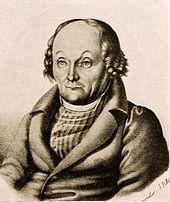
1773 - 1836 Person Name: J. G. Nageli Topics: God: His Attributes, Works and Word The Son - Life and Example Composer of "NAOMI" in The Presbyterian Book of Praise Johann G. Nageli (b. Wetzikon, near Zurich, Switzerland, 1773; d. Wetzikon, 1836) was an influential music educator who lectured throughout Germany and France. Influenced by Johann Pestalozzi, he published his theories of music education in Gangbildungslehre (1810), a book that made a strong impact on Lowell Mason. Nageli composed mainly" choral works, including settings of Goethe's poetry. He received his early instruction from his father, then in Zurich, where he concentrated on the music of. S. Bach. In Zurich, he also established a lending library and a publishing house, which published first editions of Beethoven’s piano sonatas and music by Bach, Handel, and Frescobaldi.
Bert Polman
Hans G. Nägeli
Johann Georg Frech
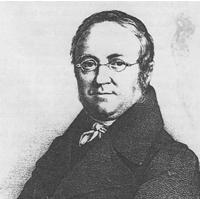
1790 - 1864 Person Name: J. G. Frech Topics: God: His Attributes, Works and Word The Son - Life and Example Composer of "ASPURG" in The Presbyterian Book of Praise Johann Georg Frech (* January 17 1790 in Kaltental, † August 23 1864 in Esslingen am Neckar ) was a German music director, composer and organist.
Naughty was the son of a watchmaker and organ builder. He visited here until his 13th Age of the school, then high school in Stuttgart and took lessons in music.
In 1806 he was teaching assistant in Degerloch while still in Stuttgart, studied music. In 1811 he went as a teaching assistant after Esslingen and in 1812 a music teacher at the newly established Esslinger teacher seminar. In 1820 he received the office of a municipal director of music and organist at the main church in Esslingen, where he remained until his retirement in 1860. His successor was Christian Fink.
Naughty took a significant role in the Württemberg church singing together with Konrad Kocher and Friedrich Silcherstraße one. Together with the aforementioned He created "The Württemberg Choral Book" of 1828 and was co-editor of "Württemberg Choral Book" of 1844.
Frech has composed six symphonies, many choral works, including 22 chorales for Württembergischen chorale books, 67 cantatas, an opera, the oratorio "Abraham on Moriah" and some organ works.
In the district of Stuttgart Kaltental a street was named after naughty.
--de.wikipedia.org/wiki/
Johann Georg Frech
A. Royce Eckhardt
b. 1937 Topics: Christ's Example Harmonizer of "BEACH SPRING" in Moravian Book of Worship Royce Eckhardt has served as a director of music, organist, conductor, composer, arranger, hymnal editor, teacher, and hymnologist for over fifty years. He has served Evangelical Covenant churches as minister of music and organist in Seattle, New Britain (CT), Winnetka, and Hinsdale, Illinois, and also the Winnetka Presbyterian Church.
Mr. Eckhardt earned a Bachelor of Music degree in organ performance in 1960 from North Park College, Chicago, and a Master of Music degree in liturgical music at Hartt College of Music, University of Hartford in 1972. Royce joined the music faculty at Seattle Pacific College in 1961, teaching organ, music theory and literature courses and directing small choral ensembles. He served as adjunct professor of church music at North Park Theological Seminary in Chicago, specializing in hymnology and also serving as chapel
organist.
Mr. Eckhardt was a member of the Covenant Hymnal Commission that produced The Covenant Hymnal (1973). In 1990 he was appointed to the Special Hymnal Commission that compiled and published The Covenant Hymnal: A Worshipbook (1996), serving as music editor. He is represented in the hymnal with 47 arrangements, original tunes, and descants. His many hymn arrangements, harmonizations and tunes appear in eight American hymnals.
Royce also served as music director of the Covenant Ministers Chorus from 1985 to 2005, leading the Chorus on a concert tour to Sweden and Germany in 1990 and on a second concert tour in 2001 to Norway, Sweden, Estonia, Latvia, Lithuania, and Germany. He has led many workshops and seminars throughout the country on worship and church music related topics, is a published composer of organ and choral works, a board member of North Shore American Guild of Organists, board member of The Bach Week Festival, and a member of The Hymn Society.
Royce Eckhardt
A. Royce Eckhardt
William W. Phelps
1792 - 1872 Person Name: William W. Phelps, 1792–1872 Topics: Jesus Christ Example Author of "Come, All Ye Saints Who Dwell on Earth" in Hymns of the Church of Jesus Christ of Latter-day Saints
William W. Phelps
Claude Goudimel
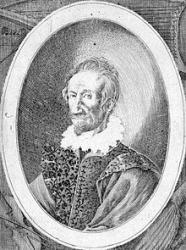
1514 - 1572 Topics: Jesus Christ Example Harmonizer of "DONNE SECOURS" in Voices United The music of Claude Goudimel (b. Besançon, France, c. 1505; d. Lyons, France, 1572) was first published in Paris, and by 1551 he was composing harmonizations for some Genevan psalm tunes-initially for use by both Roman Catholics and Protestants. He became a Calvinist in 1557 while living in the Huguenot community in Metz. When the complete Genevan Psalter with its unison melodies was published in 1562, Goudimel began to compose various polyphonic settings of all the Genevan tunes. He actually composed three complete harmonizations of the Genevan Psalter, usually with the tune in the tenor part: simple hymn-style settings (1564), slightly more complicated harmonizations (1565), and quite elaborate, motet-like settings (1565-1566). The various Goudimel settings became popular throughout Calvinist Europe, both for domestic singing and later for use as organ harmonizations in church. Goudimel was one of the victims of the St. Bartholomew's Day massacre of Huguenots, which occurred throughout France.
Bert Polman
Claude Goudimel
Pages




