You help make Hymnary.org possible. More than 10 million people from 200+ countries found hymns, liturgical resources and encouragement on Hymnary.org in 2025, including you. Every visit affirms the global impact of this ministry.

If Hymnary has been meaningful to you this year, would you take a moment today to help sustain it? A gift of any size—paired with a note of encouragement if you wish—directly supports the server costs, research work and curation that keep this resource freely available to the world.

Give securely online today, or mail a check to:
Hymnary.org
Calvin University
3201 Burton Street SE
Grand Rapids, MI 49546

Thank you for your partnership, and may the hope of Advent fill your heart.

Person Results

Topics:proper+6
In:people

Planning worship? Check out our sister site, ZeteoSearch.org, for 20+ additional resources related to your search.
Showing 191 - 200 of 321Results Per Page: 102050

T. Tertius Noble

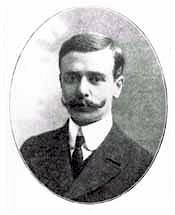
1867 - 1953 Person Name: Thomas Tertius Noble Topics: Year A Proper 6 Composer of "ORA LABORA" in The New Century Hymnal Thomas Tertius Nobel (1867-1953) was born in Bath, England, educated at the Royal College of Music, and was a noted composer and organist. He served as a church or­gan­ist in Cam­bridge and Col­ches­ter. He moved to Ely Ca­thed­ral in 1892 as or­gan­ist and choir­mas­ter, and in 1898 to York Min­ster, where he found­ed the York Sym­pho­ny Or­ches­tra, di­rect­ed the York Mu­sic­al So­ci­e­ty, con­duct­ed the York Pa­geant, and re­vived the York Mu­sic­al Fes­tiv­al af­ter a lapse of 75 years. He be­came an hon­or­a­ry fel­low of the Roy­al Coll­ege of Or­gan­ists in 1905. In 1913, he moved to New York Ci­ty, where he was or­gan­ist at St. Tho­mas’ Epis­co­pal Church, and es­tab­lished its choir school and a boys’ choir. In ad­di­tion to com­pos­ing, he wrote about mu­sic ed­u­ca­tion, and helped ed­it the 1916 Pro­test­ant Epis­co­pal hym­nal, and served on the mu­sic com­mit­tee that pre­pared its 1940 suc­ces­sor. He wrote a wide range of mu­sic, but on­ly his serv­ices, an­thems and hymn tunes are still per­formed reg­u­lar­ly. Died: May 4, 1953, Rock­port, Mass­a­chu­setts. http://www.hymntime.com/tch/

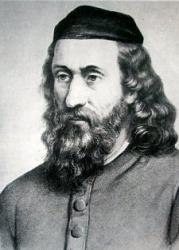
Jan Roh

1487 - 1547 Person Name: Johann Horn Topics: The Christian Year Easter; Biblical Characters Jacob's Sons; Biblical Characters Pharoah, Jacob's Sons; Celebration; Christian Year Easter; Eternal Life; Feast; Jesus Christ Light; Jesus Christ Resurrection; Joy; Music and Singing; Passover; Processionals (Opening of Worship); Seasons Changing; Service Music Gathering, Call to Worship, Greeting; Service Music Doxologies; Victory; Easter 1 Year A; Easter 2 Year A; Ascension Year A; Proper 13 Year A; Proper 19 Year A; Easter 1 Year B; Epiphany 6 Year C; Easter 1 Year C; Easter Evening Year ABC Composer of "AVE VIRGO VIRGINUM" in Voices United Pseudonyms-- Johann Cornu Johann Horn John Horn Roh, Johann, was a native of Domascbitz near Leitmeritz, in Bohemia. Roh was his name in Bohemian, but when he wrote in Latin he styled himself Cornu, and in German Horn. In 1518 he was ordained priest and appointed preacher to the Bohemian Brethren's community at Jungbunzlau, in Bohemia. At the Synod of Brandeis, in Sep. 1529, he was chosen as one of the three Seniors of the Unity. Finally, at the Synod of Brandeis, in April 1532, he was appointed Bishop, and held this post till his death, at Jungbunzlau, Feb. 11, 1547. (Koch, ii. 114; Wackernagel, i. p. 727, &c.) Roh was the editor of the Bohemian Hymn Book of 1541, and is said to have written a number of hymns in the Bohemian language, but the edition of 1561 only gives one with his name. He also edited the second German hymn-book of the Brethren, viz., Ein Gesangbuch der Brüder inn Behemen und Merherrn, Nürnberg, 1544; and seems to have been author or translator of all, or nearly all, of the 32 hymns there added. Another hymn ("O heiliger Vater, glitiger Herr") is also given with his name in the Kirchengeseng, 1566. A considerable number of Ron's hymns passed into the Lutheran hymn-books of the 16th and 17th centuries, and into the Moravian Hymn Books of the 18th cent. Rather curiously in the last Moravian Hymn Books, (the Kleines Gesangbuch, Gnadau, 1870), his name is not found in the list of authors. Those of Roh's hymns which have been translated into English are:— i. Gottes Sohn ist kommen. Christmas. In 1544, as above, and thence in Wackernagel iii. p, 350, in 9 stanzas of 6 lines, The heading "Ave Hierarchia" refers to the melody, for it is not a translation from the Latin. Included in V. Babst's Gesang-Buch, Leipzig, 1553, and recently in the Unverfälschter Liedersegen, 1851, No. 6, Strangely enough this fine hymn was omitted from the Kirchengeseng of 1566 and later editions; and though it was included in the Herrnhut Gesang-Buch, 1735, and the Brüder Gesang-Buch, 1778, it has again been omitted from the Kleines Gesang-Buch, 1870. The translations are:— 1. Lo! from highest heaven. A free translation of stanzas i.-iii., vi., by A. T. Russell, as No. 27 in his Psalms & Hymns, 1851. Included, altered, in Kennedy, 1863. 2. Once He came in blessing. A good translation of stanzas i.-iii., v., ix., by Miss Winkworth, in her Chorale Book for England, 1863, No. 26. Included in J. Robinson's Collection, 1869, and the Pennsylvania Lutheran Church Book, 1868. 3. God's Son once descending. This is No. 249 in pt. i. of the Moravian Hymn Book, 1754. Hymns not in English common use:— ii. Betrachtn wir heut zu dieser Frist. Easter. 1544 as above, and in Wackernagel, iii. p. 359, in 14 stanzas of 3 lines. Translated as:—(1) "The Saviour Jesus, Friend of Man." As No. 332 in pt. i. of the Moravian Hymn Book, 1754. This is from the recast "Der selge Heiland, Jesus Christ" (based on ii.-v.), as No. 1875 in Appendix xii. c. 1745, to the Herrnhut Gesang-Buch 1735. iii. Ein starker Held ist uns kommen. Christmas. 1544 as above, and in Wackernagel, iii. p. 352, in 12 stanzas of 4 lines. Translated as (1) "God took our nature upon Him (stanza iii.), as No. 251 in pt. i. of the Moravian Hymn Book, 1754. iv. Lob Gott getrost mit singen. Christian Church. 1544 as above, and in Wackernagel, iii. p. 360, in 9 stanzas of 8 lines. In the Kirchengeseng, 1566, two st. were inserted between iii. and iv. This form, in 11 stanzas, is No. 563 in the Unverfälschter Liedersegen 1851. In the Brüder Gesang-Buch 1778, No. 1014, is a cento in 3 st. (from st. vi., viii., ix. of the 1544, and iv. of the 1566), beginning "Lass dich durch nichts erschrecken," and this form has been translated as "O be not thou dismayed, Believing little band," as No. 596 in the Moravian Hymn Book, 1886. v. O Mensch, thu heut hören. Passiontide. 1544 as above, and in Wackernagel, iii., p. 355, in 20 stanzas of 4 lines. The English version is "I am thy Lord and God" (st. ii.), as No. 258, in pt. i. of the Moravian Hymn Book, 1754. [Rev. James Mearns, M.A.] --John Julian, Dictionary of Hymnology (1907)

Alexander V. Griswold

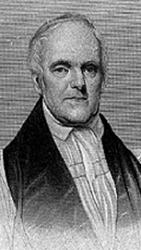
1766 - 1843 Person Name: Alexander Griswold Topics: Epiphany 6 Epistle; Whitsunday/Pentecost (first propers) Gospel; God Father; God Holiness of Author of "Holy Father, great Creator, Source of mercy, love, and peace" in Magnify the Lord Griswold, Alexander Viets, D.D., born at Simsbury, Connecticut, in 1766. After being for some time rector at Bristol, Rhode Island, he was consecrated bishop of the "Eastern Diocese," in 1811. He was subsequently Bishop of Massachusetts. He died in 1843, and his memoirs were published by Dr. J. S. Stone. His well-known hymn:— Holy Father, great Creator. Holy Trinity. Was written probably in 1835. It appeared in that year in his Family Prayers, in 4 st. of 6 1. and entitled "Hymn to the God of Christians." With some alterations by Bishop Coxe, it was given in Hymns for Church and Home, &c, Phila., 1860, No. 153. It was repeated in the Hymnal .... of the Protestant Episcopal Church , 1871, No. 145.[Rev. F. M. Bird, M.A.] -- John Julian, Dictionary of Hymnology (1907)

Clarence A. Walworth

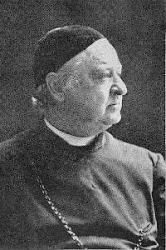
1820 - 1900 Topics: Angels; Communion of Saints; God Authority; God Holiness; God Name; God Reign; Heaven(s)/Paradise; Jesus Christ name; Judgment; Kingdom of God; Morning Prayer; Mystery; Opening Hymns; Prophets; Reverence/Wonder Before God; Service Music Gathering, Call to Worship, Greeting; Service Music Doxologies; Trinity; Worship; Epiphany 2 Year A; Epiphany Last/Transfig. Year A; Trinity Sunday Year A; Trinity Sunday Year B; Epiphany 5 Year C; Easter 6 Year C; Trinity Sunday Year C; Proper 15 Year C; All Saints Year C Translator (v. 1-3, into English) of "Song of Praise to the Holy Trinity (Grand Dieu, Nous Te Bénissons) (Holy God, We Praise Your Name)" in Voices United Walworth, Clarence Alphonsus, born in 1820, graduated at Union College, 1838, admitted to the Bar 1841, studied for the ministry of Protestant Episcopal Church, but subsequently was ordained as a priest of the Roman Catholic communion, and became Rector of St. Mary's, Albany, in 1864. He was one of the founders of the Order of the Paulists in the U.S.A. He published The Gentle Skeptic, N.Y., 1863, and Andiatoroctè, or the Eve of Lady Day, &c, N.Y., 1888. His paraphrase of the Te Deum, "Holy God, we. praise Thy name," p. 1133, ii. 7, is in the Catholic Psalmist, Dublin, 1858, p. 170. In the American Episcopal Hymnal, 1892, it begins with stanza ii., slightly altered, as "Hark, the loud celestial hymn." He died in 1900. [Rev. L. F. Benson, D.D.] --John Julian, Dictionary of Hymnology, New Supplement (1907)

Johann Sebastian Bach

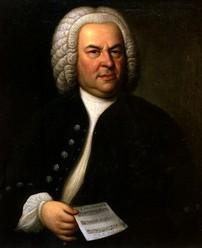
1685 - 1750 Person Name: J. S. Bach (1685-1750) Topics: Epiphany 6 Collect; Holy Saturday Collect; Whitsunday/Pentecost (second propers) Epistle; Trinity 10 Epistle; St. Mark Gospel; Jesus Incorporation into; Self-Dedication ; Confirmation Arranger of "LIEBSTER JESU" in Magnify the Lord Johann Sebastian Bach was born at Eisenach into a musical family and in a town steeped in Reformation history, he received early musical training from his father and older brother, and elementary education in the classical school Luther had earlier attended. Throughout his life he made extraordinary efforts to learn from other musicians. At 15 he walked to Lüneburg to work as a chorister and study at the convent school of St. Michael. From there he walked 30 miles to Hamburg to hear Johann Reinken, and 60 miles to Celle to become familiar with French composition and performance traditions. Once he obtained a month's leave from his job to hear Buxtehude, but stayed nearly four months. He arranged compositions from Vivaldi and other Italian masters. His own compositions spanned almost every musical form then known (Opera was the notable exception). In his own time, Bach was highly regarded as organist and teacher, his compositions being circulated as models of contrapuntal technique. Four of his children achieved careers as composers; Haydn, Mozart, Beethoven, Mendelssohn, Schumann, Brahms, and Chopin are only a few of the best known of the musicians that confessed a major debt to Bach's work in their own musical development. Mendelssohn began re-introducing Bach's music into the concert repertoire, where it has come to attract admiration and even veneration for its own sake. After 20 years of successful work in several posts, Bach became cantor of the Thomas-schule in Leipzig, and remained there for the remaining 27 years of his life, concentrating on church music for the Lutheran service: over 200 cantatas, four passion settings, a Mass, and hundreds of chorale settings, harmonizations, preludes, and arrangements. He edited the tunes for Schemelli's Musicalisches Gesangbuch, contributing 16 original tunes. His choral harmonizations remain a staple for studies of composition and harmony. Additional melodies from his works have been adapted as hymn tunes. --John Julian, Dictionary of Hymnology (1907)

Handel Parker

1854 - 1928 Person Name: Handel Parker, 1857-1928 Topics: Proper 6 Year B Composer of "DEEP HARMONY" in Common Praise

Donald Fishel

b. 1950 Topics: Year C Proper 6 Author of "Alleluia, alleluia, give thanks to the risen Lord" in Complete Anglican Hymns Old and New

Carol Owens

b. 1931 Topics: Year A Proper 6; Year C Proper 6 Author of "God forgave my sin (Freely, freely)" in Complete Anglican Hymns Old and New Owens, Carol Sue. (El Reno, Oklahoma, October 30, 1931-- ). Foursquare. Attended San Jose State College, San Jose, California; Cathedral School of the Bible, Oakland, Calif. With her husband James (Jimmy), she composed Christian musicals. --Terry W. York, DNAH Archives

Barry Rose

b. 1934 Person Name: Barry Rose (b. 1934) Topics: Proper 6 Year B Arranger (last stanza) of "ST DENIO" in Ancient and Modern

Johann C. Schwedler

1672 - 1730 Topics: Jesus Christ Praise and Thanksgiving; Adoration and Praise; Assurance; Faith; Glory; Healing; Jesus Christ Cross; Jesus Christ Life In; Jesus Christ name; Jesus Christ Praise; Reward; Salvation; Security; Victory; Witness; Epiphany 4 Year A; Epiphany 5 Year A; Epiphany 6 Year A; Proper 21 Year A; Proper 26 Year A; Lent 4 Year B; Easter 2 Year C; Proper 23 Year C Author of "Ask Me What Great Thing I Know" in Voices United Schwedler, Johann Christoph, son of Anton Schwedler, farmer and rural magistrate at Krobsdorf, near Lowenberg, in Silesia, was born at Krobsdorf, Dec. 21, 1672, and matriculated at the University of Leipzig, in 1695 (M.A. 1697). In 1698 he was appointed assistant minister at Niederwiese, near Greiffenberg, and began his duties there on the 18th Sunday after Trinity. On the death of the diaconus, Christoph Adolph, he succeeded him as diaconus, in December, 1698; and, finally, in 1701, he became pastor there. He died at Niederwiese, suddenly, during the night of Jan. 12, 1730. Schwedler was a powerful and popular preacher, and peculiarly gifted in prayer. It is said that sometimes, beginning service at 5 or 6 a.m., he would continue the service to relays who in succession filled the church, till 2 or 3 p.m. He also founded an orphanage at Niederwiese. He was a near neighbour and great friend of Johann Mentzer and N. L. von Zinzendorf. As a hymnwriter he was useful and popular. The principal theme of his hymns was the Grace of God through Christ, and the joyful confidence imparted to the soul that experienced it. Of his hymns, 462 appeared in his Die Lieder Mose und des Lammes, oder neu eingerichtetes Gesang-Buch, Budissin, 1720, Nos. 345-806. Others are in his Wöchentliche Hauss-Andacht, 1112, in his various devotional works, and in the hymn-books of the period. The only hymn by Schwedler translated into English is:— Wollt ihr wissen was mein Preis? Jesus the Crucified, or Love to Christ. Founded on 1 Cor. ii. 2, and Gal. vi. 14. The trs. in common use are:— 1. Ask ye what great thing I know. By Dr. Kennedy, in his Hymnologia Christiana, 1863, No. 620, being a good tr. of st. i.-v., with a sixth stanza suggested by st. vi. of the German. 2. Do you ask what most I prize? This is a fairly close version, omitting st. vi., as No. 98, in the Moravian Hymn Book, 1886. [Rev. James Mearns, M.A.] --Excerpts from John Julian, Dictionary of Hymnology (1907)

Pages


Export as CSV
It looks like you are using an ad-blocker. Ad revenue helps keep us running. Please consider white-listing Hymnary.org or getting Hymnary Pro to eliminate ads entirely and help support Hymnary.org.