You help make Hymnary.org possible. More than 10 million people from 200+ countries found hymns, liturgical resources and encouragement on Hymnary.org in 2025, including you. Every visit affirms the global impact of this ministry.

If Hymnary has been meaningful to you this year, would you take a moment today to help sustain it? A gift of any size—paired with a note of encouragement if you wish—directly supports the server costs, research work and curation that keep this resource freely available to the world.

Give securely online today, or mail a check to:
Hymnary.org
Calvin University
3201 Burton Street SE
Grand Rapids, MI 49546

Thank you for your partnership, and may the hope of Advent fill your heart.

Person Results

Topics:the+scriptures
In:people

Planning worship? Check out our sister site, ZeteoSearch.org, for 20+ additional resources related to your search.
Showing 191 - 200 of 468Results Per Page: 102050

Jacques Berthier

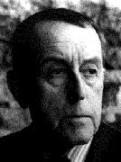
1923 - 1994 Person Name: Jacques Berthier 1923-1994s Topics: Canticles and Scripture Paraphrases Paraphraser of "Come, holy spirit (Veni Sancte Spiritus)" in The Book of Praise Jacques Berthier (b. Auxerre, Burgundy, June 27, 1923; d. June 27, 1994) A son of musical parents, Berthier studied music at the Ecole Cesar Franck in Paris. From 1961 until his death he served as organist at St. Ignace Church, Paris. Although his published works include numerous compositions for organ, voice, and instruments, Berthier is best known as the composer of service music for the Taizé community near Cluny, Burgundy. Influenced by the French liturgist and church musician Joseph Gelineau, Berthier began writing songs for equal voices in 1955 for the services of the then nascent community of twenty brothers at Taizé. As the Taizé community grew, Berthier continued to compose most of the mini-hymns, canons, and various associated instrumental arrangements, which are now universally known as the Taizé repertoire. In the past two decades this repertoire has become widely used in North American church music in both Roman Catholic and Protestant traditions. Bert Polman

Petrus Herbert

1530 - 1571 Topics: The Scriptures; Scriptures; Scriptures Author of "The Word of God, Which Ne'er Shall Cease" in Moravian Book of Worship Herbert, Petrus, seems to have been a native of or resident at Fulnek in Moravia. He was ordained priest of the Brethren's Unity in 1562, became a member of the Select Council in 1567, and was latterly Consenior of the Unity. By the Unity he was entrusted with many important missions. He was sent as a deputy to confer with Calvin: and again in 1562 to arrange with Duke Christoph of Württemberg for the education at Tübingen of young men from the Bohemian Brethren. He was also one of the deputies sent to Vienna to present the revised form of the Brethren's Confession of Faith to the Emperor Maximilian II. in 1564, and in 1566 to present their new German Hymn Book. He died at Eibenschütz in 1571 (Koch, ii. 414, Allgemeine Deutsche Biographie, xiii. 263-264, &c.). Herbert was one of the principal compilers of the enlarged edition of the Brethren's German Hymn Book published in 1566 as their Kirchengeseng, and contributed to it some 90 hymns. In the ed. of 1639 there are 104 hymns marked as his. His hymns are distinguished by simplicity and beauty of style. A number are translations from the Bohemian. His hymns translated into English include:— i. Die Nacht ist kommen drin wir ruhen sollen. [Evening] Written probably under the pressure of persecution and oppression. In the G. 2?., 1566, as above, in 5 stanzas of 7 lines (the last stanza being a versification of the Lord's Prayer), and thence in Wackernagel, iv. p. 442, and the Unverfälschter Liedersegen, 1851, No. 515. In J. H. Schein's Cantiona, 1627, it appears as No. 99, with an additional stanza not by Herbert, which reads— Denn wir kein besser Zuflucht konnen haben, ,Als zu dir, 0 Herr, in dem Himmel droben, Du veriest keinen, gibst Acht auff die deinen. Die dich recht meyuen," This stanza is included as stanza v. in the version in Bunsen's Versuch, 1833, No. 43. Translated as:— 1. The night is come, wherein at last we rest, in full from Bunsen by Miss Winkworth in her Lyra Germanica, 2nd Ser., 1858, p. 77, repeated as No. 105 in R. Minton Taylor's Collection, 1872. 2. Now God be with us, for the night is closing, a good translation from Bunsen, in the original metre, by Miss Winkworth, as No. 170 in her Chorale Book for England, 1863, and repeated in her Christian Singers of Germany, 1869, p. 139. This version has been included in various recent collections, though generally abridged or altered, as in the Hymnary, 1872; Thring's Collection, 1882; and in America in the Evangelical Hymnal, N. Y., 1880, &c. In Laudes Domini, N.Y., 1884, it is in two parts (Nos. 209-210), the second beginning, "Father, Thy name be praised, Thy kingdom given." This is stanza vi. with an added doxology, as in the Hymnary, 1872. Other translations are:— (1) "The night comes apace," as No. 293 in pt. i. of the Moravian Hymn Book, 1754. (2) “Lo! evening's shades to sleep invite," by H. J. Buckoll, 1842, p. 64. ii. 0 Christenmensch, merk wie sichs halt. [Faith] 1566, as above, in 18 stanzas of 4 lines, repeated in Wackernagel, iv. p. 433. In Bunsen's Versuch , 1833, No. 390 Allgemeine Gesang-Buch, 1846, No. 130), the hymn begins with stanza iii. altered to "Der Glaub’ ist ein lebend'ge Kraft," and consists of stanzas iii., viii., xi., xii., xvi., xviii. Bunsen calls it "a noble confession of the true Christian faith." Translated as:— Faith is a living power from heaven. A good translation from Bunsen by Miss Winkworth in her Lyra Germanica, 2nd ser., 1858, p. 160, and thence in her Chorale Book for England, 1863. It is repeated, more or less altered and abridged, in Kennedy, 1863; and in America in the Presbyterian Hymnal, 1874, Baptist Service of Song, 1871, &c. ii. Hymns not in English common use:— iii. Des Herren Wort bleibt in Ewigkeit. [Holy Scripture.] 1566, as above, in 25 stanzas, and in Wackernagel, iv. p. 432. Translated as "God's holy Word, which ne’er shall cease," by J. Swertner, as No. 3 in the Moravian Hymn Book1789 (1849, No. 2). iv. Fürchtet Gott, 0 lieben Leut. [Martyrs.] 1566, as above, in 13 stanzas, and in Wackernagel, iv. p. 429. The translations are, (i.) "O love God, ye people dear," as No. 267 in pt. i. of the Moravian Hymn Book, 1754. (2) "O exalt and praise the Lord" (from the version in the Brüder Gesang-Buch1778, beginning "Liebet Gott"), as No. 871 in the Moravian Hymn Book, 1789 (1886, No. 1306). v. Lasst uns mit Lust und Freud aus Olauben singen. [Eternal Life.] A fine hymn on the Joys of Heaven. 1566, as above, in 12 stanzas, and in Wackernagel, iv. p. 447. Translated as "In faith we sing this song of thank-fulness," by Mrs. Bevan, 1858, p. 34. vi. 0 höchster Trost, heiliger Geist [Whitsuntide.] 1566, as above, in 13 stanzas, and Wackernagel, iv. p. 407. The translations are, (1) "O highest comfort, Holy Ghost," as No. 262 in pt. i. of the Moravian Hymn Book, 1754. (2) "O Comforter, God Holy Ghost," as No. 203 in the Moravian Hymn Book, 1789 (1849, No. 265). Besides the above a number of hymns by Herbert (all of which appeared in the Kirchengeseng, 1566, and are included in Wackernagel’s vol. iv.) were translated in pt. i. of the Moravian Hymn Book, 1754. The numbers in the 1754 are 166, 259, 263, 264, 265, 266, 274, 277, 281, 287, and 294. [Rev. James Mearns, M.A.] -- John Julian, Dictionary of Hymnology

Emily Crawford

1864 - 1927 Person Name: Emily M. Crawford (1864-1927) Topics: God, Spirit Word of Truth, the Scriptures Author of "Speak, Lord, in the stillness" in Hymns for Today's Church (2nd ed.) Emily May Grimes Crawford is described in the author index of the Book of Common Praise (Toronto, 1938) as a Canadian Anglican [as author of "The Master comes! He calls for thee], which she altogether was nor was not. The hymn was first published in London by the Church Missionary Society (CMS) in 1890, before Emily May Grimes had ever left her native England. In 1893, she went to South Africa under CMS sponsorship to work among the Pondo tribe; then, in 1904, she married T.W.W. Crawford, M.D., and went to work with him among the Kikuyu of Kenya. Her career thus far is outlined in Julian (1907), p. 1712. The mission station at which the bride arrived had indeed been started by the CMS, but had been turned over to the newly-formed missionary department of the Church of England in Canada (MSCC); most of her colleagues were Canadian-born like her husband--to add a grace note of confusion--his brother! Both hailed from western Ontario, where Thomas had trained in medicine at the University of Western Ontario (London), while Edward took theology at Huron College. Thus all three of them were working under Canadian sponsorship until 1913, when Thomas and Emily left for England, she in quest of treatment for arthritis, he for further medical training--which perhaps he needed, if he thought the English climate would help anybody's arthritis! Rev. E.W. Crawford continued on in Kenya; his subsequent career can be traced through Crockford's Clerical Dictionary. Whatever plans for their future they may have made were necessarily altered by the outbreak of World War I, which found, and kept, them in England. They may have intended to come to Canada when they could, but in fact they never did: they were still in England when Emily died in 1927. She wrote, and the British Museum Catalogue lists, under her maiden name, all the books she published after her marriage. Although at the time a woman automatically acquired the citizenship of the man she married, Emily was never a Canadian citizen: no such status existed until twenty years after she died. Although she and Dr. Crawford hailed from different parts of the Empire, they were both British subjects by birth, and remained such. Therefore her connection with Canada was never more than indirect, though this may not have been what she intended. --Hugh McKellar, DNAH Archives

Michael Praetorius

1571 - 1621 Topics: Holy Scriptures Adapter of "PRAETORIUS" in The Hymnal of the Protestant Episcopal Church in the United States of America 1940 Born into a staunchly Lutheran family, Michael Praetorius (b. Creuzburg, Germany, February 15, 1571; d. Wolfenbüttel, Germany, February 15, 1621) was educated at the University of Frankfort-an-der-Oder. In 1595 he began a long association with Duke Heinrich Julius of Brunswick, when he was appoint­ed court organist and later music director and secretary. The duke resided in Wolfenbüttel, and Praetorius spent much of his time at the court there, eventually establishing his own residence in Wolfenbüttel as well. When the duke died, Praetorius officially retained his position, but he spent long periods of time engaged in various musical appointments in Dresden, Magdeburg, and Halle. Praetorius produced a prodigious amount of music and music theory. His church music consists of over one thousand titles, including the sixteen-volume Musae Sionae (1605-1612), which contains Lutheran hymns in settings ranging from two voices to multiple choirs. His Syntagma Musicum (1614-1619) is a veritable encyclopedia of music and includes valuable information about the musical instruments of his time. Bert Polman

Robert Simpson

1790 - 1832 Person Name: R. Simpson Topics: The Holy Scriptures The Gospel-The Call Arranger of "BALERMA" in The Church Hymnal Robert Simpson, of Scotland; b. 1790; d. 1832 Evangelical Lutheran Hymnal, 1908

Richard Redhead

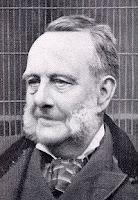
1820 - 1901 Person Name: Richard Redhead (1820-1901) Topics: Scripture Composer of "LAUS DEO (REDHEAD No. 46)" in Church Hymnary (4th ed.) Richard Redhead (b. Harrow, Middlesex, England, 1820; d. Hellingley, Sussex, England, 1901) was a chorister at Magdalen College, Oxford. At age nineteen he was invited to become organist at Margaret Chapel (later All Saints Church), London. Greatly influencing the musical tradition of the church, he remained in that position for twenty-five years as organist and an excellent trainer of the boys' choirs. Redhead and the church's rector, Frederick Oakeley, were strongly committed to the Oxford Movement, which favored the introduction of Roman elements into Anglican worship. Together they produced the first Anglican plainsong psalter, Laudes Diurnae (1843). Redhead spent the latter part of his career as organist at St. Mary Magdalene Church in Paddington (1864-1894). Bert Polman

James McGranahan

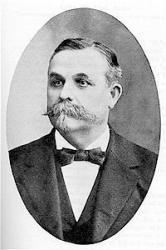
1840 - 1907 Person Name: James McGranahan, 1840-1907 Topics: Holy Scriptures Sufficiency of Composer of "KINSMAN" in Trinity Hymnal (Rev. ed.) James McGranahan USA 1840-1907. Born at West Fallowfield, PA, uncle of Hugh McGranahan, and son of a farmer, he farmed during boyhood. Due to his love of music his father let him attend singing school, where he learned to play the bass viol. At age 19 he organized his first singing class and soon became a popular teacher in his area of the state. He became a noted musician and hymns composer. His father was reluctant to let him pursue this career, but he soon made enough money doing it that he was able to hire a replacement farmhand to help his father while he studied music. His father, a wise man, soon realized how his son was being used by God to win souls through his music. He entered the Normal Music School at Genesco, NY, under William B Bradbury in 1861-62. He met Miss Addie Vickery there. They married in 1863, and were very close to each other their whole marriage, but had no children. She was also a musician and hymnwriter in her own right. For a time he held a postmaster’s job in Rome, PA. In 1875 he worked for three years as a teacher and director at Dr. Root’s Normal Music Institute. He because well-known and successful as a result, and his work attracted much attention. He had a rare tenor voice, and was told he should train for the operatic stage. It was a dazzling prospect, but his friend, Philip Bliss, who had given his wondrous voice to the service of song for Christ for more than a decade, urged him to do the same. Preparing to go on a Christmas vacation with his wife, Bliss wrote McGranahan a letter about it, which McGranahan discussed with his friend Major Whittle. Those two met in person for the first time at Ashtubula, OH, both trying to retrieve the bodies of the Bliss’s, who died in a bridge-failed train wreck. Whittle thought upon meeting McGranahan, that here is the man Bliss has chosen to replace him in evangelism. The men returned to Chicago together and prayed about the matter. McGranahan gave up his post office job and the world gained a sweet gospel singer/composer as a result. McGranahan and his wife, and Major Whittle worked together for 11 years evangelizing in the U.S., Great Britain, and Ireland. They made two visits to the United Kingdom, in 1880 and 1883, the latter associated with Dwight Moody and Ira Sankey evangelistic work. McGranahan pioneered use of the male choir in gospel song. While holding meetings in Worcester, MA, he found himself with a choir of only male voices. Resourcefully, he quickly adapted the music to those voices and continued with the meetings. The music was powerful and started what is known as male choir and quartet music. Music he published included: “The choice”, “Harvest of song”, “Gospel Choir”,, “Gospel hymns #3,#4, #5, #6” (with Sankey and Stebbins), “Songs of the gospel”, and “Male chorus book”. The latter three were issued in England. In 1887 McGranahan’s health compelled him to give up active work in evangelism. He then built a beautiful home, Maplehurst, among friends at Kinsman, OH, and settled down to the composition of music, which would become an extension of his evangelistic work. Though his health limited his hours, of productivity, some of his best hymns were written during these days. McGranahan was a most lovable, gentle, modest, unassuming, gentleman, and a refined and cultured Christian. He loved good fellowship, and often treated guests to the most delightful social feast. He died of diabetes at Kinsman, OH, and went home to be with his Savior. John Perry

John B. Wilkes

1785 - 1869 Person Name: John Wilkes Topics: Scripture Hymns and Songs Arranger of "MONKLAND" in The Worshiping Church John Bernard Wilkes (1785-1869). Not to be confused with John Wilkes (?-1882).

Michael W. Smith

b. 1957 Topics: Scripture Hymns and Songs Author of "How Majestic Is Your Name" in The Worshiping Church

Edmund S. Lorenz

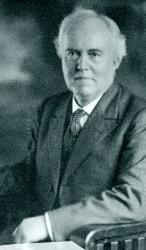
1854 - 1942 Person Name: Edmund S. Lorenz (1854-1942) Topics: The Holy Scripture Composer of "[Dadme la Biblia, reluciente estrella]" in Himnario Adventista del Séptimo Día Pseudonymns: John D. Cresswell, L. S. Edwards, E. D. Mund, ==================== Lorenz, Edmund Simon. (North Lawrence, Stark County, Ohio, July 13, 1854--July 10, 1942, Dayton, Ohio). Son of Edward Lorenz, a German-born shoemaker who turned preacher, served German immigrants in northwestern Ohio, and was editor of the church paper, Froehliche Botschafter, 1894-1900. Edmund graduated from Toledo High School in 1870, taught German, and was made a school principal at a salary of $20 per week. At age 19, he moved to Dayton to become the music editor for the United Brethren Publishing House. He graduated from Otterbein College (B.A.) in 1880, studied at Union Biblical Seminary, 1878-1881, then went to Yale Divinity School where he graduated (B.D.) in 1883. He then spent a year studying theology in Leipzig, Germany. He was ordained by the Miami [Ohio] Conference of the United Brethren in Christ in 1877. The following year, he married Florence Kumler, with whom he had five children. Upon his return to the United States, he served as pastor of the High Street United Brethren Church in Dayton, 1884-1886, and then as president of Lebanon Valley College, 1887-1889. Ill health led him to resign his presidency. In 1890 he founded the Lorenz Publishing Company of Dayton, to which he devoted the remainder of his life. For their catalog, he wrote hymns, and composed many gospel songs, anthems, and cantatas, occasionally using pseudonyms such as E.D. Mund, Anna Chichester, and G.M. Dodge. He edited three of the Lorenz choir magazines, The Choir Leader, The Choir Herald, and Kirchenchor. Prominent among the many song-books and hymnals which he compiled and edited were those for his church: Hymns for the Sanctuary and Social Worship (1874), Pilgerlieder (1878), Songs of Grace (1879), The Otterbein Hymnal (1890), and The Church Hymnal (1934). For pastors and church musicians, he wrote several books stressing hymnody: Practical Church Music (1909), Church Music (1923), Music in Work and Worship (1925), and The Singing Church (1938). In 1936, Otterbein College awarded him the honorary D.Mus. degree and Lebanon Valley College the honorary LL.D. degree. --Information from granddaughter Ellen Jane Lorenz Porter, DNAH Archives

Pages


Export as CSV
It looks like you are using an ad-blocker. Ad revenue helps keep us running. Please consider white-listing Hymnary.org or getting Hymnary Pro to eliminate ads entirely and help support Hymnary.org.