You help make Hymnary.org possible. More than 10 million people from 200+ countries found hymns, liturgical resources and encouragement on Hymnary.org in 2025, including you. Every visit affirms the global impact of this ministry.

If Hymnary has been meaningful to you this year, would you take a moment today to help sustain it? A gift of any size—paired with a note of encouragement if you wish—directly supports the server costs, research work and curation that keep this resource freely available to the world.

Give securely online today, or mail a check to:
Hymnary.org
Calvin University
3201 Burton Street SE
Grand Rapids, MI 49546

Thank you for your partnership, and may the hope of Advent fill your heart.

Person Results

Topics:works+of+god+
In:people

Planning worship? Check out our sister site, ZeteoSearch.org, for 20+ additional resources related to your search.
Showing 191 - 200 of 692Results Per Page: 102050

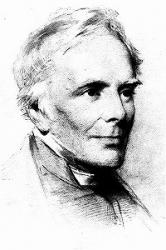
John Keble

1792 - 1866 Person Name: Keble Topics: The Works of God Author of "The Works of God" in The Boston Sunday School Hymn Book Keble, John, M.A., was born at Fairford, in Gloucestershire, on St. Mark's Day, 1792. His father was Vicar of Coln St. Aldwin's, about three miles distant, but lived at Fairford in a house of his own, where he educated entirely his two sons, John and Thomas, up to the time of their entrance at Oxford. In 1806 John Keble won a Scholarship at Corpus Christi College, and in 1810 a Double First Class, a distinction which up to that time had been gained by no one except Sir Robert Peel. In 1811 he was elected a Fellow of Oriel, a very great honour, especially for a boy under 19 years of age; and in 1811 he won the University Prizes both for the English and Latin Essays. It is somewhat remarkable that amid this brilliantly successful career, one competition in which the future poet was unsuccessful was that for English verse, in which he was defeated by Mr. Rolleston. After his election at Oriel, he resided in College, and engaged in private tuition. At the close of 1813 he was appointed Examining Master in the Schools, and was an exceedingly popular and efficient examiner. On Trinity Sunday, 1815, he was ordained Deacon, and in 1816 Priest, by the Bishop of Oxford, and became Curate of East Leach and Burthorpe, though he still continued to reside at Oxford. In 1818 he was appointed College Tutor at Oriel, which office he retained until 1823. On the death of his mother in the same year, he left Oxford, and returned to live with his father and two surviving sisters at Fairford. In addition to East Leach and Burthorpe, he also accepted the Curacy of Southrop, and the two brothers, John and Thomas, undertook the duties between them, at the same time helping their father at Coln. It should be added, as an apology for Keble thus becoming a sort of pluralist among "the inferior clergy," that the population of all his little cures did not exceed 1000, nor the income £100 a year. In 1824 came the only offer of a dignity in the Church, and that a very humble one, which he ever received. The newly-appointed Bishop of Barbadoes (Coleridge) wished Keble to go out with him as Archdeacon, and but for his father's delicate state of health, he would probably have accepted the offer. In 1825 he became Curate of Hursley, on the recommendation of his old pupil, Sir William Heathcote; but in 1826, on the death of his sister, Mary Ann, he returned to Fairford, feeling that he ought not to separate himself from his father and only surviving sister. He supplied his father's place at Coln entirely. 1827 was memorable for the publication of The Christian Year, and 1828 for the election to the Provostship of Oriel, which his friends, rather than himself, seem to have been anxious to secure for him. In 1829 the living of Hursley was offered to him by Sir William Heathcote, but declined on the ground that he could not leave his father. In 1830 he published his admirable edition of Hooker's Works. In 1831 the Bishop of Exeter (Dr. Philpotts) offered him the valuable living of Paignton, but it was declined for the same reason that Hursley had been declined. In the same year he was also elected to the Poetry Professorship at Oxford. His Praelectiones in that capacity were much admired. In 1833 he preached his famous Assize Sermon at Oxford, which is said by Dr. Newman to have given the first start to the Oxford Movement. Very soon after the publication of this sermon the Tracts for the Times began to be issued. Of these Tracts Keble wrote Nos. 4, 13, 40, and 89. In 1835 his father died, and Keble and his sister retired from Fairford to Coln. In the same year he married Miss Clarke and the Vicarage of Hursley, again becoming vacant, was again offered to him by Sir W. Heathcote, and as the reason for his previous refusal of it no longer existed, he accepted the offer, and in 1836 settled at Hursley for the remainder of his life. That life was simply the life of a devoted and indefatigable parish priest, varied by intellectual pursuits. In 1864 his health began to give way, and on March 29, 1866, he passed away, his dearly loved wife only surviving him six weeks. Both are buried, side by side, in Hursley churchyard. In his country vicarage he was not idle with his pen. In 1839 he published his Metrical Version of the Psalms. The year before, he began to edit, in conjunction with Drs. Pusey and Newman, the Library of the Fathers. In 1846 he published the Lyra Innocentium, and in 1847 a volume of Academical and Occasional Sermons. His pen then seems to have rested for nearly ten years, when the agitation about the Divorce Bill called forth from him in 1851 an essay entitled, An Argument for not proceeding immediately to repeal the Laws which treat the Nuptial Bond as Indissoluble; and in the same year the decision of Archbishop Sumner in the Denison case elicited another essay, the full title of which is The Worship of Our Lord and Saviour in the Sacrament of the Holy Communion, but which is shortly entitled, Eucharistical Adoration. In 1863 he published his last work, The Life of Bishop Wilson (of Sodor and Man). This cost him more pains than anything he wrote, but it was essentially a labour of love. In the popular sense of the word "hymn," Keble can scarcely be called a hymnwriter at all. Very many of his verses have found their way into popular collections of Hymns for Public Worship, but these are mostly centos. Often they are violently detached from their context in a way which seriously damages their significance. Two glaring instances of this occur in the Morning and Evening hymns. In the former the verse "Only, O Lord, in Thy dear love, Fit us for perfect rest above," loses half its meaning when the preceding verse, ending "The secret this of rest below," is excised, as it generally is in collections for public worship, and the same may be said of that most familiar of all Keble's lines, "Sun of my soul, thou Saviour dear," which has of course especial reference to the preceding verse, "'Tis gone, that bright and orbed blaze," &c. The Lyra Innocentium has furnished but few verses which have been adopted into hymn collections; the Psalter has been more fortunate, but the translations from the Latin are almost unknown. Taking, however, the word "hymn" in the wider sense in which Dr. Johnson defines it, as "a song of adoration to some superior being," Keble stands in the very first rank of hymnwriters. His uneventful life was the very ideal life for such a poet as Keble was, but not the sort of life which would be best adapted to train a popular hymnwriter. The Christian Year and the Lyra Innocentium reflect in a remarkable degree the surroundings of the writer. They are essentially the works of a refined and cultured mind, and require a refined and cultured mind to enter into their spirit. Keble, all his life long, and never more than in the earlier portion of it, before he wrote, and when he was writing The Christian Year, breathed an atmosphere of culture and refinement. He had imbibed neither the good nor the evil which the training of a public or even of a private, school brings. It was not even the ordinary home education which he had received. He had been trained, up to the very time of his going to college, by his father, who was clearly a man of culture and refinement, and had been himself successively Scholar and Fellow of Corpus. When he went to Oxford, he can scarcely be said to have entered into the whirl of university life. The Corpus of those days has been admirably described by Keble's own biographer, Sir John Coleridge, and by Dean Stanley in his Life of Dr. Arnold; and the impression which the two vivid pictures leave upon the mind is that of a home circle, on rather a large scale, composed of about twenty youths, all more or less scholarly and refined, and some of them clearly destined to become men of mark. When he removed across the road to Oriel, he found himself in the midst of a still more distinguished band. Whether at home or at college he had never come into contact with anything rude or coarse. And his poetry is just what one would expect from such a career. Exquisitely delicate and refined thoughts, expressed in the most delicate and refined language, are characteristic of it all. Even the occasional roughnesses of versification may not be altogether unconnected with the absence of a public school education, when public schools laid excessive stress upon the form of composition, especially in verse. The Christian Year again bears traces of the life which the writer led, in a clerical atmosphere, just at the eve of a great Church Revival, "cujus pars magna fuit." “You know," he writes to a friend, “the C. Y. (as far as I remember it) everywhere supposes the Church to be in a state of decay." Still more obviously is this the case in regard to the Lyra Innocentium. It was being composed during the time when the writer was stricken by what he always seems to have regarded as the great sorrow of his life. Not the death of his nearest relations—-and he had several trials of this kind—-not the greatest of his own personal troubles dealt to him so severe a blow as the secession of J. H. Newman to the Church of Rome. The whole circumstances of the fierce controversy connected with the Tract movement troubled and unsettled him; and one can well understand with what a sense of relief he turned to write, not for, but about, little children, a most important distinction, which has too often been unnoticed. If the Lyra had been written for children it would have been an almost ludicrous failure, for the obscurity which has been frequently complained of in The Christian Year, is still more conspicuous in the latter work. The title is somewhat misleading, and has caused it to be regarded as a suitable gift-book for the young, who are quite incapable of appreciating it. For the Lyra is written in a deeper tone, and expresses the more matured convictions of the author; and though it is a far less successful achievement as a whole, it rises in places to a higher strain of poetry than The Christian Year does. Another marked feature of Keble's poetry is to a great extent traceable to his early life, viz. the wonderful accuracy and vividness of his descriptions of natural scenery. The ordinary schoolboy or undergraduate cares little for natural scenery. The country is to him a mere playing field. But Keble's training led him to love the country for its own sake. Hence, as Dean Stanley remarks, “Oxford, Bagley Wood, and the neighbourhood of Hursley might be traced through hundreds of lines, both in The Christian Year and the Lyra Innocentium.” The same writer testifies, with an authority which no other Englishman could claim, to "the exactness of the descriptions of Palestine, which he [Keble] had never visited.” And may not this remarkable fact be also traced to some extent to his early training? Brought up under the immediate supervision of a pious father, whom he venerated and loved dearly, he had been encouraged to study intelligently his Bible in a way in which a boy differently educated was not likely to do. Hence, as Sir John Coleridge remarks, "The Christian Year is so wonderfully scriptural. Keble's mind was, by long, patient and affectionate study of Scripture, so imbued with it that its language, its train of thought, its mode of reasoning, seems to flow out into his poetry, almost, one should think, unconsciously to himself." To this may we not add that the same intimate knowledge of the Bible had rendered the memory of the Holy Land so familiar to him that he was able to describe it as accurately as if he had seen it? One other early influence of Keble's life upon his poetry must be noticed. Circumstances brought him into contact with the "Lake poets." The near relation of one of the greatest of them had been his college friend, and John Coleridge introduced him to the writings not only of his uncle, S. T. Coleridge, but also of Wordsworth, to whom he dedicated his Praelectiones, and whose poetry and personal character he admired enthusiastically. To the same college friend he was indebted for an introduction to Southey, whom he found to be "a noble and delightful character," and there is no doubt that the writings of these three great men, but especially Wordsworth, had very much to do with the formation of Keble's own mind as a poet. It has been remarked that in Keble's later life his poetical genius seemed to have, to a great extent, forsaken him; and that the Miscellaneous Poems do not show many traces of the spirit which animated The Christian Year and the Lyra Innocentium. Perhaps one reason for this change may be found in the increased interest "which Keble took in public questions which were not conducive to the calm, introspective state of mind so necessary to the production of good poetry. The poet should live in a world of his own, not in a world perpetually wrangling about University Reform, about Courts of Final Appeal, about Marriage with Deceased Wife's Sister, and other like matters into which Keble, in his later years, threw himself—heart and soul. It is not needful to say much about Keble's other poetical works, The Psalter was not a success, and Keble did not expect it to be. It was undertaken," he tells us, "in the first instance with a serious apprehension, which has since grown into a full conviction, that the thing attempted is, strictly speaking, impossible." At the same time, if Keble did not achieve what he owned to be impossible, he produced a version which has the rare merit of never offending against good taste; one which in every line reflects the mind of the cultured and elegant scholar, who had been used to the work of translating from other languages into English. Hymnal compilers have hitherto strangely neglected this volume; but it is a volume worth the attention of the hymn compiler of the future. There is scarcely a verse in it which would do discredit to any hymnbook; while there are parts which would be an acquisition to any collection. His translations from the Latin have not commended themselves to hymnal compilers. Some of his detached hymns have been more popular. But it is after all as writer of The Christian Year that Keble has established his claim to be reckoned among the immortals. It would be hardly too much to say that what the Prayer Book is in prose, The Christian Year is in poetry. They never pall upon one; they realise Keble's own exquisite simile:— "As for some dear familiar strain Untired we ask, and ask again; Ever in its melodious store Finding a spell unheard before." And it would hardly be too bold to prophesy that The Christian Year will live as long as the Prayer Book, whose spirit Keble had so thoroughly imbibed, and whose "soothing influence" it was his especial object to illustrate and commend. [Rev. John H. 0verton, D.D.] Keble's hymns, poetical pieces, and translations appeared in the following works :— (1.) The Christian Year: Thoughts in Verse for the Sundays and Holy days Throughout the Year. Oxford: John Henry Parker, 1827. Preface dated "May 30th, 1827." The last poem, that on the “Commination," is dated March 9, 1827. The poems on the "Forms of Prayer to be used at Sea," "Gunpowder Treason," "King Charles the Martyr," "The Restoration of the Royal Family," "The Accession," and "Ordination," were added to the 4th edition, 1828. The Messrs. Parker have pub. a large number of editions to date, including a facsimile reprint of the first edition, and an edition with the addition of the dates of composition of each poem. A facsimile of Keble's manuscript as it existed in 1822 was also lithographed in 1882, by Eliot Stock, but its publication was suppressed by a legal injunction, and only a few copies came into the hands of the public. Since the expiration of the first copyright other publishers have issued the work in various forms. (2.) Contributions to the British Magazine, which were included in Lyra Apostolica, 1836, with the signature of "γ." (3.) The Psalter or Psalms of David; In English Verse; By a Member of the University of Oxford. Adapted for the most part, to Tunes in Common Use; and dedicated by permission to the Lord Bishop of Oxford. . . . Oxford, John Henry Parker: J. G. & F. Rivington, London, MDCCCXXXIX. Preface dated “Oxford, May 29, 1839." (4.) The Child's Christian Year: Hymns for every Sunday and Holy-Day. Compiled for the use of Parochial Schools. Oxford: John Henry Parker, 1841. This was compiled by Mrs. Yonge. Keble wrote the Preface, dated “Hursley, Nov. 6, 1841," and signed it “J. K." To it he contributed the four poems noted below. (5.) Lyra Innocentium: Thoughts in Verse on Christian Children, their Ways and their Privileges . . . Oxford: John Henry Parker : F. & J. Rivington, London, 1846. The Metrical Address (in place of Preface) “To all Friendly Readers," is dated "Feb. 8, 1846." (6.) Lays of the Sanctuary, and otter Poems. Compiled and Edited by G. Stevenson de M. Rutherford... London: Hamilton, Adams & Co., 1859. This was a volume of poems published on behalf of Mrs. Elizabeth Good. To it Keble contributed the three pieces noted below. (7.) The Salisbury Hymn-Book 1857. Edited by Earl Nelson. To this be contributed a few hymns, some translations from the Latin, and some rewritten forms of well-known hymns, as "Guide me, 0 Thou great Jehovah," &c. (8.) Miscellaneous Poems by the. Rev. J. Keble, M.A., Vicar of Hursley. Oxford and London: Parker & Co., 1869. The excellent Preface to this posthumous work is dated "Chester, Feb. 22, 1869," and is signed "G.M," i.e. by George Moberly, late Bishop of Salisbury. This volume contains Keble's Ode written for the Installation of the Duke of Wellington as Chancellor of the University of Oxford, in 1834, his poems from the Lyra Apostolica, his hymns named above, his translations from the Latin, and other pieces not published in his works. The most important centos from The Christian Year, which are in common use as hymns, and also the hymns contributed to the Salisbury Hymn Book, 1857, are annotated in full under the first lines of the original poems. The translations from the Latin and Greek are given under the first lines of the originals. There are also several of his more important pieces noted in the body of this work. Those that …have no special history, are the following (the dates given being those of the composition of each piece):— i. From The Christian Year, 1827 and 1828. 1. Creator, Saviour, strengthening Guide. Trinity Sunday. (March 3, 1826.) 2. Father, what treasures of sweet thought. Churching of Women. (March 13, 1827.) 3. God is not in the earthquake: but behold. 9th Sunday after Trinity. The still mall voice. (Aug. 13,1822.) 4. In troublous days of anguish and rebuke. 9th S. after Trinity. The still small voice. (Aug. 13, 1822.) 5. Lessons sweet of spring returning. 1st Sunday after Epiphany. Spring. (May 17,1824.) 6. My Saviour, can it ever be? 4th Sunday after Easter. The promised Comforter. 7. 0 Father of long suffering grace. 18th Sunday after Trinity. God's longsuffering. (Oct. 6, 1823.) 8. 0 God of mercy, God of might, How should, &c. Holy Communion. (Jan. 31, 1827.) 9. 0 Lord my God, do Thou Thy holy will. Wednesday before Easter. Resignation. (Aug. 13, 1821.) 10. 0 say not, dream [think] not, heavenly notes. Catechism. (Feb. 16, 1827.) 11. 0 shame upon thee, listless heart. SS. Philip & James. (Aug. 3, 1825.) 12. 0 who shall dare in this frail scene? St. Mark's Day. (1820.) 13. Red o'er the forest peers the setting sun. 23rd Sunday after Trinity. The Resurrection of the body. (Nov. 12, 1825.) 14. Spirit of Christ, Thine earnest give. Ordination. (March 28, 1828.) 15. Spirit of light and truth, to Thee. Ordination. (March 28, 1828.) 16. Spirit of might and sweetness too. Confirmation. (Feb. 21, 1827.) 17. Sweet nurslings of the vernal skies. 15th S. after Trinity. Consider the lilies. Live for today. (Feb. 3, 1826) 18. The days of hope and prayer are past. 4th Sunday after Easter. The promised Comforter. 19. The live-long night we've toiled in vain. 5th Sunday after Trinity. Miracle of the Fishes. (1821.) 20. The midday sun with fiercest glare. Conversion of St. Paul. (Mar. 2,1822.) 21. The shadow of the Almighty's cloud. Confirmation. (Feb. 22, 1827.) 22. The silent joy that sinks so deep. 2nd Sunday after Epiphany. Turning Water into Wine. 23. Then, fainting soul, arise and sing. 4th Sunday after Easter. The promised Comforter. 24. When brothers part for manhood's race. St. Andrew's Day. (Jan. 27, 1822.) 25. Who is God’s chosen priest ? St. Matthias's Day. 26. Why doth my Saviour weep? 10th Sunday after Trinity. Christ weeping over Jerusalem. (1819.) 27. Why should we faint and fear to live alone? 24th Sunday after Trinity. God's goodness in veiling the future. (June 7, 1825.) 28. Wish not, dear friends, my pain away. 16th Sunday after Trinity. Resignation. (1824.) ii. From The Psalter, 1839. 29. From deeps so wild and drear. Ps. cxxx. 30. God our Hope and Strength abiding. Ps. xlvi. 31. How pleasant, Lord of hosts, how dear. Ps. lxxxiv. 32. Lord, be my Judge, for I have trod. Ps. xxvi. 33. Lord, Thy heart in love hath yearned. Ps. lxxxv. 34. Lord, Thou hast search'd me out and known. Ps. cxxxix 35. My God, my God, why hast Thou me? Ps. xxii. 36. My Shepherd is the living God. Ps. xxiii. 37. My Shepherd is the Lord; J know. Ps. xxiii. 38. Praise the Lord, for He is love. Ps. cxxxvi. 39. Praise ye the Lord from heaven. Ps.cxlviii. 40. Sing the song unheard before. Ps. xcvi. 41. Sound high Jehovah's Name. Ps. cxxxv. 42. The earth is all the Lord's, with all. Ps. xxiv. 43. The mercies of the Lord my God. Ps. lxxxix. 44. The seed of Jacob, one and all. Ps. xxii. iii. From The Child's Christian Year, 1841, and later editions. 45. Bethlehem, above all cities blest. Innocents’ Day. 46. Lo, from the Eastern hills the Lord. l0th Sunday after Trinity. The Gospel. (Late editions.) 47. Our God in glory sits on high. 1st Sunday after Easter. The Epistle. 48. When Christ to village comes or town. 16th Sunday after Trinity. The Gospel. (Late editions.) iv. From Lyra Innocentium, 1846. 49. Christ before thy door is waiting. Presence of Christ in His poor; or, Offertory. 50. How [When] the new-born saints, assembling. Offertory. 51. Once in His Name Who made thee. Holy Baptism. 52. Who for the like of me will care? Naamans' Servant-maid v. From Lays of the Sanctuary, 1859. 53. Lord, lift my heart to Thee at morn. Emigrant's Midnight Hymn. 54. O Love unseen, we know Thee nigh. Cento from No. 53. 55. Slowly the gleaming stars retire. Morning Hymn for Emigrants at Sea. 56. The twilight hour is sweet at home. Evening hymn for Emigrants at Sea. The editor of Keble's Miscellaneous Poems says concerning Nos. 53, 55, and 56:— "The three hymns for Emigrants, for use at Midnight, Morning, and Evening, were written at the request of his friend Sir Frederic Rogers, at that time Emigration Commissioner. They were printed in the first edition of the ‘Prayers for Emigrants, which he had compiled, but were subsequently omitted, perhaps as being thought not sufficiently simple for the class of people for whose use the Book of Prayers was chiefly intended." Preface, p. vi. It is found that nearly 100 hymns (counting centos as such) by Keble are in common use at the present time, and of these some rank with the finest and most popular in the English language. -- John Julian, Dictionary of Hymnology (1907)

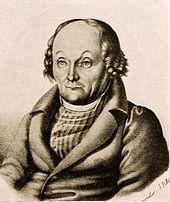
Hans G. Nägeli

1773 - 1836 Person Name: Hans G. Nägeli, 1773-1836 Topics: The Christian Life Trust in God; God Compassion of ; Works of Providence Composer of "DENNIS" in Trinity Hymnal (Rev. ed.) Johann G. Nageli (b. Wetzikon, near Zurich, Switzerland, 1773; d. Wetzikon, 1836) was an influential music educator who lectured throughout Germany and France. Influenced by Johann Pestalozzi, he published his theories of music education in Gangbildungslehre (1810), a book that made a strong impact on Lowell Mason. Nageli composed mainly" choral works, including settings of Goethe's poetry. He received his early instruction from his father, then in Zurich, where he concentrated on the music of. S. Bach. In Zurich, he also established a lending library and a publishing house, which published first editions of Beethoven’s piano sonatas and music by Bach, Handel, and Frescobaldi. Bert Polman

I. B. Woodbury

1819 - 1858 Person Name: Isaac Beverly Woodbury Topics: The Catechism Works and Attributes of God Composer of "TALMAR (Chester-Dorrnance)" in Evangelical Lutheran hymnal Woodbury, Isaac Baker. (Beverly, Massachusetts, October 23, 1819--October 26, 1858, Columbia, South Carolina). Music editor. As a boy, he studied music in nearby Boston, then spent his nineteenth year in further study in London and Paris. He taught for six years in Boston, traveling throughout New England with the Bay State Glee Club. He later lived at Bellow Falls, Vermont, where he organized the New Hampshire and Vermont Musical Association. In 1849 he settled in New York City where he directed the music at the Rutgers Street Church until ill-health caused him to resign in 1851. He became editor of the New York Musical Review and made another trip to Europe in 1852 to collect material for the magazine. in the fall of 1858 his health broke down from overwork and he went south hoping to regain his strength, but died three days after reaching Columbia, South Carolina. He published a number of tune-books, of which the Dulcimer, of New York Collection of Sacred Music, went through a number of editions. His Elements of Musical Composition, 1844, was later issued as the Self-instructor in Musical Composition. He also assisted in the compilation of the Methodist Hymn Book of 1857. --Leonard Ellinwood, DNAH Archives

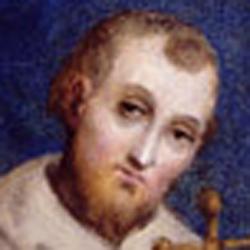
St. Francis of Assisi

1182 - 1226 Topics: God in Creation God's Work in Nature; Adoration of God; God Creator Author of "All Creatures of Our God and King" in The Worshiping Church St. Francis of Assisi (Italian: San Francesco d'Assisi, born Giovanni di Pietro di Bernardone, but nicknamed Francesco ("the Frenchman") by his father, 1181/1182 – October 3, 1226) was an Italian Catholic friar and preacher. He founded the men's Order of Friars Minor, the women’s Order of St. Clare, and the Third Order of Saint Francis for men and women not able to live the lives of itinerant preachers followed by the early members of the Order of Friars Minor or the monastic lives of the Poor Clares. Though he was never ordained to the Catholic priesthood, Francis is one of the most venerated religious figures in history. Francis' father was Pietro di Bernardone, a prosperous silk merchant. Francis lived the high-spirited life typical of a wealthy young man, even fighting as a soldier for Assisi. While going off to war in 1204, Francis had a vision that directed him back to Assisi, where he lost his taste for his worldly life. On a pilgrimage to Rome, he joined the poor in begging at St. Peter's Basilica. The experience moved him to live in poverty. Francis returned home, began preaching on the streets, and soon amassed a following. His Order was authorized by Pope Innocent III in 1210. He then founded the Order of Poor Clares, which became an enclosed religious order for women, as well as the Order of Brothers and Sisters of Penance (commonly called the Third Order). In 1219, he went to Egypt in an attempt to convert the Sultan to put an end to the conflict of the Crusades. By this point, the Franciscan Order had grown to such an extent that its primitive organizational structure was no longer sufficient. He returned to Italy to organize the Order. Once his community was authorized by the Pope, he withdrew increasingly from external affairs. In 1223, Francis arranged for the first Christmas manger scene. In 1224, he received the stigmata, making him the first recorded person to bear the wounds of Christ's Passion.He died during the evening hours of October 3, 1226, while listening to a reading he had requested of Psalm 140. On July 16, 1228, he was pronounced a saint by Pope Gregory IX. He is known as the patron saint of animals, the environment, and is one of the two patron saints of Italy (with Catherine of Siena). It is customary for Catholic and Anglican churches to hold ceremonies blessing animals on his feast day of October 4. He is also known for his love of the Eucharist, his sorrow during the Stations of the Cross, and for the creation of the Christmas creche or Nativity Scene. Francis of Assisi was one of seven children born to Pietro, and his wife Pica de Bourlemont, about whom little is known except that she was a noblewoman originally from Provence, France. Pietro was in France on business while Francis was born in Assisi, and Pica had him baptized as Giovanni. When his father returned to Assisi, he took to calling him Francesco ("the Frenchman"), possibly in honour of his commercial success and enthusiasm for all things French. Since the child was renamed in infancy, the change can hardly have had anything to do with his aptitude for learning French, as some have thought. As a youth, Francesco became a devotee of troubadours and was fascinated with all things Transalpine. Although many hagiographers remark about his bright clothing, rich friends, and love of pleasures, his displays of disillusionment toward the world that surrounded him came fairly early in his life, as is shown in the "story of the beggar." In this account, he was selling cloth and velvet in the marketplace on behalf of his father when a beggar came to him and asked for alms. At the conclusion of his business deal, Francis abandoned his wares and ran after the beggar. When he found him, Francis gave the man everything he had in his pockets. His friends quickly chided and mocked him for his act of charity. When he got home, his father scolded him in rage. In 1201, he joined a military expedition against Perugia and was taken as a prisoner at Collestrada, spending a year as a captive. It is possible that his spiritual conversion was a gradual process rooted in this experience. Upon his return to Assisi in 1203, Francis returned to his carefree life and in 1204, a serious illness led to a spiritual crisis. In 1205, Francis left for Puglia to enlist in the army of the Count of Brienne. A strange vision made him return to Assisi, deepening his ecclesiastical awakening. According to the hagiographic legend, thereafter he began to avoid the sports and the feasts of his former companions. In response, they asked him laughingly whether he was thinking of marrying, to which he answered, "yes, a fairer bride than any of you have ever seen," meaning his "Lady Poverty". He spent much time in lonely places, asking God for enlightenment. By degrees he took to nursing lepers, the most repulsive victims in the lazar houses near Assisi. After a pilgrimage to Rome, where he joined the poor in begging at the doors of the churches, he said he had a mystical vision of Jesus Christ in the country chapel of San Damiano, just outside of Assisi, in which the Icon of Christ Crucified said to him, "Francis, Francis, go and repair My house which, as you can see, is falling into ruins." He took this to mean the ruined church in which he was presently praying, and so he sold some cloth from his father's store to assist the priest there for this purpose. His father, Pietro, highly indignant, attempted to change his mind, first with threats and then with beatings. In the midst of legal proceedings before the Bishop of Assisi, Francis renounced his father and his patrimony, laying aside even the garments he had received from him in front of the public. For the next couple of months he lived as a beggar in the region of Assisi. Returning to the countryside around the town for two years, he embraced the life of a penitent, during which he restored several ruined chapels in the countryside around Assisi, among them the Porziuncola, the little chapel of St. Mary of the Angels just outside the town, which later became his favorite abode. At the end of this period (on February 24, 1209, according to Jordan of Giano), Francis heard a sermon that changed his life forever. The sermon was about Matthew 10:9, in which Christ tells his followers they should go forth and proclaim that the Kingdom of Heaven was upon them, that they should take no money with them, nor even a walking stick or shoes for the road. Francis was inspired to devote himself to a life of poverty. Clad in a rough garment, barefoot, and, after the Gospel precept, without staff or scrip, he began to preach repentance. He was soon joined by his first follower, a prominent fellow townsman, the jurist Bernardo di Quintavalle, who contributed all that he had to the work. Within a year Francis had eleven followers. Francis chose never to be ordained a priest and the community lived as "lesser brothers," fratres minores in Latin. The brothers lived a simple life in the deserted lazar house of Rivo Torto near Assisi; but they spent much of their time wandering through the mountainous districts of Umbria, always cheerful and full of songs, yet making a deep impression upon their hearers by their earnest exhortations. Francis' preaching to ordinary people was unusual since he had no license to do so. In 1209 he composed a simple rule for his followers ("friars"), (the Regula primitiva or “Primitive Rule”) which came from verses in the Bible. The rule was “To follow the teachings of our Lord Jesus Christ and to walk in his footsteps.” In 1209, Francis led his first eleven followers to Rome to seek permission from Pope Innocent III to found a new religious Order. Upon entry to Rome, the brothers encountered Bishop Guido of Assisi, who had in his company Giovanni di San Paolo, the Cardinal Bishop of Sabina. The Cardinal, who was the confessor of Pope Innocent III, was immediately sympathetic to Francis and agreed to represent Francis to the pope. Reluctantly, Pope Innocent agreed to meet with Francis and the brothers the next day. After several days, the pope agreed to admit the group informally, adding that when God increased the group in grace and number, they could return for an official admittance. The group was tonsured. This was important in part because it recognized Church authority and prevented his following from possible accusations of heresy, as had happened to the Waldensians decades earlier. Though Pope Innocent initially had his doubts, following a dream in which he saw Francis holding up the Basilica of St. John Lateran (the cathedral of Rome, thus the 'home church' of all Christendom), he decided to endorse Francis' Order. This occurred, according to tradition, on April 16, 1210, and constituted the official founding of the Franciscan Order. The group, then the "Lesser Brothers" (Order of Friars Minor also known as the Franciscan Order), preached on the streets and had no possessions. They were centered in Porziuncola, and preached first in Umbria, before expanding throughout Italy. From then on, his new Order grew quickly with new vocations. When hearing Francis preaching in the church of San Rufino in Assisi in 1209, Clare of Assisi became deeply touched by his message and she realized her calling. Her cousin Rufino, the only male member of the family in their generation, also joined the new Order. On the night of Palm Sunday, March 28, 1211, Clare sneaked out of her family's palace. Francis received Clare at the Porziuncola and hereby established the Order of Poor Ladies, later called Poor Clares. This was an Order for women, and he gave a religious habit, or dress, similar to his own to the noblewoman later known as St. Clare of Assisi, before he then lodged her and a few companions in a nearby monastery of Benedictine nuns. Later he transferred them to San Damiano. There they were joined by many other women of Assisi. For those who could not leave their homes, he later formed the Third Order of Brothers and Sisters of Penance. This was a fraternity composed of either laity or clergy whose members neither withdrew from the world nor took religious vows. Instead, they carried out the principles of Franciscan life in their daily lives. Before long this Order grew beyond Italy. Determined to bring the Gospel to all God's creatures, Francis sought on several occasions to take his message out of Italy. In the late spring of 1212, he set out for Jerusalem, but he was shipwrecked by a storm on the Dalmatian coast, forcing him to return to Italy. On May 8, 1213, he was given the use of the mountain of La Verna (Alverna) as a gift from Count Orlando di Chiusi, who described it as “eminently suitable for whoever wishes to do penance in a place remote from mankind.”[21][22] The mountain would become one of his favourite retreats for prayer. In the same year, Francis sailed for Morocco, but this time an illness forced him to break off his journey in Spain. Back in Assisi, several noblemen (among them Tommaso da Celano, who would later write the biography of St. Francis) and some well-educated men joined his Order. In 1215, Francis went again to Rome for the Fourth Lateran Council. During this time, he probably met a canon, Dominic de Guzman (later to be Saint Dominic, the founder of the Friars Preachers, another Catholic religious order). In 1217, he offered to go to France. Cardinal Ugolino of Segni (the future Pope Gregory IX), an early and important supporter of Francis, advised him against this and said that he was still needed in Italy. In 1219, accompanied by another friar and hoping to convert the Sultan of Egypt or win martyrdom in the attempt, Francis went to Egypt where a Crusader army had been encamped for over a year besieging the walled city of Damietta two miles (3.2 km) upstream from the mouth of one of the main channels of the Nile. The Sultan, al-Kamil, a nephew of Saladin, had succeeded his father as Sultan of Egypt in 1218 and was encamped upstream of Damietta, unable to relieve it. A bloody and futile attack on the city was launched by the Christians on August 29, 1219, following which both sides agreed to a ceasefire which lasted four weeks.It was most probably during this interlude that Francis and his companion crossed the Saracen lines and were brought before the Sultan, remaining in his camp for a few days. The visit is reported in contemporary Crusader sources and in the earliest biographies of Francis, but they give no information about what transpired during the encounter beyond noting that the Sultan received Francis graciously and that Francis preached to the Saracens without effect, returning unharmed to the Crusader camp. No contemporary Arab source mentions the visit. One detail, added by Bonaventure in the official life of Francis (written forty years after the event), concerns an alleged challenge by Francis offering trial-by-fire in order to prove the veracity of the Christian Gospel.Although Bonaventure does not suggest as much, subsequent biographies went further, claiming that a fire was kindled which Francis unhesitatingly entered without suffering burns. Such an incident is depicted in the late 13th-century fresco cycle, attributed to Giotto, in the upper basilica at Assisi (see accompanying illustration). According to some late sources, the Sultan gave Francis permission to visit the sacred places in the Holy Land and even to preach there. All that can safely be asserted is that Francis and his companion left the Crusader camp for Acre, from where they embarked for Italy in the latter half of 1220. Drawing on a 1267 sermon by Bonaventure, later sources report that the Sultan secretly converted or accepted a death-bed baptism as a result of the encounter with Francis. The Franciscan Order has been present in the Holy Land almost uninterruptedly since 1217 when Brother Elias arrived at Acre. It received concessions from the Mameluke Sultan in 1333 with regard to certain Holy Places in Jerusalem and Bethlehem, and (so far as concerns the Catholic Church) jurisdictional privileges from Pope Clement VI in 1342. At Greccio near Assisi, around 1220, Francis celebrated Christmas by setting up the first known presepio or crèche (Nativity scene). His nativity imagery reflected the scene in traditional paintings. He used real animals to create a living scene so that the worshipers could contemplate the birth of the child Jesus in a direct way, making use of the senses, especially sight. Thomas of Celano, a biographer of Francis and Saint Bonaventure both, tell how he only used a straw-filled manger (feeding trough) set between a real ox and donkey. According to Thomas, it was beautiful in its simplicity with the manger acting as the altar for the Christmas Mass. By this time, the growing Order of friars was divided into provinces and groups were sent to France, Germany, Hungary, Spain and to the East. When receiving a report of the martyrdom of five brothers in Morocco, Francis returned to Italy via Venice. Cardinal Ugolino di Conti was then nominated by the Pope as the protector of the Order. The friars in Italy at this time were causing problems, and as such, Francis had to return in order to correct these problems. The Franciscan Order had grown at an unprecedented rate, when compared to prior religious orders, but its organizational sophistication had not kept up with this growth and had little more to govern it than Francis' example and simple rule. To address this problem, Francis prepared a new and more detailed Rule, the "First Rule" or "Rule Without a Papal Bull" (Regula prima Regula non bullata) which again asserted devotion to poverty and the apostolic life. However, it introduced greater institutional structure, although this was never officially endorsed by the pope. On September 29, 1220, Francis handed over the governance of the Order to Brother Peter Catani at the Porziuncola. However, Brother Peter died only five months later, on March 10, 1221, and was buried in the Porziuncola. When numerous miracles were attributed to the deceased brother, people started to flock to the Porziuncola, disturbing the daily life of the Franciscans. Francis then prayed, asking Peter to stop the miracles and to obey in death as he had obeyed during his life. The reports of miracles ceased. Brother Peter was succeeded by Brother Elias as Vicar of Francis. Two years later, Francis modified the "First Rule" (creating the "Second Rule" or "Rule With a Bull"), and Pope Honorius III approved it on November 29, 1223. As the official Rule of the order, it called on the friars "to observe the Holy Gospel of our Lord Jesus Christ, living in obedience without anything of our own and in chastity." In addition, it set regulations for discipline, preaching, and entry into the order. Once the Rule was endorsed by the Pope, Francis withdrew increasingly from external affairs. During 1221 and 1222, Francis crossed Italy, first as far south as Catania in Sicily and afterwards as far north as Bologna. While he was praying on the mountain of Verna, during a forty-day fast in preparation for Michaelmas (September 29), Francis is said to have had a vision on or about September 14, 1224, the Feast of the Exaltation of the Cross, as a result of which he received the stigmata. Brother Leo, who had been with Francis at the time, left a clear and simple account of the event, the first definite account of the phenomenon of stigmata. "Suddenly he saw a vision of a seraph, a six-winged angel on a cross. This angel gave him the gift of the five wounds of Christ." Suffering from these stigmata and from trachoma, Francis received care in several cities (Siena, Cortona, Nocera) to no avail. In the end, he was brought back to a hut next to the Porziuncola. Here, in the place where it all began, feeling the end approaching, he spent the last days of his life dictating his spiritual testament. He died on the evening of October 3, 1226, singing Psalm 142(141) – "Voce mea ad Dominum". --en.wikipedia.org/wiki/Francis_of_Assisi (excerpts)

C. Hubert H. Parry

1848 - 1918 Person Name: C. H. H. Parry, 1848-1918 Topics: Christ, the Lord Jesus Exaltation of; Christ, the Lord Jesus Master; Christ, the Lord Jesus Name of; God: His Being, Word and Works God the Son: His Praise; Recessionals; Servants of Christ or God; The Church of Christ Kingdom of God Composer of "LAUDATE DOMINUM" in The Book of Praise Charles Hubert Hastings Parry KnBch/Brnt BMus United Kingdom 1848-1918. Born at Richmond Hill, Bournemouth, England, son of a wealthy director of the East India Company (also a painter, piano and horn musician, and art collector). His mother died of consumption shortly after his birth. His father remarried when he was three, and his stepmother favored her own children over her stepchildren, so he and two siblings were sometimes left out. He attended a preparatory school in Malvern, then at Twyford in Hampshire. He studied music from 1856-58 and became a pianist and composer. His musical interest was encouraged by the headmaster and by two organists. He gained an enduring love for Bach’s music from S S Wesley and took piano and harmony lessons from Edward Brind, who also took him to the ‘Three Choirs Festival in Hereford in 1861, where Mendelssohn, Mozart, Handel, and Beethoven works were performed. That left a great impression on Hubert. It also sparked the beginning of a lifelong association with the festival. That year, his brother was disgraced at Oxford for drug and alcohol use, and his sister, Lucy, died of consumption as well. Both events saddened Hubert. However, he began study at Eton College and distinguished himself at both sport and music. He also began having heart trouble, that would plague him the rest of his life. Eton was not known for its music program, and although some others had interest in music, there were no teachers there that could help Hubert much. He turned to George Elvey, organist of St George’s Chapel, Windsor Castle, and started studying with him in 1863. Hubert eventually wrote some anthems for the choir of St George’s Chapel, and eventually earned his music degree. While still at Eton, Hubert sat for the Oxford Bachelor of Music exam, the youngest person ever to have done so. His exam exercise, a cantata: “O Lord, Thou hast cast us out” astonished the Heather Professor of Music, Sir Frederick Ouseley, and was triumphantly performed and published in 1867. In 1867 he left Eton and went to Exeter College, Oxford. He did not study music there, his music concerns taking second place, but read law and modern history. However, he did go to Stuttgart, Germany, at the urging of Henry Hugh Pierson, to learn re-orchestration, leaving him much more critical of Mendelssohn’s works. When he left Exeter College, at his father’s behest, he felt obliged to try insurance work, as his father considered music only a pastime (too uncertain as a profession). He became an underwriter at Lloyd’s of London, 1870-77, but he found the work unappealing to his interests and inclinations. In 1872 he married Elizabeth Maude Herbert, and they had two daughters: Dorothea and Gwendolen. His in-laws agreed with his father that a conventional career was best, but it did not suit him. He began studying advanced piano with W S Bennett, but found it insufficient. He then took lessons with Edward Dannreuther, a wise and sympathetic teacher, who taught him of Wagner’s music. At the same time as Hubert’s compositions were coming to public notice (1875), he became a scholar of George Grove and soon an assistant editor for his new “Dictionary of Music and Musicians”. He contributed 123 articles to it. His own first work appeared in 1880. In 1883 he became professor of composition and musical history at the Royal College of Music (of which Grove was the head). In 1895 Parry succeeded Grove as head of the college, remaining in the post the remainder of his life. He also succeeded John Stainer as Heather Professor of Music at the University of Oxford (1900-1908). His academic duties were considerable and likely prevented him from composing as much as he might have. However, he was rated a very fine composer, nontheless, of orchestrations, overtures, symphonies, and other music. He only attempted one opera, deemed unsuccessful. Edward Elgar learned much of his craft from Parry’s articles in Grove’s Dictionary, and from those who studied under Parry at the Royal College, including Ralph Vaughn Williams, Gustav Holst, Frank Bridge, and John Ireland. Parry had the ability when teaching music to ascertain a student’s potential for creativity and direct it positively. In 1902 he was created a Baronet of Highnam Court in Gloucester. Parry was also an avid sailor and owned several yachts, becoming a member of the Royal Yacht Squadron in 1908, the only composer so honored. He was a Darwinian and a humanist. His daughter reiterated his liberal, non-conventional thinking. On medical advice he resigned his Oxford appointment in 1908 and produced some of his best known works. He and his wife were taken up with the ‘Suffrage Movement’ in 1916. He hated to see the WW1 ravage young potential musical talent from England and Germany. In 1918 he contracted Spanish flu during the global pandemic and died at Knightsscroft, Rustington, West Sussex. In 2015 they found 70 unpublished works of Parry’s hidden away in a family archive. It is thought some may never have been performed in public. The documents were sold at auction for a large sum. Other works he wrote include: “Studies of great composers” (1886), “The art of music” (1893), “The evolution of the art of music” (1896), “The music of the 17th century” (1902). His best known work is probably his 1909 study of “Johann Sebastian Bach”. John Perry

Henry Thomas Smart

1813 - 1879 Person Name: Henry Smart, 1813 - 1879 Topics: God Divine Perfections of; God Praise of; God: His Being, Word and Works God the Trinity Composer of "REGENT SQUARE" in The Book of Praise Henry Smart (b. Marylebone, London, England, 1813; d. Hampstead, London, 1879), a capable composer of church music who wrote some very fine hymn tunes (REGENT SQUARE, 354, is the best-known). Smart gave up a career in the legal profession for one in music. Although largely self taught, he became proficient in organ playing and composition, and he was a music teacher and critic. Organist in a number of London churches, including St. Luke's, Old Street (1844-1864), and St. Pancras (1864-1869), Smart was famous for his extemporiza­tions and for his accompaniment of congregational singing. He became completely blind at the age of fifty-two, but his remarkable memory enabled him to continue playing the organ. Fascinated by organs as a youth, Smart designed organs for impor­tant places such as St. Andrew Hall in Glasgow and the Town Hall in Leeds. He composed an opera, oratorios, part-songs, some instrumental music, and many hymn tunes, as well as a large number of works for organ and choir. He edited the Choralebook (1858), the English Presbyterian Psalms and Hymns for Divine Worship (1867), and the Scottish Presbyterian Hymnal (1875). Some of his hymn tunes were first published in Hymns Ancient and Modern (1861). Bert Polman

Samuel Sebastian Wesley

1810 - 1876 Topics: The Praise of God In his works Harmonizer of "DURHAM" in The Hymnal of the Protestant Episcopal Church in the United States of America 1940 Samuel Sebastian Wesley (b. London, England, 1810; d. Gloucester, England, 1876) was an English organist and composer. The grandson of Charles Wesley, he was born in London, and sang in the choir of the Chapel Royal as a boy. He learned composition and organ from his father, Samuel, completed a doctorate in music at Oxford, and composed for piano, organ, and choir. He was organist at Hereford Cathedral (1832-1835), Exeter Cathedral (1835-1842), Leeds Parish Church (1842­-1849), Winchester Cathedral (1849-1865), and Gloucester Cathedral (1865-1876). Wesley strove to improve the standards of church music and the status of church musicians; his observations and plans for reform were published as A Few Words on Cathedral Music and the Music System of the Church (1849). He was the musical editor of Charles Kemble's A Selection of Psalms and Hymns (1864) and of the Wellburn Appendix of Original Hymns and Tunes (1875) but is best known as the compiler of The European Psalmist (1872), in which some 130 of the 733 hymn tunes were written by him. Bert Polman

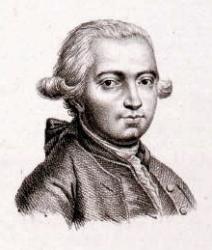
Felice Giardini

1716 - 1796 Person Name: Felice Gieadini Topics: Adoration; Children Piety in; Christ Communion with; Christ Worshiped; Christians Blessedness of; Church Beloved of God; Church Triumph of; God Adored and Exalted; God Glorious; God Kingly Character of; Gospel Gracious Fruit of; Gospel Invitations of ; Joy Exhortations to; Meekness; Mercy of God Celebrated; Praise By Saints; Praise Calls to; Praise For Works of Providence; Praise For Work of Redemption; Salvation God's Gift; Thanksgiving Declared; Worship Call to ; Worship Private Composer of "ITALIAN HYMN" in The Psalter Felice Giardini, born in Italy. When young, he studied singing, harpsichord, and violin. He became a composer and violin virtuoso. By age 12 he was playing in theatre orchestras. His most instructive lesson: While playing a solo passage during an opera, he decided to show off his skills by improvising several bravura variations that the composer, Jommelli, had not written . Although the audience applauded loudly, Jomelli, who happened to be there, went up and slapped Giardini in the face. He learned a lesson from that. He toured Europe as a violinist, considered one of the greatest musical artists of his time. He served as orchestra leader and director of the Italian Opera in London, giving concerts. He tried to run a theatre in Naples, but encountered adversity. He went to Russia, but had little fortune there, where he died. John Perry

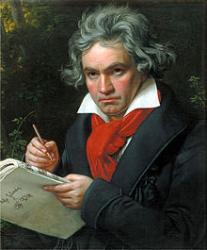
Ludwig van Beethoven

1770 - 1827 Person Name: Ludwig van Beethoven, 1770-1827 Topics: God Divine Perfections of; God Eternity of ; God Glory of; God Goodness of; God Justice of; Light; Works of Providence Composer of "ALSACE" in Trinity Hymnal A giant in the history of music, Ludwig van Beethoven (b. Bonn, Germany, 1770; d. Vienna, Austria, 1827) progressed from early musical promise to worldwide, lasting fame. By the age of fourteen he was an accomplished viola and organ player, but he became famous primarily because of his compositions, including nine symphonies, eleven overtures, thirty piano sonatas, sixteen string quartets, the Mass in C, and the Missa Solemnis. He wrote no music for congregational use, but various arrangers adapted some of his musical themes as hymn tunes; the most famous of these is ODE TO JOY from the Ninth Symphony. Although it would appear that the great calamity of Beethoven's life was his loss of hearing, which turned to total deafness during the last decade of his life, he composed his greatest works during this period. Bert Polman

Paul Henkel

1754 - 1825 Topics: The Works of God Author of "Lord, when I view thy mighty power" in Church Hymn Book; consisting of hymns and psalms, original and selected. adapted to public worship and many other occasions. 2nd ed.

Pages


Export as CSV
It looks like you are using an ad-blocker. Ad revenue helps keep us running. Please consider white-listing Hymnary.org or getting Hymnary Pro to eliminate ads entirely and help support Hymnary.org.