You help make Hymnary.org possible. More than 10 million people from 200+ countries found hymns, liturgical resources and encouragement on Hymnary.org in 2025, including you. Every visit affirms the global impact of this ministry.

If Hymnary has been meaningful to you this year, would you take a moment today to help sustain it? A gift of any size—paired with a note of encouragement if you wish—directly supports the server costs, research work and curation that keep this resource freely available to the world.

Give securely online today, or mail a check to:
Hymnary.org
Calvin University
3201 Burton Street SE
Grand Rapids, MI 49546

Thank you for your partnership, and may the hope of Advent fill your heart.

Person Results

All:(m.c.)
In:person

Planning worship? Check out our sister site, ZeteoSearch.org, for 20+ additional resources related to your search.
Showing 21 - 30 of 10,891Results Per Page: 102050

M. B. C. Slade

1826 - 1882 Person Name: Mary B. C. Slade Author of "Footsteps of Jesus" in The A.M.E. Zion Hymnal Mary Bridges Canady Slade USA 1826-1882. Born in Fall River, MA, she was well-educated and became a minister's wife, teacher, and poet. She was assistant editor of The New England Journal of Education. She also authored hymns, Sunday school materials and books on education, primarily used for training teachers. She authored a children's magazine, “Wide-awake”. She and her husband were active in the underground railroad (helping slaves achieve their freedom). She spent her whole life living in the same town. John Perry

E. M. Bartlett

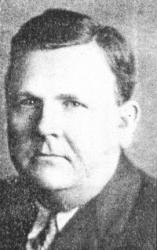
1885 - 1941 Person Name: Eugene M Bartlett Author of "Victory in Jesus" in The A.M.E. Zion Hymnal E. M. Bartlett was born December 24, 1883 in Waynesville, Missouri. His family later moved to Sebastian County, Arkansas. Bartlett received training as a music teacher and was a leader in developing Southern gospel music. He was employed by Central Music Company, a publisher of shape note singing books based in Hartford, which was owned by David Moore and Will H. Ramsey. Bartlett persuaded Moore and John A. McClung to partner with him to form Hartford Music Company. In 1921, Bartlett established the Hartford Music Institute, a shape note school. He provided opportunities for many songwriters and musicians in gospel music, including Albert E. Brumley. In 1939 he suffered a stroke and afterwards wrote "Victory in Jesus." Dianne Shapiro, from "The Encyclopedia of Arkansas History & Culture" http://www.encyclopediaofarkansas.net/encyclopedia/entry-detail.aspx?entryID=2660 and "Gospel Music Hall of Fame" website: http://www.gmahalloffame.org/speaker-lineup/e-m-bartlett-sr/ (accessed 1-24-2018)

Martin Rinkart

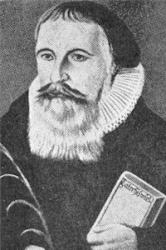
1586 - 1649 Person Name: M. Rinkart Author of "All Praise and Thanks to God" in The Y.M.C.A. Hymnal Rinkart, Martin, son of Georg Rinkart or Rinckart, cooper at Eilenburg on the Mulde, Saxony, was born at Eilenburg, April 23, 1586.* After passing through the Latin school at Eilenburg, he became, in Nov., 1601, a foundation scholar and chorister of the St. Thomas's School at Leipzig. This scholarship also allowed him to proceed to the University of Leipzig, where he matriculated for the summer session of 1602, as a student of Theology; and after the completion of his course he remained for some time in Leipzig (he did not take his M.A. till 1616). In March 1610 he offered himself as a candidate for the post of diaconus at Eilenburg, and was presented by the Town Council, but the Superintendent refused to sanction this arrangement, nominally on the ground that Rinkart was a better musician than theologian, but really because he was unwilling to have a colleague who was a native of Eilenburg, and who appeared to have a will of his own. Rinkart, not wishing to contest the matter, applied for a vacant mastership in the gymnasium at Eisleben, and entered on his duties there in the beginning of June, 1610, as sixth master, and also cantor of the St. Nicholas Church. After holding this appointment for a few months, he became diaconus of St. Anne's Church, in the Neustadt of Eisleben, and began his work there May 28, 1611; and then became pastor at Erdeborn and Lyttichendorf (Lütjendorf), near Eisleben, entering on his duties there on Dec. 5, 1613. Finally he was invited by the Town Council of Eilenburg to become archidiaconus there, and in Nov. 1617 came into residence at Eilenburg. He died at Eilenburg, Dec. 8, 1649. A memorial tablet to his memory, affixed to the house where he lived, was unveiled at Eilenburg on Easter Monday, April 26, 1886. (Martin Rinkart’s Geistliche Lieder, ed., with a biographical introduction, and an extensive bibliography, by Heinrich Rembe and Johannes Linke, D.D., Gotha, F. A. Perthes, 1886; K. Goedeke's Grundris, vol. iii., 1887, pp. 169, 211, &c.) The greater part of Rinkart's professional life was passed amid the horrors of the Thirty Years War. Eilenburg being a walled town became a refuge for fugitives from all around, and being so overcrowded, not unnaturally suffered from pestilence and famine. During the great pestilence of 1637 the Superintendent went away for change of air, and could not be persuaded to return; and on Aug. 7 Rinkart had to officiate at the funerals of two of the town clergy and two who had had to leave their livings in the country. Rinkart thus for some time was the only clergyman in the place, and often read the service over some 40 to 50 persons a day, and in all over about 4,480. At last the refugees had to be buried in trenches without service, and during the whole epidemic some 8,000 persons died, including Rinkart's first wife, who died May 8, 1637. The next year he had an epidemic of marriages to encounter, and himself fell a victim on June 24. Immediately thereafter came a most severe famine, during which Rinkart's resources were strained to the uttermost to help his people. Twice also he saved Eilenburg from the Swedes, once in the beginning of 1637, and again in 1639 (see p. 319, i.). Unfortunately the services he rendered to the place seemed to have made those in authority the more ungrateful, and in his latter years he was much harassed by them in financial and other matters, and by the time that the long-looked-for peace came (Oct. 24, 1648) he was a worn-out and prematurely aged man. Rinkart was a voluminous writer and a good musician, but a considerable number of his books seem to have perished, and others survive only in single copies. He early began to write poetry, and was crowned as a poet apparently in 1614. Among other things he wrote a cycle of seven so-called "Comedies," or rather dramas, on the Reformation Period, suggested by the centenary of the Reformation in 1617. Three of these were printed respectively in 1613, 1618, and 1625, and two of them were acted in public. Rinkart's hymns appeared principally in the following works:— (1) Jesu Hertz-Büchlein. This was completed in 1630, and first published at Leipzig in 1636. No copy is now known. The second edition, published at Leipzig, 1663, is in the Royal Library at Hannover. (2) Der Meissnische Thränen Saat, Leipzig, 1637. In the Royal Library at Berlin. (3) xlv. Epithalami Salomoneo—Sulamitici cantica canticorum . . . Leibliche Geistliche und Uimmlische Braut Messe, Leipzig, 1642. In Wolfenbüttel Library. (4) Catechismus-wolthaten, und Catechismus-Lieder, Leipzig, 1645. In the Berlin Library. Dr. Linke, 1886, as above, gives a list of the first lines of all the hymns in the works of Rinkart which have come under his notice, and prints a selection from them, including 66 in all. The best of them are characterised by a true patriotism, a childlike devotion to God, and a firm confidence in God's mercy, and His promised help and grace. A few passed into the German hymn-books. Those which have been translated into English are:— 1. Alleluja, Lob, Preis und Ehr. This hymn… seems to be based on two hymns, beginning with the same first line, and both found in Rinkart's Braut Messe, 1642. Dr. Linke does not print the full text. (See Blätter für Hymnologie, 1886, p. 91.) ii. Nun danket alle Gott. Thanksgiving. The oldest text now accessible is in J. Crüger's Praxis, 1648, No. 183, in 3 stanzas of 8 lines; also in the Crüger-Runge Gesang-Buch, 1653, No. 187. It is also in Rinkart's Jesu Hertz-Büchlein, 1663, where the text slightly varies, and is entitled "Grace" ("Tisch-Gebetlein," i.e. a short prayer at table). There does not seem any good reason for supposing that it did not appear in the first ed., 1636, of the Hertz-Büchlein, and in any case it has no connection with the Peace of Westphalia. (A good specimen of the way in which stories of hymns are manufactured is in the Sunday at Home, Aug., 1888, p. 539, where a full and particular account is given of its legendary origin in Nov. 1648.) It is founded on Ecclesiasticus 1. 22-24; and st. i., ii. are indeed little more than a paraphrase of these verses, st. iii. being a version of the Gloria Patri. The fact that the regimental chaplains, when holding the special service of thanksgiving for the conclusion of the peace, were commanded to preach from this passage, may have suggested the theory that Rinkart's hymn was written for the same occasion. It gradually came into general use, successfully survived the period of Rationalism, and is now to be found in every German hymnbook, e.g. in the Berlin Geistliche Lieder, ed. 1863, No. 1022. It may be called the German Te Deum, and as such is used at all national festivals or special occasions of thanksgiving. It was recently used at the festal celebration of the completion of Cologne Cathedral, on Aug. 14, 1880, at the laying of the foundation stone of the new Reichstags building in Berlin, by the Emperor William, June 9, 1884, &c. The fine melody (set to the hymn in Hymns Ancient & Modern and most recent English collections) appears in the Praxis, 1648 (Crüger's Kirchenmelodien, 1649, No. 94), and in the Crüger-Runge Gesang-Buch, 1653, is marked with Crüger's initials. It has been described as adapted from a melody by Lucas Marenzo (choirmaster at Rome, who died 1598), or as adapted from a motet by Rinkart; but to prove either statement, very little evidence is forthcoming. The translations of the hymn into English are:— 1. Let all men praise the Lord. This is a tr. of st. i., iii., by Alfred Novello, as part of his version of the word-book to Mendelssohn's Lobgesang, or Hymn of Praise, 1843, p. 89. This form has passed into a number of hymnals, including the New Congregational Hymn Book, 1859; Dale's English Hymn Book 1874, and others. In the Baptist Hymnal, 1879, a tr. of st. ii. is added, of which 11. 1—4 are from Miss Winkworth's translation. 2. Now praise the Lord on high. In full as No. 53 in the Dalston Hospital Hymn Book, 1848. This appears to be the version which Kübler, in his Historical Notes to the Lyra Germanica, 1865, p. 247, says was made by Baron C. K. J. von Bunsen, for the opening of the German Hospital at Dalston, on Oct. 15, 1845. 3. Now let us all to God. In full, by A. T. Russell, as No. 201, in his Psalms & Hymns, 1851. 4. 0 let us praise the Lord, From hearts by true love guided. This is No. 240 in the Winchester Church Hymn Book, 1857, and seems to be intended as a paraphrase of the German. 5. Now thank we all our God. A full and very good translation by Miss Winkworth, in her Lyra Germanica, 2nd Serv. 1858, p. 145, repeated in her Chorale Book for England, 1863, No. 11, and her Christian Singers, 1869, p. 181. It has been included in many recent English and American hymnals, e. g. Hymns Ancient & Modern, 1861; People's Hymnal, 1867; Congregational Hymnal, 1887, &c, and in America in the Episcopal Hymnal, 1871; Presbyterian Hymnal, 1874, and many others, generally in full and unaltered. 6. Now all give thanks to God. In full as No. 264 in the Anglican Hymn Book, 1868 (1871, No. 307), marked as a versification by R. C. Singleton. Repeated in J. L. Porter's Collection, 1876. 7. Now all men thank ye God. In full by T. E. Brown, as No. 37 in the Clifton College Hymn Book, 1872. Other translations are:— (l) "Now let us praise the Lord." In full by J. C. Jacobi, 1722, p. 85 (1732, p. 144), repeated, altered, in the Moravian Hymn Book, 1754 to 1886. (2) "Now all, to God give thanks." By Dr. H. Mills, in the Evangelical Review, Gettysburg, 1851, p. 293, and his Horae Germanica, 1856, p. 14. (3) "Lift heart, and hands, and voice." By Miss Cox, 1864, p. 239. (4) “Now all give thanks to God." By J. D. Burns, 1869, p. 252. (5) “All hearts and tongues and hands." By N. L. Frothingham, 1870, p. 212. iii. So fahr ich hin mit Freuden. For the Dying. In his Meissnische Thränen-Saat, 1637, No. 24, p. 19, in 5 st.anzas of 8 lines, entitled "Even the same, and her soul-rejoicing Farewell Hymn. On May 8." St. i. is, "So fahr ich hin mit Frewden Aus diesem Jammerthal, Aus Angst, Gefahr und Leiden In Himmels-Frewden Saal, Da wir und alle Frommen Durch Gottes Wundermacht Zusaminen wiederkominen: In des zu guter Nacht." The title refers to the preceding hymn, which is in 19 stanzas, the initials of the stanzas forming the acrostic Christina Rinckardi. Dr. Linke abridges it and misprints the title, which is:— "Die Teutsche Jobs-Schwester (Christina M. Rinckart's Hertzgetrewe Ehe- und Creutz-genossin) und ihr Tagliches und behägliches Trost Lied. Aus ihrem längst erwählten und am 10. [not 30] Tage des Trosthühlen Meyen dieses 1637. Jahres zum letzten Ehrengedächtniss abgehandelten Leich-Text: des 77. Psalms." From this it is clear that both hymns are in memory of his wife, that she died on May 8, 1637, and that her funeral sermon was preached by her husband on May 10, 1637. The form translation into English is the greatly altered, or rather practically new text. [Rev. James Mearns, M.A.] * His own statement was that he “was born Anno 1586, Jubilate Sunday, on St. George's day, which was the 23rd of April, between 6 and 7 a.m." In 1586 however Jubilate S. (3rd Sunday after Easter) fell on April 24, while St. George's day is April 23. The entry in the Registers at Eilenburg says that he was baptised "Monday after Jubilate, the 25th of April," which is quite correct. --John Julian, Dictionary of Hymnology (1907)

Michael Praetorius

1571 - 1621 Person Name: M. Praetorius, 1571-1621 Arranger of "VON HIMMEL HOCH" in Evangelical Lutheran Hymnary Born into a staunchly Lutheran family, Michael Praetorius (b. Creuzburg, Germany, February 15, 1571; d. Wolfenbüttel, Germany, February 15, 1621) was educated at the University of Frankfort-an-der-Oder. In 1595 he began a long association with Duke Heinrich Julius of Brunswick, when he was appoint­ed court organist and later music director and secretary. The duke resided in Wolfenbüttel, and Praetorius spent much of his time at the court there, eventually establishing his own residence in Wolfenbüttel as well. When the duke died, Praetorius officially retained his position, but he spent long periods of time engaged in various musical appointments in Dresden, Magdeburg, and Halle. Praetorius produced a prodigious amount of music and music theory. His church music consists of over one thousand titles, including the sixteen-volume Musae Sionae (1605-1612), which contains Lutheran hymns in settings ranging from two voices to multiple choirs. His Syntagma Musicum (1614-1619) is a veritable encyclopedia of music and includes valuable information about the musical instruments of his time. Bert Polman

Melchior Vulpius

1570 - 1615 Person Name: M. Vulpius, c.1570-1615 Composer of "GELOBT SIE GOTT" in Evangelical Lutheran Hymnary Born into a poor family named Fuchs, Melchior Vulpius (b. Wasungen, Henneberg, Germany, c. 1570; d. Weimar, Germany, 1615) had only limited educational oppor­tunities and did not attend the university. He taught Latin in the school in Schleusingen, where he Latinized his surname, and from 1596 until his death served as a Lutheran cantor and teacher in Weimar. A distinguished composer, Vulpius wrote a St. Matthew Passion (1613), nearly two hundred motets in German and Latin, and over four hundred hymn tunes, many of which became popular in Lutheran churches, and some of which introduced the lively Italian balletto rhythms into the German hymn tunes. His music was published in Cantiones Sacrae (1602, 1604), Kirchengesangund Geistliche Lieder (1604, enlarged as Ein schon geistlich Gesanglmch, 1609), and posthumous­ly in Cantionale Sacrum (1646). Bert Polman

Frederick C. Maker

1844 - 1927 Composer of "ST. CHRISTOPHER" in Baptist Hymnal 2008 Frederick C. Maker (b. Bristol, England, August 6, 1844; d. January 1, 1927) received his early musical training as a chorister at Bristol Cathedral, England. He pursued a career as organist and choirmaster—most of it spent in Methodist and Congregational churches in Bristol. His longest tenure was at Redland Park Congregational Church, where he was organist from 1882-1910. Maker also conducted the Bristol Free Church Choir Association and was a long-time visiting professor of music at Clifton College. He wrote hymn tunes, anthems, and a cantata, Moses in the Bulrushes. Bert Polman

Charles C. Converse

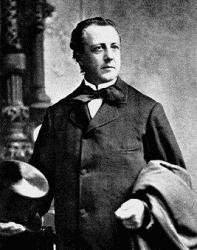
1832 - 1918 Composer of "CONVERSE" in The Church Hymnal Pseudonyms: Clare, Lester Vesé, Nevers, Karl Re­den, Revons ================================= Charles Crozat Converse LLD USA 1832-1918. Born in Warren, MA, he went to Leipzig, Germany to study law and philosophy, as well as music theory and composition under Moritz Hauptmann, Friedrich Richter, and Louis Plaidy at the Leipzig Conservatory. He also met Franz Liszt and Louis Spohr. He became an author, composer, arranger and editor. He returned to the states in 1859 and graduated from the Albany, NY, Law School two years later. He married Lida Lewis. From 1875 he practiced law in Erie, PA, and also was put in charge of the Burdetta Organ Company. He composed hymn tunes and other works. He was offered a DM degree for his Psalm 126 cantata, but he declined the offer. In 1895 Rutherford College honored him with a LLD degree. He spent his last years in Highwood, NJ, where he died. He published “New method for the guitar”, “Musical bouquet”, “The 126th Psalm”, “Sweet singer”, “Church singer”, “Sayings of Sages” between 1855 and 1863. he also wrote the “Turkish battle polka” and “Rock beside the sea” ballad, and “The anthem book of the Episcopal Methodist Church”. John Perry

George C. Stebbins

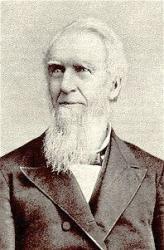
1846 - 1945 Composer of "[Jesus is tenderly calling thee home]" in The Church Hymnal Stebbins studied music in Buffalo and Rochester, New York, then became a singing teacher. Around 1869, he moved to Chicago, Illinois, to join the Lyon and Healy Music Company. He also became the music director at the First Baptist Church in Chicago. It was in Chicago that he met the leaders in the Gospel music field, such as George Root, Philip Bliss, & Ira Sankey. At age 28, Stebbins moved to Boston, Massachusetts, where he became music director at the Claredon Street Baptist Church; the pastor there was Adoniram Gordon. Two years later, Stebbins became music director at Tremont Temple in Boston. Shortly thereafter, he became involved in evangelism campaigns with Moody and others. Around 1900, Stebbins spent a year as an evangelist in India, Egypt, Italy, Palestine, France and England. (www.hymntime.com/tch)

T. C. O'Kane

1830 - 1912 Person Name: Tullius C. O'Kane Composer of "THE HOME OVER THERE" in A. M. E. C. Hymnal O'Kane, Tullius Clinton, an American writer, born March 10, 1830, is the author of "O sing of Jesus, Lamb of God" (Redemption); and "Who, who are these beside the chilly wave?" (Triumph in Death), in I. D. Sankey's Sacred Songs and Solos, 1878 and 1881. --John Julian, Dictionary of Hymnology, Appendix, Part II (1907) =========================== Tullius Clinton O'Kane was born in Fairfield County, Ohio, March 10, 1830. He resided with his parents in this vicinity until the spring of 1849, when he went to Delaware, Ohio, and entered the Ohio Wesleyan University, from which he graduated in 1852, with the degree A. B., and received his A. M. degree three years later from his Alma Mater. Immediately upon his graduation, he was tendered a position in the Faculty as Tutor of Mathematics, which he accepted and successfully filled for five years. The students always called him "Professor," by which title he is known to the present day. His musical abilities were early recognized in the University, and for years he was the musical precentor in the daily chapel devotions. He organized and maintained a Choral Society in the College, and was the first musical instructor in the Ohio Wesleyan Female College, which a few years ago was incorporated into the University. In 1857 he was elected to a principalship in the Cincinnati public schools, and served in that capacity until 1861, when he resigned his position to accept a place in the piano establishment of Philip Phillips & Co. He remained with this house until its removal to New York City in 1867, when, although urged to be transferred with the house to that city, he preferred to remove with his family back to Delaware, Ohio. For the ensuing six years he traveled over the state of Ohio as the general agent for the Smith American Organ Co., of Boston, Mass. During this time he visited conferences, Sunday-school conventions, both State and County, introducing his Sunday-school singing books, and in this way became well known throughout his native state, and quite extensively in some of the adjoining states. His musical compositions were first published in Philip Phillips' Musical Leaves, in 1865, and since then but few Sunday-school singing books have appeared without one or more of his compositions. His first music book, Fresh Leaves, was issued in 1868. This was followed at intervals by Dew Drops, Songs of Worship, Every Sabbath, Jasper and Gold, Redeemer's Praise, Glorious Things and Morning Stars. In connection with his son, Edward T. O'Kane, who is himself a most excellent composer and a very skillful organist, in 1882 he issued Selected Anthems, a book designed for use by the more advanced choirs. In association with J. R. Sweney and "Chaplain" McCabe, he issued Joy to the World, a song book for prayer-meetings, and the same editors, with the addition of W. J. Kirkpatrick, compiled Songs of Redeeming Love, No. 1, in 1882, and No. 2 in 1884. He also issued Songs of Praises, Unfading Treasures and Forward Songs. Some of Professor O'Kane's best known songs are Glorious Fountain, The Home Over There, On Jordan's Stormy Banks, Say, are You Ready? and many others. With Mr. O'Kane, music and musical composition have ever been a recreation, rather than a profession. He is an excellent leader of choirs, but his forte seems to be in leading large congregations, Sunday-schools and social religious meetings in sacred song. He sings "with the spirit and the understanding also " — with a due appreciation of both words and music — and very naturally infuses his enthusiasm into his audiences so that they cannot "keep from singing." In his music he endeavors to catch the spirit of the hymn, and then give it expression in the music he composes for it. This sometimes seems to have been almost an inspiration, and could be illustrated by a reference to the circumstances under which many of his compositions have been made. One of his earlier and more widely known pieces is that entitled, Over There. He says he cut this hymn out of some newspaper and put it with others in his portfolio, intending some time when he felt like it to give it a musical setting. One Sunday afternoon, after studying his lesson for the next session of his Sunday-school, he opened his portfolio, and turning over the selections, found these words, and something seemed to say, "Now's your time." He sat down at the organ, studied the hymn intently for a few moments, and then, as his fingers touched the keys of the instrument, melody and harmony were in every movement, and when the stanza was ended, melody and harmony found their expression in the chorus, and Over There was finished. Another of his well known songs is Sweeping Through the Gates. One cold, blustery day he had occasion to go from his residence to the railroad depot, about a mile distant, and in his route had to cross the river on a suspension foot-bridge. As he came down to the bridge, he thought of the "river of death," so cold, with no bridge, and then the words of the dying Cookman came to his mind, and he exclaimed to himself: 'Who, who are these beside the chilly wave? " Words, melody and refrain seemed to come all at once and all together, so that by the time he arrived back at his home, the composition was complete. Professor O'Kane is a genial, modest Christian gentleman, who carries sunshine wherever he goes. His greatest joy comes from the consciousness that his music has cheered and comforted the hearts of Christian people all over the world, and has been the means of winning thousands from the pleasures of the world to the higher enjoyments of the Christian religion. His song, Sweeping Through the Gates, will be sung till all the ransomed are gathered Over There. -Hall, J. H. (c1914). Biographies of Gospel Song and Hymn Writers. New York: Fleming H. Revell Company. ======================== O'Kane, Tullius Clinton. Died 10 February 1912, Delaware, Ohio. Buried in Oak Grove Cemetery, Delaware, Ohio. --DNAH Archives

Louis Bourgeois

1510 - 1561 Person Name: Louis Bourgeois, c. 1510-1561 Composer of "OLD HUNDREDTH" in The A.M.E. Zion Hymnal Louis Bourgeois (b. Paris, France, c. 1510; d. Paris, 1561). In both his early and later years Bourgeois wrote French songs to entertain the rich, but in the history of church music he is known especially for his contribution to the Genevan Psalter. Apparently moving to Geneva in 1541, the same year John Calvin returned to Geneva from Strasbourg, Bourgeois served as cantor and master of the choristers at both St. Pierre and St. Gervais, which is to say he was music director there under the pastoral leadership of Calvin. Bourgeois used the choristers to teach the new psalm tunes to the congregation. The extent of Bourgeois's involvement in the Genevan Psalter is a matter of scholar­ly debate. Calvin had published several partial psalters, including one in Strasbourg in 1539 and another in Geneva in 1542, with melodies by unknown composers. In 1551 another French psalter appeared in Geneva, Eighty-three Psalms of David, with texts by Marot and de Beze, and with most of the melodies by Bourgeois, who supplied thirty­ four original tunes and thirty-six revisions of older tunes. This edition was republished repeatedly, and later Bourgeois's tunes were incorporated into the complete Genevan Psalter (1562). However, his revision of some older tunes was not uniformly appreciat­ed by those who were familiar with the original versions; he was actually imprisoned overnight for some of his musical arrangements but freed after Calvin's intervention. In addition to his contribution to the 1551 Psalter, Bourgeois produced a four-part harmonization of fifty psalms, published in Lyons (1547, enlarged 1554), and wrote a textbook on singing and sight-reading, La Droit Chemin de Musique (1550). He left Geneva in 1552 and lived in Lyons and Paris for the remainder of his life. Bert Polman

Pages


Export as CSV
It looks like you are using an ad-blocker. Ad revenue helps keep us running. Please consider white-listing Hymnary.org or getting Hymnary Pro to eliminate ads entirely and help support Hymnary.org.