

 My Starred Hymns
 My FlexScores
 My Hymnals
 My Purchased Files
Planning worship?
Check out our sister site, ZeteoSearch.org,
for 20+ additional resources related to your search.
- |
User Links
Person Results
Karl Johann Philipp Spitta
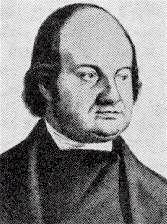
1801 - 1859 Person Name: C. J. P. Spitta Meter: 8.7.8.7.8.8.7 Author of "I place myself in Jesus' hands" in The Lutheran Hymnary Spitta, Carl Johann Philipp, D.D., was born Aug. 1, 1801, at Hannover, where his father, Lebrecht Wilhelm Gottfried Spitta, was then living, as bookkeeper and teacher of the French language. In his eleventh year Spitta fell into a severe illness, which lasted for four years, and so threw him back that his mother (the father died in 1805) abandoned the idea of a professional career, and apprenticed him to a watchmaker. This occupation did not prove at all congenial to him, but he would not confess his dislike, and his family were ignorant of it till an old friend, who was trying to comfort him after the death of a younger brother, discovered his true feelings. The younger brother had been preparing for ordination, and so Carl was now invited by the family to adopt this career. He joyfully accepted the offer, left the workshop in the autumn of 1818, and succeeded, by dint of hard study during the winter, in gaining admission to the highest class in the Gymnasium (Lyceum) at Hannover, which he entered at Easter, 1819. He was thus able, at Easter, 1821, to proceed to the University of Göttingen, where he completed his theological course, under professors of pronounced Rationalistic opinions, at Easter, 1824 (D.D. from Gottingen, 1855).
He then became, in the beginning of May, a tutor in the family of Judge (Oberamlmann) Jochnius, at Lüine, near Lüneburg. Here he remained till his ordination on Dec. 10, 1828, as assistant pastor at Sudwalde, near Hoya. In Nov., 1830, he became assistant chaplain to the garrison and to the prison at Hameln on the Weser, and would have succeeded as permanent chaplain there, in the beginning of 1837, had not the military authorities, alarmed by reports which described him as a Pietist and a Mystic, refused to sanction the arrangement. As a compensation, he was appointed pastor at Wechold, near Hoya, in Oct., 1837, and married just before settling there. On his birthday, Aug. 1, 1847, he was instituted as Lutheran superintendent at Wittingen; in Oct., 1853, at Peine; and in July, 1859, at Burgdorf—all his appointments having been in the kingdom of Hannover.
A few weeks after removing to Burgdorf he was seized with gastric fever, but had apparently recovered, when, on Sept. 28, 1859, while sitting at his writing table, he was seized with cramp of the heart, and died in a quarter of an hour.
Spitta had begun to write in verse when he was eight years old, along with his brother Heinrich. During his university course he continued to write songs and secular poems, and published a collection of songs anonymously as a Sangbüchlein der Liebe für Handwerksleute. At Göttingen he formed a life-long friendship with Adolf Peters. He was also on intimate terms with Heinrich Heine, who was a fellow member with them of the Burschenschaft, or student's patriotic union (see K. Goedeke'sGrundriss, vol. iii., 1881, p. 259); and this friendship continued till Heine, while visiting him at Ltine, so jested at things sacred, even in the presence of Spitta's pupils, that their friendship came to an end. After the spiritual change, which began about the end of his university course, Spitta ceased to write secular pieces. His hymnwriting proper seems to have begun in 1821. In writing to a friend on May 5, 1826, he says, "In the manner in which I formerly sang I sing no more. To the Lord I consecrate my life and my love, and likewise my song. His love is the one great theme of all my songs; to praise and exalt it worthily is the desire of the Christian singer. He gave to me song and melody; I give it back to Him." The most fruitful period of his hymnwriting was at Lüne, where many of his most popular hymns were composed in the quiet evenings, in his own room, often after fasting, and when, sitting at the piano or at his harp, he had tuned his spirit to song. Many others were inspired by the beautiful scenery of the valley of the Weser, and by the intercourse with friends during his residence at Hameln. In his later years his ecclesiastical duties absorbed his attention, and hardly any of his hymns were written after 1847. A number of them were first printed in the Christliche Monatsschrift zur häuslichen Erbauung für alle Stände, which appeared from Jan. to June, 1826, and was edited by Spitta and by Pastor Deichmann, of Lüneburg.
Various causes doubtless contributed to the popularity of Spitta's Psalter und Harfe. The hymns therein are, as a rule, of moderate length, are clear and simple in style, refined in diction, sweet, flowing and melodious. Their quiet beauty, their tone of earnest, sincere, and childlike piety, of glowing devotion to the Saviour, and of calm resting on, what to Spitta were, the eternal verities, endeared them to all ranks and classes. They form a faithful mirror of his inner life and Chritian experience. They at once met and ministered to the revival of Evangelical religion in Germany, and thus enjoyed somewhat of the same good fortune and popularity which the renewed churchly life in England brought to Keble's Christian Year. As the title adopted shows Spitta meant them for family and private use, and for this they are best fitted, being, for the most part, subjective and individnal. They speedily, however, passed into the German hymnbooks for church use, both at home and abroad, and translations of them are found in almost all recent English and American collections.
Another element of Spitta's popularity in Germany has been contributed by the very numerous musical settings which have appeared to his hymns. Koch, vii., 246, gives a list of the more important of the collective editions, but, besides these, many of the separate pieces have been set to music by various composers, the "Angel of Patience" being one of the greatest favourites.
A number of Spitta's hymns are annotated under their original first lines. Of the rest we may note here the following:—
I. From his Psalter und Harfe. 1st Series, Pirna, 1833, and the 2nd ed. Leipzig, 1834; 2nd Series, Leipzig, 1843.
i. Allen ist ein Heil beschieden. Communion of Saints. First published at Pirna, 1833, as above, p. 27, in 5 stanzas of 7 lines, entitled "Unity in spirit." Another translation is:—“Salvation is a boon." By Miss Fry, 1859, p. 75.
ii. Es wird mein Herz mit Freuden wach. Sunday Morning. First published at Leipzig, 1843, p. 61, in 7 st. of 4 1., entitled "Sunday Morning." Translated as:—
My heart wakes with a joyful lay. This is a good and full tr. by Mrs. Findlater, in Hymns from the Land of Luther, 4th Ser. 1862, p. 82. Repeated, abridged and beginning "Awake! all hearts and joyful say," in G. S. Jellicoe's Collection, 1867, No. 26.
Other trs. are: (1) "My heart awakes with holy glee." By Miss Manington, 1863, p. 143. (2) "Awake, my heart, this day of rest." By R. Massie, 1864, p. 51. (3) "My heart is bright with joy." By Lady Durand, 1873, p. 25.
iii. Gottes Stadt steht festgegründet. Christian Church. First published at Leipzig, 1843, p. 97, in 6 stanzas of 12 lines, entitled "The City of God," and founded on Ps. lxxxvii. Tr. as:—
By the holy hills surrounded, In full, by R.. Massie, in his Lyra Domestica, 1864, p. 82, repeated in the Wesleyan Hymn Book1875, No. 595.
iv. Hochgesegnet seid ihr Boten. Foreign Missions. First pub. at Pirna, 1833, as above, p. 24, in 6 stanzas of 8 lines, entitled "The Missionaries to the Heathen." Tr. as:—
Blest are ye, ye chosen bearers. In full, by R. Massie, in his Lyra Domestica, 1860, p. 95.
Other trs. are: (1) "Ye messengers of Christ, By Him commissioned forth." By Miss Fry, 1859, p. 147. (2) "0 blessed are ye messengers, sent forth." By Lady Durand, 1873, p. 52.
v. Ich glaube, darum rede ich. Faith. First published at Pirna, 1833, as above, p. 56, in 5 st. of 8 1., entitled " I believe." Tr. as:—
I believe, and so have spoken. By R. Massie, in his Lyra Domestica, 1860, p. 55.
vi. Ich höre deine Stimme. Ps. xxiii. First pub. at Pirna, 1833, as above, p. 44, in 7 st. of 8 1., entitled "The Lord is my Shepherd." Tr. as:—
1. I hear my Shepherd calling. This is a good and full tr. by R. Massie, in his Lyra Domestic, 1860, p. 44
2. Jesu, my Lord, my Shepherd. This is a very good translation, omitting st. vi., in the Catholic Apostolic Hymns for the Use of the Churches, n.d. [1868], marked as tr. by "M. E. A. 1867."
Other trs. are: (1) "Shepherd of souls. Thy voice I hear, As stage." By Dr. R. Maguire, 1872, p. 166. (2) “I know Thy voice, my Shepherd.” By Lady Durand, 1873, p. 11.
vii. Ich und mein Haus, wir sind bereit. Family Use. A fine hymn, founded on Joshua xxiv., 15. First pub. at Pirna, 1833, as above, p. 110, in 6 st. of 10 1., entitled “I and my house will serve the Lord." Tr. as:—
I and my house are ready, Lord. In full, by R. Massie, in his Lyra Domestica, 1860, p. 103.
viii. Im Osten flammt empor der gol'dne Morgen. Morning. First published at Pirna, 1833, as above, p. 91, in 7 st. of 6 1., entitled "At Morning." Tr. as:—
The golden morn flames up the Eastern sky. This is a good and full tr. by Miss Winkworth, in the Lyra Germanica, 2nd Ser., 1858, p. 74. Other trs. are: (1) “The golden morn is in the East arisen." By the Hon. S. R. Maxwell in his Sacred Poems, 1857, p. 114. (2) "On the far East now flames the golden Morning." By S. A. Storrs, in her Thoughts and Sketches, 1857, p. 74. (3) "Lo! in the East the golden morn appearing." By Miss Fry, 1859, p. 1. (4) “The purple morning gilds the Eastern skies." By R. Massie, 1860, p. 6. (5) "Out from the East, the golden morn is riding." By Miss Manington. 1863, p. 113. (6) “See from the East the golden morn." By Dr. R. Maguire, 1883, p. 27.
ix. Kehre wieder, kehre wieder. Lent. Founded on Jer. iii. 12, 13. First pub. at Pirna, 1833, as above, p. 29, in 5 st. of 10 l., entitled " Turn again." Translated as:—
1. Return, return! Poor long-lost wanderer, home. This is a free tr. by Miss Borthwick in Hymns from the Land of Luther, 2nd Ser., 1855, p. 25.
2. Turn, poor wanderer, ere the sentence. In full, by R. Massie, in his Lyra Domestic, 1860, p. 69.
Other trs. are: (1) "Turn, O turn, no more delaying." By the Hon. S. R. Maxwell, in his Sacred Poems, 1857, p. 101. (2) "Return, return, thou lost one." By Lady Durand, 1873, p. 59. (3) "Return again! return again." By J. Kelly, in his Hymns of the Present Century, 1885, p. 60.
x. Meine Stund' ist noch nicht kommen. Cross and Consolation. First published at Pirna, 1833, as above, p. 37, in 7 st. of 6 1., entitled "The Lord's Hour.” Tr. as:—
Jesus' hour is not yet come. This is a free tr., omitting st. v., by Miss Borthwick, in Hymns from the Land of Luther, 2nd ser. 1855, p.43.
Other trs. are:—(1) "'Tis not yet the time appointed." By R. Massie, 1860, p. 47, and in Reid's Praise Book, 1872. (2) " My times, O Lord, are in Thy hand." By Dr. R. Maguire, 1883, p. 99.
xi. Kimm hin, was dein ist, Gott, nimms hin. Surrender to God. This beautiful hymn was first pub. at Leipzig, 1843, as above, p. 58, in 5 st. of 10 1., entitled "Resignation." Translated as:—
I give Thee back Thine own again. A good and full tr. by R. Massie, in hisLyra Domestica, 1864, p. 49.
xii. 0 du, der uns begegnet. Christian Service. First pub. at Leipzig, 1843, as above, p. 92, in 4 st. of 4 1., entitled "The Blessing of the Blest." Tr. as:—
0 Thou Whose grace first found us, Whose love. In full, by R. Massie, in his Lyra Domestica, 1864.
xiii. O komm, du Geist der Wahrheit. Whitsuntide. First pub. at Pirna, 1833, as above, p. 12, in 7 st. of 8 1., entitled "Whitsunday." Tr. as:—
1. Draw, Holy Spirit, nearer. In full, by R. Massie, in his Lyra Domestica, 1860, p. 27.
2. 0 come, Eternal Spirit, Of truth, diffuse Thou light.
xiv. 0 Vaterhand, die mich so treu geführet. Holy Trinity. A fine hymn, first pub. at Pirna, 1833, as above, p. 128, in 3 st. of 8 1., entitled "Father, Son, and Spirit.” Tr. as:—
1. O Father-Eye, that hath so truly watch'd. By Miss Winkworth, in her Lyra Germanica, 2nd Ser., 1858, p. 63.
2. Father whose hand hath led me so securely.
xv. 0 welche fromme schöne Sitte. Spiritual Conversation. First pub. at Pirna, 1833, as above, p. 101, in 6 st. of 8 1., entitled "The Blessing of Christian fellowship." Tr. as:—
It is a practice greatly blest. In full, by R. Massie, in his Lyra Domestica, 1860, p. 89.
xvi. 0 wie freun wir uns der Stunde. Fellowship with Christ. First pub. at Leipzig, 1843, as above, p. 3, in 6 st. of 8 1., entitled "Thou hast the words of Eternal Life". Tr. as:—
Oh J how blest the hour, Lord Jesus. In full, by R. Massie, in his Lyra Domestica, 1864, p. 5. Another tr. is: "How great the joy, how blest the hour." By Dr. R. Maguire, 1872, p. 182.
xvii. 0 wie manche schone Stunde. Cross and Consolation. First published at Pirna, 1833, as above, p. 130, in 10 st. of 4 1., entitled "Comfort." Tr. as:—
1. O how many hours of gladness, Hath the Lord. In full, by R. Massie, in his Lyra Domestica, 1860, p. 126, repeated, abridged, in the Book of Common Praise, 1863.
2. O how many hours of beauty. This is a good and full tr., by Mrs. Findlater, in Hymns from the Land of Luther, 4th Ser., 1862, p. 11.
Another tr. is: "O how many an hour of gladness." By Lady Durand, 1873, p. 16.
xviii. Sehet, sehet, welche Liebe. The Love of the Holy Trinity. First pub. at Pirna, 1833, as above, p. 19, in 3 st. of 8 1., entitled " See what Love." Tr. as:—
See, O see, what love the Father. In full, by R. Massie, in his Lyra Domestica, 1860, p. 50.
Other trs. are : (1) "Behold the Father's love." By Miss Fry, 1859, p. 9. (2) "See! what wondrous love, how matchless." By Miss Manington, 1863, p. 33. (3) “Behold what love the Father hath—how great." By Dr. R. Maguire, 1872, p. 68.
xix. Unser Wandel ist im Himmel! Wie ein Mensch in sich versenkt. The Christian Life. First pub. at Pirna, 1833, as above, p. 75, in 7 st. of 8 1., entitled "Our Conversation is in Heaven," and suggested by Philipp. iii. 20. Tr. as:—
As a traveller returning. In full, by R. Massie, in his Lyra Domestica, 1860, p. 73. This is found in two centos :—
1. Jesus, like the magnet, raises (st. iii., v., vi.) in the Methodist New Congregational Hymn Book 1863.
2. Can we have our hearts in heaven (st. v., vii.) in Adams's Church Pastorals, Boston, U.S., 1864.
Another tr. is: "We are citizens of heaven." In the British Herald, January, 1866, p. 205.
xx. Wandle leuchtender und schöner. Easter. First published at Pirna, 1833, as above, p. 8, in 9 st. of 8 1., entitled "Easter Festival." Tr. as:—
Sun, shine forth in all thy splendour. This is a full and good tr. by R. Massie, in his Lyra Domestica, 1860, p. 24. Another tr. is: "With brighter glory, Easter Sun." By Lady Durand, 1873, p. 4.
xxi. Wir sind des Herrn, wir leben, oder sterben. Life in Christ. A fine hymn founded on Rom. xiv. 8. Tr. as:—
1. We are the Lord's; His all-sufficient merit. This is a good and full tr. by C. T. Astley, in his Songs in the Night, 1860, p. 32.
2. We are the Lord's, whether we live or die. Also a good and full tr. by R. Massie, in his Lyra Domestica, 1864, p. 81.
Hymns not in English common use:—
xxii. Ach, welche Marter, welche Flagen. Christ's Mercy. Tr. as "O Lord, what sorrows past expression."
xxiii. Das Leben wird oft trübe. Spiritual Dryness. The trs. are: (1) "How weary and how worthless this life at times appears." (2) “Our life is often dark." (3) "This life is ofttimes gloomy." (4) "Life often seems so dreary.”
xxiv. Der du in der Nacht des Todes. Epiphany. The trs. are: (1) "Thou Who in the night of death." (2) "Christ whose first appearance lighted." (3) "Thou who in death's night of terror." (4) "Christ, who in Death's night of darkness."
xxv. Des Christen Schmuck und Ordensband. Rejoicing in Tribulation. The trs. are: (1) "The Christian's badge of honour here." (2) "The badge the Christian wears on earth." (3) "The Christian's star of honour here." (4) "The sign of faith, and love's true token
xxvi. Du schöne Lilie auf dem Feld. Trust in God. The trs. are: (1) "Thou beauteous lily of the field, Who robed." (2) "Thou beauteous lily of the field! Who hath." (3) "Thou beauteous lily of the field, Thou child to Nature dear." (4) "Sweet lily of the field, declare." (5) "Thou pretty lily of the field." (6) "Thou lovely lily of the field."
xxvii. Ein lieblich Loos ist uns gefallen. The Christian's Portion.
xxviii. Ein Pilger schickt sich an zur Fahrt. For the Dying. Tr. as (1) "A pilgrim stands on Jordan's brink." (2) "A pilgrim for his new abode."
xxix. Erhalt' in mir den Lebenstrieb, das Sehnen. The Plant of Grace. The trs. are (1) "Maintain in me the sap of life, the yearning." (2) "Excite in me, 0 Lord, an ardent thirst.” (3) "Uphold in me a living wish and longing."
xxx. Es giebt ein Lied der Lieder. The Lord's Song. The trs. are: (1) "A Song of songs there is." (2) "There is a song so thrilling." (3) "There is a song now singing." (4) "One song of songs —the sweetest." (5) "A blessed Song of songs there is."
xxxi. Freuet euch der schonen Erde. Joy in the Beauties of Nature. The trs. are: (1) "0 rejoice in Nature's beauties." (2) "In the beauteous earth rejoice ye." (3) "Rejoice in the beautiful earth! For well may." (4) "Rejoice in the beautiful earth For well she," &c. (5) "Joy ye o'er this earth so lovely." (6) "Rejoice in Earth's fair beauty."
xxxii. Gehe hin in Gottes Namen. Before Work. The trs. are: (1) "Cheerfully to work proceed.” (2) "In the name of God advancing." (3) "In the Name of God go forward."
xxxiii. Ich nehme, was du mir bestimmst. Submission to God's Will. The trs. are: (1) "What Thou appointest I receive." (2) "Give what Thou wilt oh Lord! my grateful heart." (3) "Thy will I cheerfully obey.”
xxxiv. Ich steh' in xneines Herren Hand. Trust in God. Tr. as "I place myself in Jesus' hands."
xxxv. In der Angst der Welt will ich nicht klagen. Christian Life. The trs. are: (1) "Amid the world's vexations." (2) "Uncomplaining, though with care grown hoary." (3) "In this earth—life's bitter anguish.”
xxxvi. 0 du, den meine Seele liebt. Holy Communion. The trs. are: (1) "0 Thou, Who holdest in my heart." (2) "Oh Thou, my loving thoughts employ.”
xxxvii. Still an deinem liebevollen Herzen. The Love of Christ. The trs. are: (1) "Safe on thy paternal breast." (2) "With calm repose, Oh let me lie." (3) "Still on Thy loving heart let me repose."
xxxviii. Stimm' an das Lied vom Sterben. For the Dying. Sung at hisown funeral on Sunday, Oct. 1, 1859. The trs. are: (1) "I sing of death and dying." (2) "Sing now the Song of Dying."
xxxix. Vom Oelberg' wogt es nieder. Christ weeping over Jerusalem. The trs. are: (1) "Hark! for loud notes of joy." (2) "Where yonder mount, with olives clad." (3) “From Olivet the surging crowd."
xl. Was macht ihr dass ihr weinet. Communion of Saints. Founded on Acts xxi. 13. The trs. are: (1) "What mean ye by this wailing." (2) "What mean ye, dearly loved ones." (3) " What mean ye thus those tears to weep." (4) "How mean ye thus by weeping." (5) "Why is it that ye're weeping."
xli. Weint nicht uber Jesu Schmerzen. Repentance. The trs. are: (1) "For Jesu's agony and death." (2) "Wherefore weep we over Jesus." (3) "Weep not over Jesu's sorrow."
xlii. Wie wird uns sein, wenn endlich nach dent
schweren. Eternal Life. The trs. are: (1) "How shall it be with us, when we, frail mortals." (2) "O what will be the day, when won at last." (3) "What shall we be, and whither shall we go?" (4) "How will it be? when past the conflict heavy.” (5) "O what shall we be, when the conflict o'er."
xliii. Winter ist es. In dem weiten Reich. Winter. The trs. are: (1) "Winter is here, and none may dare intrude." (2) "It is winter. All seems dead or dying." (3) "Winter it is! o'er the mighty kingdom." (4) "It is Winter. The wide realm of Nature.” (5) "Winter is here. In Nature's wide domain." (6) "It is winter; and the wide domain.”
xliv. Wohl uns, der Vater hat uns lieb. The Love of God. Founded on Rom. viii. 32. This was, according to Koch vii. 243, one of the hymns which Spitta wrote between Easter and July, 1824, while studying the Epistle to the Romans, and which on July 7, 1824, he sent to his brother Heinrich Spitta, professor of medicine at Rostock, but Ludwig Spitta dates it "Autumn, 1833." It is tr. as "How blest are we! that God of us."
xlv. Wo ist göttliches Erbarmen. The Grace of Christ. The trs. are:— (1) "Oh where doth mercy dwell." (2) "Where is mercy and compassion." (3) "Where is Divine compassion, that."
xlvi. Wort des Lebens, lautre Quelle. Holy Scripture. The trs. are: (1) "Word of Life! unsullied fountain." (2) "Thou word of Life, unsullied spring!"
(3) "Word of Life, eternal Fountain." (4) "Word of Life, thou fountain bright.”
II. From his Nachgelassene geistliche Lieder. Leipzig, 1861.
Hardly any of these have come into use in Germany; and they have either remained unknown to or have been almost entirely ignored by translators into English. We need only note two, viz.:—
xlvii. Die erste Ruhestatte die die Welt. Christmas. It is tr. as "The cradle which the world has drest."
xlviii. 0 Herbst, du Abendstunde. Autumn. It is tr. as “0 autumn, fair pensive evening." By Miss Borthwick, in the Family Treasury, 1864, p. 191, dated September 1864, and included Thoughtful Hour, 1867, p. 181. [Rev. James Mearns, M.A.]
--Excerpts from John Julian, Dictionary of Hymnology (1907)
===================
Spitta, C. J. P. , p. 1076, ii. A new edition of the Psalter und Harfe (both parts), with biographical Introduction, was published at Gotha in 1890.
--John Julian, Dictionary of Hymnology, Appendix, Part II (1907)
Karl Johann Philipp Spitta
W. H. Havergal
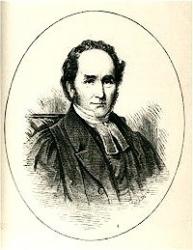
1793 - 1870 Person Name: William Henry Havergal, 1793-1870 Meter: 8.7.8.7.8.8.7 Composer of "ZOHELETH" in The Irish Presbyterian Hymnbook Havergal, William Henry, M.A, son of William Havergal, was born at High Wycombe, Buckinghamshire, 1793, and was educated at St. Edmund's Hall, Oxford (B.A. 1815, M.A. 1819). On taking Holy Orders he became in 1829 Rector of Astley, Worcestershire; in 1842, Rector of St. Nicholas, Worcester; and in 1860, Rector of Shareshill, near Wolverhampton. He was also Hon. Canon in Worcester Cathedral from 1845. He died April 18, 1870. His hymns, about 100 in all, were in many instances written for special services in his own church, and printed as leaflets. Several were included in W. Carus Wilson's Book of General Psalmody, 1840 (2nd ed., 1842); and in Metrical Psalms & Hymns for Singing in Churches, Worcester, Deighton, 1849, commonly known as the Worcester Diocesan Hymn Book, and of which he was the Editor. In Life Echoes, 1883, his hymns are given with those of Miss Havergal. Of those in common use the greater part are in Mercer, and Snepp's Songs of Grace & Glory. Although his hymns are all good, and two or three are excellent, it is not as a hymnwriter but as a musician that Canon Havergal is best known. His musical works and compositions included, in addition to numerous individual hymn tunes and chants, the Gresham Prize Service, 1836; the Gresham Prize Anthem, 1845; Old Church Psalmody, 1849; History of the Old 100th Psalm tune, 1854, &c. He also reprinted Ravenscroft’s Psalter of 1611. His hymns in common use include:—
1. Blessed Jesus, lord and Brother. School Festivals, 1833. Published in Life Echoes, 1883.
2. Brighter than meridian splendour. Christ the glory of His Church. 1830. Published in W. C. Wilson's Book of General Psalms, 1840; the Worcester Psalms & Hymns, 1849, &c.
3. Christians, awake to joy and praise. Christmas Carol, c. 1860. Printed on broadsheet, with music by the author, and sold on behalf of the Lancashire Cotton Distress Fund.
4. Come, Shepherds, come, 'tis just a year. Christmas Carol. 1860. Published in Snepp's Songs of Grace & Glory,
5. For ever and for ever, Lord. Missions, 1866, for the Church Mission Society. Published in Snepp's Songs of Grace & Glory, 1872, and the Life Echoes, 1883.
6. Hallelujah, Lord, our voices. Sunday. 1828. Published in W. C. Wilson's Book of General Psalms, 1840; the Worcester Psalms & Hymns, 1849; Life Echoes, 1883, &c.
7. Heralds of the Lord of glory. Missions. First sung in Astley Church, Sep. 23, 1827. Published in Miss Havergal's Starlight through the Shadows, 1880; Snepp's Songs of Grace & Glory, 1872, &c.
8. Hosanna, raise the pealing hymn. Praise to Christ, 1833, and first sung in Astley Church, June 9, 1833. Published in W. C. Wilson's Book of General Psalmody, 1840; the Worcester Psalms & Hymns, 1849; Life Echoes 1883, &c.
9. How vast the field of souls. Missions. 1858. Printed for Shareshill Church Miss. Anniversary, 1863, and published in Snepp's Songs of Grace & Glory, 1872, and the Life Echoes, 1883.
10. In doubt and dread dismay. Missions. Written in 1837, and published in W. C. Wilson's Book of General Psalmody, 1840; the Worcester Psalms & Hymns, 1849, &c.
11. Jerusalem the golden, The home of saints shall be. Heaven. Published in Life Echoes, 1883.
12. My times are in Thy hand, Their best, &c. 1860. Published in Snepp's Songs of Grace & Glory, 1872, the Records of the author's life and work, and Life Echoes, 1883. The editor of the Records says (p. 159) "this hymn has been much appreciated, and well illustrates the devotional and cheerful spirit of the writer."
13. No dawn of holy light. Sunday. 1825. Printed in 1831 on a leaflet, and published in W. C. Wilson's Book of General Psalmody, 1840; the Worcester Psalms & Hymns, 1849; Life Echoes, 1883, &c.
14. Our faithful God hath sent us. Harvest. Written at Shareshill in 1863, for a Harvest Festival. Published in Snepp's Songs of Grace & Glory 1872, and Life Echoes, 1883.
15. Shout, 0 earth! from silence waking. Praise to Jesus for Redemption. 1841. Published in the Worcester Psalms & Hymns, 1849; Snepp's Songs of Grace & Glory, 1872, &c.
16. So happy all the day. Christmas Carol, c. 1834. Published in Snepp's Songs of Grace & Glory, 1872.
17. Soon the trumpet of salvation. Missions. 1826. Published in Snepp's Songs of Grace & Glory, 1872.
18. To praise our Shepherd's [Saviour's] care. The Good Shepherd. Written after witnessing the death of Elizabeth Edwards, aged 12, of St. Nicholas, Worcester, and printed as a leaflet. Published in W. C. Wilson's Book of General Psalmody, 1840; the Worcester Psalms & Hymns, 1849; Life Echoes, &c, 1883. The author also published a Memoir of the child.
19. Widely 'midst the slumbering nations. Missions. 1828. Published in the Worcester Psalms & Hymns, 1849; Snepp's Songs of Grace & Glory, 1872, &c.
In addition to these hymns, his carols, "How grand, and how bright," "Our festal morn is come," and others are annotated under their respective first lines. Most of these carols and hymns were reprinted in Christmas Carols & Sacred Songs, Chiefly by the Rev. W. H. Havergal, London, Nisbet, 1869.
--John Julian, Dictionary of Hymnology (1907)
=====================
Havergal, W. H., p. 498, i. Other hymns are: —
1. Lord, if judgments now are waking. Second Advent. Published in W. Carus Wilson's Book of General Psalmody, 1840; in Kennedy, 1863, &c.
2. Remember, Lord, Thy word of old displayed. Missions. "Composed for a special prayer-meeting for missionary labourers, held in the author's schoolroom, in the parish of St. Nicholas's, Worcester." (W. F. Stevenson's Hymns for Church and Home, 1873, where the original text is also given.)
It must be noted that No. 17, at p. 498, ii., "Soon the trumpet of salvation," was first published in A Collection of Original Airs adapted to Hymns, &c, 1826.
--John Julian, Dictionary of Hymnology, Appendix, Part II (1907)
W. H. Havergal
James Montgomery
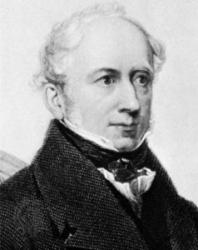
1771 - 1854 Meter: 8.7.8.7.8.8.7 Author of "The Lord is King: upon His throne" in Sacred Poems and Hymns James Montgomery (b. Irvine, Ayrshire, Scotland, 1771; d. Sheffield, Yorkshire, England, 1854), the son of Moravian parents who died on a West Indies mission field while he was in boarding school, Montgomery inherited a strong religious bent, a passion for missions, and an independent mind. He was editor of the Sheffield Iris (1796-1827), a newspaper that sometimes espoused radical causes. Montgomery was imprisoned briefly when he printed a song that celebrated the fall of the Bastille and again when he described a riot in Sheffield that reflected unfavorably on a military commander. He also protested against slavery, the lot of boy chimney sweeps, and lotteries. Associated with Christians of various persuasions, Montgomery supported missions and the British Bible Society. He published eleven volumes of poetry, mainly his own, and at least four hundred hymns. Some critics judge his hymn texts to be equal in quality to those of Isaac Watts and Charles Wesley . Many were published in Thomas Cotterill's Selection of Psalms and Hymns (1819 edition) and in Montgomery's own Songs of Zion (1822), Christian Psalmist (1825), and Original Hymns (1853).
Bert Polman
========================
Montgomery, James, son of John Montgomery, a Moravian minister, was born at Irvine, Ayrshire, Nov. 4, 1771. In 1776 he removed with his parents to the Moravian Settlement at Gracehill, near Ballymena, county of Antrim. Two years after he was sent to the Fulneck Seminary, Yorkshire. He left Fulneck in 1787, and entered a retail shop at Mirfield, near Wakefield. Soon tiring of that he entered upon a similar situation at Wath, near Rotherham, only to find it quite as unsuitable to his taste as the former. A journey to London, with the hope of finding a publisher for his youthful poems ended in failure; and in 1792 he was glad to leave Wath for Shefield to join Mr. Gales, an auctioneer, bookseller, and printer of the Sheffield Register newspaper, as his assistant. In 1794 Mr. Gales left England to avoid a political prosecution. Montgomery took the Sheffield Register in hand, changed its name to The Sheffield Iris, and continued to edit it for thirty-one years. During the next two years he was imprisoned twice, first for reprinting therein a song in commemoration of "The Fall of the Bastille," and the second for giving an account of a riot in Sheffield. The editing of his paper, the composition and publication of his poems and hynms, the delivery of lectures on poetry in Sheffield and at the Royal Institution, London, and the earnest advocacy of Foreign Missions and the Bible Society in many parts of the country, gave great variety but very little of stirring incident to his life. In 1833 he received a Royal pension of £200 a year. He died in his sleep, at the Mount, Sheffield, April 30, 1854, and was honoured with a public funeral. A statue was erected to his memory in the Sheffield General Cemetery, and a stained glass window in the Parish Church. A Wesleyan chapel and a public hall are also named in his honour. Montgomery's principal poetical works, including those which he edited, were:—
(1) Prison Amusements, 1797; (2) The Wanderer of Switzerland, 1806; (3) The West Indies, 1807; (4) The World before the Flood, 1813; (5) Greenland and Other Poems, 1819; (6) Songs of Zion, 1822; (7) The Christian Psalmist, 1825; (8) The Christian Poet, 1825; (9) The Pelican Island, 1828; (10) The Poet’s Portfolio, 1835; (11) Original Hymns for Public, Private, and Social Devotion, 1853. He also published minor pieces at various times, and four editions of his Poetical Works, the first in 1828, the second in 1836, the third in 1841, and the fourth in 1854. Most of these works contained original hymns. He also contributed largely to Collyer's Collection, 1812, and other hymnbooks published during the next 40 years, amongst which the most noticeable was Cotterill's Selections of 1819, in which more than 50 of his compositions appeared. In his Christian Psalmist, 1825, there are 100 of his hymns, and in his Original Hymns, 1853, 355 and 5 doxologies. His Songs of Zion, 1822, number 56. Deducting those which are repeated in the Original Hymns, there remain about 400 original compositions.
Of Montgomery's 400 hymns (including his versions of the Psalms) more than 100 are still in common use. With the aid of Montgomery's MSS. we have given a detailed account of a large number. The rest are as follows:—
i. Appeared in Collyer's Collection, 1812.
1. Jesus, our best beloved Friend. Personal Dedication to Christ.
2. When on Sinai's top I see. Sinai, Tabor, and Calvary.
ii. Appeared in Cotterill's Selection, 1819.
3. Come to Calvary's holy mountain. The Open Fountain.
4. God in the high and holy place. God in Nature. The cento in Com. Praise, 1879, and others, "If God hath made this world so fair," is from this hymn.
5. Hear me, O Lord, in my distress. Ps. cxliii.
6. Heaven is a place of rest from sin. Preparation for Heaven.
7. I cried unto the Lord most just. Ps. cxlii.
8. Lord, let my prayer like incense rise. Ps. cxxxix.
9. O bless the Lord, my soul! His grace to thee proclaim. Ps. ciii.
10. Out of the depths of woe. Ps. cxxx. Sometimes "When from the depths of woe."
11. The world in condemnation lay. Redemption.
12. Where are the dead? In heaven or hell? The Living and the Dead.
iii. Appeared in his Songs of Zion, 1822.
13. Give glory to God in the highest. Ps. xxix.
14. Glad was my heart to hear. Ps. cxxii.
15. God be merciful to me. Ps. lxix.
16. God is my strong salvation. Ps. xxvii.
17. Hasten, Lord, to my release. Ps. lxx.
18. Have mercy on me, O my God. Ps. li.
19. Hearken, Lord, to my complaints. Ps. xlii.
20. Heralds of creation cry. Ps. cxlviii.
21. How beautiful the sight. Ps. cxxxiii.
22. How precious are Thy thoughts of peace. Ps. cxxxix.
23. I love the Lord, He lent an ear. Ps. cxvi.
24. In time of tribulation. Ps. lxxvii.
25. Jehovah is great, and great be His praise. Ps. xlviii. Sometimes, "0 great is Jehovah, and great is His Name."
26. Judge me, O Lord, in righteousness. Ps. xliii.
27. Lift up your heads, ye gates, and wide. Ps.xxiv.
28. Lord, let me know mine [my] end. Ps. xxxi.
29. Of old, 0 God, Thine own right hand. Ps. lxxx.
30. O God, Thou art [my] the God alone. Ps. lxiii.
31. 0 Lord, our King, how excellent. Ps. viii. Sometimes, "0 Lord, how excellent is Thy name."
32. O my soul, with all thy powers. Ps. ciii.
33. One thing with all my soul's desire. Ps. xxvii. From this, "Grant me within Thy courts a place."
34. Searcher of hearts, to Thee are known. Ps. cxxxix.
35. Thank and praise Jehovah's name. Ps. cvii.
36. Thee will I praise, O Lord in light. Ps. cxxxviii.
37. The Lord is King; upon His throne. Ps. xciii.
38. The Lord is my Shepherd, no want shall I know. Ps. xxiii.
39. The tempter to my soul hath said. Ps. iii.
40. Thrice happy he who shuns the way. Ps. i.
41. Thy glory, Lord, the heavens declare. Ps. xix.
42. Thy law is perfect, Lord of light. Ps. xix.
43. Who make the Lord of hosts their tower. Ps. cxxv.
44. Yea, I will extol Thee. Ps. xxx.
iv. Appeared in his Christian Psalmist. 1825.
45. Fall down, ye nations, and adore. Universal adoration of God desired.
46. Food, raiment, dwelling, health, and friends. The Family Altar.
47. Go where a foot hath never trod. Moses in the desert. Previously in the Leeds Congregational Collection, 1822.
48. Green pastures and clear streams. The Good Shepherd and His Flock.
49. Less than the least of all. Mercies acknowledged.
50. Not to the mount that burned with fire [flame]. Communion of Saints.
51. On the first Christian Sabbath eve. Easter Sunday Evening.
52. One prayer I have: all prayers in one. Resignation.
53. Our heavenly Father hear. The Lord's Prayer.
54. Return, my soul, unto thy rest. Rest in God.
55. Spirit of power and might, behold. The Spirit's renewing desired.
56. The Christian warrior, see him stand. The Christian Soldier. Sometimes, "Behold the Christian warrior stand."
57. The days and years of time are fled. Day of Judgment.
58. The glorious universe around. Unity.
59. The pure and peaceful mind. A Children's Prayer.
60. This is the day the Lord hath made (q. v.). Sunday.
61. Thy word, Almighty Lord. Close of Service.
62. What secret hand at morning light ? Morning.
63. While through this changing world we roam. Heaven.
64. Within these walls be peace. For Sunday Schools.
v. Appeared in his Original Hymns, 1853.
65. Behold yon bright array. Opening a Place of Worship.
66. Behold the book whose leaves display. Holy Scriptures.
67. Come ye that fear the Lord. Confirmation.
68. Home, kindred, friends, and country, these. Farewell to a Missionary.
69. Let me go, the day is breaking. Jacob wrestling.
70. Not in Jerusalem alone. Consecration of a Church.
71. Praise the high and holy One. God the Creator.
In common with most poets and hymnwriters, Montgomery strongly objected to any correction or rearrangement of his compositions. At the same time he did not hesitate to alter, rearrange, and amend the productions of others. The altered texts which appeared in Cotterill's Selections, 1819, and which in numerous instances are still retained in some of the best hymnbooks, as the "Rock of Ages," in its well-known form of three stanzas, and others of equal importance, were made principally by him for Cotterill's use. We have this confession under his own hand.
As a poet, Montgomery stands well to the front; and as a writer of hymns he ranks in popularity with Wesley, Watts, Doddridge, Newton, and Cowper. His best hymns were written in his earlier years. In his old age he wrote much that was unworthy of his reputation. His finest lyrics are "Angels from the realms of glory," "Go to dark Gethsemane," "Hail to the Lord's Anointed," and "Songs of praise the angels sang." His "Prayer is the soul's sincere desire," is an expanded definition of prayer of great beauty; and his "Forever with the Lord" is full of lyric fire and deep feeling. The secrets of his power as a writer of hymns were manifold. His poetic genius was of a high order, higher than most who stand with him in the front rank of Christian poets. His ear for rhythm was exceedingly accurate and refined. His knowledge of Holy Scripture was most extensive. His religious views were broad and charitable. His devotional spirit was of the holiest type. With the faith of a strong man he united the beauty and simplicity of a child. Richly poetic without exuberance, dogmatic without uncharitableness, tender without sentimentality, elaborate without diffusiveness, richly musical without apparent effort, he has bequeathed to the Church of Christ wealth which could onlv have come from a true genius and a sanctified! heart.
--John Julian, Dictionary of Hymnology (1907)
James Montgomery
Elizabeth Rundle Charles
1828 - 1896 Person Name: Elizabeth Rundle Charles, 1828-1896 Meter: 8.7.8.7.8.8.7 Author of "Lift your voice rejoicing, Mary" in The Hymnal 1982 Charles, Elizabeth, née Rundle, is the author of numerous and very popular works intended to popularize the history of early Christian life in Great Britain; of Luther and his times; of Wesley and his work; the struggles of English civil wars; and kindred subjects as embodied in the Chronicles of the Schönherg-Cotta Family, the Diary of Kitty Trevelyan, &c, was born at Tavistock, Devonshire, Her father was John Rundle, M.P., and her husband, Andrew Paton Charles, Barrister-at-Law. Mrs. Charles has made some valuable contributions to hymnology, including original hymns and translations from the Latin and German. These were given in her:—
(1) The Voice of Christian Life in Song; or, Hymns and Hymn-writers of Many Lands and Ages, 1858; (2) The Three Wakings, and other Poems, 1859; and (3) The Chronicles of the Schönberg-Cotta Family; (4) Poems, New York, 1867. This has some additional pieces.
Her hymn on the Annunciation, "Age after age shall call thee [her] blessed," appeared in her Three Wakings, &c., 1859.
--John Julian, Dictionary of Hymnology (1907)
=========================
Charles, Elizabeth, née Rundle. Mrs. Charles has assumed the name of "Rundle-Charles," as given in the 1890 edition of the Hymnal Companion. Other hymns in common use are:—
1. Around a Table, not a tomb. Holy Communion. Dated Oct. 1862. In her Poems, 1868, in 6 stanzas of 4 lines.
2. Come, and rejoice with me. Joy in Christ. Some-times dated 1846. From her Three Wakings, 1859, p. 146, in 7 stanzas of 4 lines, and headed "Eureka."
3. Jesus, what once Thou wast. Jesus the Unchangeable One. In Mrs. Brock's Children's Hymn Book, 1881.
4. Never further than Thy Cross. Passiontide. In The Family Treasury, Feb. 1860.
5. What marks the dawning of the Year? New Year. From her Three Wakings, 1859, p. 155.
--John Julian, Dictionary of Hymnology, Appendix, Part II (1907)
======================
Charles, Elizabeth, née Rundle, pp. 218, ii.; 1556, i. Mrs. Rundle-Charles was born Jan. 2, 1828, married in 1851, and died March 28, 1896. Her hymn, "The little birds fill all the air with their glee" (Thankfulness), was published in her Three Waitings, 1859, p. 165, as a "Song for an Infant School." It is found in The Sunday School Hymnary, 1905, and others. [Rev. James Mearns, M.A.]
--John Julian, Dictionary of Hymnology, New Supplement (1907)
Elizabeth Rundle Charles
Joseph A. Seiss
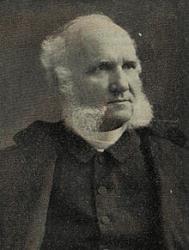
1823 - 1904 Meter: 8.7.8.7.8.8.7 Translator of "Almighty God! I cry to Thee" in The Book of Worship Joseph A. Seiss was born and raised in a Moravian home with the original family name of Seuss. After studying at Pennsylvania College in Gettysburg and completing his theological education with tutors and through private study, Seiss became a Lutheran pastor in 1842. He served several Lutheran congregations in Virginia and Maryland and then became pastor of St. John's Lutheran Church (1858-1874) and the Church of the Holy Communion (1874-1904), both in Philadelphia. Known as an eloquent and popular preacher, Seiss was also a prolific author and editor of some eighty volumes, which include The Last Times (1856), The Evangelical Psalmist (1859), Ecclesia Lutherana (1868), Lectures on the Gospels (1868-1872), and Lectures on the Epistles (1885). He contributed to and compiled several hymnals.
Bert Polman
Joseph A. Seiss
Ronald F. Krisman
Person Name: Ronald F. Krisman, b. 1946 Meter: 8.7.8.7.8.8.7 Alterer of "Out of the Depths (De Lo Profundo)" in Oramos Cantando = We Pray In Song
Ronald F. Krisman
John W. Peterson
1921 - 2006 Person Name: John W. Peterson, 1921- Meter: 8.7.8.7.8.8.7 Author of "Praise Our God" in Great Hymns of the Faith
John W. Peterson
Joseph Parry
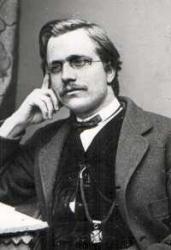
1841 - 1903 Meter: 8.7.8.7.8.8.7 Composer of "DIES IRAE (Parry)" Joseph Parry (b. Merthyr Tydfil, Glamorganshire, Wales, 1841; d. Penarth, Glamorganshire, 1903) was born into a poor but musical family. Although he showed musical gifts at an early age, he was sent to work in the puddling furnaces of a steel mill at the age of nine. His family immigrated to a Welsh settlement in Danville, Pennsylvania in 1854, where Parry later started a music school. He traveled in the United States and in Wales, performing, studying, and composing music, and he won several Eisteddfodau (singing competition) prizes. Parry studied at the Royal Academy of Music and at Cambridge, where part of his tuition was paid by interested community people who were eager to encourage his talent. From 1873 to 1879 he was professor of music at the Welsh University College in Aberystwyth. After establishing private schools of music in Aberystwyth and in Swan sea, he was lecturer and professor of music at the University College of South Wales in Cardiff (1888-1903). Parry composed oratorios, cantatas, an opera, orchestral and chamber music, as well as some four hundred hymn tunes.
Bert Polman
Joseph Parry
John Hughes
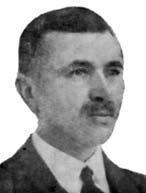
1873 - 1932 Meter: 8.7.8.7.8.8.7 Composer of "CWM RHONDDA" in Psalter Hymnal (Gray) John Hughes (b. Dowlais, Glamorganshire, Wales, 1873; d. Llantwit Fardre, Wales, 1932) received little formal education; at age twelve he was already working as a doorboy at a local mining company in Llantwit Fardre. He eventually became an official in the traffic department of the Great Western Railway. Much of his energy was devoted to the Salem Baptist Church in Pontypridd, where he served as both deacon and precentor. Hughes composed two anthems, a number of Sunday school marches, and a few hymn tunes, of which CWM RHONDDA is universally known, the tune was composed in 1905 Baptist Cymanfa Ganu (song festival) in Capel Rhondda, Pontypridd, Wales.
Bert Polman
John Hughes
Matthias Greiter
1495 - 1550 Person Name: M. Greiter Meter: 8.7.8.7.8.8.7 Composer of "O HOLY GHOST, THOU HEAVENLY GIFT" in Christian Hymns Greitter, Matthäus, was a monk and chorister of Strassburg Cathedral, but in 1524 espoused the cause of the Reformation. In 1528 he was appointed assistant pastor of St. Martin's Church, and afterwards at St. Stephen's. When the Interim [Agricola] was forced on Strassburg, he was the only one of the Lutheran pastors that sought to further it, a course which he afterwards deeply regretted. His death is dated by Wetzel, i. 349, as Dec. 20, 1550; by the Allgemeine Deutsche Biographie, ix. 636, as Nov. 20, 1550; while Koch, ii. 104, says he died of the pestilence in 1552.
Greitter was a distinguished musician, and with his friend Dachstein (q.v.) edited the Strassburg Kirchen ampt, 1524-5. Four psalm tunes by Greitter, and one by Dachstein were inserted by Calvin in his first Hymnbook published at Strassburg, 1539. All these were transferred to the first edition of the French-Genevan Psalter in 1542, and two of them, both by Greitter (the tunes to psalms 36 and 91), were retained in the final edition of 1562. Of his seven Psalm versions 4 have been translated into English :—
i. Ach Gott, wie lang vergissest mein. Ps. xiii. 1524. Wackernagel, iii. p. 89, in 4 st. Translated as, "O Lord, how lang forever wil thow foirget," in the Gude and Godly Ballates, ed. 1568, folio 46 (1868, p. 78).
ii. Da Israel aus Egypten zog. Ps. cxiv. In Die Zwen Psalmen: In exitu Israel, &c, Strassburg, 1527, thence in Wackernagel, iii. p. 93, in 2 stanzas. Translated as, "Quhen, fra Egypt departit Israeli," In the Gude & Godly Ballates, ed. 1568, folio 56 (1868, p. 95).
iii. Nicht uns, nicht uns, o ewiger Herr. Ps. cxv, 1527, as ii., and Wackernagel, iii. p. 93, in 4 st. Translated as, “Not unto us, not unto us, O Lord," in the G. & G. Ballates, ed. 1568, folio 56 (1868, p. 95).
iv. 0 Herre Gott, begnade mich. Ps. li. 1525. Wackernagel, iii. p. 90, in 5 st. Translated as, "O Lorde God, have mercy on me," by Bishop Coverdale, 1539 (Remains, 1846, p. 574). [Rev.James Mearns, M.A.]
--John Julian, Dictionary of Hymnology (1907)
Matthias Greiter
Pages




