

 My Starred Hymns
 My FlexScores
 My Hymnals
 My Purchased Files
Planning worship?
Check out our sister site, ZeteoSearch.org,
for 20+ additional resources related to your search.
- |
User Links
Person Results
Fred Kaan
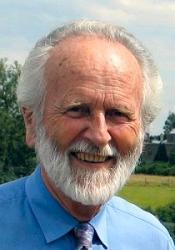
1929 - 2009 Scripture: Hebrews 11 Translator of "Faith, While Trees Are Still in Blossom" in The United Methodist Hymnal Fred Kaan Hymn writer. His hymns include both original work and translations. He sought to address issues of peace and justice. He was born in Haarlem in the Netherlands in July 1929. He was baptised in St Bavo Cathedral but his family did not attend church regularly. He lived through the Nazi occupation, saw three of his grandparents die of starvation, and witnessed his parents deep involvement in the resistance movement. They took in a number of refugees. He became a pacifist and began attending church in his teens.
Having become interested in British Congregationalism (later to become the United Reformed Church) through a friendship, he was attended Western College in Bristol. He was ordained in 1955 at the Windsor Road Congregational Church in Barry, Glamorgan.
In 1963 he was called to be minister of the Pilgrim Church in Plymouth. It was in this congregation that he began to write hymns. The first edition of Pilgrim Praise was published in 1968, going into second and third editions in 1972 and 1975. He continued writing many more hymns throughout his life.
Dianne Shapiro, from obituary written by Keith Forecast in Independent (http://www.independent.co.uk/news/obituaries/fred-kaan-minister-and-celebrated-hymn-writer-1809481.html)
Fred Kaan
Carl P. Daw Jr.
b. 1944 Person Name: Carl P. Daw, Jr. b. 1944 Scripture: Hebrews 11 Author of "We Sing for All the Unsung Saints" in Lutheran Service Book Carl P. Daw, Jr. (b. Louisville, KY, 1944) is the son of a Baptist minister. He holds a PhD degree in English (University of Virginia) and taught English from 1970-1979 at the College of William and Mary, Williamsburg, Virginia. As an Episcopal priest (MDiv, 1981, University of the South, Sewanee, Tennesee) he served several congregations in Virginia, Connecticut and Pennsylvania. From 1996-2009 he served as the Executive Director of The Hymn Society in the United States and Canada. Carl Daw began to write hymns as a consultant member of the Text committee for The Hymnal 1982, and his many texts often appeared first in several small collections, including A Year of Grace: Hymns for the Church Year (1990); To Sing God’s Praise (1992), New Psalms and Hymns and Spiritual Songs (1996), Gathered for Worship (2006). Other publications include A Hymntune Psalter (2 volumes, 1988-1989) and Breaking the Word: Essays on the Liturgical Dimensions of Preaching (1994, for which he served as editor and contributed two essays. In 2002 a collection of 25 of his hymns in Japanese was published by the United Church of Christ in Japan. He wrote Glory to God: A Companion (2016) for the 2013 hymnal of the Presbyterian Church (U.S.A.).
Emily Brink
Carl P. Daw Jr.
Lowell Mason
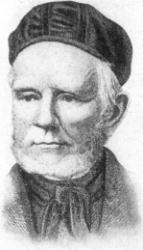
1792 - 1872 Person Name: Lowell Mason (1792-1872) Scripture: Hebrews 11, 12:1 Harmonizer of "TRURO" in Songs of Grace Dr. Lowell Mason (the degree was conferred by the University of New York) is justly called the father of American church music; and by his labors were founded the germinating principles of national musical intelligence and knowledge, which afforded a soil upon which all higher musical culture has been founded. To him we owe some of our best ideas in religious church music, elementary musical education, music in the schools, the popularization of classical chorus singing, and the art of teaching music upon the Inductive or Pestalozzian plan. More than that, we owe him no small share of the respect which the profession of music enjoys at the present time as contrasted with the contempt in which it was held a century or more ago. In fact, the entire art of music, as now understood and practiced in America, has derived advantage from the work of this great man.
Lowell Mason was born in Medfield, Mass., January 8, 1792. From childhood he had manifested an intense love for music, and had devoted all his spare time and effort to improving himself according to such opportunities as were available to him. At the age of twenty he found himself filling a clerkship in a banking house in Savannah, Ga. Here he lost no opportunity of gratifying his passion for musical advancement, and was fortunate to meet for the first time a thoroughly qualified instructor, in the person of F. L. Abel. Applying his spare hours assiduously to the cultivation of the pursuit to which his passion inclined him, he soon acquired a proficiency that enabled him to enter the field of original composition, and his first work of this kind was embodied in the compilation of a collection of church music, which contained many of his own compositions. The manuscript was offered unavailingly to publishers in Philadelphia and in Boston. Fortunately for our musical advancement it finally secured the attention of the Boston Handel and Haydn Society, and by its committee was submitted to Dr. G. K. Jackson, the severest critic in Boston. Dr. Jackson approved most heartily of the work, and added a few of his own compositions to it. Thus enlarged, it was finally published in 1822 as The Handel and Haydn Society Collection of Church Music. Mason's name was omitted from the publication at his own request, which he thus explains, "I was then a bank officer in Savannah, and did not wish to be known as a musical man, as I had not the least thought of ever making music a profession." President Winchester, of the Handel and Haydn Society, sold the copyright for the young man. Mr. Mason went back to Savannah with probably $500 in his pocket as the preliminary result of his Boston visit.
The book soon sprang into universal popularity, being at once adopted by the singing schools of New England, and through this means entering into the church choirs, to whom it opened up a higher field of harmonic beauty. Its career of success ran through some seventeen editions. On realizing this success, Mason determined to accept an invitation to come to Boston and enter upon a musical career. This was in 1826. He was made an honorary member of the Handel and Haydn Society, but declined to accept this, and entered the ranks as an active member. He had been invited to come to Boston by President Winchester and other musical friends and was guaranteed an income of $2,000 a year. He was also appointed, by the influence of these friends, director of music at the Hanover, Green, and Park Street churches, to alternate six months with each congregation. Finally he made a permanent arrangement with the Bowdoin Street Church, and gave up the guarantee, but again friendly influence stepped in and procured for him the position of teller at the American Bank.
In 1827 Lowell Mason became president and conductor of the Handel and Haydn Society. It was the beginning of a career that was to win for him as has been already stated the title of "The Father of American Church Music." Although this may seem rather a bold claim it is not too much under the circumstances. Mr. Mason might have been in the average ranks of musicianship had he lived in Europe; in America he was well in advance of his surroundings. It was not too high praise (in spite of Mason's very simple style) when Dr. Jackson wrote of his song collection: "It is much the best book I have seen published in this country, and I do not hesitate to give it my most decided approbation," or that the great contrapuntist, Hauptmann, should say the harmonies of the tunes were dignified and churchlike and that the counterpoint was good, plain, singable and melodious.
Charles C. Perkins gives a few of the reasons why Lowell Mason was the very man to lead American music as it then existed. He says, "First and foremost, he was not so very much superior to the members as to be unreasonably impatient at their shortcomings. Second, he was a born teacher, who, by hard work, had fitted himself to give instruction in singing. Third, he was one of themselves, a plain, self-made man, who could understand them and be understood of them."
The personality of Dr. Mason was of great use to the art and appreciation of music in this country. He was of strong mind, dignified manners, sensitive, yet sweet and engaging.
Prof. Horace Mann, one of the great educators of that day, said he would walk fifty miles to see and hear Mr. Mason teach if he could not otherwise have that advantage.
Dr. Mason visited a number of the music schools in Europe, studied their methods, and incorporated the best things in his own work. He founded the Boston Academy of Music. The aim of this institution was to reach the masses and introduce music into the public schools. Dr. Mason resided in Boston from 1826 to 1851, when he removed to New York. Not only Boston benefited directly by this enthusiastic teacher's instruction, but he was constantly traveling to other societies in distant cities and helping their work. He had a notable class at North Reading, Mass., and he went in his later years as far as Rochester, where he trained a chorus of five hundred voices, many of them teachers, and some of them coming long distances to study under him. Before 1810 he had developed his idea of "Teachers' Conventions," and, as in these he had representatives from different states, he made musical missionaries for almost the entire country. He left behind him no less than fifty volumes of musical collections, instruction books, and manuals.
As a composer of solid, enduring church music. Dr. Mason was one of the most successful this country has introduced. He was a deeply pious man, and was a communicant of the Presbyterian Church. Dr. Mason in 1817 married Miss Abigail Gregory, of Leesborough, Mass. The family consisted of four sons, Daniel Gregory, Lowell, William and Henry. The two former founded the publishing house of Mason Bros., dissolved by the death of the former in 1869. Lowell and Henry were the founders of the great organ manufacturer of Mason & Hamlin. Dr. William Mason was one of the most eminent musicians that America has yet produced.
Dr. Lowell Mason died at "Silverspring," a beautiful residence on the side of Orange Mountain, New Jersey, August 11, 1872, bequeathing his great musical library, much of which had been collected abroad, to Yale College.
--Hall, J. H. (c1914). Biography of Gospel Song and Hymn Writers. New York: Fleming H. Revell Company.
Lowell Mason
Carolyn Winfrey Gillette
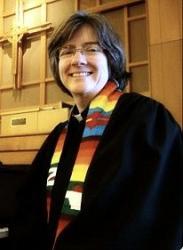
b. 1961 Scripture: Hebrews 11:1 Author of "God of Love, We Sing Your Glory" in Songs of Grace Carolyn Winfrey Gillette has been a pastor in rural, small town, suburban, and city churches; she has also served as a hospice chaplain, a hospital chaplain, and a school bus aide helping children with special needs. She and her husband Bruce are pastors of the First Presbyterian Union Church in Owego, NY.
Carolyn is a gifted hymn writer who has written over 400 hymns. These hymns have been sung by congregations throughout the United States and around the world — from the Washington National Cathedral to St. Giles' Cathedral in Edinburgh, Scotland to St. George's Cathedral in Cape Town, South Africa to small town churches and small household congregations; they have also been sung at national church and international ecumenical meetings.
She has written four books: "I Sing to My Savior: New Hymns from the Stories in Luke's Gospel", "God's World is Changing: New Hymns for Advent and Christmas", "Gifts of Love: New Hymns for Today's Worship" (Geneva Press) and "Songs of Grace: New Hymns for God and Neighbo"r (Upper Room Books). Her hymns have been published in over 20 books. Two of her hymns have been published by the Choristers Guild as anthems. Carolyn was commissioned to write the lead article for the special issue on "Singing Our Lives" for Baylor University's "Christian Reflectio"n journal. Her hymns have also been in "Call to Worship" journal, "The Chorister" (cover story), "Reformed Worship," "The Presbyterian Outlook" and posted on thousands of web sites. All of her hymns can be found on her website with indices to scriptural references, topics, tunes, and the three-year cycle of the Revised Common Lectionary: http://www.carolynshymns.com
The World Council of Churches, National Council of Churches, Church World Service and Churches Uniting in Christ have asked her to write hymns. Habitat for Humanity International used a hymn by Carolyn for their 30th anniversary celebration. Family Promise (Interfaith Hospitality Network) did a music video of her hymn for their ministry with homeless families. The Humane Society of the United States did a music video contest of her hymn for their Blessing of the Animals service. The Presbyterian Church (USA) 216th General Assembly presented her with the "Ecumenical and Interreligious Service Recognition." Sojourners did a short video about her hymn writing. A Canadian scholar wrote her biography for the "Cambridge Dictionary for Hymnology."
Feature stories about Carolyn's hymns addressing concerns facing the Church, nation and world, were done by The New Yorker, The Christian Century, America, National Public Radio, national PBS-TV, and newspapers (Philadelphia Inquirer, Washington Post, New Jersey Courier Post, Delaware News Journal, and others).
Carolyn is a graduate of Lebanon Valley College and Princeton Theological Seminary. She finds joy in parish ministry, hymn writing, and most of all in her family as a wife, mother (and foster mother), grandmother, sister, and human parent to a rescue dog, "Annie."
Carolyn sees her hymn writing as a partnership and is very grateful for prayers for her hymn writing, suggestions for hymns, gifts for hymn use and commissions, and invitations to speak at conferences, workshops, and church gatherings (in person and online). She hopes her hymns nurture people in their discipleship and support churches in their worship and service in the world. Sing to the Lord a new song!
Copied from "About the Author" in "I Sing to My Savior: New Hymns from the Stories in Luke's Gospel."
Email from Bruce Gillette
Carolyn Winfrey Gillette
Phoebe Palmer Knapp
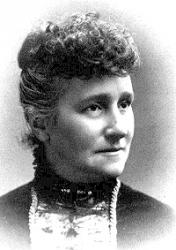
1839 - 1908 Person Name: Phoebe Palmer Knapp, 1839-1908 Scripture: Hebrews 11:1 Composer of "BLESSED ASSURANCE" in Complete Anglican Hymns Old and New As a young girl Phoebe Palmer Knapp (b. New York, NY, 1839; d. Poland Springs, ME, 1908) displayed great musical talent; she composed and sang children’s song at an early age. The daughter of the Methodist evangelist Walter C. Palmer, she was married to John Fairfield Knapp at the age of sixteen. Her husband was a founder of the Metropolitan Life Insurance Company, and after his death, she shared her considerable inherited wealth with various charitable organizations. She composed over five hundred gospel songs, of which the tunes for “Blessed Assurance” and “Open the Gates of the Temple” are still popular today.
Bert Polman
Phoebe Palmer Knapp
Joseph Barnby
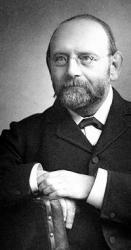
1838 - 1896 Person Name: Sir Joseph Barnby Scripture: Hebrews 11 Composer of "SARUM" in Trinity Hymnal Joseph Barnby (b. York, England, 1838; d. London, England, 1896) An accomplished and popular choral director in England, Barnby showed his musical genius early: he was an organist and choirmaster at the age of twelve. He became organist at St. Andrews, Wells Street, London, where he developed an outstanding choral program (at times nicknamed "the Sunday Opera"). Barnby introduced annual performances of J. S. Bach's St. John Passion in St. Anne's, Soho, and directed the first performance in an English church of the St. Matthew Passion. He was also active in regional music festivals, conducted the Royal Choral Society, and composed and edited music (mainly for Novello and Company). In 1892 he was knighted by Queen Victoria. His compositions include many anthems and service music for the Anglican liturgy, as well as 246 hymn tunes (published posthumously in 1897). He edited four hymnals, including The Hymnary (1872) and The Congregational Sunday School Hymnal (1891), and coedited The Cathedral Psalter (1873).
Bert Polman
Joseph Barnby
Frederick Lucian Hosmer
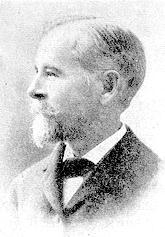
1840 - 1929 Scripture: Hebrews 11 Author of "Forward through the Ages" in The New Century Hymnal Hosmer, Frederick Lucian, B.A., was born at Framingham, Mass., in 1840, and educated at Harvard, where he graduated B.A. in 1869. Entering the Unitarian Ministry in 1872 he has held charges in Quincy, Ill., 1872-77; Cleveland, Ohio, 1878-92; St. Louis, 1894-99; and since 1899, at Berkeley, Cal. His Way of Life, 1877, was a compilation of Prayers and Responsive Services for Sunday Schools. Of Unity Hymns and Carols, 1880, he was joint editor with W. C. Gannett and J. V. Blake. His hymns were published jointly by him and W. C. Gannett (q.v.), as The Thought of God in Hymns and Poems (Boston: Little, Brown & Co.), 1st Series, 1885; 2nd Series, 1894. Of his 56 hymns in this work the following have come into common use, for the most part during the past ten years:—
1. Father, to Thee we look in all our sorrow. [Trust in God.] Written in 1881 upon the death of a member of the author's congregation, and published in The Thought of God, 1st Series, 1885.
2. From age to age how grandly rise. [Unity.] Written for the annual festival of the Free Religious Assoc, Boston, June 2, 1899, and first published in Souvenir Festival Hymns, 1899. Subsequently altered by the author to "From age to age the prophet's vision."
3. From age to age they gather, all the brave of heart and strong. [Victory of Truth.] "Written in 1891 for the Dedication of Unity Church, Decorah, Iowa, and published in The Thought of God, 2nd Series, 1894.
4. From many ways and wide apart. [College or School Reunion.] Dated in The Thought of God, 2nd Series, 1894, as having been written in 1890.
5. Go not, my soul, in search of Him. [God Within.] Written in 1879, printed in the Boston Christian Register, May 31, 1879, and included in The Thought of God, 1st Series, 1885, with the title, "The Indwelling God."
6. I cannot think of them as dead. [Eternal Life.] Written in 1882, and first published in The Thought of God, 1st Series, 1885, and entitled "My Dead." in the English collections it is usually given as "We cannot think of them as dead."
7. I little see, I little know. [Trust.] "A Psalm of Trust," written in 1883, first appeared in the Boston Christian Register, and again in The Thought of God, 1st Series, 1885.
8. Immortal by their deed and word. [The Spirit of Jesus.] Written in 1880, and first published in Unity Hymns and Carols, Chicago, Ill., 1880, and then in The Thought of God, 1st Series, 1885.
9. Many things in life there are. [Mystery in all Things.] Written in 1885, and first published in The Thought of God, 1st Series, 1885, with the title "Passing Understanding," and the quotation "The Peace of God which passeth all understanding."
10. Not always on the mount may we. [On the Mount.] This lesson from the Transfiguration was written in 1882, and published in the Chicago Unity, April 1, 1884. After revision by the author, it was included in the 1st Series of The Thought of God, 1885.
11. Not when, with self dissatisfied. [Lent.] Written in 1891, and given in The Thought of God, 2nd series, 1894, p. 33. It is in The Public School Hymn Book, 1903, and others.
12. O beautiful, my country. [National Hymn.] As “Our Country," written in 1884, and published in the Chicago Unity Festivals, 1884; and again in The Thought of God, 1885.
13. O Light, from age to age the same. [Dedication Anniversary.] Written in 1890 for the fiftieth anniversary of the Second Congregational Church (Unitarian), Quincy, 111. Included in The Thought of God, 2nd Series, 1894, and entitled "From Generation to Generation."
14. O Lord of Life, where'er they be. [Life in God.] "Written in 1888 for Easter service in Author's own church," and first published in the Chicago Unit, and again in The Thought of God, 2nd Series, 1894. The "Alleluia!" refrain, which is added in some collections to each verse, is appended, in the original, to the last verse only.
15. O Name, all other names above. [Trust in God.] Under the title "Found. 'They that know Thy name will put their trust in Thee!’ this hymn, written in 1878, was given in The Thought of God, 1st Series, 1885.
16. O Prophet souls of all the years. [Unity.] “Written in 1893 for, and sung at, the Unitarian gathering in connection with The World's Parliament of Religions (World's Fair), Chicago, Sep., 1893," and included in The Thought of God, 2nd Series, 1894, and entitled "One Law, One Life, one Love."
17. O Thou, in all Thy might so far. [God All in All.] This hymn, given in The Thought of God, 1st Series, 1885, with the title "The Mystery of God," was written in 1876, and first published in the New York Inquirer.
18. O thou in lonely vigil led. This encouragement for lonely workers was written for the "Emerson Commemoration, W. U. C, 1888," and included in The Thought of God, 2nd Series, 1894.
19. O Thou, Who art of all that is. [Divine Guidance.] Under the title "Through unknown paths," this hymn was included in The Thought of God, 1st Series, 1885. It was written in 1877.
20. O Thou, Whose Spirit witness bears. [Dedication of a Place of Worship.] Written for the Dedication of First Unitarian Church, Omaha, Feb. 6, 1891, and published in The Thought of God, 2nd Series, 1894, with the title "The Inward Witness," and the subscription "For T. K., Omaha, 1801."
21. On eyes that watch through sorrow's night. [Easter] A Carol for Easter Morn, written in 1890 for the author's congregation, and published in The Thought of God, 2nd Series, 1894.
22. One thought I have, my ample creed. [The Thought of God.] This is the initial hymn to the collection The Thought of God, 1st Series, 1885, and supplies the title to the work. It was written in 1880, and first published in the Chicago Unity Hymns and Carols, 1880, and then in The Thought of God, 1885.
23. The rose is queen among the flowers. [Flower Service.] "Written in 1875, first published in The Sunnyside, a song book for Sunday Schools, and again in The Thought of God, 1st Series, 1885, under the title "Flower Sunday."
24. Thy kingdom come, — on bended knee. [Missions.] "Written in 1891 for the Commencement of the Meadville Theological School (Meadville, Pa.), June 12, 1891, and published in The Thought of God, 2nd Series, 1894," under the title "The Day of God," and the subscription, "M. T. S., June 12, 1891."
25. We pray no more, made lowly wise, For miracle and sign. [Greater Faith Desired.] Written in 1879, and first published in The Christian Register (Boston), Mar. 22 of that year, under the title 'The Larger Faith.'" Included under the same title in The Thought of God, 1st Series, 1885. Sometimes given as "Made lowly wise, we pray no more."
26. When courage fails, and faith burns low. [Victory of Truth.] Under the title "Loyalty," this hymn was given in The Thought of God, 1st Series, 1885. It was written in 1881.
27. Where men on mounts of vision Have passed the veil within. [Dedication of a Place of Worship.] "Written in 1891 for the Dedication of First Unitarian Church, Oakland, California." Included in The Thought of God, 2nd Series, 1894, entitled "Holy Places," and subscribed " For C. W. W., Oakland, Cal., 1891."
These annotations are from manuscript notes supplied to us by the author. Of these hymns all are in common use in America, and more than one half in Great Britain, mainly by Unitarians and Congregationalists. Amongst Unitarian hymn-writers of the last twenty years Mr. Hosmer is the most powerful and original known to us.
--John Julian, Dictionary of Hymnology, New Supplement (1907)
Frederick Lucian Hosmer
Arthur Sullivan
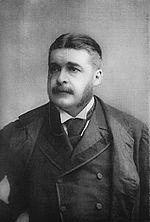
1842 - 1900 Person Name: Arthur S. Sullivan Scripture: Hebrews 11 Composer of "ST. GERTRUDE" in The New Century Hymnal Arthur Seymour Sullivan (b Lambeth, London. England. 1842; d. Westminster, London, 1900) was born of an Italian mother and an Irish father who was an army bandmaster and a professor of music. Sullivan entered the Chapel Royal as a chorister in 1854. He was elected as the first Mendelssohn scholar in 1856, when he began his studies at the Royal Academy of Music in London. He also studied at the Leipzig Conservatory (1858-1861) and in 1866 was appointed professor of composition at the Royal Academy of Music. Early in his career Sullivan composed oratorios and music for some Shakespeare plays. However, he is best known for writing the music for lyrics by William S. Gilbert, which produced popular operettas such as H.M.S. Pinafore (1878), The Pirates of Penzance (1879), The Mikado (1884), and Yeomen of the Guard (1888). These operettas satirized the court and everyday life in Victorian times. Although he composed some anthems, in the area of church music Sullivan is best remembered for his hymn tunes, written between 1867 and 1874 and published in The Hymnary (1872) and Church Hymns (1874), both of which he edited. He contributed hymns to A Hymnal Chiefly from The Book of Praise (1867) and to the Presbyterian collection Psalms and Hymns for Divine Worship (1867). A complete collection of his hymns and arrangements was published posthumously as Hymn Tunes by Arthur Sullivan (1902). Sullivan steadfastly refused to grant permission to those who wished to make hymn tunes from the popular melodies in his operettas.
Bert Polman
Arthur Sullivan
Marty Haugen
b. 1950 Person Name: Marty Haugen, 1950- Scripture: Hebrews 11:1-3 Paraphraser of "Eye Has Not Seen, Ear Has Not Heard" in Common Praise (1998) Marty Haugen (b. 1950), is a prolific liturgical composer with many songs included in hymnals across the liturgical spectrum of North American hymnals and beyond, with many songs translated into different languages. He was raised in the American Lutheran Church, received a BA in psychology from Luther College, yet found his first position as a church musician in a Roman Catholic parish at a time when the Roman Catholic Church was undergoing profound liturgical and musical changes after Vatican II. Finding a vocation in that parish to provide accessible songs for worship, he continued to compose and to study, receiving an MA in pastoral studies at the University of St. Thomas in St. Paul Minnesota. A number of liturgical settings were prepared for the Evangelical Lutheran Church in America and more than 400 of his compositions are available from several publishers, especially GIA Publications, who also produced some 30 recordings of his songs. He is composer-in-residence at Mayflower Community Congregational Church in Minneapolis and continues to compose and travel to speak and teach at worship events around the world.
Emily Brink
Marty Haugen
Sydney Carter
1915 - 2004 Person Name: Sydney Carter, 1915-2004 Scripture: Hebrews 11:1-3 Author of "and it's from the old I travel to the new" in Singing the Faith
Sydney Carter
Pages




