You help make Hymnary.org possible. More than 10 million people from 200+ countries found hymns, liturgical resources and encouragement on Hymnary.org in 2025, including you. Every visit affirms the global impact of this ministry.

If Hymnary has been meaningful to you this year, would you take a moment today to help sustain it? A gift of any size—paired with a note of encouragement if you wish—directly supports the server costs, research work and curation that keep this resource freely available to the world.

Give securely online today, or mail a check to:
Hymnary.org
Calvin University
3201 Burton Street SE
Grand Rapids, MI 49546

Thank you for your partnership, and may the hope of Advent fill your heart.

Person Results

Topics:adversity
In:people

Planning worship? Check out our sister site, ZeteoSearch.org, for 20+ additional resources related to your search.
Showing 21 - 30 of 117Results Per Page: 102050

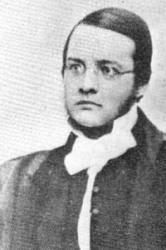
Edward Mote

1797 - 1874 Topics: Adversity Author of "My Hope is Built" in Chalice Hymnal Mote, Edward, was born in Upper Thames Street, London, Jan. 21, 1797. Through the preaching of the Rev. J. Hyatt, of Tottenham Court Road Chapel, he underwent a great spiritual change; and ultimately he became a Baptist minister. For the last 26 years of his life he was pastor at Horsham, Sussex, where he died Nov. 13, 1874. Mr. Mote published several small pamphlets; and also:- Hymns of Praise. A New Selection of Gospel Hymns, combining all the Excellencies of our spiritual Poets, with many Originals. By E. Mote. London. J. Nichols, 1836. The Originals number nearly 100. Concerning the authorship of one of these original hymns much uncertainty has existed. The hymn is:— 1. Nor earth, nor hell my soul can move. [Jesus All in All.] In 6 stanzas of 4 lines, with a refrain. Mr. Mote's explanation, communicated to the Gospel Herald, is:— "One morning it came into my mind as I went to labour, to write an hymn on the ‘Gracious Experience of a Christian.' As I went up Holborn I had the chorus, ‘On Christ the solid Rock I stand, All other ground is sinking sand.’ In the day I had four first verses complete, and wrote them off. On the Sabbath following I met brother King as I came out of Lisle Street Meeting . . . who informed me that his wife was very ill, and asked me to call and see her. I had an early tea, and called afterwards. He said that it was his usual custom to sing a hymn, read a portion, and engage in prayer, before he went to meeting. He looked for his hymnbook but could find it nowhere. I said, ‘I have some verses in my pocket; if he liked, we would sing them.' We did; and his wife enjoyed them so much, that after service he asked me, as a favour, to leave a copy of them for his wife. 1 went home, and by the fireside composed the last two verses, wrote the whole off, and took them to sister King. . . As these verses so met the dying woman's case, my attention to them was the more arrested, and I had a thousand printed for distribution. I sent one to the Spiritual Magazine, without my initials, which appeared some time after this. Brother Rees, of Crown Street, Soho, brought out an edition of hymns [1836], and this hymn was in it. David Denham introduced it [1837] with Rees's name, and others after... . Your inserting this brief outline may in future shield me from the charge of stealth, and be a vindication of truthfulness in my connection with the Church of God." The form in which the hymn is usually found is:— 2. My hope is built on nothing less (st. ii.), sometimes in 4 stanzas, and at others in 5 st., and usually without the refrain. The original in the author's Hymns of Praise, 1836, is No. 465, and entitled, "The immutable Basis of a Sinner's hope." Bishop Bickersteth calls it a "grand hymn of faith." It dates circa 1834, and is in extensive use. [Rev. W. R. Stevenson, M.A.] --John Julian, Dictionary of Hymnology (1907)

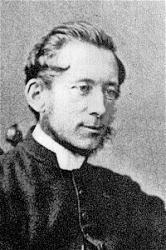
William Whiting

1825 - 1878 Topics: Adversity Author of "Eternal Father, Strong to Save" in Chalice Hymnal William Whiting was born in Kensington, November 1, 1825, and was educated at Clapham and Winchester Colleges. He was later master of Winchester College Choristers' School, where he wrote Rural Thoughts and Other Poems, 1851. He died at Winchester. --The Hymnal 1940 Companion =============== Whiting, William, was born in Kensington, London, Nov. 1, 1825, and educated at Clapham. He was for several years Master of the Winchester College Choristers' School. His Rural Thoughts and other poems were published in 1851; but contained no hymns. His reputation as a hymnwriter is almost exclusively confined to his “Eternal Father, strong to save". Other hymns by him were contributed to the following collections:— i. To the 1869 Appendix to the Society for Promoting Christian Knowledge Psalms & Hymns 1. O Lord the heaven Thy power displays. Evening. 2. Onward through life Thy children stray. Changing Scenes of Life. ii. To an Appendix to Hymns Ancient & Modern issued by the Clergy of St. Philip's, Clerkenwell, 1868. 3. Jesus, Lord, our childhood's Pattern. Jesus the Example to the Young. 4. Lord God Almighty, Everlasting Father. Holy Trinity. 5. Now the harvest toil is over. Harvest. 6. 0 Father of abounding grace. Consecration of a Church. 7. We thank Thee, Lord, for all. All Saints Day. iii. To The Hymnary, 1872. 8. Amen, the deed in faith is done. Holy Baptism. 9. Jesus Christ our Saviour. For the Young. 10. Now the billows, strong and dark. For Use at Sea. 11. 0 Father, Who the traveller's way. For Travellers by Land. 12. When Jesus Christ was crucified. Holy Baptism. Mr. Whiting's hymns, with the exception of his “Eternal Father," &c, have not a wide acceptance. He died in 1878. -- John Julian, Dictionary of Hymnology (1907)

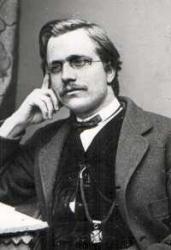
John Bacchus Dykes

1823 - 1876 Person Name: John B. Dykes Topics: Adversity Composer of "MELITA" in Chalice Hymnal As a young child John Bacchus Dykes (b. Kingston-upon-Hull' England, 1823; d. Ticehurst, Sussex, England, 1876) took violin and piano lessons. At the age of ten he became the organist of St. John's in Hull, where his grandfather was vicar. After receiving a classics degree from St. Catherine College, Cambridge, England, he was ordained in the Church of England in 1847. In 1849 he became the precentor and choir director at Durham Cathedral, where he introduced reforms in the choir by insisting on consistent attendance, increasing rehearsals, and initiating music festivals. He served the parish of St. Oswald in Durham from 1862 until the year of his death. To the chagrin of his bishop, Dykes favored the high church practices associated with the Oxford Movement (choir robes, incense, and the like). A number of his three hundred hymn tunes are still respected as durable examples of Victorian hymnody. Most of his tunes were first published in Chope's Congregational Hymn and Tune Book (1857) and in early editions of the famous British hymnal, Hymns Ancient and Modern. Bert Polman

Joseph Parry

1841 - 1903 Topics: Adversity Composer of "ABERYSTWYTH" in Chalice Hymnal Joseph Parry (b. Merthyr Tydfil, Glamorganshire, Wales, 1841; d. Penarth, Glamorganshire, 1903) was born into a poor but musical family. Although he showed musical gifts at an early age, he was sent to work in the puddling furnaces of a steel mill at the age of nine. His family immigrated to a Welsh settlement in Danville, Pennsylvania in 1854, where Parry later started a music school. He traveled in the United States and in Wales, performing, studying, and composing music, and he won several Eisteddfodau (singing competition) prizes. Parry studied at the Royal Academy of Music and at Cambridge, where part of his tuition was paid by interested community people who were eager to encourage his talent. From 1873 to 1879 he was professor of music at the Welsh University College in Aberystwyth. After establishing private schools of music in Aberystwyth and in Swan sea, he was lecturer and professor of music at the University College of South Wales in Cardiff (1888-1903). Parry composed oratorios, cantatas, an opera, orchestral and chamber music, as well as some four hundred hymn tunes. Bert Polman

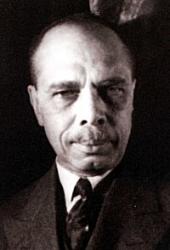
James Weldon Johnson

1871 - 1938 Topics: Adversity Author of "Lift Every Voice and Sing" in Chalice Hymnal James Weldon Johnson MA PhD USA 1871-1938. Born at Jacksonville, FL, he attended Clark University, Atlanta, GA, and also spent three months in the backwoods of Georgia., taking in the culture there. While in school he published a paper, ”The daily American newspaper”, which ran for a year until terminated for lack of funding. He graduated in 1894. He then taught at the largest school in Jacksonville, FL, eventually becoming principal and adding 9th & 10th grades there. While there he began preparing for the FL bar exam, taking it in 1897. In 1904 he became treasurer of the Colored Republican Club, becoming its president the following year. He became an author, activist, educator, lawyer, and diplomat. A musician from youth, he collaborated with his brother, Rosamond, also a musician, and Bob Cole to write Broadway songs, and they achieved some success. They also wrote an opera, “Tolosa”, satirizing the U.S. annexation of the Pacific islands. He became a writer and Civil Rights activist. He did the editorial page of the New York Age, an African-American newspaper. In 1916 he became active in the NAACP, and in 1917 he added many chapters to its southern membership. He was its executive secretary (essentially its operating officer) from 1920-1930. He was involved in the campaign to pass the Dyer Anti-lynching Bill. He wrote poems, novels, and anthologies, and collected poems and spirituals from black culture. He wrote the lyrics to the Negro National Anthem, “Lift every voice and sing”, in honor of Booker T Washington, who visited his school and heard the poem recited by 500 school children in his presence, paying tribute to Abraham Lincoln’s birthday. He participated in Theodore Roosevelt’s successful presidential campaign, and was rewarded by receiving an appointment as U.S. Consul to Venezuela (1906-1909), and later to Nicaragua (1909-1913). He married activist,Grace Elizabeth Nail during this period. They had collaborated on a screenwriting project. They had no children. In 1930, after years leading the NAACP, he became professor of creative literature and writing at Fisk University ( a historically black university), Nashville, TN, where he lectured on a wide range of issues. In 1934 he was the first African-American professor hired at New York University, where he taught several classes in literature and culture. He published four works: “Autobiography of an Ex-colored man” (1920) “The book of American negro poetry” (1922/1931), “God’s trombones” (1927), and “Along this way” (1933). In 1938 he supported efforts by Ignatz Waghalter, a Polish-Jewish composer who had escaped the Nazis in Germany, to establish a classical orchestra of African-American musicians. He perished at Wiscasset, ME, while on vacation when the car his wife was driving was hit by a train. She was severely injured, but recovered. More than 2000 people attended his funeral. Several universities named buildings or departments in his honor, as is a community library in St. Petersburg, FL. In 1988 a U.S, postage stamp was printed in his honor. John Perry

George Nelson Allen

1812 - 1877 Person Name: George N. Allen Topics: Adversity, Affliction & Tribulation Composer of "PRECIOUS LORD" in Voices United George Nelson Allen (1812-1871), studied at Western Reserve Academy in Hudson, Oh OH and with Lowell Mason in Boston. Allen gave a strong musical foundation to Oberlin College in its earliest years; in addition to being Professor of Music he also served as Professor of Geology and Natural History, Secretary and Treasurer. In 1835 he compiled The Oberlin Social and Sabbath Hymn Book, in which appeared his most well known tune MAITLAND (also known as CROSS AND CROWN or WESTERN MELODY) with the text "Must Jesus bear the cross alone?". This was adapted by Thomas A. Dorsey in 1938 for his hymn "Precious Lord, take my hand". hand." He composed anthems and wrote some additional music for Isaac Woodbury's Oratorio "Absalom." He compiled a small 3" x 4" hymnal that every student should keep in his pocket that went through several printings. Mary Louise VanDyke

J. Jefferson Cleveland

1937 - 1986 Person Name: J. Jefferson Cleveland, 1937-1986 Topics: Adversity Arranger of "WALK WITH ME" in Community of Christ Sings Judge Jefferson Cleveland (1937-1986) was one of the most important scholars and editors of African-American congregational song of the 20th century. Along with Verogla Nix, he edited what is arguably the most groundbreaking collection of African-American song in the last half of the 20th century, Songs of Zion (1981/1982). Lutheran hymnologist Marilyn Stulken provides a biographical sketch of Cleveland’s life and accomplishments. Born in Georgia, Cleveland graduated from Clark College (Atlanta), Illinois Wesleyan University and received his doctorate in education from Boston University. He served on the faculty of three historically black Christian colleges: Claflin College (South Carolina), Langston University (Oklahoma), and Jarvis Christian College (Texas), before teaching at the University of Massachusetts and Wesley Theological Seminary in Washington, D.C. Cleveland’s musical arrangements, historical research and scholarship on the performance practice of African-American song have proven invaluable for the advancement of black gospel song, not only among African Americans, but also in Anglo hymnals to the present day. For example, Cleveland’s essay, “A Historical Account of the Hymn in the Black Worship Experience,” in Songs of Zion is a helpful introduction for laypersons and scholars alike. In addition to serving as a hymnody consultant for the United Methodist General Board of Discipleship, he toured the United States and Africa in 1981 and Europe in 1984 as a teacher, lecturer and performer. --www.umportal.org/

George Keith

1638 - 1716 Person Name: "K" Topics: Adversity, Affliction & Tribulation Author of "How Firm a Foundation" in Voices United George Keith, according to D. Sedgwick, was the author of "How firm a foundation, ye saints of the Lord." Little is known about Keith, save that he was a publisher, a son-in-law of Dr. Gill, and the composer of several hymns. --Annotations of the Hymnal, Charles Hutchins, M.A. 1872.

Carolina Sandell

1823 - 1903 Person Name: Caroline V. Sandell-Berg Topics: Adversity Author of "Day by Day" in Celebrating Grace Hymnal Caroline W. Sandell Berg (b. Froderyd, Sweden, 1832; d. Stockholm, Sweden, 1903), is better known as Lina Sandell, the "Fanny Crosby of Sweden." "Lina" Wilhelmina Sandell Berg was the daughter of a Lutheran pastor to whom she was very close; she wrote hymns partly to cope with the fact that she witnessed his tragic death by drowning. Many of her 650 hymns were used in the revival services of Carl O. Rosenius, and a number of them gained popularity particularly because of the musical settings written by gospel singer Oskar Ahnfelt. Jenny Lind, the famous Swedish soprano, underwrote the cost of publishing a collection of Ahnfelt's music, Andeliga Sänger (1850), which consisted mainly of Berg's hymn texts. Bert Polman

George Croly

1780 - 1860 Person Name: George Croly, 1780-1860 Topics: Adversity Author of "Spirit of God, Descend upon My Heart" in Community of Christ Sings Croly, George, LL.D., born in Dublin, Aug. 17, 1780, and educated at the Dublin University (M.A. 1804, LL.D. 1831). After taking Holy Orders, he laboured in Ireland till about 1810, when he took up his residence in London, and devoted himself to literature. In 1835 he succeeded to the united benefices of St. Stephen's, Walbrook, and St. Benet Sherehog, retaining the same till his death, which occurred suddenly in the public street, Holborn, Nov. 24, 1860. His prose publications, in addition to contributions to Blackwood's Magazine, were numerous, and dealt with biographical, historical, and scriptural subjects. His hymns were given in his— Psalms and Hymns for Public Worship. Written and compiled by the Rev. George Croly, LL.D. London Kendrick, 1854. This collection contained 25 psalms, 50 hymns, and 6 poems. Of these 10 psalms, 12 hymns, and the 6 poems bear Dr. Croly's initial. The following have come into common use mainly through Windle's Collection:— 1. Be still, be still, impatient soul. Patience. 2. Behold me, Lord, and if thou find. Lent. 3. Lift up your heads, ye gates of light. Ascension. 4. Lord, who hast sought us out, unsought. Public Worship. 5. Teach us, O Lord, this day. Sunday. 6. Thou, Lord of mercy and of might. Lent. All these date from 1854, with the exception of No. 6, which appeared in his Scenes from Scripture and other Poems, 1851. -- John Julian, Dictionary of Hymnology (1907)

Pages


Export as CSV
It looks like you are using an ad-blocker. Ad revenue helps keep us running. Please consider white-listing Hymnary.org or getting Hymnary Pro to eliminate ads entirely and help support Hymnary.org.