You help make Hymnary.org possible. More than 10 million people from 200+ countries found hymns, liturgical resources and encouragement on Hymnary.org in 2025, including you. Every visit affirms the global impact of this ministry.

If Hymnary has been meaningful to you this year, would you take a moment today to help sustain it? A gift of any size—paired with a note of encouragement if you wish—directly supports the server costs, research work and curation that keep this resource freely available to the world.

Give securely online today, or mail a check to:
Hymnary.org
Calvin University
3201 Burton Street SE
Grand Rapids, MI 49546

Thank you for your partnership, and may the hope of Advent fill your heart.

Person Results

Topics:complaint
In:people

Planning worship? Check out our sister site, ZeteoSearch.org, for 20+ additional resources related to your search.
Showing 21 - 30 of 60Results Per Page: 102050

Chrétien Urhan

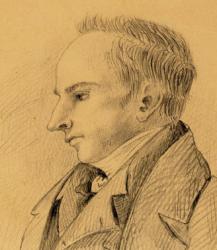
1790 - 1845 Topics: Prayer Complaint in Composer of "RUTHERFORD" in The Psalter Chrétien Urhan (Baptised as Christian Urhan; 16 February 1790, Montjoie - 2 November 1845, Belleville) was a French violinist, organist, composer and player of the viola and the viola d'amore. His father first introduced him to the violin. He was first mentioned in 1804 by Joséphine de Beauharnais that he had replaced a violinist for a performance of Haydn's The Creation, at the young age of 14. From there he was sent to work in Paris, where he took instruction from Jean-François Lesueur, master of the chapel of the Tuileries. He also learned from prominent teachers such as François-Antoine Habeneck, Rodolphe Kreutzer and Pierre Rode. He was invited to join the imperial chapel as a violinist in 1810. In this period the young Urhan shared lodgings with his friends the harpist Franz Anton Stockhausen (father of Julius Stockhausen) and the painter Carl Begas the elder (who was studying with Antoine Jean Gros, 1813-15). In 1815, through a Quartermaster in the Prussian army of occupation, Urhan and Stockhausen (who corresponded with Beethoven) obtained a score of Beethoven's Eroica Symphony and set it before Habeneck, with the result that the work was introduced to Paris. The two were among Amis de Beethoven, or Beethoven-Bruder in Paris, together with Wilhelm Mangold and others. In the early 1820s the violinist Sina, a member of the string quartet led by Schuppanzigh for Andreas Razumovsky, with Urhan gave new encouragement to Habeneck to continue with the master's works. Until Stockhausen's marriage to the singer Margarethe Schmuck, a member of their circle, in 1825, he lived with Urhan, who remained a lifelong friend. In 1816, Urhan was appointed solo viola at the Opéra de Paris, and became solo violinist in 1825. Strongly Catholic, he was also appointed the organist at the Church of Saint-Vincent-de-Paul in Paris in 1827, a position that he held until his death. In this position he met the young Franz Liszt, with whom he played chamber music, and also the Beethoven Kreutzer Sonata in a mass. A number of composers wrote prominent parts for Urhan. Meyerbeer composed for him solo viola and solo viola d'amore parts in his opera Les Huguenots, and Rudolph Kreutzer, the solo viola d'amore part in his opera Le Paradis de Mahomet. In 1834, Berlioz wrote his Harold en Italie for orchestra with viola obbligato at the request of Niccolò Paganini, who refused to play the work. Berlioz offered the solo viola part to Urhan and the premiere was given on 23 November 1834 at the Paris Conservatory. According to Ernest Legouvé, he was both entirely religious and entirely devoted to music. He lived like a medieval ascetic, abstaining from almost everything except his daily visit to the Café des Anglais. His love for theatre music created a severe inner conflict, which he overcame by asking the permission of the Archbishop to play in the orchestra of the Opéra (of which he was Leader), being told it was a matter for his own conscience. He accepted this by always being seated with his back to the stage, so that he never saw the singers or dancers for whom he played, even when providing solo accompaniment for a dancer. Legouvé thought there were several greater violin virtuousi in Paris than Urhan, but that he outshone them through his profound knowledge of the masters and respect for their music, and through the indefinable quality of style which he brought to them. He often differed with Habeneck, when the conductor wanted to make cuts, and actually published and signed an article against Habeneck when he withdrew some double-basses from Beethoven's Choral Symphony. He did not merely guard the reputation of the old masters, but he was also a fierce advocate and defender of the new, and of those of the future. He was the first to introduce a song of Schubert's into France ('L'Adieu'). For Legouvé, to see him play was like watching Fra Angelico painting in his cell, a medieval mystic at work. The Stockhausens visited Urhan in his fifth-floor Paris apartment in 1839, and found him living in great simplicity in two rooms, with a piano and five stools in his bedroom, where they sat and were made very welcome. In 1843 Urhan encouraged their son Julius while he was in Paris. In November 1845 Julius wrote to inform his parents of Urhan's death. He had been living in pitiable conditions in Belleville, and began to refuse his food: thoughts of suicide made him resolve to starve himself to death. He suffered agonies of pain and descended into a frenzy, giving terrible grief to his friends, none of whom could talk him out of it. All interventions failed, and Urhan, whom the Stockhausen and Legentil families considered their dear friend, and who had formerly taken communion every Sunday, lost his faith in God and his desire for life. Thus he died, quietly at last with friends at his bedside, on 2 November 1845. --en.wikipedia.org/wiki/ (excerpts)

Theodore E. Perkins

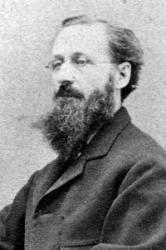
1831 - 1912 Person Name: Thos. E. Perkins Topics: Afflictions Complaint of Composer of "[Thy hands have made and fashioned me]" in Bible Songs Theodore E. Perkins was born at Poughkeepsie, on the Hudson, N.Y., July 21, 1831. His father was a Baptist clergyman. The family of ten brothers and sisters sang and played various instruments, forming among themselves both choir and orchestra. His musical education began at the early age of three years. During his father's pastorate at Hamilton, N. Y., the choir rehearsals were often held at the parsonage, and the leader used to place the three-year-old on a small stool, on the table around which the choir was assembled, giving him a chance to both see and hear. Later on he played the violincello in church, standing on a stool in order to finger the instrument. The home gatherings — especially on Thanksgiving Day, are the recollections among the happiest of his childhood. His father became pastor of the Berean Baptist Church in New York City, in 1839, giving him the opportunity of studying the pianoforte, of which he became a proficient player. His fine alto voice soon gave him notoriety. At the age of nineteen while filling a position as clerk in New York, all his spare time was given to the study of voice and piano. In 1851 he went to Hamilton, N. Y., taught music in Madison University (now Colgate), and in the Female Seminary. In 1854 he went to Port Jervis, N. Y., where he taught singing school, and April 30, 1855, married Mary Frances Caskey, who was for years his soprano soloist in many musical Festivals and Conventions. Soon after marriage he removed to Salem, N. J., where his lifework as singing school teacher really began, including Bridgeton and prominent towns in southern New Jersey. During the summer of 1856 he and his wife were pupils of the Normal Academy of Music at North Reading, Mass., conducted by Drs. Lowell Mason and Geo. F. Root. During 1856-1858 he was given the position of assistant teacher and manager. His association with these two great men gave an inspiration to all his future work. In 1859 he was co-principal with Wm. B. Bradbury at the Normal Academy of Music, Geneseo, N. Y. He remained at Geneseo until 1863. Professor Perkins also held very successful schools in North Pelham Province of Ontario, Canada, and in 1864-1868 was principal in schools at Tunkhannock and Meadville, Pa. In 1860, The Olive Branch, his first book of church music, was published by F. J. Huntington, New York City, the sales reaching 100,000. Next was Oriental, which sold over 30,000. The Union, Glees and Anthems, and Sabbath Anthems followed ; then The Sacred Lute, which sold over 300,000. His Sunday-school books commenced with The Evergreen, followed by the Shining Star and New Shining Star. Then came Psalm King, which was the last of the books published by Mr. Huntington. Hallowed Songs was published by Philip Phillips; The Sunday School Banner was published by Wm. B. Bradbury. The Royal Standard was published in Toronto, Canada. The Golden Promise, Sabbath Carols, The Mount Zion Collection were published under his own supervision. His Free Sunday School Songs several times numbered over 500,000 a month. Coronation Songs with Rev. Dr. Deems as hymn editor was published by A. S. Barnes Co., who also published Psalms and Hymns and Spiritual Songs, in which Dr. C. S. Robinson was hymn editor, who with Professor Perkins edited Calvary Songs, published by the American S. S. Union. Gospel Tent Songs was evangelical. The Safe-Guard Singer was his temperance book. Mr. Perkins was musical director in the following churches in Brooklyn: The Lafayette Avenue Presbyterian Church, Rev. Dr. Cuyler; Strong Place Baptist Church, Rev. E. E. L. Taylor, D. D.; Madison Avenue Baptist Church, Rev. H. G. Weston, D. D., L. L. D.; Fifth Avenue Presbyterian Church, Rev. Dr. Rice, followed by Dr. John Hall; The Memorial Presbyterian Church, Rev. Dr. C. S. Robinson, who was his close friend; The Church of the Holy Trinity, Rev. Dr. Tyng, Jr. ; Trinity Baptist Church, Rev. Dr. J. B. Simmons, and Washington Square M. E. Church. In Philadelphia: The Fifth Baptist Church, Rev. Dr. Chase; The Eleventh Baptist Church, Rev. Dr. Colman; The Tabernacle M. E. Church, Rev. George Gaul, D. D. He was leader and singer in Evangelistic Services, at the Rink, The Old Madison Square Garden and Cooper Union, all of New York City. The music of the first great meeting of the world's Evangelical Alliance, held for ten days in New York City, was under his direction, as was the first National Sunday School convention, held in Newark, N. J. He was also conductor at the Golden Anniversary of the Female Guardian Society, leading a chorus of forty-two hundred children. In the opening chorus, Great is the Lord, by Dr. Calcott, the word "Great" was given with so much decision and power that the clergymen on the platform sprang to their feet and remained standing until the chorus was finished. He taught voice culture in Princeton and Lafayette Universities, The Union Theological Seminary, New York City; Crozer Seminary, Chester, Pa., and organized the music department of Temple University, Philadelphia, continuing in charge four years. He had charge of the children's choir of Howard Mission, New York City, for twenty-five years, and thinks that some of the happiest and most restful of the working hours were spent in teaching the poor children of the fourth and sixth wards to sing the Gospel. Mr. Sankey said to Mr. Perkins that " Jesus of Nazareth was my banner song for eight years." Jesus is Mine has been sung at the Christian's death-bed, the grave, and once as the convict was going to the scaffold. His Christmas Carol Sweetly Carol had a very large sale in this country, and was republished in England, France, Italy, and Germany. For a period of forty years he has made the study of the voice special work. The most thorough investigations of the voice and its possibilities were made with the assistance of the late John Howard, extending over a period of twenty-five years, during which he has had the care of over two thousand voices. He published a work entitled, Physiological Yoice Culture, edited by his son, the late T. Edward Perkins, M. D., physician and throat specialist of Philadelphia. Mr. Perkins also completed a method of voice culture based on the principles of John Howard's Physiology of Artistic Singing." During these years of work he has found time to edit thirty-four books of church, Sunday-school, day-school, and glee music, the larger portion having been previously mentioned. Also songs and ballads in sheet form, and a cantata entitled, The Excursion, libretto by Fanny Crosby, with whom there has existed an unbroken friendship for over forty years. -Biography of Gospel Song and hymn Writers

John E. Gould

1821 - 1875 Person Name: John H. Gould Topics: Prayer Complaint in Composer of "BERA" in The Psalter John Edgar Gould USA 1821-1875. Born in Bangor, ME, he became a musician. He managed music stores in New York City and Philadelphia, PA., the latter with composer partner, William Fischer. He married Josephine Louisa Barrows, and they had seven children: Blanche, Marie, Ida, John, Josephine, Josephine, and Augusta. He compiled eight religious songbooks from 1846 thru 1869. He died while traveling in Algiers, Africa, and was buried in Philadelphia, PA. John Perry

Ignaz Pleyel

1757 - 1831 Person Name: Ignace J. Pleyel Topics: Prayer Complaint in Composer of "[Who is he that fears the Lord]" in Bible Songs Ignaz Joseph Pleyel; b. Ruppertstahl, near Vienna, 1757; d. Parice France, 1831 Evangelical Lutheran Hymnal, 1908

Anonymous

Topics: Afflictions Complaint of Composer of "CANA" in The Psalter In some hymnals, the editors noted that a hymn's author is unknown to them, and so this artificial "person" entry is used to reflect that fact. Obviously, the hymns attributed to "Author Unknown" "Unknown" or "Anonymous" could have been written by many people over a span of many centuries.

U. C. Burnap

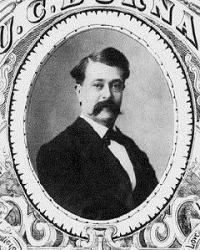
1834 - 1900 Topics: Afflictions Complaint of; Prayer Complaint in Composer of "[O God, the heathen hosts]" in Bible Songs Burnap ran a dry goods bus­iness in Brook­lyn, though he grad­u­at­ed from the Un­i­ver­si­ty of Par­is with a mu­sic de­gree, and for 37 years played the or­gan at the Re­formed Church in Brook­lyn Heights. He was a pro­li­fic com­pos­er, and helped ed­it the fol­low­ing: Hymns of the Church, 1869 Hymns of Pray­er and Praise, 1871 Hymns and Songs of Praise, 1874 --The Cyber Hymnal™ There is uncertainty about his middle name. Reynolds and the Library of Congress say it was Christopher. A contemporary obituary relied on by "The Cyber Hymnal™" says it was Cicero. It appears that there was another Uzziah C[icero] Burnap who lived (per LOC) 1794-1854.

William Tans'ur

1699 - 1783 Topics: Prayer Complaint in Composer of "ROTHWELL" in The Psalter William Tansur, b. about 1700, Dunchurch of Barnes; d. 1783, St. Neots Evangelical Lutheran Hymnal, 1908 Also known as Tansur; Tanzer; le Tansur

James Langran

1835 - 1909 Topics: Prayer Complaint in Composer of "LANGRAN" in The Psalter James Langran (b. St. Pancras, London, England, November 10, 1835; d. Tottenham, London, England, June 8, 1909) studied organ as a youth but did not receive his Bachelor of Music degree from Oxford until he was forty-nine years old. He had several organist positions–the longest was at St. Paul's Church, Tottenham, England, from 1870 to 1909. He also taught music at St. Katherine's Training College for Schoolmistresses (1878-1909). Music editor of theNew Mitre Hymnal (1875), Langran composed around fifty hymn tunes and contributed several of them to early editions of Hymns Ancient and Modern. Bert Polman

George J. Elvey

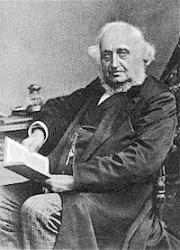
1816 - 1893 Topics: Afflictions Complaint of Composer of "[Defend me, Lord, from shame]" in Bible Songs George Job Elvey (b. Canterbury, England, 1816; d. Windlesham, Surrey, England, 1893) As a young boy, Elvey was a chorister in Canterbury Cathedral. Living and studying with his brother Stephen, he was educated at Oxford and at the Royal Academy of Music. At age nineteen Elvey became organist and master of the boys' choir at St. George Chapel, Windsor, where he remained until his retirement in 1882. He was frequently called upon to provide music for royal ceremonies such as Princess Louise's wedding in 1871 (after which he was knighted). Elvey also composed hymn tunes, anthems, oratorios, and service music. Bert Polman

John Bacchus Dykes

1823 - 1876 Person Name: John B. Dykes Topics: Afflictions Complaint of; Prayer Complaint in Composer of "ST. SYLVESTER" in The Psalter As a young child John Bacchus Dykes (b. Kingston-upon-Hull' England, 1823; d. Ticehurst, Sussex, England, 1876) took violin and piano lessons. At the age of ten he became the organist of St. John's in Hull, where his grandfather was vicar. After receiving a classics degree from St. Catherine College, Cambridge, England, he was ordained in the Church of England in 1847. In 1849 he became the precentor and choir director at Durham Cathedral, where he introduced reforms in the choir by insisting on consistent attendance, increasing rehearsals, and initiating music festivals. He served the parish of St. Oswald in Durham from 1862 until the year of his death. To the chagrin of his bishop, Dykes favored the high church practices associated with the Oxford Movement (choir robes, incense, and the like). A number of his three hundred hymn tunes are still respected as durable examples of Victorian hymnody. Most of his tunes were first published in Chope's Congregational Hymn and Tune Book (1857) and in early editions of the famous British hymnal, Hymns Ancient and Modern. Bert Polman

Pages


Export as CSV
It looks like you are using an ad-blocker. Ad revenue helps keep us running. Please consider white-listing Hymnary.org or getting Hymnary Pro to eliminate ads entirely and help support Hymnary.org.