You help make Hymnary.org possible. More than 10 million people from 200+ countries found hymns, liturgical resources and encouragement on Hymnary.org in 2025, including you. Every visit affirms the global impact of this ministry.

If Hymnary has been meaningful to you this year, would you take a moment today to help sustain it? A gift of any size—paired with a note of encouragement if you wish—directly supports the server costs, research work and curation that keep this resource freely available to the world.

Give securely online today, or mail a check to:
Hymnary.org
Calvin University
3201 Burton Street SE
Grand Rapids, MI 49546

Thank you for your partnership, and may the hope of Advent fill your heart.

Person Results

Topics:death+and+funeral
In:people

Planning worship? Check out our sister site, ZeteoSearch.org, for 20+ additional resources related to your search.
Showing 21 - 30 of 286Results Per Page: 102050

Richard Redhead

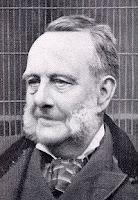
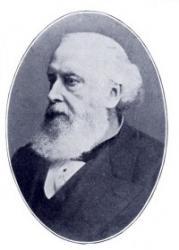
1820 - 1901 Person Name: Richard Redhead (1820-1901) Topics: Funerals and The Departed; Atonement; Death and Bereavement; God in judgement and justice; Grace; Judgement; Other Saints and Festivals Peter and Paul, Apostles; Proper 16 Year C; Proper 21 Year A; Proper 4 Year A; Sin Composer of "PETRA" in Ancient and Modern Richard Redhead (b. Harrow, Middlesex, England, 1820; d. Hellingley, Sussex, England, 1901) was a chorister at Magdalen College, Oxford. At age nineteen he was invited to become organist at Margaret Chapel (later All Saints Church), London. Greatly influencing the musical tradition of the church, he remained in that position for twenty-five years as organist and an excellent trainer of the boys' choirs. Redhead and the church's rector, Frederick Oakeley, were strongly committed to the Oxford Movement, which favored the introduction of Roman elements into Anglican worship. Together they produced the first Anglican plainsong psalter, Laudes Diurnae (1843). Redhead spent the latter part of his career as organist at St. Mary Magdalene Church in Paddington (1864-1894). Bert Polman

John Bacchus Dykes

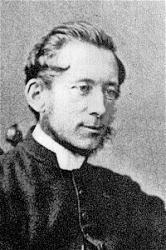
1823 - 1876 Person Name: John Bacchus Dykes (1823-1876) Topics: Assurance; Children and All-Age Worship; Comfort and Consolation; Death and Bereavement; God Presence of; Proper 19 Year C; Providence; The Fourth Sunday of Easter Year B; The Fourth Sunday of Lent Year A; Trust and Confidence; Funerals and The Departed Composer of "DOMINUS REGIT ME" in Ancient and Modern As a young child John Bacchus Dykes (b. Kingston-upon-Hull' England, 1823; d. Ticehurst, Sussex, England, 1876) took violin and piano lessons. At the age of ten he became the organist of St. John's in Hull, where his grandfather was vicar. After receiving a classics degree from St. Catherine College, Cambridge, England, he was ordained in the Church of England in 1847. In 1849 he became the precentor and choir director at Durham Cathedral, where he introduced reforms in the choir by insisting on consistent attendance, increasing rehearsals, and initiating music festivals. He served the parish of St. Oswald in Durham from 1862 until the year of his death. To the chagrin of his bishop, Dykes favored the high church practices associated with the Oxford Movement (choir robes, incense, and the like). A number of his three hundred hymn tunes are still respected as durable examples of Victorian hymnody. Most of his tunes were first published in Chope's Congregational Hymn and Tune Book (1857) and in early editions of the famous British hymnal, Hymns Ancient and Modern. Bert Polman

William Williams

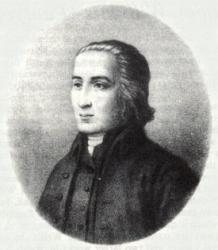
1717 - 1791 Topics: The Glory of the Triune God Providence; New Heaven and a New Earth Death and Eternal Life; Adoration and Praise; Assurance; Funerals and Memorial Services; Guidance; Pilgrimage; Providence Author of "Guide Me, O Thou Great Jehovah" in The United Methodist Hymnal William Williams, called the "Watts of Wales," was born in 1717, at Cefn-y-coed, near Llandovery, Carmarthenshire. He originally studied medicine, but abandoned it for theology. He was ordained Deacon in the Church of England, but was refused Priest's Orders, and subsequently attached himself to the Calvinistic Methodists. For half a century he travelled in Wales, preaching the Gospel. He died in 1791. Williams composed his hymns chiefly in the Welsh language; they are still largely used by various religious bodies in the principality. Many of his hymns have appeared in English, and have been collected and published by Sedgwick. His two principal poetical works are "Hosannah to the Son of David," and "Gloria in Excelsis." --Annotations of the Hymnal, Charles Hutchins, M.A. 1872. ===================== Williams, William, of Pantycelyn, was the Sweet Singer of Wales. He was born at Cefn-y-Coed, in the Parish of Llanfair-y-bryn, near Llandovery, in 1717. He was ordained a deacon of the Established Church in 1740, by Dr. Claget, Bishop of St. Davids, and for three years he served the Curacies of Llan-wrtyd and Llanddewi-Abergwesyn. He never received Priest's Orders. He became early acquainted with the revivalist Daniel Rowlands, and for thirty-five years he preached once a month at Llanllian and Caio and Llansawel, besides the preaching journeys he took in North and South Wales. He was held in great esteem as a preacher. In 1744 his first book of hymns appeared under the title of Halleluiah, and soon ran through three editions. In1762, he published another book under the title of Y Môr o Wydr, which soon went through five editions. His son John published an excellent edition of his hymns in the year 181lines In addition to his Welsh hymns Williams also published several in English as:— (1.) Hosannah to the Son of David; or, Hymns of Praise to God, For our glorious Redemption by Christ. Some few translated from the Welsh Hymn-Book, but mostly composed on new Subjects. By William Williams. Bristol: Printed by John Grabham, in Narrow-Wine Street, 1759. This contains 51 hymns of which 11 are translated from his Welsh hymns. This little book was reprinted by D. Sedgwick in 1859. (2.) Gloria in Excelsis: or, Hymns of Praise to God and the Lamb. By W. Williams . . . Carmarthen. Printed for the Author by John Ross, removed to Priory Street, near the Church, M.DCC.LXXI. This contains 70 hymns, not including parts. From these volumes the following hymns are in common use:— i. From the Hosannah, 1759:— 1. Jesus, my Saviour is enough. Jesus, All in All. 2. My God, my God, Who art my all. Communion with God desired. 3. The enormous load of human guilt. God's love unspeakable. ii. From the Gloria in Excelsis, 1772. 4. Awake, my soul, and rise. Passiontide. 5. Beneath Thy Cross I lay me down. Passiontide. 6. Hark! the voice of my Beloved. The Voice of Jesus. 7. Jesus, lead us with Thy power. Divine Guidance Desired. Sometimes given as "Father, lead us with Thy power." 8. Jesus, Whose Almighty sceptre. Jesus as King. 9. Saviour, look on Thy beloved. The Help of Jesus desired. 10. White and ruddy is my Beloved. Beauties of Jesus. Williams is most widely known through his two hymns, "Guide me, O Thou great Jehovah," and "O'er those gloomy hills of darkness." Williams died at Pantycelyn, Jan. 11, 1791. [Rev. W. Glanffrwd Thomas] -- John Julian, Dictionary of Hymnology (1907) ================= See also in: Hymn Writers of the Church

Henry Francis Lyte

1793 - 1847 Person Name: Henry F. Lyte Topics: Particular Times of Worship Evening; New Heaven and a New Earth Death and Eternal Life; Assurance; Calmness and Serenity; Comfort; Eternal Life; Evening Prayer; Funerals and Memorial Services; Grief; Jesus Christ Cross; Jesus Christ Presence Author of "Abide with Me" in The United Methodist Hymnal Lyte, Henry Francis, M.A., son of Captain Thomas Lyte, was born at Ednam, near Kelso, June 1, 1793, and educated at Portora (the Royal School of Enniskillen), and at Trinity College, Dublin, of which he was a Scholar, and where he graduated in 1814. During his University course he distinguished himself by gaining the English prize poem on three occasions. At one time he had intended studying Medicine; but this he abandoned for Theology, and took Holy Orders in 1815, his first curacy being in the neighbourhood of Wexford. In 1817, he removed to Marazion, in Cornwall. There, in 1818, he underwent a great spiritual change, which shaped and influenced the whole of his after life, the immediate cause being the illness and death of a brother clergyman. Lyte says of him:— "He died happy under the belief that though he had deeply erred, there was One whose death and sufferings would atone for his delinquencies, and be accepted for all that he had incurred;" and concerning himself he adds:— "I was greatly affected by the whole matter, and brought to look at life and its issue with a different eye than before; and I began to study my Bible, and preach in another manner than I had previously done." From Marazion he removed, in 1819, to Lymington, where he composed his Tales on the Lord's Prayer in verse (pub. in 1826); and in 1823 he was appointed Perpetual Curate of Lower Brixham, Devon. That appointment he held until his death, on Nov. 20, 1847. His Poems of Henry Vaughan, with a Memoir, were published in 1846. His own Poetical works were:— (1) Poems chiefly Religious 1833; 2nd ed. enlarged, 1845. (2) The Spirit of the Psalms, 1834, written in the first instance for use in his own Church at Lower Brixham, and enlarged in 1836; (3) Miscellaneous Poems (posthumously) in 1868. This last is a reprint of the 1845 ed. of his Poems, with "Abide with me" added. (4) Remains, 1850. Lyte's Poems have been somewhat freely drawn upon by hymnal compilers; but by far the larger portion of his hymns found in modern collections are from his Spirit of the Psalms. In America his hymns are very popular. In many instances, however, through mistaking Miss Auber's (q. v.) Spirit of the Psalms, 1829, for his, he is credited with more than is his due. The Andover Sabbath Hymn Book, 1858, is specially at fault in this respect. The best known and most widely used of his compositions are "Abide with me, fast falls the eventide;” “Far from my heavenly home;" "God of mercy, God of grace;" "Pleasant are Thy courts above;" "Praise, my soul, the King of heaven;" and "There is a safe and secret place." These and several others are annotated under their respective first lines: the rest in common use are:— i. From his Poems chiefly Religious, 1833 and 1845. 1. Above me hangs the silent sky. For Use at Sea. 2. Again, 0 Lord, I ope mine eyes. Morning. 3. Hail to another Year. New Year. 4. How good, how faithful, Lord, art Thou. Divine care of Men. 5. In tears and trials we must sow (1845). Sorrow followed by Joy. 6. My [our] rest is in heaven, my [our] rest is not here. Heaven our Home. 7. 0 Lord, how infinite Thy love. The Love of God in Christ. 8. Omniscient God, Thine eye divine. The Holy Ghost Omniscient. 9. The leaves around me falling. Autumn. 10. The Lord hath builded for Himself. The Universe the Temple of God. 11. Vain were all our toil and labour. Success is of God. 12. When at Thy footstool, Lord, I bend. Lent. 13. When earthly joys glide swift away. Ps. cii. 14. Wilt Thou return to me, O Lord. Lent. 15. With joy we hail the sacred day. Sunday. ii. From his Spirit of the Psalms, 1834. 16. Be merciful to us, O God. Ps. lvii. 17. Blest is the man who knows the Lord. Ps. cxii. 18. Blest is the man whose spirit shares. Ps. xli. 19. From depths of woe to God I cry. Ps. cxxxx. 20. Gently, gently lay Thy rod. Ps. vi. 21. Glorious Shepherd of the sheep. Ps. xxiii. 22. Glory and praise to Jehovah on high. Ps. xxix. 23. God in His Church is known. Ps. lxxvi. 24. God is our Refuge, tried and proved. Ps. xlvi. 25. Great Source of my being. Ps. lxxiii. 26. Hear, O Lord, our supplication. Ps. lxiv. 27. How blest the man who fears the Lord. Ps.cxxviii. 28. Humble, Lord, my haughty spirit. Ps. cxxxi. 29. In this wide, weary world of care. Ps. cxxxii. 30. In vain the powers of darkness try. Ps.lii. 31. Jehovah speaks, let man be awed. Ps. xlix. 32. Judge me, O Lord, and try my heart. Ps. xxvi. 33. Judge me, O Lord, to Thee I fly. Ps. xliii. 34. Lord, I have sinned, but O forgive. Ps. xli. 35. Lord, my God, in Thee I trust. Ps. vii. 36. Lord of the realms above, Our Prophet, &c. Ps.xlv. 37. Lone amidst the dead and dying. Ps. lxii. 38. Lord God of my salvation. Ps. lxxxviii. 39. Lord, I look to Thee for all. Ps. xxxi. 40. Lord, I would stand with thoughtful eye. Ps. lxix. 41. Lord, my God, in Thee I trust. Ps. vii. 42. My God, my King, Thy praise I sing. Ps. cviii. 43. My God, what monuments I see. Ps. xxxvi. 44. My spirit on [to] Thy care. Ps. xxxi. 45. My trust is in the Lord. Ps. xi. 46. Not unto us, Almighty Lord [God]. Ps. cxv. 47. O God of glory, God of grace. Ps. xc. 48. O God of love, how blest are they. Ps. xxxvii. 49. O God of love, my God Thou art. Ps. lxiii. 50. O God of truth and grace. Ps. xviii. 51. O had I, my Saviour, the wings of a dove. Ps. lv. 52. O how blest the congregation. Ps. lxxxix. 53. O how safe and [how] happy he. Ps. xci. 54. O plead my cause, my Saviour plead. Ps. xxxv. 55. O praise the Lord, 'tis sweet to raise. Ps. cxlvii. 56. O praise the Lord; ye nations, pour. Ps. cxvii. 57. O praise ye the Lord With heart, &c. Ps. cxlix. 58. O that the Lord's salvation. Ps. xiv. 59. O Thou Whom thoughtless men condemn. Ps. xxxvi. 60. Of every earthly stay bereft. Ps. lxxiv. 61. Our hearts shall praise Thee, God of love. Ps. cxxxviii. 62. Pilgrims here on earth and strangers. Ps. xvi. 63. Praise for Thee, Lord, in Zion waits. Ps. lxv. 64. Praise to God on high be given. Ps. cxxxiv. 65. Praise ye the Lord, His servants, raise. Ps. cxiii. 66. Redeem'd from guilt, redeem'd from fears. Ps. cxvi. 67. Save me by Thy glorious name. Ps. liv. 68. Shout, ye people, clap your hands. Ps. xlvii. 69. Sing to the Lord our might. Ps. lxxxi. 70. Strangers and pilgrims here below. Ps. cix. 71. Sweet is the solemn voice that calls. Ps. cxxii. 72. The Church of God below. Ps. lxxxvii. 73. The Lord is King, let earth be glad. Ps. xcvii. 74. The Lord is on His throne. Ps. xciii. 75. The Lord is our Refuge, the Lord is our Guide. Ps. xlvii. 76. The mercies of my God and King. Ps. lxxxix. 77. The Lord Who died on earth for men. Ps. xxi. 78. Tis a pleasant thing to fee. Ps. cxxxiii. 79. Thy promise, Lord, is perfect peace. Ps. iii. 80. Unto Thee I lift mine [my] eyes. Ps. cxxiii. 81. Whom shall [should] we love like Thee? Ps. xviii. Lyte's versions of the Psalms are criticised where their sadness, tenderness and beauty are set forth. His hymns in the Poems are characterized by the same features, and rarely swell out into joy and gladness. --John Julian, Dictionary of Hymnology (1907) ================== Lyte, Henry Francis, p. 706, i. Additional versions of Psalms are in common use:-- 1. Lord, a thousand foes surround us. Psalms lix. 2. Praise, Lord, for Thee in Zion waits. Psalms lxv. 3. The Christian like his Lord of old. Psalms cxl. 4. The Lord of all my Shepherd is. Psalms xxiii. 5. The Lord of heaven to earth is come. Psalms xcviii. 6. Thy mercy, Lord, the sinner's hope. Psalms xxxvi. 7. To Thee, O Lord, in deep distress. Psalms cxlii. Sometimes given as "To God I turned in wild distress." 8. Uphold me, Lord, too prone to stray. Psalms i. 9. When Jesus to our [my] rescue came. Psalms cxxvi. These versions appeared in the 1st edition of Lyte's Spirit of the Psalms, 1834. It must be noted that the texts of the 1834, the 1836, and the 3rd ed., 1858, vary considerably, but Lyte was not responsible for the alterations and omissions in the last, which was edited by another hand for use at St. Mark's, Torquay. Lyte's version of Psalms xxix., "Glory and praise to Jehovah on high" (p. 706, ii., 22), first appeared in his Poems, 1st ed., 1833, p. 25. Read also No. 39 as "Lord, I look for all to Thee." --John Julian, Dictionary of Hymnology, Appendix, Part II (1907)

Sydney H. Nicholson

1875 - 1947 Person Name: Sydney Hugo Nicholson (1875-1947) Topics: Funerals and The Departed; National and Remembrance; Death and Bereavement; God faithfulness of in creation; God Protection of; New Year; Other Saints and Festivals Remembrance Sunday; Remembrance Sunday; The Second Sunday before Advent Year A Composer (descant) of "ST ANNE" in Ancient and Modern Sydney H. Nicholson, (b. St. Marylebone, London, England, 1875; d. Ashford, Kent, England, 1947) was an organist and church music educator who greatly influenced English hymnody. Educated at Oxford's New College, the Royal College of Music in London, and in Frankfurt, Germany, he became organist at several famous cathedrals, including Westminster Abbey (1919-1928). Nicholson founded and administered the School of English Church Music at Chislehurst in 1927; this important institution, with branches throughout the English-speaking world, was renamed the Royal School of Church Music in 1945. Located in Canterbury after World War II, its headquarters were moved to Addington Palace, Croydon, in 1954. Nicholson was music adviser for the 1916 Supplement of Hymns Ancient and Modern and prepared the way for its 1950 edition. He wrote Church Music: a Practical Handbook (1920) and Quires and Places Where They Sing (1932) and composed operettas, anthems, and hymn tunes. In 1938 he was knighted for his contributions to church music. Bert Polman

Augustus Toplady

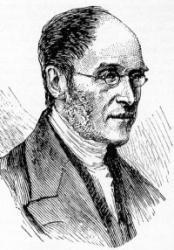
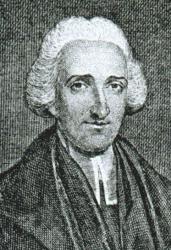
1740 - 1778 Person Name: Augustus Montague Toplady (1740-1778) Topics: Funerals and The Departed; Atonement; Death and Bereavement; God in judgement and justice; Grace; Judgement; Other Saints and Festivals Peter and Paul, Apostles; Proper 16 Year C; Proper 21 Year A; Proper 4 Year A; Sin Author of "Rock of ages, cleft for me" in Ancient and Modern Toplady, Augustus Montague, the author of "Rock of Ages," was born at Farnham, Surrey, November 4, 1740. His father was an officer in the British army. His mother was a woman of remarkable piety. He prepared for the university at Westminster School, and subsequently was graduated at Trinity College, Dublin. While on a visit in Ireland in his sixteenth year he was awakened and converted at a service held in a barn in Codymain. The text was Ephesians ii. 13: "But now, in Christ Jesus, ye who sometimes were far off are made nigh by the blood of Christ." The preacher was an illiterate but warm-hearted layman named Morris. Concerning this experience Toplady wrote: "Strange that I, who had so long sat under the means of grace in England, should be brought nigh unto God in an obscure part of Ireland, amidst a handful of God's people met together in a barn, and under the ministry of one who could hardly spell his name. Surely this is the Lord's doing, and it is marvelous." In 1758, through the influence of sermons preached by Dr. Manton on the seventeenth chapter of John, he became an extreme Calvinist in his theology, which brought him later into conflict with Mr. Wesley and the Methodists. He was ordained to the ministry in the Church of England in 1762, and in 1768 he became vicar of Broadhembury, a small living in Devonshire, which he held until his death. The last two or three years of his life he passed in London, where he preached in a chapel on Orange Street. His last sickness was of such a character that he was able to make a repeated and emphatic dying testimony. A short time before his death he asked his physician what he thought. The reply was that his pulse showed that his heart was beating weaker every day. Toplady replied with a smile: "Why, that is a good sign that my death is fast approaching; and, blessed be God, I can add that my heart beats stronger and stronger every day for glory." To another friend he said: "O, my dear sir, I cannot tell you the comforts I feel in my soul; they are past expression. . . . My prayers are all converted into praise." He died of consumption August 11, 1778. His volume of Psalms and Hymns for Public and Private Worship was published in 1776. Of the four hundred and nineteen hymns which it contained, several were his own productions. If on a quiet sea 446 Rock of ages, cleft for me 279 Hymn Writers of the Church, 1915 by Charles S. Nutter =============================================== Toplady, Augustus Montague, M.A. The life of Toplady has been repeatedly and fully written, the last, a somewhat discursive and slackly put together book, yet matterful, by W. Winters (1872). Summarily, these data may be here given: he was born at Farnham, in Surrey, on November 4, 1740. His father, Richard Toplady, was a Major in the British array, and was killed at the siege of Carthagena (1741) soon after the birth of his son. His widowed mother placed him at the renowned Westminster school, London. By-and-by circumstances led her to Ireland, and young Augustus was entered at Trinity College, Dublin, where he completed his academical training, ultimately graduating M.A. He also received his "new birth" in Ireland under remarkable conditions, as he himself tells us with oddly mixed humility and lofty self-estimate, as "a favourite of heaven," common to his school:— "Strange that I who had so long sat under the means of grace in England should be brought right unto God in an obscure part of Ireland, midst a handful of people met together in a barn, and by the ministry of one who could hardly spell his own name. Surely it was the Lord's doing and is marvellous. The excellency of such power must be of God and cannot be of man. The regenerating spirit breathes not only on whom but likewise, when and where and as He listeth." Toplady received orders in the Church of England on June 6, 1762, and after some time was appointed to Broadhembury. His Psalms and Hymns of 1776 bears that he was then “B.A." and Vicar of Broadhembury. Shortly thereafter be is found in London as minister of the Chapel of the French Calvinists in Leicester Fields. He was a strong and partizan Calvinist, and not well-informed theologically outside of Calvinism. We willingly and with sense of relief leave unstirred the small thick dust of oblivion that has gathered on his controversial writings, especially his scurrilous language to John Wesley because of his Arminianism, as we do John Wesley's deplorable misunderstanding and misrepresentation of Calvinism. Throughout Toplady lacked the breadth of the divine Master's watchword "Forbid him not, for he that is not against us is for us" (St. Luke ix. 50). He was impulsive, rash-spoken, reckless in misjudgment; but a flame of genuine devoutness burned in the fragile lamp of his overtasked and wasted body. He died on August 11, 1778. The last edition of his works is in 6 vols., 8 vo., 1825. An accurate reproduction of most of his genuine hymns was one of the reprints of Daniel Sedgwick, 1860. His name occurs and recurs in contemporary memoirs and ecclesiastical histories, e.g., in Tyerman's Life of John Wesley. The reader will find in their places annotations on the several hymns of Toplady, and specially on his "Rock of Ages,” a song of grace that has given him a deeper and more inward place in millions of human hearts from generation to generation than almost any other hymnologist of our country, not excepting Charles Wesley. Besides the "Rock of Ages" must be named, for power, intensity, and higher afflatus and nicer workmanship, "Object of my first desire,” and "Deathless principle arise." It is to be regretted that the latter has not been more widely accepted. It is strong, firm, stirring, and masterful. Regarded critically, it must be stated that the affectionateness with which Toplady is named, and the glow and passion of his faith and life, and yearning after holiness, have led to an over-exaltation of him as a hymnwriter. Many of his hymns have been widely used, and especially in America, and in the Evangelical hymnbooks of the Church of England. Year by year, however, the number in use is becoming less. The reason is soon found. He is no poet or inspired singer. He climbs no heights. He sounds no depths. He has mere vanishing gleams of imaginative light. His greatness is the greatness of goodness. He is a fervent preacher, not a bard. [Rev. A. B. Grosart, D.D., LL.D.] Toplady's hymns and poetical pieces were published in his:— (1) Poems on Sacred Subjects wherein The Fundamental Doctrines of Christianity, with many other interesting Points, are occasionally introduced. . . Dublin: Printed by S. Powell, in Crane-lane, MDCCLIX.; (2) his Psalms & Hymns for Public and Private Worship, 1776; (3) in The Gospel Magazine, 1771-1776; and (4) in Hymns and Sacred Poems on a variety of Divine Subjects, &c. D. Sedgwick's reprint, 1860. His Works, with a Memoir by W. Row, were published in 6 volumes, in 1794. Walter How was also the editor of the 2nd and some later editions of the Psalms & Hymns. He was a most careless editor, and attributed several hymns by C. Wesley and others to Toplady. The following additional hymns in common use together with centos indicated in the sub-lines, are from:— i. His Poems on Sacred Subjects, 1759. 1. Can my heaven-born soul submit? All for Christ. 2. Come from on high, my King and God. Holiness desired. (1.) 0 might this worthless heart of mine. 3. Earnest of future bliss. The Witness of the Spirit. 4. From Thy supreme tribunal, Lord. Christ's Righteousness a Refuge. (1.) The spotless Saviour lived for me. 5. Great God, Whom heaven, and earth, and sea. For Peace. 6. I saw, and lo! a countless throng. Saints' Days. Revised form in the Gospel Magazine, 1774, p. 449. 7. Immovable our hope remains. Divine Faithfulness. 8. Jesus, God of love, attend. Divine Worship. Pt. ii. is "Prayer can mercy's door unlock." 9. Jesus, Thy power I fain would feel. Lent. 10. Lord, I feel a carnal mind. Mind of Christ desired. 11. My yielding heart dissolves as wax. On behalf of Arians, &c. (1.) 0 Jesus, manifest Thy grace. 12. Not to myself I owe. Praise for Conversion, (1.) Not to ourselves we owe. (2.) The Father's grace and love. 13. 0 that my heart was right with Thee. Dedication to God desired. 14. 0 Thou that hearest the prayer of faith. Christ the Propitiation. 15. 0 Thou Who didst Thy glory leave. Thanksgiving for Redemption. 16. 0 when wilt Thou my Saviour be. Trust in Jesus. (1.) Jesus, the sinner's Rest Thou art. 17. Redeemer, whither should I flee? Safety in the Cross. 18. Remember, Lord, that Jesus bled. Pardon. 19. Surely Christ thy griefs hath borne. Redemption. Revised text in Gospel Magazine, 1774, p. 548. (1.) Weary sinner, keep thine eyes. (2.) Weeping soul, no longer mourn. ii. From the Gospel Magazine. 20. Compared with Christ, in all besides. Christ All in All. Feb. 1772. 21. Eternal Hallelujahs Be to the Father given. Holy Trinity, Dec. 1774. 22. From whence this fear and unbelief. Reviving Faith, Feb. 1772. 23. How vast the benefits divine. Redemption. Dec. 1774. From this "Not for the works which we have done" is taken. 24. Whom have I in heaven but Thee? Christ All and in All, Feb. 1772. From this "If my Lord Himself reveal" is taken. 25. Jesus, immutably the same. Jesus, the True Vine. June, 1771. All these hymns, together with "O precious blood, 0 glorious death" (Death of Christ), are in D. Sedgwick's reprint of Toplady's Hymns, &c, 1860. We have met with several other hymns to which Toplady's name is appended, but for this we can find no authority whatever. -- Excerpts from John Julian, Dictionary of Hymnology (1907)

St. Francis of Assisi

1182 - 1226 Person Name: Saint Francis of Assisi Topics: Animals; Creation Beauty of; Gathering; Worship; Animals; Creation Beauty of; Death and Eternal Life; Funeral / Memorial Service; Gathering; Heritage Before 1500; Worship Author of "All Creatures, Worship God Most High" in Voices Together St. Francis of Assisi (Italian: San Francesco d'Assisi, born Giovanni di Pietro di Bernardone, but nicknamed Francesco ("the Frenchman") by his father, 1181/1182 – October 3, 1226) was an Italian Catholic friar and preacher. He founded the men's Order of Friars Minor, the women’s Order of St. Clare, and the Third Order of Saint Francis for men and women not able to live the lives of itinerant preachers followed by the early members of the Order of Friars Minor or the monastic lives of the Poor Clares. Though he was never ordained to the Catholic priesthood, Francis is one of the most venerated religious figures in history. Francis' father was Pietro di Bernardone, a prosperous silk merchant. Francis lived the high-spirited life typical of a wealthy young man, even fighting as a soldier for Assisi. While going off to war in 1204, Francis had a vision that directed him back to Assisi, where he lost his taste for his worldly life. On a pilgrimage to Rome, he joined the poor in begging at St. Peter's Basilica. The experience moved him to live in poverty. Francis returned home, began preaching on the streets, and soon amassed a following. His Order was authorized by Pope Innocent III in 1210. He then founded the Order of Poor Clares, which became an enclosed religious order for women, as well as the Order of Brothers and Sisters of Penance (commonly called the Third Order). In 1219, he went to Egypt in an attempt to convert the Sultan to put an end to the conflict of the Crusades. By this point, the Franciscan Order had grown to such an extent that its primitive organizational structure was no longer sufficient. He returned to Italy to organize the Order. Once his community was authorized by the Pope, he withdrew increasingly from external affairs. In 1223, Francis arranged for the first Christmas manger scene. In 1224, he received the stigmata, making him the first recorded person to bear the wounds of Christ's Passion.He died during the evening hours of October 3, 1226, while listening to a reading he had requested of Psalm 140. On July 16, 1228, he was pronounced a saint by Pope Gregory IX. He is known as the patron saint of animals, the environment, and is one of the two patron saints of Italy (with Catherine of Siena). It is customary for Catholic and Anglican churches to hold ceremonies blessing animals on his feast day of October 4. He is also known for his love of the Eucharist, his sorrow during the Stations of the Cross, and for the creation of the Christmas creche or Nativity Scene. Francis of Assisi was one of seven children born to Pietro, and his wife Pica de Bourlemont, about whom little is known except that she was a noblewoman originally from Provence, France. Pietro was in France on business while Francis was born in Assisi, and Pica had him baptized as Giovanni. When his father returned to Assisi, he took to calling him Francesco ("the Frenchman"), possibly in honour of his commercial success and enthusiasm for all things French. Since the child was renamed in infancy, the change can hardly have had anything to do with his aptitude for learning French, as some have thought. As a youth, Francesco became a devotee of troubadours and was fascinated with all things Transalpine. Although many hagiographers remark about his bright clothing, rich friends, and love of pleasures, his displays of disillusionment toward the world that surrounded him came fairly early in his life, as is shown in the "story of the beggar." In this account, he was selling cloth and velvet in the marketplace on behalf of his father when a beggar came to him and asked for alms. At the conclusion of his business deal, Francis abandoned his wares and ran after the beggar. When he found him, Francis gave the man everything he had in his pockets. His friends quickly chided and mocked him for his act of charity. When he got home, his father scolded him in rage. In 1201, he joined a military expedition against Perugia and was taken as a prisoner at Collestrada, spending a year as a captive. It is possible that his spiritual conversion was a gradual process rooted in this experience. Upon his return to Assisi in 1203, Francis returned to his carefree life and in 1204, a serious illness led to a spiritual crisis. In 1205, Francis left for Puglia to enlist in the army of the Count of Brienne. A strange vision made him return to Assisi, deepening his ecclesiastical awakening. According to the hagiographic legend, thereafter he began to avoid the sports and the feasts of his former companions. In response, they asked him laughingly whether he was thinking of marrying, to which he answered, "yes, a fairer bride than any of you have ever seen," meaning his "Lady Poverty". He spent much time in lonely places, asking God for enlightenment. By degrees he took to nursing lepers, the most repulsive victims in the lazar houses near Assisi. After a pilgrimage to Rome, where he joined the poor in begging at the doors of the churches, he said he had a mystical vision of Jesus Christ in the country chapel of San Damiano, just outside of Assisi, in which the Icon of Christ Crucified said to him, "Francis, Francis, go and repair My house which, as you can see, is falling into ruins." He took this to mean the ruined church in which he was presently praying, and so he sold some cloth from his father's store to assist the priest there for this purpose. His father, Pietro, highly indignant, attempted to change his mind, first with threats and then with beatings. In the midst of legal proceedings before the Bishop of Assisi, Francis renounced his father and his patrimony, laying aside even the garments he had received from him in front of the public. For the next couple of months he lived as a beggar in the region of Assisi. Returning to the countryside around the town for two years, he embraced the life of a penitent, during which he restored several ruined chapels in the countryside around Assisi, among them the Porziuncola, the little chapel of St. Mary of the Angels just outside the town, which later became his favorite abode. At the end of this period (on February 24, 1209, according to Jordan of Giano), Francis heard a sermon that changed his life forever. The sermon was about Matthew 10:9, in which Christ tells his followers they should go forth and proclaim that the Kingdom of Heaven was upon them, that they should take no money with them, nor even a walking stick or shoes for the road. Francis was inspired to devote himself to a life of poverty. Clad in a rough garment, barefoot, and, after the Gospel precept, without staff or scrip, he began to preach repentance. He was soon joined by his first follower, a prominent fellow townsman, the jurist Bernardo di Quintavalle, who contributed all that he had to the work. Within a year Francis had eleven followers. Francis chose never to be ordained a priest and the community lived as "lesser brothers," fratres minores in Latin. The brothers lived a simple life in the deserted lazar house of Rivo Torto near Assisi; but they spent much of their time wandering through the mountainous districts of Umbria, always cheerful and full of songs, yet making a deep impression upon their hearers by their earnest exhortations. Francis' preaching to ordinary people was unusual since he had no license to do so. In 1209 he composed a simple rule for his followers ("friars"), (the Regula primitiva or “Primitive Rule”) which came from verses in the Bible. The rule was “To follow the teachings of our Lord Jesus Christ and to walk in his footsteps.” In 1209, Francis led his first eleven followers to Rome to seek permission from Pope Innocent III to found a new religious Order. Upon entry to Rome, the brothers encountered Bishop Guido of Assisi, who had in his company Giovanni di San Paolo, the Cardinal Bishop of Sabina. The Cardinal, who was the confessor of Pope Innocent III, was immediately sympathetic to Francis and agreed to represent Francis to the pope. Reluctantly, Pope Innocent agreed to meet with Francis and the brothers the next day. After several days, the pope agreed to admit the group informally, adding that when God increased the group in grace and number, they could return for an official admittance. The group was tonsured. This was important in part because it recognized Church authority and prevented his following from possible accusations of heresy, as had happened to the Waldensians decades earlier. Though Pope Innocent initially had his doubts, following a dream in which he saw Francis holding up the Basilica of St. John Lateran (the cathedral of Rome, thus the 'home church' of all Christendom), he decided to endorse Francis' Order. This occurred, according to tradition, on April 16, 1210, and constituted the official founding of the Franciscan Order. The group, then the "Lesser Brothers" (Order of Friars Minor also known as the Franciscan Order), preached on the streets and had no possessions. They were centered in Porziuncola, and preached first in Umbria, before expanding throughout Italy. From then on, his new Order grew quickly with new vocations. When hearing Francis preaching in the church of San Rufino in Assisi in 1209, Clare of Assisi became deeply touched by his message and she realized her calling. Her cousin Rufino, the only male member of the family in their generation, also joined the new Order. On the night of Palm Sunday, March 28, 1211, Clare sneaked out of her family's palace. Francis received Clare at the Porziuncola and hereby established the Order of Poor Ladies, later called Poor Clares. This was an Order for women, and he gave a religious habit, or dress, similar to his own to the noblewoman later known as St. Clare of Assisi, before he then lodged her and a few companions in a nearby monastery of Benedictine nuns. Later he transferred them to San Damiano. There they were joined by many other women of Assisi. For those who could not leave their homes, he later formed the Third Order of Brothers and Sisters of Penance. This was a fraternity composed of either laity or clergy whose members neither withdrew from the world nor took religious vows. Instead, they carried out the principles of Franciscan life in their daily lives. Before long this Order grew beyond Italy. Determined to bring the Gospel to all God's creatures, Francis sought on several occasions to take his message out of Italy. In the late spring of 1212, he set out for Jerusalem, but he was shipwrecked by a storm on the Dalmatian coast, forcing him to return to Italy. On May 8, 1213, he was given the use of the mountain of La Verna (Alverna) as a gift from Count Orlando di Chiusi, who described it as “eminently suitable for whoever wishes to do penance in a place remote from mankind.”[21][22] The mountain would become one of his favourite retreats for prayer. In the same year, Francis sailed for Morocco, but this time an illness forced him to break off his journey in Spain. Back in Assisi, several noblemen (among them Tommaso da Celano, who would later write the biography of St. Francis) and some well-educated men joined his Order. In 1215, Francis went again to Rome for the Fourth Lateran Council. During this time, he probably met a canon, Dominic de Guzman (later to be Saint Dominic, the founder of the Friars Preachers, another Catholic religious order). In 1217, he offered to go to France. Cardinal Ugolino of Segni (the future Pope Gregory IX), an early and important supporter of Francis, advised him against this and said that he was still needed in Italy. In 1219, accompanied by another friar and hoping to convert the Sultan of Egypt or win martyrdom in the attempt, Francis went to Egypt where a Crusader army had been encamped for over a year besieging the walled city of Damietta two miles (3.2 km) upstream from the mouth of one of the main channels of the Nile. The Sultan, al-Kamil, a nephew of Saladin, had succeeded his father as Sultan of Egypt in 1218 and was encamped upstream of Damietta, unable to relieve it. A bloody and futile attack on the city was launched by the Christians on August 29, 1219, following which both sides agreed to a ceasefire which lasted four weeks.It was most probably during this interlude that Francis and his companion crossed the Saracen lines and were brought before the Sultan, remaining in his camp for a few days. The visit is reported in contemporary Crusader sources and in the earliest biographies of Francis, but they give no information about what transpired during the encounter beyond noting that the Sultan received Francis graciously and that Francis preached to the Saracens without effect, returning unharmed to the Crusader camp. No contemporary Arab source mentions the visit. One detail, added by Bonaventure in the official life of Francis (written forty years after the event), concerns an alleged challenge by Francis offering trial-by-fire in order to prove the veracity of the Christian Gospel.Although Bonaventure does not suggest as much, subsequent biographies went further, claiming that a fire was kindled which Francis unhesitatingly entered without suffering burns. Such an incident is depicted in the late 13th-century fresco cycle, attributed to Giotto, in the upper basilica at Assisi (see accompanying illustration). According to some late sources, the Sultan gave Francis permission to visit the sacred places in the Holy Land and even to preach there. All that can safely be asserted is that Francis and his companion left the Crusader camp for Acre, from where they embarked for Italy in the latter half of 1220. Drawing on a 1267 sermon by Bonaventure, later sources report that the Sultan secretly converted or accepted a death-bed baptism as a result of the encounter with Francis. The Franciscan Order has been present in the Holy Land almost uninterruptedly since 1217 when Brother Elias arrived at Acre. It received concessions from the Mameluke Sultan in 1333 with regard to certain Holy Places in Jerusalem and Bethlehem, and (so far as concerns the Catholic Church) jurisdictional privileges from Pope Clement VI in 1342. At Greccio near Assisi, around 1220, Francis celebrated Christmas by setting up the first known presepio or crèche (Nativity scene). His nativity imagery reflected the scene in traditional paintings. He used real animals to create a living scene so that the worshipers could contemplate the birth of the child Jesus in a direct way, making use of the senses, especially sight. Thomas of Celano, a biographer of Francis and Saint Bonaventure both, tell how he only used a straw-filled manger (feeding trough) set between a real ox and donkey. According to Thomas, it was beautiful in its simplicity with the manger acting as the altar for the Christmas Mass. By this time, the growing Order of friars was divided into provinces and groups were sent to France, Germany, Hungary, Spain and to the East. When receiving a report of the martyrdom of five brothers in Morocco, Francis returned to Italy via Venice. Cardinal Ugolino di Conti was then nominated by the Pope as the protector of the Order. The friars in Italy at this time were causing problems, and as such, Francis had to return in order to correct these problems. The Franciscan Order had grown at an unprecedented rate, when compared to prior religious orders, but its organizational sophistication had not kept up with this growth and had little more to govern it than Francis' example and simple rule. To address this problem, Francis prepared a new and more detailed Rule, the "First Rule" or "Rule Without a Papal Bull" (Regula prima Regula non bullata) which again asserted devotion to poverty and the apostolic life. However, it introduced greater institutional structure, although this was never officially endorsed by the pope. On September 29, 1220, Francis handed over the governance of the Order to Brother Peter Catani at the Porziuncola. However, Brother Peter died only five months later, on March 10, 1221, and was buried in the Porziuncola. When numerous miracles were attributed to the deceased brother, people started to flock to the Porziuncola, disturbing the daily life of the Franciscans. Francis then prayed, asking Peter to stop the miracles and to obey in death as he had obeyed during his life. The reports of miracles ceased. Brother Peter was succeeded by Brother Elias as Vicar of Francis. Two years later, Francis modified the "First Rule" (creating the "Second Rule" or "Rule With a Bull"), and Pope Honorius III approved it on November 29, 1223. As the official Rule of the order, it called on the friars "to observe the Holy Gospel of our Lord Jesus Christ, living in obedience without anything of our own and in chastity." In addition, it set regulations for discipline, preaching, and entry into the order. Once the Rule was endorsed by the Pope, Francis withdrew increasingly from external affairs. During 1221 and 1222, Francis crossed Italy, first as far south as Catania in Sicily and afterwards as far north as Bologna. While he was praying on the mountain of Verna, during a forty-day fast in preparation for Michaelmas (September 29), Francis is said to have had a vision on or about September 14, 1224, the Feast of the Exaltation of the Cross, as a result of which he received the stigmata. Brother Leo, who had been with Francis at the time, left a clear and simple account of the event, the first definite account of the phenomenon of stigmata. "Suddenly he saw a vision of a seraph, a six-winged angel on a cross. This angel gave him the gift of the five wounds of Christ." Suffering from these stigmata and from trachoma, Francis received care in several cities (Siena, Cortona, Nocera) to no avail. In the end, he was brought back to a hut next to the Porziuncola. Here, in the place where it all began, feeling the end approaching, he spent the last days of his life dictating his spiritual testament. He died on the evening of October 3, 1226, singing Psalm 142(141) – "Voce mea ad Dominum". --en.wikipedia.org/wiki/Francis_of_Assisi (excerpts)

William Henry Monk

1823 - 1889 Person Name: W. H. Monk Topics: Particular Times of Worship Evening; New Heaven and a New Earth Death and Eternal Life; Assurance; Calmness and Serenity; Comfort; Eternal Life; Evening Prayer; Funerals and Memorial Services; Grief; Jesus Christ Cross; Jesus Christ Presence Composer of "EVENTIDE" in The United Methodist Hymnal William H. Monk (b. Brompton, London, England, 1823; d. London, 1889) is best known for his music editing of Hymns Ancient and Modern (1861, 1868; 1875, and 1889 editions). He also adapted music from plainsong and added accompaniments for Introits for Use Throughout the Year, a book issued with that famous hymnal. Beginning in his teenage years, Monk held a number of musical positions. He became choirmaster at King's College in London in 1847 and was organist and choirmaster at St. Matthias, Stoke Newington, from 1852 to 1889, where he was influenced by the Oxford Movement. At St. Matthias, Monk also began daily choral services with the choir leading the congregation in music chosen according to the church year, including psalms chanted to plainsong. He composed over fifty hymn tunes and edited The Scottish Hymnal (1872 edition) and Wordsworth's Hymns for the Holy Year (1862) as well as the periodical Parish Choir (1840-1851). Bert Polman

Johnson Oatman, Jr.

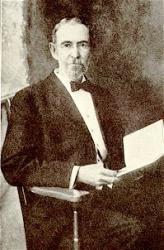
1856 - 1922 Person Name: Johnson Oatman, Jr., 1856-1926 Topics: The Christian Life Death and Life Eternal; Funeral Author of "If I Walk in the Pathway of Duty (The Last Mile of the Way)" in African Methodist Episcopal Church Hymnal Johnson Oatman, Jr., son of Johnson and Rachel Ann Oatman, was born near Medford, N. J., April 21, 1856. His father was an excellent singer, and it always delighted the son to sit by his side and hear him sing the songs of the church. Outside of the usual time spent in the public schools, Mr. Oatman received his education at Herbert's Academy, Princetown, N. J., and the New Jersey Collegiate Institute, Bordentown, N. J. At the age of nineteen he joined the M.E. Church, and a few years later he was granted a license to preach the Gospel, and still later he was regularly ordained by Bishop Merrill. However, Mr. Oatman only serves as a local preacher. For many years he was engaged with his father in the mercantile business at Lumberton, N. J., under the firm name of Johnson Oatman & Son. Since the death of his father, he has for the past fifteen years been in the life insurance business, having charge of the business of one of the great companies in Mt. Holly, N. J., where he resides. He has written over three thousand hymns, and no gospel song book is considered as being complete unless it contains some of his hymns. In 1878 he married Wilhelmina Reid, of Lumberton, N.J. and had three children, Rachel, Miriam, and Percy. Excerpted from Biography of Gospel Song and Hymn Writers by Jacob Henry Hall; Fleming H. Revell, Co. 1914

John Macleod Campbell Crum

1872 - 1958 Topics: Death and Eternal Life; Funeral / Memorial Service; Heritage Before 1500 Author of "Now the Green Blade Rises" in Voices Together Crum, John Macleod Campbell Born: Oc­to­ber 12, 1872, Mere Old Hall, Che­shire, Eng­land. Died: De­cem­ber 19, 1958, Farn­ham, Sur­rey, Eng­land. A graduate of New Coll­ege, Ox­ford (BA 1895, MA 1901), Crum was or­dained as a dea­con in 1897, and priest in 1900. He was as­sist­ant cur­ate at St. John the Evan­gel­ist, Dar­ling­ton (1897-1901); do­mes­tic chap­lain to Fran­cis Pa­get, Bi­shop of Ox­ford (1901-10); as­sist­ant cur­ate, Win­dsor (1907-10); Vi­car of Ment­more with Led­burn (1910-12); Rec­tor of Farn­ham (1913-28); and Ca­non of Can­ter­bu­ry (1928-43). His works in­clude: Road Mend­ing on the Sac­red Way, 1924 What Mean Ye by These Stones? 1926 The Orig­in­al Je­ru­sa­lem Gos­pel, 1927 Notes on the Old Glass of the Ca­thed­ral of Christ Church, Can­ter­bury, 1930 St. Mark’s Gos­pel, Two Stag­es of Its Mak­ing, 1936 Life of Fran­cis Pa­get, 1912 (with Ste­phen Pa­get) --www.cyberhymnal.org/bio

Pages


Export as CSV
It looks like you are using an ad-blocker. Ad revenue helps keep us running. Please consider white-listing Hymnary.org or getting Hymnary Pro to eliminate ads entirely and help support Hymnary.org.