You help make Hymnary.org possible. More than 10 million people from 200+ countries found hymns, liturgical resources and encouragement on Hymnary.org in 2025, including you. Every visit affirms the global impact of this ministry.

If Hymnary has been meaningful to you this year, would you take a moment today to help sustain it? A gift of any size—paired with a note of encouragement if you wish—directly supports the server costs, research work and curation that keep this resource freely available to the world.

Give securely online today, or mail a check to:
Hymnary.org
Calvin University
3201 Burton Street SE
Grand Rapids, MI 49546

Thank you for your partnership, and may the hope of Advent fill your heart.

Person Results

Topics:fourth+sunday+in+advent
In:people

Planning worship? Check out our sister site, ZeteoSearch.org, for 20+ additional resources related to your search.
Showing 21 - 30 of 86Results Per Page: 102050

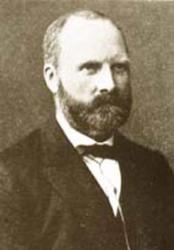
Johann Joseph Winckler

1670 - 1722 Person Name: Joh. Winkler Topics: Søndag Septuagesima Til Aftengudstjeneste; Septuagesima Sunday; Third Sunday in Advent; Fourth Sunday after Epiphany; Første Søndag i Faste Til Høimesse; First Sunday in Lent; Tredje Søndag I Faste Til Aftengudstjeneste - Til Tredje Tekstrækkes Lektie; Tredje Søndag I Faste Til Aftengudstjeneste - Til Tredje Tekstrækkes Lektie; Third Sunday in Lent; Third Sunday in Lent; Eighth Sunday after Trinity Sunday; Tiende Søndag efter Trefoldiheds Fest Til Høimesse -Til Tredje Teksxtækkes Evangelium; Tenth Sunday after Trinity Sunday; Beskandighed og Troskab; Discouragement and Faith; Kamp og Seier; Struggle and Victory; Åttende Søndag efter Trefoldiheds Fest Til Høimesse -Til Anden Tekstrækkes Evangelium; Fjerde Søndag efter Hellig 3 Kongers Dag Til Aftengudstjeneste - Til Anden Tekstrækkes Epistel; Tredje Søndag I Advent Til Høimesse -Til Anden Tekstrækkes Evangelium Author of "Kjæmp alvorlig nu, Guds Naade" in Salmebog for Lutherske Kristne i Amerika Winckler, John Joseph, a German Pietist, was born at Luckau, in Saxony, December 23, 1670. He was at first a pastor at Magdeburg, then a chaplain in the Protestant army, accompanying the troops to Holland and Italy, and at length returned to Magdeburg and became chief minister of the cathedral. He was no less eminent for his mental culture than for his piety. He was a preacher and writer who had the courage of his convictions, and this quality is notably manifest in the hymn by him found in this collection. He died August 11, 1722. Shall I, for fear of feeble man 225 Hymn Writers of the Church Nutter ================================================================== Winckler, Johann Joseph, son of Gottfried Winckler, town clerk of Lucka, Sachse-Altenburg, was born at Lucka, Dec. 23, 1670. He became a student of Theology at the University of Leipzig, during the time when A. H. Francke and J. C. Schade were holding their Bible readings, and his sympathies henceforth were with the Pietistic movement. In 1692 he was appointed preacher to the St. George's Hospital at Magdeburg, and afternoon preacher at St. Peter's Church there. He became chaplain to the Prince Christian Ludwig regiment in 1695, and went with it to Holland and Italy. After the Peace of Ryswijk (Oct. 30, 1697) he made a tour in Holland and England. Returning to Magdeburg, he was appointed, in 1698, diaconus of the Cathedral, and in 1703 also inspector of the so-called Holzkreis. Finally, in 1714, he became chief preacher at the Cathedral, and in 1716, also Consistorialrath. He died at Magdeburg, Aug. 11, 1722 (Wetzel, iii. 437; Grischow-Kirchner Nachricht to Freylinghausen, p. 53; Koch, iv. 383; Blätter fur Hymnologie, 1888, p. 170, &c). Winckler was a man who had the courage of his opinions, and his hymn No. iv. below is a picture of the stand he was willing to make when conscience bade him. Not that he was fond of controversy, but rather the reverse. Twice however he raised considerable feeling against himself in Magdeburg, first by the position he took up against theatre going, and afterwards by his well-meant attempts to bring about a closer union between the Lutheran and Reformed churches in Prussia. But the opposition he encountered he bore patiently, and in the spirit of his hymn No. i. below. His hymns, some 27 in all appeared mostly in the Appendix to the 2nd edition. 1703 of H. G. Neuss’s Heb-Opfer, in Porst’s Gesang-Buch, Berlin, 1708,and in Freylinghausens Neues geistreiches Gesang-Buch, 1714. They rank among the better productions of the earlier Pietistic writers, and are distinguished by firm faith, earnestness, and picturesqueness; but are somewhat lengthy and frequently in unusual metres. Those of Winckler's hymns which have passed into English are:— i. Meine Seele senket sich. Resignation. First published in the 1703 edition of Neuss's Heb-Opfer, p. 248, in 6 stanzas of 6 lines, entitled "Ps. 62 v. 1. My soul is still towards God." Repeated in Freylinghause, 1714, No. 511, and in the Unverfälschter Liedersegen, 1851, No. 714. It is a fine hymn on patient waiting upon God's will. Translated as:— Yea, my spirit fain would sink. In full, by Miss Winkworth in her Lyra Germanica, 1st Ser., 1855, p. i98. In her Chorale Book for England, 1863, No. 138, it is greatly altered, beginning "In Thy heart and hands, my God"; and this form is No. 419 in the Ohio Lutheran Hymnal, 1880. Another translation is: "Wearily my spirit sinketh," by Mrs. Sevan, 1858, p. 65. ii. 0 süsser Stand, o selig Leben . Christian Simplicity. In Porst's Gesang-Buch, 1708, p. 519 (1711, No. 642), in 8 stanzas of 8 lines, repeated inFreylinghausen, 1714, No. 322, and in the Unverfälschter Liedersegen, 1851, No. 331. The translations are:— 1. 0 sweet condition, happy Living. This, omitting st. iii., is No. 658 in pt. i. of the Moravian Hymn Book, 1754. 2. 0 blest condition, happy living. This is a translation of st. i., ii., vi., viii., based on the 1754 version, as No. 441 in theMoravian Hymn Book, 1789 (1886, No. 584). iii. Ringe recht, wenn Gottes Gnade. Christian Warfare. A thoughtful and powerful hymn, included as No. 359 in Unverfälschter Liedersegen , 1851, No. 336. Wetzel, iii. 437, says it was written as a hymn on the three favourite Scripture passages of Ursula Maria Zorn, of Berlin, and was first published at the end of her funeral sermon by Johann Lysius, pastor of St. George's Church, Berlin. Thus stanzas i.-v. are founded on St. Luke xiii. 24; vi.-xv. on Philipp. ii. 12; and xvi.-xxiii. on Gen. xix. 15-22. The translations in common use are: 1. Strive, when thou art call'd of God. This is a good translation of st. i., iii.-vii., xii., xiii., xv., xvi. by Miss Winkworth, in her Lyra Germanica, 1st Ser., 1855, p. 46. Repeated, abridged, in Kennedy, 1863; the Harrow School Hymn Book, 1866, and Rugby School Hymn Book, 1876. 2. Strive aright when God doth call thee. This is a translation of st. i., iii., iv., xii., xiii., xv., xvi. by Miss Winkworth, founded on her Lyra Germanica version, as No. 128 in her Chorale Book for England, 1863. Repeated in the Marlborough College Hymn Book, 1869. 3. Thou must wrestle, when God's mercy. This is a tr. of st. i., ii., x., xxii., signed E. T. L., as No. 230, in Dr. Pagenstecher's Collection, 1864. Another translation is: “Wrestle on! for God is pleading," by Miss Burlingham in the British Herald, Sept., 1865, p. 137. iv. Sollt ich aus Furcht vor Menschenkindern. Adherence to Christ. A hymn on Constancy, and against cowardice and time-serving. In Porst's Gesang-Buch, 1708, p. 1133 (1711, No. 701), in 17 stanzas of 4 lines. Repeated in Freylinghausen, 1714, No. 541 (entitled "For a Preacher"), in the Unverfälschter Liedersegen 1851, No. 658, &c. The translation in common use is:— Shall I for fear of feeble man. This is a vigorous translation in 10 stanzas (representing st. i.-iii., xii.-xv., xvii.; st. iv. being freely from vi., vii., and st. v. from viii., xi.), by J. Wesley in the Hymns & Sacred Poems, 1739 (Poetical Works, 1868-72, vol. i. p. 177). Included in full in the Moravian Hymn Book, 1754 (1849, No. 875 abridged). In the Wesleyan Hymn Book, 1780, stanzas i.—vii. were included as No. 270; stanzas viii.-x. being added in the edition of 1800 (1875, No. 279). The full form is in the Methodist New Congrational Hymn Book., 1863, and in Mercer's Church Psalter & Hymn Book 91857, and abridged in Mercer's Oxford edition, 1864; Spurgeon's Our Own Hymn Book,1866, and others. It is also found in the following forms:— (1) Awed by a mortal's frown, shall I (Wesley's st. ii.). In W. Carus Wilson's Gen. Psalter 1842. (2) Saviour of men, Thy searching eye (Wesley's at. vi.). In J. A. Latrobe's Psalms & Hymns, 1841, and various American collections. (3) Our Lives, our Blood, we here present (Wesley's st. ix. alt.). In M. Madan's Psalms & Hymns, 1760. [Rev. James Mearns, M.A.] -- John Julian, Dictionary of Hymnology (1907) =========================== See also in: Hymn Writers of the Church

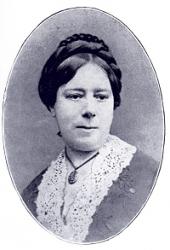
Catherine Winkworth

1827 - 1878 Person Name: Miss Winkworth Topics: The Christian Life Love to God and Christ; Advent, Second Sunday; Christmas Day; Sundays in Lent; Lent, Fifth Sunday; Fourth Sunday after Trinity; Thirteenth Sunday after Trinity; Eighteenth Sunday after Trinity Translator of "O Morning Star! how fair and bright" in Church Book Catherine Winkworth (b. Holborn, London, England, 1827; d. Monnetier, Savoy, France, 1878) is well known for her English translations of German hymns; her translations were polished and yet remained close to the original. Educated initially by her mother, she lived with relatives in Dresden, Germany, in 1845, where she acquired her knowledge of German and interest in German hymnody. After residing near Manchester until 1862, she moved to Clifton, near Bristol. A pioneer in promoting women's rights, Winkworth put much of her energy into the encouragement of higher education for women. She translated a large number of German hymn texts from hymnals owned by a friend, Baron Bunsen. Though often altered, these translations continue to be used in many modern hymnals. Her work was published in two series of Lyra Germanica (1855, 1858) and in The Chorale Book for England (1863), which included the appropriate German tune with each text as provided by Sterndale Bennett and Otto Goldschmidt. Winkworth also translated biographies of German Christians who promoted ministries to the poor and sick and compiled a handbook of biographies of German hymn authors, Christian Singers of Germany (1869). Bert Polman ======================== Winkworth, Catherine, daughter of Henry Winkworth, of Alderley Edge, Cheshire, was born in London, Sep. 13, 1829. Most of her early life was spent in the neighbourhood of Manchester. Subsequently she removed with the family to Clifton, near Bristol. She died suddenly of heart disease, at Monnetier, in Savoy, in July, 1878. Miss Winkworth published:— Translations from the German of the Life of Pastor Fliedner, the Founder of the Sisterhood of Protestant Deaconesses at Kaiserworth, 1861; and of the Life of Amelia Sieveking, 1863. Her sympathy with practical efforts for the benefit of women, and with a pure devotional life, as seen in these translations, received from her the most practical illustration possible in the deep and active interest which she took in educational work in connection with the Clifton Association for the Higher Education of Women, and kindred societies there and elsewhere. Our interest, however, is mainly centred in her hymnological work as embodied in her:— (1) Lyra Germanica, 1st Ser., 1855. (2) Lyra Germanica, 2nd Ser., 1858. (3) The Chorale Book for England (containing translations from the German, together with music), 1863; and (4) her charming biographical work, the Christian Singers of Germany, 1869. In a sympathetic article on Miss Winkworth in the Inquirer of July 20, 1878, Dr. Martineau says:— "The translations contained in these volumes are invariably faithful, and for the most part both terse and delicate; and an admirable art is applied to the management of complex and difficult versification. They have not quite the fire of John Wesley's versions of Moravian hymns, or the wonderful fusion and reproduction of thought which may be found in Coleridge. But if less flowing they are more conscientious than either, and attain a result as poetical as severe exactitude admits, being only a little short of ‘native music'" Dr. Percival, then Principal of Clifton College, also wrote concerning her (in the Bristol Times and Mirror), in July, 1878:— "She was a person of remarkable intellectual and social gifts, and very unusual attainments; but what specially distinguished her was her combination of rare ability and great knowledge with a certain tender and sympathetic refinement which constitutes the special charm of the true womanly character." Dr. Martineau (as above) says her religious life afforded "a happy example of the piety which the Church of England discipline may implant.....The fast hold she retained of her discipleship of Christ was no example of ‘feminine simplicity,' carrying on the childish mind into maturer years, but the clear allegiance of a firm mind, familiar with the pretensions of non-Christian schools, well able to test them, and undiverted by them from her first love." Miss Winkworth, although not the earliest of modern translators from the German into English, is certainly the foremost in rank and popularity. Her translations are the most widely used of any from that language, and have had more to do with the modern revival of the English use of German hymns than the versions of any other writer. -- John Julian, Dictionary of Hymnology (1907) ============================ See also in: Hymn Writers of the Church

Elias Blix

1836 - 1902 Person Name: Blix Topics: Hymns for the Church Year Fourth Sunday in Advent; Fourth Sunday in Advent High Mass Author of "Jesus kom til Jorderike" in M. B. Landstads Kirkesalmebog og "Nokre Salmar" ved Professor Dr. E. Blix, samt følgende tillæg

Nikolaus Herman

1500 - 1561 Person Name: Nik. Herman Topics: Fourth Sunday in Advent Author of "Naar Tid og Stund den er for Haand" in Salmebog for Lutherske Kristne i Amerika Herman, Nicolaus, is always associated with Joachimsthal in Bohemia, just over the mountains from Saxony. The town was not of importance till the mines began to be extensively worked about 1516. Whether Herman was a native of this place is not known, but he was apparently there in 1518, and was certainly in office there in 1524. For many years he held the post of Master in the Latin School, and Cantor or Organist and Choirmaster in the church. Towards the end of his life he suffered greatly from gout, and had to resign even his post as Cantor a number of years before his death. He died at Joachimsthal, May 3, 1561. (Koch, i. 390-398; Allgemeine Deutsche Biographie, xii. 186-188, &c.) He was a great friend and helper of J. Mathesius (q.v.) (who in 1532 became rector of the school, but in 1541 diaconus and in 1545 pastor of the church), and it was said that whenever Mathesius preached a specially good sermon Herman straightway embodied its leading ideas in a hymn. His hymns, however, were not primarily written for use in church, but were intended for the boys and girls in the schools, to supplant profane songs in the mouths of the young men and women, or for the daily life of the “housefathers and housemothers" in Joachimsthal, at home, and in their work in the mines. He is a poet of the people, homely, earnest, and picturesque in style; by his naiveté reminding us of Hans Sachs. He was an ardent lover of music and a very good organist. The chorales which he published with his hymns are apparently all of his own composition, and are among the best of the Reformation period. Many of Herman's hymns soon passed into Church use in Germany, and a number are found in almost all books in present use. About 190 in all, they appeared principally in:— (1) Die Sontags Evangelia uber des gantze Jar, in Gesenge verfasset, für die Kinder und christlichen Haussvetter, &c, Wittenberg, 1560 (dedication by Herman dated Trinity Sunday, 1559), with 101 hymns and 17 melodies. The best are those interspersed specially meant for children and not directly founded on the Gospel for the day. (2) Die Historien von der Sindfludt, Joseph, Mose, Helia, Elisa und der Susanna, sampt etlichen Historien aus den Evangelisten, &c., Wittenberg, 1562 (preface by Herman dated St. Bartholomew's Day, 1560), with 73 hymns and 20 melodies. In this case also the general hymns are the best. A selection of 60 (really 61) of his hymns, with a memoir by K. F. Ledderhose, was published at Halle, 1855. One of Herman's hymns is noted under “Wenn mein Stündlein vorhanden ist." The others which have passed into English are:— i. Bescher uns, Herr, das täglioh Brod. Grace before Meat. 1562, as above, and thence in Wackernagel, iii. p. 1228, in 6 stanzas of 4 lines; in Ledderhose, p. 70; and in the Berlin Geistliche Lieder, ed. 1863, No. 1133. Translated as:— 1. Thou art our Father and our God. This, by P. H. Molther, a translation of stanza vi., as No. 180 in the Moravian Hymn Book, 1789 (1849, No. 220, st. v.). 2. As children we are owned by Thee, a translation of stanza vi., as st. iii. of No. 191 in the Moravian Hymn Book, 1801 (1849, No. 220, stanza iii.). ii. Die helle Sonn leucht jetzt herfür. Morning. 1560, as above, and thence in Wackernagel, iii. p. 1184, in 4 stanzas of 4 lines, in Ledderhose, p. 87; and in the Unverfälschter Liedersegen, 1851, No. 450. Translated as:— The morning beam revives our eyes, a good and full translation by. A. T. Russell, as No. 71 in the Dalston Hospital Hymn Book 1848. iii. Erschienen ist der herrliche Tag. Easter. 1560, as above, in 14 stanzas of 4 lines, entitled, "A new Spiritual Song of the Joyful Resurrection of our Saviour Jesus Christ; for the maidens of the girls' school in Joachimsthal”; and thence in Wackernagel, iii. p. 1175; in Ledderhose p. 23, and Unverfälschter Liedersegen, 1851, No. 134. It has reminiscences of the "Erstanden ist der heil'ge Christ". Translated as:— The day hath dawn'd—-the day of days, a good translation by A. T. Russell of stanzas i., ii., xiii., xiv., as No. 113 in his Psalms & Hymns, 1851. Another tr. is, "At length appears the glorious day," by Dr. G. Walker, 1860, p. 28. iv. Hinunter ist der Sonnen Schein. Evening. 1560, as above, and thence in Wackernagel, iii. p. 1184, in 4 stanzas of 4 lines; in Ledderhose, p. 88; and in the Unverfälschter Liedersegen1851, No. 523. Some of the phrases may have been suggested by the "Christe qui lux es et dies" (q. v.). Translated as:— 1. Sunk is the sun's last beam of light, a full and good translation by Miss Cox in her Sacred Hymns from the German, 1841, p. 57. Included in Alford's Psalms & Hymns, 1844, and Tear of Praise, 1867; in Dale's English Hymn Book, 1875; in the Pennsylvania Lutheran Church Book, 1868, and others. It is also given considerably altered and beginning, "Sunk is the Sun! the daylight gone," in W. J. Blew's Church Hymn and Tune Book, 1851-55. 2. The happy sunshine all is gone, in full, by Miss Winkworth in her Lyra Germanica, 1st Ser., 1855, p. 225; repeated in her Chorale Book for England, 1863, and the Ohio Lutheran Hymnal, 1880. Other translations are: (1) "Did I perhaps Thee somewhat grieve," a translation of stanza iii. in the Moravian Hymn Book, 1789, No. 756. In the 1801 and later eds. (1886, No. 1181, st. iii.), it begins, "Where'er I Thee this day did grieve." (2) "The sun’s fair sheen is past and gone," by H. J. Buckoll, 1842, p. 68. (3) "The sun hath run his daily race," by Lady E. Fortescue, 1843, p. 14. v. Lobt Gott, ihr Christen alle gleich. Christmas. Written c. 1554, but first published 1560 as above, as the first of "Three Spiritual Christmas Songs of the new-born child Jesus, for the children in Joachimsthal." Thence in Wackernagel iii. p. 1169, in 8 stanzas of 4 lines; in Ledderhose, p. 1; and in the Unverfälschter Liedersegen, 1851, No. 47. It is one of the most popular German Christmas hymns. The melody set to it in 1560 is also by Herman; in 1554 to his "Kommt her ihr liebsten Schwesterlein" [in the Hymnal Companioncalled "St. George's (old)"]. Translated as :— 1. Let all together praise our God, a good translation of stanzas i., iii., vi., viii., by A. T. Russell, as No. 52 in his Psalms & Hymns, 1851. Repeated in Kennedy, 1863, adding a translation of st. ii., and beginning, "Let all creation praise our God." 2. Praise ye the Lord, ye Christians I yea, in full, by E. Cronenwett, as No. 31 in the Ohio Lutheran Hymnal 1880. Other translations are: (1) "A wondrous change He with us makes," a tr. of stanza viii., ix. as No. 438 in pt. i. of the Moravian Hymn Book, 1754, repeated 1789-1826. (2) "Come, brethren, lets the song arise," by Dr. G. Walker, 1860, p. 26. (3) "Praise God, now Christians, all alike," by Miss Manington, 1864, p. 9. (4) "Praise God, upon His throne on high," in the Sunday Magazine, 1874, p. 384, signed "P. J." The hymn “Shepherds rejoice, lift up your eyes," given by J. C. Jacobi in his Psalmodia Germanica, 1722, p. 8, to Herman's melody (which was first published 1554) is, as stated in his Preface, taken from Bk. i. of Isaac Watts's Horse Lyricae vi. So wahr ich leb, spricht Gott der Herr. Absolution. 1560, as above, in 11 stanzas of 4 lines, entitled "A hymn on the power of the keys and the virtue of holy absolution; for the children in Joachimsthal." Thence in Wackernagel, iii. p. 1183; in Ledderhose, p. 47; and the Unverfälschter Liedersegen, 1851, No. 429. It probably suggested the better known hymn, "So wahr ich lebe," q. v., by Johann Heermann. Translated as:— Yea, as I live, Jehovah saith, I do not wish the sinner's death, in full, by Dr. M. Loy, as No. 245, in the Ohio Lutheran Hymnal, 1880. [Rev. James Mearns, M.A.] --John Julian, Dictionary of Hymnology (1907)

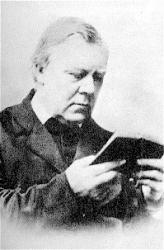
Edward Caswall

1814 - 1878 Topics: Communion with Christ; Advent, Third Sunday; Advent, Fourth Sunday; Epiphany, Second Sunday; Epiphany, Third Sunday; Sundays in Lent; Easter Season, Fourth Sunday; Eighteenth Sunday after Trinity Translator of "O Jesus! King most wonderful" in Church Book Edward Caswall was born in 1814, at Yately, in Hampshire, where his father was a clergyman. In 1832, he went to Brasenose College, Oxford, and in 1836, took a second-class in classics. His humorous work, "The Art of Pluck," was published in 1835; it is still selling at Oxford, having passed through many editions. In 1838, he was ordained Deacon, and in 1839, Priest. He became perpetural Curate of Stratford-sub-Castle in 1840. In 1841, he resigned his incumbency and visited Ireland. In 1847, he joined the Church of Rome. In 1850, he was admitted into the Congregation of the Oratory at Birmingham, where he has since remained. He has published several works in prose and poetry. --Annotations of the Hymnal, Charles Hutchins, M.A. 1872 ===================== Caswall, Edward, M.A., son of the Rev. R. C. Caswall, sometime Vicar of Yately, Hampshire, born at Yately, July 15, 1814, and educated at Brasenose College, Oxford, graduating in honours in 1836. Taking Holy Orders in 1838, he became in 1840 Incumbent of Stratford-sub-Castle, near Salisbury, and resigned the same in 1847. In 1850 (Mrs. Caswall having died in 1849) he was received into the Roman Catholic communion, and joined Dr. Newman at the Oratory, Edgbaston. His life thenceforth, although void of stirring incidents, was marked by earnest devotion to his clerical duties and a loving interest in the poor, the sick, and in little children. His original poems and hymns were mostly written at the Oratory. He died at Edgbaston, Jan. 2, 1878, and was buried on Jan. 7 at Redwall, near Bromsgrove, by his leader and friend Cardinal Newman. Caswall's translations of Latin hymns from the Roman Breviary and other sources have a wider circulation in modern hymnals than those of any other translator, Dr. Neale alone excepted. This is owing to his general faithfulness to the originals, and the purity of his rhythm, the latter feature specially adapting his hymns to music, and for congregational purposes. His original compositions, although marked by considerable poetical ability, are not extensive in their use, their doctrinal teaching being against their general adoption outside the Roman communion. His hymns appeared in:— (1) Lyra Catholica, which contained 197 translations from the Roman Breviary, Missal, and other sources. First ed. London, James Burns, 1849. This was reprinted in New York in 1851, with several hymns from other sources added thereto. This edition is quoted in the indices to some American hymn-books as Lyra Cath., as in Beecher's Plymouth Collection, 1855, and others. (2) Masque of Mary, and Other Poems, having in addition to the opening poem and a few miscellaneous pieces, 53 translations, and 51 hymns. 1st ed. Lon., Burns and Lambert, 1858. (3) A May Pageant and Other Poems, including 10 original hymns. Lon., Burns and Lambert, 1865. (4) Hymns and Poems, being the three preceding volumes embodied in one, with many of the hymns rewritten or revised, together with elaborate indices. 1st ed. Lon., Burns, Oates & Co., 1873. Of his original hymns about 20 are given in the Roman Catholic Crown of Jesus Hymn Book, N.D; there are also several in the Hymns for the Year, N.D., and other Roman Catholic collections. --John Julian, Dictionary of Hymnology (1907) ====================== Caswall, E. , p. 214, ii. Additional original hymns by Caswall are in the Arundel Hymns, 1902, and other collections. The following are from the Masque of Mary, &c, 1858:— 1. Christian soul, dost thou desire. After Holy Communion. 2. Come, let me for a moment cast. Holy Communion. 3. O Jesu Christ [Lord], remember. Holy Communion. 4. Oft, my soul, thyself remind. Man's Chief End. 5. Sleep, Holy Babe. Christmas. Appeared in the Rambler, June 1850, p. 528. Sometimes given as "Sleep, Jesus, sleep." 6. The glory of summer. Autumn. 7. This is the image of the queen. B. V. M. His "See! amid the winter's snow,” p. 1037, i., was published in Easy Hymn Tunes, 1851, p. 36. In addition the following, mainly altered texts or centos of his translations are also in common use:— 1. A regal throne, for Christ's dear sake. From "Riches and regal throne," p. 870, ii. 2. Come, Holy Ghost, Thy grace inspire. From "Spirit of grace and union," p. 945, i. 3. Hail! ocean star, p. 99, ii,, as 1873. In the Birmingham Oratory Hymn Book, 1850, p. 158. 4. Lovely flow'rs of martyrs, hail. This is the 1849 text. His 1873 text is "Flowers of martyrdom," p. 947, i. 5. None of all the noble cities. From "Bethlehem! of noblest cities," p. 946, ii. 6. O Jesu, Saviour of the World. From “Jesu, Redeemer of the world," p. 228, ii. 7. 0 Lady, high in glory raised. From "O Lady, high in glory, Whose," p. 945, i. The Parochial Hymn Book, 1880, has also the following original hymns by Caswall. As their use is confined to this collection, we give the numbers only:— IS os. 1, 2, 3, 159 (Poems, 1873, p. 453), 209 (1873, p. 288), 299, 324 (1873, p. 323), 357, 402, 554, 555, 558, 569 (1873, p. 334). These are from his Masque of Mary 1858. Nos. 156, 207 (1873, p. 296), 208 (1873, p. 297), 518. These are from his May Pageant, 1865. As several of these hymns do not begin with the original first lines, the original texts are indicated as found in his Poems, 1873. [Rev. James Mearns, M.A.] --John Julian, Dictionary of Hymnology, New Supplement (1907)

Michael Schirmer

1606 - 1673 Topics: Fourth Sunday in Advent Author of "O Helligaand, kom til as ned" in Salmebog for Lutherske Kristne i Amerika Schirmer, Michael, son of Michael Schirmer, inspector of wine casks at Leipzig, was born at Leipzig, apparently, in July, 1606, his baptism being entered as on July 18, in the registers of St. Thomas's Church there. He matriculated at the University of Leipzig, at Easter, 1619, and graduated M.A. in 1630. In 1636 he was appointed subrector, and in 1651 conrector of the Greyfriars Gymnasium at Berlin. During his conrectorship the rectorship fell vacant several times, and each time, after he had officiated as prorector during the vacancy, a younger man than he was set over him (probably on account of Schirmer's feeble health) till, last of all, in May, 1668, the sub-rector was promoted over his head. In the same year Schirmer retired from office. The remainder of his life he spent in Berlin, where he published, in the end of 1668, a version of the Aeneid in German Alexandrine verse, wrote various occasional poems, &c. He died at Berlin, apparently on May 4, and was certainly buried there, in the churchyard of the Kloster Kirche, on May 8, 1673…. Schirmer had many domestic and personal afflictions to bear. His wife and his two children predeceased him. The early part of his life in Berlin was spent amid the distress caused by the Thirty Years War, during which Brandenburg, and Berlin itself, suffered greatly from pestilence and poverty. In 1644 a deep melancholy fell upon him, which lasted for five years; and something of the same kind seems to have returned to him for a time, after his wife's death, in Feb. 1667. Schirmer was crowned as a poet in 1637. His earlier productions were mostly occasional pieces in German and Latin. In 1655 he published, at Berlin, a metrical version of Ecclesiasticus as, Das Buch Jesus Sirach, &c.; and in 1660, also at Berlin, a Scriptural play, which was acted by the scholars of the Gymnasium, and was entitled Der verfolgte David, &c. He also published, at Berlin, in 1650, versions of the Songs of the Old and New Testament as, Biblische Lieder und Lehrsprüche. The only compositions by him which have come into use as hymns, are those which he contributed to J. Crüger's Newes vollkömliches Gesang-Buch, Berlin, 1640; and to Crüger's Praxis pietatis melica, Berlin, 1648, &c. These, have in all, passed into many German hymnbooks of the 17th century, and most of them are still in use. They were reprinted by Dr. Bachmann …together with various selections irom his other poetical compositions. They are practical, clear, objective, churchly hymns, somewhat related to those of Gerhardt; and still more closely to those of Johann Heermann, from whom indeed Schirmer borrows a few expressions. The only hymn by Schirmer which has passed into English is:— 0 heilger Geist, kehr bei uns ein. Whitsuntide. First published, 1640, as above, No. 75, in 7 stanzas of 10 lines, entitled, "Another short hymn for Whitsuntide, M. Michael Schirmers." … Translated as:— 1. 0 Holy Ghost, desoend, we pray. This is a somewhat free translation of st. i., v., ii., iii., by W. M. Reynolds, as No. 794, in the American Lutheran Gen. Synod's Collection, 1850; and is repeated, with translations of st. iv., vi., vii., added, as No. 103, in the Ohio Lutheran Hymnal, 1880. 2. 0 Holy Spirit, enter in. This is a good translation, omitting st. ii., iv., by Miss Winkworth, in her Chorale Book for England, 1863, No. 70. It was repeated, as No. 249, in the Pennsylvania Luth. Church Book, 1868. In Dr. Thomas's Augustine Hymn Book, 1866, it is Nos. 480, 481; No. 481 beginning, "O mighty Rock, O source of Life," which is the tr. of st. v. [Rev. James Mearns, M.A.] --Excerpts from John Julian, Dictionary of Hymnology (1907)

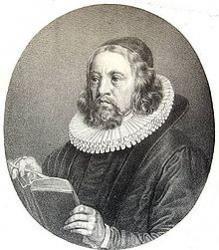
Thomas Kingo

1634 - 1703 Person Name: Kingo Topics: Fourth Sunday in Advent; Fourth Sunday in Advent Author of "I Kristne, I, som kaldes vil " in Salmebog for Lutherske Kristne i Amerika

Richard Runciman Terry

1865 - 1938 Person Name: Richard Runciman Terry (1865-1938) Topics: Adoration; Advent; Church Year Advent; God in grace and mercy; Jesus coming again; Jesus Names and images for; The Fourth Sunday before Advent Year A; The Second Sunday of Advent Year A Composer of "HIGHWOOD" in Ancient and Modern Terry, Richard R., was born at Morpeth, Jan. 3, 1868, and was Tate Choral Scholar at King's College, Cambridge. In 1896 he became organist and music-master at Downside R. C. College and Abbey, Bath; and in 1901 organist and director of the choir at Westminster Cathedral (R. C.) London. He contributed to A. E. Tozer's Catholic Hymns, 1898, thirteen tunes and the words of two hymns:— 1. Christ, the Lord, is my true Shepherd. Ps. xxiii. 2. Peaceful eve, so still and holy. Christmas Carol. It is marked as D. C. B., i.e. for Downside Coll., Bath. The tune by Mr. Tozor was published in 1881 to a carol beginning with the same first line, but otherwise entirely different. --John Julian, Dictionary of Hymnology, New Supplement (1907)

Laurentius Laurenti

1660 - 1722 Topics: The Catechism The Redeemer; Fourth Sunday of Advent; Fifth Sunday in Lent; Eighteenth Sunday after Trinity Author of "O Thou Essential Word" in Evangelical Lutheran hymnal Laurenti, Laurentius, son of Herr Lorenz, or Laurenti, a burgess of Husum, in Schleswig, was born at Husum, June 8, 1660. He entered the University of Rostock in 1681, and after a year and a half spent there, went to Kiel to study music. In 1684 he was appointed cantor and director of the music at the cathedral church at Bremen. He died at Bremen, May 29, 1722 (Koch, iv. 281; Rotermund's continuation of Jöcher's Gelehrten-Lexicon, iii. 1405, &c). Laurenti was one of the best hymn-writers of the Pietistic school. His hymns are founded on the Gospels for Sundays and Festivals, and they draw out the bearing on the Christian life of the leading thoughts therein contained. They are of noble simplicity; are Scriptural, fervent, and often of genuine poetical worth. In Freylinghausen's Gesang-Buch, 1704 and 1714, no less than 34 are included, and many of these, with others by him, are still in extensive German use. They appeared in his:— Evangelia Melodica, das ist: Geistliche Lieder,und Lobgesange, nach den Sinn der ordentlichen Sonn-und Festages Evangelien, &c. Bremen, 1700 [Royal Library, Berlin], with 148 hymns on the Gospels, and two others. Of his hymns those which have passed into English are:—— i. Du wesentliches Wort. Christmas. Founded on St. John i. 1-12. In his Evangelia Melodica, 1700, p. 30, in 8 stanzas of 8 lines, entitled, "For the Third Day of Christmas." Included in Freylinghausen's Gesang-Buch, 1704, No. 20; and, recently, as No. 83, in the Berlin Geistliche Lieder, 1863. The translations in common use are:— 1. 0 Thou essential Word, Who from. A good translation, omitting st. iii., v., by Miss Winkworth, in her Lyra Germanica, first Ser., 1855, p. 15 (2nd edition, 1856, considerably altered); and repeated, abridged, in Flett's Collection, Paisley, 1871. Varying centos, beginning with st. i., 1. 5, altered to "O Saviour of our race," are found in America, as in Boardman's Selections, Philadelphia, 1861; the Pennsylvania Lutheran Church Book, 1868; and the Dutch Ref. Hymns of the Church, 1869. 2. 0 Thou essential Word, Who wast. By Miss Winkworth, in her Chorale Book for England, 1863, No. 54. This is her 1856 version (as above) rewritten to the original metre. Repeated, in full, in Dr. Thomas's Augustine Hymn Book, 1866, and the Ohio Lutheran Hymnal, 1880; and, abridged, in the English Presbyterian Psalms & Hymns, 1867, and Laudes Domini, N. Y., 1884. ii. Ermuntert euch, ihr Frommen. Second Advent. This is his finest hymn. In his Evangelia Melodica, 1700, p. 353, in 10 stanzas of 8 lines, entitled, "For the 27th Sunday after Trinity." It is founded on St. Matt. xxv. 1-13; and unites the imagery of the parable of the Ten Virgins with that of Rev. xx., xxi. Included, as No. 578, in Freylinghausen's Gesang-Buch, 1704; and, recently, as No. 1519, in the Berlin Geistliche Lieder, ed. 1863. The translation in common use is:— Rejoice, all ye believers. By Mrs. Findlater, in Hymns from the Land of Luther, 1st Ser., 1854, p. 61 (1884, p. 62), a good translation of st. i.-iii., vii., viii., x. In full, but altered to the original metre, in Schaff’s Christ in Song, 1869 and 1870. This version is found in a large number of English and American hymnals, under the following forms:— (1) Rejoice, all ye believers (st. i.). Varying centos are found in Mercer, 1864, Hymnal Companion, 1876, &c.; and in America in Hatfield's Church Hymn Book, 1872, Evangelical Hymnal, N. Y., 1880, and others. (2)

Timothy Dudley-Smith

1926 - 2024 Person Name: Timothy Dudley-Smith (b. 1926) Topics: Advent; Blessing; Canticles and Affirmations of Faith; Children and All-Age Worship; Food and Hunger; God faithfulness of in creation; God Power of; God Promises of; Mary; Other Saints and Festivals The Blessed Virgin Mary; Other Saints and Festivals Luke the Evangelist; Praise; The Fourth Sunday of Advent Year A; The Fourth Sunday of Advent Year C Author of "Tell out, my soul, the greatness of the Lord!" in Ancient and Modern Timothy Dudley-Smith (b. 1926) Educated at Pembroke College and Ridley Hall, Cambridge, Dudley-Smith has served the Church of England since his ordination in 1950. He has occupied a number of church posi­tions, including parish priest in the diocese of Southwark (1953-1962), archdeacon of Norwich (1973-1981), and bishop of Thetford, Norfolk, from 1981 until his retirement in 1992. He also edited a Christian magazine, Crusade, which was founded after Billy Graham's 1955 London crusade. Dudley-Smith began writing comic verse while a student at Cambridge; he did not begin to write hymns until the 1960s. Many of his several hundred hymn texts have been collected in Lift Every Heart: Collected Hymns 1961-1983 (1984), Songs of Deliverance: Thirty-six New Hymns (1988), and A Voice of Singing (1993). The writer of Christian Literature and the Church (1963), Someone Who Beckons (1978), and Praying with the English Hymn Writers (1989), Dudley-Smith has also served on various editorial committees, including the committee that published Psalm Praise (1973). Bert Polman

Pages


Export as CSV
It looks like you are using an ad-blocker. Ad revenue helps keep us running. Please consider white-listing Hymnary.org or getting Hymnary Pro to eliminate ads entirely and help support Hymnary.org.