

 My Starred Hymns
 My FlexScores
 My Hymnals
 My Purchased Files
Planning worship?
Check out our sister site, ZeteoSearch.org,
for 20+ additional resources related to your search.
- |
User Links
Person Results
James Montgomery
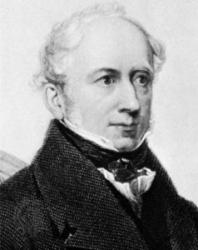
1771 - 1854 Topics: Anniversaries; Assurance; Church Year Lent; Church Year Transfiguration; Conflict; Courage; Darkness; Elements of Worship Call to Worship; Elements of Worship Confession (Individual); Elements of Worship Gathering; Elements of Worship Prayer for Illumination; Enemies; Freedom from Fear; God Dependence on; God as Refuge; God as Shelter; God's Armor; God's Love; God's Presence; God's Protection; God's Strength; Hope; Joy; Judgment; Lament Individual; Mercy; Occasional Services Dedication / Consecration / Anniversary; Occasional Services Funerals; Occasional Services Ordination and/or Installation; Peace; People of God / Church Suffering; Prayer; Temptation And Trial; Truth; Year A, Ordinary Time after Epiphany, 3rd Sunday; Year C, Lent, 2nd Sunday Author of "God Is My Strong Salvation" in Psalms for All Seasons James Montgomery (b. Irvine, Ayrshire, Scotland, 1771; d. Sheffield, Yorkshire, England, 1854), the son of Moravian parents who died on a West Indies mission field while he was in boarding school, Montgomery inherited a strong religious bent, a passion for missions, and an independent mind. He was editor of the Sheffield Iris (1796-1827), a newspaper that sometimes espoused radical causes. Montgomery was imprisoned briefly when he printed a song that celebrated the fall of the Bastille and again when he described a riot in Sheffield that reflected unfavorably on a military commander. He also protested against slavery, the lot of boy chimney sweeps, and lotteries. Associated with Christians of various persuasions, Montgomery supported missions and the British Bible Society. He published eleven volumes of poetry, mainly his own, and at least four hundred hymns. Some critics judge his hymn texts to be equal in quality to those of Isaac Watts and Charles Wesley . Many were published in Thomas Cotterill's Selection of Psalms and Hymns (1819 edition) and in Montgomery's own Songs of Zion (1822), Christian Psalmist (1825), and Original Hymns (1853).
Bert Polman
========================
Montgomery, James, son of John Montgomery, a Moravian minister, was born at Irvine, Ayrshire, Nov. 4, 1771. In 1776 he removed with his parents to the Moravian Settlement at Gracehill, near Ballymena, county of Antrim. Two years after he was sent to the Fulneck Seminary, Yorkshire. He left Fulneck in 1787, and entered a retail shop at Mirfield, near Wakefield. Soon tiring of that he entered upon a similar situation at Wath, near Rotherham, only to find it quite as unsuitable to his taste as the former. A journey to London, with the hope of finding a publisher for his youthful poems ended in failure; and in 1792 he was glad to leave Wath for Shefield to join Mr. Gales, an auctioneer, bookseller, and printer of the Sheffield Register newspaper, as his assistant. In 1794 Mr. Gales left England to avoid a political prosecution. Montgomery took the Sheffield Register in hand, changed its name to The Sheffield Iris, and continued to edit it for thirty-one years. During the next two years he was imprisoned twice, first for reprinting therein a song in commemoration of "The Fall of the Bastille," and the second for giving an account of a riot in Sheffield. The editing of his paper, the composition and publication of his poems and hynms, the delivery of lectures on poetry in Sheffield and at the Royal Institution, London, and the earnest advocacy of Foreign Missions and the Bible Society in many parts of the country, gave great variety but very little of stirring incident to his life. In 1833 he received a Royal pension of £200 a year. He died in his sleep, at the Mount, Sheffield, April 30, 1854, and was honoured with a public funeral. A statue was erected to his memory in the Sheffield General Cemetery, and a stained glass window in the Parish Church. A Wesleyan chapel and a public hall are also named in his honour. Montgomery's principal poetical works, including those which he edited, were:—
(1) Prison Amusements, 1797; (2) The Wanderer of Switzerland, 1806; (3) The West Indies, 1807; (4) The World before the Flood, 1813; (5) Greenland and Other Poems, 1819; (6) Songs of Zion, 1822; (7) The Christian Psalmist, 1825; (8) The Christian Poet, 1825; (9) The Pelican Island, 1828; (10) The Poet’s Portfolio, 1835; (11) Original Hymns for Public, Private, and Social Devotion, 1853. He also published minor pieces at various times, and four editions of his Poetical Works, the first in 1828, the second in 1836, the third in 1841, and the fourth in 1854. Most of these works contained original hymns. He also contributed largely to Collyer's Collection, 1812, and other hymnbooks published during the next 40 years, amongst which the most noticeable was Cotterill's Selections of 1819, in which more than 50 of his compositions appeared. In his Christian Psalmist, 1825, there are 100 of his hymns, and in his Original Hymns, 1853, 355 and 5 doxologies. His Songs of Zion, 1822, number 56. Deducting those which are repeated in the Original Hymns, there remain about 400 original compositions.
Of Montgomery's 400 hymns (including his versions of the Psalms) more than 100 are still in common use. With the aid of Montgomery's MSS. we have given a detailed account of a large number. The rest are as follows:—
i. Appeared in Collyer's Collection, 1812.
1. Jesus, our best beloved Friend. Personal Dedication to Christ.
2. When on Sinai's top I see. Sinai, Tabor, and Calvary.
ii. Appeared in Cotterill's Selection, 1819.
3. Come to Calvary's holy mountain. The Open Fountain.
4. God in the high and holy place. God in Nature. The cento in Com. Praise, 1879, and others, "If God hath made this world so fair," is from this hymn.
5. Hear me, O Lord, in my distress. Ps. cxliii.
6. Heaven is a place of rest from sin. Preparation for Heaven.
7. I cried unto the Lord most just. Ps. cxlii.
8. Lord, let my prayer like incense rise. Ps. cxxxix.
9. O bless the Lord, my soul! His grace to thee proclaim. Ps. ciii.
10. Out of the depths of woe. Ps. cxxx. Sometimes "When from the depths of woe."
11. The world in condemnation lay. Redemption.
12. Where are the dead? In heaven or hell? The Living and the Dead.
iii. Appeared in his Songs of Zion, 1822.
13. Give glory to God in the highest. Ps. xxix.
14. Glad was my heart to hear. Ps. cxxii.
15. God be merciful to me. Ps. lxix.
16. God is my strong salvation. Ps. xxvii.
17. Hasten, Lord, to my release. Ps. lxx.
18. Have mercy on me, O my God. Ps. li.
19. Hearken, Lord, to my complaints. Ps. xlii.
20. Heralds of creation cry. Ps. cxlviii.
21. How beautiful the sight. Ps. cxxxiii.
22. How precious are Thy thoughts of peace. Ps. cxxxix.
23. I love the Lord, He lent an ear. Ps. cxvi.
24. In time of tribulation. Ps. lxxvii.
25. Jehovah is great, and great be His praise. Ps. xlviii. Sometimes, "0 great is Jehovah, and great is His Name."
26. Judge me, O Lord, in righteousness. Ps. xliii.
27. Lift up your heads, ye gates, and wide. Ps.xxiv.
28. Lord, let me know mine [my] end. Ps. xxxi.
29. Of old, 0 God, Thine own right hand. Ps. lxxx.
30. O God, Thou art [my] the God alone. Ps. lxiii.
31. 0 Lord, our King, how excellent. Ps. viii. Sometimes, "0 Lord, how excellent is Thy name."
32. O my soul, with all thy powers. Ps. ciii.
33. One thing with all my soul's desire. Ps. xxvii. From this, "Grant me within Thy courts a place."
34. Searcher of hearts, to Thee are known. Ps. cxxxix.
35. Thank and praise Jehovah's name. Ps. cvii.
36. Thee will I praise, O Lord in light. Ps. cxxxviii.
37. The Lord is King; upon His throne. Ps. xciii.
38. The Lord is my Shepherd, no want shall I know. Ps. xxiii.
39. The tempter to my soul hath said. Ps. iii.
40. Thrice happy he who shuns the way. Ps. i.
41. Thy glory, Lord, the heavens declare. Ps. xix.
42. Thy law is perfect, Lord of light. Ps. xix.
43. Who make the Lord of hosts their tower. Ps. cxxv.
44. Yea, I will extol Thee. Ps. xxx.
iv. Appeared in his Christian Psalmist. 1825.
45. Fall down, ye nations, and adore. Universal adoration of God desired.
46. Food, raiment, dwelling, health, and friends. The Family Altar.
47. Go where a foot hath never trod. Moses in the desert. Previously in the Leeds Congregational Collection, 1822.
48. Green pastures and clear streams. The Good Shepherd and His Flock.
49. Less than the least of all. Mercies acknowledged.
50. Not to the mount that burned with fire [flame]. Communion of Saints.
51. On the first Christian Sabbath eve. Easter Sunday Evening.
52. One prayer I have: all prayers in one. Resignation.
53. Our heavenly Father hear. The Lord's Prayer.
54. Return, my soul, unto thy rest. Rest in God.
55. Spirit of power and might, behold. The Spirit's renewing desired.
56. The Christian warrior, see him stand. The Christian Soldier. Sometimes, "Behold the Christian warrior stand."
57. The days and years of time are fled. Day of Judgment.
58. The glorious universe around. Unity.
59. The pure and peaceful mind. A Children's Prayer.
60. This is the day the Lord hath made (q. v.). Sunday.
61. Thy word, Almighty Lord. Close of Service.
62. What secret hand at morning light ? Morning.
63. While through this changing world we roam. Heaven.
64. Within these walls be peace. For Sunday Schools.
v. Appeared in his Original Hymns, 1853.
65. Behold yon bright array. Opening a Place of Worship.
66. Behold the book whose leaves display. Holy Scriptures.
67. Come ye that fear the Lord. Confirmation.
68. Home, kindred, friends, and country, these. Farewell to a Missionary.
69. Let me go, the day is breaking. Jacob wrestling.
70. Not in Jerusalem alone. Consecration of a Church.
71. Praise the high and holy One. God the Creator.
In common with most poets and hymnwriters, Montgomery strongly objected to any correction or rearrangement of his compositions. At the same time he did not hesitate to alter, rearrange, and amend the productions of others. The altered texts which appeared in Cotterill's Selections, 1819, and which in numerous instances are still retained in some of the best hymnbooks, as the "Rock of Ages," in its well-known form of three stanzas, and others of equal importance, were made principally by him for Cotterill's use. We have this confession under his own hand.
As a poet, Montgomery stands well to the front; and as a writer of hymns he ranks in popularity with Wesley, Watts, Doddridge, Newton, and Cowper. His best hymns were written in his earlier years. In his old age he wrote much that was unworthy of his reputation. His finest lyrics are "Angels from the realms of glory," "Go to dark Gethsemane," "Hail to the Lord's Anointed," and "Songs of praise the angels sang." His "Prayer is the soul's sincere desire," is an expanded definition of prayer of great beauty; and his "Forever with the Lord" is full of lyric fire and deep feeling. The secrets of his power as a writer of hymns were manifold. His poetic genius was of a high order, higher than most who stand with him in the front rank of Christian poets. His ear for rhythm was exceedingly accurate and refined. His knowledge of Holy Scripture was most extensive. His religious views were broad and charitable. His devotional spirit was of the holiest type. With the faith of a strong man he united the beauty and simplicity of a child. Richly poetic without exuberance, dogmatic without uncharitableness, tender without sentimentality, elaborate without diffusiveness, richly musical without apparent effort, he has bequeathed to the Church of Christ wealth which could onlv have come from a true genius and a sanctified! heart.
--John Julian, Dictionary of Hymnology (1907)
James Montgomery
Joseph Haydn
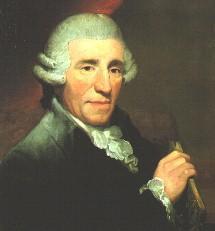
1732 - 1809 Person Name: F. Joseph Haydn Topics: Judge, God, Christ As; Judgment, Divine; Judgment, Final; Nature, God In; Praise To God, Jesus Christ; Works of God Composer of "AUSTRIAN HYMN" in Psalter Hymnal (Blue) Franz Joseph Haydn (b. Rohrau, Austria, 1732; d. Vienna, Austria, 1809) Haydn's life was relatively uneventful, but his artistic legacy was truly astounding. He began his musical career as a choirboy in St. Stephen's Cathedral, Vienna, spent some years in that city making a precarious living as a music teacher and composer, and then served as music director for the Esterhazy family from 1761 to 1790. Haydn became a most productive and widely respected composer of symphonies, chamber music, and piano sonatas. In his retirement years he took two extended tours to England, which resulted in his "London" symphonies and (because of G. F. Handel's influence) in oratorios. Haydn's church music includes six great Masses and a few original hymn tunes. Hymnal editors have also arranged hymn tunes from various themes in Haydn's music.
Bert Polman
Joseph Haydn
Martin Luther
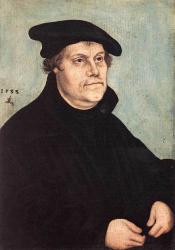
1483 - 1546 Person Name: Martin Luther, 1483-1546 Topics: Judgment of God Author of "A mighty fortress is our God" in Together in Song Luther, Martin, born at Eisleben, Nov. 10, 1483; entered the University of Erfurt, 1501 (B.A. 1502, M.A.. 1503); became an Augustinian monk, 1505; ordained priest, 1507; appointed Professor at the University of Wittenberg, 1508, and in 1512 D.D.; published his 95 Theses, 1517; and burnt the Papal Bull which had condemned them, 1520; attended the Diet of Worms, 1521; translated the Bible into German, 1521-34; and died at Eisleben, Feb. 18, 1546. The details of his life and of his work as a reformer are accessible to English readers in a great variety of forms. Luther had a huge influence on German hymnody.
i. Hymn Books.
1. Ellich cristlich lider Lobgesang un Psalm. Wittenberg, 1524. [Hamburg Library.] This contains 8 German hymns, of which 4 are by Luther.
2. Eyn Enchiridion oder Handbuchlein. Erfurt, 1524 [Goslar Library], with 25 German hymns, of which 18 are by Luther.
3. Geystliche Gesangk Buchleyn. Wittenberg, 1524 [Munich Library], with 32 German hymns, of which 24 are by Luther.
4. Geistliche Lieder auffs new gebessert. Wittenberg. J. Klug, 1529. No copy of this book is now known, but there was one in 1788 in the possession of G. E. Waldau, pastor at Nürnberg, and from his description it is evident that the first part of the Rostock Gesang-Buch, 1531, is a reprint of it. The Rostock Gesang-Buch, 1531, was reprinted by C. M. Wiechmann-Kadow at Schwerin in 1858. The 1529 evidently contained 50 German hymns, of which 29 (including the Litany) were by Luther.
5. Geistliche Lieder auffs new gebessert. Erfurt. A. Rauscher, 1531 [Helmstädt, now Wolfenbüttel Library], a reprint of No. 4.
6. Geistliche Lieder. Wittenberg. J. Klug, 1535 [Munich Library. Titlepage lost], with 52 German hymns, of which 29 are by Luther.
7. Geistliche Lieder auffs new gebessert. Leipzig. V. Schumann, 1539 [Wernigerode Library], with 68 German hymns, of which 29 are by Luther.
8. Geistliche Lieder. Wittenberg. J. Klug, 1543 [Hamburg Library], with 61 German hymns, of which 35 are by Luther.
9. Geystliche Lieder. Leipzig. V. Babst, 1545 [Gottingen Library]. This contains Luther's finally revised text, but adds no new hymns by himself. In pt. i. are 61 German hymns, in pt. ii. 40, of which 35 in all are by Luther.
For these books Luther wrote three prefaces, first published respectively in Nos. 3, 4, 9. A fourth is found in his Christliche Geseng, Lateinisch und Deudsch, zum Begrebnis, Wittenberg, J. Klug, 1542. These four prefaces are reprinted in Wackernagel’s Bibliographie, 1855, pp. 543-583, and in the various editions of Luther's Hymns. Among modern editions of Luther's Geistliche Lieder may be mentioned the following:—
Carl von Winterfeld, 1840; Dr. C. E. P. Wackernagel, 1848; Q. C. H. Stip, 1854; Wilhelm Schircks, 1854; Dr. Danneil, 1883; Dr. Karl Gerok, 1883; Dr. A. F. W. Fischer, 1883; A. Frommel, 1883; Karl Goedeke, 1883, &c. In The Hymns of Martin Luther. Set to their original melodies. With an English version. New York, 1883, ed. by Dr. Leonard Woolsey Bacon and Nathan H. Allen, there are the four prefaces, and English versions of all Luther's hymns, principally taken more or less altered, from the versions by A. T. Russell, R. Massie and Miss Winkworth [repub. in London, 1884]. Complete translations of Luther's hymns have been published by Dr. John Anderson, 1846 (2nd ed. 1847), Dr. John Hunt, 1853, Richard Massie, 1854, and Dr. G. Macdonald in the Sunday Magazine, 1867, and his Exotics, 1876. The other versions are given in detail in the notes on the individual hymns.
ii. Classified List of Luther's Hymns. Of Luther's hymns no classification can be quite perfect, e.g. No. 3 (see below) takes hardly anything from the Latin, and No. 18 hardly anything from the Psalm. No. 29 is partly based on earlier hymns (see p. 225, i.). No. 30 is partly based on St. Mark i. 9-11, and xvi., 15, 16 (see p. 226, ii.). No. 35 is partly based on St. Luke ii. 10-16. The following arrangement, however, will answer all practical purposes.
A. Translations from the Latin.
i. From Latin Hymns:
1. Christum wir sollen loben schon. A solis ortus cardine
2. Der du bist drei in Einigkeit. O Lux beata Trinitas.
3. Jesus Christus unser Heiland, Der von. Jesus Christus nostra salus
4. Komm Gott Schopfer, heiliger Geist. Veni Creator Spiritus, Mentes.
5. Nun komm der Beidenheiland. Veni Redemptor gentium
6. Was flirchst du Feind Herodes sehr. A solis ortus cardine
ii. From Latin Antiphons, &c.:
7. Herr Gott dich loben wir. Te Deum laudamus.
8. Verleih uns Frieden gnädiglich. Dapacem, Domine
9. Wir glauben all an einen Gott.
iii. Partly from the Latin, the translated stanzas being adopted from Pre-Reformation Versions:
10. Komm, heiliger Geist, Herre Gott.
11. Mitten wir im Leben sind. Media vita in morte sumus.
B. Hymns revised and enlarged from Pre-Reformation popular hymns.
12. Gelobet seist du Jesus Christ.
13. Gott der Vater wohn uns bei.
14. Gott sei gelobet und gebenedeiet.
15. Nun bitten wir den heiligen Geist.
C. Psalm versions.
16. Ach Gott vom Himmel, sieh darein.
17. Aus tiefer Noth schrei ich zu dir.
18. Ein' feste Burg ist unser Gott.
19. Es spricht der Unweisen Mund wohl.
20. Es wollt uns Gott genädig sein.
21. War Gott nicht mit uns diese Zeit.
22. Wohl dem, der in Gotten Furcht steht.
D. Paraphrases of other portions of Holy Scripture.
23. Diess sind die heilgen zehn Gebot.
24. Jesaia dem Propheten das geschah.
25. Mensch willt du leben seliglich.
26. Mit Fried und Freud ich fahr dahin.
27. Sie ist mir lieb die werthe Magd.
28. Vater unser im Himmelreich.
E. Hymns mainly Original.
29. Christ lag in Todesbanden.
30. Christ unser Herr zum Jordan kam.
31. Ein neues Lied wir heben an.
32. Erhalt uns Herr bei deinem Wort.
33. Jesus Christus unser Heiland, Der den,
34. Nun freut euch lieben Christengemein.
35. Vom Himmel hoch da komm ich her.
36. Vom Himmel kam der Engel Schaar.
In addition to these —
37. Fur alien Freuden auf Erden.
38. Kyrie eleison.
In the Blätter fur Hymnologie, 1883, Dr. Daniel arranges Luther's hymns according to what he thinks their adaptation to modern German common use as follows:—
i. Hymns which ought to be included in every good Evangelical hymn-book: Nos. 7-18, 20, 22, 28, 29, 30, 32, 34, 35, 36, 38.
ii. Hymns the reception of which into a hymn-book might be contested: Nos. 2, 3, 4, 19, 21, 22, 23, 24, 25, 33.
iii. Hymns not suited for a hymn-book: Nos. 1, 5, 6, 27, 31, 37.
[Rev. James Mearns, M.A.]
--John Julian, Dictionary of Hymnology (1907)
Martin Luther
Nicolaus Decius
1485 - 1541 Person Name: N. Decius, 1490?-1541 Topics: Christ The King; Christ Love of; Christ Passion, Death of; Consecration; The Cross; Dedication Self; Judgment; Pride; Revelation; Sin; War; The Kingdom of God on Earth Community Life and Brotherhood Composer of "ELBERFORD" in The Hymnal Decius, Nicolaus (Nicolaus a Curia or von Hofe, otherwise Hovesch, seems to have been a native of Hof, in Upper Franconia, Bavaria, and to have been originally called Tech. He became a monk, and was in 1519 Probst of the cloister at Steterburg, near Wolfenbüttel. Becoming favourable to the opinions of Luther, he left Steterburg in July, 1522, and went to Brunswick, where he was appointed a master in the St. Katherine and Egidien School. In 1523 he was invited by the burgesses of Stettin to labour there as an Evangelical preacher along with Paulus von Rhode. He became preacher at the Church of St. Nicholas; was probably instituted by the Town Council in 1526, when von Rhode was instituted to St. Jacob's; and at the visitation in 1535 was recognized as pastor of St. Nicholas'. He died suddenly at Stettin, March 21, 1541, with some suspicion of being poisoned by his enemies of the Roman Catholic faction (Koch, i. 419-421, 471, 472; ii. 483; Allg. Deutsche Biography, iii. 791-793).He seems to have been a popular preacher and a good musician. Three hymns are ascribed to him. These are versions of the “Sanctus," the "Gloria in excelsis," and the "Agnus Dei." The second and third are noted under these Latin first lines. He is also said to have composed or adapted the melodies set to them. [Rev. James Mearns, M.A.]
-- John Julian, Dictionary of Hymnology (1907)
Nicolaus Decius
Ignaz Franz
1719 - 1790 Person Name: Ignaz Franz, 18th cent Topics: 심 판; 아침; 하 나 님; Adoration and Praise; Christian Year Trinity (Sunday); Creation; God; Judgment; Kingdom of God; Morning; Opening Hymns; Praise; Service Music Greeting/Call to Worship/Opening Hymns; 경배와 찬양; 교회 년 삼위일체 (주일); 창조; 속죄; 하나님나라; 개 회 찬송; 찬미; 예배 전화; 예배 의 부름 Author of "거 룩 하 신 하 나 님 이 름 높 여 (Holy God, We Praise Thy Name)" in 찬송과 예배 = Chansong gwa yebae = Come, Let Us Worship Ignaz Franz Poland 1719-1790. Born at Protzau, Silesia, he studied in Glaz andf Breslau. In 1742 he became a Roman Catholic priest. He served as chaplain at Gross-Glogau and vicar of Glogau in Silesia. In 1753 he was appointed archpriest at Schlawa, and assessor to the apostolic vicar's office in Breslau in 1766. He also functioned as the Assessor for Theological Affairs at the Apostolic Vicariate. He wrote hymn lyrics and compiled religious music. His works include “Katholisches Gesangbuch” (1744). He died at Breslau.
John Perry
Ignaz Franz
Gustav Holst
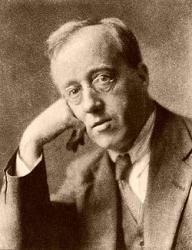
1874 - 1934 Topics: Grace; Harvest; Judgment; The Life of the Nations; Mercy; Sovereignty of God; Thanksgiving Composer of "THAXTED" in Glory to God Gustav Holst (b. Chelteham, Gloucestershire, England, September 21, 1874, d. London, England, May 25, 1934) was a renowned British composer and musician. Having studied at Cheltenham Grammar School, he soon obtained a professional position as an organist, and later as choirmaster. In 1892, Holst composed a two-act operetta, which so impressed his father that he borrowed the money to send Holst to the Royal College of Music. Severe neuritis in his right hand later caused him to give up the keyboard, and Holst turned to the trombone and composing. In 1895 Holst met Ralph Vaughan Williams, and the two became lifelong friends. Vaughan Williams helped Holst land his first job as a singing teacher. Holst became very interested in Indian and Hindu culture, and composed a number of operas translated from Sanksrit myths. These were not received well in England, however. Holst is best known for his composition, The Planets, as well as
Gustav Holst
Ludwig van Beethoven
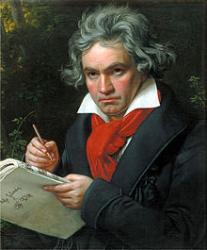
1770 - 1827 Person Name: Beethoven Topics: Adoration; Afflictions For sin; Assurance Enjoyed; Christ Anointed; Christ Grace and Love of; Christians Saved by Grace; Glory of God In Creation; God Hearer of Prayer; God Preserver; Praise For Spiritual Blessings; Praise Of the Lord; Prayer Answers to; Prayer For Divine Favor; Prayer For the Church; Prayer God Hears; Retribution Threatened; Royalty of Christ Judgment His Prerogative; Salvation Prayers for; Strength in God; The Wicked Condemned; The Wicked Prayers for Punishment of; The Wicked Separation from Composer of "[O Lord, to thee I cry]" in Bible Songs A giant in the history of music, Ludwig van Beethoven (b. Bonn, Germany, 1770; d. Vienna, Austria, 1827) progressed from early musical promise to worldwide, lasting fame. By the age of fourteen he was an accomplished viola and organ player, but he became famous primarily because of his compositions, including nine symphonies, eleven overtures, thirty piano sonatas, sixteen string quartets, the Mass in C, and the Missa Solemnis. He wrote no music for congregational use, but various arrangers adapted some of his musical themes as hymn tunes; the most famous of these is ODE TO JOY from the Ninth Symphony. Although it would appear that the great calamity of Beethoven's life was his loss of hearing, which turned to total deafness during the last decade of his life, he composed his greatest works during this period.
Bert Polman
Ludwig van Beethoven
Thomas Kelly
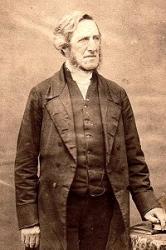
1769 - 1855 Topics: Judgment, Final; King, Christ Our; Praise To God, Jesus Christ; Ascension of Christ; Conqueror, Christ the Author of "Hark! Ten Thousand Harps and Voices" in Psalter Hymnal (Blue) Kelly, Thomas, B.A., son of Thomas Kelly, a Judge of the Irish Court of Common Pleas, was born in Dublin, July 13, 1769, and educated at Trinity College, Dublin. He was designed for the Bar, and entered the Temple, London, with that intention; but having undergone a very marked spiritual change he took Holy Orders in 1792. His earnest evangelical preaching in Dublin led Archbishop Fowler to inhibit him and his companion preacher, Rowland Hill, from preaching in the city. For some time he preached in two unconsecrated buildings in Dublin, Plunket Street, and the Bethesda, and then, having seceded from the Established Church, he erected places of worship at Athy, Portarlington, Wexford, &c, in which he conducted divine worship and preached. He died May 14, 1854. Miller, in his Singers & Songs of the Church, 1869, p. 338 (from which some of the foregoing details are taken), says:—
"Mr. Kelly was a man of great and varied learning, skilled in the Oriental tongues, and an excellent Bible critic. He was possessed also of musical talent, and composed and published a work that was received witli favour, consisting of music adapted to every form of metre in his hymn-book. Naturally of an amiable disposition and thorough in his Christian piety, Mr. Kelly became the friend of good men, and the advocate of every worthy, benevolent, and religious cause. He was admired alike for his zeal and his humility; and his liberality found ample scope in Ireland, especially during the year of famine."
Kelly's hymns, 765 in all, were composed and published over a period of 51 years, as follows:—
(1) A Collection of Psalms and Hymns extracted from Various Authors, by Thomas Kelly, A.B., Dublin, 1802. This work contains 247 hymns by various authors, and an Appendix of 33 original hymns by Kelly.
(2) Hymns on Various Passages of Scripture, Dublin, 1804. Of this work several editions were published: 1st, 1804; 2nd, 1806; 3rd, 1809; 4th, 1812. This last edition was published in two divisions, one as Hymns on Various Passages of Scripture, and the second as Hymns adapted for Social Worship. In 1815 Kelly issued Hymns by Thomas Kelly, not before Published. The 5th edition, 1820, included the two divisions of 1812, and the new hymns of 1815, as one work. To the later editions of 1820, 1826, 1836, 1840, 1846, and 1853, new hymns were added, until the last published by M. Moses, of Dublin, 1853, contained the total of 765.
As a hymn-writer Kelly was most successful. As a rule his strength appears in hymns of Praise and in metres not generally adopted by the older hymn writers. His "Come, see the place where Jesus lay" (from "He's gone, see where His body lay"),"From Egypt lately come"; “Look, ye saints, the sight is glorious"; "On the mountain's top appearing"; "The Head that once was crowned with thorns"; "Through the day Thy love has spared us"; and “We sing the praise of Him Who died," rank with the first hymns in the English language. Several of his hymns of great merit still remain unknown through so many modern editors being apparently adverse to original investigation. In addition to the hymns named and others, which are annotated under their respective first lines, the following are also in common use:—
i. From the Psalms and Hymns, 1802:—
1. Grant us, Lord, Thy gracious presence. Commencement of Divine Worship.
2. Jesus, Immortal King, go on [display]. Missions.
3. Saviour, through the desert lead us. Divine Guidance Desired.
4. The day of rest once more [again] comes round. Sunday.
5. We've no abiding city here. Seeking Heaven.
ii. From the Hymns on Varous Passages of Scripture, first edition, 1804 :—
6. Boundless glory, Lord, be thine. Praise for the Gospel.
7. By whom shall Jacob now arise? Epiphany.
8. Glory, glory to our King. Praise to Christ as King.
9. How pleasant is the sound of praise. Praise for Redemption.
10. How sweet to leave the world awhile. In Retirement, or For a Retreat.
11. Inform I long had bowed the knee. Jesus, the Saviour, or Praise for Salvation.
12. It is finished! sinners, hear it. Good Friday.
13. Jesus, the Shepherd of the sheep. The Good Shepherd.
14. Let reason vainly boast her power. Death.
15. Poor and afflicted, Lord, are Thine. Affliction.
16. Praise we Him to Whose kind favour. Close of Service.
11. Spared a little longer. Safety in God.
18. Stricken, smitten, and afflicted. Passiontide.
ii. From the Hymns, &c, second edition, 1806:—
19. Far from us be grief and sadness. Joy of Believers.
20. Give us room that we may dwell. Missions.
21. Glory, glory everlasting. Praise of Jesus.
22. God has.turned my grief to gladness. Joy after Sorrow.
23. Happy they who trust in Jesus. Peace in Jesus.
24. Hark, the notes of angels singing. Angels praising Jesus.
25. Hark! 'tis a martial sound. Christian Life a Warfare.
26. I hear a sound [voice] that comes from far. The Gospel Message.
27. Jesus is gone up on high. Divine Worship.
28. Now [O] may the Gospel's conquering power. Home Missions. In the 1853 edition of the Hymns it begins “O may the Gospel's conqu'ring force."
29. O Zion, when I think on thee. Desiring Heaven.
30. Praise the Saviour, ye who know Him. Praise of Jesus.
31. See from Zion's sacred mountain. The Fountain of Life.
32. The atoning work is done. Jesus the High Priest.
33. Zion is Jehovah's dwelling. The Church of God.
34. Zion stands by hills surrounded. The Safety of the Church.
35. Zion's King shall reign victorious. Missions.
iv. From the Hymns, &c, 3rd edition, 1809:—
36. Behold the Temple of the Lord. The Church a Spiritual Temple.
37. Blessed Fountain, full of grace. Fountain for Sin.
38. Brethren, come, our Saviour bids us. Holy Communion.
39. Fly, ye seasons, fly still faster. Second Advent Desired.
40. God of Israel, we adore Thee. Evening.
41. Gracious Lord, my heart is fixed. Trust and Peace.
42. Hark, a voice! it comes from heaven. Death.
43. Hark, that shout of rapt'rous joy. Second Advent.
44. If our warfare be laborious. Labour and Rest .
45. Lo, He comes, let all adore Him. Missions.
46. Nothing know we of the season. Time of Second Advent uncertain.
47. O had I the wings of a dove. Holiness and Heaven desired.
48. O where is now that glowing love. Despondency.
49. Our Father sits on yonder throne. God the Father.
50. Ours is a rich and royal Feast. Holy Communion.
51. Shepherd of the chosen number. Safety in the
Good Shepherd.
52. We're bound for yonder land. Life, a Voyage.
53. Welcome sight! the Lord descending. The Advent.
54. What is life? 'tis but a vapour. Death anticipated.
55. Who is this that comes from Edom? Ascension.
56. Why those fears ? Behold 'tis Jesus. Stilling the Sea.
57. Without blood is no remission. Passiontide.
58. Yes, we trust the day is breaking. Missions.
v. FromHymns: Not before Published, 1815:—
59. Behold the Lamb with glory crowned. Exaltation of Christ.
60. God is love, His word has said it. God is Love.
61. God of our salvation, hear us. Opening or Close of Divine Worship.
62. In Thy Name, O Lord, assembling. Commencement of Divine Worship.
63. Keep us, Lord, O [and] keep us ever. Divine Worship.
64. Let sinners saved give thanks, and sing. Praise for Salvation.
65. Praise the Lord Who died to save us. Passiontide.
66. Salvation is of God alone. God the Author of Salvation.
67. Saviour, come, Thy [saints] friends await Thee [are waiting] . Second Advent desired.
68. Sweet were the sounds that reached our ears. Divine Mercy.
69. We'll sing of the Shepherd that died. The Lost Sheep.
70. When we cannot see our way. Trust and Peace.
71. Who is this that calms the ocean? Stilling the Sea.
vi. From the Hymns on F. Passages of Scripture, &c, eds. 1820 and 1826 :-—
72. Grace is the sweetest sound. Divine Grace.
73. Now let a great effectual door. Missions.
74. Now may the mighty arm awake. Missions.
75. Now may the Spirit from above. Home Missions.
76. Sing, sing His lofty praise. Praise of Jesus.
77. Sound, 6ound the truth abroad. Missions.
78. Speed Thy servants, Saviour, speed them. Departure of Missionaries.
vii. From the Hymns on Various Passages, &c, 1836:—
79. Come, O Lord, the heavens rending. Prayer for Blessings.
80. The night is far spent, the day is at hand. The Second Advent.
viii. From the Hymns on Various Passages, &c, circa 1845:—
81. Joyful be the hours today. Sunday.
82. Lord, behold us few and weak. Opening of Divine Service.
83. Meet Thy people, Saviour, meet us. Meetings for Prayer.
84. Saviour, send a blessing to us. Prayer for Blessings.
85. Sing of Jesus, sing for ever. Praise of Jesus.
ix. From the Hymns on Various Passages, &c, 1853:—
86. Precious volume, what thou doest. Holy Scripture.
87. Unfold to us, O Lord, unfold. Divine aid to reading Holy Scripture.
All these hymns, together with those annotated under their respective first lines are in the 1853 edition of Kelly's Hymns published in Dublin by M. Moses, and in London by Simpkin, Marshall & Co. Kelly's musical editions are issued by the same publishers.
-- John Julian, Dictionary of Hymnology (1907)
==================
Kelly, Thomas, p. 615, i. Other hymns in common use are:
1. Behold the Man! How glorious He. (1809.) Good Friday.
2. Jesus the [Thou] Shepherd of the Sheep. (1804.) Good Shepherd.
3. Saved ourselves by Jesu's blood. (1802.) For a Revival.
4. Saviour, 'tis to [unto] Thee. (1853*.) Lent.
5. See the vineyard lately planted. (1806.) Missions. Sometimes given as "See, O Lord, the vineyard planted."
6. Sing aloud to God our strength. (1809.) Praise to the Father.
7. Sing, sing His lofty praise. (1820.) Praise to Jesus. Sometimes as "Hail our eternal King" (p. 615, No. 76).
8. Sing of Him Who bore our guilt. (1853*.) Praise to Jesus.
9. Sing we praise to God above, God our Saviour, &c. (1815.) Praise for Divine Mercy.
10. Sing we praise to God above, Sing we praise, &c. (1853*.) Praise.
11. Sons of Zion, raise your songs. (1820-26) The Exalted Saviour.
12. The Lord Himself will keep. (1809.) From “We're bound for yonder land" (sec p. 615, No. 52.)
13. The God [Lord] of glory dwells on high. (1809.) Humility and Love of Christ.
14. The people of the Lord Are on their way, &c. (1820.) Life a Pilgrimage.
15. Thus saith God of His Anointed. (1809.) Missions.
16. 'Tis to us no cause of sorrow. (1815.) Resignation.
17. To the Ark away, or perish. (1815.) Safety in Jesus only.
18. To our Lord a throne is given. (1838.) Christ the King.
19. Trust ye in the Lord for ever. (1853*.) Trust in God.
20. We'll sing in spite of scorn. (1806.) Christmas. From this "The long-expected morn" is taken.
21. What tongue can tell, what fancy paint. (1806.) Saints in Glory
22. What were Sinai's awful wonders. (1809.) Advent.
23. Whence those sounds symphonious? (1815.) Christmas.
24. While in the [this] world we still [yet] remain. (1806.) Communion of Saints.
25. Yes, 'tis a rough and thorny road. (1809.) Resignation. Sometimes given as "Though rough and thorny be the way."
The dates given above are those of the various editions of Kelly's Hymns. The date 1853* indicates that the hymn is in the 1853 ed. of the Hymns, but had also appeared in a previous edition which we have not seen.
--John Julian, Dictionary of Hymnology, Appendix, Part II (1907)
Thomas Kelly
John Goss
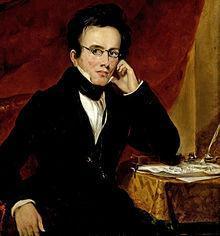
1800 - 1880 Topics: Hope, Christian; Judge, God, Christ As; Judgment, Final; Ascension of Christ; Hell; Conqueror, Christ the Composer of "ARTHUR'S SEAT" in Psalter Hymnal (Blue) John Goss (b. Fareham, Hampshire, England, 1800; d. London, England, 1880). As a boy Goss was a chorister at the Chapel Royal and later sang in the opera chorus of the Covent Garden Theater. He was a professor of music at the Royal Academy of Music (1827-1874) and organist of St. Paul Cathedral, London (1838-1872); in both positions he exerted significant influence on the reform of British cathedral music. Goss published Parochial Psalmody (1826) and Chants, Ancient and Modern (1841); he edited William Mercer's Church Psalter and Hymn Book (1854). With James Turle he published a two-volume collection of anthems and Anglican service music (1854).
Bert Polman
John Goss
M. A. Kidder
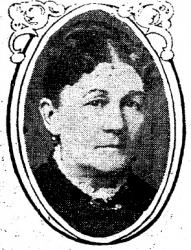
1820 - 1905 Person Name: Mrs. Mary A. Kidder Topics: Book of Judgment; Christ Love of; Faith; Forgiveness; God Love of; Guilt; Heaven; Judgment; Love Author of "Is my name written there" in The Sunday School Hymnal Used pseudonym: Minnie Waters
==========
Mary Ann Pepper Kidder USA 1820-1905. Born at Boston, MA, she was a poet, writing from an early age. She went blind at age 16, but miraculously recovered her sight the following year. She was a member of the Methodist Episcopal Church. In 1844 she married Ellis Usher Kidder, a music publisher, working for the firm founded by his brother, Andrew, and they had three children: Mary Frances, Edward, and Walter. That year they moved to Charlestown, MA, and in 1857 to New York City. When the American Civil War broke out, Ellis enlisted in the 4th Regiment as a private. Mustered in for two years of service, he died of disease in 1862, six days after participating in the Battle of Antietam. Left alone, with three children to care for, her writing hobby became a much needed source of income. She began writing short stories, poems, and articles and submitting them to various magazines and newspapers. For over 25 years she wrote a poem each week to the New York Ledger and others to the Waverly Magazine and New York Fireside Companion. She also frequently contributed to the New York Weekly, Demorest’s Monthly, and Packard’s Monthly. It was estimated that she earned over $80,000 from her verse. She lost two of her children when Walter drowned while swimming, and 18 years later, her daughter, Mary Frances, a talented sketch artist, died of heart disease. Mary Ann was active in the temperance movement and one of the first members of the Sorosis club, a women’s club. She loved children and animals. Her daughter-in-law described her as gentle, patient, always serene, and a good listener. She was fiercely independent and refused to lean on others for support, mentally or materially. Mary Ann lived for 46 years in New York City. She is said to have written 1000+ hymn lyrics. She died at Chelsea, MA, at the home of her brother, Daniel, having lived there two years. It is said that her jet-black hair never turned gray, which was a real grief to her, as she longed for that in advancing age.
John Perry
===========
Kidder, Mary Ann, née Pepper, who was born in Boston, Massachusetts, March 16, 1820, is the author of "Lord, I care not for riches" (Name in the Book of Life desired), and "We shall sleep, but not for ever" (Hope of the Resurrection), both of which are in I. D. Sankey's Sacred Songs & Solos, 1878.
--John Julian, Dictionary of Hymnology, Appendix, Part II (1907)
=====================
Kidder, Mary Ann, née Pepper, p. 1576, i. Mrs. Kidder died at Chelsea, Mass., Nov. 25, 1905. She was a member of the Methodist Episcopal Church, and resided for 46 years in New York City.
--John Julian, Dictionary of Hymnology, New Supplement (1907)
M. A. Kidder
Pages




