You help make Hymnary.org possible. More than 10 million people from 200+ countries found hymns, liturgical resources and encouragement on Hymnary.org in 2025, including you. Every visit affirms the global impact of this ministry.

If Hymnary has been meaningful to you this year, would you take a moment today to help sustain it? A gift of any size—paired with a note of encouragement if you wish—directly supports the server costs, research work and curation that keep this resource freely available to the world.

Give securely online today, or mail a check to:
Hymnary.org
Calvin University
3201 Burton Street SE
Grand Rapids, MI 49546

Thank you for your partnership, and may the hope of Advent fill your heart.

Person Results

Topics:order+of+christian+funerals
In:people

Planning worship? Check out our sister site, ZeteoSearch.org, for 20+ additional resources related to your search.
Showing 21 - 30 of 168Results Per Page: 102050

Rowland Hugh Prichard

1811 - 1887 Person Name: Rowland H. Prichard, 1811-1887 Topics: Order of Christian Funerals Vigils - Hymns Composer of "HYFRYDOL" in Catholic Book of Worship III Rowland H. Prichard (sometimes spelled Pritchard) (b. Graienyn, near Bala, Merionetshire, Wales, 1811; d. Holywell, Flintshire, Wales, 1887) was a textile worker and an amateur musician. He had a good singing voice and was appointed precentor in Graienyn. Many of his tunes were published in Welsh periodicals. In 1880 Prichard became a loom tender's assistant at the Welsh Flannel Manufacturing Company in Holywell. Bert Polman

William Croft

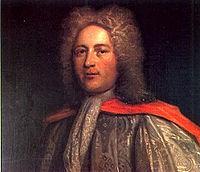
1678 - 1727 Person Name: William Croft, 1678-1727 Topics: Order of Christian Funerals Vigils - Hymns; Order of Christian Funerals Funeral Liturgy Composer (attributed to) of "ST. ANNE" in Catholic Book of Worship III William Croft, Mus. Doc. was born in the year 1677 and received his musical education in the Chapel Royal, under Dr. Blow. In 1700 he was admitted a Gentleman Extraordinary of the Chapel Boyd; and in 1707, upon the decease of Jeremiah Clarke, he was appointed joint organist with his mentor, Dr. Blow. In 1709 he was elected organist of Westminster Abbey. This amiable man and excellent musician died in 1727, in the fiftieth year of his age. A very large number of Dr. Croft's compositions remain still in manuscript. Cathedral chants of the XVI, XVII & XVIII centuries, ed. by Edward F. Rimbault, London: D. Almaine & Co., 1844

David M. Young

1928 - 1997 Person Name: DMY Topics: Order of Christian Funerals Funeral Liturgy Composer of "[What marvels the Lord worked for us]" in Catholic Book of Worship III

Nahum Tate

1652 - 1715 Person Name: Nahum Tate, 1652-1714 Topics: Order of Christian Funerals Funeral Liturgy Author of "Have Mercy, Lord, on Us" in Catholic Book of Worship III Nahum Tate was born in Dublin and graduated from Trinity College, Dublin, B.A. 1672. He lacked great talent but wrote much for the stage, adapting other men's work, really successful only in a version of King Lear. Although he collaborated with Dryden on several occasions, he was never fully in step with the intellectual life of his times, and spent most of his life in a futile pursuit of popular favor. Nonetheless, he was appointed poet laureate in 1692 and royal historiographer in 1702. He is now known only for the New Version of the Psalms of David, 1696, which he produced in collaboration with Nicholas Brady. Poverty stricken throughout much of his life, he died in the Mint at Southwark, where he had taken refuge from his creditors, on August 12, 1715. --The Hymnal 1940 Companion See also in: Hymn Writers of the Church

Katherine Davis

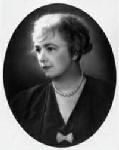
1892 - 1980 Person Name: Katherine K. Davis, 1892-1980 Topics: Order of Christian Funerals Funeral Liturgy Author of "Let All Things Now Living" in Catholic Book of Worship III Katherine Kennicott Davis (b. St. Joseph, MO, 1892; d. Concord, MA, 1980) studied at Wellesley College, Wellesley, Massachusetts, where she was also a teaching assistant in music. From 1921 to 1929 she taught singing and piano in private schools in Concord, Massachusetts, and Philadelphia, Pennsylvania. After 1929 she devoted herself largely to music composition. She wrote some eight hundred pieces, most of which were choral (often writing under several pseudonyms). One of her most popular songs is "The Little Drummer Boy," originally called "Carol of the Drum" (1941). Her other publications include the folk operetta Cinderella (1933) and Songs of Freedom (1948). Bert Polman

John Goss

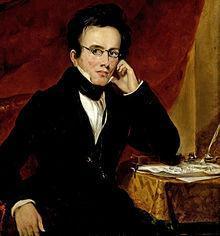
1800 - 1880 Person Name: John Goss, 1800-1880 Topics: Order of Christian Funerals Funeral Liturgy Composer of "LAUDA ANIMA" in Catholic Book of Worship III John Goss (b. Fareham, Hampshire, England, 1800; d. London, England, 1880). As a boy Goss was a chorister at the Chapel Royal and later sang in the opera chorus of the Covent Garden Theater. He was a professor of music at the Royal Academy of Music (1827-1874) and organist of St. Paul Cathedral, London (1838-1872); in both positions he exerted significant influence on the reform of British cathedral music. Goss published Parochial Psalmody (1826) and Chants, Ancient and Modern (1841); he edited William Mercer's Church Psalter and Hymn Book (1854). With James Turle he published a two-volume collection of anthems and Anglican service music (1854). Bert Polman

Andraé Crouch

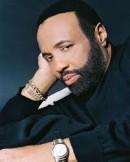
1942 - 2015 Person Name: Andraé Crouch, 1945-2015 Topics: Rites of the Church Order of Christian Funerals: Funeral Liturgy Author of "Soon and Very Soon" in Glory and Praise (3rd. ed.) Born in San Francisco on July 1, 1942, and raised in Los Angeles, Andraé Edward Crouch was the son of bivocational-pastor parents Benjamin and Catherine Crouch. He has recounted that he received the gift of music as a child, when his father was called as a guest preacher and pastoral candidate to a small rural church that had no musicians. He began playing for them at the age of 11. He wrote his first gospel song at 14, and formed his first band, the COGICS, in 1960. In 1965 he formed The Disciples, which lasted until 1979, and as a protegé of Audrey Mieir, Ralph Carmichael, and other leading Contemporary Christian Music artists of the time, went on to win a total of nine Grammies, and numerous other awards. He wrote his first well-known song, "The Blood Will Never Lose Its Power", at the age of 15, but most of his songs that have gained congregational currency flowed from the years when he was active with The Disciples. After The Disciples were disbanded, Crouch continued his recording and performing career, and also became more active in church ministries. After his parents died (1993-94), with his twin sister Sandra he took over the pastorate at the church his parents had led, New Christ Memorial Church of God in Christ in Pacoima, California. In December, 2014, Crouch was hospitalized for treatment of pneumonia and congestive heart failure, and on January 3, 2015, he was readmitted to the hospital following a heart attack. He died there five days later, at the age of 72. His twin sister and co-pastor Sandra Crouch issued the following statement: "Today my twin brother, womb-mate and best friend went home to be with the Lord. Please keep me, my family and our church family in your prayers. I tried to keep him here but God loved him best."

Contractus Hermannus

1013 - 1054 Person Name: Hermanus Contractus Topics: Order of Christian Funerals Vigils - Hymns Author of "Salve Regina" in Catholic Book of Worship III Hermannus Contractus (also known as Herimanus Augiensis or Hermann von Reichenau) was the son of Count Wolverad II von Altshausen. He was born 18 February, 1013 at Altshausen (Swabia). He was a cripple at birth, but intellectually gifted. Therefore his parents sent him to be taught by Abbot Berno on the island of Reichenau. He took his monastic vows here and died on Reichenau 21 September, 1054. He was a mathematician, astronomer, musician, chronicler, and poet, among other things. He is frequently credited as the author of "Alma Redemptoris Mater" and "Salve Regina" Dianne Shapiro, from Schlager, P. (1910). Hermann Contractus. In The Catholic Encyclopedia. New York: Robert Appleton Company. Retrieved October 13, 2014 from New Advent: http://www.newadvent.org/cathen/07266a.htm ================================== Hermannus Contraecus, so called because of his crippled condition, is also known as Hermann of Vöhringen, Hermann of Reichenau, and Hermann der Gebrechliche. He was the son of the Count of Vöhringen in Swabia, and was born on July 18, 1013. He entered the school of St. Gall, circa 1020, and soon developed, although so young, an intense interest in his studies. It is said of him that he rapidly mastered Latin, Greek, and Arabic. History, music, mathematics, philosophy, and theology engaged his attention, and in each study he attained marked success. Some go so far as to say with confidence that he translated Aristotle's Poetics and Rhetoric from the Arabic, but the statement is disputed by others. At thirty years of age he removed from St. Gall to the monastery of Reichenau, where he remained to his death, Sept. 24, 1054. His name is associated with several hymns of historical importance, and notably the following:— 1. Alma Redemptoris, Mater quae pervia coeli. 2. Rex omnipotens die hodierna. 3. Sancti Spiritus adsit nobis gratia. 4. Salve Regina. 5. Veni Sancte spiritus, Et emitte. 6. Veni Sancte spiritus: Reple. 7. Victimae Paschali. The conclusions arrived at in annotations of these hymns concerning their respective authorship will be found somewhat adverse to Hermannus's claims with regard to Nos. 2 and 4, and positively against him with respect to Nos. 3,5 and 7. Some of these conclusions will be found to be utterly opposed to those of Duffield on the same hymns in his Latin Hymn-Writers, &c, 1889, pp. 149-168. This difference of opinion arises mainly out of the fact that the manuscript at St. Gall and at the British Museum were not examined by Duffield, and are much older and more important than any of those with which he was acquainted. --Excerpts from John Julian, Dictionary of Hymnology, Appendix I (1907)

Carey Landry

b. 1944 Person Name: Carey Landry, b. 1944 Topics: Rites of the Church Order of Christian Funerals: Funeral Liturgy Author (vs. 2-4) of "All Is Well with My Soul" in Glory and Praise (3rd. ed.)

Thomas Tallis

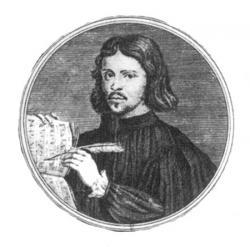
1505 - 1585 Person Name: Thomas Tallis, 1505-1585 Topics: Order of Christian Funerals Vigils - Hymns Composer of "TALLIS' CANON" in Catholic Book of Worship III Thomas Tallis (b. Leicestershire [?], England, c. 1505; d. Greenwich, Kent, England 1585) was one of the few Tudor musicians who served during the reigns of Henry VIII: Edward VI, Mary, and Elizabeth I and managed to remain in the good favor of both Catholic and Protestant monarchs. He was court organist and composer from 1543 until his death, composing music for Roman Catholic masses and Anglican liturgies (depending on the monarch). With William Byrd, Tallis also enjoyed a long-term monopoly on music printing. Prior to his court connections Tallis had served at Waltham Abbey and Canterbury Cathedral. He composed mostly church music, including Latin motets, English anthems, settings of the liturgy, magnificats, and two sets of lamentations. His most extensive contrapuntal work was the choral composition, "Spem in alium," a work in forty parts for eight five-voice choirs. He also provided nine modal psalm tunes for Matthew Parker's Psalter (c. 1561). Bert Polman

Pages


Export as CSV
It looks like you are using an ad-blocker. Ad revenue helps keep us running. Please consider white-listing Hymnary.org or getting Hymnary Pro to eliminate ads entirely and help support Hymnary.org.