You help make Hymnary.org possible. More than 10 million people from 200+ countries found hymns, liturgical resources and encouragement on Hymnary.org in 2025, including you. Every visit affirms the global impact of this ministry.

If Hymnary has been meaningful to you this year, would you take a moment today to help sustain it? A gift of any size—paired with a note of encouragement if you wish—directly supports the server costs, research work and curation that keep this resource freely available to the world.

Give securely online today, or mail a check to:
Hymnary.org
Calvin University
3201 Burton Street SE
Grand Rapids, MI 49546

Thank you for your partnership, and may the hope of Advent fill your heart.

Person Results

Topics:poder+divino
In:people

Planning worship? Check out our sister site, ZeteoSearch.org, for 20+ additional resources related to your search.
Showing 21 - 30 of 56Results Per Page: 102050

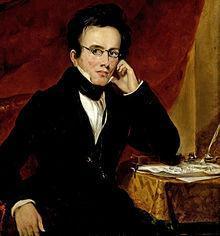
John Goss

1800 - 1880 Topics: Poder Divino Arranger of "ARMAGEDDON" in Celebremos Su Gloria John Goss (b. Fareham, Hampshire, England, 1800; d. London, England, 1880). As a boy Goss was a chorister at the Chapel Royal and later sang in the opera chorus of the Covent Garden Theater. He was a professor of music at the Royal Academy of Music (1827-1874) and organist of St. Paul Cathedral, London (1838-1872); in both positions he exerted significant influence on the reform of British cathedral music. Goss published Parochial Psalmody (1826) and Chants, Ancient and Modern (1841); he edited William Mercer's Church Psalter and Hymn Book (1854). With James Turle he published a two-volume collection of anthems and Anglican service music (1854). Bert Polman

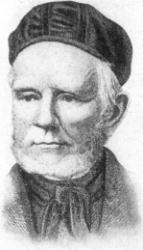
C. G. Gläser

1784 - 1829 Person Name: Carl G. Gläser Topics: Poder Divino Composer of "AZMON" in Celebremos Su Gloria Carl Gotthelf Gläser Germany 1781-1829. Born at Weissenfels, Burgenlandkreis, Sachsen-Anhalt, Germany, he received musical training from his father, after which he attended St. Thomas school in Leipzig. He became an author and composer. At Barmen he taught voice, piano, and violin. He also wrote and conducted chorale music. He died at Barmen. John Perry

Alfredo Colom

1904 - 1971 Person Name: Alfredo Colom M. Topics: Poder Divino Author of "Los que esperan en Jehová" in Celebremos Su Gloria Alfredo Colom was a prolific songwriter from Guatemala. He held public office, but ruined his life with alcohol and was considering suicide when an indigenous Guatemalan Christian gave him a New Testament. Eventually he surrendered his life to Christ serving in music and evangelism on the radio and in travels throughout Central and South America. Footnote from Singing the New Testament, hymn #36

Lowell Mason

1792 - 1872 Topics: Poder Divino Arranger of "AZMON" in Celebremos Su Gloria Dr. Lowell Mason (the degree was conferred by the University of New York) is justly called the father of American church music; and by his labors were founded the germinating principles of national musical intelligence and knowledge, which afforded a soil upon which all higher musical culture has been founded. To him we owe some of our best ideas in religious church music, elementary musical education, music in the schools, the popularization of classical chorus singing, and the art of teaching music upon the Inductive or Pestalozzian plan. More than that, we owe him no small share of the respect which the profession of music enjoys at the present time as contrasted with the contempt in which it was held a century or more ago. In fact, the entire art of music, as now understood and practiced in America, has derived advantage from the work of this great man. Lowell Mason was born in Medfield, Mass., January 8, 1792. From childhood he had manifested an intense love for music, and had devoted all his spare time and effort to improving himself according to such opportunities as were available to him. At the age of twenty he found himself filling a clerkship in a banking house in Savannah, Ga. Here he lost no opportunity of gratifying his passion for musical advancement, and was fortunate to meet for the first time a thoroughly qualified instructor, in the person of F. L. Abel. Applying his spare hours assiduously to the cultivation of the pursuit to which his passion inclined him, he soon acquired a proficiency that enabled him to enter the field of original composition, and his first work of this kind was embodied in the compilation of a collection of church music, which contained many of his own compositions. The manuscript was offered unavailingly to publishers in Philadelphia and in Boston. Fortunately for our musical advancement it finally secured the attention of the Boston Handel and Haydn Society, and by its committee was submitted to Dr. G. K. Jackson, the severest critic in Boston. Dr. Jackson approved most heartily of the work, and added a few of his own compositions to it. Thus enlarged, it was finally published in 1822 as The Handel and Haydn Society Collection of Church Music. Mason's name was omitted from the publication at his own request, which he thus explains, "I was then a bank officer in Savannah, and did not wish to be known as a musical man, as I had not the least thought of ever making music a profession." President Winchester, of the Handel and Haydn Society, sold the copyright for the young man. Mr. Mason went back to Savannah with probably $500 in his pocket as the preliminary result of his Boston visit. The book soon sprang into universal popularity, being at once adopted by the singing schools of New England, and through this means entering into the church choirs, to whom it opened up a higher field of harmonic beauty. Its career of success ran through some seventeen editions. On realizing this success, Mason determined to accept an invitation to come to Boston and enter upon a musical career. This was in 1826. He was made an honorary member of the Handel and Haydn Society, but declined to accept this, and entered the ranks as an active member. He had been invited to come to Boston by President Winchester and other musical friends and was guaranteed an income of $2,000 a year. He was also appointed, by the influence of these friends, director of music at the Hanover, Green, and Park Street churches, to alternate six months with each congregation. Finally he made a permanent arrangement with the Bowdoin Street Church, and gave up the guarantee, but again friendly influence stepped in and procured for him the position of teller at the American Bank. In 1827 Lowell Mason became president and conductor of the Handel and Haydn Society. It was the beginning of a career that was to win for him as has been already stated the title of "The Father of American Church Music." Although this may seem rather a bold claim it is not too much under the circumstances. Mr. Mason might have been in the average ranks of musicianship had he lived in Europe; in America he was well in advance of his surroundings. It was not too high praise (in spite of Mason's very simple style) when Dr. Jackson wrote of his song collection: "It is much the best book I have seen published in this country, and I do not hesitate to give it my most decided approbation," or that the great contrapuntist, Hauptmann, should say the harmonies of the tunes were dignified and churchlike and that the counterpoint was good, plain, singable and melodious. Charles C. Perkins gives a few of the reasons why Lowell Mason was the very man to lead American music as it then existed. He says, "First and foremost, he was not so very much superior to the members as to be unreasonably impatient at their shortcomings. Second, he was a born teacher, who, by hard work, had fitted himself to give instruction in singing. Third, he was one of themselves, a plain, self-made man, who could understand them and be understood of them." The personality of Dr. Mason was of great use to the art and appreciation of music in this country. He was of strong mind, dignified manners, sensitive, yet sweet and engaging. Prof. Horace Mann, one of the great educators of that day, said he would walk fifty miles to see and hear Mr. Mason teach if he could not otherwise have that advantage. Dr. Mason visited a number of the music schools in Europe, studied their methods, and incorporated the best things in his own work. He founded the Boston Academy of Music. The aim of this institution was to reach the masses and introduce music into the public schools. Dr. Mason resided in Boston from 1826 to 1851, when he removed to New York. Not only Boston benefited directly by this enthusiastic teacher's instruction, but he was constantly traveling to other societies in distant cities and helping their work. He had a notable class at North Reading, Mass., and he went in his later years as far as Rochester, where he trained a chorus of five hundred voices, many of them teachers, and some of them coming long distances to study under him. Before 1810 he had developed his idea of "Teachers' Conventions," and, as in these he had representatives from different states, he made musical missionaries for almost the entire country. He left behind him no less than fifty volumes of musical collections, instruction books, and manuals. As a composer of solid, enduring church music. Dr. Mason was one of the most successful this country has introduced. He was a deeply pious man, and was a communicant of the Presbyterian Church. Dr. Mason in 1817 married Miss Abigail Gregory, of Leesborough, Mass. The family consisted of four sons, Daniel Gregory, Lowell, William and Henry. The two former founded the publishing house of Mason Bros., dissolved by the death of the former in 1869. Lowell and Henry were the founders of the great organ manufacturer of Mason & Hamlin. Dr. William Mason was one of the most eminent musicians that America has yet produced. Dr. Lowell Mason died at "Silverspring," a beautiful residence on the side of Orange Mountain, New Jersey, August 11, 1872, bequeathing his great musical library, much of which had been collected abroad, to Yale College. --Hall, J. H. (c1914). Biography of Gospel Song and Hymn Writers. New York: Fleming H. Revell Company.

Lewis E. Jones

1865 - 1936 Topics: Poder Divino Author of "¿Quieres ser salvo?" in Celebremos Su Gloria Pseudonyms: Mary Slater ================ Lewis Edgar Jones USA 1865-1936. Born in Yates City, IL, his family moved near Davenport, IA, where he lived on a farm until age 21. He went into business for awhile, and attended the Moody Bible Institute in Chicago. He was a classmate of evangelist, Billy Sunday. After graduating, he worked for the YMCA in Davenport, IA; Fort Worth, TX (1915, as general secretary); and Santa Barbara, CA (1925 as general secretary). Hymn writing was his avocation, and he wrote 200+, advising that many came from pastors’ sermons. He married Lora May Wright (1872-1950), and they had a daughter, Frances Ellen (1897-1982). He died in Santa Barbara, CA. John Perry

Leonard E. Smith

b. 1942 Person Name: Leonard E. Smith, Jr. Topics: Poder Divino Author of "Reina Dios" in Celebremos Su Gloria Leonard Earl ‘Lenny’ Smith, Jr USA 1942-present. Born at Philadelphia, PA, the son of a career Marine Corp father and Catholic mother. The family moved around frequently due to his father’s transfers. They lived in PA, VA, CA, NC, Guam, and finally NJ. He was raised Protestant, though his mother was a devout Catholic. She would drop the children off at a Protestant church at the insistence of her non-religious husband, then attend her own church. When Smith was 12, his father left the family, he then attended the Catholic church with his mother. He wished to prepare for the priesthood and in 1960 studied at Jordan Evangelical Theological Seminary, Menominee, MI, then at Mt St Paul Seminary, Waukesha, WI. and Mt St Mary’s Seminary, Emmitsburg, MD, where, in 1965, he started writing songs for the guitar masses introduced there. In 1967 he left the seminary, but lead mass at different Catholic churches. He then attended at Augustinian Catholic Villanova University, Villanova, PA. In 1968, over the course of five years, he was a teacher for three Catholic high schools and one public school. After his first year at a high school in Haddon Township, NJ, he was dismissed, due to a ‘strained relationship’ with the principal over a student being abused by another teacher, and he reporting it. The next year he taught at Gloucester Catholic HS, Gloucester, NJ, and had a good year there. Smith married Marian Wehrle, and they had five children: Daniel, Rachel, Megan, David, and Andrew. He and wife Marian became involved in the Catholic Charismatic Movement, that included expressive dancing, and speaking in tongues. In 1970 they attended a Protestant Charismatic church in Philadelphia called The Gospel Temple. For two years Smith lead similar worship at an off-shoot church in NJ, called the Living Word Community, but resigned over concerns about the church’s doctrine of ‘shepherding’. The next year he wished to teach at a public school and taught Latin and English at Cinnaminson HS, Cinnaminson, NJ. During this time, he became involved with the Charismatic Movements and had a dramatic spiritual awakening. He decided to teach his regular coursework Monday-Thursday and teach Bible on Fridays, though many students were Jewish. Parental complaints resulted in his being let go at the end of the school year. In 1970 he returned to Gloucester Catholic HS teaching religion. Along with standard curriculum, he brought his guitar to class, sang, prayed, and read the Bible. He held a once-a-month prayer gathering in town for his students. The priests there were worried that he was starting a cult, and at year-end he was let go. He then took on carpentry and house painting work to support the family. In 1972 he started teaching religion at Bishop Eustace Prep School, Cherry Hill, NJ. He continued bringing his guitar to class and leading mass in the chapel. The head of the religion department refused to let him teach that Jesus was the only Messiah, wanting him to teach that there were many Messiahs, like Martin Luther king, and Mahatma Gandhi. When Smith refused, he was forced to resign. He returned to house painting, and eventually remodeling and building houses. For the next 35 years he worked on houses by day and wrote songs at night, and lead worship in various churches on Sundays. Depressed and without work in 1973, he read Isaiah 52:7 and wrote the gospel song ‘Our God Reigns’. A traveling evangelist, Bob Mumford, heard Smith sing his song at church and loved it. Mumford taught it at each church and conference he visited all over the world during the next couple of years. An Australian Company, Scripture in Song, released a songbook in 1979 with two of Smith’s songs in it, and a Catholic Prayer community in Ann Arbor, MI, also released a songbook and album, after which world-wide attention was brought to his songs, ‘Our God Reigns’ was embraced and used by Protestant and Catholic denominations around the world. It was a favorite of Pope John Paul II, and was used during his North and South American visits in 1999. Pope Benedict XVI heard it sung at his papal mass at Bellahouston Park, Glasgow, Scotland in 2010. Smith was involved with both Catholic and Protestant Charismatics and Pentecostals because both groups had interest in the same things. His home church became the Gospel Temple of Philadelphia. A singer, songwriter, and music publisher of pop, gospel, folk, and contemporary Christian music, Smith, now retired, still works on his music for his publishing company, Great Comfort Records, Clarksboro, NJ. His son, Daniel also started a recording label titled: Sounds Familyre Records, and eldest daughter, Rachel, writes and records worship music on Smith’s record label. John Perry

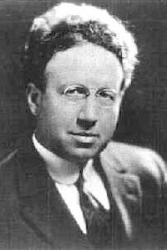
Harry Emerson Fosdick

1878 - 1969 Person Name: Harry E. Fosdick Topics: Poder Divino Author of "Dios de gracia, Dios de gloria" in Celebremos Su Gloria Born: May 24, 1878, Buf­fa­lo, New York. Died: Oc­to­ber 5, 1969, Bronx­ville, New York. Fosdick at­tend­ed Col­gate Un­i­ver­si­ty, Un­ion The­o­lo­gic­al Sem­in­a­ry, and Co­lum­bia Un­i­ver­si­ty. Or­dained in 1903, he pas­tored at the First Bap­tist Church in Mont­clair, New Jer­sey, from 1904 to 1915. At Un­ion The­o­lo­gic­al Sem­in­a­ry, he lec­tured on Bap­tist prin­ci­ples and hom­i­le­tics (1908-1915) and was pro­fess­or of prac­ti­cal the­ol­o­gy (1915-1946). He al­so found time to serve as as­so­ci­ate min­is­ter at the First Pres­by­ter­i­an Church in Man­hat­tan, New York (1919-1925), and pas­tor of Park Av­e­nue Bap­tist Church (1929-1946). His pic­ture was on the co­ver of Time magazine, Sep­tem­ber 21, 1925. His works in­clude: A Guide to Understanding the Bi­ble, 1938 The Living of These Days (an autobiography), 1956 A Book of Pub­lic Pray­ers, 1960 © The Cyber Hymnal™ (www.hymntime.com/tch)

Eugene Thomas

b. 1941 Topics: Poder Divino Arranger of "OUR GOD REIGNS" in Celebremos Su Gloria Eugene Thomas (b. 1941) is an American church musician and arranger best known for his setting of Jack W. Hayford’s Majesty, Worship His Majesty (1981). He has supplied choral endings and harmonizations for many other widely used hymns, crafting accessible SATB textures for congregations and choirs in the late-twentieth-century evangelical tradition. J. S. McDuff (from publisher notes and U.S. copyright filings retrieved 9/15/2025)

George William Warren

1828 - 1902 Person Name: George W. Warren Topics: Poder Divino Composer of "NATIONAL HYMN" in Celebremos Su Gloria George W. Warren (b. Albany, NY, 1828; d. New York, 1902) received his general education at Racine College in Wisconsin, but as a musician he was largely self-trained. An organist in a number of Episcopal churches, he played the organ for thirty years (1870-1900) at St. Thomas Church in New York City. Warren composed anthems and liturgical service music; his hymn tunes were collected in Warren's Hymns and Tunes as Sung in St. Thomas Church (1888). Bert Polman

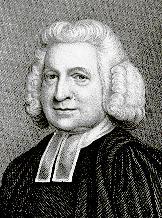
Charles Wesley

1707 - 1788 Topics: Poder Divino Author of "Oh, que tuviera lenguas mil" in Celebremos Su Gloria Charles Wesley, M.A. was the great hymn-writer of the Wesley family, perhaps, taking quantity and quality into consideration, the great hymn-writer of all ages. Charles Wesley was the youngest son and 18th child of Samuel and Susanna Wesley, and was born at Epworth Rectory, Dec. 18, 1707. In 1716 he went to Westminster School, being provided with a home and board by his elder brother Samuel, then usher at the school, until 1721, when he was elected King's Scholar, and as such received his board and education free. In 1726 Charles Wesley was elected to a Westminster studentship at Christ Church, Oxford, where he took his degree in 1729, and became a college tutor. In the early part of the same year his religious impressions were much deepened, and he became one of the first band of "Oxford Methodists." In 1735 he went with his brother John to Georgia, as secretary to General Oglethorpe, having before he set out received Deacon's and Priest's Orders on two successive Sundays. His stay in Georgia was very short; he returned to England in 1736, and in 1737 came under the influence of Count Zinzendorf and the Moravians, especially of that remarkable man who had so large a share in moulding John Wesley's career, Peter Bonier, and also of a Mr. Bray, a brazier in Little Britain. On Whitsunday, 1737, [sic. 1738] he "found rest to his soul," and in 1738 he became curate to his friend, Mr. Stonehouse, Vicar of Islington, but the opposition of the churchwardens was so great that the Vicar consented that he "should preach in his church no more." Henceforth his work was identified with that of his brother John, and he became an indefatigable itinerant and field preacher. On April 8, 1749, he married Miss Sarah Gwynne. His marriage, unlike that of his brother John, was a most happy one; his wife was accustomed to accompany him on his evangelistic journeys, which were as frequent as ever until the year 1756," when he ceased to itinerate, and mainly devoted himself to the care of the Societies in London and Bristol. Bristol was his headquarters until 1771, when he removed with his family to London, and, besides attending to the Societies, devoted himself much, as he had done in his youth, to the spiritual care of prisoners in Newgate. He had long been troubled about the relations of Methodism to the Church of England, and strongly disapproved of his brother John's "ordinations." Wesley-like, he expressed his disapproval in the most outspoken fashion, but, as in the case of Samuel at an earlier period, the differences between the brothers never led to a breach of friendship. He died in London, March 29, 1788, and was buried in Marylebone churchyard. His brother John was deeply grieved because he would not consent to be interred in the burial-ground of the City Road Chapel, where he had prepared a grave for himself, but Charles said, "I have lived, and I die, in the Communion of the Church of England, and I will be buried in the yard of my parish church." Eight clergymen of the Church of England bore his pall. He had a large family, four of whom survived him; three sons, who all became distinguished in the musical world, and one daughter, who inherited some of her father's poetical genius. The widow and orphans were treated with the greatest kindness and generosity by John Wesley. As a hymn-writer Charles Wesley was unique. He is said to have written no less than 6500 hymns, and though, of course, in so vast a number some are of unequal merit, it is perfectly marvellous how many there are which rise to the highest degree of excellence. His feelings on every occasion of importance, whether private or public, found their best expression in a hymn. His own conversion, his own marriage, the earthquake panic, the rumours of an invasion from France, the defeat of Prince Charles Edward at Culloden, the Gordon riots, every Festival of the Christian Church, every doctrine of the Christian Faith, striking scenes in Scripture history, striking scenes which came within his own view, the deaths of friends as they passed away, one by one, before him, all furnished occasions for the exercise of his divine gift. Nor must we forget his hymns for little children, a branch of sacred poetry in which the mantle of Dr. Watts seems to have fallen upon him. It would be simply impossible within our space to enumerate even those of the hymns which have become really classical. The saying that a really good hymn is as rare an appearance as that of a comet is falsified by the work of Charles Wesley; for hymns, which are really good in every respect, flowed from his pen in quick succession, and death alone stopped the course of the perennial stream. It has been the common practice, however for a hundred years or more to ascribe all translations from the German to John Wesley, as he only of the two brothers knew that language; and to assign to Charles Wesley all the original hymns except such as are traceable to John Wesley through his Journals and other works. The list of 482 original hymns by John and Charles Wesley listed in this Dictionary of Hymnology have formed an important part of Methodist hymnody and show the enormous influence of the Wesleys on the English hymnody of the nineteenth century. -- Excerpts from John Julian, Dictionary of Hymnology (1907) ================== Charles Wesley, the son of Samuel Wesley, was born at Epworth, Dec. 18, 1707. He was educated at Westminster School and afterwards at Christ Church, Oxford, where he graduated M.A. In 1735, he took Orders and immediately proceeded with his brother John to Georgia, both being employed as missionaries of the S.P.G. He returned to England in 1736. For many years he engaged with his brother in preaching the Gospel. He died March 29, 1788. To Charles Wesley has been justly assigned the appellation of the "Bard of Methodism." His prominence in hymn writing may be judged from the fact that in the "Wesleyan Hymn Book," 623 of the 770 hymns were written by him; and he published more than thirty poetical works, written either by himself alone, or in conjunction with his brother. The number of his separate hymns is at least five thousand. --Annotations of the Hymnal, Charles Hutchins, M.A., 1872.

Pages


Export as CSV
It looks like you are using an ad-blocker. Ad revenue helps keep us running. Please consider white-listing Hymnary.org or getting Hymnary Pro to eliminate ads entirely and help support Hymnary.org.