You help make Hymnary.org possible. More than 10 million people from 200+ countries found hymns, liturgical resources and encouragement on Hymnary.org in 2025, including you. Every visit affirms the global impact of this ministry.

If Hymnary has been meaningful to you this year, would you take a moment today to help sustain it? A gift of any size—paired with a note of encouragement if you wish—directly supports the server costs, research work and curation that keep this resource freely available to the world.

Give securely online today, or mail a check to:
Hymnary.org
Calvin University
3201 Burton Street SE
Grand Rapids, MI 49546

Thank you for your partnership, and may the hope of Advent fill your heart.

Person Results

Topics:proper+12
In:people

Planning worship? Check out our sister site, ZeteoSearch.org, for 20+ additional resources related to your search.
Showing 21 - 30 of 210Results Per Page: 102050

Hugh Wilson

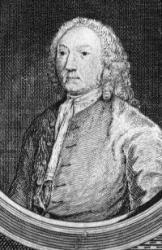
1766 - 1824 Person Name: Hugh Wilson, 1766-1824 Topics: Year C Proper 12 Composer of "MARTYRDOM" in Complete Anglican Hymns Old and New Hugh Wilson (b. Fenwick, Ayrshire, Scotland, c. 1766; d. Duntocher, Scotland, 1824) learned the shoemaker trade from his father. He also studied music and mathematics and became proficient enough in various subjects to become a part-­time teacher to the villagers. Around 1800, he moved to Pollokshaws to work in the cotton mills and later moved to Duntocher, where he became a draftsman in the local mill. He also made sundials and composed hymn tunes as a hobby. Wilson was a member of the Secession Church, which had separated from the Church of Scotland. He served as a manager and precentor in the church in Duntocher and helped found its first Sunday school. It is thought that he composed and adapted a number of psalm tunes, but only two have survived because he gave instructions shortly before his death that all his music manuscripts were to be destroyed. Bert Polman

William Knapp

1698 - 1768 Person Name: William Knapp, 1698-1768 Topics: Proper 12 Year C Composer of "WAREHAM" in Common Praise Born: 1698, Ware­ham, Dor­set­shire, Eng­land. Died: Sep­tem­ber 26, 1768, Poole, Dor­set­shire, Eng­land. Buried: Poole, Dor­set­shire, Eng­land.

Samuel Longfellow

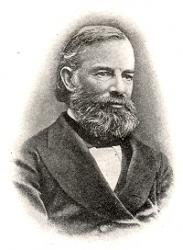
1819 - 1892 Topics: Year C Proper 12 Author of "I Look to You in Every Need" in The New Century Hymnal Longfellow, Samuel, B. A., brother of the Poet, was born at Portland, Maine, June 18, 1819, and educated at Harvard, where he graduated in Arts in 1839, and in Theology in 1846. On receiving ordination as an Unitarian Minister, he became Pastor at Fall River, Massachusetts, 1848; at Brooklyn, 1853; and at Germantown, Pennsylvania, 1860. In 1846 he edited, with the Rev. S. Johnson (q. v.), A Book of Hymns for Public and Private Devotion. This collection was enlarged and revised in 1848. In 1859 his Vespers was published, and in 1864 the Unitarian Hymns of the Spirit , under the joint editorship of the Rev. S. Johnson and himself. His Life of his brother, the Poet Longfellow, was published in 1886. To the works named he contributed the following hymns:— i. To A Book of Hymns , revised ed., 1848. 1. Beneath the shadow of the Cross. Love. 2. 0 God, thy children gathered here. Ordination. ii. To the Vespers 1859. 3. Again as evening's shadow falls. Evening. 4. Now on land and sea descending. Evening. iii. To the Hymns of the Spirit, 1864. 5. A voice by Jordan's shore. Advent. 6. Father, give Thy benediction. Ordination. 7. Go forth to life, 0 child of earth. Life's Mission. 8. God of ages and of nations. Holy Scriptures. 9. Holy Spirit, Truth divine. The Holy Spirit desired. 10. I look to Thee in every need. Trust in God. 11. In the beginning was the Word. The Word. 12. Love for all, and can it be? Lent. The Prodigal Son. 13. 0 God, in Whom we live and move. God's Law and Love. 14. 0 God, Thou Giver of all good. Prayer for Food. 15. O still in accents sweet and strong. Missions. 16. 0 Thou, Whose liberal sun and rain. Anniversary of Church dedication. 17. One holy Church of God appears. The Church Universal. 18. Out of the dark, the circling sphere. The Outlook. 19. Peace, peace on earth! the heart of man for ever. Peace on Earth. 20. The loving Friend to all who bowed. Jesus of Nazareth. 21. ’Tis winter now, the fallen snow. Winter. Of these, hymn No. 2 was written for the Ordination of E. E. Hale (q. v.), at Worcester, 1846. Several are included in Martineau's Hymns, 1873. Died Oct. 3, 1892. [Rev. F. M. Bird, M.A.] --John Julian, Dictionary of Hymnology (1907), p. 685 =============== Longfellow, S., p. 685, i. Since Mr. Longfellow's death on Oct. 3, 1892, his hymns have been collected by his niece, Miss Alice Longfellow, as Hymns and Verses(Houghton, Mifflin & Co., 1904.) From this work we find many of the hymns signed Anon, in the Index to Longfellow and Johnson's Hymns of the Spirit, 1864, were his; several of these, including E. Osier's "O God unseen, yet ever near," were popular English hymns which he rewrote from his own theological standpoint. These re¬written hymns are very widely used by Unitarians and others. During the last ten years the following additional hymns by S. Long¬fellow have come into common use:— 1. Eternal One, Thou living God. Faith in God. 2. God of the earth, the sky, the sea. God in Nature. 3. God's trumpet wakes the slumbering world. Call to duty. 4. Light of ages and of nations. God in and through all time. 5. Lo, the earth is risen again. Spring. (1876.) 6. Now while we sing our closing psalm. Close of Worship. 7. O Life that maketh all things new. Unity. (1874.) 8. O Thou in Whom we live and move. The Divine Law. 9. The summer days are come again. Summer. From his hymn,"The sweet[bright] June days are come again." 10. Thou Lord of lite, our saving health. In Sickness. (1886.) Of these hymns Nos. 2, 3 appeared in the Hymns of the Spirit, 1864, and all with the dates appended in Hymns and Verses, 1904. --John Julian, Dictionary of Hymnology, New Supplement (1907) ================== http://en.wikipedia.org/wiki/Samuel_Longfellow

Richard Frederick Littledale

1833 - 1890 Person Name: Richard Frederick Littledale (1833-1890) Topics: Proper 12 Year B Translator of "Come down, O Love divine" in Ancient and Modern Richard Frederick Littledale (b. Dublin, 1833; d. London, 1890) entered Trinity College, Dublin, as a foundation scholar, graduated with a bachelors degree in classics, a Masters of Divinity in 1858, then a Bachelors and Doctorate in Civil Law at Oxford in 1862. From 1856 to 1857 he was the curate of St. Matthew in Thorpe Hamlet, Norfolk, and from 1857 to 1861 was the curate of St. Mary the Virgin, in Soho, London. For the remainder of his life he suffered from chronic illness and spent most of his time writing. He authored many books and pamphlets on Anglican liturgy, theology, and the church’s engagement with society, and completed his good friend John Mason Neale’s work on the psalms after Neale died in 1866. Laura de Jong ================ Littledale, Richard Frederick, LL.D., D.C.L., son of John Richard Littledale, merchant, was born at Dublin on the 14th of Sept, 1833, and was educated at Bective House Seminary, and Trinity College, Dublin. His University course was distinguished. In 1852 he became a University Scholar; in 1854 he was first class in Classics and gold medallist; in 1856 he won the Berkeley gold medal (for Greek), and other honours. He graduated B.A., 1855, M.A., 1858, LL.D., 1862, and D.C.L. at Oxford, 1862. Taking Holy Orders in 1856, he was Curate of St. Matthew's, in Thorpe Hamlet, Norwich, from 1856 to 1857, and of St. Mary the Virgin, Soho, London, from 1857 to 1861. Through ill-health he retired from parochial work in 1861, and devoted himself to literature. Dr. Littledale's publications amount to about fifty in all, and embrace Theological, Historical, Liturgical, and Hymnological subjects chiefly. His prose works include:— (1) Application of Colour to the Decoration of Churches, 1857; (2) Religious Communities of Women in the Early Church, 1862; (3) Catholic Ritual in the Church of England, 1861; (4) Continuation of Dr. Neale's Commentary on the Psalms, vols. ii., iii., iv., 1868-74; (5) Commentary on the Song of Songs, 1869; (6) The Petrine Claims, 1878-84; (7) Plain Reasons against joining the Church of Rome, 1880, &c.; (8) Short History of the Council of Trent; and several articles in the Encyclopaedia Britannica, 1882-88. His contributions to periodical literature have been also extensive and valuable. Dr. Littledale's Liturgical, Devotional, and Hymnological works include:— (1) Offices of the Holy Eastern Church, in the Original Greek, with translation into English, Notes, &c, 1863; (2) Carols for Christmas and Other Seasons, 1863; (3)The Priest's Prayer Book, with hymns, 1864, and with Brief Pontifical in 1870 and later editions; (4)The People's Hymnal, 1867 ; (5) The Children's Bread. A Communion Office for the Young, with hymns, 1868; (6) Primitive Liturgies and Translations, 1868-69; (7) Children at Calvary: being The Stations of the Cross in Metre for Singing, 1872; (8) the Christian Passover, 1873; (9) The Altar Manual, 1863-77. He was joint Editor of Nos. 3, 4, 8 and 9 with the Rev. J. E. Vaux; and of No. 6 with Dr. Neale. In addition to a large number of hymns, original and translated, in the above works, Dr. Littledale has also directly contributed original and translated hymns to:— (1) Lyra Eucharistica, 1863; (2) Lyra Messianica, 1864; (3) Lyra Mystica, 1865; (4) The Eucharistic Hymnal, 1877; (5) The Roman Breviary in English, by the Marquess of Bute, 1879; (6) The Altar Hymnal, 1884; (7) Supplement to Hymns Ancient & Modern, 1889; (8) to the Night Hours of the Church; (9) to the St. Margaret's Hymnal [East Grinstead], 1875; and (10) to the Church Times, The Guardian, &c, &c. Dr. Littledale's Hymnological works in verse consist of translations of Danish, Swedish, Greek, Latin, Syriac, German, and Italian hymns, together with original Carols, Hymns, and Metrical Litanies. His original hymns remain to be noted. These include the following:— i. In the Priest's Prayer Book, 1864 :— 1. Captain of Salvation. Christian Warfare. 2. Christ, on Whose Face the soldiers. Passiontide. 3. Christ, Who hast for sinners suffered. Passiontide. 4. God the Father, from on high. For the Sick. 5. Lord Jesu, by Thy passion. Passiontide. 6. Lord, Who in pain and weariness. Passiontide. 7. 0 Jesu, in Thy torture. Passiontide. In Meditations and Prayers on the Passion of Our Lord Jesus Christ, 1863. 8. 0 Lord, to Whom the spirits live. All Souls. 9. The clouds of sorrow rest upon mine eyes. For the Sorrowing. ii. In the People's Hymnal, 1867:— 10. Christ, our song we lift to Thee. Blessed Virgin Mary. 11. Christ, our Sun, on us arose. Whitsuntide. In Carols for Christmas, &c, 3rd series, 1864. 12. Christ, the Lord, Whose mighty hand. Prayer for Peace. 13. Day is past and gone. Evening. In the Church Times, Feb. 17, 1866. 14. Eternal Shepherd, God most high. Vacancy of a See or Parish. 15. Eternal Wisdom, God most high. Common of Doctors. 16. God eternal, infinite. Septuagesima. 17. Hidden Saviour, great High Priest. Holy Communion. 18. I believe in God the Father. The Creed. 19. I worship Thee, Lord Jesu. Holy Communion. In the Church Times, May 10, 1865. 20. In Paradise reposing. Burial of a Child. 21. In songs of glad thanksgiving. General Thanksgiving. 22. Lord, Whose goodwill is ever sure. In time of Famine. 23. Now the sun is in the skies. Morning. In the Church Times, Jan. 27, 1866. 24. 0 God of mercy, God of love. For Rain. 25. 0 God, Who metest in Thine hand. For those at Sea. 26. 0 God, Whose Sole-Begotten left. Almsgiving. 27. 0 sing to the Lord, Whose bountiful hand. Thanksgiving for Rain. 28. Set upon Sion's wall. Ember Days. 29. The Cedar of Lebanon, Plant of renown. Christmas. First published in Sedding's Christmas Carols, 1863. 30. The fight is o'er, the crown is won. Burial of a Sister of Mercy. 31. The wintry time hath ended. Thanksgiving for Fair Weather. 32. We are marching through the desert. Processional. 33. When the day hath come at last. The Judgment. In addition to these, a few of the more widely used of Dr. Littledale's original hymns, as "From hidden source arising," and others, are annotated under their respective first lines. In the People's Hymnal, 1867, Dr. Littledale adopted the following signatures:— A. L. P., i.e., A London Priest. B., i.e., An initial of a former address. B. T., i.e., The initials of a former address. D. L., i.e. Dr. Littledale. F., i.e., Frederick. F. R., i.e., Frederick Richard. L., i.e., Littledale. P. C. E., i.e., Priest of the Church of England. P. P. Bk., i.e., Priest's Prayer Book. Taken as a whole, Dr. Littledale's translations from the seven languages named above are characterised by general faithfulness to the originals, great simplicity of diction, good metre, smooth rhythm, and deep earnestness. His original compositions are usually on special subjects, for which, at th$ time they were written, there were few hymns, and are marked by the same excellent features of a good hymn as his translations. His main object throughout is to teach through Praise and Prayer. --John Julian, Dictionary of Hymnology (1907) ====================== Littledale, Richard F., p. 679, ii. He died at Red Lion Square, London, Jan. 11, 1890. --John Julian, Dictionary of Hymnology, Appendix, Part II (1907)

Bland Tucker

1895 - 1984 Person Name: Francis Bland Tucker Topics: Proper 12 Year B Author of "Our Parent, by Whose Name" in Voices United Francis Bland Tucker (born Norfolk, Virginia, January 6, 1895). The son of a bishop and brother of a Presiding bishop of the Episcopal Church, he was educated at the University of Virginia, B.A., 1914, and at Virginia Theological Seminary, B.D., 1920; D.D., 1944. He was ordained deacon in 1918, priest in 1920, after having served as a private in Evacuation Hospital No.15 of the American Expeditionary Forces in France during World War I. His first charge was as a rector of Grammer Parish, Brunswick County, in southern Virginia. From 1925 to 1945, he was rector of historic St. John's Church, Georgetown, Washington, D.C. Then until retirement in 1967 he was rector of John Wesley's parish in Georgia, old Christ Church, Savannah. In "Reflections of a Hymn Writer" (The Hymn 30.2, April 1979, pp.115–116), he speaks of never having a thought of writing a hymn until he was named a member of the Joint Commission on the Revision of the Hymnal in 1937 which prepared the Hymnal 1940

Frederick Lucian Hosmer

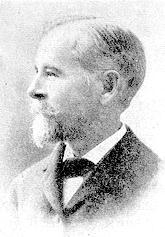
1840 - 1929 Person Name: Frederick Lucian Hosmer, 1840-1929 Topics: Year C Proper 12 Author of "Thy kingdom come! " in Complete Anglican Hymns Old and New Hosmer, Frederick Lucian, B.A., was born at Framingham, Mass., in 1840, and educated at Harvard, where he graduated B.A. in 1869. Entering the Unitarian Ministry in 1872 he has held charges in Quincy, Ill., 1872-77; Cleveland, Ohio, 1878-92; St. Louis, 1894-99; and since 1899, at Berkeley, Cal. His Way of Life, 1877, was a compilation of Prayers and Responsive Services for Sunday Schools. Of Unity Hymns and Carols, 1880, he was joint editor with W. C. Gannett and J. V. Blake. His hymns were published jointly by him and W. C. Gannett (q.v.), as The Thought of God in Hymns and Poems (Boston: Little, Brown & Co.), 1st Series, 1885; 2nd Series, 1894. Of his 56 hymns in this work the following have come into common use, for the most part during the past ten years:— 1. Father, to Thee we look in all our sorrow. [Trust in God.] Written in 1881 upon the death of a member of the author's congregation, and published in The Thought of God, 1st Series, 1885. 2. From age to age how grandly rise. [Unity.] Written for the annual festival of the Free Religious Assoc, Boston, June 2, 1899, and first published in Souvenir Festival Hymns, 1899. Subsequently altered by the author to "From age to age the prophet's vision." 3. From age to age they gather, all the brave of heart and strong. [Victory of Truth.] "Written in 1891 for the Dedication of Unity Church, Decorah, Iowa, and published in The Thought of God, 2nd Series, 1894. 4. From many ways and wide apart. [College or School Reunion.] Dated in The Thought of God, 2nd Series, 1894, as having been written in 1890. 5. Go not, my soul, in search of Him. [God Within.] Written in 1879, printed in the Boston Christian Register, May 31, 1879, and included in The Thought of God, 1st Series, 1885, with the title, "The Indwelling God." 6. I cannot think of them as dead. [Eternal Life.] Written in 1882, and first published in The Thought of God, 1st Series, 1885, and entitled "My Dead." in the English collections it is usually given as "We cannot think of them as dead." 7. I little see, I little know. [Trust.] "A Psalm of Trust," written in 1883, first appeared in the Boston Christian Register, and again in The Thought of God, 1st Series, 1885. 8. Immortal by their deed and word. [The Spirit of Jesus.] Written in 1880, and first published in Unity Hymns and Carols, Chicago, Ill., 1880, and then in The Thought of God, 1st Series, 1885. 9. Many things in life there are. [Mystery in all Things.] Written in 1885, and first published in The Thought of God, 1st Series, 1885, with the title "Passing Understanding," and the quotation "The Peace of God which passeth all understanding." 10. Not always on the mount may we. [On the Mount.] This lesson from the Transfiguration was written in 1882, and published in the Chicago Unity, April 1, 1884. After revision by the author, it was included in the 1st Series of The Thought of God, 1885. 11. Not when, with self dissatisfied. [Lent.] Written in 1891, and given in The Thought of God, 2nd series, 1894, p. 33. It is in The Public School Hymn Book, 1903, and others. 12. O beautiful, my country. [National Hymn.] As “Our Country," written in 1884, and published in the Chicago Unity Festivals, 1884; and again in The Thought of God, 1885. 13. O Light, from age to age the same. [Dedication Anniversary.] Written in 1890 for the fiftieth anniversary of the Second Congregational Church (Unitarian), Quincy, 111. Included in The Thought of God, 2nd Series, 1894, and entitled "From Generation to Generation." 14. O Lord of Life, where'er they be. [Life in God.] "Written in 1888 for Easter service in Author's own church," and first published in the Chicago Unit, and again in The Thought of God, 2nd Series, 1894. The "Alleluia!" refrain, which is added in some collections to each verse, is appended, in the original, to the last verse only. 15. O Name, all other names above. [Trust in God.] Under the title "Found. 'They that know Thy name will put their trust in Thee!’ this hymn, written in 1878, was given in The Thought of God, 1st Series, 1885. 16. O Prophet souls of all the years. [Unity.] “Written in 1893 for, and sung at, the Unitarian gathering in connection with The World's Parliament of Religions (World's Fair), Chicago, Sep., 1893," and included in The Thought of God, 2nd Series, 1894, and entitled "One Law, One Life, one Love." 17. O Thou, in all Thy might so far. [God All in All.] This hymn, given in The Thought of God, 1st Series, 1885, with the title "The Mystery of God," was written in 1876, and first published in the New York Inquirer. 18. O thou in lonely vigil led. This encouragement for lonely workers was written for the "Emerson Commemoration, W. U. C, 1888," and included in The Thought of God, 2nd Series, 1894. 19. O Thou, Who art of all that is. [Divine Guidance.] Under the title "Through unknown paths," this hymn was included in The Thought of God, 1st Series, 1885. It was written in 1877. 20. O Thou, Whose Spirit witness bears. [Dedication of a Place of Worship.] Written for the Dedication of First Unitarian Church, Omaha, Feb. 6, 1891, and published in The Thought of God, 2nd Series, 1894, with the title "The Inward Witness," and the subscription "For T. K., Omaha, 1801." 21. On eyes that watch through sorrow's night. [Easter] A Carol for Easter Morn, written in 1890 for the author's congregation, and published in The Thought of God, 2nd Series, 1894. 22. One thought I have, my ample creed. [The Thought of God.] This is the initial hymn to the collection The Thought of God, 1st Series, 1885, and supplies the title to the work. It was written in 1880, and first published in the Chicago Unity Hymns and Carols, 1880, and then in The Thought of God, 1885. 23. The rose is queen among the flowers. [Flower Service.] "Written in 1875, first published in The Sunnyside, a song book for Sunday Schools, and again in The Thought of God, 1st Series, 1885, under the title "Flower Sunday." 24. Thy kingdom come, — on bended knee. [Missions.] "Written in 1891 for the Commencement of the Meadville Theological School (Meadville, Pa.), June 12, 1891, and published in The Thought of God, 2nd Series, 1894," under the title "The Day of God," and the subscription, "M. T. S., June 12, 1891." 25. We pray no more, made lowly wise, For miracle and sign. [Greater Faith Desired.] Written in 1879, and first published in The Christian Register (Boston), Mar. 22 of that year, under the title 'The Larger Faith.'" Included under the same title in The Thought of God, 1st Series, 1885. Sometimes given as "Made lowly wise, we pray no more." 26. When courage fails, and faith burns low. [Victory of Truth.] Under the title "Loyalty," this hymn was given in The Thought of God, 1st Series, 1885. It was written in 1881. 27. Where men on mounts of vision Have passed the veil within. [Dedication of a Place of Worship.] "Written in 1891 for the Dedication of First Unitarian Church, Oakland, California." Included in The Thought of God, 2nd Series, 1894, entitled "Holy Places," and subscribed " For C. W. W., Oakland, Cal., 1891." These annotations are from manuscript notes supplied to us by the author. Of these hymns all are in common use in America, and more than one half in Great Britain, mainly by Unitarians and Congregationalists. Amongst Unitarian hymn-writers of the last twenty years Mr. Hosmer is the most powerful and original known to us. --John Julian, Dictionary of Hymnology, New Supplement (1907)

Catherine Winkworth

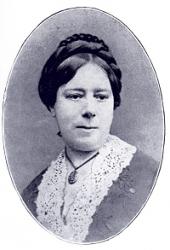
1827 - 1878 Topics: Proper 12 Year C Translator (into English) of "Now Thank We All Our God" in Voices United Catherine Winkworth (b. Holborn, London, England, 1827; d. Monnetier, Savoy, France, 1878) is well known for her English translations of German hymns; her translations were polished and yet remained close to the original. Educated initially by her mother, she lived with relatives in Dresden, Germany, in 1845, where she acquired her knowledge of German and interest in German hymnody. After residing near Manchester until 1862, she moved to Clifton, near Bristol. A pioneer in promoting women's rights, Winkworth put much of her energy into the encouragement of higher education for women. She translated a large number of German hymn texts from hymnals owned by a friend, Baron Bunsen. Though often altered, these translations continue to be used in many modern hymnals. Her work was published in two series of Lyra Germanica (1855, 1858) and in The Chorale Book for England (1863), which included the appropriate German tune with each text as provided by Sterndale Bennett and Otto Goldschmidt. Winkworth also translated biographies of German Christians who promoted ministries to the poor and sick and compiled a handbook of biographies of German hymn authors, Christian Singers of Germany (1869). Bert Polman ======================== Winkworth, Catherine, daughter of Henry Winkworth, of Alderley Edge, Cheshire, was born in London, Sep. 13, 1829. Most of her early life was spent in the neighbourhood of Manchester. Subsequently she removed with the family to Clifton, near Bristol. She died suddenly of heart disease, at Monnetier, in Savoy, in July, 1878. Miss Winkworth published:— Translations from the German of the Life of Pastor Fliedner, the Founder of the Sisterhood of Protestant Deaconesses at Kaiserworth, 1861; and of the Life of Amelia Sieveking, 1863. Her sympathy with practical efforts for the benefit of women, and with a pure devotional life, as seen in these translations, received from her the most practical illustration possible in the deep and active interest which she took in educational work in connection with the Clifton Association for the Higher Education of Women, and kindred societies there and elsewhere. Our interest, however, is mainly centred in her hymnological work as embodied in her:— (1) Lyra Germanica, 1st Ser., 1855. (2) Lyra Germanica, 2nd Ser., 1858. (3) The Chorale Book for England (containing translations from the German, together with music), 1863; and (4) her charming biographical work, the Christian Singers of Germany, 1869. In a sympathetic article on Miss Winkworth in the Inquirer of July 20, 1878, Dr. Martineau says:— "The translations contained in these volumes are invariably faithful, and for the most part both terse and delicate; and an admirable art is applied to the management of complex and difficult versification. They have not quite the fire of John Wesley's versions of Moravian hymns, or the wonderful fusion and reproduction of thought which may be found in Coleridge. But if less flowing they are more conscientious than either, and attain a result as poetical as severe exactitude admits, being only a little short of ‘native music'" Dr. Percival, then Principal of Clifton College, also wrote concerning her (in the Bristol Times and Mirror), in July, 1878:— "She was a person of remarkable intellectual and social gifts, and very unusual attainments; but what specially distinguished her was her combination of rare ability and great knowledge with a certain tender and sympathetic refinement which constitutes the special charm of the true womanly character." Dr. Martineau (as above) says her religious life afforded "a happy example of the piety which the Church of England discipline may implant.....The fast hold she retained of her discipleship of Christ was no example of ‘feminine simplicity,' carrying on the childish mind into maturer years, but the clear allegiance of a firm mind, familiar with the pretensions of non-Christian schools, well able to test them, and undiverted by them from her first love." Miss Winkworth, although not the earliest of modern translators from the German into English, is certainly the foremost in rank and popularity. Her translations are the most widely used of any from that language, and have had more to do with the modern revival of the English use of German hymns than the versions of any other writer. -- John Julian, Dictionary of Hymnology (1907) ============================ See also in: Hymn Writers of the Church

Henry Percy Smith

1825 - 1898 Topics: Proper 12 Year C Composer of "MARYTON" in Voices United Henry Percy Smith (b. Malta, 1825; d. Bournemouth, Hampshire, England, 1898) was educated at Balliol College, Oxford, England, and ordained a priest in the Church of England in 1850. He served five churches, including St. Michael's York Town in Farnborough (1851-1868), Great Barton in Suffolk (1868-1882), Christ Church in Cannes, France (1882-1892), and the Cathedral in Gibraltar (1892-1898). MARYTON is his only tune found in contemporary hymnals and is thought to be the only tune he published. Bert Polman

Rosamond E. Herklots

1905 - 1987 Topics: Proper 12 Year C Author of "Forgive Our Sins as We Forgive" in Voices United Rosamond E. Herklots was born of British parents in North India. Educated at Leeds University in England, she worked for many years as secretary to an eminent neurologist, and later in the head office of the Association for Spina Bifida and Hydrocephalus in London. She began writing hymns late in life, and some achieved an immediate success. --www.societyholytrinity.org/2007gr-hymnfestcommentary.htm Herklots began writing poetry in her childhood and turned to hymn writing in her adult years. She wrote over seventy hymns, many specifically with children in mind. --Presbyterian Hymnal Companion

John Darwall

1732 - 1789 Topics: Proper 12 Year B Composer of "DARWALL" in Voices United John Darwall (b. Haughton, Staffordshire, England, 1731; d. Walsall, Staffordshire, England, 1789) The son of a pastor, he attended Manchester Grammar School and Brasenose College, Oxford, England (1752-1756). He became the curate and later the vicar of St. Matthew's Parish Church in Walsall, where he remained until his death. Darwall was a poet and amateur musician. He composed a soprano tune and bass line for each of the 150 psalm versifications in the Tate and Brady New Version of the Psalms of David (l696). In an organ dedication speech in 1773 Darwall advocated singing the "Psalm tunes in quicker time than common [in order that] six verses might be sung in the same space of time that four generally are." Bert Polman

Pages


Export as CSV
It looks like you are using an ad-blocker. Ad revenue helps keep us running. Please consider white-listing Hymnary.org or getting Hymnary Pro to eliminate ads entirely and help support Hymnary.org.