You help make Hymnary.org possible. More than 10 million people from 200+ countries found hymns, liturgical resources and encouragement on Hymnary.org in 2025, including you. Every visit affirms the global impact of this ministry.

If Hymnary has been meaningful to you this year, would you take a moment today to help sustain it? A gift of any size—paired with a note of encouragement if you wish—directly supports the server costs, research work and curation that keep this resource freely available to the world.

Give securely online today, or mail a check to:
Hymnary.org
Calvin University
3201 Burton Street SE
Grand Rapids, MI 49546

Thank you for your partnership, and may the hope of Advent fill your heart.

Person Results

Topics:waiting+upon+god+
In:people

Planning worship? Check out our sister site, ZeteoSearch.org, for 20+ additional resources related to your search.
Showing 21 - 30 of 56Results Per Page: 102050

Christian Strover

1932 - 2020 Person Name: Christian Strover Topics: Waiting upon God Composer of "SILENCE" in Trinity Hymnal (Rev. ed.) Christian T. Strover (b. Colchester, Essex, England, 1932) received the B.Litt. and MA degrees from Hertford College in Oxford, England. He was director of music at Emanuel School (Battersea Rise), 1956-1997) and organist and choirmaster at Christ Church in Beckenham, Kent, England (1956-2020). He has composed and arranged a number of hymn tunes, some of which appeared in Psalm Praise (1973). Bert Polman, (revised Dianne Shapiro, from email sent to Hymnary)

Dewey Westra

1899 - 1979 Topics: Waiting upon God Author of "Out of the Depths of Sadness" in Psalter Hymnal (Red) Dewey D. Westra (b. Holland, MI, 1899; d. Wyoming, MI, 1979) was a dedicated educator, writer, and musician who faithfully served the Christian Reformed Church. He attended Calvin College, Grand Rapids, Michigan, and Wayne State University in Detroit. In the 1920s and 30s he was a Christian school Principal in Byron Center and Detroit, Michigan. During the 1940s he was involved in various ventures, including becoming a diesel instructor for the Ford Motor Company. After 1947 he became a principal again, serving at Christian schools in Sioux Center, Iowa; Randolph, Wisconsin; and Walker, Michigan. Westra wrote poetry in English, Dutch, and Frisian, and translated poetry into English from Dutch and Frisian. He arranged many songs and composed songs for children's choirs. He also versified all one hundred and fifty psalms and the Lord's Prayer, as well as the songs of Mary, Zechariah, and Simeon, in meters that fit the corresponding Genevan psalm tunes. His manuscripts are housed in the library of Calvin College. Seventeen of his psalm versifications and his paraphrases of the Lucan canticles were included in the 1934 and in the 1959 editions of the Psalter Hymnal. Much of the credit for keeping the Genevan psalms alive in the Christian Reformed Church goes to Westra. Bert Polman

A. L. Skoog

1854 - 1934 Topics: Waiting upon God Translator of "Day by Day and with Each Passing Moment" in Trinity Hymnal (Rev. ed.) Skoog, Andrew L. (Gunnarskog, Sweden, December 17, 1856 [sic]--October 30, 1934, Minneapolis, Minnesota). Evangelical Covenant. Son of pietists. Tailor's apprentice at 10. Family emigrated to St. Paul, Minn., when Andrew was 13. Only formal music training was 12 lessons on a melodeon. Organist, choir director, and Sunday School superintendent in Swedish Tabernacle, Minneapolis, 1886-1916. Co-editor of hymnals: Evangelii Basun I & II, 1881-1883; Lilla Basunen, 1890; and Jubelklangen, 1896. Was in editorial committee of Covenant's first three hymnals: Sions Basun, 1908; De Ungas Sångbok, 1914; and Mission Hymns, 1921. Editor and publisher of Gittit 1892-1908, a monthly choir journal with music; a series of ten bound volumes of choir selections; and many hymns. --J. Irving Erickson, DNAH Archives

Theodore E. Perkins

1831 - 1912 Topics: Waiting upon God Composer of "NAZARETH" in The Psalter Theodore E. Perkins was born at Poughkeepsie, on the Hudson, N.Y., July 21, 1831. His father was a Baptist clergyman. The family of ten brothers and sisters sang and played various instruments, forming among themselves both choir and orchestra. His musical education began at the early age of three years. During his father's pastorate at Hamilton, N. Y., the choir rehearsals were often held at the parsonage, and the leader used to place the three-year-old on a small stool, on the table around which the choir was assembled, giving him a chance to both see and hear. Later on he played the violincello in church, standing on a stool in order to finger the instrument. The home gatherings — especially on Thanksgiving Day, are the recollections among the happiest of his childhood. His father became pastor of the Berean Baptist Church in New York City, in 1839, giving him the opportunity of studying the pianoforte, of which he became a proficient player. His fine alto voice soon gave him notoriety. At the age of nineteen while filling a position as clerk in New York, all his spare time was given to the study of voice and piano. In 1851 he went to Hamilton, N. Y., taught music in Madison University (now Colgate), and in the Female Seminary. In 1854 he went to Port Jervis, N. Y., where he taught singing school, and April 30, 1855, married Mary Frances Caskey, who was for years his soprano soloist in many musical Festivals and Conventions. Soon after marriage he removed to Salem, N. J., where his lifework as singing school teacher really began, including Bridgeton and prominent towns in southern New Jersey. During the summer of 1856 he and his wife were pupils of the Normal Academy of Music at North Reading, Mass., conducted by Drs. Lowell Mason and Geo. F. Root. During 1856-1858 he was given the position of assistant teacher and manager. His association with these two great men gave an inspiration to all his future work. In 1859 he was co-principal with Wm. B. Bradbury at the Normal Academy of Music, Geneseo, N. Y. He remained at Geneseo until 1863. Professor Perkins also held very successful schools in North Pelham Province of Ontario, Canada, and in 1864-1868 was principal in schools at Tunkhannock and Meadville, Pa. In 1860, The Olive Branch, his first book of church music, was published by F. J. Huntington, New York City, the sales reaching 100,000. Next was Oriental, which sold over 30,000. The Union, Glees and Anthems, and Sabbath Anthems followed ; then The Sacred Lute, which sold over 300,000. His Sunday-school books commenced with The Evergreen, followed by the Shining Star and New Shining Star. Then came Psalm King, which was the last of the books published by Mr. Huntington. Hallowed Songs was published by Philip Phillips; The Sunday School Banner was published by Wm. B. Bradbury. The Royal Standard was published in Toronto, Canada. The Golden Promise, Sabbath Carols, The Mount Zion Collection were published under his own supervision. His Free Sunday School Songs several times numbered over 500,000 a month. Coronation Songs with Rev. Dr. Deems as hymn editor was published by A. S. Barnes Co., who also published Psalms and Hymns and Spiritual Songs, in which Dr. C. S. Robinson was hymn editor, who with Professor Perkins edited Calvary Songs, published by the American S. S. Union. Gospel Tent Songs was evangelical. The Safe-Guard Singer was his temperance book. Mr. Perkins was musical director in the following churches in Brooklyn: The Lafayette Avenue Presbyterian Church, Rev. Dr. Cuyler; Strong Place Baptist Church, Rev. E. E. L. Taylor, D. D.; Madison Avenue Baptist Church, Rev. H. G. Weston, D. D., L. L. D.; Fifth Avenue Presbyterian Church, Rev. Dr. Rice, followed by Dr. John Hall; The Memorial Presbyterian Church, Rev. Dr. C. S. Robinson, who was his close friend; The Church of the Holy Trinity, Rev. Dr. Tyng, Jr. ; Trinity Baptist Church, Rev. Dr. J. B. Simmons, and Washington Square M. E. Church. In Philadelphia: The Fifth Baptist Church, Rev. Dr. Chase; The Eleventh Baptist Church, Rev. Dr. Colman; The Tabernacle M. E. Church, Rev. George Gaul, D. D. He was leader and singer in Evangelistic Services, at the Rink, The Old Madison Square Garden and Cooper Union, all of New York City. The music of the first great meeting of the world's Evangelical Alliance, held for ten days in New York City, was under his direction, as was the first National Sunday School convention, held in Newark, N. J. He was also conductor at the Golden Anniversary of the Female Guardian Society, leading a chorus of forty-two hundred children. In the opening chorus, Great is the Lord, by Dr. Calcott, the word "Great" was given with so much decision and power that the clergymen on the platform sprang to their feet and remained standing until the chorus was finished. He taught voice culture in Princeton and Lafayette Universities, The Union Theological Seminary, New York City; Crozer Seminary, Chester, Pa., and organized the music department of Temple University, Philadelphia, continuing in charge four years. He had charge of the children's choir of Howard Mission, New York City, for twenty-five years, and thinks that some of the happiest and most restful of the working hours were spent in teaching the poor children of the fourth and sixth wards to sing the Gospel. Mr. Sankey said to Mr. Perkins that " Jesus of Nazareth was my banner song for eight years." Jesus is Mine has been sung at the Christian's death-bed, the grave, and once as the convict was going to the scaffold. His Christmas Carol Sweetly Carol had a very large sale in this country, and was republished in England, France, Italy, and Germany. For a period of forty years he has made the study of the voice special work. The most thorough investigations of the voice and its possibilities were made with the assistance of the late John Howard, extending over a period of twenty-five years, during which he has had the care of over two thousand voices. He published a work entitled, Physiological Yoice Culture, edited by his son, the late T. Edward Perkins, M. D., physician and throat specialist of Philadelphia. Mr. Perkins also completed a method of voice culture based on the principles of John Howard's Physiology of Artistic Singing." During these years of work he has found time to edit thirty-four books of church, Sunday-school, day-school, and glee music, the larger portion having been previously mentioned. Also songs and ballads in sheet form, and a cantata entitled, The Excursion, libretto by Fanny Crosby, with whom there has existed an unbroken friendship for over forty years. -Biography of Gospel Song and hymn Writers

Gottfried W. Fink

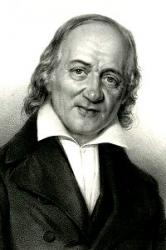
1783 - 1846 Person Name: Gottfried Wilhelm Fink Topics: Waiting upon God Composer of "SERAPH" in Psalter Hymnal (Red) Rv Gottfried Wilhelm Fink PhD Germany 1783-1846. Born at Sulza, Thuringa, Germany, he was a German composer, music theorist, poet, and a protestant clergyman. From 1804-1808 he studied at the University of Leipzig, where he joined the Corps Lusatia, where he made his first attempts at composition and poetry. In 1811 he was appointed Vicar in Leipzig for some years, where he also founded an educational institution, leading it until 1829. Around 1800 he worked for the “Allgemeine musikalische Zeitschrift” (General musical mazazine). In 1827 he became the magazine's editor-in-chief for 15 years. From 1838 he was a lecturer at the University of Leipzig. In 1841 he became a Privatdozent of musicology at the university. That year he became a member of the Prussian Academy of Arts in Berlin, and a year later was appointed university Music Director. He was highly esteemed throughout his life as a music theorist and composer, receiving numberous honors and awards, both at home and abroad. The Faculty of Philosophy at Leipzig University awarded him an honorary doctorate. He wrote mostly Songs and ballads and collected songs as well. He authored important words on music theory and history, but was best known as editor of the “Musikalischer Hausschatz der Deutschen”, a collection of about 1000 songs and chants, as well as the “Deutsche Liedertafel” (German song board), a collection of polyphonic songs sung by men. He died at Leipzig, Saxony. John Perry

Edward Harwood

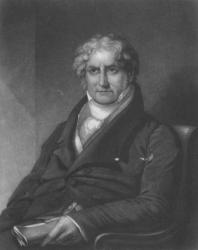
1707 - 1787 Topics: Waiting upon God Composer of "RAPTURE" in The Psalter Edward Harwood (of Darwen) (1707–1787) was an English composer of hymns, anthems and songs. His setting of Alexander Pope's The Dying Christian (Vital spark of heav'nly flame) was enormously popular at one time and was widely performed at funerals. Edward Harwood was born at Hoddlesden, near Darwen, Lancashire, in 1707. His early training was as a hand-loom weaver, but he subsequently became a professional musician in Liverpool. His first collection of psalmody, A set of hymns and psalm tunes, was published in London in 1781 and a second collection, entitled A Second Set of Hymns and Psalm Tunes/ was published at Chester in 1786. He died in 1787. Harwood's setting of Pope's ode "Vital spark of heav'nly flame" was first published in Harwood's A set of hymns and psalm tunes: it is written in the style of a glee, and in the original publication is written for the most part for three voices (two trebles and bass), with a fourth (tenor) part being added for the last few bars only. It was, however, often arranged for the more usual four part-choir. The piece was very popular in the first half of the 19th century, being widely sung among Anglicans, Methodists and dissenters, and Lightwood noted in 1935 that it 'certainly had a long and prosperous run, and even now it is not quite extinct'. However, it was not always a great favourite with the clergy, whose objections were mainly to do with the text, which is not explicitly religious (also, it's a poem written by a Catholic, after the last words of the Emperor Hadrian). --en.wikipedia.org/wik

Benjamin Carr

1768 - 1831 Topics: Waiting upon God Arranger of "SPANISH HYMN" in Psalter Hymnal (Red)

George J. Elvey

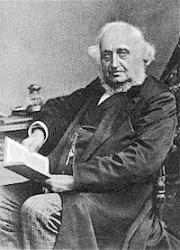
1816 - 1893 Topics: Waiting upon God Composer of "DIADEMATA" in Trinity Hymnal (Rev. ed.) George Job Elvey (b. Canterbury, England, 1816; d. Windlesham, Surrey, England, 1893) As a young boy, Elvey was a chorister in Canterbury Cathedral. Living and studying with his brother Stephen, he was educated at Oxford and at the Royal Academy of Music. At age nineteen Elvey became organist and master of the boys' choir at St. George Chapel, Windsor, where he remained until his retirement in 1882. He was frequently called upon to provide music for royal ceremonies such as Princess Louise's wedding in 1871 (after which he was knighted). Elvey also composed hymn tunes, anthems, oratorios, and service music. Bert Polman

K. Lee Scott

b. 1950 Topics: Waiting upon God Composer of "WIBERG" in Trinity Psalter Hymnal

Henry A. Bruinsma

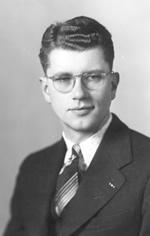
1916 - 1991 Topics: Waiting upon God Adapter of "CONTRITION" in Psalter Hymnal (Blue) It was in Bruinsma's musical compositions that his brilliance was most displayed. “Henry’s personality was … embodied in his music: colorful, radiating charisma, magnetic in a nonverbal way,” niece Jane DeGroot said. Bruinsma displayed musical potential even before he was considered old enough to take music lessons, said his wife, Grace Hekman Bruinsma. The preschooler would eavesdrop on his older brother’s piano lessons. After the teacher left, Bruinsma would climb onto the piano bench to practice his brother’s lesson assignment. Later on, he chose to attend Ottawa Hills High School in Grand Rapids, Mich., for its music program. Following high school graduation in 1933, Bruinsma attended the University of Michigan for a degree in music. He stayed on to complete a Ph.D. in musicology, becoming the first musicologist to graduate from the University of Michigan. It was during his graduate work that Bruinsma wrote Scherzo on a Dutch Nursery Song. “He never lost his love for Dutch history or Dutch Reformed music,” Grace Bruinsma said. It was also during his time at U of M that Bruinsma began taking Grace to music concerts, and in 1939 they were married. Bruinsma began his time as a professor of music at Calvin College (1946-55). In addition to his teaching duties at the college, Bruinsma taught the first music and theology course at Calvin Seminary. He also chaired the first Conference on Liturgy of Music. However, not long after his time at Calvin, Bruinsma decided he was being called to move from teaching to education administration. Of note is his time at Ohio State University (1959-64), where he served as the director of the School of Music. He also held the position of executive committee member of the College of Education. Next, Bruinsma moved to what is now Arizona State University (1964-79), another notable mark in his education administration career. During that time, he served first as chair of the School of Music, then as founding dean of the College of Fine Arts. He is also known to have started the first religious studies program at Arizona State as part of the university’s interdisciplinary studies program. Due to the amount of time he spent in education administration, much of Bruinsma’s musical compositions were never published. After his death, Grace Bruinsma contacted Gerry Bouma of Morningside College in Sioux City, Iowa. Bouma and Henry Bruinsma had met in 1969 at a Grand Rapids Christian High School concert in Chicago. “For whatever reason, Henry and Grace treated us like we were their kids,” Bouma said. Grace asked Bouma to catalog and publish the 10,000 pages of Henry’s material. Taking a semester sabbatical, Bouma began his work. Bouma’s catalog of Bruinsma’s work can be found in the Heritage Hall Archives at the Hekman Library, Calvin College. The Archives also hosts additional works from Bruinsma’s time at Calvin. --Excerpted from Calvin Spark, Spring 2006 issue

Pages


Export as CSV
It looks like you are using an ad-blocker. Ad revenue helps keep us running. Please consider white-listing Hymnary.org or getting Hymnary Pro to eliminate ads entirely and help support Hymnary.org.