You help make Hymnary.org possible. More than 10 million people from 200+ countries found hymns, liturgical resources and encouragement on Hymnary.org in 2025, including you. Every visit affirms the global impact of this ministry.

If Hymnary has been meaningful to you this year, would you take a moment today to help sustain it? A gift of any size—paired with a note of encouragement if you wish—directly supports the server costs, research work and curation that keep this resource freely available to the world.

Give securely online today, or mail a check to:
Hymnary.org
Calvin University
3201 Burton Street SE
Grand Rapids, MI 49546

Thank you for your partnership, and may the hope of Advent fill your heart.

Person Results

Topics:admonition+and+invitation
In:person

Planning worship? Check out our sister site, ZeteoSearch.org, for 20+ additional resources related to your search.
Showing 21 - 30 of 82Results Per Page: 102050

Samuel Webbe

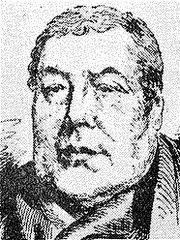
1740 - 1816 Person Name: S. Webbe, 1740-1816 Topics: Admonition and Invitation Composer of "VIGILS" in The Baptist Standard Hymnal Samuel Webbe (the elder; b. London, England, 1740; d. London, 1816) Webbe's father died soon after Samuel was born without providing financial security for the family. Thus Webbe received little education and was apprenticed to a cabinet­maker at the age of eleven. However, he was determined to study and taught himself Latin, Greek, Hebrew, French, German, and Italian while working on his apprentice­ship. He also worked as a music copyist and received musical training from Carl Barbant, organist at the Bavarian Embassy. Restricted at this time in England, Roman Catholic worship was freely permitted in the foreign embassies. Because Webbe was Roman Catholic, he became organist at the Portuguese Chapel and later at the Sardinian and Spanish chapels in their respective embassies. He wrote much music for Roman Catholic services and composed hymn tunes, motets, and madrigals. Webbe is considered an outstanding composer of glees and catches, as is evident in his nine published collections of these smaller choral works. He also published A Collection of Sacred Music (c. 1790), A Collection of Masses for Small Choirs (1792), and, with his son Samuel (the younger), Antiphons in Six Books of Anthems (1818). Bert Polman

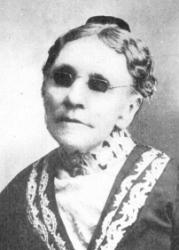
Fanny Crosby

1820 - 1915 Person Name: Fanny J. Crosby Topics: Admonition and Invitation Author of "Only a Step" in The Baptist Standard Hymnal Pseudonymns: A.V., Mrs. A. E. Andrews, Mrs. E. A. Andrews, Mrs. E. L. Andrews, James L. Black, Henrietta E. Blair, Charles Bruce, Robert Bruce, Leah Carlton, Eleanor Craddock, Lyman G. Cuyler, D.H.W., Ella Dare, Ellen Dare, Mrs. Ellen Douglass, Lizzie Edwards. Miss Grace Elliot, Grace J. Frances, Victoria Frances, Jennie Garnett, Frank Gould, H. D. K., Frances Hope, Annie L. James, Martha J. Lankton [Langton], Grace Lindsey, Maud Marion, Sallie Martin, Wilson Meade, Alice Monteith, Martha C. Oliver, Mrs. N. D. Plume, Kate Smiley, Sallie Smith, J. L. Sterling, John Sterling, Julia Sterling, Anna C. Storey, Victoria Stuart, Ida Scott Taylor, Mary R. Tilden, Mrs. J. B. Thresher, Hope Tryaway, Grace Tureman, Carrie M. Wilson, W.H.D. Frances Jane Crosby, the daughter of John and Mercy Crosby, was born in Southeast, Putnam County, N. Y., March 24, 1820. She became blind at the age of six weeks from maltreatment of her eyes during a spell of sickness. When she was eight years old she moved with her parents to Ridgefield, Conn., the family remaining there four years. At the age of fifteen she entered the New York Institution for the Blind, where she received a good education. She became a teacher in the institution in 1847, and continued her work until March 1, 1858. She taught English grammar, rhetoric and American history. This was the great developing period in her life. During the vacations of 1852 and 1853, spent at North Reading, Mass., she wrote the words to many songs for Dr. Geo. F. Root, then the teacher of music at the blind institution. Among them were, "Hazel Dell,", "The Honeysuckle Glen," "Rosalie, the Prairie Flower," "Music in the Air," "Proud World, Good-bye, I'm Going Home," "All Together", "Never Forget the Dear Ones," and others. Subsequently she wrote the words for the cantatas of The Flower Queen and The Pilgrim Fathers, all of which were very popular in their day, though it was not generally known at the time that she was the author. While teaching at the institution she met Presidents Van Buren and Tyler, Hon. Henry Clay, Governor Wm. H. Seward, General Winfield Scott, and other distinguished characters of American history. Concerning Mr. Clay, she gives the following: "When Mr. Clay came to the institution during his last visit to New York, I was selected to welcome him with a poem. Six months before he had lost a son at the battle of Monterey, and I had sent him some verses. In my address I carefully avoided any allusion to them, in order not to wound him. When I had finished he drew my arm in his, and, addressing the audience, said through his tears: 'This is not the first poem for which I am indebted to this lady. Six months ago she sent me some lines on the death of my dear son.' Both of us were overcome for a few moments. Soon, by a splendid effort, Mr. Clay recovered himself, but I could not control my tears." In connection with her meeting these notable men, we might add that Miss Fanny Crosby had the honor of being the first woman whose voice was heard publicly in the Senate Chamber at Washington. She read a poem there on one occasion. In addition to the thousands of hymns that she has written (about eight thousand poems in all), many of which have not been set to music, she has published four volumes of verses. The first was issued in 1844 and was entitled The Blind Girl, and Other Poems, a second volume, Monterey, and Other Poems, followed in 1849, and the third, A Wreath of Columbia's Flowers, in 1858. The fourth, Bells at Evening and Other Verses, with a biographical sketch by Rev. Robert Lowry, and a fine half-tone portrait, in 1897, the sales of which have reached a fourth edition. The book is published by The Biglow & Main Co., New York. Though these show the poetical bent of her mind, they have little to do with her world-wide fame. It is as a writer of Sunday-school songs and gospel hymns that she is known wherever the English language is spoken, and, in fact, wherever any other language is heard. Fanny was married March 5, 1858, to Alex. Van Alstyne, who was also a scholar in the same institution in which she was educated. She began to write Sunday-school hymns for Wm. B. Bradbury in 1864. Her first hymn, "We are going, we are going To a home beyond the skies", was written at the Ponton Hotel on Franklin Street, New York City, on February 5th of that year. This hymn was sung at Mr. Bradbury's funeral in January, 1868. Since 1864 she supported herself by writing hymns. She resided in New York City nearly all her life, where, she says, she is "a member of the Old John Street M. E. Church in good standing." She spent regular hours on certain days at the office of The Biglow & Main Co., the firm for which she did most of her writing, and for whom she has composed over four thousand hymns. Her hymns have been in great demand and have been used by many of our most popular composers, among whom may be mentioned Wm. B. Bradbury, Geo. F. Root, W. H. Doane, Rev. Robert Lowry, Ira D. Sankey, J. R. Sweney, W. J. Kirkpatrick, H. P. Main, H. P. Danks, Philip Phillips, B. G. Unseld, and others. She could compose at any time and did not need to wait for any special inspiration, and her best hymns have come on the spur of the moment. She always composed with an open book in her hand, generally a copy of Golden Hymns, held closely over her eyes, bottom side up. She learned to play on the guitar and piano while at the institution, and has a clear soprano voice. She also received a technical training in music, and for this reason she could, and did, compose airs for some of her hymns. One of these is, "Jesus, dear, I come to Thee, Thou hast said I may," both words and music of which are wonderfully sweet. "Safe in the arms of Jesus", probably one of her best known hymns, was her own favorite. Fanny loved her work, and was happy in it. She was always ready either to sympathize or join in a mirthful conversation, as the case may be. The secret of this contentment dates from her first composition at the age of eight years. "It has been the motto of my life," she says. It is: "O what a happy soul am I! Although I cannot see, I am resolved that in this world Contented I will be;" This has continued to be her philosophy. She says that had it not been for her affliction she might not have so good an education, nor so great an influence, and certainly not so fine a memory. She knows a great many portions of the Bible by heart, and had committed to memory the first four books of the Old Testament, and also the four Gospels before she was ten years of age. Her scope of subjects is wide, embracing everything from a contemplation of heaven, as in "The Bright Forever" and "The Blessed Homeland", to an appeal to the work of this world, as in "To the Work" and "Rescue the Perishing." The most of Fanny's published hymns have appeared under the name of Fanny J. Crosby or Mrs. Yan Alstyne, but quite a large number have appeared under the nom de plumes of Grace J. Frances, Mrs. C. M. Wilson, Lizzie Edwards, Ella Dale, Henrietta E. Blair, Rose Atherton, Maud Marion, Leah Carlton, nearly two hundred different names. -Biographies of Gospel Song and Hymn Writers (excerpts) ======================= Van Alstyne, Frances Jane, née Crosby, a member of the Methodist Episcopal Church, was born at South East, Putnam County, New York, March 24, 1823. When six weeks old she lost her sight. About 1835 she entered the New York City Institution for the Blind. On completing her training she became a teacher therein from 1847 to 1858. In 1858 she was married to Alexander Van Alstyne, a musician, who was also blind. Her first poem was published in 1831; and her first volumes of verse as A Blind Girl, and Other Poems, 1844; Monteresy, and Other Poems, 1849; and A Wreath of Columbia's Flowers, 1858. Her first hymn was "We are going, we are going" (Death and Burial), which was written for Mr. Bradbury and published in the Golden Censer, 1864. From 1853 to 1858 she wrote 20 songs, which were set to music by G. F. Root. Her songs and hymns number some 2,000 or more, and have been published mainly in several of the popular American Sunday school collections, and often under a nom de plume. About 60 have come into common use in Great Britain. The majority of these are taken from the following American collections:— i. From The Shining Star, 1864. 1. Softly on the breath of evening. Evening. ii. From Fresh Laurels, 1867. 2. Beautiful Mansions, home of the blest. Heaven. 3. Jesus the Water of Life has given. The Water of Life. 4. Light and Comfort of my soul. In Affliction. 5. There's a cry from Macedonia. Missions. 6. We are marching on with shield and banner bright. Sunday School Anniversary. iii. From Musical Leaves, 1868. 7. 0 what are you going to do, brother? Youth for God. iv. From Sabbath Carols, 1868. 8. Dark is the night, and cold the wind is blowing. Affliction anticipated. 9. Lord, at Thy mercy seat, Humbly I fall. Lent. v. From Silver Spray, 1868. 10. If I come to Jesus, He will make me glad. Peace in Jesus. 11. 'Twill not be long—our journey here. Heaven anticipated. vi. From Notes of Joy, 1869. 12. Little beams of rosy light. The Divine Father. 13. Press on! press on! a glorious throng. Pressing towards the Prize. vii. From Bright Jewels, 1869. 14. Christ the Lord is risen today, He is risen indeed. Easter. 15. Holy, holy, holy is the Lord! Sing 0 ye people, &c. Holiness of God. 16. Jesus, keep me near the Cross. Near the Cross of Christ. 17. Saviour, bless a little child. A Child's Prayer. Written Feb. 6, 1869. viii. From Songs of Devotion, 1870. 18. Pass me not, 0 gentle Saviour. Lent. Written in 1868. 19. Rescue the perishing, care for the dying. Home Missions. ix. From Pure Gold, 1871. 20. Great is Jehovah. King of kings. Greatness of God. 21. I would be Thy little lamb. The Good Shepherd. 22. Lead me to Jesus, lead me to Jesus. Desiring Jesus. 23. To the work, to the work, we are servants of God. Home Missions. 24. Why labour for treasures that rust and decay? The Fadeless Crown. x. From the Royal Diadem, 1873. 25. I am Jesus' little friend. For Infant Schools. 26. Jesus I love Thee. Loving Jesus. 27. Mourner, wheresoe'er thou art. To the Sorrowing and Penitent. Written Oct. 3, 1871. 28. Never be faint or weary. Joy in Jesus. 29. Only a step to Jesus. Invitation. xi. From Winnowed Hymns, 1873-4. 30. Loving Saviour, hear my cry. Lent. xii. From Echoes of Zion, 1874. 31. Say, where is thy refuge, my brother? Home Missions. xiii. From Songs of Grace and Glory, 1874. 32. Thou my everlasting Portion. Christ the Portion of His People. xiv. From Brightest and Best, 1875. 33. All the way my Saviour leads me. Jesus the Guide. 34. I am Thine, O Lord: I have heard Thy voice. Holiness desired. 35. O come to the Saviour, believe in His name. Invitation. Written, Sep. 7, 1874. 36. O how sweet when we mingle. Communion of Saints. Written in 1866. 37. O my Saviour, hear me. Prayer to Jesus for blessing and love. 38. Only Jesus feels and knows. Jesus the Divine Friend. 39. Revive Thy work, O Lord. Home Missions. 40. Saviour, more than life to me. Jesus All and in All. 41. To God be the glory, great things He hath done. Praise for Redemption. xv. From Calvary Songs, 1875. 42. Come, O come with thy broken heart. Invitation. xvi. From Gospel Music, 1876. 43. Here from the world we turn. Divine Worship. 44. When Jesus comes to reward His servants. Watching, xvii. From Welcome Tidings, 1877. 45. O hear my cry, be gracious now to me. For Pardon and Peace. xviii. From The Fountain of Song, 1877. 46. Lord, my trust I repose on Thee. Trusting in Jesus. xix. From Good as Gold, 1880. 47. In Thy cleft, O Rock of Ages. Safety in Jesus. 48. Sound the alarm ! let the watchman cry. Home Missions. 49. Tenderly He leads us. Christ the Leader. 50. 'Tis the blessed hour of prayer. The Hour of Prayer. In addition to these hymns, all of which are in common use in Great Britain (mainly through I. D. Sankey's Sacred Songs and Solos, the Methodist Sunday School Hymn Book, the Silver Street Sunday Scholars Companion, and other collections for Sunday schools), there are also "A blessing for you, will you take it?" (Pardon through Jesus); "My song shall be of Jesus" (Praise of Jesus); “Now, just a word for Jesus"(Home Missions); "Onward, upward, Christian soldier" (Pressing Heavenward); 44 Sinner, how thy heart is troubled" (Invitation); "'Tis a goodly, pleasant land" (Heaven anticipated); and "When the dewy light was fading" (Death anticipated). All of these are in I. D. Sankey's Sacred Songs & Solos. Mrs. Van Alstyne's most popular composition is "Safe in the arms of Jesus" (Safety in Jesus). This was written in 1868, at the request of Mr. W. H. Doane, to his well-known melody with which it is inseparably associated, and published in Bright Jewels, 1869. Mrs. Van Alstyne's hymns have sometimes been published anonymously; but the greater part are signed by a bewildering number of initials. The combined sales of the volumes of songs and hymns named above have amounted in English-speaking countries to millions of copies. Notwithstanding the immense circulation thus given to Mrs. Van Alstyne's hymns, they are, with few exceptions, very weak and poor, their simplicity and earnestness being their redeeming features. Their popularity is largely due to the melodies to which they are wedded. Since the above was in type we have found that the following are also in common use in Great Britain:— 51. Suppose the little cowslip. Value of Little Things. 52. Sweet hour of prayer. The Hour of Prayer. These are in Bradbury's Golden Chain, 1861. 53. Never lose the golden rule. Love to our Neighbours. In Bradbury's Golden Censer, 1864. 54. I will not be afraid at night. Trust in God. In Bradbury's Fresh Laurels, 1867. 55. Praise Him, praise Him, Jesus our, &c. Praise of Jesus. In Biglow & Main's Bright Jewels, 1869. 56. More like Jesus would I be. More like Jesus. In Perkins & Taylor's Songs of Salvation, 1870. 57. Behold me standing at the door. Christ at the Door. In Biglow & Main's Christian Songs, 1872. 58. If I come to Jesus. Jesus the Children's Guide. 59. Jesus, Lord, I come to Thee. Trust in Jesus. 60. Let me learn of Jesus. Jesus the Children's Friend. 61. Singing for Jesus, O singing for Jesus. Singing for Jesus. 62. There is a Name divinely sweet Holy Name of Jesus. Of these hymns Nos. 58-62 we have not been able to trace. --Excerpts from John Julian, Dictionary of Hymnology (1907 ================ Van Alstyne, Frances J., p. 1203, ii. From the American collections of recent date we find that Mrs. Van Alstyne is still actively engaged in hymn-writing. In the Funk and Wagnalls Company Gloria Deo, 1903, there are about 30 of her hymns, most of which are new. They are all signed, and some are dated, but we have not space to quote the first lines and subjects, as this hymnal is not an official collection of any denomination. Another name, "Mrs. S. K. Bourne" is credited in the same hymnal with about 40 new hymns. If this signature is not another pen-name of Mrs. Van Alstyne's (and these pen-names and initials of hers are very numerous), we can only say that she has a very successful understudy in "Mrs. S. K. Bourne." --John Julian, Dictionary of Hymnology, New Supplement (1907)

Haldor Lillenas

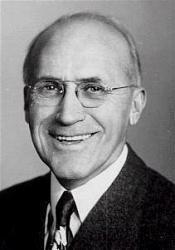
1885 - 1959 Topics: Admonition and Invitation Composer of "[Don't you know that Jesus knows all your care]" in The Baptist Standard Hymnal Rv Haldor Lillenas DMus Norway/USA 1885-1959. Born at Stord, near Bergen, Norway, his father sold their 15 acre farm in Norway and emigrated to the U.S., buying a farm in Colton, SD. After he built a sod house, the family (wife and three chldren) also came to SD in 1887. They moved to Astoria, Oregon in 1889, where Lillenas learned English and began writing song lyrics at an early age. In 1900 the family moved again to Roseville, MN, where he worked as a farm laborer and began attending a Lutheran high school at Hawick, MN. He sold a few songs at age 19. At age 21 he began writing more songs, encouraged by some earlier ones becoming popular (“He set me free” was one). His mother died in 1906 and his father returned to ND, but Lillenas decided to move back to Astoria, OR, to finish a chemical correspondence course he had been taking. There he found employment in a chemical factory. He started attending a Lutheran church, but one evening he heard the song, “Tell mother I’ll be there”, sung at a mission. It made him decide to commit his life to Christ. An elderly lady who worked there told him about Jesus, and he began attending the Peniel Mission, a holiness rescue mission in Astoria, OR. He started working at the mission himself. In 1907 he moved to Portland, OR, where he worked with the Peniel Mission there, the mission paying most of his expenses. He was appointed leader of the mission. He saw many there come to know Christ and felt called to the Lord’s work. He joined the First Church of the Nazarene in Portland. Soon he enrolled in a ministerial course of study by correspondence. Soon afterward, he joined a vocal group associated with the Salvation Army called the ‘Charioteers Brigade’, which held street meetings and revival services throught much of CA. As a result of generous donations made, and efforts by his pastor, A O Hendricks, he was able to attend Pacific Bible College (later renamed Pasadena College), Los Angeles, CA. He also found part-time work to help support himself. He was soon a music director at a local church, and was preaching and writing songs. He also studied voice at the Lyric School of Music in Los Angeles, CA. While at Deets, he met and married Bertha Mae Wilson, also on an evangelistic team. Both preached. She was a songwriter like he. They practiced music at her father’s house and found that their voices blended well. They had two children: Evangline, and Wendell. They eventually became elders in the Nazarene Church, and she eventually became an ordained minister as well. He also studied music at the Siegel-Myers School of Music Chicago, IL. He composed songs for cantatas, Christmas, Easter, and special day services. He also used several pseudonyms in their composition. He traveled as an evangelist, then he pastored several churches (1910-1924) at Lompoc, CA, then Redlands, CA, and later in Indianapolis, IN. While there, In 1924, he founded the Lillenas Music Company (bought by the Nazarene Publishing Company in 1930). His wife preached at their pastorate until he was able to get the company up and running. While they owned the company, they published more than 700,000 hymnals. He worked as an editor there (after selling his company) until his retirement in 1950, becoming an advisor for them until his death. Also that year Lillenas purchased a 500 acre rural estate in Miller County, MO, where they built an Ozark home called ‘Melody Lane’. Lillenas joined the American Society of Composers, Authors, and Publishers (ASCAP) in 1938. In 1941 he received an honorable doctorate degree from Olivet Nazarene College, Bourbonnais, IL. In 1945 Bertha died of cancer, and later that year Lillenas remarried to a Lola Dell, and they lived in Melody Lane until 1955, when they moved to Pasadena, CA, attending the Nazarene Church there. They also made three trips to Norway after his retirement, and he wrote three books during that time: “Modern gospel song stories (1952), “Down Melody Lane (an autobiography): (1953), “Motoring 11,000 miles through Norway-A guide for tourists” (1955). In 1955 they toured Israel and sponsored a Palestinian Greek Orthodox family he had met as immigrants to the US that included Sirhan Bishara Sirhan (born in 1944). After they arrived in Pasadena, the Sirhan family stayed with Lillenas for several months, after which the Sirhans moved to a home Lillenas rented and furnished to them. When Mary Sirhan’s husband abandoned her and her two sons and returned to Jordan, Lillenas ensured that they were able to remain in the US. S B Sirhan was the convicted killer of Robert Kennedy. Lillenas wrote some 4000 hymn lyrics, supplying some for evangelists. Four of his song books contain his hymns: “Special sacred songs” (1919), “New Sacred Songs”, “Strains of love”, and “Special sacred songs #2”. He died at Aspen, CO. He is buried at Kansas City, MO. He was an author, editor, compiler, composer, and contributor. He edited and compiled over 50 song books. John Perry

James Rowe

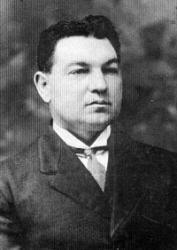
1865 - 1933 Topics: Admonition and Invitation Author of "He Always Knows" in The Baptist Standard Hymnal Pseudonym: James S. Apple. James Rowe was born in England in 1865. He served four years in the Government Survey Office, Dublin Ireland as a young man. He came to America in 1890 where he worked for ten years for the New York Central & Hudson R.R. Co., then served for twelve years as superintendent of the Mohawk and Hudson River Humane Society. He began writing songs and hymns about 1896 and was a prolific writer of gospel verse with more than 9,000 published hymns, poems, recitations, and other works. Dianne Shapiro, from "The Singers and Their Songs: sketches of living gospel hymn writers" by Charles Hutchinson Gabriel (Chicago: The Rodeheaver Company, 1916)

J. W. Acuff

1864 - 1937 Person Name: Jas. W. Acuff Topics: Admonition and Invitation Author of "Just Over in the Glory-Land" in The Baptist Standard Hymnal Born: January 4, 1864, Freestone County, Texas. Died: August 1, 1937, Georgetown, Texas. Buried: Odd Fellows Cemetery, Georgetown, Texas. James was a well known singer and song writer among the Churches of Christ in Texas. He wrote several popular Gospel songs, often led the singing for protracted meetings, and helped compile hymnals for the Firm Foundation Company of Austin. His career as a singer and song writer spanned nearly 50 years. http://www.hymntime.com/tch/bio/a/c/u/acuff_jw.htm

Charles Albert Tindley

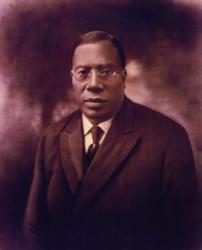
1851 - 1933 Person Name: C. A. T. Topics: Admonition and Invitation Author of "Go Wash in the Beautiful Stream" in The Baptist Standard Hymnal

B. B. McKinney

1886 - 1952 Topics: Admonition and Invitation Composer of "[Never lose sight of Jesus]" in The Baptist Standard Hymnal Pseudonyms-- Martha Annis (his mother’s maiden name was Martha Annis Heflin) Otto Nellen Gene Routh (his wife’s maiden name was Leila Irene Routh) ----- Son of James Calvin McKinney and Martha Annis Heflin McKinney, B . B. attended Mount Lebanon Academy, Louisiana; Louisiana College, Pineville, Louisiana; the Southwestern Baptist Seminary in Fort Worth, Texas; the Siegel-Myers Correspondence School of Music, Chicago, Illinois (BM.1922); and the Bush Conservatory of Music, Chicago. Oklahoma Baptist University awarded him an honorary MusD degree in 1942. McKinney served as music editor at the Robert H. Coleman company in Dallas, Texas (1918–35). In 1919, after several months in the army, McKinney returned to Fort Worth, where Isham E. Reynolds asked him to join the faculty of the School of Sacred Music at Southwestern Baptist Theological Seminary. He taught at the seminary until 1932, then pastored in at the Travis Avenue Baptist Church in Fort Worth (1931–35). In 1935, McKinney became music editor for the Baptist Sunday School Board in Nashville, Tennessee. McKinney wrote words and music for about 150 songs, and music for 115 more. --© Cyber Hymnal™ (www.hymntime.com/tch)

J. H. Tenney

1840 - 1918 Topics: Admonition and Invitation Composer of "TENNEY" in The Baptist Standard Hymnal John Harrison Tenney, 1840-1918 Born: No­vem­ber 22, 1840, Row­ley, Mass­a­chu­setts. Born just af­ter the pre­si­den­tial cam­paign of "Tip­pe­ca­noe and Ty­ler, too," Ten­ney was named af­ter Amer­i­can pre­si­dent Will­iam Hen­ry Har­ri­son. A dea­con in the Con­gre­ga­tion­al Church in Line­brook, Mass­a­chu­setts, he ed­it­ed or was as­so­ci­ate ed­it­or of over 30 books, and con­trib­ut­ed to hun­dreds more. His works in­clude: Amer­i­can Male Choir Temperance Jew­els, with Eli­sha Hoff­man (Bos­ton, Mass­a­chu­setts: Ol­iv­er Dit­son & Com­pa­ny, 1879) Bells of Vic­to­ry, with Eli­sha Hoff­man (Bos­ton, Mass­a­chu­setts: Oliv­er Dit­son & Com­pa­ny, 1888) Gems of Gos­pel Song Golden Sun­beams Sharon’s Dewy Rose Songs of Faith Shining Light Songs of Joy Sparkling and Bright Spiritual Songs, Nos. 1 and 2 Sweet Fields of Eden The Bea­con Light The Sing­ing School Ban­ner The An­them Of­fer­ing The Amer­i­can An­them Book The Crown of Praise Sources-- Hall, pp. 219-22 Music-- Asilomar Bogotá Beyond the Swell­ing Flood Cancún Come to Je­sus Ever Will I Pray Hallowed Hour of Pray­er Jesus Is Pass­ing This Way Jubilate! My An­chor Is Hold­ing Nothing Be­tween Onward Christ­ian Sol­diers Sabbath Bell San Fran­cis­co We’ll Ne­ver Say Good­bye Where Will You Spend Eter­ni­ty? --www.hymntime.com/tch

Samuel Francis Smith

1808 - 1895 Person Name: S. F. Smith Topics: Admonition and Invitation Author of "To-day the Savior Calls" in The Baptist Standard Hymnal Smith, Samuel Francis, D.D., was born in Boston, U.S.A., Oct. 21, 1808, and graduated in arts at Harvard, and in theology at Andover. He entered the Baptist ministry in 1832, and became the same year editor of the Baptist Missionary Magazine. He also contributed to the Encyclopaedia Americana. From 1834 to 1842 he was pastor at Waterville, Maine, and Professor of Modern Languages in Waterville College. In 1842 he removed to Newton, Massachusetts, where he remained until 1854, when he became the editor of the publications of the Baptist Missionary Union. With Baron Stow he prepared the Baptist collection known as The Psalmist, published in 1843, to which he contributed several hymns. The Psalmist is the most creditable and influential of the American Baptist collections to the present day. Dr. Smith also published Lyric Gems, 1854, Rock of Ages, 1870, &c. A large number of his hymns are in use in America, and several have passed into some of the English collections. Taking his hymns in common use in alphabetical order, we have the following:— 1. And now the solemn deed is done. Ordination. Given in The Psalmist, 1843, No. 954. In Dr. Hatfield's Church Hymn Book, N. Y., 1872, it is altered to "The solemn service now is done." 2. As flows the rapid river. Life Passing Away. In Christian Psalmody, 1833, No. 33; the Hymns for the Vestry and Fireside, Boston, 1841; and The Psalmist, 1843, No. 1059. Found in a few English hymn-books, and in Lyra Sacra Americana, 1868. 3. Auspicious morning, hail. American National Anniversary. Written for July 4th, 1841, and published in The Psalmist, 1843, No. 1007. 4. Beyond where Cedron's waters flow. Gethsemane. In L. Bacon's Appendix, 1833; the Psalmist, 1843, No. 220, and later collections. 5. Blest is the hour when cares depart. Divine Worship. In The Psalmist, 1843, No. 947, and others. 6. Constrained by love we follow where. Holy Baptism. Appeared in the Baptist edition of the Plymouth Hymn Book, 1857. 7. Down to the sacred wave. Holy Baptism. Contributed to Winchell's Additional Hymns added to his Collection of 1817, in 1832, No. 510; repeated in The Psalmist, 1843, No. 818, and in several collections. Also in Lyra Sacra Americana, 1868. 8. Hail! ye days of solemn meeting. Public Worship. An altered form of No. 26 below, in Spurgeon's Our Own Hymn Book, 1866, as an "American Hymn, 1840." 9. How blest the hour when first we gave. Holy Baptism. Appeared in the Baptist edition of thePlymouth Hymn Book, 1857, No. 1468. 10. How calmly wakes the hallowed morn. Holy Baptism. Given in The Psalmist, 1843, No. 810, in later collections, and in Lyra Sacra Americana, 1868. 11. Jesus, Thou hast freely saved us. Salvation. In Winchell's Additional Hymns, 1832, No. 503, and others. 12. Meekly in Jordan's Holy Stream. Holy Baptism. Contributed to The Psalmist, 1843, No. 808. 13. My country, 'tis of thee. National Hymn. "Written in 1832, and first sung at a children's Fourth of July celebration in Park Street church, Boston." Included in The Psalmist, 1843, No. 1000, and found in a large number of American hymn-books, but not in use in Great Britain. It is one of the most popular of Dr. Smith's compositions. Text, with note in Lyra Sacra Americana, 1868. 14. 0 not my own these verdant hills. Bought with a Price. Appeared in Nason's Congregational Hymn Book, 1857, and given inLaudes Domini, 1884. 15. Onward speed thy conquering flight. Missions. Appeared in The Psalmist, 1843, No. 892, and is found in several modern collections in Great Britain and America. Also in Lyra Sac. Americana, 1868. 16. Planted in Christ, the living Vine. Christian Fellowship; or, For Unity. Given in The Psalmist, 1843, No. 929, inLyra Sacra Americana, 1868, and several hymn-books. Of the hymns contributed by Dr. Smith to The Psalmist this is the best, and one of the most popular. 17. Remember thy Creator. Youthful Piety Enforced. In Christian Psalmody, 1832, No. 32; the Hymns for the Vestry and Fireside, 1841; The Psalmist, 1843, No. 778; Lyra Sac. Americana, 1868, and other collections. 18. Sister, thou wast mild and lovely. Death and Burial. Written on the death of Miss J. M. C. of Mount Vernon School, Boston, July 13,1833, and published in The Psalmist, 1843, No. 1096. 19. Softly fades the twilight ray. Sunday Evening. Written in 1832, and included in The Psalmist, 1843, No. 56. Also in Lyra Sacra Americana, and several hymn-books. 20. Spirit of holiness, descend. Whitsuntide. Appeared in the Hymns for the Vestry and Fireside, 1841, No. 295, and again in The Psalmist, 1843, No. 384. In the Unitarian Hymns for the Church of Christ, Boston, 1853. St. ii., iii., iv. were given as "Spirit of God, Thy churches wait." This form of the text and the original are both in modern hymn-books. 21. Spirit of peace and holiness. Institution of a Minister. Appeared in The Psalmist, 1843, No. 953, and Hatfield's Church Hymn Book, 1872. 22. The morning light is breaking. Missions. Written in 1832, and included in Hastings's Spiritual Songs, 1832-33, No. 253; and The Psalmist, 1843, No. 912. This hymn is very popular and has been translated into several languages. Dr. Smith says of it that “it has been a great favourite at missionary gatherings, and I have myself heard it sung in five or six different languages in Europe and Asia. It is a favourite with the Burmans, Karens, and Telegus in Asia, from whose lips I have heard it repeatedly.” 23. The Prince of Salvation in triumph is riding. Missions. Given in Hastings and Mason's Spiritual Songs, 1832-33, No. 274; The Psalmist, 1843, and later collections. 24. Tis done, the [important] solemn act is done. Ordination. Appeared in The Psalmist 1843, No. 951, and later hymn-books. 25. Today the Saviour calls. Invitation. First sketch by Dr. Smith, the revised text, as in Hastings and Mason's Spiritual Songs, No. 176, and The Psalmist, No. 453, by Dr. T. Hastings (p. 495, i. 19). 26. Welcome, days of solemn meeting. Special Devotional Services. Written in 1834, and given in Dr. Hatfield's Church Hymn Book, 1872. See No. 8. 27. When shall we meet again ? Parting. This is a cento. The first stanza is from Alaric A. Watts's Poetical Sketches, &c, 1822, p. 158 ; and st. ii.-iv. are by Dr. Smith. In this form it was published in L. Bacon's Supplement to Dwight, 1833, No. 489. It is in several American hymn-books; and also the English Baptist Psalms & Hymns, 1858, &c. 28. When the harvest is past and the summer is gone. Close of Worship. Contributed to Hastings and Mason's Spiritual Songs, 1831, No. 244; and repeated in the Fuller and Jeter Supplement to The Psalmist, 1847, No. 22, and later collections. 29. When thy mortal life is fled. The Judgment. Contributed to Winchell's Additional Hymns, 1832, No. 379, and repeated in The Psalmist, 1843, No. 455, and later hymn-books. Also in Lyra Sacra Americana, 1868. 30. While in this sacred rite of Thine. Holy Baptism. Appeared in The Psalmist, 1843, No. 803: Lyra Sacra Americana, 1868, &c. 31. With willing hearts we tread. Holy Baptism. In The Psalmist, 1843, No. 798; and again in the Baptist Praise Book, 1871. 32. Yes, my native land, I love thee. A Missionary's Farewell. Contributed to Winchell's Additional Hymns, 1832, No. 445, and found in later collections. Also in Lyra Sacra Americana, 1868. [Rev. F. M. Bird, M.A.] --John Julian, Dictionary of Hymnology (1907)

Louis M. Gottschalk

1829 - 1869 Person Name: L. M. Gottschalk Topics: Admonition and Invitation Composer of "MERCY" in The Baptist Standard Hymnal Louis Moreau Gottschalk USA 1829-1869. Born in New Orleans, LA, to a Jewish father and Creole mother, he had six siblings and half-siblings. They lived in a small cottage in New Orleans. He later moved in with relatives (his grandmother and a nurse). He played the piano from an early age and was soon recognized as a prodigy by new Orleans bourgeois establishments. He made a performance debut at the new St. Charles Hotel in 1840. At 13 he left the U.S. And went to Europe with his father, as they realized he needed classical training to fulfill his musical ambitions. The Paris Conservatory rejected him without hearing him play on the grounds of his nationality. Chopin heard him play a concert there and remarked, “Give me your hand, my child, I predict that you will become the king of pianists. Franz Liszt and Charles Valentin Alkan also recognized his extreme talent. He became a composer and piano virtuoso, traveling far and wide performing, first back to the U.S., then Cuba, Puerto Rico, Central and South America. He was taken with music he heard in those places and composed his own. He returned to the States, resting in NJ, then went to New York City. There he mentored a young Venezuelan student, Carreno, and became concerned that she succeed. He was only able to give her a few lessons, yet she would remember him fondly and play his music the rest of her days. A year after meeting Gottschalk, she performed for President Lincoln and went on to become a renowned concern pianist, earning the nickname “Valkyrie of the Piano”. Gottschalk was also interested in art and made connections with notable figures of the New York art world. He traded one of his compositions to his art friend, Frederic Church, for one of Church's landscape paintings. By 1860 Gootschalk had established himself as the best known pianist in the New World. He supported the Union cause during the Civil War and returned to New Orleans only occasionally for concerts. He traveled some 95,000 miles and gave 1000 concerts by 1865. He was forced to leave the U.S. later that year as a result of a scandelous affair with a student at Oakland Female Seminary in Oakland, CA. He never came back to the U.S. He went to South America giving frequent concerts. At one, in Rio de Janeiro, Brazil, he collapsed from yellow fever as he played a concert. He died three weeks later, never recovering from the collapse, possibly from an overdose of quinine or an abdominal infection. He was buried in Brooklyn, NY. Though some of his works were destroyed or disappeared after his death, a number of them remain and have been recorded by various artists. John Perry

Pages


Export as CSV
It looks like you are using an ad-blocker. Ad revenue helps keep us running. Please consider white-listing Hymnary.org or getting Hymnary Pro to eliminate ads entirely and help support Hymnary.org.