You help make Hymnary.org possible. More than 10 million people from 200+ countries found hymns, liturgical resources and encouragement on Hymnary.org in 2025, including you. Every visit affirms the global impact of this ministry.

If Hymnary has been meaningful to you this year, would you take a moment today to help sustain it? A gift of any size—paired with a note of encouragement if you wish—directly supports the server costs, research work and curation that keep this resource freely available to the world.

Give securely online today, or mail a check to:
Hymnary.org
Calvin University
3201 Burton Street SE
Grand Rapids, MI 49546

Thank you for your partnership, and may the hope of Advent fill your heart.

Person Results

Topics:closing+of+service
In:person

Planning worship? Check out our sister site, ZeteoSearch.org, for 20+ additional resources related to your search.
Showing 21 - 30 of 419Results Per Page: 102050

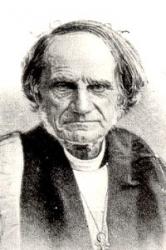
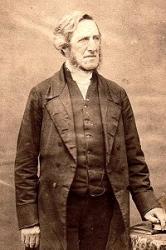
Christopher Wordsworth

1807 - 1885 Person Name: C. Wordsworth Topics: Close of Service Author of "The day is gently sinking to a close" in The New Laudes Domini Christopher Wordsworth--nephew of the great lake-poet, William Wordsworth--was born in 1807. He was educated at Winchester, and at Trinity College, Cambridge, where he graduated B.A., with high honours, in 1830; M.A. in 1833; D.D. in 1839. He was elected Fellow of his College in 1830, and public orator of the University in 1836; received Priest's Orders in 1835; head master of Harrow School in 1836; Canon of Westminster Abbey in 1844; Hulsean Lecturer at Cambridge in 1847-48; Vicar of Stanford-in-the-Vale, Berks, in 1850; Archdeacon of Westminster, in 1865; Bishop of Lincoln, in 1868. His writings are numerous, and some of them very valuable. Most of his works are in prose. His "Holy Year; or, Hymns for Sundays, Holidays, and other occasions throughout the Year," was published in [1862], and contains 127 hymns. --Annotations of the Hymnal, Charles Hutchins, M.A., 1872. =================== Wordsworth, Christopher, D.D., was born at Lambeth (of which parish his father was then the rector), Oct. 30, 1807, and was the youngest son of Christopher Wordsworth, afterwards Master of Trinity College, Cambridge, and Priscilla (née Lloyd) his wife. He was educated at Winchester, where he distinguished himself both as a scholar and as an athlete. In 1826 he matriculated at Trinity College, Cambridge, where his career was an extraordinarily brilliant one. He swept off an unprecedented number of College and University prizes, and in 1830 graduated as Senior Classic in the Classical Tripos, and 14th Senior Optime in the Mathematical, won the First Chancellor's Medal for classical studies, and was elected Fellow of Trinity. He was engaged as classical lecturer in college for some time, and in 1836 was chosen Public Orator for the University. In the same year he was elected Head Master of Harrow School, and in 1838 he married Susan Hatley Freere. During his head-mastership the numbers at Harrow fell off, but he began a great moral reform in the school, and many of his pupils regarded him with enthusiastic admiration. In 1844 he was appointed by Sir Robert Peel to a Canonry at Westminster; and in 1848-49 he was Hulsean lecturer at Cambridge. In 1850 he took the small chapter living of Stanford-in-the-Vale cum Goosey, in Berkshire, and for the next nineteen years he passed his time as an exemplary parish priest in this retired spot, with the exception of his four months' statutable residence each year at Westminster. In 1869 he was elevated to the bishopric of Lincoln, which he held for more than fifteen years, resigning it a few months before his death, which took place on March 20th, 1885. As bearing upon his poetical character, it may be noted that he was the nephew of the poet-laureate, William Wordsworth, whom he constantly visited at Rydal up to the time of the poet's death in 1850, and with whom he kept up a regular and lengthy correspondence. Christopher Wordsworth was a very voluminous writer, his principal works being:— (1) Athens and Attica, 1836; (2) Pompeian Inscriptions, 1837; (3) Greece Pictorial and Descriptive, 1839; (4) King Edward VIth's Latin Grammar, 1841; (5) Bentley's Correspondence, 1842; (6) Theophilus Anglicanus, 1843; (7) Memoirs of William Wordsworth, 1851; (8) Hippolytus, 1853; (9) Notes at Paris, 1854; (10) A Commentary on the whole Bible, 1856-1870; (11) The Holy Year, 1862; (12) Church History, 1881-1883; many volumes of Sermons, and an enormous amount of Pamphlets, Addresses, Letters, Speeches, on almost every subject in which the interests of the church were concerned, and also on subjects connected with classical literature. Of his many works, however, the only one which claims notice from the hynmologist's point of view is The Holy Year, which contains hymns, not only for every season of the Church's year, but also for every phase of that season, as indicated in the Book of Common Prayer. Dr. Wordsworth, like the Wesleys, looked upon hymns as a valuable means of stamping permanently upon the memory the great doctrines of the Christian Church. He held it to be "the first duty of a hymn-writer to teach sound doctrine, and thus to save souls." He thought that the materials for English Church hymns should be sought (1) in the Holy Scriptures, (2) in the writings of Christian Antiquity, and (3) in the Poetry of the Ancient Church. Hence he imposed upon himself the strictest limitations in his own compositions. He did not select a subject which seemed to him most adapted for poetical treatment, but felt himself bound to treat impartially every subject, and branch of a subject, that is brought before us in the Church's services, whether of a poetical nature or not. The natural result is that his hymns are of very unequal merit; whether his subject inspired him with poetical thoughts or not, he was bound to deal with it; hence while some of his hymns (such as "Hark! the sound of holy voices," &c, “See the Conqueror mounts in triumph," &c, "O, day of rest and gladness") are of a high order of excellence, others are prosaic. He was particularly anxious to avoid obscurity, and thus many of his hymns are simple to the verge of baldness. But this extreme simplicity was always intentional, and to those who can read between the lines there are many traces of the "ars celans artem." It is somewhat remarkable that though in citing examples of early hymnwriters he almost always refers to those of the Western Church, his own hymns more nearly resemble those of the Eastern, as may be seen by comparing The Holy Year with Dr. Mason Neale's Hymns of the Eastern Church translated, with Notes, &c. The reason of this perhaps half-unconscious resemblance is not far to seek. Christopher Wordsworth, like the Greek hymnwriters, drew his inspiration from Holy Scripture, and he loved, as they did, to interpret Holy Scripture mystically. He thought that ”the dangers to which the Faith of England (especially in regard to the Old Testament) was exposed, arose from the abandonment of the ancient Christian, Apostolic and Patristic system of interpretation of the Old Testament for the frigid and servile modern exegesis of the literalists, who see nothing in the Old Testament but a common history, and who read it (as St. Paul says the Jews do) ‘with a veil on their heart, which veil' (he adds) 'is done away in Christ.'" In the same spirit, he sought and found Christ everywhere in the New Testament. The Gospel History was only the history of what "Jesus began to do and to teach" on earth; the Acts of the Apostles and all the Epistles were the history of what he continued to do and to teach from Heaven; and the Apocalypse (perhaps his favourite book) was "the seal and colophon of all." Naturally he presents this theory, a theory most susceptible of poetical treatment, in his hymns even more prominently than in his other writings. The Greek writers took, more or less, the same view; hence the resemblance between his hymns and those of the Eastern Church. [Rev. J. H. Overton, D.D.] During the time that Bishop Wordsworth was Canon of Westminster, and Vicar of Stanford-in-the-Vale cum Goosey, he published his collection of hymns as:— The Holy Year; or Hymns for Sundays and Holy-days, And other Occasions. London, Rivingtons, 1862. This work contained an extended Preface; a Calendar of Hymns; 117 Original Compositions; and a Supplement of 82 hymns from other sources. In the 3rd edition, 1863, the Supplement was omitted, and the Original hymns were increased to 127. Several of these hymns are annotated under their respective first lines, the rest in common use are:— From The Holy Year, first edition, 1862:— 1. Five pebbles from the brook. Temptation. Stanza ix. added in 1863. 2. Giver of law is God's [Thy] dear Son. Circumcision. Doxology added in 1863. 3. Gracious Spirit, Holy Ghost. Quinquagesima. 4. Holy, holy, holy, Lord, God of Hosts, Eternal King. Holy Trinity. 5. Holy of Holies! awful name. Epistle 5th Sunday in Lent. 6. How blest are hearts which Christ the Lord. Holy Matrimony. In 1863 in two parts, Pt. ii. being "Bless these Thy servants, gracious Lord." 7. How blessed is the force of prayer. St. Peter. In 1863, in two parts, Pt. i. being "Behold! at hand is Herod's doom." 8. How wondrous and mysterious are. Holy Baptism. In the 1863 ed. it is divided into four parts:— Pt. ii. "In Jordan Thou didst sanctify"; Pt. iii. "Thee, risen in triumph from the grave"; Pt. iv." Baptized in Christ we put on Christ." The cento, "By Water and the Holy Ghost," is also from this hymn. 9. In sorrow and distress. Ash Wednesday. 10. In Thy glorious Resurrection . Easter. In the 1863 ed. it begins, "Lord, Thy glorious Resurrection," and the doxology was added. 11. Lord, may we never, save to One. Against False Worship. Stanza viii. was added in 1863. 12. Lord not with [by] poor and paltry gifts. Offertory. 13. Lord, Who didst the Prophets teach. 2nd Sunday in Advent, or, Holy Scripture. The doxology was added in 1863. 14. Man fell from grace by carnal appetite. Gospel 1st S. in Lent. 15. Mankind in Adam fell. Good Friday. In the 1863 ed. it is divided into three parts: Pt. ii. being "We fell by Adam's sin;" and Pt. iii. "Thy Cross a Trophy is." 16. Not bound by chains, nor pent in cells. The Gifts of the Holy Ghost. This hymn is preceded by a special note on the Holy Spirit and His gifts. 17. Not gifts of prophecy can save. Self Discipline, or, 8th Sunday after Trinity. 18. 0 Jerusalem beloved, joyful morn has dawned on Thee. Purification of Blessed Virgin Mary, or, The Presentation. In the 1863 edition it is divided into two parts, Pt. ii. Being “Light the Gentile world to lighten, and thy glory Israel." 19. 0 Saviour, Who at Nain's gate. The Raising of the Widow's Son. 20. 0 Son of God, the Eternal Word. The Queen's Accession. 21. Once all the nations were as one. Babel and Sion a Contrast. 22. Sing, 0 sing this blessed morn. Christmas. In the 1863 edition a doxology was added, and the hymn was divided into two parts, Pt. ii. being, "God comes down that man may rise." 23. The banner of the Cross. Missions. In the 1863 ed. it is in three parts, Pt. ii., "Now for the Lord our God"; Pt. iii. "The earth from East to West." 24. The Galilean Fishers toil. Collect 4th Sunday in Advent. From this "0 Lord, when storms around us howl" is taken. 25. Thou bidd'st us visit in distress. The Promise of the Comforter, or, Sunday before Ascension. In the 1863 edition it is in two parts, Pt. ii. being “At Thy first birth, Thou, Lord, didst wait." 26. Thou hast a Temple founded. The Christian Temple; or, Epistle 11th Sunday after Trinity. 27. To-day, 0 Lord, the Holy James. St. James. In the 1863 ed. in two parts, Pt. ii. being "God in His word does not display." 28. Today with bright effulgence shine. Conversion of St. Paul. In the 1863 ed. it begins "Today in Thine Apostle shine," and is in two parts, Pt. ii being "From East to West, from North to South." 29. Upon the sixth day of the week. Easter Eve. Stanzas x., xi. of the 1863 text were added then, and the hymn was given in two parts, Pt. ii. being "By tasting the forbidden fruit." 30. We hear the tolling bell. Burial. The doxology was added in 1863, and the hymn was divided, Pt. ii. being "0 gracious Lord, to Thee." The cento "We see the open grave" is from this hymn. 31. When from the City of our God. The Good Samaritan. From this is taken “What beams of grace and mercy, Lord." 32. When Thou, 0 Lord, didst send the Twelve. SS. Simon and Jude. In the 1863 ed. stanza x. is new, and Pt. ii. begins, "Zeal, swollen with passion's cloudy smoke." ii. From the Holy Year, 3rd ed., 1863. 33. Heavenly Father, send Thy blessing. For Schools. In extensive use. 34. Holy, holy, holy Lord, Maker of this worldly frame. Septuagesima. Based on the Epistle and Gospel of the week. 35. Lo He comes! Whom every nation. Advent. This is headed "The First Advent of Christ, coming to save." 36. 0 fear not though before thee lies. Communion of the Sick. Pt. ii. begins, "The Resurrection and the Life." 37. On every new-born babe of earth. Churching of Women. Pt. ii. begins, "Bright angels of the King of kings." 38. Peace to this house! O Thou Whose way. Visitation of the Sick. Pt. ii. "0 Conqueror by suffering; Pt. iii. "Restore us to Thine house of prayer." 39. The day is gently sinking to a close. Evening. A beautiful hymn. 40. We all, 0 God, unrighteous are. The Lord our Righteousness. Sometimes "We all, O Lord, unrighteous are." Based upon the Epistle of the Sunday next before Advent. Pt. ii. begins "Behold the day, the glorious day." In addition to many of the hymns in the 1863 edition of The Holy Year being divided into parts, the texts of most of them were revised by the author, and are authorized. -- John Julian, Dictionary of Hymnology (1907) ================ Wordsworth, Bp. C. (Lincoln) , p. 1294, i. Of his hymns, noted on p. 1294, i., ii., we find that No. 39 appeared in his Holy Year in 1864; and Nos. 34, 35, and 40 in 1862. The first edition in which the longer hymns were divided into parts was that of 1868. With regard to the date of Bp. Wordsworth's death, we find this reference thereto in his Biography: "He expired soon after midnight on Friday, March 20, or perhaps, it might be said, early on the Saturday morning." This gives the date of his death as March 21, 1885. --John Julian, Dictionary of Hymnology, New Supplement (1907) =========================== See also in: Hymn Writers of the Church

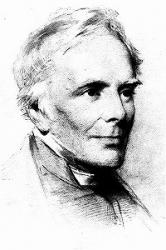
John Keble

1792 - 1866 Person Name: Rev. John Keble Topics: Closing of Service Author (sts. 1-4) of "Sun of my Soul, Thou Savior Dear" in Psalter Hymnal (Red) Keble, John, M.A., was born at Fairford, in Gloucestershire, on St. Mark's Day, 1792. His father was Vicar of Coln St. Aldwin's, about three miles distant, but lived at Fairford in a house of his own, where he educated entirely his two sons, John and Thomas, up to the time of their entrance at Oxford. In 1806 John Keble won a Scholarship at Corpus Christi College, and in 1810 a Double First Class, a distinction which up to that time had been gained by no one except Sir Robert Peel. In 1811 he was elected a Fellow of Oriel, a very great honour, especially for a boy under 19 years of age; and in 1811 he won the University Prizes both for the English and Latin Essays. It is somewhat remarkable that amid this brilliantly successful career, one competition in which the future poet was unsuccessful was that for English verse, in which he was defeated by Mr. Rolleston. After his election at Oriel, he resided in College, and engaged in private tuition. At the close of 1813 he was appointed Examining Master in the Schools, and was an exceedingly popular and efficient examiner. On Trinity Sunday, 1815, he was ordained Deacon, and in 1816 Priest, by the Bishop of Oxford, and became Curate of East Leach and Burthorpe, though he still continued to reside at Oxford. In 1818 he was appointed College Tutor at Oriel, which office he retained until 1823. On the death of his mother in the same year, he left Oxford, and returned to live with his father and two surviving sisters at Fairford. In addition to East Leach and Burthorpe, he also accepted the Curacy of Southrop, and the two brothers, John and Thomas, undertook the duties between them, at the same time helping their father at Coln. It should be added, as an apology for Keble thus becoming a sort of pluralist among "the inferior clergy," that the population of all his little cures did not exceed 1000, nor the income £100 a year. In 1824 came the only offer of a dignity in the Church, and that a very humble one, which he ever received. The newly-appointed Bishop of Barbadoes (Coleridge) wished Keble to go out with him as Archdeacon, and but for his father's delicate state of health, he would probably have accepted the offer. In 1825 he became Curate of Hursley, on the recommendation of his old pupil, Sir William Heathcote; but in 1826, on the death of his sister, Mary Ann, he returned to Fairford, feeling that he ought not to separate himself from his father and only surviving sister. He supplied his father's place at Coln entirely. 1827 was memorable for the publication of The Christian Year, and 1828 for the election to the Provostship of Oriel, which his friends, rather than himself, seem to have been anxious to secure for him. In 1829 the living of Hursley was offered to him by Sir William Heathcote, but declined on the ground that he could not leave his father. In 1830 he published his admirable edition of Hooker's Works. In 1831 the Bishop of Exeter (Dr. Philpotts) offered him the valuable living of Paignton, but it was declined for the same reason that Hursley had been declined. In the same year he was also elected to the Poetry Professorship at Oxford. His Praelectiones in that capacity were much admired. In 1833 he preached his famous Assize Sermon at Oxford, which is said by Dr. Newman to have given the first start to the Oxford Movement. Very soon after the publication of this sermon the Tracts for the Times began to be issued. Of these Tracts Keble wrote Nos. 4, 13, 40, and 89. In 1835 his father died, and Keble and his sister retired from Fairford to Coln. In the same year he married Miss Clarke and the Vicarage of Hursley, again becoming vacant, was again offered to him by Sir W. Heathcote, and as the reason for his previous refusal of it no longer existed, he accepted the offer, and in 1836 settled at Hursley for the remainder of his life. That life was simply the life of a devoted and indefatigable parish priest, varied by intellectual pursuits. In 1864 his health began to give way, and on March 29, 1866, he passed away, his dearly loved wife only surviving him six weeks. Both are buried, side by side, in Hursley churchyard. In his country vicarage he was not idle with his pen. In 1839 he published his Metrical Version of the Psalms. The year before, he began to edit, in conjunction with Drs. Pusey and Newman, the Library of the Fathers. In 1846 he published the Lyra Innocentium, and in 1847 a volume of Academical and Occasional Sermons. His pen then seems to have rested for nearly ten years, when the agitation about the Divorce Bill called forth from him in 1851 an essay entitled, An Argument for not proceeding immediately to repeal the Laws which treat the Nuptial Bond as Indissoluble; and in the same year the decision of Archbishop Sumner in the Denison case elicited another essay, the full title of which is The Worship of Our Lord and Saviour in the Sacrament of the Holy Communion, but which is shortly entitled, Eucharistical Adoration. In 1863 he published his last work, The Life of Bishop Wilson (of Sodor and Man). This cost him more pains than anything he wrote, but it was essentially a labour of love. In the popular sense of the word "hymn," Keble can scarcely be called a hymnwriter at all. Very many of his verses have found their way into popular collections of Hymns for Public Worship, but these are mostly centos. Often they are violently detached from their context in a way which seriously damages their significance. Two glaring instances of this occur in the Morning and Evening hymns. In the former the verse "Only, O Lord, in Thy dear love, Fit us for perfect rest above," loses half its meaning when the preceding verse, ending "The secret this of rest below," is excised, as it generally is in collections for public worship, and the same may be said of that most familiar of all Keble's lines, "Sun of my soul, thou Saviour dear," which has of course especial reference to the preceding verse, "'Tis gone, that bright and orbed blaze," &c. The Lyra Innocentium has furnished but few verses which have been adopted into hymn collections; the Psalter has been more fortunate, but the translations from the Latin are almost unknown. Taking, however, the word "hymn" in the wider sense in which Dr. Johnson defines it, as "a song of adoration to some superior being," Keble stands in the very first rank of hymnwriters. His uneventful life was the very ideal life for such a poet as Keble was, but not the sort of life which would be best adapted to train a popular hymnwriter. The Christian Year and the Lyra Innocentium reflect in a remarkable degree the surroundings of the writer. They are essentially the works of a refined and cultured mind, and require a refined and cultured mind to enter into their spirit. Keble, all his life long, and never more than in the earlier portion of it, before he wrote, and when he was writing The Christian Year, breathed an atmosphere of culture and refinement. He had imbibed neither the good nor the evil which the training of a public or even of a private, school brings. It was not even the ordinary home education which he had received. He had been trained, up to the very time of his going to college, by his father, who was clearly a man of culture and refinement, and had been himself successively Scholar and Fellow of Corpus. When he went to Oxford, he can scarcely be said to have entered into the whirl of university life. The Corpus of those days has been admirably described by Keble's own biographer, Sir John Coleridge, and by Dean Stanley in his Life of Dr. Arnold; and the impression which the two vivid pictures leave upon the mind is that of a home circle, on rather a large scale, composed of about twenty youths, all more or less scholarly and refined, and some of them clearly destined to become men of mark. When he removed across the road to Oriel, he found himself in the midst of a still more distinguished band. Whether at home or at college he had never come into contact with anything rude or coarse. And his poetry is just what one would expect from such a career. Exquisitely delicate and refined thoughts, expressed in the most delicate and refined language, are characteristic of it all. Even the occasional roughnesses of versification may not be altogether unconnected with the absence of a public school education, when public schools laid excessive stress upon the form of composition, especially in verse. The Christian Year again bears traces of the life which the writer led, in a clerical atmosphere, just at the eve of a great Church Revival, "cujus pars magna fuit." “You know," he writes to a friend, “the C. Y. (as far as I remember it) everywhere supposes the Church to be in a state of decay." Still more obviously is this the case in regard to the Lyra Innocentium. It was being composed during the time when the writer was stricken by what he always seems to have regarded as the great sorrow of his life. Not the death of his nearest relations—-and he had several trials of this kind—-not the greatest of his own personal troubles dealt to him so severe a blow as the secession of J. H. Newman to the Church of Rome. The whole circumstances of the fierce controversy connected with the Tract movement troubled and unsettled him; and one can well understand with what a sense of relief he turned to write, not for, but about, little children, a most important distinction, which has too often been unnoticed. If the Lyra had been written for children it would have been an almost ludicrous failure, for the obscurity which has been frequently complained of in The Christian Year, is still more conspicuous in the latter work. The title is somewhat misleading, and has caused it to be regarded as a suitable gift-book for the young, who are quite incapable of appreciating it. For the Lyra is written in a deeper tone, and expresses the more matured convictions of the author; and though it is a far less successful achievement as a whole, it rises in places to a higher strain of poetry than The Christian Year does. Another marked feature of Keble's poetry is to a great extent traceable to his early life, viz. the wonderful accuracy and vividness of his descriptions of natural scenery. The ordinary schoolboy or undergraduate cares little for natural scenery. The country is to him a mere playing field. But Keble's training led him to love the country for its own sake. Hence, as Dean Stanley remarks, “Oxford, Bagley Wood, and the neighbourhood of Hursley might be traced through hundreds of lines, both in The Christian Year and the Lyra Innocentium.” The same writer testifies, with an authority which no other Englishman could claim, to "the exactness of the descriptions of Palestine, which he [Keble] had never visited.” And may not this remarkable fact be also traced to some extent to his early training? Brought up under the immediate supervision of a pious father, whom he venerated and loved dearly, he had been encouraged to study intelligently his Bible in a way in which a boy differently educated was not likely to do. Hence, as Sir John Coleridge remarks, "The Christian Year is so wonderfully scriptural. Keble's mind was, by long, patient and affectionate study of Scripture, so imbued with it that its language, its train of thought, its mode of reasoning, seems to flow out into his poetry, almost, one should think, unconsciously to himself." To this may we not add that the same intimate knowledge of the Bible had rendered the memory of the Holy Land so familiar to him that he was able to describe it as accurately as if he had seen it? One other early influence of Keble's life upon his poetry must be noticed. Circumstances brought him into contact with the "Lake poets." The near relation of one of the greatest of them had been his college friend, and John Coleridge introduced him to the writings not only of his uncle, S. T. Coleridge, but also of Wordsworth, to whom he dedicated his Praelectiones, and whose poetry and personal character he admired enthusiastically. To the same college friend he was indebted for an introduction to Southey, whom he found to be "a noble and delightful character," and there is no doubt that the writings of these three great men, but especially Wordsworth, had very much to do with the formation of Keble's own mind as a poet. It has been remarked that in Keble's later life his poetical genius seemed to have, to a great extent, forsaken him; and that the Miscellaneous Poems do not show many traces of the spirit which animated The Christian Year and the Lyra Innocentium. Perhaps one reason for this change may be found in the increased interest "which Keble took in public questions which were not conducive to the calm, introspective state of mind so necessary to the production of good poetry. The poet should live in a world of his own, not in a world perpetually wrangling about University Reform, about Courts of Final Appeal, about Marriage with Deceased Wife's Sister, and other like matters into which Keble, in his later years, threw himself—heart and soul. It is not needful to say much about Keble's other poetical works, The Psalter was not a success, and Keble did not expect it to be. It was undertaken," he tells us, "in the first instance with a serious apprehension, which has since grown into a full conviction, that the thing attempted is, strictly speaking, impossible." At the same time, if Keble did not achieve what he owned to be impossible, he produced a version which has the rare merit of never offending against good taste; one which in every line reflects the mind of the cultured and elegant scholar, who had been used to the work of translating from other languages into English. Hymnal compilers have hitherto strangely neglected this volume; but it is a volume worth the attention of the hymn compiler of the future. There is scarcely a verse in it which would do discredit to any hymnbook; while there are parts which would be an acquisition to any collection. His translations from the Latin have not commended themselves to hymnal compilers. Some of his detached hymns have been more popular. But it is after all as writer of The Christian Year that Keble has established his claim to be reckoned among the immortals. It would be hardly too much to say that what the Prayer Book is in prose, The Christian Year is in poetry. They never pall upon one; they realise Keble's own exquisite simile:— "As for some dear familiar strain Untired we ask, and ask again; Ever in its melodious store Finding a spell unheard before." And it would hardly be too bold to prophesy that The Christian Year will live as long as the Prayer Book, whose spirit Keble had so thoroughly imbibed, and whose "soothing influence" it was his especial object to illustrate and commend. [Rev. John H. 0verton, D.D.] Keble's hymns, poetical pieces, and translations appeared in the following works :— (1.) The Christian Year: Thoughts in Verse for the Sundays and Holy days Throughout the Year. Oxford: John Henry Parker, 1827. Preface dated "May 30th, 1827." The last poem, that on the “Commination," is dated March 9, 1827. The poems on the "Forms of Prayer to be used at Sea," "Gunpowder Treason," "King Charles the Martyr," "The Restoration of the Royal Family," "The Accession," and "Ordination," were added to the 4th edition, 1828. The Messrs. Parker have pub. a large number of editions to date, including a facsimile reprint of the first edition, and an edition with the addition of the dates of composition of each poem. A facsimile of Keble's manuscript as it existed in 1822 was also lithographed in 1882, by Eliot Stock, but its publication was suppressed by a legal injunction, and only a few copies came into the hands of the public. Since the expiration of the first copyright other publishers have issued the work in various forms. (2.) Contributions to the British Magazine, which were included in Lyra Apostolica, 1836, with the signature of "γ." (3.) The Psalter or Psalms of David; In English Verse; By a Member of the University of Oxford. Adapted for the most part, to Tunes in Common Use; and dedicated by permission to the Lord Bishop of Oxford. . . . Oxford, John Henry Parker: J. G. & F. Rivington, London, MDCCCXXXIX. Preface dated “Oxford, May 29, 1839." (4.) The Child's Christian Year: Hymns for every Sunday and Holy-Day. Compiled for the use of Parochial Schools. Oxford: John Henry Parker, 1841. This was compiled by Mrs. Yonge. Keble wrote the Preface, dated “Hursley, Nov. 6, 1841," and signed it “J. K." To it he contributed the four poems noted below. (5.) Lyra Innocentium: Thoughts in Verse on Christian Children, their Ways and their Privileges . . . Oxford: John Henry Parker : F. & J. Rivington, London, 1846. The Metrical Address (in place of Preface) “To all Friendly Readers," is dated "Feb. 8, 1846." (6.) Lays of the Sanctuary, and otter Poems. Compiled and Edited by G. Stevenson de M. Rutherford... London: Hamilton, Adams & Co., 1859. This was a volume of poems published on behalf of Mrs. Elizabeth Good. To it Keble contributed the three pieces noted below. (7.) The Salisbury Hymn-Book 1857. Edited by Earl Nelson. To this be contributed a few hymns, some translations from the Latin, and some rewritten forms of well-known hymns, as "Guide me, 0 Thou great Jehovah," &c. (8.) Miscellaneous Poems by the. Rev. J. Keble, M.A., Vicar of Hursley. Oxford and London: Parker & Co., 1869. The excellent Preface to this posthumous work is dated "Chester, Feb. 22, 1869," and is signed "G.M," i.e. by George Moberly, late Bishop of Salisbury. This volume contains Keble's Ode written for the Installation of the Duke of Wellington as Chancellor of the University of Oxford, in 1834, his poems from the Lyra Apostolica, his hymns named above, his translations from the Latin, and other pieces not published in his works. The most important centos from The Christian Year, which are in common use as hymns, and also the hymns contributed to the Salisbury Hymn Book, 1857, are annotated in full under the first lines of the original poems. The translations from the Latin and Greek are given under the first lines of the originals. There are also several of his more important pieces noted in the body of this work. Those that …have no special history, are the following (the dates given being those of the composition of each piece):— i. From The Christian Year, 1827 and 1828. 1. Creator, Saviour, strengthening Guide. Trinity Sunday. (March 3, 1826.) 2. Father, what treasures of sweet thought. Churching of Women. (March 13, 1827.) 3. God is not in the earthquake: but behold. 9th Sunday after Trinity. The still mall voice. (Aug. 13,1822.) 4. In troublous days of anguish and rebuke. 9th S. after Trinity. The still small voice. (Aug. 13, 1822.) 5. Lessons sweet of spring returning. 1st Sunday after Epiphany. Spring. (May 17,1824.) 6. My Saviour, can it ever be? 4th Sunday after Easter. The promised Comforter. 7. 0 Father of long suffering grace. 18th Sunday after Trinity. God's longsuffering. (Oct. 6, 1823.) 8. 0 God of mercy, God of might, How should, &c. Holy Communion. (Jan. 31, 1827.) 9. 0 Lord my God, do Thou Thy holy will. Wednesday before Easter. Resignation. (Aug. 13, 1821.) 10. 0 say not, dream [think] not, heavenly notes. Catechism. (Feb. 16, 1827.) 11. 0 shame upon thee, listless heart. SS. Philip & James. (Aug. 3, 1825.) 12. 0 who shall dare in this frail scene? St. Mark's Day. (1820.) 13. Red o'er the forest peers the setting sun. 23rd Sunday after Trinity. The Resurrection of the body. (Nov. 12, 1825.) 14. Spirit of Christ, Thine earnest give. Ordination. (March 28, 1828.) 15. Spirit of light and truth, to Thee. Ordination. (March 28, 1828.) 16. Spirit of might and sweetness too. Confirmation. (Feb. 21, 1827.) 17. Sweet nurslings of the vernal skies. 15th S. after Trinity. Consider the lilies. Live for today. (Feb. 3, 1826) 18. The days of hope and prayer are past. 4th Sunday after Easter. The promised Comforter. 19. The live-long night we've toiled in vain. 5th Sunday after Trinity. Miracle of the Fishes. (1821.) 20. The midday sun with fiercest glare. Conversion of St. Paul. (Mar. 2,1822.) 21. The shadow of the Almighty's cloud. Confirmation. (Feb. 22, 1827.) 22. The silent joy that sinks so deep. 2nd Sunday after Epiphany. Turning Water into Wine. 23. Then, fainting soul, arise and sing. 4th Sunday after Easter. The promised Comforter. 24. When brothers part for manhood's race. St. Andrew's Day. (Jan. 27, 1822.) 25. Who is God’s chosen priest ? St. Matthias's Day. 26. Why doth my Saviour weep? 10th Sunday after Trinity. Christ weeping over Jerusalem. (1819.) 27. Why should we faint and fear to live alone? 24th Sunday after Trinity. God's goodness in veiling the future. (June 7, 1825.) 28. Wish not, dear friends, my pain away. 16th Sunday after Trinity. Resignation. (1824.) ii. From The Psalter, 1839. 29. From deeps so wild and drear. Ps. cxxx. 30. God our Hope and Strength abiding. Ps. xlvi. 31. How pleasant, Lord of hosts, how dear. Ps. lxxxiv. 32. Lord, be my Judge, for I have trod. Ps. xxvi. 33. Lord, Thy heart in love hath yearned. Ps. lxxxv. 34. Lord, Thou hast search'd me out and known. Ps. cxxxix 35. My God, my God, why hast Thou me? Ps. xxii. 36. My Shepherd is the living God. Ps. xxiii. 37. My Shepherd is the Lord; J know. Ps. xxiii. 38. Praise the Lord, for He is love. Ps. cxxxvi. 39. Praise ye the Lord from heaven. Ps.cxlviii. 40. Sing the song unheard before. Ps. xcvi. 41. Sound high Jehovah's Name. Ps. cxxxv. 42. The earth is all the Lord's, with all. Ps. xxiv. 43. The mercies of the Lord my God. Ps. lxxxix. 44. The seed of Jacob, one and all. Ps. xxii. iii. From The Child's Christian Year, 1841, and later editions. 45. Bethlehem, above all cities blest. Innocents’ Day. 46. Lo, from the Eastern hills the Lord. l0th Sunday after Trinity. The Gospel. (Late editions.) 47. Our God in glory sits on high. 1st Sunday after Easter. The Epistle. 48. When Christ to village comes or town. 16th Sunday after Trinity. The Gospel. (Late editions.) iv. From Lyra Innocentium, 1846. 49. Christ before thy door is waiting. Presence of Christ in His poor; or, Offertory. 50. How [When] the new-born saints, assembling. Offertory. 51. Once in His Name Who made thee. Holy Baptism. 52. Who for the like of me will care? Naamans' Servant-maid v. From Lays of the Sanctuary, 1859. 53. Lord, lift my heart to Thee at morn. Emigrant's Midnight Hymn. 54. O Love unseen, we know Thee nigh. Cento from No. 53. 55. Slowly the gleaming stars retire. Morning Hymn for Emigrants at Sea. 56. The twilight hour is sweet at home. Evening hymn for Emigrants at Sea. The editor of Keble's Miscellaneous Poems says concerning Nos. 53, 55, and 56:— "The three hymns for Emigrants, for use at Midnight, Morning, and Evening, were written at the request of his friend Sir Frederic Rogers, at that time Emigration Commissioner. They were printed in the first edition of the ‘Prayers for Emigrants, which he had compiled, but were subsequently omitted, perhaps as being thought not sufficiently simple for the class of people for whose use the Book of Prayers was chiefly intended." Preface, p. vi. It is found that nearly 100 hymns (counting centos as such) by Keble are in common use at the present time, and of these some rank with the finest and most popular in the English language. -- John Julian, Dictionary of Hymnology (1907)

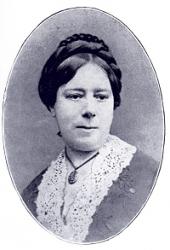
Catherine Winkworth

1827 - 1878 Topics: Close of Service Translator of "Now God be with us, for the night is closing" in The New Laudes Domini Catherine Winkworth (b. Holborn, London, England, 1827; d. Monnetier, Savoy, France, 1878) is well known for her English translations of German hymns; her translations were polished and yet remained close to the original. Educated initially by her mother, she lived with relatives in Dresden, Germany, in 1845, where she acquired her knowledge of German and interest in German hymnody. After residing near Manchester until 1862, she moved to Clifton, near Bristol. A pioneer in promoting women's rights, Winkworth put much of her energy into the encouragement of higher education for women. She translated a large number of German hymn texts from hymnals owned by a friend, Baron Bunsen. Though often altered, these translations continue to be used in many modern hymnals. Her work was published in two series of Lyra Germanica (1855, 1858) and in The Chorale Book for England (1863), which included the appropriate German tune with each text as provided by Sterndale Bennett and Otto Goldschmidt. Winkworth also translated biographies of German Christians who promoted ministries to the poor and sick and compiled a handbook of biographies of German hymn authors, Christian Singers of Germany (1869). Bert Polman ======================== Winkworth, Catherine, daughter of Henry Winkworth, of Alderley Edge, Cheshire, was born in London, Sep. 13, 1829. Most of her early life was spent in the neighbourhood of Manchester. Subsequently she removed with the family to Clifton, near Bristol. She died suddenly of heart disease, at Monnetier, in Savoy, in July, 1878. Miss Winkworth published:— Translations from the German of the Life of Pastor Fliedner, the Founder of the Sisterhood of Protestant Deaconesses at Kaiserworth, 1861; and of the Life of Amelia Sieveking, 1863. Her sympathy with practical efforts for the benefit of women, and with a pure devotional life, as seen in these translations, received from her the most practical illustration possible in the deep and active interest which she took in educational work in connection with the Clifton Association for the Higher Education of Women, and kindred societies there and elsewhere. Our interest, however, is mainly centred in her hymnological work as embodied in her:— (1) Lyra Germanica, 1st Ser., 1855. (2) Lyra Germanica, 2nd Ser., 1858. (3) The Chorale Book for England (containing translations from the German, together with music), 1863; and (4) her charming biographical work, the Christian Singers of Germany, 1869. In a sympathetic article on Miss Winkworth in the Inquirer of July 20, 1878, Dr. Martineau says:— "The translations contained in these volumes are invariably faithful, and for the most part both terse and delicate; and an admirable art is applied to the management of complex and difficult versification. They have not quite the fire of John Wesley's versions of Moravian hymns, or the wonderful fusion and reproduction of thought which may be found in Coleridge. But if less flowing they are more conscientious than either, and attain a result as poetical as severe exactitude admits, being only a little short of ‘native music'" Dr. Percival, then Principal of Clifton College, also wrote concerning her (in the Bristol Times and Mirror), in July, 1878:— "She was a person of remarkable intellectual and social gifts, and very unusual attainments; but what specially distinguished her was her combination of rare ability and great knowledge with a certain tender and sympathetic refinement which constitutes the special charm of the true womanly character." Dr. Martineau (as above) says her religious life afforded "a happy example of the piety which the Church of England discipline may implant.....The fast hold she retained of her discipleship of Christ was no example of ‘feminine simplicity,' carrying on the childish mind into maturer years, but the clear allegiance of a firm mind, familiar with the pretensions of non-Christian schools, well able to test them, and undiverted by them from her first love." Miss Winkworth, although not the earliest of modern translators from the German into English, is certainly the foremost in rank and popularity. Her translations are the most widely used of any from that language, and have had more to do with the modern revival of the English use of German hymns than the versions of any other writer. -- John Julian, Dictionary of Hymnology (1907) ============================ See also in: Hymn Writers of the Church

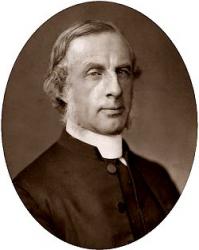
E. H. Plumptre

1821 - 1891 Person Name: Edward Hayes Plumptre, 1821 - 91 Topics: The Church Worship - The Close of Service Author of "Rejoice, rejoice!" in Service Book and Hymnal of the Lutheran Church in America Edward H. Plumptre (b. London, England, August 6, 1821; d. Wells, England, February 1, 1891) was an eminent classical and biblical scholar who gained prominence in both church and university. Educated at King's College, London, and University College, Oxford, he was ordained in the Church of England in 1846. Plumptre served as a preacher at Oxford and a professor of pastoral theology at King's College, and held a number of other prestigious positions. His writings include A Life of Bishop Ken (1888), translations from Greek and Latin classics, and poetry and hymns. Plumptre was also a member of the committee that produced the Revised Version of the Bible. Bert Polman ==================== Plumptre, Edward Hayes, D.D., son of Mr. E. H. Plumptre, was born in London, Aug. 6, 1821, and educated at King's College, London, and University College, Oxford, graduating as a double first in 1844. He was for some time Fellow of Brasenose. On taking Holy Orders in 1846 he rapidly attained to a foremost position as a Theologian and Preacher. His appointments have been important and influential, and include that of Assistant Preacher at Lincoln's Inn; Select Preacher at Oxford; Professor of Pastoral Theology at King's College, London; Dean of Queen's, Oxford; Prebendary in St. Paul's Cathedral, London; Professor of Exegesis of the New Testament in King's College, London; Boyle Lecturer; Grinfield Lecturer on the Septuagint, Oxford; Examiner in the Theological schools at Oxford; Member of the Old Testament Company for the Revision of the A.V. of the Holy Scriptures; Rector of Pluckley, 1869; Vicar of Bickley, Kent, 1873; and Dean of Wells, 1881. Dean Plumptre's literary productions have been very numerous and important, and embrace the classics, history, divinity, biblical criticism, biography, and poetry. The list as set forth in Crockford's Clerical Directory is very extensive. His poetical works include Lazarus, and Other Poems, 1864; Master and Scholar, 1866; Things New and Old, 1884; and translations of Sophocles, Æschylus, and Dante. As a writer of sacred poetry he ranks very high. His hymns are elegant in style, fervent in spirit, and broad in treatment. The subjects chosen are mainly those associated with the revived Church life of the present day, from the Processional at a Choral Festival to hospital work and the spiritual life in schools and colleges. The rhythm of his verse has a special attraction for musicians, its poetry for the cultured, and its stately simplicity for the devout and earnest-minded. The two which have attained to the most extensive use in Great Britain and America are: Rejoice, ye pure in heart," and "Thine arm, O Lord, in days of old." His translations from the Latin, many of which were made for the Hymnary, 1871 and 1872, are very good and musical, but they have not been used in any way in proportion to their merits. His original hymns in common use include:— 1. Behold they gain the lonely height. The Transfiguration. Written for and first published in the Society for Promoting Christian Knowledge Church Hymns, 1871. 2. For all Thy countless bounties. National Hymns. Written for the Jubilee of Queen Victoria, 1887, and set to music by C. W. Lavington. It was printed, together with the National Anthem adapted for the Jubilee, in Good Words, 1887. 3. Lo, summer comes again! Harvest. Written in 1871 for use at the Harvest Festival in Pluckley Church, Kent, of which the author was then rector, and published in the same year in the Hymnary, No. 466. 4. March, march, onward soldiers true. Processional at Choral Festivals. Written in 1867 for the tune of Costa's March of the Israelites in the Oratorio of Eli, at the request of the Rev. Henry White, Chaplain of the Savoy, and first used in that Chapel. It was subsequently published in the Savoy Hymnary, N.D. [1870], in 4 stanzas of 4 lines; in a Choral Festival book at Peterborough, and in the S. P. C. K. Church Hymns, 1871. 5. 0 Light, Whose beams illumine all. The Way, the Truth, and the Life. Written in May 1864, and published in his Lazarus, and Other Poems, 1864, as one of five Hymns for School and College. It passed into the 1868 Appendix to Hymns Ancient & Modern, and again into other collections. 6. 0 Lord of hosts, all heaven possessing. For School or College. Written in May, 1864, and published in his Lazarus and other Poems, 1864, in 5 stanzas of 6 lines. 7. 0 praise the Lord our God. Processional Thanksgiving Hymn. Written May 1864, and published in his Lazarus, and other Poems, 1864, in 4 stanzas of 8 lines. It is a most suitable hymn for Sunday school gatherings. 8. Rejoice, ye pure in heart. Processional at Choral Festival. Written in May 1865, for the Peterborough Choral Festival of that year, and first used in Peterborough Cathedral. In the same year it was published with special music by Novello & Co; and again (without music) in the 2nd edition of Lazarus, and Other Poems, 1865. It was included in the 1868 Appendix to Hymns Ancient & Modern with the change in stanza i., line 3, of "Your orient banner wave on high," to "Your festal banner wave on high." It is more widely used than any other of the author's hymns. Authorized text in Hymns Ancient & Modern. 9. Thine arm, 0 Lord, in days of old. Hospitals. Written in 1864 for use in King's College Hospital, London, and first printed on a fly-sheet as "A Hymn used in the Chapel of King's College Hospital." It was included in the 2nd edition of Lazarus, and Other Poems, 1865; in the 1868 Appendix to Hymns Ancient & Modern; the S. P. C. K. Church Hymns, 1871; Thring's Collection, 1882; and many others. 10. Thy hand, 0 God, has guided. Church Defence. Included in the 1889 Supplemental Hymns to Hymns Ancient & Modern The closing line of each stanza, "One Church, one Faith, one Lord," comes in with fine effect. Dean Plumptre's Life of Bishop Ken, 1888, is an exhaustive and excellent work. -- John Julian, Dictionary of Hymnology (1907) =============== Plumptre, E. H., p. 897, i. Died at the Deanery, Wells, Feb. 1, 1891. --John Julian, Dictionary of Hymnology, Appendix, Part II (1907)

W. Chatterton Dix

1837 - 1898 Person Name: William Chatterton Dix, 1837 - 98 Topics: The Church Worship - The Close of Service Author of "Alleluia! sing to Jesus" in Service Book and Hymnal of the Lutheran Church in America Most British hymn writers in the nineteenth century were clergymen, but William C. Dix (b. Bristol, England, 1837; d. Cheddar, Somerset, England, 1898) was a notable exception. Trained in the business world, he became the manager of a marine insurance company in Glasgow, Scotland. Dix published various volumes of his hymns, such as Hymns of Love and Joy (1861) and Altar Songs: Verses on the Holy Eucharist (1867). A number of his texts were first published in Hymns Ancient and Modern (1861). Bert Polman ======================== Dix, William Chatterton, son of John Dix, surgeon, of Bristol, author of the Life of Chatterton; Local Legends, &c, born at Bristol, June 14, 1837, and educated at the Grammar School of that city. Mr. Chatterton Dix's contributions to modern hymnody are numerous and of value. His fine Epiphany hymn, "As with gladness men of old,” and his plaintive ”Come unto Me, ye weary," are examples of his compositions, many of which rank high amongst modern hymns. In his Hymns of Love and Joy, 1861, Altar Songs, Verses on the Holy Eucharist, 1867; Vision of All Saints, &c, 1871; and Seekers of a City, 1878, some of his compositions were first published. The greater part, however, were contributed to Hymns Ancient & Modern; St. Raphaels Hymnbook, 1861; Lyra Eucharidica, 1863; Lyra Messianica, 1864; Lyra Mystica, 1865; The People's Hymns, 1867; The Hymnary, 1872; Church Hymns, 1871, and others. Many of his contributions are renderings in metrical form of Dr. Littledale's translation from the Greek in his Offices . . . of the Holy Eastern Church, 1863; and of the Rev. J. M. Rodwell's translation of hymns of the Abyssinian Church. These renderings of the "songs of other Churches" have not received the attention they deserve, and the sources from whence they come are practically unknown to most hymnal compilers. Mr. Dix has also written many Christmas and Easter carols, the most widely known of which is "The Manger Throne."   In addition to detached pieces in prose and verse for various magazines, he has published two devotional works, Light; and The Risen Life, 1883; and a book of instructions for children entitled The Pattern Life, 1885. The last-named contains original hymns by Mr. Dix not given elsewhere. In addition to the more important of Mr. Dix's hymns which are annotated under their respective first lines, the following are also in common use:- 1. God cometh, let the heart prepare.  Advent. In his Vision of All Saints, &c, 1871.      2. Holy, holy, holy, to Thee our vows we pay.  Holy Communion.   Published in his Altar Songs, 1867, in 6 stanzas of 6 lines, and headed "Eucharistic Processional for Dedication Feast."    In the Society for Promoting Christian Knowledge Church Hymns, 1871, and others in an abridged form.      3. How long, O Lord, how long, we ask.   Second Advent.   Appeared in the Appendix to the Society for Promoting Christian Knowledge Psalms & Hymns, 1869, and repeated in several collections.        4. In our work and in our play.    Children's Hymn. Published in his Hymns and Carols for Children, 1869, and is largely adopted  in  children's  hymnbooks, as  Mrs. Brock's Children's Hymnbook, 1881, and others.   Also in the Society for Promoting Christian Knowledge Church Hymns, 1871.      5.  In the hollow of Thine hand.   For Fair Weather. Appeared in the People's Hymns, 1867, and repeated in several others.      6.  Joy fills our inmost heart today.    Christmas. Printed in the Church Times, and  then on a Flysheet by Gr. J. Palmer, as the third of Four Joyful Hymns for Christmas, circa 1865. It is in the Society for Promoting Christian Knowledge Church Hymns, 1871, and other hymnals. It is also one of Mr. Dix's Christmas Customs & Christmas Carols, not dated.      7. Lift up your songs, ye thankful.   St. Ambrose. Contributed to the People's Hymns, 1867.  8. Now in numbers softly flowing.    St. Cecilia. Contributed to the People's Hymns, 1867.    9.  Now, our Father, we adore Thee.   Praise to the Father.   Appeared in the Appendix to the S. P. C. K. Psalms & Hymns, 1869.   10.  O Christ, Thou Son of Mary.   St. Crispin.   First printed in the Union Review, Sept., 1866, and thence into the People's Hymns, 1887.   11. O Cross which only canst allay.   Glorying and Trusting in the Cross.   Published in the People's Hymns, 1867.   12. O Thou the Eternal Son of God.   Good Friday. Appeared in Lyra Messianica, 1864; the author's Hymns and Carols for Children, 1869; the S. P. C. K. Church Hymns, 1871, &c.   13. On the waters dark and drear.   For use at Sea. Published in Hymns for Public Worship, &c. (St. Raphael's, Bristol), 1861; the S. P. C. K. Church Hymns, 1871, &c.   14. Only one prayer to-day.   Ash Wednesday.   Contributed to the People's Hymns, 1867.   15. Sitting at receipt of custom.  St. Matthew.  Appeared in the People's Hymns, 1867.   16. The Cross is on thy brow.   Confirmation.   In the 1869 Appendix to the S. P. C. K. Psalms & Hymns.   17.  The stars above our head.   Work and Humility. In the 1869 Appendix to the S. P. C. K. Psalms & Hymns.  18. When the shades of night are falling.   Evening Hymn to the Good Shepherd.   In the author's Seekers of a City, &c. [1878]. Most of Mr. Dix's best-known hymns, and also some of those named above, are in common use in America and other English-speaking countries. In Great Britain and America from 30 to 40 are in common use.  He died Sept. 9, 1898. -- John Julian, Dictionary of Hymnology (1907) ====================== Dix, William Chatterton, p. 302, ii. Additional hymns by Mr. Dix now in common use are:— 1. Lift up your songs, ye angel choirs. Ascension. 2. Now, my soul rehearse the story. Christ Feeding the Multitude. 3. Within the temple's hallowed courts. Blessed Virgin Mary. These hymns are from his Altar Songs, 1867. --John Julian, Dictionary of Hymnology, Appendix, Part II (1907)

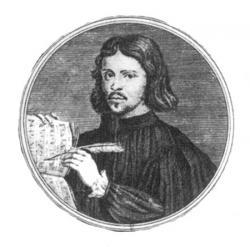
Thomas Tallis

1505 - 1585 Person Name: T. Tallis Topics: Close of Service Composer of "EVENING HYMN" in Laudes Domini Thomas Tallis (b. Leicestershire [?], England, c. 1505; d. Greenwich, Kent, England 1585) was one of the few Tudor musicians who served during the reigns of Henry VIII: Edward VI, Mary, and Elizabeth I and managed to remain in the good favor of both Catholic and Protestant monarchs. He was court organist and composer from 1543 until his death, composing music for Roman Catholic masses and Anglican liturgies (depending on the monarch). With William Byrd, Tallis also enjoyed a long-term monopoly on music printing. Prior to his court connections Tallis had served at Waltham Abbey and Canterbury Cathedral. He composed mostly church music, including Latin motets, English anthems, settings of the liturgy, magnificats, and two sets of lamentations. His most extensive contrapuntal work was the choral composition, "Spem in alium," a work in forty parts for eight five-voice choirs. He also provided nine modal psalm tunes for Matthew Parker's Psalter (c. 1561). Bert Polman

J. Hart

1712 - 1768 Person Name: Joseph Hart Topics: Close of Service Author of "At Dismission" in Laudes Domini Hart, Joseph, was born in London in 1712. His early life is involved in obscurity. His education was fairly good; and from the testimony of his brother-in-law, and successor in the ministry in Jewin Street, the Rev. John Hughes, "his civil calling was" for some time "that of a teacher of the learned languages." His early life, according to his own Experience which he prefaced to his Hymns, was a curious mixture of loose conduct, serious conviction of sin, and endeavours after amendment of life, and not until Whitsuntide, 1757, did he realize a permanent change, which was brought about mainly through his attending divine service at the Moravian Chapel, in Fetter Lane, London, and hearing a sermon on Rev. iii. 10. During the next two years many of his most earnest and impassioned hymns were written. These appeared as:— Hymns composed on Various Subjects, with the Author's Experience, London, 1759. During this year he became the Minister of the Independent Chapel, Jewin Street, London. In 1762 he added a Supplement to his Hymns; and in 1765 an Appendix. In modern editions of his Hymns these three are embodied in one volume as:— Hymns composed on Various Subjects: With the Author's Experience, The Supplement and Appendix. By the Rev. Joseph Hart, late Minister of the Gospel in Jewin Street, London. Allott & Co. [no date]. Hart died on May 24, 1768. At one time his hymns were widely used, especially by Calvinistic Nonconformists. Many of them are of merit, and are marked by great earnestness, and passionate love of the Redeemer. The best known are: “Come, Holy Spirit, come"; “Come, ye sinners, poor and wretched"; "This God is the God we adore"; and "Lord, look on all assembled here." Those which are more limited in their use include:— i. From his Hymns, &c, 1759. 1. Descend from heaven, celestial Dove. Whitsuntide. No. 6, in 6 stanzas of 6 lines. In Snepp's Songs of Grace & Glory., 1872, No. 374, st. iv., v. are omitted. It is in extensive use in America. 2. Great High Priest, we view Thee stooping. High Priesthood of Christ. No. 56, pt. ii., in 3 stanzas of 8 lines. In Snepp's Songs of Grace & Glory, 1872, No. 236; Hatfield's Church Hymn Book, N. Y., 1872, No. 435, &c. 8. How wondrous are the works of God. Redeeming Love. No. 21, in 9 stanzas of 4 lines. In the Scottish Evangelical Union Hymnal, 1878, st. i.-iv. are given as No. 11. 4. If ever it could come to pass. Final Perseverance. No. 58, in 3 stanzas of 6 lines. Repeated in Snepp's Songs of Grace & Glory, 1872, No. 729. 6. Jesus is our God and Saviour . Faith and Repentance. No. 54, in 7 stanzas of 8 lines. In Snepp's Songs of Grace & Glory, 1872, No. 146, st. iv. is omitted. In the London Hymn Book (enlarged), 1879, st. iii. and v. are given as "Nothing but Thy blood, 0 Jesus." 6. Jesus, while He dwelt below. Gethsemane. No. 75, in 23 stanzas of 6 lines. In Snepp's Songs of Grace & Glory, 1872, No. 230, sixteen stanzas are broken up into three parts: (i.) "Jesus, while He dwelt below"; (ii.) "Full of love to man's lost race"; (iii.) "There my God bore all my guilt." A cento is also given in Hatfield's Church Hymn Book, N. Y., 1872, No. 441, as "Many woes had Christ [He] endured." It is composed of st. viii., ix., xiii., xx., xxiii., slightly altered. In the Scottish Evangelical Union Hymnal, 1878, No. 34, 8 stanzas are given in two parts: pt. i. as, "Jesus, while He dwelt below"; pt. ii. "Eden from each flowery bed." 7. Lamb of God, we fall before Thee. Christ All in All. No. 17 in 4 stanzas of 8 lines. It is in various collections, and as altered in Kennedy , 1863, No. 1171, is much improved. 8. Let us all with grateful praises. Christmas. No. 14 in 7 stanzas of 8 lines. In Spurgeon's 0ur Own Hymn Book, 1866, it is reduced to 4 stanzas of 4 lines. 9. Lord, look on all assembled here. For a Public Fast. No. 96, in 8 stanzas of 4 lines. It is in several of the older hymnbooks. 10. Lord, we lie before Thy feet. Lent. No. 74, in 6 stanzas of 6 lines, and based on 2 Chron. xx. 20. In Spurgeon's 0ur Own Hymn Book, 1866, stanza i., iii., vi. are given as No. 585. 11. Mercy is welcome news indeed. God's Mercy in pardoning Sin. No. 51, in 6 stanzas of 4 lines, on St. Luke vii. 42. In Spurgeon, 1866, No. 544. 12. Much we talk of Jesu's blood. Passiontide. No. 41, in 4 st. of 8 lines, on Lam. i. 12. In Spurgeon, 1866, it is abridged to 4 stanzas of 4 lines. 13. Bow from the garden to the cross. Good Friday. No. 63, in 9 stanzas of 4 lines, and entitled, "The Crucifixion." In Spurgeon, 1866, No. 274, st. ii.-v., vi.-ix. are given as "See how the patient Jesus stands." 14. The Fountain of Christ Assist me to sing. The Fountain. No. 86, in 8 stanzas of 8 lines on Zech. xiii. 1. In Spurgeon, 1866, st. i., v., vii., viii., are given as No. 375. 15. The moon and stars shall lose their light. Advent. No. 48, in 4 stanzas of 4 lines, on St. Matt. xxiv. 35. In Spurgeon, 1866. 16. The sinner that truly believes. Saving Faith. No. 88, in 5 stanzas of 4 lines, and entitled, "Saving Faith" In Spurgeon, 1866, No. 533, st. ii. is omitted, and the opening line is altered to "The moment a sinner believes." ii. From his Supplement, 1762. 17. Behold what awful pomp. Advent. No. 52, in 8 stanzas of 4 lines. It is usually abridged as in the American Methodist Episcopal Hymns, 1849, No. 1107. 18. Christ is the Eternal Rock. The Offices of Christ. No. 27, in 6 stanzas of 8 lines. In Windle's Metrical Psalter & Hymnal, 1862, stanzas i., ii., v. are given as No. 53. 19. Christians, dismiss your fear. Easter. No. 33, in 4 stanzas of 8 lines into Dr. Alexander's Augustine Hymn Book, 1849, No. 79, in 7 stanzas of 4 lines. 20. Dismiss us with Thy blessing, Lord. Close of Service. No. 78, in 2 stanzas of 4 lines. In a few collections. 21. Gird thy loins up, Christian soldier. The Christian Armour . No. 29, in 5 stanzas of 8 lines, on Eph. vi. 11. Found in several of the older, and a few of the modern collections. 22. Glory to God on high, Our peace, &c. Holy Communion. No. 3, in 6 stanzas of 4 lines. In Hatfield's Church Hymn Book, 1872, No. 704, st. v., vi. are omitted. 23. Holy Ghost, inspire our praises. On behalf of Ministers. No. 77, in 5 stanzas of 8 lines. In the Scottish Evangelical Union Hymnal, 1878, No. 412, st. iii.-v. are given as, "Happy soul that hears and follows." 24. Jesus once for sinners slain. Holy Communion. No. 18, in 6 stanzas of 4 lines. In American use. 25. Lord, help us on Thy word to feed. Close of Service. No. 80, in 2 stanzas of 4 lines. In several modern hymnbooks. 26. O for a glance of heavenly day. Lent. No. 64, in 5 stanzas of 4 lines. In Hatfield's Church Hymn Book, 1872, and other American collections it is usually repeated in full. In Bickersteth's Christian Psalmody, 1833, it was given as, "Lord, shed a beam of heavenly day," and this is repeated in modern hymnbooks. 27. Once more before we part. Close of Service. No. 79, in 2 stanzas of 4 lines. Popular in Great Britain and America. 28. Once more we come before our God. Before a Sermon. No. 21, in 6 stanzas of 4 lines, into Hatfield, 1872, No. 111, and others. 29. Sons of God by bless'd adoption. Burial. No. 45, in 3 stanzas of 8 lines, into Snepp's Songs of Grace & Glory, 1872, No. 981, as "Sons of God by blest adoption." 30. Suffering Saviour, Lamb of God . Holy Communion. No. 14, in 8 stanzas of 4 lines. In W. F. Stevenson's Hymns for Church & Home, 1873, st. iii., vii. are omitted. 31. That doleful night before His death. Holy Communion. No. 17, in 2 stanzas of 8 lines. In the Scottish Evangelical Union Hymnal, 1878, st. i. 11. 4-8, and st. ii., are given as, "To keep Thy Feast, Lord, we are met." iii. From his Appendix, 1765. 32. Christians, in your several stations. Christian Duty. No. 7, in 5 stanzas of 6 lines. It is slightly altered in Snepp's Songs of Grace & Glory, 1872, No. 742, and dated 1759 in error. 33. Prayer was [is] appointed to convey. Prayer. No. 12 in 6 stanzas of 4 lines into Snepp's Songs of Grace & Glory, 1872, No. 542, with alterations and the omission of st. ii., v. In some American collections it begins, "Prayer is to God, the soul's sure way." --John Julian, Dictionary of Hymnology (1907) ======================= Hart, Joseph, p. 492, ii. Other hymns in common use are— 1. The blest memorials of Thy grief (1762). Holy Communion. 2. To comprehend the great Three-One (1759). Holy Trinity. 3. Vain man, thy fond pursuits forbear (1759). Death. 4. When the blest day of Pentecost (1759). Whitsuntide. --John Julian, Dictionary of Hymnology, Appendix, Part II (1907)

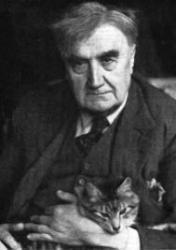
Ralph Vaughan Williams

1872 - 1958 Person Name: Ralph Vaughan Williams, 1872-1958 Topics: Close of Service; Close of Service Composer of "RANDOLPH" in Christian Worship (1993) Through his composing, conducting, collecting, editing, and teaching, Ralph Vaughan Williams (b. Down Ampney, Gloucestershire, England, October 12, 1872; d. Westminster, London, England, August 26, 1958) became the chief figure in the realm of English music and church music in the first half of the twentieth century. His education included instruction at the Royal College of Music in London and Trinity College, Cambridge, as well as additional studies in Berlin and Paris. During World War I he served in the army medical corps in France. Vaughan Williams taught music at the Royal College of Music (1920-1940), conducted the Bach Choir in London (1920-1927), and directed the Leith Hill Music Festival in Dorking (1905-1953). A major influence in his life was the English folk song. A knowledgeable collector of folk songs, he was also a member of the Folksong Society and a supporter of the English Folk Dance Society. Vaughan Williams wrote various articles and books, including National Music (1935), and composed numerous arrange­ments of folk songs; many of his compositions show the impact of folk rhythms and melodic modes. His original compositions cover nearly all musical genres, from orchestral symphonies and concertos to choral works, from songs to operas, and from chamber music to music for films. Vaughan Williams's church music includes anthems; choral-orchestral works, such as Magnificat (1932), Dona Nobis Pacem (1936), and Hodie (1953); and hymn tune settings for organ. But most important to the history of hymnody, he was music editor of the most influential British hymnal at the beginning of the twentieth century, The English Hymnal (1906), and coeditor (with Martin Shaw) of Songs of Praise (1925, 1931) and the Oxford Book of Carols (1928). Bert Polman

John Warrington Hatton

1710 - 1793 Person Name: John Hatton, d. 1793 Topics: The Church Worship - The Close of Service Composer of "DUKE STREET" in Service Book and Hymnal of the Lutheran Church in America John Warrington Hatton (b. Warrington, England, c. 1710; d, St. Helen's, Lancaster, England, 1793) was christened in Warrington, Lancashire, England. He supposedly lived on Duke Street in Lancashire, from where his famous tune name comes. Very little is known about Hatton, but he was most likely a Presbyterian, and the story goes that he was killed in a stagecoach accident. Bert Polman

Thomas Kelly

1769 - 1855 Person Name: Thomas Kelly, 1769 - 1854 Topics: The Church Worship - The Close of Service Author of "The head that once was crowned with thorns" in Service Book and Hymnal of the Lutheran Church in America Kelly, Thomas, B.A., son of Thomas Kelly, a Judge of the Irish Court of Common Pleas, was born in Dublin, July 13, 1769, and educated at Trinity College, Dublin. He was designed for the Bar, and entered the Temple, London, with that intention; but having undergone a very marked spiritual change he took Holy Orders in 1792. His earnest evangelical preaching in Dublin led Archbishop Fowler to inhibit him and his companion preacher, Rowland Hill, from preaching in the city. For some time he preached in two unconsecrated buildings in Dublin, Plunket Street, and the Bethesda, and then, having seceded from the Established Church, he erected places of worship at Athy, Portarlington, Wexford, &c, in which he conducted divine worship and preached. He died May 14, 1854. Miller, in his Singers & Songs of the Church, 1869, p. 338 (from which some of the foregoing details are taken), says:— "Mr. Kelly was a man of great and varied learning, skilled in the Oriental tongues, and an excellent Bible critic. He was possessed also of musical talent, and composed and published a work that was received witli favour, consisting of music adapted to every form of metre in his hymn-book. Naturally of an amiable disposition and thorough in his Christian piety, Mr. Kelly became the friend of good men, and the advocate of every worthy, benevolent, and religious cause. He was admired alike for his zeal and his humility; and his liberality found ample scope in Ireland, especially during the year of famine." Kelly's hymns, 765 in all, were composed and published over a period of 51 years, as follows:— (1) A Collection of Psalms and Hymns extracted from Various Authors, by Thomas Kelly, A.B., Dublin, 1802. This work contains 247 hymns by various authors, and an Appendix of 33 original hymns by Kelly. (2) Hymns on Various Passages of Scripture, Dublin, 1804. Of this work several editions were published: 1st, 1804; 2nd, 1806; 3rd, 1809; 4th, 1812. This last edition was published in two divisions, one as Hymns on Various Passages of Scripture, and the second as Hymns adapted for Social Worship. In 1815 Kelly issued Hymns by Thomas Kelly, not before Published. The 5th edition, 1820, included the two divisions of 1812, and the new hymns of 1815, as one work. To the later editions of 1820, 1826, 1836, 1840, 1846, and 1853, new hymns were added, until the last published by M. Moses, of Dublin, 1853, contained the total of 765. As a hymn-writer Kelly was most successful. As a rule his strength appears in hymns of Praise and in metres not generally adopted by the older hymn writers. His "Come, see the place where Jesus lay" (from "He's gone, see where His body lay"),"From Egypt lately come"; “Look, ye saints, the sight is glorious"; "On the mountain's top appearing"; "The Head that once was crowned with thorns"; "Through the day Thy love has spared us"; and “We sing the praise of Him Who died," rank with the first hymns in the English language. Several of his hymns of great merit still remain unknown through so many modern editors being apparently adverse to original investigation. In addition to the hymns named and others, which are annotated under their respective first lines, the following are also in common use:— i. From the Psalms and Hymns, 1802:— 1. Grant us, Lord, Thy gracious presence. Commencement of Divine Worship. 2. Jesus, Immortal King, go on [display]. Missions. 3. Saviour, through the desert lead us. Divine Guidance Desired. 4. The day of rest once more [again] comes round. Sunday. 5. We've no abiding city here. Seeking Heaven. ii. From the Hymns on Varous Passages of Scripture, first edition, 1804 :— 6. Boundless glory, Lord, be thine. Praise for the Gospel. 7. By whom shall Jacob now arise? Epiphany. 8. Glory, glory to our King. Praise to Christ as King. 9. How pleasant is the sound of praise. Praise for Redemption. 10. How sweet to leave the world awhile. In Retirement, or For a Retreat. 11. Inform I long had bowed the knee. Jesus, the Saviour, or Praise for Salvation. 12. It is finished! sinners, hear it. Good Friday. 13. Jesus, the Shepherd of the sheep. The Good Shepherd. 14. Let reason vainly boast her power. Death. 15. Poor and afflicted, Lord, are Thine. Affliction. 16. Praise we Him to Whose kind favour. Close of Service. 11. Spared a little longer. Safety in God. 18. Stricken, smitten, and afflicted. Passiontide. ii. From the Hymns, &c, second edition, 1806:— 19. Far from us be grief and sadness. Joy of Believers. 20. Give us room that we may dwell. Missions. 21. Glory, glory everlasting. Praise of Jesus. 22. God has.turned my grief to gladness. Joy after Sorrow. 23. Happy they who trust in Jesus. Peace in Jesus. 24. Hark, the notes of angels singing. Angels praising Jesus. 25. Hark! 'tis a martial sound. Christian Life a Warfare. 26. I hear a sound [voice] that comes from far. The Gospel Message. 27. Jesus is gone up on high. Divine Worship. 28. Now [O] may the Gospel's conquering power. Home Missions. In the 1853 edition of the Hymns it begins “O may the Gospel's conqu'ring force." 29. O Zion, when I think on thee. Desiring Heaven. 30. Praise the Saviour, ye who know Him. Praise of Jesus. 31. See from Zion's sacred mountain. The Fountain of Life. 32. The atoning work is done. Jesus the High Priest. 33. Zion is Jehovah's dwelling. The Church of God. 34. Zion stands by hills surrounded. The Safety of the Church. 35. Zion's King shall reign victorious. Missions. iv. From the Hymns, &c, 3rd edition, 1809:— 36. Behold the Temple of the Lord. The Church a Spiritual Temple. 37. Blessed Fountain, full of grace. Fountain for Sin. 38. Brethren, come, our Saviour bids us. Holy Communion. 39. Fly, ye seasons, fly still faster. Second Advent Desired. 40. God of Israel, we adore Thee. Evening. 41. Gracious Lord, my heart is fixed. Trust and Peace. 42. Hark, a voice! it comes from heaven. Death. 43. Hark, that shout of rapt'rous joy. Second Advent. 44. If our warfare be laborious. Labour and Rest . 45. Lo, He comes, let all adore Him. Missions. 46. Nothing know we of the season. Time of Second Advent uncertain. 47. O had I the wings of a dove. Holiness and Heaven desired. 48. O where is now that glowing love. Despondency. 49. Our Father sits on yonder throne. God the Father. 50. Ours is a rich and royal Feast. Holy Communion. 51. Shepherd of the chosen number. Safety in the Good Shepherd. 52. We're bound for yonder land. Life, a Voyage. 53. Welcome sight! the Lord descending. The Advent. 54. What is life? 'tis but a vapour. Death anticipated. 55. Who is this that comes from Edom? Ascension. 56. Why those fears ? Behold 'tis Jesus. Stilling the Sea. 57. Without blood is no remission. Passiontide. 58. Yes, we trust the day is breaking. Missions. v. FromHymns: Not before Published, 1815:— 59. Behold the Lamb with glory crowned. Exaltation of Christ. 60. God is love, His word has said it. God is Love. 61. God of our salvation, hear us. Opening or Close of Divine Worship. 62. In Thy Name, O Lord, assembling. Commencement of Divine Worship. 63. Keep us, Lord, O [and] keep us ever. Divine Worship. 64. Let sinners saved give thanks, and sing. Praise for Salvation. 65. Praise the Lord Who died to save us. Passiontide. 66. Salvation is of God alone. God the Author of Salvation. 67. Saviour, come, Thy [saints] friends await Thee [are waiting] . Second Advent desired. 68. Sweet were the sounds that reached our ears. Divine Mercy. 69. We'll sing of the Shepherd that died. The Lost Sheep. 70. When we cannot see our way. Trust and Peace. 71. Who is this that calms the ocean? Stilling the Sea. vi. From the Hymns on F. Passages of Scripture, &c, eds. 1820 and 1826 :-— 72. Grace is the sweetest sound. Divine Grace. 73. Now let a great effectual door. Missions. 74. Now may the mighty arm awake. Missions. 75. Now may the Spirit from above. Home Missions. 76. Sing, sing His lofty praise. Praise of Jesus. 77. Sound, 6ound the truth abroad. Missions. 78. Speed Thy servants, Saviour, speed them. Departure of Missionaries. vii. From the Hymns on Various Passages, &c, 1836:— 79. Come, O Lord, the heavens rending. Prayer for Blessings. 80. The night is far spent, the day is at hand. The Second Advent. viii. From the Hymns on Various Passages, &c, circa 1845:— 81. Joyful be the hours today. Sunday. 82. Lord, behold us few and weak. Opening of Divine Service. 83. Meet Thy people, Saviour, meet us. Meetings for Prayer. 84. Saviour, send a blessing to us. Prayer for Blessings. 85. Sing of Jesus, sing for ever. Praise of Jesus. ix. From the Hymns on Various Passages, &c, 1853:— 86. Precious volume, what thou doest. Holy Scripture. 87. Unfold to us, O Lord, unfold. Divine aid to reading Holy Scripture. All these hymns, together with those annotated under their respective first lines are in the 1853 edition of Kelly's Hymns published in Dublin by M. Moses, and in London by Simpkin, Marshall & Co. Kelly's musical editions are issued by the same publishers. -- John Julian, Dictionary of Hymnology (1907) ================== Kelly, Thomas, p. 615, i. Other hymns in common use are: 1. Behold the Man! How glorious He. (1809.) Good Friday. 2. Jesus the [Thou] Shepherd of the Sheep. (1804.) Good Shepherd. 3. Saved ourselves by Jesu's blood. (1802.) For a Revival. 4. Saviour, 'tis to [unto] Thee. (1853*.) Lent. 5. See the vineyard lately planted. (1806.) Missions. Sometimes given as "See, O Lord, the vineyard planted." 6. Sing aloud to God our strength. (1809.) Praise to the Father. 7. Sing, sing His lofty praise. (1820.) Praise to Jesus. Sometimes as "Hail our eternal King" (p. 615, No. 76). 8. Sing of Him Who bore our guilt. (1853*.) Praise to Jesus. 9. Sing we praise to God above, God our Saviour, &c. (1815.) Praise for Divine Mercy. 10. Sing we praise to God above, Sing we praise, &c. (1853*.) Praise. 11. Sons of Zion, raise your songs. (1820-26) The Exalted Saviour. 12. The Lord Himself will keep. (1809.) From “We're bound for yonder land" (sec p. 615, No. 52.) 13. The God [Lord] of glory dwells on high. (1809.) Humility and Love of Christ. 14. The people of the Lord Are on their way, &c. (1820.) Life a Pilgrimage. 15. Thus saith God of His Anointed. (1809.) Missions. 16. 'Tis to us no cause of sorrow. (1815.) Resignation. 17. To the Ark away, or perish. (1815.) Safety in Jesus only. 18. To our Lord a throne is given. (1838.) Christ the King. 19. Trust ye in the Lord for ever. (1853*.) Trust in God. 20. We'll sing in spite of scorn. (1806.) Christmas. From this "The long-expected morn" is taken. 21. What tongue can tell, what fancy paint. (1806.) Saints in Glory 22. What were Sinai's awful wonders. (1809.) Advent. 23. Whence those sounds symphonious? (1815.) Christmas. 24. While in the [this] world we still [yet] remain. (1806.) Communion of Saints. 25. Yes, 'tis a rough and thorny road. (1809.) Resignation. Sometimes given as "Though rough and thorny be the way." The dates given above are those of the various editions of Kelly's Hymns. The date 1853* indicates that the hymn is in the 1853 ed. of the Hymns, but had also appeared in a previous edition which we have not seen. --John Julian, Dictionary of Hymnology, Appendix, Part II (1907)

Pages


Export as CSV
It looks like you are using an ad-blocker. Ad revenue helps keep us running. Please consider white-listing Hymnary.org or getting Hymnary Pro to eliminate ads entirely and help support Hymnary.org.