You help make Hymnary.org possible. More than 10 million people from 200+ countries found hymns, liturgical resources and encouragement on Hymnary.org in 2025, including you. Every visit affirms the global impact of this ministry.

If Hymnary has been meaningful to you this year, would you take a moment today to help sustain it? A gift of any size—paired with a note of encouragement if you wish—directly supports the server costs, research work and curation that keep this resource freely available to the world.

Give securely online today, or mail a check to:
Hymnary.org
Calvin University
3201 Burton Street SE
Grand Rapids, MI 49546

Thank you for your partnership, and may the hope of Advent fill your heart.

Person Results

Topics:god+-+the+father
In:person

Planning worship? Check out our sister site, ZeteoSearch.org, for 20+ additional resources related to your search.
Showing 21 - 30 of 340Results Per Page: 102050

Nahum Tate

1652 - 1715 Topics: God our father Translator of "O God! we praise Thee, and confess" in Book of Worship with Hymns and Tunes Nahum Tate was born in Dublin and graduated from Trinity College, Dublin, B.A. 1672. He lacked great talent but wrote much for the stage, adapting other men's work, really successful only in a version of King Lear. Although he collaborated with Dryden on several occasions, he was never fully in step with the intellectual life of his times, and spent most of his life in a futile pursuit of popular favor. Nonetheless, he was appointed poet laureate in 1692 and royal historiographer in 1702. He is now known only for the New Version of the Psalms of David, 1696, which he produced in collaboration with Nicholas Brady. Poverty stricken throughout much of his life, he died in the Mint at Southwark, where he had taken refuge from his creditors, on August 12, 1715. --The Hymnal 1940 Companion See also in: Hymn Writers of the Church

Folliott Sandford Pierpoint

1835 - 1917 Person Name: Folliott S. Pierpoint Topics: Adoration and Praise God Our Father Author of "For the Beauty of the Earth" in The Hymnal for Worship and Celebration In the spring of 1863, Folliott S. Pierpoint (b. Bath, Somerset, England, 1835; d. Newport, Monmouthshire, England, 1917) sat on a hilltop outside his native city of Bath, England, admiring the country view and the winding Avon River. Inspired by the view to think about God's gifts in creation and in the church, Pierpont wrote this text. Pierpont was educated at Queen's College, Cambridge, England, and periodically taught classics at Somersetshire College. But because he had received an inheritance, he did not need a regular teaching position and could afford the leisure of personal study and writing. His three volumes of poetry were collected in 1878; he contributed hymns to The Hymnal Noted (1852) and Lyra Eucharistica (1864). "For the Beauty of the Earth" is the only Pierpont hymn still sung today. Bert Polman ================== Pierpoint, Folliott Sandford, M.A., son of William Home Pierpoint of Bath, was born at Spa Villa, Bath, Oct. 7, 1835, and educated at Queen's College, Cambridge, graduating in classical honours in 1871. He has published The Chalice of Nature and Other Poems, Bath, N.D. This was republished in 1878 as Songs of Love, The Chalice of Nature, and Lyra Jesu. He also contributed hymns to the Churchman's Companion (London Masters), the Lyra Eucharistica, &c. His hymn on the Cross, "0 Cross, O Cross of shame," appeared in both these works. He is most widely known through:— "For the beauty of the earth." Holy Communion, or Flower Service. This was contributed to the 2nd edition of Orby Shipley's Lyra Eucharistica, 1864, in 8 stanzas of 6 lines, as a hymn to be sung at the celebration of Holy Communion. In this form it is not usually found, but in 4, or sometimes in 5, stanzas, it is extensively used for Flower Services and as a Children's hymn. --John Julian, Dictionary of Hymnology (1907)

Johann Crüger

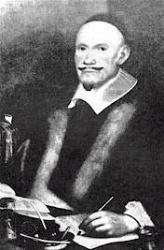
1598 - 1662 Topics: God as Father Composer of "NUN DANKET" in The Sing! Hymnal Johann Crüger (b. Grossbriesen, near Guben, Prussia, Germany, 1598; d. Berlin, Germany, 1662) Crüger attended the Jesuit College at Olmutz and the Poets' School in Regensburg, and later studied theology at the University of Wittenberg. He moved to Berlin in 1615, where he published music for the rest of his life. In 1622 he became the Lutheran cantor at the St. Nicholas Church and a teacher for the Gray Cloister. He wrote music instruction manuals, the best known of which is Synopsis musica (1630), and tirelessly promoted congregational singing. With his tunes he often included elaborate accom­paniment for various instruments. Crüger's hymn collection, Neues vollkomliches Gesangbuch (1640), was one of the first hymnals to include figured bass accompaniment (musical shorthand) with the chorale melody rather than full harmonization written out. It included eighteen of Crüger's tunes. His next publication, Praxis Pietatis Melica (1644), is considered one of the most important collections of German hymnody in the seventeenth century. It was reprinted forty-four times in the following hundred years. Another of his publications, Geistliche Kirchen Melodien (1649), is a collection arranged for four voices, two descanting instruments, and keyboard and bass accompaniment. Crüger also published a complete psalter, Psalmodia sacra (1657), which included the Lobwasser translation set to all the Genevan tunes. Bert Polman =============================== Crüger, Johann, was born April 9, 1598, at Gross-Breese, near Guben, Brandenburg. After passing through the schools at Guben, Sorau and Breslau, the Jesuit College at Olmütz, and the Poets' school at Regensburg, he made a tour in Austria, and, in 1615, settled at Berlin. There, save for a short residence at the University of Wittenberg, in 1620, he employed himself as a private tutor till 1622. In 1622 he was appointed Cantor of St. Nicholas's Church at Berlin, and also one of the masters of the Greyfriars Gymnasium. He died at Berlin Feb. 23, 1662. Crüger wrote no hymns, although in some American hymnals he appears as "Johann Krüger, 1610,” as the author of the supposed original of C. Wesley's "Hearts of stone relent, relent" (q.v.). He was one of the most distinguished musicians of his time. Of his hymn tunes, which are generally noble and simple in style, some 20 are still in use, the best known probably being that to "Nun danket alle Gott" (q.v.), which is set to No. 379 in Hymns Ancient & Modern, ed. 1875. His claim to notice in this work is as editor and contributor to several of the most important German hymnological works of the 16th century, and these are most conveniently treated of under his name. (The principal authorities on his works are Dr. J. F. Bachmann's Zur Geschichte der Berliner Gesangbücher 1857; his Vortrag on P. Gerhard, 1863; and his edition of Gerhardt's Geistliche Lieder, 1866. Besides these there are the notices in Bode, and in R. Eitner's Monatshefte für Musik-Geschichte, 1873 and 1880). These works are:— 1. Newes vollkömmliches Gesangbuch, Augspur-gischer Confession, &c, Berlin, 1640 [Library of St. Nicholas's Church, Berlin], with 248 hymns, very few being published for the first time. 2. Praxis pietatis melica. Das ist: Ubung der Gottseligkeit in Christlichen und trostreichen Gesängen. The history of this, the most important work of the century, is still obscure. The 1st edition has been variously dated 1640 and 1644, while Crüger, in the preface to No. 3, says that the 3rd edition appeared in 1648. A considerable correspondence with German collectors and librarians has failed to bring to light any of the editions which Koch, iv. 102, 103, quotes as 1644, 1647, 1649, 1650, 1651, 1652, 1653. The imperfect edition noted below as probably that of 1648 is the earliest Berlin edition we have been able to find. The imperfect edition, probably ix. of 1659, formerly in the hands of Dr. Schneider of Schleswig [see Mützell, 1858, No. 264] was inaccessible. The earliest perfect Berlin edition we have found is 1653. The edition printed at Frankfurt in 1656 by Caspar Röteln was probably a reprint of a Berlin edition, c. 1656. The editions printed at Frankfurt-am-Main by B. C. Wust (of which the 1666 is in the preface described as the 3rd) are in considerable measure independent works. In the forty-five Berlin and over a dozen Frankfurt editions of this work many of the hymns of P. Gerhardt, J. Franck, P. J. Spener, and others, appear for the first time, and therein also appear many of the best melodies of the period. 3. Geistliche Kirchen-Melodien, &c, Leipzig, 1649 [Library of St. Katherine's Church, Brandenburg]. This contains the first stanzas only of 161 hymns, with music in four vocal and two instrumental parts. It is the earliest source of the first stanzas of various hymns by Gerhardt, Franck, &c. 4. D. M. Luther's und anderer vornehmen geisU reichen und gelehrten Manner Geistliche Lieder und Psalmen, &c, Berlin, 1653 [Hamburg Town Library], with 375 hymns. This was edited by C. Runge, the publisher, and to it Crüger contributed some 37 melodies. It was prepared at the request of Luise Henriette (q.v.), as a book for the joint use of the Lutherans and the Re¬formed, and is the earliest source of the hymns ascribed to her, and of the complete versions of many hymns by Gerhardt and Franck. 5. Psalmodia Sacra, &c, Berlin, 1658 [Royal Library, Berlin]. The first section of this work is in an ed. of A. Lobwasser's German Psalter; the second, with a similar title to No. 4, and the date 1657, is practically a recast of No. 4,146 of those in 1653 being omitted, and the rest of the 319 hymns principally taken from the Praxis of 1656 and the hymn-books of the Bohemian Brethren. New eds. appeared in 1676, 1700, 1704, 1711, and 1736. [Rev. James Mearns, M.A.] -- Excerpt from John Julian, Dictionary of Hymnology (1907) ======================= Crüger, Johann, p. 271, ii. Dr. J. Zahn, now of Neuendettelsau, in Bavaria, has recently acquired a copy of the 5th ed., Berlin, 1653, of the Praxis. --John Julian, Dictionary of Hymnology, Appendix, Part II (1907)

Jimmy Owens

1930 - 2023 Topics: Adoration and Praise God Our Father; Adoration and Praise God Our Father; Adoration and Praise God Our Father Composer of "FAIRHILL" in The Hymnal for Worship and Celebration Owens, James Lloyd (Jimmy). (Clarksdale, Mississippi, December 9, 1930-November 26. 2023). Foursquare. Attended Millsaps College, Jackson, Miss.; Southwestern College, Memphis, Tennessee; Cathedral School of the Bible, Oakland, California; Cabot College, San Leandro, Calif. Minister of Music, The Neighborhood Church, Oakland, Calif., 1951-1966; Minister of Music, United Community Church, Glendale, Calif., 1966-1968; Minister of Music, Anaheim Christian Center (now Melodyland Christian Center), Anaheim, Calif., 1968-1969. With his wife Carol, Owens composed four Christian musicals. He recorded several albums. --Terry W. York, DNAH Archives     (updated 2025 by Leland Bryant Ross)

Anne Steele

1717 - 1778 Person Name: Steele Topics: God Father Author of "Our Father" in Psalms and Hymns and Spiritual Songs Anne Steele was the daughter of Particular Baptist preacher and timber merchant William Steele. She spent her entire life in Broughton, Hampshire, near the southern coast of England, and devoted much of her time to writing. Some accounts of her life portray her as a lonely, melancholy invalid, but a revival of research in the last decade indicates that she had been more active and social than what was previously thought. She was theologically conversant with Dissenting ministers and "found herself at the centre of a literary circle that included family members from various generations, as well as local literati." She chose a life of singleness to focus on her craft. Before Christmas in 1742, she declined a marriage proposal from contemporary minister-hymnist Benjamin Beddome. All the same, some of Steele's sufferings were very real. She lost her mother at age 3, a potential suitor at age 20, her step mom at 43, and her sister-in-law at 45. She spent many years caring for her father until his death in 1769. For most of her life, she exhibited symptoms of malaria, including persistent pain, fever, headaches, and stomach aches. Caleb Evans, in his preface to Steele's posthumous Miscellaneous Pieces in Verse and Prose (1780), noted that she had been bed ridden for "some years" before her death: When the interesting hour came, she welcomed its arrival, and though her feeble body was excruciated with pain, her mind was perfectly serene. . . . She took the most affectionate leave of her weeping friends around her, and at length, the happy moment of her dismission arising, she closed her eyes, and with these animating words on her dying lips, "I know that my Redeemer liveth," gently fell asleep in Jesus. Historically, her most popular hymn has been "When I survey life's varied scene" (and its shortened form, "Father, whate'er of earthly bliss"), a hymn that turns earthly loss or denial into a spirit of thankfulness, published in over 800 North American hymnals since 1792. Not all of her work deals with personal agony. Her hymns span a wide doctrinal and ecclesiastical range, some crafted and used for her father's congregation. Her metrical psalms are among the finest of the genre. Steele's hymns and psalms were published in two volumes in 1760, Poems on Subjects Chiefly Devotional, under the pseudonym Theodosia, with an additional volume of material published after her death, in Miscellaneous Pieces in Verse and Prose, 1780. Another small collection, Verses for Children, was issued in 1788, with two other editions given in 1803 and 1806. Sixty-two of her hymns, including new material and some revisions by Steele, were published in a hymnal for Baptists in 1769, A Collection of Hymns Adapted to Public Worship, edited by Caleb Evans and John Ash. Forty seven were included in John Rippon's A Selection of Hymns from the Best Authors in 1787; the only author with larger representation was Philip Doddridge, with 101. These collections represent the earliest attempts to anthologize Baptist hymns and were vital for bringing Steele's hymns into wider public worship, where they have been a mainstay for over two hundred years. Chris Fenner adapted from The Towers (Southern Baptist Theological Seminary, August 2015) Recommended Bibliography: Cynthia Y. Aalders, To Express the Ineffable: The Hymns and Spirituality of Anne Steele (Milton Keynes, U.K.: Paternoster, 2008). Cynthia Y. Aalders, "In melting grief and ardent love: Anne Steele's contribution to eighteenth-century hymnody," The Hymn (summer 2009), 16-25. J.R. Broome, A Bruised Reed: The Life and Times of Anne Steele (Harpenden, U.K.: Gospel Standard Trust Publications, 2007). Joseph Carmichael, The Hymns of Anne Steele in John Rippon's Selection of Hymns: A Theological Analysis in the Context of the English Particular Baptist Revival (2012), dissertation, http://digital.library.sbts.edu/handle/10392/4112 Priscilla Wong, Anne Steele and Her Spiritual Vision (Grand Rapids: Reformation Heritage Books, 2012). Timothy Whelan & Julia B. Griffin, eds., Nonconformist Women Writers, 1720–1840, vols. 1 & 2 (London: Pickering & Chatto, 2011). ======================== Steele, Anne, born in 1716, was the daughter of Mr. Wm. Steele, a timber merchant, and pastor, without salary, of the Baptist Church at Broughton, in Hampshire. At an early age she showed a taste for literature, and would often entertain her friends by her poetical compositions. But it was not until 1760 that she could be prevailed upon to publish. In that year two volumes appeared under the title of Poems on Subjects chiefly Devotional, by Theodosia. After her death, which occurred in November, 1778, a new edition was published with an additional volume and a Preface by the Rev. Dr. Caleb Evans, of Bristol (Bristol, 1780). In the three volumes are 144 hymns, 34 Psalms in verse, and about 30 short poems. They have been reprinted in one vol. by D. Sedgwick, 1863…. Among Baptist hymnwriters Miss Steele stands at the head, if we regard either the number of her hymns which have found a place in the hymnals of the last 120 years, or the frequency with which they have been sung. Although few of them can be placed in the first rank of lyrical compositions, they are almost uniformly simple in language, natural and pleasing in imagery, and full of genuine Christian feeling. Miss Steele may not inappropriately be compared with Miss F. R. Havergal, our "Theodosia" of the 19th century. In both there is the same evangelic fervour, in both the same intense personal devotion to the Lord Jesus. But whilst Miss Steele seems to think of Him more frequently as her "bleeding, dying Lord "—dwelling on His sufferings in their physical aspect—Miss Havergal oftener refers to His living help and sympathy, recognizes with gladness His present claims as "Master" and "King," and anticipates almost with ecstasy His second coming. Looking at the whole of Miss Steele's hymns, we find in them a wider range of thought than in Miss Havergal's compositions. She treats of a greater variety of subjects. On the other hand, Miss Havergal, living in this age of missions and general philanthropy, has much more to say concerning Christian work and personal service for Christ and for humanity. Miss Steele suffered from delicacy of health and from a great sorrow, which befell her in the death of her betrothed under peculiarly painful circumstances. In other respects her life was uneventful, and occupied chiefly in the discharge of such domestic and social duties as usually fall to the lot of the eldest daughter of a village pastor. She was buried in Broughton churchyard. [Rev W. R. Stevenson, M.A.] A large number of Miss Steele's hymns are in common use, the larger proportion being in American hymnbooks. In addition to "Almighty Maker of my frame," “Far from these narrow scenes of night," "Father of mercies in Thy word," and others annotated under their respective first lines, there are also:— i. From her Poems on Subjects Chiefly Devotional, 1760, vols. i., ii. 1. Come, let our souls adore the Lord. Pleading for Mercy. One of two hymns "On the Fast, Feb. 11, 1757," the first being "While justice waves her vengeful hand." 2. Come, tune ye saints, your noblest strains. Christ Dying and Rising. 3. Deep are the wounds which sin has made. Christ, the Physician. 4. Enslaved by sin, and bound in chains. Redemption. 5. Eternal power, almighty God. Divine Condescension. 6. Eternal Source of joys divine. Divine Assurance desired. 7. Great God, to Thee my evening song. Evening. 8. Great Source of boundless power and grace. Desiring to Trust in God. 9. Hear, gracious [God] Lord, my humble moan [prayer] . The presence of God desired. 10. Hear, O my God, with pity hear. Ps. cxliii. 11. How long shall earth's alluring toys ? On Longing after unseen pleasures. 12. How lovely, how divinely sweet. Ps. lxxziv. 13. How oft, alas, this wretched heart. Pardoning Love. 14. In vain my roving thoughts would find. Lasting Happiness. 15. Jesus, the spring of joys divine. Christ the Way. 16. Lord, how mysterious are Thy ways. Providence. 17. Lord, Thou hast been Thy Children's God. Ps. xc. 18. Lord, we adore Thy boundless grace. Divine Bounty. 19. Lord, when my [our] raptured thought surveys. Creation and Providence. 20. Lord, when my thoughts delighted rove. Passiontide. 21. My God, 'tis to Thy mercy seat. Divine Mercy. 22. My God, to Thee I call. Lent. 23. O for a sweet, inspiring ray. The Ascended Saviour. 24. O Thou Whose tender mercy hears. Lent. 25. Permit me, Lord, to seek Thy face. Strength and Safety in God alone. 26. Should famine o'er the mourning field. During Scarcity. 27. So fades the lovely, blooming flower. Death of a Child. 28. Stretched on the Cross the Saviour dies. Good Friday. 29. The Lord, my Shepherd and my Guide. Ps.xxiii. 30. The Lord, the God of glory reigns. Ps. xciii. 31. The Saviour calls; let every ear. The Invitation. 32. There is a glorious world on high. True Honour. 33. Thou lovely [only] Source of true delight. Desiring to know Jesus. 34. Thou only Sovereign of my heart. Life in Christ alone. 35. To Jesus, our exalted Lord. Holy Communion. 36. To our Redeemer's glorious Name. Praise to the Redeemer. 37. To your Creator, God. A Rural Hymn. 38. When I survey life's varied scene. Resignation. 39. When sins and fears prevailing rise. Christ the Life of the Soul. 40. Where is my God? does He retire. Rreathing after God. 41. While my Redeemer's near. The Good Shepherd. 42. Why sinks my weak desponding mind? Hope in God. 43. Ye earthly vanities, depart. Love for Christ desired. 44. Ye glittering toys of earih adieu. The Pearl of great Price. 45. Ye humble souls, approach your God. Divine Goodness. ii. From the Bristol Baptist Collection of Ash & Evans, 1769. 46. Come ye that love the Saviour's Name. Jesus, the King of Saints. 47. How helpless guilty nature lies. Need of Receiving Grace. 48. Praise ye the Lord let praise employ. Praise. iii. Centos and Altered Texts, 49. How blest are those, how truly wise. True honour. From "There is a glorious world on high." 50. How far beyond our mortal view. Christ the Supreme Beauty. From "Should nature's charms to please the eye," 1760, st. iii. 51. In vain I trace creation o'er. True happiness. From "When fancy spreads her boldest wings," 1760, st. ii. 52. Jesus, and didst thou leave the sky? Praise to Jesus. From “Jesus, in Thy transporting name," 1760, st. iv. 53. Look up, my soul, with cheerful eye. Breathing after God. From No. 40, st. v. 54. Lord, in the temple of Thy grace. Christ His people's Joy. From "The wondering nations have beheld," 1760, st. iii. 55. My God, O could I make the claim. Part of No. 9 above. 56. My soul, to God, its source, aspires. God, the Soul's only Portion. From "In vain the world's alluring smile," st. iii. 57. O could our thoughts and wishes fly. Part of No. 11 above, st. iv. 58. O for the eye of faith divine. Death anticipated. From "When death appears before my sight," 1760, st. iii., vii., viii. altered, with opening stanzas from another source. 59. O Jesus, our exalted Head. Holy Communion. From "To Jesus, our exalted Lord." See No. 35. 60. O world of bliss, could mortal eyes. Heaven. From "Far from these narrow scenes of night." 61. See, Lord, Thy willing subjects bow. Praise to Christ. From "O dearer to my thankful heart," 1780, st. 5. 62. Stern winter throws his icy chains. Winter. From "Now faintly smile day's hasty hours," 1760, st. ii. 63. Sure, the blest Comforter is nigh. Whitsuntide. From "Dear Lord, and shall Thy Spirit rest," 1760, st. iii. 64. The God of my salvation lives. In Affliction. From, "Should famine, &c," No. 26, st. iv. 65. The Gospel, O what endless charms. The Gospel of Redeeming Love. From "Come, Heavenly Love, inspire my song." 66. The mind was formed lo mount sublime. The Fettered Mind. From "Ah! why should this immortal mind?" 1760, st. ii. 67. The once loved form now cold and dead. Death of a Child. From "Life is a span, a fleeting hour," 1760, st. iii. 68. Thy gracious presence, O my God. Consolation in Affliction. From "In vain, while dark affliction spreads," 1780, st. iv. 69. Thy kingdom, Lord, for ever stands. Ps. cxlv. From "My God, my King, to Thee I'll raise," 1760, st. xii. 70. Triumphant, Christ ascends on high. Ascension. From "Come, Heavenly Love, inspire my song," 1760, st. xxxii. 71. When blest with that transporting view. Christ the Redeemer. From "Almighty Father, gracious Lord," 1760, st. xi. 72. When death before my sight. Death Anticipated. From "When death appears before my sight," 1760. 73. When gloomy thoughts and boding fears. Com¬forts of Religion. From "O blest religion, heavenly fair," 1760, st. ii. 74. When weary souls with sin distrest. Invitation to Rest. From "Come, weary souls, with sin distressed," 1760. 75. Whene'er the angry passions rise. Example of Christ. From “And is the gospel peace and love?" 1760, st. ii. All the foregoing hymns are in D. Sedgwick's reprint of Miss Steele's Hymns, 1863. --Excerpts from John Julian, Dictionary of Hymnology (1907) ==================== Steele, Anne, p. 1089, i., Additional hymns in common use: 1. Amazing love that stoop'd so low. Thankfulness. From "O dearer to my thankful heart," 1780, iii. 2. Bright scenes of bliss, unclouded skies. Saved by Hope. Poems, 1760, i. p. 228. 3. Jesus demands this heart of mine. Pardon De¬sired. Poems, 1760, i. p. 120. 4. Jesus, Thou Source divine. Christ the Way. Poems, 1760, i. p. 53, altered. 5. Lord, how mysterious are Thy ways. Mysteries of Providence. Poems, 1760, i. p. 131. 6. Lord^in Thy great, Thy glorious Name. Ps. xxxi. Poems, 1760, ii. p. 158. --John Julian, Dictionary of Hymnology, Appendix, Part II (1907)

Felix Mendelssohn-Bartholdy

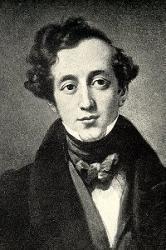
1809 - 1847 Person Name: Felix Mendelssohn Topics: God as Father Harmonizer of "NUN DANKET" in The Sing! Hymnal Felix Mendelssohn-Bartholdy (b. Hamburg, Germany, 1809; d. Leipzig, Germany, 1847) was the son of banker Abraham Mendelssohn and the grandson of philosopher Moses Mendelssohn. His Jewish family became Christian and took the Bartholdy name (name of the estate of Mendelssohn's uncle) when baptized into the Lutheran church. The children all received an excellent musical education. Mendelssohn had his first public performance at the age of nine and by the age of sixteen had written several symphonies. Profoundly influenced by J. S. Bach's music, he conducted a performance of the St. Matthew Passion in 1829 (at age 20!) – the first performance since Bach's death, thus reintroducing Bach to the world. Mendelssohn organized the Domchor in Berlin and founded the Leipzig Conservatory of Music in 1843. Traveling widely, he not only became familiar with various styles of music but also became well known himself in countries other than Germany, especially in England. He left a rich treasury of music: organ and piano works, overtures and incidental music, oratorios (including St. Paul or Elijah and choral works, and symphonies. He harmonized a number of hymn tunes himself, but hymnbook editors also arranged some of his other tunes into hymn tunes. Bert Polman

Oliver Wendell Holmes

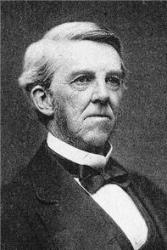
1809 - 1894 Person Name: Oliver W. Holmes Topics: God our Father Author of "Lord of all being, throned afar" in The New Baptist Praise Book Holmes, Oliver Wendell, M.D, LL.D., son of the Rev. Abiel Holmes, D.D. of Cambridge, U.S.A., was born at Cambridge, Aug. 29, 1809, and educated at Harvard, where he graduated in 1829. After practising for some time in Boston, he was elected in 1847 to the chair of Anatomy, in Harvard. His writings in prose and verse are well known and widely circulated. They excel in humour and pathos. Although not strictly speaking a hymnwriter, a few of his hymns are in extensive use, and include:— 1. Father of mercies, heavenly Friend. Prayer during war. 2. Lord of all being, throned afar. God's Omnipresence. This is a hymn of great merit. It is dated 1848. 3. 0 Lord of hosts, Almighty King. Soldiers’ Hymn. Dated 1861. 4. 0 Love divine that stoop'st to share. Trust. 1859. Of these Nos. 2 and 4 are in his Professor at the Breakfast Table, and are in common use in Great Britain, in Martineau's Hymns, 1873, and others. In 1886 the D.C.L. degree was conferred upon Professor Holmes by the University of Oxford. He was a member of the Unitarian body. He died Oct 7, 1894. [Rev. F. M. Bird, M.A.] --John Julian, Dictionary of Hymnology (1907) ================== Holmes, O. W. , p. 530, i. His Songs in Many Keys was published in 1861, his Poems, 1869, and the Cambridge edition of his Complete Poetical Works, 1895. Additional hymns of his have come into common use of late, including:— 1. Land where the banners wave last in the sun. [American National Hymn.] Appeared in his Songs in Many Keys, 1861 (7th ed. 1864, p. 289) as "Freedom, our Queen." 2. Lord, Thou hast led us as of old. [Promised Unity.] In his Before the Curfew and other Poems, chiefly occasional, Boston, 1888, as "An hymn set forth to bo sung by the Great Assembly at Newtown [Mass.]." In the Complete Poetical Works it is dated 1886. The hymn "Soon shall the slumbering morn awake," in Hymns for Church and Home, Boston, 1895, is composed of stanzas v.-vii. 3. Our Father, while our hearts unlearn The creeds that wrong Thy name. [Fruits of the Spirit.] Written for the 25th Anniversary Reorganization of the Poston Young Men's Christian Union, May 31, 1893. In his Complete Poetical Works, 1895, p. 298, Horder's Worship Song, 1905, and other collections. 4. Thou gracious [God] Power Whose mercy lends. [Reunion.] "Written for the annual meeting of the famous class '29, Harvard University, in 1869. ln the Methodist Hymn Book, 1904, it begins "Thou gracious God, Whose mercy lends." [Rev. L. F. Benson, D.D.] --John Julian, Dictionary of Hymnology, New Supplement (1907)

Catherine Winkworth

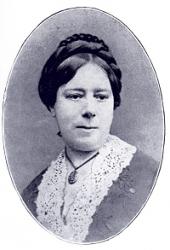
1827 - 1878 Topics: God as Father Translator of "Now Thank We All Our God" in The Sing! Hymnal Catherine Winkworth (b. Holborn, London, England, 1827; d. Monnetier, Savoy, France, 1878) is well known for her English translations of German hymns; her translations were polished and yet remained close to the original. Educated initially by her mother, she lived with relatives in Dresden, Germany, in 1845, where she acquired her knowledge of German and interest in German hymnody. After residing near Manchester until 1862, she moved to Clifton, near Bristol. A pioneer in promoting women's rights, Winkworth put much of her energy into the encouragement of higher education for women. She translated a large number of German hymn texts from hymnals owned by a friend, Baron Bunsen. Though often altered, these translations continue to be used in many modern hymnals. Her work was published in two series of Lyra Germanica (1855, 1858) and in The Chorale Book for England (1863), which included the appropriate German tune with each text as provided by Sterndale Bennett and Otto Goldschmidt. Winkworth also translated biographies of German Christians who promoted ministries to the poor and sick and compiled a handbook of biographies of German hymn authors, Christian Singers of Germany (1869). Bert Polman ======================== Winkworth, Catherine, daughter of Henry Winkworth, of Alderley Edge, Cheshire, was born in London, Sep. 13, 1829. Most of her early life was spent in the neighbourhood of Manchester. Subsequently she removed with the family to Clifton, near Bristol. She died suddenly of heart disease, at Monnetier, in Savoy, in July, 1878. Miss Winkworth published:— Translations from the German of the Life of Pastor Fliedner, the Founder of the Sisterhood of Protestant Deaconesses at Kaiserworth, 1861; and of the Life of Amelia Sieveking, 1863. Her sympathy with practical efforts for the benefit of women, and with a pure devotional life, as seen in these translations, received from her the most practical illustration possible in the deep and active interest which she took in educational work in connection with the Clifton Association for the Higher Education of Women, and kindred societies there and elsewhere. Our interest, however, is mainly centred in her hymnological work as embodied in her:— (1) Lyra Germanica, 1st Ser., 1855. (2) Lyra Germanica, 2nd Ser., 1858. (3) The Chorale Book for England (containing translations from the German, together with music), 1863; and (4) her charming biographical work, the Christian Singers of Germany, 1869. In a sympathetic article on Miss Winkworth in the Inquirer of July 20, 1878, Dr. Martineau says:— "The translations contained in these volumes are invariably faithful, and for the most part both terse and delicate; and an admirable art is applied to the management of complex and difficult versification. They have not quite the fire of John Wesley's versions of Moravian hymns, or the wonderful fusion and reproduction of thought which may be found in Coleridge. But if less flowing they are more conscientious than either, and attain a result as poetical as severe exactitude admits, being only a little short of ‘native music'" Dr. Percival, then Principal of Clifton College, also wrote concerning her (in the Bristol Times and Mirror), in July, 1878:— "She was a person of remarkable intellectual and social gifts, and very unusual attainments; but what specially distinguished her was her combination of rare ability and great knowledge with a certain tender and sympathetic refinement which constitutes the special charm of the true womanly character." Dr. Martineau (as above) says her religious life afforded "a happy example of the piety which the Church of England discipline may implant.....The fast hold she retained of her discipleship of Christ was no example of ‘feminine simplicity,' carrying on the childish mind into maturer years, but the clear allegiance of a firm mind, familiar with the pretensions of non-Christian schools, well able to test them, and undiverted by them from her first love." Miss Winkworth, although not the earliest of modern translators from the German into English, is certainly the foremost in rank and popularity. Her translations are the most widely used of any from that language, and have had more to do with the modern revival of the English use of German hymns than the versions of any other writer. -- John Julian, Dictionary of Hymnology (1907) ============================ See also in: Hymn Writers of the Church

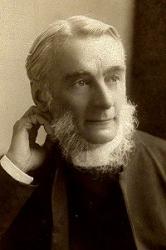
Edward Henry Bickersteth

1825 - 1906 Person Name: Edward H. Bickersteth Topics: God our Father Author of "O God, the Rock of Ages" in The New Baptist Praise Book Bickersteth, Edward Henry, D.D., son of Edward Bickersteth, Sr. born at Islington, Jan. 1825, and educated at Trinity College, Cambridge (B.A. with honours, 1847; M.A., 1850). On taking Holy Orders in 1848, he became curate of Banningham, Norfolk, and then of Christ Church, Tunbridge Wells. His preferment to the Rectory of Hinton-Martell, in 1852, was followed by that of the Vicarage of Christ Church, Hampstead, 1855. In 1885 he became Dean of Gloucester, and the same year Bishop of Exeter. Bishop Bickersteth's works, chiefly poetical, are:— (l) Poems, 1849; (2) Water from the Well-spring, 1852; (3) The Rock of Ages, 1858 ; (4) Commentary on the New Testament, 1864; (5) Yesterday, To-day, and For Ever, 1867; (6) The Spirit of Life, 1868; (7) The Two Brothers and other Poems, 1871; (8) The Master's Home Call, 1872 ; (9) The Shadowed Home and the Light Beyond, 1874; (10) The Beef and other Parables, 1873; (11) Songs in the House of Pilgrimage, N.D.; (12) From Year to Year, 1883. As an editor of hymnals, Bp. Bickersteth has also been most successful. His collections are:— (1) Psalms & Hymns, 1858, based on his father's Christian Psalmody, which passed through several editions; (2) The Hymnal Companion, 1870; (3) The Hymnal Companion revised and enlarged, 1876. Nos. 2 and 3, which are two editions of the same collection, have attained to an extensive circulation.   [Ch. of England Hymnody.] About 30 of Bp. Bickersteths hymns are in common use. Of these the best and most widely known are:—" Almighty Father, hear our cry"; "Come ye yourselves apart and rest awhile"; "Father of heaven above"; "My God, my Father, dost Thou call"; "O Jesu, Saviour of the lost"; "Peace, perfect peace"; "Rest in the Lord"; "Stand, Soldier of the Cross"; " Thine, Thine, for ever"; and "Till He come.” As a poet Bp. Bickersteth is well known. His reputation as a hymn-writer has also extended far and wide. Joined with a strong grasp of his subject, true poetic feeling, a pure rhythm, there is a soothing plaintiveness and individuality in his hymns which give them a distinct character of their own. His thoughts are usually with the individual, and not with the mass: with the single soul and his God, and not with a vast multitude bowed in adoration before the Almighty. Hence, although many of his hymns are eminently suited to congregational purposes, and have attained to a wide popularity, yet his finest productions are those which are best suited for private use. -John Julian, Dictionary of Hymnology (1907) ================= Bickersteth, Edward Henry, p. 141, ii. Bishop Bickersteth's 1890 edition of his Hymnal Companion is noted on p. 1312, i., and several of his own hymns and translations, which appear therein for the first time, are annotated in this Appendix. One of these, "All-merciful, Almighty Lord," for the Conv. of St. Paul, was written for the 1890 edition of Hymnal Companion. --John Julian, Dictionary of Hymnology, Appendix, Part II (1907) ================== Bickersteth, B. H., p. 141, ii. Bp. Bickersteth died in London, May 16, 1906. --John Julian, Dictionary of Hymnology, New Supplement (1907)

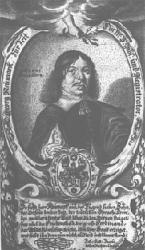
Georg Neumark

1621 - 1681 Topics: God Father Author of "If You Will Only Let God Guide You" in The Hymnal for Worship and Celebration Georg Neumark (b. Langensalza, Thuringia, Germany, 1621; d. Weimar, Germany, 1681) lived during the time of the Thirty Years' War, when social and economic conditions were deplorable. He had personal trials as well. On his way to Königsberg to study at the university, traveling in the comparative safety of a group of merchants, he was robbed of nearly all his possessions. During the next two years he spent much of his time looking for employment. He finally secured a tutoring position in Kiel. When he had saved enough money, he returned to the University of Königsberg and studied there for five years. In Königsberg he again lost all his belongings, this time in a fire. Despite his personal suffering Neumark wrote many hymns in which he expressed his absolute trust in God. In 1651 he settled in Weimar, Thuringia, where he became court poet and archivist to Duke Johann Ernst and librarian and registrar of the city. Neumark wrote thirty-four hymns, of which "If You But Trust in God to Guide You" has become a classic. Bert Polman ============== Neumark, Georg, son of Michael Neumark, clothier at Langensalza, in Thuringia (after 1623 at Miihlhausen in Thuringia), was born at Langensalza, March 16, 1621; and educated at the Gymnasium at Schleueingen, and at the Gymnasium at Gotha. He received his certificate of dimission from the latter in Sept. 1641 (not 1640). He left Gotha in the autumn of 1641 along with a number of merchants who were going to the Michaelmas Fair at Leipzig. He then joined a similar party who were going from Leipzig to Lübeck; his intention being to proceed to Königsberg and matriculate at the University there. After passing through Magdeburg they were plundered by a band of highwaymen on the Gardelegen Heath, who robbed Neumark of all he had with him, save his prayer-book and a little money sewed up in the clothes he was wearing. He returned to Magdeburg, but could obtain no employment there, nor in Lüneburg, nor in Winsen, nor in Hamburg, to which in succession the friends he made passed him on. In the beginning of December he went to Kiel, where he found a friend in the person of Nicolaus Becker, a native of Thuringia, and then chief pastor at Kiel. Day after day passed by without an opening, till about the end of the month the tutor in the family of the Judge Stephan Henning fell into disgrace and took sudden flight from Kiel. By Becker's recommendation Neumark received the vacant position, and this sudden end of his anxieties was the occasion of the writing of his hymn as noted below. In Henning's house the time passed happily till he had saved enough to proceed to Königsberg, where he matriculated June 21, 1643, as a student of law. He remained five years, studying also poetry under Dach, and maintaining himself as a family tutor. During this time (in 1046) he again lost all his property, and this time by fire. In 1648 he left Königsberg, was for a short time at Warsaw, and spent 1649-50 at Thorn. He was then in Danzig, and in Sept. 1651 we find him in Hamburg. In the end of 1651 he returned to Thuringia, and bronght himself under the notice of Duke Wilhelm II. of Sachse-Weimar, the chief or president of the Fruit-bearing Society, the principal German literary union of the 17th century. The Duke, apparently in 1652, appointed him court poet, librarian and registrar of the administration at Weimar; and finally secretary of the Ducal Archives. In Sept. 1653 he was admitted as a member of the Fruit-bearing Society, of which he became secretary in 1656, and of which he wrote a history (Der Neu-Sprossende Teutsche Palmbaum, Nürnberg and Weimar, 1668); and, in 1679, became also a member of the Pegnitz Order. In 1681 he became blind, but was permitted to retain his emoluments till his death, at Weimar, July 18, 1681. [K. Goedeke's Grundriss, vol. iii., 1887, p. 74; Allgemeine Deutsche Biographie. xxiii. 539; Weimarisches Jahrbuch, vol. iii., 1855, p. 176, &c. The dates given by the different authorities vary exceedingly, and are quite irreconcilable. In the registers at Schleusingen Neumark is last mentioned in 1636, and then as in the Third Form. Dr. von Bamberg, director of the Gymnasium at Gotha, informs me that Neumark's name appears in the matriculation book there under January 31, 1641; and as one of the "newly entered" scholars.] A long list of Neumark's poetical works is given by Goedeke. A large proportion of his secular poems are pastorals, or else occasional poems written to order at Weimar; and in all there is little freshness, or happiness in expression, or glow of feeling. As a musician, and as a hymn-writer, he is of more importance. His hymns appeared in his (1) Poetisch-und Musikalisches Lustwäldchen, Hamburg, 1652; the enlarged edition, entitled (2) Fortgepfiantzter Musikalizch-Poetischer Lustwald, Jena, 1657; and (3) Unterschiedliche, so wol gottseliger Andacht; als auch zu christlichen Tugenden aufmuntemde Lieder, Weimar, 1675. Of the 34 hymns in these three works a few are found in the German hymn-books of the 17th century, and three or four still survive. The best of Neumark's hymns are those of Trust in God, and patient waiting for His help under trial and suffering; and one of these may be fairly called classical and imperishable. It is:— Wer nur den lieben Gott lässt walten. Trust in God. First published in his Fortgepflantzter musikalisch-poetischer Lustwald, Jena, 1657, p. 26, in 7 stanzas of 6 lines, entitled “A hymn of consolation. That God will care for and preserve His own in His own time. After the saying 'Cast thy burden upon the Lord, and He shall sustain thee'“(Ps. lv. 22). This, his finest hymn, was written in 1641, at Kiel, when after unsuccessful attempts to procure employment he became a tutor in the family of the judge Stephan Henning. Of this appointment Neumark, in his Thrünendes Haus-Kreuiz, Weimar, 1681, speaks thus:-— "Which good fortune coming suddenly, and as if fallen from heaven, greatly rejoiced me, and on that very day I composed to the honour of my beloved Lord the here and there well-known hymn 'Wer nur den lieben Gott lässt walten'; and had certainly cause enough to thank the Divine compassion for such unlooked for grace shown to me," &c. As the date of its composition is thus December, 1641, or at latest Jan. 1642, it is certainly strange that it was not published in his Lustwäldchen, Hamburg, 1652. In that volume he does give, at p. 32, a piece entitled, "a hymn of consolation, when, in 1646, through a dreadful fire I came to my last farthing." The apocryphal story, according to which the hymn was written at Hamburg, about 1653 (see Miller's Singers and Songs, 1869, p. 91), has not been traced earlier than 1744. The hymn speedily became popular, and passed into hymn-books all over Germany (Leipzig Vorrath, 1673, No. 1169), and still holds its place as in the Berlin Geistliche Lieder, ed. 1863, No. 73. Lauxmann, in Koch, viii. 386-390, relates that it was the favourite hymn of Magdalena Sibylla (d. 1687), wife of the Elector Johann Georg II. of Saxony; was sung, by his command, at the funeral, in 1740, of King Friedrich Wilhelm I. of Prussia; was sung, or rather played, by the first band of missionaries from Herrmannsburg as they set sail from Brunshausen on the Elbe (near Stade) on Oct. 28, 1853, &c. The beautiful melody by Neumark was probably composed in 1641 along with the hymn, and was published with it in 1657. On it J. S. Bach composed a cantata. It is well known in England through its use by Mendelssohn in his St. Paul ("To Thee, 0 Lord, I yield my spirit"), and from its introduction into Hymns Ancient & Modern (as Bremen), and many other collections. Translations in common use:-- 1. Who leaves th' Almighty God to reign. A full but free translation by Sir John Bowring in his Hymns, 1825, No. 58. His translations of stanzas ii., iv.-vi. beginning "How vain are sighs! how vain regret," are included in Curtis's Union Collection, 1827. 2. Who all his will to God resigneth. A good and full translation by A. T. Kussell, as No. 236 in his Psalms & Hymns, 1851. His translations of st. v.-vii. beginning "Say not, I am of God forsaken," are in Dr. Pagenstecher's Collection, 1864. 3. Leave God to order all thy ways. A full and good translation by Miss Winkworth, in her Lyra Germanica, 1st Ser. 1855, p. 152. This is given in full in M. W. Stryker's Christian Chorals, 1885, and, omitting st. vi., in W. F. Stevenson's Hymns for Church and Home, 1873, and the Baptist Hymnal, 1879. Further abridged forms are in the Baptist Psalms & Hymns, 1858; Harrow School Hymn Book, l866; Holy Song, 1869, and others. In the Pennsylvania Lutheran Church Book, 1868; and the American Presbyterian Hymnal, 1874, st. v., vi. are omitted, and the rest altered to 6 stanzas, beginning "My God, I leave to Thee my ways." 4. Him who the blessed God trusts ever. A good and full translation by Dr.John Ker in the Juvenile Missionary Magazine, of the United Presbyterian Church, 1857. It was revised, and st. iii., v., vi. omitted, for the Ibrox Hymnal, 1871, where it begins: "He who,” &c. 5. If thou but suffer God to guide thee. A full and good translation by Miss Winkworth (based on her Lyra Germanica version and set to the original melody), as No. 134 in her Chorale Book for England, 1863. Repeated in full in the Baptist Psalmist, 1878, and in America in the Ohio Lutheran Hymnal, 1880. It is found, in various abridged forms, in J. Robinson's Collection, 1869; Horder's Congregational Hymns , 1884; the Evangelical Hymnal, N. Y., 1880, and others. 6. He, who the living God hath chosen. A translation of st. i., ii., vii. by Miss Borthwick, as No. 237 in Dr. Pagenstecher's Collection, 1864. 7. He who doth glad submission render. A good translation omitting st. vi., by J. M. Sloan, as No. 284 in J. H. Wilson's Service of Praise, 1865, repeated, omitting the translations of st. ii., vii., in Flett's Collection, Paisley, 1871. Other translations are:— (1) "He that confides in his Creator." By J. C. Jacobi, 1720, p. 13 (1722, p. 36; 1732, p. 61). Repeated in the Moravian Hymn Book, 1754, and later eds. (1886, No. 183). (2) "0 Christian! let the Lord direct." By Miss Knight in her Trs. from the German in Prose and Verse, 1812, p. 85. (3) "To let God rule who's but contented." By H. W. Dulcken in his Book of German Song, 1856, p. 274. (4) "He who the rule to God hath yielded." By J. D. Burns in the Family Treasury, 1859, p. 309, and his Memoir & Remains, 1869, p. 240. (5) "Who trusts in God's all-wise direction." By R. Massie, in the British Herald, Aug. 1865, p. 120, and Reid's Praise Book, 1872. (6) "Who yields his will to God's good pleasure. In the British Herald, April, 1866, p. 244, and in Reid's Praise Book, 1872. (7) "He who commits his way to God." In the Family Treasury, 1878, p. 49. [Rev. James Mearns, M.A.] --John Julian, Dictionary of Hymnology (1907) See also in: Hymn Writers of the Church

Pages


Export as CSV
It looks like you are using an ad-blocker. Ad revenue helps keep us running. Please consider white-listing Hymnary.org or getting Hymnary Pro to eliminate ads entirely and help support Hymnary.org.