You help make Hymnary.org possible. More than 10 million people from 200+ countries found hymns, liturgical resources and encouragement on Hymnary.org in 2025, including you. Every visit affirms the global impact of this ministry.

If Hymnary has been meaningful to you this year, would you take a moment today to help sustain it? A gift of any size—paired with a note of encouragement if you wish—directly supports the server costs, research work and curation that keep this resource freely available to the world.

Give securely online today, or mail a check to:
Hymnary.org
Calvin University
3201 Burton Street SE
Grand Rapids, MI 49546

Thank you for your partnership, and may the hope of Advent fill your heart.

Person Results

Topics:god+our+helper
In:person

Planning worship? Check out our sister site, ZeteoSearch.org, for 20+ additional resources related to your search.
Showing 21 - 30 of 32Results Per Page: 102050

A. Williams

1731 - 1776 Person Name: Aaron Williams Topics: God our Helper Composer of "ST. THOMAS" in Psalter Hymnal (Red) Aaron Williams (b. London, England, 1731; d. London, 1776) was a singing teacher, music engraver, and clerk at the Scottish Church, London Wall. He published various church music collections, some intended for rural church choirs. Representative of his compilations are The Universal Psalmodist (1763)— published in the United States as The American Harmony (1769)—The Royal Harmony (1766), The New Universal Psalmodist (1770), and Psalmody in Miniature (1778). His Harmonia Coelestis (1775) included anthems by noted composers. Bert Polman

U. C. Burnap

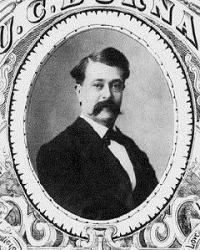
1834 - 1900 Person Name: Uzziah C. Burnap Topics: God our Helper Composer of "HOLY GUIDE" in Psalter Hymnal (Red) Burnap ran a dry goods bus­iness in Brook­lyn, though he grad­u­at­ed from the Un­i­ver­si­ty of Par­is with a mu­sic de­gree, and for 37 years played the or­gan at the Re­formed Church in Brook­lyn Heights. He was a pro­li­fic com­pos­er, and helped ed­it the fol­low­ing: Hymns of the Church, 1869 Hymns of Pray­er and Praise, 1871 Hymns and Songs of Praise, 1874 --The Cyber Hymnal™ There is uncertainty about his middle name. Reynolds and the Library of Congress say it was Christopher. A contemporary obituary relied on by "The Cyber Hymnal™" says it was Cicero. It appears that there was another Uzziah C[icero] Burnap who lived (per LOC) 1794-1854.

W. Irving Hartshorn

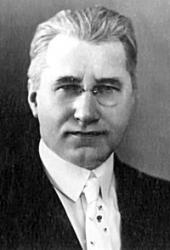
Topics: God our Helper Composer of "IRVING" in Psalter Hymnal (Red)

Gottfried W. Fink

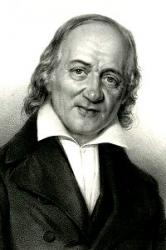
1783 - 1846 Person Name: Gottfried Wilhelm Fink Topics: God our Helper Composer of "SERAPH" in Psalter Hymnal (Red) Rv Gottfried Wilhelm Fink PhD Germany 1783-1846. Born at Sulza, Thuringa, Germany, he was a German composer, music theorist, poet, and a protestant clergyman. From 1804-1808 he studied at the University of Leipzig, where he joined the Corps Lusatia, where he made his first attempts at composition and poetry. In 1811 he was appointed Vicar in Leipzig for some years, where he also founded an educational institution, leading it until 1829. Around 1800 he worked for the “Allgemeine musikalische Zeitschrift” (General musical mazazine). In 1827 he became the magazine's editor-in-chief for 15 years. From 1838 he was a lecturer at the University of Leipzig. In 1841 he became a Privatdozent of musicology at the university. That year he became a member of the Prussian Academy of Arts in Berlin, and a year later was appointed university Music Director. He was highly esteemed throughout his life as a music theorist and composer, receiving numberous honors and awards, both at home and abroad. The Faculty of Philosophy at Leipzig University awarded him an honorary doctorate. He wrote mostly Songs and ballads and collected songs as well. He authored important words on music theory and history, but was best known as editor of the “Musikalischer Hausschatz der Deutschen”, a collection of about 1000 songs and chants, as well as the “Deutsche Liedertafel” (German song board), a collection of polyphonic songs sung by men. He died at Leipzig, Saxony. John Perry

Matthias Greiter

1495 - 1550 Person Name: Matthaeus Greiter Topics: God our Helper Composer of "GREITER" in Psalter Hymnal (Red) Greitter, Matthäus, was a monk and chorister of Strassburg Cathedral, but in 1524 espoused the cause of the Reformation. In 1528 he was appointed assistant pastor of St. Martin's Church, and afterwards at St. Stephen's. When the Interim [Agricola] was forced on Strassburg, he was the only one of the Lutheran pastors that sought to further it, a course which he afterwards deeply regretted. His death is dated by Wetzel, i. 349, as Dec. 20, 1550; by the Allgemeine Deutsche Biographie, ix. 636, as Nov. 20, 1550; while Koch, ii. 104, says he died of the pestilence in 1552. Greitter was a distinguished musician, and with his friend Dachstein (q.v.) edited the Strassburg Kirchen ampt, 1524-5. Four psalm tunes by Greitter, and one by Dachstein were inserted by Calvin in his first Hymnbook published at Strassburg, 1539. All these were transferred to the first edition of the French-Genevan Psalter in 1542, and two of them, both by Greitter (the tunes to psalms 36 and 91), were retained in the final edition of 1562. Of his seven Psalm versions 4 have been translated into English :— i. Ach Gott, wie lang vergissest mein. Ps. xiii. 1524. Wackernagel, iii. p. 89, in 4 st. Translated as, "O Lord, how lang forever wil thow foirget," in the Gude and Godly Ballates, ed. 1568, folio 46 (1868, p. 78). ii. Da Israel aus Egypten zog. Ps. cxiv. In Die Zwen Psalmen: In exitu Israel, &c, Strassburg, 1527, thence in Wackernagel, iii. p. 93, in 2 stanzas. Translated as, "Quhen, fra Egypt departit Israeli," In the Gude & Godly Ballates, ed. 1568, folio 56 (1868, p. 95). iii. Nicht uns, nicht uns, o ewiger Herr. Ps. cxv, 1527, as ii., and Wackernagel, iii. p. 93, in 4 st. Translated as, “Not unto us, not unto us, O Lord," in the G. & G. Ballates, ed. 1568, folio 56 (1868, p. 95). iv. 0 Herre Gott, begnade mich. Ps. li. 1525. Wackernagel, iii. p. 90, in 5 st. Translated as, "O Lorde God, have mercy on me," by Bishop Coverdale, 1539 (Remains, 1846, p. 574). [Rev.James Mearns, M.A.] --John Julian, Dictionary of Hymnology (1907)

George C. Stebbins

1846 - 1945 Person Name: George C. Stebbins, born 1846 Topics: God our Helper Composer of "ASSIUT" in Psalter Hymnal (Red) Stebbins studied music in Buffalo and Rochester, New York, then became a singing teacher. Around 1869, he moved to Chicago, Illinois, to join the Lyon and Healy Music Company. He also became the music director at the First Baptist Church in Chicago. It was in Chicago that he met the leaders in the Gospel music field, such as George Root, Philip Bliss, & Ira Sankey. At age 28, Stebbins moved to Boston, Massachusetts, where he became music director at the Claredon Street Baptist Church; the pastor there was Adoniram Gordon. Two years later, Stebbins became music director at Tremont Temple in Boston. Shortly thereafter, he became involved in evangelism campaigns with Moody and others. Around 1900, Stebbins spent a year as an evangelist in India, Egypt, Italy, Palestine, France and England. (www.hymntime.com/tch)

Theodore E. Perkins

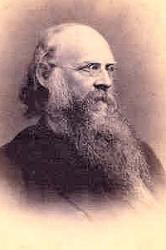
1831 - 1912 Person Name: Theodore E. Perkins, born 1831 Topics: God our Helper Composer of "NAZARETH" in Psalter Hymnal (Red) Theodore E. Perkins was born at Poughkeepsie, on the Hudson, N.Y., July 21, 1831. His father was a Baptist clergyman. The family of ten brothers and sisters sang and played various instruments, forming among themselves both choir and orchestra. His musical education began at the early age of three years. During his father's pastorate at Hamilton, N. Y., the choir rehearsals were often held at the parsonage, and the leader used to place the three-year-old on a small stool, on the table around which the choir was assembled, giving him a chance to both see and hear. Later on he played the violincello in church, standing on a stool in order to finger the instrument. The home gatherings — especially on Thanksgiving Day, are the recollections among the happiest of his childhood. His father became pastor of the Berean Baptist Church in New York City, in 1839, giving him the opportunity of studying the pianoforte, of which he became a proficient player. His fine alto voice soon gave him notoriety. At the age of nineteen while filling a position as clerk in New York, all his spare time was given to the study of voice and piano. In 1851 he went to Hamilton, N. Y., taught music in Madison University (now Colgate), and in the Female Seminary. In 1854 he went to Port Jervis, N. Y., where he taught singing school, and April 30, 1855, married Mary Frances Caskey, who was for years his soprano soloist in many musical Festivals and Conventions. Soon after marriage he removed to Salem, N. J., where his lifework as singing school teacher really began, including Bridgeton and prominent towns in southern New Jersey. During the summer of 1856 he and his wife were pupils of the Normal Academy of Music at North Reading, Mass., conducted by Drs. Lowell Mason and Geo. F. Root. During 1856-1858 he was given the position of assistant teacher and manager. His association with these two great men gave an inspiration to all his future work. In 1859 he was co-principal with Wm. B. Bradbury at the Normal Academy of Music, Geneseo, N. Y. He remained at Geneseo until 1863. Professor Perkins also held very successful schools in North Pelham Province of Ontario, Canada, and in 1864-1868 was principal in schools at Tunkhannock and Meadville, Pa. In 1860, The Olive Branch, his first book of church music, was published by F. J. Huntington, New York City, the sales reaching 100,000. Next was Oriental, which sold over 30,000. The Union, Glees and Anthems, and Sabbath Anthems followed ; then The Sacred Lute, which sold over 300,000. His Sunday-school books commenced with The Evergreen, followed by the Shining Star and New Shining Star. Then came Psalm King, which was the last of the books published by Mr. Huntington. Hallowed Songs was published by Philip Phillips; The Sunday School Banner was published by Wm. B. Bradbury. The Royal Standard was published in Toronto, Canada. The Golden Promise, Sabbath Carols, The Mount Zion Collection were published under his own supervision. His Free Sunday School Songs several times numbered over 500,000 a month. Coronation Songs with Rev. Dr. Deems as hymn editor was published by A. S. Barnes Co., who also published Psalms and Hymns and Spiritual Songs, in which Dr. C. S. Robinson was hymn editor, who with Professor Perkins edited Calvary Songs, published by the American S. S. Union. Gospel Tent Songs was evangelical. The Safe-Guard Singer was his temperance book. Mr. Perkins was musical director in the following churches in Brooklyn: The Lafayette Avenue Presbyterian Church, Rev. Dr. Cuyler; Strong Place Baptist Church, Rev. E. E. L. Taylor, D. D.; Madison Avenue Baptist Church, Rev. H. G. Weston, D. D., L. L. D.; Fifth Avenue Presbyterian Church, Rev. Dr. Rice, followed by Dr. John Hall; The Memorial Presbyterian Church, Rev. Dr. C. S. Robinson, who was his close friend; The Church of the Holy Trinity, Rev. Dr. Tyng, Jr. ; Trinity Baptist Church, Rev. Dr. J. B. Simmons, and Washington Square M. E. Church. In Philadelphia: The Fifth Baptist Church, Rev. Dr. Chase; The Eleventh Baptist Church, Rev. Dr. Colman; The Tabernacle M. E. Church, Rev. George Gaul, D. D. He was leader and singer in Evangelistic Services, at the Rink, The Old Madison Square Garden and Cooper Union, all of New York City. The music of the first great meeting of the world's Evangelical Alliance, held for ten days in New York City, was under his direction, as was the first National Sunday School convention, held in Newark, N. J. He was also conductor at the Golden Anniversary of the Female Guardian Society, leading a chorus of forty-two hundred children. In the opening chorus, Great is the Lord, by Dr. Calcott, the word "Great" was given with so much decision and power that the clergymen on the platform sprang to their feet and remained standing until the chorus was finished. He taught voice culture in Princeton and Lafayette Universities, The Union Theological Seminary, New York City; Crozer Seminary, Chester, Pa., and organized the music department of Temple University, Philadelphia, continuing in charge four years. He had charge of the children's choir of Howard Mission, New York City, for twenty-five years, and thinks that some of the happiest and most restful of the working hours were spent in teaching the poor children of the fourth and sixth wards to sing the Gospel. Mr. Sankey said to Mr. Perkins that " Jesus of Nazareth was my banner song for eight years." Jesus is Mine has been sung at the Christian's death-bed, the grave, and once as the convict was going to the scaffold. His Christmas Carol Sweetly Carol had a very large sale in this country, and was republished in England, France, Italy, and Germany. For a period of forty years he has made the study of the voice special work. The most thorough investigations of the voice and its possibilities were made with the assistance of the late John Howard, extending over a period of twenty-five years, during which he has had the care of over two thousand voices. He published a work entitled, Physiological Yoice Culture, edited by his son, the late T. Edward Perkins, M. D., physician and throat specialist of Philadelphia. Mr. Perkins also completed a method of voice culture based on the principles of John Howard's Physiology of Artistic Singing." During these years of work he has found time to edit thirty-four books of church, Sunday-school, day-school, and glee music, the larger portion having been previously mentioned. Also songs and ballads in sheet form, and a cantata entitled, The Excursion, libretto by Fanny Crosby, with whom there has existed an unbroken friendship for over forty years. -Biography of Gospel Song and hymn Writers

Dewey Westra

1899 - 1979 Topics: God our Helper Author of "Unto the Hills I Lift Mine Eyes" in Psalter Hymnal (Red) Dewey D. Westra (b. Holland, MI, 1899; d. Wyoming, MI, 1979) was a dedicated educator, writer, and musician who faithfully served the Christian Reformed Church. He attended Calvin College, Grand Rapids, Michigan, and Wayne State University in Detroit. In the 1920s and 30s he was a Christian school Principal in Byron Center and Detroit, Michigan. During the 1940s he was involved in various ventures, including becoming a diesel instructor for the Ford Motor Company. After 1947 he became a principal again, serving at Christian schools in Sioux Center, Iowa; Randolph, Wisconsin; and Walker, Michigan. Westra wrote poetry in English, Dutch, and Frisian, and translated poetry into English from Dutch and Frisian. He arranged many songs and composed songs for children's choirs. He also versified all one hundred and fifty psalms and the Lord's Prayer, as well as the songs of Mary, Zechariah, and Simeon, in meters that fit the corresponding Genevan psalm tunes. His manuscripts are housed in the library of Calvin College. Seventeen of his psalm versifications and his paraphrases of the Lucan canticles were included in the 1934 and in the 1959 editions of the Psalter Hymnal. Much of the credit for keeping the Genevan psalms alive in the Christian Reformed Church goes to Westra. Bert Polman

William Kuipers

1883 - 1933 Person Name: Rev. William Kuipers Topics: God our Helper Versifier of "Thy Land, O Lord, the Heathen Have Invaded" in Psalter Hymnal (Red) Born: 1883, Rochester, New York. Died: 1933, Passaic, New Jersey. Buried: Restlawn Cemetery, Grand Rapids, Michigan. Kuipers emigrated from Friesland to America, in the late 1880s, graduated from Calvin College, Grand Rapids, Michigan, and was ordained in the Christian Reformed Church. He served at the Second Christian Reformed Church of Fremont, Michigan (1914-19); Christian Reformed churches in Oakland, Michigan (1919-23); Dennis Avenue, Grand Rapids, Michigan (1923-27); and Summer Street, Passaic, New Jersey (1927-33). He wrote a number of poems, hymns, and psalm versifications. © The Cyber Hymnal™ (hymntime.com/tch)

H. L. Hastings

1831 - 1899 Person Name: Rev. H. L. Hastings Topics: God Our Helper Author of "O God, to Whom Our Fathers Prayed" in Gloria Deo Hastings, Horace Lorenzo, was born at Blandford, Mass., Nov. 26, 1831; commenced writing hymns, and preaching, in his 17th year, and laboured as an evangelist in various parts of the U. S. In 1866 he established The Christian, a monthly paper, in which many of his hymns have appeared, and in 1865 the Scriptural Tract Repository in Boston. He published Social Hymns, Original and Selected, Boston, 1865; Songs of Pilgrimage, a Hymnal for the Churches of Christ, Part i., 1880; and in August, 1886, the same completed, to tho extent of 1533 hymns, 450 of which are original and signed "H." The best known of these is "Shall we meet beyond the river," written in N. Y. city, 1858, and lately published as a leaflet in 14 stanzas of 8 lines. The text in Gospel Hymns and elsewhere consists of the 1st half of stanzas i., iv., xi. and ix. The Hastings Birthday Book, extracts from his prose writings, appeared 1886. [Rev. F. M. Bird, M.A.] -- John Julian, Dictionary of Hymnology

Pages


Export as CSV
It looks like you are using an ad-blocker. Ad revenue helps keep us running. Please consider white-listing Hymnary.org or getting Hymnary Pro to eliminate ads entirely and help support Hymnary.org.