

 My Starred Hymns
 My FlexScores
 My Hymnals
 My Purchased Files
Planning worship?
Check out our sister site, ZeteoSearch.org,
for 20+ additional resources related to your search.
- |
User Links
Person Results
Henry Kirke White
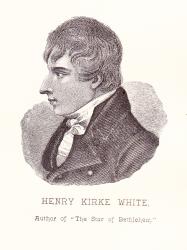
1785 - 1806 Person Name: H. K. White Topics: Early Instruction and Piety Author of "O Lord, another day is flown" in Christian Hymns for Public and Private Worship White, Henry Kirke, a gifted English poet who died early in life, was born in Nottingham, England, March 21, 1785. Very early he manifested a remarkable love for books and a decided talent for composition. But his parents were poor, and he was apprenticed in early boyhood to a stocking weaver, from which uncongenial servitude he escaped as soon as he could and began the study of law; but later he was converted and felt called to the ministry. The story of his conversion from deism to Christianity is briefly but beautifully told in the poem titled "The Star of Bethlehem." He entered St. John's College, Cambridge, in 1805 as a servitor; but died October 19, 1806, in the second year of his college course, when only twenty-one years of age. In 1803 he published a small volume of poems. Some of them are very fine, but no doubt he would have produced others far better if he had lived to the ordinary age of man. His rare poetic genius, his victory over skepticism and subsequent faith and piety, his hard struggle with poverty and early death invest the story of his life with more than ordinary pathos. His hymns, ten in number, appeared in Collyer's Collection, 1812.
Oft in danger, oft in woe 412
The Lord our God is clothed with 99
When marshaled on the mighty 124
Hymn Writers of the Church, 1911
============================
White, Henry Kirk, remarkable both for the early development of his genius and for the untimely termination of his brief life of splendid promise, was born at Nottingham, March 21, 1785. His father was a butcher, but his mother must have been a superior woman, since for a number of years she successfully conducted a boarding-school for girls. The writing-master in her establishment was for some time Henry's teacher, and under his instruction he made remarkable progress in Latin and other subjects. At the age of 13 he composed the lines "To an early Primrose," which were subsequently printed with his poems. At 14 he left school, and was put to the stocking-frame in order to learn prac¬tically the business of a hosier; but, disliking the employment, he was removed to an attorney's office in Nottingham, with a view to the legal profession. All his spare time was now devoted to literary pursuits, the acquisition of languages, and the composition of poetical and other contributions for the periodicals of the day. At the age of 15 he obtained from the Monthly Preceptor a silver medal for a translation from Horace, and a pair of globes for the best description of an imaginary tour from London to Edinburgh. When only 17 he was encouraged to publish his Clifton Grove and other Poems, which were certainly excellent as the compositions of a mere boy. About this time he was inclined to scepticism, but. through the perusal of Scott's Force of Truth and the arguments and appeals of a young friend, R. W. Almond (afterwards Rector of St. Peter's, Nottingham), he was led to earnest faith in Christianity. His well-known hymn "When marshall'd on the nightly plain" is understood to be a figurative description of his spiritual experience at this period.
He now desired to become a Christian minister, and through the generosity of his employers he was released from his articles in 1804. With the help of the Rev. C. Simeon and other friends, he became a student of St. John's College, Cambridge. There he speedily distinguished himself, and the highest honours seemed within his grasp; but over application to study destroyed his health, and he fell ill and died Oct. 19, 1806, in the 22nd year of his age. Universal regret was expressed at his untimely end. Southey published his Remains, accompanied by a short memoir. Lord Byron composed some beautiful lines on the sad event. Josiah Conder and others wrote commemorative verses. The entire literary young manhood of England and America seemed moved with sympathy. A monumental tablet, with a medallion by Chantrey, was erected in All Saints Church, Cambridge, at the expense of a citizen of Boston, in the United States. Ten hymns are ascribed to H. K. White, which were printed by the Rev. Dr. W. B. Collyer in his Supplement to Dr. Watts's Psalms & Hymns, London, 1812. Of these four of the most popular are annotated as follows: "Awake, sweet harp of Judah, wake"; "Christians, brethren, ere we part"; "Much in sorrow, oft in woe"; “When marshalled on the nightly plain." These are all in extensive use. The rest, all in common use at the present time, are:—
1. 0 Lord, another day has flown. Evening. From this the hymn "0 let Thy grace perform its part" is taken.
2. 0 Lord, my God, in mercy turn. Penitence and Faith.
3. The Lord our God is full [clothed in] of might. Divine Sovereignty.
4. The Lord our God is Lord of all. Divine Sovereignty.
5. Through sorrow's night and danger's path. The Resurrection. Sometimes given as "When sorrow's path and danger's road."
6. What is this passing scene? Human Frailty. This hymn consists of selected stanzas from his “Ode on Disappointment." [Rev. W. R. Stevenson, M.A.]
-- John Julian, Dictionary of Hymnology (1907)
Henry Kirke White
Wolfgang Amadeus Mozart
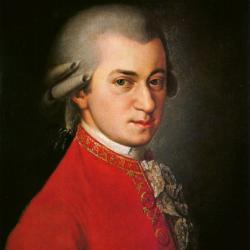
1756 - 1791 Person Name: Wolfgang Amadeus Mozart, 1756-1791 Topics: Instruction Composer of "ARIEL" in Psalms and Hymns to the Living God Wolfgang Amadeus Mozart Austria 1756-1791. Born at Salzburg, Austria, the son of Leopold Mozart, a minor composer and violinist, and youngest of seven children, he showed amazing ability on violin and keyboard from earliest childhood, even starting to compose music at age four when his father would play a piece and Mozart would play it exactly as did his father. At five, he composed some of his own music, which he played to his father, who wrote it down. When Mozart was eight, he wrote his first symphony, probably transcribed by his father. In his early years his father was his only teacher, teaching his children languages and academic subjects, as well as fundamentals of their strict Catholic faith. Some of his early compositions came as a surprise to his father, who eventually gave up composing himself when he realized how talented his son was. His family made several European journeys and he and his sister, Nanneri, performed as child prodigies, at the court of Prince-elector Maximillian II of Bavaria in Munich, and at the Imperial Courts in Vienna and Prague. A long concert tour followed, for 3.5 years, taking the family to courts in Munich, Mannheim, Paris, London, Dover, The Hague, Amsterdam, Utrecht, Mechelen, and again to Paris, and back home via Zurich, Donaueschingen, and Munich. During these trips Mozart met many musicians, acquainting himself with the works of other composers. He met Johann Christian Bach in London in 1764. Family trips were challenging, and travel conditions were primitive. They had to wait for invitations and reimbursements from nobility, and they endured long, near-fatal illnesses far from home. First Leopold (1764) got sick, then both children (1765). They traveled again to Vienna in 1767 and stayed there over a year. After a year back in Salzburg, Leopold and Wolfgang went to Italy (1769-1771), Leopold wished to display his son’s abilities as a performer and maturing composer. In Bologna, Italy, Wolfgang was accepted as a member of the famous Academia Filamonica. In Rome he heard Gregorio Allegri’s Miserere twice in performance. Back in the Sistine Chapel, Mozart wrote the whole performance out from memory, thus producing the first unauthorized copy of this closely guarded property of the Vatican. In the next few years Mozart wrote several operas performed with success in Italy, but his father’s hopes of securing a professional appointment for his son were not realized. At age 17 he was engaged as a musician at the Salzburg court, but grew restless and traveled in search of a better position. After returning to Salzburg, Mozart was employed as a court musician by the ruler of Salzburg, Prince Archbishop Hieronymus Colloredo. This gave Mozart ample opportunity to develop relationships with other musicians and his admirers, resulting in his development of new symphonies, sonatas, string quartets, masses, serenades, and some minor operas. In 1775 he wrote his only violin concertos, five in all. Again, he was discontent with work in Salzburg and traveled to find more opportunity to write operas. He and his father again visited Munich and Vienna, but neither visit was successful with the exception of his opera ‘La finta giardiniera’ in Munich. In 1777 he resigned his Salzburg position and went to Augsburg, Mannheim, Paris, and Munich again. In Mannheim he met and fell in love with Aloysia Weber, one of four daughters of a musical family. He could find no real employment there and left for Paris in 1778. He might have had a position as organist at Versailles, but he was not interested in that. He fell into debt and started pawning valuables. During these events his mother died. Meanwhile his father was still trying to find him a position in Salzburg. After checking out several other European cities and Munich, he again encountered Aloysia, but she was no longer interested in him, so he returned to Salzburg, having written another symphony, concerto, and piano sonata, and took the new appointment his father had found. However, he was still in discontent. Visiting Vienna in 1781, he was dismissed from his Salzburg position. He wrote another opera, ‘Idomeneo’, in 1781, that was successful in Munich. Two months later he was summoned to Vienna, where his employer, Archbishop Colloredo, wanted him around due to his notoriety. Mozart wished to meet the emperor and perform for him, and finally got that opportunity. It resulted in a part-time position and substantial commissions. Colloredo became a nemesis to Mozart’s career, finally releasing Mozart from his employ with a literal kick in the pants, much against his father’s wishes. However, he was now independent. Mozart then decided to settle in Vienna as a free lance performer and composer. He lived with the Fridolin Weber family, who had moved from Mannheim to Vienna. Fridolin, the father, had died, and they were taking in lodgers to make ends meet. His career there went well, and he performed as a pianist before the Emperor, establishing himself as the finest keyboard player in Vienna. He wrote another opera in 1782, again achieving success. Mozart had now become a prolific and influential composer of the Classical period and was known throughout Europe. Aloysia was now married to actor, Joseph Lange, and Mozart’s interest shifted to her sister, Constanze. In 1782 he married Constanze Weber Mozart Nissen. The marriage started out with a brief separation, and there was a problem getting Mozart’s father’s permission, which finally came. They had six children, but only two survived infancy: Carl and Franz. He lived in Vienna and achieved some notoriety, composing many of his best-known symphonies, concertos, and operas. In 1782-83 he became intimately acquainted with Johann Sebastian Bach and George Friederic Handel, as his friend, Gottfried van Swieten, owned many manuscripts of the Baroque masters, which Mozart studied intently. He altered his style of composition as a result. That year Mozart and his wife visited his father and sister, and he composed a liturgical piece, a Mass, with a singing part for his wife. He also met Joseph Hadyn in Vienna in 1784 and they became friends. They even played together in a string quartet from time to time. Mozart wrote six quartets dedicated to Hadyn. In 1785 Hadyn told Leopold Mozart, “Your son is the greatest composer known to me by person and repute, he has taste, and what is more, the greatest skill in composition”. Over the next several years Mozart booked several piano concertos in various places as a sole performer to delighted audiences, making substantial remuneration for his work. He and his wife then adopted a more luxurious lifestyle. They moved to an expensive apartment and he bought a fine fortepiano and billiard table. They sent their son, Karl, to an expensive boarding school and also kept servants. In 1784 Mozart became a Freemason and even composed Masonic music. Over the next several years he did little operatic writing and focused on his career as a piano soloist and writer of concertos. He again began operatic collaboration in 1785, creating ‘The marriage of Figaro’, then ‘Don Giovanni’ in 1787. That year his father died. Also that year he obtained a steady post under Emperor Joseph II as his chamber composer. This was part-time employment that was important when hard times arrived. However, Joseph aimed at keeping Mozart from leaving Vienna for better work. The Austrio-Turkish War made life difficult for musicians, and his aristocracy support had declined. He moved to save on expenses, but that did not help much, and he was reduced to borrowing funds from his friends, and pleading for loans. During this period he produced his last three symphonies. In 1789 he then set up on a journey to Leipzig, Dresden, and Berlin hoping to improve his fortunes. In 1790 he was highly productive, producing concertos, an opera, ‘The magic flute’, a series of string quintets, a motet, and an (unfinished) Requiem. Finances began to improve and he begin paying back his debts. Public reaction to his works also brought him great satisfaction. In 1791, while in Prague for the premiere of his opera, ‘La clemenza di Tito’, he fell ill. He continued professional functions for a short time, but had to go home and be nursed by his wife over the next couple of months. He died at Vienna, Austria, at the age of 35, a small thin man with undistinguishing characteristics. He was buried in a modest grave, having had a small funeral. Beethoven composed his early works in the shadow of Mozart, and Joseph Hadyn wrote “posterity will not see such a talent (as Mozart) again in 100 years”. 600+ works. Side note: Mozart enjoyed billiards, dancing, and had a pet canary, a starling, a dog, and a horse for recreational riding. He liked off-color humor. He wore elegant clothing when performing and had a modest tenor voice.
John Perry
Wolfgang Amadeus Mozart
Thomas Hastings
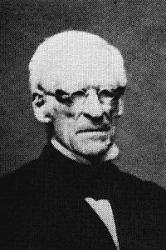
1784 - 1872 Person Name: Thomas Hastings, 1784-1872 Topics: The Christian Home Nurture, Instruction of Youth Composer of "HAVEN" in The Christian Hymnary Hastings, Thomas, MUS. DOC., son of Dr. Seth Hastings, was born at Washington, Lichfield County, Connecticut, October 15, 1784. In 1786, his father moved to Clinton, Oneida Co., N. Y. There, amid rough frontier life, his opportunities for education were small; but at an early age he developed a taste for music, and began teaching it in 1806. Seeking a wider field, he went, in 1817, to Troy, then to Albany, and in 1823 to Utica, where he conducted a religious journal, in which he advocated his special views on church music. In 1832 he was called to New York to assume the charge of several Church Choirs, and there his last forty years were spent in great and increasing usefulness and repute. He died at New York, May 15, 1872. His aim was the greater glory of God through better musical worship; and to this end he was always training choirs, compiling works, and composing music. His hymn-work was a corollary to the proposition of his music-work; he wrote hymns for certain tunes; the one activity seemed to imply and necessitate the other. Although not a great poet, he yet attained considerable success. If we take the aggregate of American hymnals published duriug the last fifty years or for any portion of that time, more hymns by him are found in common use than by any other native writer. Not one of his hymns is of the highest merit, but many of them have become popular and useful. In addition to editing many books of tunes, Hastings also published the following hymnbooks:—
(1) Spiritual Songs for Social Worship: Adapted to the Use of Families and Private Circles in Seasons of Revival, to Missionary Meetings, &c, Utica, 1831-2, in which he was assisted by Lowell Mason; (2) The Mother's Hymn-book, 1834; (3) The Christian Psalmist; or, Watts's Psalms and Hymns, with copious Selections from other Sources, &c, N. Y., 1836, in connection with "William Patton; (4) Church Melodies, N. Y., 1858, assisted by his son, the Rev. T. S. Hastings; (5) Devotional Hymns and Poems, N. Y., 1850. The last contained many, but not all, of his original hymns. (6) Mother's Hymn-book, enlarged 1850.
The authorship of several of Hastings's hymns has been somewhat difficult to determine. All the hymns given in the Spiritual Songs were without signatures. In the Christian Psalmist some of his contributions were signed "Anon." others "M. S.," whilst others bore the names of the tune books in which they had previously appeared; and in the Church Melodies some were signed with his name, and others were left blank. His MSS [manuscript] and Devotional Hymns, &c, enable us to fix the authorship of over 50 which are still in common use. These, following the chronological order of his leading work, are:—
i. From the Spiritual Songs, 1831:—
1. Before Thy footstool kneeling. In Sickness. No. 358, in 3 stanzas of 8 lines.
2. Bleeding hearts defiled by sin. Fulness of Christ. No. 261, in 5 stanzas of 4 lines.
3. Child of sin and sorrow, Filled with dismay. Lent. No. 315, in 2 stanzas of 8 lines. It is sometimes given as "Child of sin and sorrow, Where wilt thou flee?" It is in extensive use.
4. Delay not, delay not, 0 sinner draw near. Exhortation to Repentance. No. 145, in 5 stanzas of 4 lines. Given in several important collections.
5. Forgive us, Lord, to Thee we cry. Forgiveness desired. No. 165, in 4 stanzas of 4 lines.
6. Gently, Lord, 0 gently lead us. Pilgrimage of Life. No. 29, in 2 stanzas of 8 lines. It is given in several collections. The first two lines are taken from a hymn which appeared in the Christian Lyre, 1830.
7. Go forth on wings of fervent prayer. For a blessing on the distribution of Books and Tracts. No. 250, in 4 stanzas of 5 lines. It is sometimes given as “Go forth on wings of faith and prayer," as in the Baptist Praise Book, N. Y., 1871, No. 1252; but the alterations are so great as almost to constitute it a new hymn.
8. Hail to the brightness of Zion's glad morning. Missionary Success. No. 239, in 4 stanzas of 4 lines. In several hymnbooks in Great Britain and America.
9. How calm and beautiful the morn. Easter. No. 291, in 5 stanzas of 6 lines. Very popular.
10. In this calm, impressive hour. Early Morning. No. 235, pt. i. in 3 stanzas of 6 lines. In several collections.
11. Jesus, save my dying soul. Lent. No. 398, in 4 stanzas of 4 lines. A deeply penitential hymn.
12. Now be the gospel banner. Missions. No. 178, in 2 stanzas of 8 lines. In several collections (see below).
13. Now from labour, and from care. Evening. No. 235. Pt. ii. in 3 stanzas of 6 lines. This hymn, with No. 10 above, "In this calm," &c, constitute one hymn of 6 st. in the Spiritual Songs, but divided into two parts, one for Morning and the other for Evening. Both parts are popular as separate hymns.
14. 0 God of Abraham, hear. Prayer on behalf of Children. No. 288, in 5 stanzas of 4 lines. In use in Great Britain.
15. 0 tell me, Thou Life and delight of my soul. Following the Good Shepherd. No. 151, in 5 stanzas of 4 lines, on Cant. i. 7, 8.
16. Return, O wanderer, to thy home. The Prodigal recalled. No. 183, in 3 stanzas of 4 lines, with the refrain, " Return, return " (see below).
17. Soft and holy is the place. Public Worship. No. 351, in 4 stanzas of 4 lines. In Dr. Hatfield's Church Hymn Book, N. Y., 1872, and some other collections, the opening line is altered to "Sweet and holy is the place."
18. That warning voice, 0 sinner, hear. Exhortation to Repentance. No. 231, in 4 stanzas of 6 lines.
19. To-day the Saviour calls. Lent. No. 176, in 4 stanzas of 4 lines. Dr. Hastings says, in a communication to Dr. Stevenson (Hymns for Church and Home, 1873), this hymn “was offered me in a hasty sketch which I retouched." The sketch was by the Rev. S. F. Smith.
20. Why that look of sadness. Consolation. No. 268, in 3 stanzas of 8 lines.
21. Zion, dreary and in anguish. The Church Comforted. No. 160, in 4 stanzas of 4 lines.
Concerning the two hymns, No. 12, "Now be the gospel banner"; and No. 16, "Beturn, O wanderer, to thy home," Dr. Stevenson has the following note in his Hymns for Church and Home, London, 1873:—
"In a letter to the Editor, Dr. Hastings wrote, not more than a fortnight before his death, 'These two hymns of mine were earlier compositions, the former ["Now be," &c.] for a Utica Sunday School celebration, the latter ["Return, 0 wanderer," &c.] after hearing a stirring revival sermon on the Prodigal Son, by the Rev. Mr. Kint, at a large union meeting in the Presbyterian Church, where two hundred converts were present. The preacher at the close eloquently exclaimed with tender emphasis, "Sinner, come home! come home! come home!" It was easy afterwards to write, "Return, 0 wanderer."'"
Several additional hymns in the Spiritual Songs, 1831, have been ascribed to Dr. Hastings, but without confirmation. The sum of what can be said on his behalf is that the hymns are in his style, and that they have not been claimed by others. They are:—
22. Drooping souls, no longer mourn. Pardon promised. No. 40, in 3 stanzas of 8 1., of which st. i., ii. are altered from J. J. Harrod's Public, Parlour, and Cottage Hymns, Baltimore, 1823, that is, 8 years before the Spiritual Songs were published.
23. Dying souls, fast bound in sin. Pardon offered. No. 41, in 5 stanzas of 8 lines. It is usually given in an abridged form.
ii. From his Mother's Hymn Book, 1834:—-
24. Forbid them not, the Saviour cried. Holy Baptism. No. 44.
25. God of mercy, hear our prayer. On behalf of Cliildrcn, No. 48, in 5 stanzas of 4 lines. It was included in J. Campbell's Comprehensive Hymn Book, Lond., 1837, and subsequently in several collections.
26. God of the nations, bow Thine ear. Missions. No. 115, in 4 stanzas of 6 lines. In several collections.
27. How tender is Thy hand. Affliction. No. 99, in 5 stanzas of 41.
28. Jesus, while our hearts are bleeding. Death. Resignation. No. 95, in 5 stanzas of 4 lines. This is in extensive use and is one of his best and most popular hymns.
29. Lord, I would come to Thee. Self-dedication of a Child. No. 72, in 4 stanzas of 4 lines.
30. 0 Lord, behold us at Thy feet. Lent. No. 59, in 4 stanzas of 4 lines. It is doubtful if this is by Hastings. It is sometimes signed "Mrs. T."
31. The rosy light is dawning. Morning. No. 11, in 3 stanzas of 8 lines.
32. The Saviour bids us [thee] watch and pray. Watch and Pray. No. 119, in 4 stanzas of 4 lines.
33. Thou God of sovereign grace. On behalf of Children. No. 66, in 6 stanzas of 4 lines.
34. Wherever two or three may meet. Divine Service. No. 56.
35. Within these quiet walls, 0 Lord. Mothers' Meetings. No. 58, in 5 stanzas of 4 lines. In Spurgeon's Our Own Hymn Book, 1866, No. 1010, it begins, "Within these peaceful walls." This reading is from J. Campbell's Comprehensive Hymn Book, London, 1837. It is very doubtful if this is by Hastings.
iii. From the Christian Psalmist, 1836:—
36. Children, hear the melting story. On the life of Christ. No. 430, in 3 stanzas of 6 lines. It is given as from the Union Minstrel, and the statement that it is by Hastings is very doubtful, no evidence to that effect being in the possession of his family. Dr. Hatfield, in his Church Hymn Book, dates it 1830, and gives it as "Anon."
37. Go, tune thy voice to sacred song. Praise No. 190, in 5 stanzas of 5 lines, and given as from "ms."
38. He that goeth forth with weeping. Missions No. 212, in 2 stanzas of 8 lines, and given as from "ms." It is in several collections.
39. I love the Lord, Whose gracious ear. Ps. cxvi. Page 186, in 4 stanzas of 6 lines, as from "ms."
40. Lord of the harvest, bend Thine ear. For the Increase of the Ministry. No. 407, in 6 stanzas of 4 lines, as from "ms." This hymn Dr. Hastings altered for his Devotional Hymns & Poems, 1850, but it has failed to replace the original in the hymnbooks.
iv. From the Reformed Dutch Additional Hymns, 1846:—
41. Child of sorrow, child of care [woe]. Trust. No. 168, in 2 stanzas of 8 lines, appeared in W. Hunter's Minstrel of Zion, 1845.
42. Heirs of an immortal crown. Christian Warfare. No. 136, in 2 stanzas of 8 lines.
43. O Saviour, lend a listening ear. Lent. No. 175. Stanzas vi., i., iv., v., altered.
44. The Lord Jehovah lives. Ps. xviii. No. 26, in 4 stanzas of 6 lines.
These three hymns, together with many others, are given in the Dutch Reformed Hymns of the Church, N. Y., 1869. In the 1847 Psalms & Hymns there were, including these, 38 hymns by Hastings, and 2 which are doubtful.
v. From Dr. Hastings's Devotional Hymns and Religious Poems, 1850:—
45. In time of fear, when trouble's near. Encouragement in Trial. Page 95, in 3 stanzas of 4 lines. In use in Great Britain.
vi. From Church Melodies, 1858:—-
46. For those in bonds as bound with them. Missions. No. 416, in 5 stanzas of 4 lines, on Heb. xiii. 3.
47. Forget thyself, Christ bids thee come. Holy Communion. No. 683, in 3 stanzas of 6 lines.
48. Jesus, Merciful and Mild. Leaning on Christ. No. 585, in 4 stanzas of 8 1. In several collections.
49. Pilgrims in this vale of sorrow. Self-denial. No. 397, in 4 stanzas of 4 lines.
50. Saviour, I look to Thee. Lent. In time of Trouble. No. 129, in 4 stanzas of 7 lines.
51. Saviour of our ruined race. Holy Communion. No. 379, in 3 stanzas of 6 lines.
52. Why that soul's commotion? Lent. No. 211, in 3 stanzas of 8 lines. It is doubtful if this is by Hastings.
vii. In Robinson's Songs of the Church, 1862:
53. Be tranquil, 0 my soul. Patience in Affliction. No. 519, in 4 stanzas of 4 lines. Altered in Robinson's Songs for the Sanctuary, 1865.
54. Peace, peace, I leave with you. Peace, the benediction of Christ. No. 386, in 3 stanzas of 7 lines.
55. Saviour, Thy gentle voice. Christ All in All. No. 492, in 3 stanzas of 7 lines.
viii. In Bobinson's Songs for the Sanctuary, 1865:—
56. God of the morning ray. Morning. No. 53, in 2 stanzas of 7 lines.
Of Hastings's hymns about 40 are in the Reformed Dutch Psalms & Hymns, 1847; 39 in Robinson's Songs for the Sanctuary, 1865; 15 in Hatfield's Church Hymn Book, 1872; and 13 in the Lyra Sacra Americana, 1868. They are also largely represented in other collections. Many other of his compositions are found in collections now or recently in common use, but these are not of the highest merit. [Rev. F. M. Bird, M.A.]
--John Julian, Dictionary of Hymnology (1907)
========================
Hastings, T., p. 494, i. Additional hymns are:—
1. Children hear the wondrous story; and "Sinners, hear the melting story," are altered forms of No. 36, on p. 495, i.
2. Father, we for our children plead. On behalf of Children.
3. Forgive my folly, O Lord most holy. Lent.
4. Hosanna to the King, That for, &c. Praise to Jesus.
5. I look to Thee, O Lord, alone. Pardon desired.
6. Jesus, full of every grace. Pardon desired.
7. O why should gloomy thoughts arise? The Mourner Encouraged.
8. Peace to thee, O favoured one. Peace in Jesus.
9. Saviour, hear us through Thy merit. Forgiveness. Of these hymns, No. 3 is in Hasting’s Spiritual Songs, 1831; No. 9 in his Mother's Hymn Book, 1834, and his Devotional Hymns, 1850; and Nos. 4, 5 & 8 in his Devotional Hymns, 1850.
--John Julian, Dictionary of Hymnology, Appendix, Part II (1907)
Thomas Hastings
William Daman
1540 - 1591 Topics: Instruction Composer of "SOUTHWELL" in Psalms and Hymns to the Living God Aliases: Damon; Damano; Demaunde; Damond; Dymond
Born: ca.1540
Died: 1591
Damon was a foreign composer resident in England. He arrived probably in England in 1566 as a servant of Sir Thomas Sackville. In 1576 he became a recorder player at the Court of Elizabeth I.
He was described as having been born in "Luke" and "Lewklande" and, on the assumption that these names refer to Luik or Liège, it has been inferred that he was a Walloon. However contemporary London records describe him as an Italian and a later reference refers to him having been born in "Luke in Italy", i.e. Lucca. His unanglicised name may have been Gulielmo (or Gulielmus) Damano.
Daman died from the effects of an ulcer and was buried at St Peter-le-Poer, London, on 26 March 1591.
List of choral works:
Beati omnes qui timent Dominum
Confitebor tibi Domine
Miserere nostri Domine
Omnis caro gramen sit
Praedicabo laudes tuae Domine
Spem in alium
Publications:
The Psalmes of David in English Metre (1579)
The Former Booke of Musicke of M. William Damon (1591)
The Second Booke of Musicke of M. William Damon (1591)
--www3.cpdl.org/wiki/index.php/
William Daman
Reginald Heber

1783 - 1826 Person Name: Heber Topics: Early Instruction and Piety Author of "By cool Siloam's shady rill" in Christian Hymns for Public and Private Worship Reginald Heber was born in 1783 into a wealthy, educated family. He was a bright youth, translating a Latin classic into English verse by the time he was seven, entering Oxford at 17, and winning two awards for his poetry during his time there. After his graduation he became rector of his father's church in the village of Hodnet near Shrewsbury in the west of England where he remained for 16 years. He was appointed Bishop of Calcutta in 1823 and worked tirelessly for three years until the weather and travel took its toll on his health and he died of a stroke. Most of his 57 hymns, which include "Holy, Holy, Holy," are still in use today.
-- Greg Scheer, 1995
====================
Heber, Reginald, D.D. Born at Malpas, April 21, 1783, educated at Brasenose College, Oxford; Vicar of Hodnet, 1807; Bishop of Calcutta, 1823; died at Trichinopoly, India, April 3, 1826. The gift of versification shewed itself in Heber's childhood; and his Newdigate prize poem Palestine, which was read to Scott at breakfast in his rooms at Brazenose, Oxford, and owed one of its most striking passages to Scott's suggestion, is almost the only prize poem that has won a permanent place in poetical literature. His sixteen years at Hodnet, where he held a halfway position between a parson and a squire, were marked not only by his devoted care of his people, as a parish priest, but by literary work. He was the friend of Milman, Gifford, Southey, and others, in the world of letters, endeared to them by his candour, gentleness, "salient playfulness," as well as learning and culture. He was on the original staff of The Quarterly Review; Bampton Lecturer (1815); and Preacher at Lincoln's Inn (1822). His edition of Jeremy Taylor is still the classic edition. During this portion of his life he had often had a lurking fondness for India, had traced on the map Indian journeys, and had been tempted to wish himself Bishop of Calcutta. When he was forty years old the literary life was closed by his call to the Episcopate. No memory of Indian annals is holier than that of the three years of ceaseless travel, splendid administration, and saintly enthusiasm, of his tenure of the see of Calcutta. He ordained the first Christian native—Christian David. His first visitation ranged through Bengal, Bombay, and Ceylon; and at Delhi and Lucknow he was prostrated with fever. His second visitation took him through the scenes of Schwartz's labours in Madras Presidency to Trichinopoly, where on April 3,1826, he confirmed forty-two persons, and he was deeply moved by the impression of the struggling mission, so much so that “he showed no appearance of bodily exhaus¬tion." On his return from the service
”He retired into his own room, and according to his invariable custom, wrote on the back of the address on Confirmation 'Trichinopoly, April 3, 1826.' This was his last act, for immediately on taking off his clothes, he went into a large cold bath, where he had bathed the two preceding mornings, but which was now the destined agent of his removal to Paradise. Half an hour after, his servant, alarmed at his long absence, entered the room and found him a lifeless corpse." Life, &c, 1830, vol. ii. p. 437.
Heber's hymns were all written during the Hodnet period. Even the great missionary hymn, "From Greenland's icy mountains," notwithstanding the Indian allusions ("India's coral strand," "Ceylon's isle"), was written before he received the offer of Calcutta. The touching funeral hymn, "Thou art gone to the grave," was written on the loss of his first babe, which was a deep grief to him. Some of the hymns were published (1811-16) in the Christian Observer, the rest were not published till after his death. They formed part of a ms. collection made for Hodnet (but not published), which contained, besides a few hymns from older and special sources, contributions by Milman. The first idea of the collection appears in a letter in 1809 asking for a copy of the Olney Hymns, which he "admired very much." The plan was to compose hymns connected with the Epistles and Gospels, to be sung after the Nicene Creed. He was the first to publish sermons on the Sunday services (1822), and a writer in The Guardian has pointed out that these efforts of Heber were the germs of the now familiar practice, developed through the Christian Year (perhaps following Ken's Hymns on the Festivals), and by Augustus Hare, of welding together sermon, hymnal, and liturgy. Heber tried to obtain from Archbishop Manners Sutton and the Bishop of London (1820) authorization of his ms. collection of hymns by the Church, enlarging on the "powerful engine" which hymns were among Dissenters, and the irregular use of them in the church, which it was impossible to suppress, and better to regulate. The authorization was not granted. The lyric spirit of Scott and Byron passed into our hymns in Heber's verse; imparting a fuller rhythm to the older measures, as illustrated by "Oh, Saviour, is Thy promise fled," or the martial hymn, "The Son of God goes forth to war;" pressing into sacred service the freer rhythms of contemporary poetry (e.g. "Brightest and best of the sons of the morning"; "God that madest earth and heaven"); and aiming at consistent grace of literary expression.. Their beauties and faults spring from this modern spirit. They have not the scriptural strength of our best early hymns, nor the dogmatic force of the best Latin ones. They are too flowing and florid, and the conditions of hymn composition are not sufficiently understood. But as pure and graceful devotional poetry, always true and reverent, they are an unfailing pleasure. The finest of them is that majestic anthem, founded on the rhythm of the English Bible, "Holy, Holy, Holy, Lord God Almighty." The greatest evidence of Heber's popularity as a hymnwriter, and his refined taste as a compiler, is found in the fact that the total contents of his ms. collection which were given in his posthumous Hymns written and adapted to the Weekly Church Service of the Year. London, J. Murray, 1827; which included 57 hymns by Heber, 12 by Milman, and 29 by other writers, are in common in Great Britain and America at the present time. [Rev. H. Leigh Bennett, M.A.]
Of Bishop Heber's hymns, about one half are annotated under their respective first lines. Those given below were published in Heber's posthumous Hymns, &c, 1827. Some of them are in extensive use in Great Britain and America; but as they possess no special histories they are grouped together as from the Hymns, &c, 1827:—
1. Beneath our feet, and o'er our head. Burial.
2. Creator of the rolling flood. St. Peter's Day, or, Gospel for 6th Sunday after Trinity.
3. Lo, the lilies of the field. Teachings of Nature: or, Gospel for 15th Sunday after Trinity.
4. 0 God, by Whom the seed is given. Sexagesima.
6. 0 God, my sins are manifold. Forgiveness, or,
Gospel for 22nd S. after Trinity.
6. 0 hand of bounty, largely spread. Water into Wine, or, Gospel for 2nd S. after Epiphany.
7. 0 King of earth, and air, and sea. Feeding the Multitude; or, Gospel for 4th S. in Lent.
8. 0 more than merciful, Whose bounty gave. Good Friday.
9. 0 most merciful! 0 most bountiful. Introit Holy Communion.
10. 0 Thou, Whom neither time nor space. God unsearchable, or, Gospel for 5th Sunday in Lent.
11. 0 weep not o'er thy children's tomb. Innocents Day.
12. Room for the proud! Ye sons of clay. Dives and Lazarus, or, Gospel for 1st Sunday after Trinity.
13. Sit thou on my right hand, my Son, saith the Lord. Ascension.
14. Spirit of truth, on this thy day. Whit-Sunday.
15. The feeble pulse, the gasping breath. Burial, or, Gospel for 1st S. after Trinity.
16. The God of glory walks His round. Septuagesima, or, the Labourers in the Marketplace.
17. The sound of war in earth and air. Wrestling against Principalities and Powers, or, Epistle for 2lst Sunday after Trinity.
18. The world is grown old, her pleasures are past. Advent; or, Epistle for 4th Sunday in Advent.
19. There was joy in heaven. The Lost Sheep; or, Gospel for 3rd S. after Trinity.
20. Though sorrows rise and dangers roll. St. James's Day.
21. To conquer and to save, the Son of God. Christ the Conqueror.
22. Virgin-born, we bow before Thee. The Virgin Mary. Blessed amongst women, or, Gospel for 3rd S. in Lent.
23. Wake not, 0 mother, sounds of lamentation. Raising the Widow's Son, or, Gospel for 16th S. after Trinity.
24. When on her Maker's bosom. Holy Matrimony, or, Gospel for 2nd S. after Epiphany.
25. When through the torn sail the wild tempest is streaming. Stilling the Sea, or, Gospel for 4th Sunday after Epiphany.
26. Who yonder on the desert heath. The Good Samaritan, or, Gospel for 13th Sunday after Trinity.
This list is a good index of the subjects treated of in those of Heber's hymns which are given under their first lines, and shows that he used the Gospels far more than the Epistles in his work.
--John Julian, Dictionary of Hymnology (1907)
Reginald Heber
James Merrick
1720 - 1769 Person Name: Merrick Topics: Desire of Instruction; Divine instruction implored Author of "Teach me, O teach me, Lord! thy way" in A Collection of Psalms and Hymns for Christian Worship (6th ed.) Merrick, James , M.A., was born in 1720, and educated at Oxford, where he became a Fellow of Trinity College. He entered Holy Orders, but his health would not admit of parish work. He died at Reading, 1769. His publications include:—
(1) Messiah, a Divine Essay. Humbly dedicated to the Reverend the Vice-Chancellor of the University of Oxford and the Visitors of the Free School in Reading. By James Merrick, Ætat. 14, Senior Scholar of the School at their last Terminal Visitation, the 7th of October, 1734. Reading. (2) The Destruction of Troy. Translated from the Greek of Tryphiodorus into English Verse, with Notes, &c. 1742. (3) Poems on Sacred Subjects. Oxford . 1763. (4) The Psalms of David Translated or Paraphrased in English Verse. By James Merrick, M.A., late Fellow of Trinity College, Oxford. Reading. J. Carnan and Co. 1765. 2nd ed. 1766. A few only of these paraphrases were divided into stanzas. In 1797 the Rev. W. D. Tattersall pulished the work "Divided into stanzas for Parochial Use, and paraphrased in such language as will be intelligible to every capacity . . . with a suitable Collect to each Psalm from the Works of Archbishop Parker."
Merrick's paraphrases, although weak and verbose, were in extensive use in the early part of the present century, both in the Church of England and with Nonconformists. They have, however, fallen very much into disuse. Those in modern hymn-books, mainly in the form of centos, include:—
1. Blest Instructor, from Thy ways. Ps. xix.
2. Descend, O Lord! from heaven descend. Ps. cxliv. (In time of National Peril.)
3. Far as creation's bounds extend. Ps. cxlv.
4. God of my strength, the wise, the just. Ps. xxxi.
5. He who with generous pity glows. Ps. xli.
6. How pleasant, Lord.Thy dwellings are. Ps. lxxxiv.
7. Lift up your voice and thankful sing. Ps. cxxxvi.
8. Lo, my Shepherd's hand divine. Ps. xxiii.
9. Lord, my Strength, to Thee I pray. Ps. xxviii.
10. My heart its noblest theme has found. Ps.xlv.
11. O let me, [gracious] heavenly Lord extend. Ps. xxxix.
12. O turn, great Ruler of the skies. Ps. li.
13. Praise, O praise the Name divine. Ps. cl.
14. Sing, ye sons of [men] might, O sing. Ps. xxix.
15. Teach me, O teach me, Lord, Thy way. Ps. cxix.
16. The festal morn, my [O] God, is come. Ps. cxxii, (Sunday Morning.)
17. The morn and eve Thy praise resound. Ps. lxv. (Harvest.)
18. To Thy pastures, fair and large. Ps. xxiii.
From his Poems on Sacred Subjects, 1763, the following centos have also come into common use: --
19. Author of good, to Thee we turn. Resignation.
20. Eternal God, we look to Thee. Resignation.
21. 'Tis enough, the hour is come. Nunc Dimittis.
John Julian, Dictionary of Hymnology (1907)
James Merrick
John Pierpont
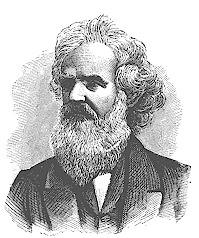
1785 - 1866 Person Name: Pierpont Topics: Early Instruction and Piety Author of "O God, I thank thee that the night" in Christian Hymns for Public and Private Worship Pierpont, John, son of James Pierpont, of Litchfield, Connecticut, was born at Litchfield, April 6, 1785, and educated at Yale College, where he graduated in 1804. After fulfilling engagements as a Tutor in New Haven, and in Charlestown, South Carolina, he was admitted to the Bar in 1812. Shortly after he retired and went into business, only to leave it also, and to pass on to Harvard College as a student in theology. In 1819 he succeeded Dr. Holley as the pastor of the Unitarian congregation in Hollis Street, Boston. At length his zeal against intemperance and slavery caused him to resign his charge in 1840 [sic. 1845] (see Lothrop's Proceedings of an Eccl. Council in the case of the Hollis Street Meeting and the Rev. J. Pierpont). At this date he published his Poems & Hymns, including his anti-slavery and temperance poems and songs. In 1845 he became the pastor of an Unitarian congregation at Troy, New York. This he vacated for another at Medford, Massachusetts, in 1849. That he resigned in 1859. When over 70 years of age he became Chaplain in the United States Army (1862), and was finally a Government clerk in the Treasury Department at Washington. He died suddenly at Medford, Aug. 27, 1866.
Pierpont's publications include Airs of Palestine, 1816, some school books, and his Poems & Hymns, 1840 and 1854. His hymns in common use include:—
1. Another day its course hath run. Evening. Appeared in Hymns for Children, Boston, 1825; in Greenwood's Chapel Liturgy, 1827; and in the author's Poems & Hymns, 1840.
2. Break forth in song, ye trees. Public Thanksgiving. Written for the Second Centennial Celebration of the Settlement of Boston, Sept. 17, 1830, and included in the Poems & Hymns, 1840.
3. Break the bread and pour the wine. Holy Communion. In Harris's Hymns for the Lord's Supper, 1820.
4. Father, while we break the bread. Holy Communion.
5. God Almighty and All-seeing. Greatness of the Father. Contributed to Elias Nason's Congregational Hymn Book, Boston, 1857.
6. God of mercy, do Thou never. Ordination. Written for the Ordination of John B. P. Storer at Walpole, Nov. 15, 1826; and published in the author's Poems, &c, 1840.
7. God of our fathers, in Whose sight. Love of Truth desired. This hymn is composed of st. ix., x. of a hymn written for the Charlestown Centennial, June 17, 1830. In this form it was given in the Boston Hymns of the Spirit, 1864, and others.
8. Gone are those great and good. Burial. Written in 1830. Part of No. 2 above.
9. I cannot make him dead. Gone Before. "A part of an exquisitely touching and beautiful poem of ten stanzas, originally printed in the Monthly Miscellany, Oct. 1840."
10. Let the still air rejoice. Praise.
11. Mighty One, Whose name is Holy. Charitable Institutions. Written for the anniversary of the Howard Benevolent Society, Dec. 1826, and included in the author's Poems, &c, 1840.
12. My [0] God, I thank Thee that the night. Morning. Appeared in his Poems, &c, 1840. In Martineau's Hymns, &c, 1873, it begins "O God, I thank Thee," &c.
13. 0 bow Thine ear, eternal One. Opening of Divine Service. This is dated 1823, but was not included in the author's Poems, &c, 1840, although one of his best productions.
14. 0 Thou to Whom in ancient time. Universal Worship. “Written for the opening of the Independent Congregational Church in Barton Square, Salem, Massachusetts, Dec. 7, 1824," and printed at the close of the sermon preached by Henry Colman on that day. It was given in Pierpont's Poems, &c, 1840, and is found in several collections in Great Britain and America. It is widely known.
15. 0 Thou Who art above all height. Ordination. “Written for the Ordination of Mr. William Ware, as Pastor of the First Congregational Church in New York, Dec. 18, 1821," and included in his Poems, &c, 1840.
16. 0 Thou Who on the whirlwind rides. Dedication of a Place of Worship. Written for the opening of the Seamen's Bethel in Boston, Sept. 11, 1833. Sometimes given as “Thou Who on the," &c.
17. O'er Kedron's stream, and Salem's height. Gethsemane. One of eight hymns contributed to Dr. T. M. Harris's Hymns for the Lord's Supper, 1820. It is in Martineau's Hymns, &c, London, 1873, and others.
18. On this stone, now laid with prayer. Foundation-stone Laying. Written for the laying of the cornerstone of Suffolk Street Chapel, Boston, for the Ministry of the Poor, May 23, 1839.
19. With Thy pure dews and rain. Against Slavery. Written for the African Colonization Society, and included in Cheever's American Common Place Book, 1831. Not in the author's Poems, &c, 1840.
Pierpont's talents as a hymn-writer, as in other fields, were respectable rather than commanding, but so energetically employed as to make their mark. Thus, although he never wrote a single hymn that can be called a great lyric, yet he has attained to a prominent position in American hymnody. [Rev. F. M. Bird, M.A.]
-- John Julian, Dictionary of Hymnology (1907)
John Pierpont
Sigismund Neukomm
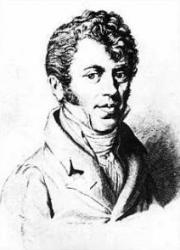
1778 - 1858 Topics: Children Instruction of Composer of "AMES" in The Psalter Sigismund Ritter von Neukomm, b. Salzburg, 1778; d. Paris 1858
Evangelical Lutheran Hymnal, 1908
Sigismund Neukomm
Jane Taylor
1783 - 1824 Person Name: J. Taylor Topics: Early Instruction and Piety Author of "There is a glorious world of light" in Christian Hymns for Public and Private Worship Taylor, Jane, the younger of two sisters, was born at London, Sept. 23, 1783. Her gift in writing verse displayed itself at an early age. Her first piece was printed in the Minor's Pocket Book for 1804. Her publications included Display, a tale, 1815; Essays in Rhymes, 1816; and the posthumous work edited by her brother, entitled The Contributions of Q. Q., 1824, being pieces in prose and verse from the Youth's Magazine, to which she had contributed under the signature of "Q. Q." She died at Ongar, Essex, April 13, 1824. Her Memoir and Poetical Remains, were published by her father in 1825.
The joint productions of the two sisters, Ann Taylor Gilbert & Jane Taylor, were:-- (1) Original Poems, 1805; (2) Hymns for the Nursery, 1806; (3) Hymns for Infant Minds, 1809; 2nd edition 1810; 52nd edition 1877. To the 35th edition, 1844, Mrs. Gilbert interspersed 23 additional hymns by herself, thereby raising the total to 93. In 1886 Josiah Gilbert revised these hymns, added thereto from the works named above, supplied the initials "A." and "J." respectively, and published the same under the original title as the Authorized Edition." (4) Original Hymns for Sunday Schools, 1812.
In addition to the hymns which are noted under their respective first lines, Miss Taylor is the authors of the following (the date in brackets indicates the book in which each hymn appeared):—
1. A sinner, Lord, behold I stand (1809). A Child's Humble Confession.
2. Almighty God, Who dwellest high (1809). Praise to God.
3. Come, my fond, fluttering heart (Collyer's Collection 1812). Renunciation of the World.
4. God is so good that He will hear (1809). Encouragement to Pray.
5. God!—What a great and awful name (1809). God's Condescension.
6. How dreadful to be turned away (1812). Expulsion from Sunday School.
7. Lord, I would own thy tender care (1809). Thanks for Daily Mercies.
8. Love and kindness we may measure (1809). Against Selfishness.
9. Now condescend, Almighty King (1809). Evening Hymn for a Small Family.
10. This is a precious book indeed (1809). Holy Scripture.
11. What is there, Lord, a child can do? Repentance.
12. When daily I kneel down to pray (1809). Against wandering thoughts in Prayer.
13. When for some little insult given (1809). Against Anger, &c.
14. When to the house of God we go (1809). Public Worship.
Mr. Gilbert's edition of the Hymns for Infant Minds, 1886, together with manuscript notes, are our authorities for the foregoing ascriptions of authorship. Mr. Gilbert cannot distinguish the authorship of the following hymns by one or both sisters:—
1. Good David, whose Psalms have so often been sung (1812). Concerning David.
2. If Jesus Christ was sent (1812). Repentance.
3. King Solomon of old (1812). Concerning Solomon.
In literary excellence Mrs. Gilbert's hymns surpass those of her sister. They are more elevated in style, ornate in character, broader in grasp, and better adapted for adults. The best are "Great God, and wilt Thou condescend?", "Jesus, Who lived above the sky," and "Lo! at noon 'tis sudden night." Miss Taylor's hymns are marked by great simplicity and directness. The most popular and one of the best is, "There is a path that leads to God." Taken as a whole, her hymns are somewhat depressing in tone. They lack brightness and warmth.
--Excerpts from John Julian, Dictionary of Hymnology (1907)
Jane Taylor
Pages




