You help make Hymnary.org possible. More than 10 million people from 200+ countries found hymns, liturgical resources and encouragement on Hymnary.org in 2025, including you. Every visit affirms the global impact of this ministry.

If Hymnary has been meaningful to you this year, would you take a moment today to help sustain it? A gift of any size—paired with a note of encouragement if you wish—directly supports the server costs, research work and curation that keep this resource freely available to the world.

Give securely online today, or mail a check to:
Hymnary.org
Calvin University
3201 Burton Street SE
Grand Rapids, MI 49546

Thank you for your partnership, and may the hope of Advent fill your heart.

Person Results

Topics:pentecost+2
In:person

Planning worship? Check out our sister site, ZeteoSearch.org, for 20+ additional resources related to your search.
Showing 21 - 30 of 275Results Per Page: 102050

David Mowbray

b. 1938 Person Name: David Mowbray (born 1938) Topics: Pentecost 2 The Church's Unity and Fellowship Author of "Risen Lord, whose name we cherish" in Hymns for Today's Church (2nd ed.) David Mowbray (b. 1938) was born in Wallington, Surrey, England. He attended Dulwich College, Fitzwilliam, Cambridge where he read English. He gained an MA at Trinity in Bristol and a BD at London (External). Ordained in the Church of England, he was a curate at St. Giles in Northampton and at St. Mary's in Walford. Appointed Vicar of Broxborne, Herts in 1970 in 1984, he became Vicar of All Saints, Hertfordshire. In 1991 he became Vicar of St. Matthew's Darley Abbey, Derby, where he serves to this day. He has been writing hymns since 1977 and most of his texts are represented by Jubilate Hymns. Three of his hymn texts have been included in Hope's new hymnal Worship & Rejoice (2001). --www.hopepublishing.com

Nikolaus Herman

1500 - 1561 Person Name: Nikolaus Herman, 1480-1561 Topics: Biblical Names and Places Jacob; Blessing; Church Year Advent; Church Year All Saints' Day; Church Year Ascension of the Lord; Church Year Christ the King; Church Year Passion/Palm Sunday; Church Year Transfiguration; Earth; Elements of Worship Call to Worship; Elements of Worship Gathering; Elements of Worship Lord's Supper; Elements of Worship Preparation for Worship; Enthronement Psalms; Faith; Freedom; God Trust in; God as Creator; God as King; God's Sovereignty; God's Armor; God's Face; God's Majesty; God's Strength; Guilt; Hope; Idols and Idolatry; Innocence; Processions; Temple; Ten Commandments 2nd Commandment (do not make graven emages); The Creation; Unity and Fellowship; Worship; Year A, B, C, Presentation of the Lord, February 2; Year B, All Saints' Day, November 1; Year B, Ordinary Time after Pentecost, July 10-16 Adapter of "LOBT GOTT, IHR CHRISTEN" in Psalms for All Seasons Herman, Nicolaus, is always associated with Joachimsthal in Bohemia, just over the mountains from Saxony. The town was not of importance till the mines began to be extensively worked about 1516. Whether Herman was a native of this place is not known, but he was apparently there in 1518, and was certainly in office there in 1524. For many years he held the post of Master in the Latin School, and Cantor or Organist and Choirmaster in the church. Towards the end of his life he suffered greatly from gout, and had to resign even his post as Cantor a number of years before his death. He died at Joachimsthal, May 3, 1561. (Koch, i. 390-398; Allgemeine Deutsche Biographie, xii. 186-188, &c.) He was a great friend and helper of J. Mathesius (q.v.) (who in 1532 became rector of the school, but in 1541 diaconus and in 1545 pastor of the church), and it was said that whenever Mathesius preached a specially good sermon Herman straightway embodied its leading ideas in a hymn. His hymns, however, were not primarily written for use in church, but were intended for the boys and girls in the schools, to supplant profane songs in the mouths of the young men and women, or for the daily life of the “housefathers and housemothers" in Joachimsthal, at home, and in their work in the mines. He is a poet of the people, homely, earnest, and picturesque in style; by his naiveté reminding us of Hans Sachs. He was an ardent lover of music and a very good organist. The chorales which he published with his hymns are apparently all of his own composition, and are among the best of the Reformation period. Many of Herman's hymns soon passed into Church use in Germany, and a number are found in almost all books in present use. About 190 in all, they appeared principally in:— (1) Die Sontags Evangelia uber des gantze Jar, in Gesenge verfasset, für die Kinder und christlichen Haussvetter, &c, Wittenberg, 1560 (dedication by Herman dated Trinity Sunday, 1559), with 101 hymns and 17 melodies. The best are those interspersed specially meant for children and not directly founded on the Gospel for the day. (2) Die Historien von der Sindfludt, Joseph, Mose, Helia, Elisa und der Susanna, sampt etlichen Historien aus den Evangelisten, &c., Wittenberg, 1562 (preface by Herman dated St. Bartholomew's Day, 1560), with 73 hymns and 20 melodies. In this case also the general hymns are the best. A selection of 60 (really 61) of his hymns, with a memoir by K. F. Ledderhose, was published at Halle, 1855. One of Herman's hymns is noted under “Wenn mein Stündlein vorhanden ist." The others which have passed into English are:— i. Bescher uns, Herr, das täglioh Brod. Grace before Meat. 1562, as above, and thence in Wackernagel, iii. p. 1228, in 6 stanzas of 4 lines; in Ledderhose, p. 70; and in the Berlin Geistliche Lieder, ed. 1863, No. 1133. Translated as:— 1. Thou art our Father and our God. This, by P. H. Molther, a translation of stanza vi., as No. 180 in the Moravian Hymn Book, 1789 (1849, No. 220, st. v.). 2. As children we are owned by Thee, a translation of stanza vi., as st. iii. of No. 191 in the Moravian Hymn Book, 1801 (1849, No. 220, stanza iii.). ii. Die helle Sonn leucht jetzt herfür. Morning. 1560, as above, and thence in Wackernagel, iii. p. 1184, in 4 stanzas of 4 lines, in Ledderhose, p. 87; and in the Unverfälschter Liedersegen, 1851, No. 450. Translated as:— The morning beam revives our eyes, a good and full translation by. A. T. Russell, as No. 71 in the Dalston Hospital Hymn Book 1848. iii. Erschienen ist der herrliche Tag. Easter. 1560, as above, in 14 stanzas of 4 lines, entitled, "A new Spiritual Song of the Joyful Resurrection of our Saviour Jesus Christ; for the maidens of the girls' school in Joachimsthal”; and thence in Wackernagel, iii. p. 1175; in Ledderhose p. 23, and Unverfälschter Liedersegen, 1851, No. 134. It has reminiscences of the "Erstanden ist der heil'ge Christ". Translated as:— The day hath dawn'd—-the day of days, a good translation by A. T. Russell of stanzas i., ii., xiii., xiv., as No. 113 in his Psalms & Hymns, 1851. Another tr. is, "At length appears the glorious day," by Dr. G. Walker, 1860, p. 28. iv. Hinunter ist der Sonnen Schein. Evening. 1560, as above, and thence in Wackernagel, iii. p. 1184, in 4 stanzas of 4 lines; in Ledderhose, p. 88; and in the Unverfälschter Liedersegen1851, No. 523. Some of the phrases may have been suggested by the "Christe qui lux es et dies" (q. v.). Translated as:— 1. Sunk is the sun's last beam of light, a full and good translation by Miss Cox in her Sacred Hymns from the German, 1841, p. 57. Included in Alford's Psalms & Hymns, 1844, and Tear of Praise, 1867; in Dale's English Hymn Book, 1875; in the Pennsylvania Lutheran Church Book, 1868, and others. It is also given considerably altered and beginning, "Sunk is the Sun! the daylight gone," in W. J. Blew's Church Hymn and Tune Book, 1851-55. 2. The happy sunshine all is gone, in full, by Miss Winkworth in her Lyra Germanica, 1st Ser., 1855, p. 225; repeated in her Chorale Book for England, 1863, and the Ohio Lutheran Hymnal, 1880. Other translations are: (1) "Did I perhaps Thee somewhat grieve," a translation of stanza iii. in the Moravian Hymn Book, 1789, No. 756. In the 1801 and later eds. (1886, No. 1181, st. iii.), it begins, "Where'er I Thee this day did grieve." (2) "The sun’s fair sheen is past and gone," by H. J. Buckoll, 1842, p. 68. (3) "The sun hath run his daily race," by Lady E. Fortescue, 1843, p. 14. v. Lobt Gott, ihr Christen alle gleich. Christmas. Written c. 1554, but first published 1560 as above, as the first of "Three Spiritual Christmas Songs of the new-born child Jesus, for the children in Joachimsthal." Thence in Wackernagel iii. p. 1169, in 8 stanzas of 4 lines; in Ledderhose, p. 1; and in the Unverfälschter Liedersegen, 1851, No. 47. It is one of the most popular German Christmas hymns. The melody set to it in 1560 is also by Herman; in 1554 to his "Kommt her ihr liebsten Schwesterlein" [in the Hymnal Companioncalled "St. George's (old)"]. Translated as :— 1. Let all together praise our God, a good translation of stanzas i., iii., vi., viii., by A. T. Russell, as No. 52 in his Psalms & Hymns, 1851. Repeated in Kennedy, 1863, adding a translation of st. ii., and beginning, "Let all creation praise our God." 2. Praise ye the Lord, ye Christians I yea, in full, by E. Cronenwett, as No. 31 in the Ohio Lutheran Hymnal 1880. Other translations are: (1) "A wondrous change He with us makes," a tr. of stanza viii., ix. as No. 438 in pt. i. of the Moravian Hymn Book, 1754, repeated 1789-1826. (2) "Come, brethren, lets the song arise," by Dr. G. Walker, 1860, p. 26. (3) "Praise God, now Christians, all alike," by Miss Manington, 1864, p. 9. (4) "Praise God, upon His throne on high," in the Sunday Magazine, 1874, p. 384, signed "P. J." The hymn “Shepherds rejoice, lift up your eyes," given by J. C. Jacobi in his Psalmodia Germanica, 1722, p. 8, to Herman's melody (which was first published 1554) is, as stated in his Preface, taken from Bk. i. of Isaac Watts's Horse Lyricae vi. So wahr ich leb, spricht Gott der Herr. Absolution. 1560, as above, in 11 stanzas of 4 lines, entitled "A hymn on the power of the keys and the virtue of holy absolution; for the children in Joachimsthal." Thence in Wackernagel, iii. p. 1183; in Ledderhose, p. 47; and the Unverfälschter Liedersegen, 1851, No. 429. It probably suggested the better known hymn, "So wahr ich lebe," q. v., by Johann Heermann. Translated as:— Yea, as I live, Jehovah saith, I do not wish the sinner's death, in full, by Dr. M. Loy, as No. 245, in the Ohio Lutheran Hymnal, 1880. [Rev. James Mearns, M.A.] --John Julian, Dictionary of Hymnology (1907)

Bernhard Severin Ingemann

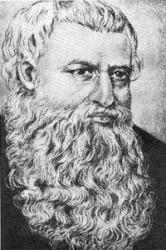
1789 - 1862 Person Name: B. S. Ingemann (1789-1862) Topics: Pentecost 2 The Church's Unity and Fellowship Author of "Through the night of doubt and sorrow" in Hymns for Today's Church (2nd ed.) Ingemann, Bernhardt Severin, was born at Thor Kildstrup, Island of Falster, May 28, 1789. From 1822 to his death in 1862, he was Professor of the Danish Language and Literature at the Academy of Sorö, Zealand, Denmark. He was a poet of some eminence. His collected works were pub, in 1851, in 34 volumes. Seven of his hymns translated into English are given in Gilbert Tait's Hymns of Denmark, 1868. The only hymn by him in English common use is:— Igjennem Nat og Traengael. Unity and Progress. It is dated 1825, and is given in the Nyt Tillaeg til Evangelisk-christelig. Psalmebog, Copenhagen, 1859, No. 502. In its translated form as "Through the night of doubt and sorrow," by the Rev. S. Baring-Gould, it has become widely known in most English-speaking countries. The translation was published in the People's Hymnal, 1861. It was greatly improved in Hymns Ancient & Modern, 1875, and has been specially set to music by several composers. --John Julian, Dictionary of Hymnology (1907)

Thomas H. Ingham

1878 - 1948 Person Name: T. H. Ingham (1878-1948) Topics: Pentecost 2 The Church's Unity and Fellowship Composer (descant) of "AUSTRIA" in Hymns for Today's Church (2nd ed.)

George William Warren

1828 - 1902 Topics: The Christian Year Pentecost; Calling and Response; Challenge; Church Community in Christ; Church Ecumenism; Church Triumphant; Closing Hymns; Compassion; Confession; Discipleship and Service; Faith; Holy Spirit; Holy Spirit Images; Holy Spirit Movement; Holy Spirit Power; Inspiration; Installation Services; Jesus Christ Friend; Mission and Outreach; Peace (Inner, Calmness, Serenity; Unity; Witness; Easter 4 Year A; Pentecost Year A; Epiphany 2 Year C; Easter 7 Year C Composer of "NATIONAL HYMN" in Voices United George W. Warren (b. Albany, NY, 1828; d. New York, 1902) received his general education at Racine College in Wisconsin, but as a musician he was largely self-trained. An organist in a number of Episcopal churches, he played the organ for thirty years (1870-1900) at St. Thomas Church in New York City. Warren composed anthems and liturgical service music; his hymn tunes were collected in Warren's Hymns and Tunes as Sung in St. Thomas Church (1888). Bert Polman

George James Webb

1803 - 1887 Person Name: G. J. Webb (1803-1887) Topics: God's Church Conflict and Endurance; Lent 2, The King and the Kingdom Conflict; Pentecost 9 The Whole Armour of God; Pentecost 13 The Suffering Community; Pentecost 20 Endurance Composer of "MORNING LIGHT" in Hymns for Today's Church (2nd ed.) George James Webb, b. 1803,England; d. 1887, Orange, N. J. Evangelical Lutheran Hymnal, 1908

James R. Murray

1841 - 1905 Topics: God Creation and Providence; Blessings; Communion with Christ and God; Creation; God Creator; God Kingdom, Majesty, Realm; God Power/Might; God Presence; God Works; Gratitude; Heaven(s)/Paradise; Life; Brevity of Life; Nature; Petition; Praise; Service Music Gathering, Call to Worship, Greeting; Water; Word of God; Christmas Eve Year A; Lent 2 Year A; Pentecost Year A; Trinity Sunday Year A; Easter 6 Year B; Proper 7 Year B; Proper 24 Year B; Trinity Sunday Year C; Proper 18 Year C; New Year Year ABC Harmonizer of "LACQUIPARLE" in Voices United L.P.M. (1905, April 12). Obituary. New Church Messenger, p.209. Murray.--At Cincinnati, March 10, 1905, James Ramsey Murray. Funeral services in the Church of the New Jersualem, March 13th. James R. Murray was widely known in the musical world as the author of many songs and song books, and in the New Church in Chicago and Cincinnati as an affectionate, intelligent, and loyal New Churchman. He was born in Andover (Ballard Vale), Mass., March 17, 1841. In early life he developed musical talent, and composed many minor pieces for local and special occasions. Later at North Reading, Mass., he attended Dr. George F. Root's School of Music, and was associated with William Bradbury and Dr. Lowell Mason. He enlisted in the Fourteenth Regiment of infantry, commonly known as the Essex County Regiment, and afterwards was changed to the First Regiment, Massachusetts Heavy Artillery, which was engaged in most of the battles fought by the Second Army Corps up to the surrender of General Lee. "Daisy Deane," the first and most popular of his early song successes, was composed in 1863 in Virginia while in camp, words by his cousin, Thomas F. Winthrop. This song is known all over the world, and the Salvation Army is using an arrangement of it for one of their war cry songs. In 1868 Mr. Murray married Isabella Maria Taylor of Andover; and they removed to Chicago. Here three children were born to them, two passing early to their heavenly home, the youngest, Winthrop Root Murray, is still living. It was during these first years in Chicago that Mr. and Mrs. Murray became interested in the New Church, while he was engaged with Root and Cady as editor of the Long Visitor, afterwards merged with the Musical Visitor. After the great fire of 1871 Mr. and Mrs. Murray returned East, where he was engaged in teaching in Lawrence and Andover, and as organist at the Old South Church in Andover. In 1881 they removed to Cincinnati and Mr. Murray became the editor of the Musical Viistor [sic] and head of the publication department of the John Church Company. Among the most popular of his books are "Pure Diamonds," "Royal Gems," "The Prize" and "Murray's Sacred Songs." The following titles will recall some of his best loved sacred songs: "At Last," "Calm on the Listening Ear of Night," "I Shall Be Satisfied," "There Shall No Evil Befall Thee," "Thine, O Lord, Is the Greatness," "The Way Was Mine," "How Beautiful Upon the Mountains," "Angels from the Realms of Glory." His last great labor in the publishing department of the John Church Company was the seeing through the press five volumes of Wagner's music dramas, with full score and original German text, and an English translation. The immense and careful labor involved in the preparation of these volumes, with a really smooth and excellent English translation, had perhaps, as it was done under pressure, something to do with Mr. Murray's breakdown. Although for some reason Mr. Murray's name does not appear on the title page of these volumes, his friends knew of the place the work held in his affections and ambition. Mr. Murray was a member of the Church Council of the Cincinnati Society for the last four years and took a deep interest in the building of the New Church, and in the inauguration of services, with all the changes looking to the improvement of the musical part of the service. The vested choir, organized by Mr. and Mrs. Lawson, which Mr. Murray as councilman had urged from the beginning, in their entrance to the church each Sunday singing the processional hymn participated in the funeral service, with a congregation of brethren and friends, all moved by deep love and profound respect for the consistent life and faith of a worthy Churchman and beloved friend. --DNAH Archives =================================== For a discussion of Murray and the tune MUELLER, see: Stulken, M.K. (1981). Hymnal companion to the Lutheran Book of Worship. Philadelphia : Fortress Press, p.170. =================================== Also available in the DNAH Archives: 1. An excerpt from Christie, George A. (1927). New Free Church. In Music in Andover. Papers read at "Fagot Party" of the Andover Natural History Society. 2. Unsourced essay about Murray written soon after his death, likely from Andover, Mass., perhaps authored by Charlotte Helen Abbott.

Jean Tisserand

? - 1494 Topics: The Christian Year Easter; Angels; Biblical Characters Thomas; Biblical Characters Wome at the Tomb; Biblical Narrative; Biblical Places Galilee; Christian Year Easter; Doubt; Faith; Hallelujah; Jesus Christ Kingship, Conqueror; Jesus Christ Resurrection; Music and Singing; Praise; Service Music Gathering, Call to Worship, Greeting; Trust; Victory; Worship; Easter 1 Year A; Easter 2 Year A; Easter 3 Year A; Pentecost Year A; Easter 1 Year B; Easter 2 Year B; Pentecost Year B; Easter 1 Year C; Easter 2 Year C; Easter Evening Year ABC Author of "O Sons and Daughters, Let Us Sing" in Voices United Died: 1494, Par­is, France. A Fran­cis­can monk, Tis­ser­and found­ed an or­der for pen­i­tent wo­men. He is al­so said to have writ­ten a wor­ship ser­vice com­mem­o­rat­ing Fran­cis­cans mar­tyred in Mo­roc­co in 1220. Lyrics: O FILII ET FILIAE, Rex coe­les­tis, Rex glor­i­ae O Sons and Daugh­ters, Let Us Sing! Young Men and Maids, Re­joice and Sing www.hymntime.com/tch

Mary Fawler Maude

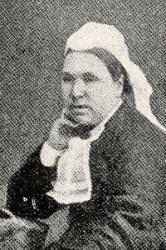
1819 - 1913 Person Name: Mary F. Maude (1819-1913) Topics: God's Church Commitment and Character; Easter 2 The Good Shepherd; Easter 4 The Way, the Truth, and the Life; Pentecost 18 The Offering of Life; Pentecost 20 Endurance Author of "Yours for ever! God of love" in Hymns for Today's Church (2nd ed.) Maude, Mary Fawler, née Hooper, daughter of George Henry Hooper, of Stanmore, Middlesex, was married in 1841 to the late Joseph Maude, some time Vicar of Chirk, near Ruabon, and Hon. Canon of St. Asaph, who died in Feb. 1887. Mrs. Maude's hymns were published in her Twelve Letters on Confirmation, 1848, and in Memorials of Past Years, 1852 (privately printed). Her best known hymn, is "Thine for ever, God of love" (Confirmation). Concerning it Mrs. Maude says: -- "It was written in 1847 for my class in the Girls' Sunday School of St. Thomas, Newport, Isle of Wight, and published in 1848 at the beginning of a little book called ‘Twelve Letters on Confirmation,' by a Sunday School Teacher, and reprinted in the Memorials, 1852." [S. MSS.] The original is in 7 stanzas of 4 lines. It is usually abbreviated, and stanzas ii., iii. transposed, as in the Society for Promoting Christian Knowledge Church Hymns, 1871; the Hymnal Companion; Hymns Ancient & Modern, 1875, Thring's Collection, 1882, and most other hymnbooks. As a hymn for Confirmation its use is extensive. The omitted stanzas are:— "Thine for ever in that day When the world shall pass away: When the trumpet note shall sound, And the nations underground "Shall the awful summons hear, Which proclaims the judgment near. Thine for ever. 'Neath Thy wings Hide and save us, King of Kings." -- John Julian, Dictionary of Hymnology (1907)

John Hughes

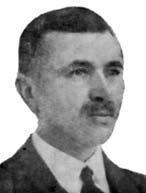
1873 - 1932 Person Name: J. Hughes (1873-1932) Topics: Easter 1 The Bread of Life; God's Church Conflict and Endurance; Lent 2, The King and the Kingdom Conflict; Pentecost 13 The Suffering Community; Pentecost 20 Endurance; Pentecost 9 The Whole Armour of God; The Promise of Redemption Moses; The Remnant of Israel Composer of "CWM RHONDDA" in Hymns for Today's Church (2nd ed.) John Hughes (b. Dowlais, Glamorganshire, Wales, 1873; d. Llantwit Fardre, Wales, 1932) received little formal education; at age twelve he was already working as a doorboy at a local mining company in Llantwit Fardre. He eventually became an official in the traffic department of the Great Western Railway. Much of his energy was devoted to the Salem Baptist Church in Pontypridd, where he served as both deacon and precentor. Hughes composed two anthems, a number of Sunday school marches, and a few hymn tunes, of which CWM RHONDDA is universally known, the tune was composed in 1905 Baptist Cymanfa Ganu (song festival) in Capel Rhondda, Pontypridd, Wales. Bert Polman

Pages


Export as CSV
It looks like you are using an ad-blocker. Ad revenue helps keep us running. Please consider white-listing Hymnary.org or getting Hymnary Pro to eliminate ads entirely and help support Hymnary.org.