You help make Hymnary.org possible. More than 10 million people from 200+ countries found hymns, liturgical resources and encouragement on Hymnary.org in 2025, including you. Every visit affirms the global impact of this ministry.

If Hymnary has been meaningful to you this year, would you take a moment today to help sustain it? A gift of any size—paired with a note of encouragement if you wish—directly supports the server costs, research work and curation that keep this resource freely available to the world.

Give securely online today, or mail a check to:
Hymnary.org
Calvin University
3201 Burton Street SE
Grand Rapids, MI 49546

Thank you for your partnership, and may the hope of Advent fill your heart.

Person Results

Topics:proper+15
In:person

Planning worship? Check out our sister site, ZeteoSearch.org, for 20+ additional resources related to your search.
Showing 21 - 30 of 218Results Per Page: 102050

Lowell Mason

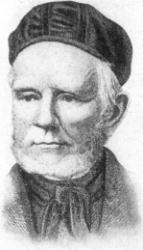
1792 - 1872 Topics: Proper 15 Year A Adapter and Harmonizer of "AZMON" in Voices United Dr. Lowell Mason (the degree was conferred by the University of New York) is justly called the father of American church music; and by his labors were founded the germinating principles of national musical intelligence and knowledge, which afforded a soil upon which all higher musical culture has been founded. To him we owe some of our best ideas in religious church music, elementary musical education, music in the schools, the popularization of classical chorus singing, and the art of teaching music upon the Inductive or Pestalozzian plan. More than that, we owe him no small share of the respect which the profession of music enjoys at the present time as contrasted with the contempt in which it was held a century or more ago. In fact, the entire art of music, as now understood and practiced in America, has derived advantage from the work of this great man. Lowell Mason was born in Medfield, Mass., January 8, 1792. From childhood he had manifested an intense love for music, and had devoted all his spare time and effort to improving himself according to such opportunities as were available to him. At the age of twenty he found himself filling a clerkship in a banking house in Savannah, Ga. Here he lost no opportunity of gratifying his passion for musical advancement, and was fortunate to meet for the first time a thoroughly qualified instructor, in the person of F. L. Abel. Applying his spare hours assiduously to the cultivation of the pursuit to which his passion inclined him, he soon acquired a proficiency that enabled him to enter the field of original composition, and his first work of this kind was embodied in the compilation of a collection of church music, which contained many of his own compositions. The manuscript was offered unavailingly to publishers in Philadelphia and in Boston. Fortunately for our musical advancement it finally secured the attention of the Boston Handel and Haydn Society, and by its committee was submitted to Dr. G. K. Jackson, the severest critic in Boston. Dr. Jackson approved most heartily of the work, and added a few of his own compositions to it. Thus enlarged, it was finally published in 1822 as The Handel and Haydn Society Collection of Church Music. Mason's name was omitted from the publication at his own request, which he thus explains, "I was then a bank officer in Savannah, and did not wish to be known as a musical man, as I had not the least thought of ever making music a profession." President Winchester, of the Handel and Haydn Society, sold the copyright for the young man. Mr. Mason went back to Savannah with probably $500 in his pocket as the preliminary result of his Boston visit. The book soon sprang into universal popularity, being at once adopted by the singing schools of New England, and through this means entering into the church choirs, to whom it opened up a higher field of harmonic beauty. Its career of success ran through some seventeen editions. On realizing this success, Mason determined to accept an invitation to come to Boston and enter upon a musical career. This was in 1826. He was made an honorary member of the Handel and Haydn Society, but declined to accept this, and entered the ranks as an active member. He had been invited to come to Boston by President Winchester and other musical friends and was guaranteed an income of $2,000 a year. He was also appointed, by the influence of these friends, director of music at the Hanover, Green, and Park Street churches, to alternate six months with each congregation. Finally he made a permanent arrangement with the Bowdoin Street Church, and gave up the guarantee, but again friendly influence stepped in and procured for him the position of teller at the American Bank. In 1827 Lowell Mason became president and conductor of the Handel and Haydn Society. It was the beginning of a career that was to win for him as has been already stated the title of "The Father of American Church Music." Although this may seem rather a bold claim it is not too much under the circumstances. Mr. Mason might have been in the average ranks of musicianship had he lived in Europe; in America he was well in advance of his surroundings. It was not too high praise (in spite of Mason's very simple style) when Dr. Jackson wrote of his song collection: "It is much the best book I have seen published in this country, and I do not hesitate to give it my most decided approbation," or that the great contrapuntist, Hauptmann, should say the harmonies of the tunes were dignified and churchlike and that the counterpoint was good, plain, singable and melodious. Charles C. Perkins gives a few of the reasons why Lowell Mason was the very man to lead American music as it then existed. He says, "First and foremost, he was not so very much superior to the members as to be unreasonably impatient at their shortcomings. Second, he was a born teacher, who, by hard work, had fitted himself to give instruction in singing. Third, he was one of themselves, a plain, self-made man, who could understand them and be understood of them." The personality of Dr. Mason was of great use to the art and appreciation of music in this country. He was of strong mind, dignified manners, sensitive, yet sweet and engaging. Prof. Horace Mann, one of the great educators of that day, said he would walk fifty miles to see and hear Mr. Mason teach if he could not otherwise have that advantage. Dr. Mason visited a number of the music schools in Europe, studied their methods, and incorporated the best things in his own work. He founded the Boston Academy of Music. The aim of this institution was to reach the masses and introduce music into the public schools. Dr. Mason resided in Boston from 1826 to 1851, when he removed to New York. Not only Boston benefited directly by this enthusiastic teacher's instruction, but he was constantly traveling to other societies in distant cities and helping their work. He had a notable class at North Reading, Mass., and he went in his later years as far as Rochester, where he trained a chorus of five hundred voices, many of them teachers, and some of them coming long distances to study under him. Before 1810 he had developed his idea of "Teachers' Conventions," and, as in these he had representatives from different states, he made musical missionaries for almost the entire country. He left behind him no less than fifty volumes of musical collections, instruction books, and manuals. As a composer of solid, enduring church music. Dr. Mason was one of the most successful this country has introduced. He was a deeply pious man, and was a communicant of the Presbyterian Church. Dr. Mason in 1817 married Miss Abigail Gregory, of Leesborough, Mass. The family consisted of four sons, Daniel Gregory, Lowell, William and Henry. The two former founded the publishing house of Mason Bros., dissolved by the death of the former in 1869. Lowell and Henry were the founders of the great organ manufacturer of Mason & Hamlin. Dr. William Mason was one of the most eminent musicians that America has yet produced. Dr. Lowell Mason died at "Silverspring," a beautiful residence on the side of Orange Mountain, New Jersey, August 11, 1872, bequeathing his great musical library, much of which had been collected abroad, to Yale College. --Hall, J. H. (c1914). Biography of Gospel Song and Hymn Writers. New York: Fleming H. Revell Company.

Thomas H. Troeger

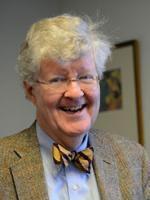
1945 - 2022 Topics: Proper 15 Year A Adapter of "Psalm 100: Vous, qui sur la terre habitez (All People That on Earth do Dwell)" in Voices United Thomas Troeger (1945-2022), professor of Christian communication at Yale Divinity school, was a well known preacher, poet, and musician. He was a fellow of Silliman College, held a B.A. from Yale University; B.D. Colgate Rochester Divinity School; S.T. D. Dickinson College, and was awarded an honorary D.D. from Virginia Theological Seminary. He was ordained in the Presbyterian Church in 1970 and the Episcopal Church in 1999, and remained dually aligned with both traditions. Troerger led conferences and lectures in worship and preaching throughout North America, as well as in Denmark, Holland, Australia, Japan, and Africa. He served as national chaplain to the American Guild of Organists, and for at least three years he hosted the Season of Worship broadcast for Cokesbury. He was president of the Academy of Homiletics as well as Societas Homiletica. He had, as of 2009, written 22 books in the areas of preaching, poetry, hymnody, and worship. Many of his hymn texts are found in New Hymns for the Lectionary (Oxford, 1992), and God, You Made All Things for Singing (Oxford, 2009). Laura de Jong

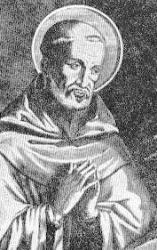
St. Bernard of Clairvaux

1090 - 1153 Person Name: Bernard of Clairvaux Topics: Year B Proper 15 Author (attributed to) of "Jesus, the Joy of Loving Hearts" in The New Century Hymnal Bernard of Clairvaux, saint, abbot, and doctor, fills one of the most conspicuous positions in the history of the middle ages. His father, Tecelin, or Tesselin, a knight of great bravery, was the friend and vassal of the Duke of Burgundy. Bernard was born at his father's castle on the eminence of Les Fontaines, near Dijon, in Burgundy, in 1091. He was educated at Chatillon, where he was distinguished for his studious and meditative habits. The world, it would be thought, would have had overpowering attractions for a youth who, like Bernard, had all the advantages that high birth, great personal beauty, graceful manners, and irresistible influence could give, but, strengthened in the resolve by night visions of his mother (who had died in 1105), he chose a life of asceticism, and became a monk. In company with an uncle and two of his brothers, who had been won over by his entreaties, he entered the monastery of Citeaux, the first Cistercian foundation, in 1113. Two years later he was sent forth, at the head of twelve monks, from the rapidly increasing and overcrowded abbey, to found a daughter institution, which in spite of difficulties and privations which would have daunted less determined men, they succeeded in doing, in the Valley of Wormwood, about four miles from the Abbey of La Ferté—itself an earlier swarm from the same parent hive—on the Aube. On the death of Pope Honorius II., in 1130, the Sacred College was rent by factions, one of which elected Gregory of St. Angelo, who took the title of Innocent II., while another elected Peter Leonis, under that of Anacletua II. Innocent fled to France, and the question as to whom the allegiance of the King, Louie VI., and the French bishops was due was left by them for Bernard to decide. At a council held at Etampes, Bernard gave judgment in favour of Innocent. Throwing himself into the question with all the ardour of a vehement partisan, he won over both Henry I., the English king, and Lothair, the German emperor, to support the same cause, and then, in 1133, accompanied Innocent II., who was supported by Lothair and his army, to Italy and to Rome. When Lothair withdrew, Innocent retired to Pisa, and Bernard for awhile to his abbey of Clairvaux. It was not until after the death of Anacletus, the antipope, in January, 1138, and the resignation of his successor, the cardinal-priest Gregory, Victor II., that Innocent II., who had returned to Rome with Bernard, was universally acknowledged Pope, a result to which no one had so greatly contributed as the Abbot of Clairvaux. The influence of the latter now became paramount in the Church, as was proved at the Lateran Council of 1139, the largest council ever collected together, where the decrees in every line displayed the work of his master-hand. After having devoted four years to the service of the Pope, Bernard, early in 1135, returned to Clairvaux. In 1137 he was again at Rome, impetuous and determined as ever, denouncing the election of a Cluniac instead of a Clairvaux monk to the see of Langres in France, and in high controversy in consequence with Peter, the gentle Abbot of Cluny, and the Archbishop of Lyons. The question was settled by the deposition by the Pope of the Cluniac and the elevation of a Clairvaux monk (Godfrey, a kinsman of St. Bernard) into his place. In 1143, Bernard raised an almost similar question as to the election of St. William to the see of York, which was settled much after the same fashion, the deposition, after a time, if only for a time, of William, and the intrusion of another Clairvaux monk, Henry Murdac, or Murduch, into the archiepiccopal see. Meantime between these two dates—in 1140—the condemnation of Peter Abilaid and his tenets, in which matter Bernard appeared personally as prosecutor, took place at a council held at Sens. Abelard, condemned at Sens, appealed to Rome, and, resting awhile on his way thither, at Cluny, where Peter still presided as Abbot, died there in 1142. St. Bernard was next called upon to exercise his unrivalled powers of persuasion in a very different cause. Controversy over, he preached a crusade. The summer of 1146 was spent by him in traversing France to rouse the people to engage in the second crusade; the autumn with a like object in Germany. In both countries the effect of his appearance and eloquence was marvellous, almost miraculous. The population seemed to rise en masse, and take up the cross. In 1147 the expedition started, a vast horde, of which probably not a tenth ever reached Palestine. It proved a complete failure, and a miserable remnant shared the flight of their leaders, the Emperor Conrad, and Louis, King of France, and returned home, defeated and disgraced. The blame was thrown upon Bernard, and his apology for his part in the matter is extant. He was not, however, for long to bear up against reproach; he died in the 63rd year of his age, in 1153, weary of the world and glad to be at rest. With the works of St. Bernard, the best ed. of which was pub. by Mabillon at Paris in the early part of the 18th cent. (1719), we are not concerned here, except as regards his contributions, few and far between as they are, to the stores of Latin hymnology. There has been so much doubt thrown upon the authorship of the hymns which usually go by his name,—notably by his editor, Mabillon himself,—that it is impossible to claim any of them as having been certainly written by him; but Archbishop Trench, than whom we have no greater modern authority on such a point, is satisfied that the attribution of them all, except the "Cur mundus militat," to St. Bernard is correct. "If he did not write," the Archbishop says, "it is not easy to guess who could have written them; and indeed they bear profoundly the stamp of his mind, being only inferior in beauty to his prose." The hymns by which St. Bernard is best known as a writer of sacred poetry are: (1.) "Jesu duicis memoria," a long poem on the " Name of Jesus"—known as the "Jubilus of St. Bernard," and among mediaeval writers as the " Rosy Hymn." It is, perhaps, the best specimen of what Neale describes as the "subjective loveliness " of its author's compositions. (2.) "Salve mundi Salutore," an address to the various limbs of Christ on the cross. It consists of 350 lines, 50 lines being addressed to each. (3.) "Laetabundus, exultet fidelis chorus: Alleluia." This sequence was in use all over Europe. (4.) "Cum sit omnis homo foenum." (5.) " Ut jucundas cervus undas." A poem of 68 lines, and well known, is claimed for St. Bernard by Hommey in his Supplementum Patrum, Paris, 1686, p. 165, but on what Archbishop Trench, who quotes it at length, (Sac. Lat. Poetry, p. 242,) deems " grounds entirely insufficient." (6.) " Eheu, Eheu, mundi vita," or " Heu, Heu, mala mundi vita." A poem of nearly 400 lines, is sometimes claimed for St. Bernard, but according to Trench, “on no authority whatever." (7.) “O miranda vanitas." This is included in Mabillon's ed. of St. Bernard's Works. It is also attributed to him by Rambach, vol. i. p. 279. Many other hymns and sequences are attributed to St. Bernard. Trench speaks of a " general ascription to him of any poems of merit belonging to that period whereof the authorship was uncertain." Hymns, translated from, or founded on, St. Bernard's, will be found in almost every hymnal of the day, details of which, together with many others not in common use, will be found under the foregoing Latin first lines. -John Julian, Dictionary of Hymnology (1907) See also in: Hymn Writers of the Church

Edward Perronet

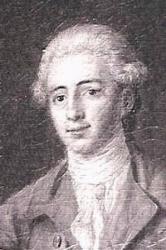
1721 - 1792 Person Name: Edward Perronet (1726-1792) Topics: Proper 15 Year A Author of "All hail the power of Jesu's name" in Ancient and Modern Edward Perronet was the son of the Rev. Vincent Perronet, Vicar of Shoreham, Kent. For some time he was an intimate associate of the Wesleys, at Canterbury and Norwich. He afterwards became pastor of a dissenting congregation. He died in 1792. In 1784, he published a small volume, entitled "Occasional Verses, Moral and Social;" a book now extremely rare. At his death he is said to have left a large sum of money to Shrubsole, who was organist at Spafield's Chapel, London, and who had composed the tune "Miles Lane" for "All hail the power of Jesus' Name!" --Annotations of the Hymnal, Charles Hutchins, M.A. 1872. ------ Perronet, Edward. The Perronets of England, grandfather, father, and son, were French emigres. David Perronet came to England about 1680. He was son of the refugee Pasteur Perronet, who had chosen Switzerland as his adopted country, where he ministered to a Protestant congregation at Chateau D'Oex. His son, Vincent Perronet, M.A., was a graduate of Queen's College, Oxford, though his name is not found in either Anthony Woods's Athenae Oxonienses nor his Fasti, nor in Bliss's apparatus of additional notes. He became, in 1728, Vicar of Shoreham, Kent. He is imperishably associated with the Evangelical Revival under the Wesleys and Whitefield. He cordially cooperated with the movement, and many are the notices of him scattered up and down the biographies and Journals of John Wesley and of Selina, Countess of Huntingdon. He lived to the venerable age of ninety-one; and pathetic and beautiful is the account of John Wesley's later visits to the white-haired saint (b. 1693, d. May 9, 1785).* His son Edward was born in 1726. He was first educated at home under a tutor, but whether he proceeded to the University (Oxford) is uncertain. Born, baptized, and brought up in the Church of England, he had originally no other thought than to be one of her clergy. But, though strongly evangelical, he had a keen and searching eye for defects. A characteristic note to The Mitre, in referring to a book called The Dissenting Gentleman's answer to the Rev. Mr. White, thus runs:—"I was born, and am like to die, in the tottering communion of the Church of England; but I despise her nonsense; and thank God that I have once read a book that no fool can answer, and that no honest man will". The publication of The Mitre is really the first prominent event in his life. A copy is preserved in the British Museum, with title in the author's holograph, and manuscript notes; and on the fly-leaf this:— "Capt. Boisragon, from his oblig'd and most respectful humble servt. The Author. London, March 29th, 1757." The title is as follows:— The Mitre; a Sacred Poem (1 Samuel ii. 30). London: printed in the year 1757. This strangely overlooked satire is priceless as a reflex of contemporary ecclesiastical opinion and sentiment. It is pungent, salted with wit, gleams with humour, hits off vividly the well-known celebrities in Church and State, and is well wrought in picked and packed words. But it is a curious production to have come from a "true son" of the Church of England. It roused John Wesley's hottest anger. He demanded its instant suppression; and it was suppressed (Atmore's Methodist Memorial, p. 300, and Tyerman, ii. 240-44, 264, 265); and yet it was at this period the author threw himself into the Wesleys' great work. But evidences abound in the letters and journals of John Wesley that he was intermittently rebellious and vehement to even his revered leader's authority. Earlier, Edward Perronet dared all obloquy as a Methodist. In 1749 Wesley enters in his diary: "From Rochdale went to Bolton, and soon found that the Rochdale lions were lambs in comparison with those of Bolton. Edward Perronet was thrown down and rolled in mud and mire. Stones were hurled and windows broken" (Tyerman's Life and Times of the Rev. John Wesley, M.A., 3 vols., 1870 ; vol. ii. 57). In 1750 John Wesley writes: ”Charles and you [Edward Perronet] behave as I want you to do; but you cannot, or will not, preach where I desire. Others can and will preach where I desire, but they do not behave as I want them to do. I have a fine time between the one and the other. I think Charles and you have in the general a right sense of what it is to serve as sons in the gospel; and if all our helpers had had the same, the work of God would have prospered better both in England and Ireland. I have not one preacher with me, and not six in England, whose wills are broken to serve me" (ibid. ii. 85, and Whitehead's Life of Wesley, ii. 259). In 1755 arrangements to meet the emergency created by its own success had to be made for Methodism. As one result, both Edward and Charles Perronet broke loose from John Wesley's law that none of his preachers or "helpers" were to dispense the Sacraments, but were still with their flocks to attend the parish churches. Edward Perronet asserted his right to administer the Sacraments as a divinely-called preacher ibid. ii. 200). At that time he was resident at Canterbury, "in a part of the archbishop's old palace" (ibid. ii. 230. In season and out of season he "evangelized." Onward, he became one of the Countess of Huntingdon's "ministers" in a chapel in Watling Street, Canterbury. Throughout he was passionate, impulsive, strong-willed; but always lived near his divine Master. The student-reader of Lives of the Wesleys will be "taken captive" by those passages that ever and anon introduce him. He bursts in full of fire and enthusiasm, yet ebullient and volatile. In the close of his life he is found as an Independent or Congregational pastor of a small church in Canterbury. He must have been in easy worldly circumstances, as his will shows. He died Jan. 2, 1792, and was buried in the cloisters of the great cathedral, Jan. 8. His Hymns were published anonymously in successive small volumes. First of all came Select Passages of the Old and New Testament versified; London: Printed by H. Cock, mdcclvi. … A second similar volume is entitled A Small Collection of Hymns, &c, Canterbury: printed in the year dcclxxxii. His most important volume was the following:— Occasional Verses, moral and sacred. Published for the instruction and amusement of the Candidly Serious and Religious. London, printed for the Editor: And Sold by J. Buckland in Paternoster Row; and T. Scollick, in the City Road, Moorfields, mdcclxxxv. pp. 216 (12°). [The British Museum copy has the two earlier volumes bound up with this.] The third hymn in this scarce book is headed, “On the Resurrection," and is, ”All hail the power of Jesus' name". But there are others of almost equal power and of more thorough workmanship. In my judgment, "The Lord is King" (Psalm xcvi. 16) is a great and noble hymn. It commences:— “Hail, holy, holy, holy Loud! Let Pow'rs immortal sing; Adore the co-eternal Word, And shout, the Lord is King." Very fine also is "The Master's Yoke—the Scholar's Lesson," Matthew xi. 29, which thus opens:— O Grant me, Lord, that sweet content That sweetens every state; Which no internal fears can rent, Nor outward foes abate." A sacred poem is named "The Wayfaring Man: a Parody"; and another, "The Goldfish: a Parody." The latter has one splendid line on the Cross, "I long to share the glorious shame." "The Tempest" is striking, and ought to be introduced into our hymnals; and also "The Conflict or Conquest over the Conqueror, Genesis xxxii. 24". Still finer is "Thoughts on Hebrews xii.," opening:— "Awake my soul—arise! And run the heavenly race; Look up to Him who holds the prize, And offers thee His grace." "A Prayer for Mercy on Psalm cxix. 94," is very striking. On Isaiah lxv. 19, is strong and unmistakable. "The Sinner's Resolution," and "Thoughts on Matthew viii. 2," and on Mark x. 51, more than worthy of being reclaimed for use. Perronet is a poet as well as a pre-eminently successful hymnwriter. He always sings as well as prays. It may be added that the brief paraphrase after Ovid given below, seems to echo the well-known lines in Gray's immortal elegy:— "How many a gem unseen of human eyes, Entomb'd in earth, a sparkling embryo lies; How many a rose, neglected as the gem, Scatters its sweets and rots upon its stem: So many a mind, that might a meteor shone, Had or its genius or its friend been known; Whose want of aid from some maternal hand, Still haunts the shade, or quits its native land." [Rev. A. B. Grosart, D.D., LL.D.] * Agnew's Protestant Exiles from France in the Reign of Louis XIV. confounds Vincent the father with Edward his son. -- John Julian, Dictionary of Hymnology (1907)

Hugh Wilson

1766 - 1824 Person Name: Hugh Wilson, 1766-1824 Topics: Proper 15 Year C Composer of "MARTYRDOM" in Common Praise Hugh Wilson (b. Fenwick, Ayrshire, Scotland, c. 1766; d. Duntocher, Scotland, 1824) learned the shoemaker trade from his father. He also studied music and mathematics and became proficient enough in various subjects to become a part-­time teacher to the villagers. Around 1800, he moved to Pollokshaws to work in the cotton mills and later moved to Duntocher, where he became a draftsman in the local mill. He also made sundials and composed hymn tunes as a hobby. Wilson was a member of the Secession Church, which had separated from the Church of Scotland. He served as a manager and precentor in the church in Duntocher and helped found its first Sunday school. It is thought that he composed and adapted a number of psalm tunes, but only two have survived because he gave instructions shortly before his death that all his music manuscripts were to be destroyed. Bert Polman

John Bacchus Dykes

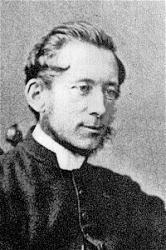
1823 - 1876 Person Name: John Bacchus Dykes (1823-1876) Topics: Proper 15 Year A Harmonizer of "MILES LANE" in Ancient and Modern As a young child John Bacchus Dykes (b. Kingston-upon-Hull' England, 1823; d. Ticehurst, Sussex, England, 1876) took violin and piano lessons. At the age of ten he became the organist of St. John's in Hull, where his grandfather was vicar. After receiving a classics degree from St. Catherine College, Cambridge, England, he was ordained in the Church of England in 1847. In 1849 he became the precentor and choir director at Durham Cathedral, where he introduced reforms in the choir by insisting on consistent attendance, increasing rehearsals, and initiating music festivals. He served the parish of St. Oswald in Durham from 1862 until the year of his death. To the chagrin of his bishop, Dykes favored the high church practices associated with the Oxford Movement (choir robes, incense, and the like). A number of his three hundred hymn tunes are still respected as durable examples of Victorian hymnody. Most of his tunes were first published in Chope's Congregational Hymn and Tune Book (1857) and in early editions of the famous British hymnal, Hymns Ancient and Modern. Bert Polman

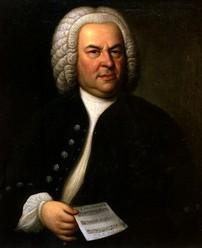
Johann Sebastian Bach

1685 - 1750 Person Name: Johann Sebastian Bach, 1685-1750 Topics: Year B Proper 15 Harmonizer of "EISENACH" in Complete Anglican Hymns Old and New Johann Sebastian Bach was born at Eisenach into a musical family and in a town steeped in Reformation history, he received early musical training from his father and older brother, and elementary education in the classical school Luther had earlier attended. Throughout his life he made extraordinary efforts to learn from other musicians. At 15 he walked to Lüneburg to work as a chorister and study at the convent school of St. Michael. From there he walked 30 miles to Hamburg to hear Johann Reinken, and 60 miles to Celle to become familiar with French composition and performance traditions. Once he obtained a month's leave from his job to hear Buxtehude, but stayed nearly four months. He arranged compositions from Vivaldi and other Italian masters. His own compositions spanned almost every musical form then known (Opera was the notable exception). In his own time, Bach was highly regarded as organist and teacher, his compositions being circulated as models of contrapuntal technique. Four of his children achieved careers as composers; Haydn, Mozart, Beethoven, Mendelssohn, Schumann, Brahms, and Chopin are only a few of the best known of the musicians that confessed a major debt to Bach's work in their own musical development. Mendelssohn began re-introducing Bach's music into the concert repertoire, where it has come to attract admiration and even veneration for its own sake. After 20 years of successful work in several posts, Bach became cantor of the Thomas-schule in Leipzig, and remained there for the remaining 27 years of his life, concentrating on church music for the Lutheran service: over 200 cantatas, four passion settings, a Mass, and hundreds of chorale settings, harmonizations, preludes, and arrangements. He edited the tunes for Schemelli's Musicalisches Gesangbuch, contributing 16 original tunes. His choral harmonizations remain a staple for studies of composition and harmony. Additional melodies from his works have been adapted as hymn tunes. --John Julian, Dictionary of Hymnology (1907)

Stuart K. Hine

1899 - 1989 Topics: Proper 15 Year A Translator (into English) of "O Lord My God (How Great Thou Art)" in Voices United Stuart K. Hine was born in 1899 in Great Britain. In much of Stuart’s earlier years he and his wife were missionaries in the Western Ukraine of Russia, where they evangelized as Christian workers and singers. In 1931, Stuart K. Hine and his wife returned to Britain and conducted gospel campaigns throughout Great Britain. During those years, Stuart published many song books and wrote many of his beloved gospel songs. Stuart retired from the active ministry but continued to publish his song books and his music and contributed the majority of his income to various missionary endeavors around the world…Stuart K. Hine’s most popular composition is “How Great Thou Art,” which is recognized in many polls as the number one Hymn in America. Among his other compositions are “Can There Be One,” “O Savior Mine?”, “Faith Is The Bridge,” and “What Can Cleanse My heart?” Mr. Hine died in 1989. --www.gmahalloffame.org/site/stuart-k-hine/

Anonymous

Person Name: Unknown Topics: Proper 15 Year A Translator (into French) of "O Lord My God (How Great Thou Art)" in Voices United In some hymnals, the editors noted that a hymn's author is unknown to them, and so this artificial "person" entry is used to reflect that fact. Obviously, the hymns attributed to "Author Unknown" "Unknown" or "Anonymous" could have been written by many people over a span of many centuries.

Bland Tucker

1895 - 1984 Person Name: Francis Bland Tucker Topics: Proper 15 Year B Author of "All Praise to Thee" in Voices United Francis Bland Tucker (born Norfolk, Virginia, January 6, 1895). The son of a bishop and brother of a Presiding bishop of the Episcopal Church, he was educated at the University of Virginia, B.A., 1914, and at Virginia Theological Seminary, B.D., 1920; D.D., 1944. He was ordained deacon in 1918, priest in 1920, after having served as a private in Evacuation Hospital No.15 of the American Expeditionary Forces in France during World War I. His first charge was as a rector of Grammer Parish, Brunswick County, in southern Virginia. From 1925 to 1945, he was rector of historic St. John's Church, Georgetown, Washington, D.C. Then until retirement in 1967 he was rector of John Wesley's parish in Georgia, old Christ Church, Savannah. In "Reflections of a Hymn Writer" (The Hymn 30.2, April 1979, pp.115–116), he speaks of never having a thought of writing a hymn until he was named a member of the Joint Commission on the Revision of the Hymnal in 1937 which prepared the Hymnal 1940

Pages


Export as CSV
It looks like you are using an ad-blocker. Ad revenue helps keep us running. Please consider white-listing Hymnary.org or getting Hymnary Pro to eliminate ads entirely and help support Hymnary.org.