

 My Starred Hymns
 My FlexScores
 My Hymnals
 My Purchased Files
Planning worship?
Check out our sister site, ZeteoSearch.org,
for 20+ additional resources related to your search.
- |
User Links
Person Results
W. H. Jude
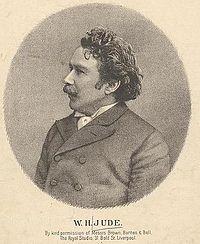
1851 - 1922 Person Name: William H. Jude Topics: Renouncing All for Christ Composer of "GALILEE" in The Hymnal William Herbert Jude United Kingdom 1851-1922. Born at Westleton, Suffolk, England, his family moved to Norfolk. A precocious child, by age eight he was composing music for school plays. Educated at the Liverpool Organ School and East Liverpool College of Music, he became college principal for awhile. He married Catherine Helena Haigh. They had no children. He became a composer, editor, and organist. He was organist for the Blue Coat Hospital & School and Stretford Town Hall near Manchester, while teaching and lecturing. After 20 years there he was appointed organist at the Exeter Hall in London, a primary venue and Christian Centre owned by the YMCA on the Strand in London. As a recitalist, he was asked to “open” over 1000 new organs across the UK, Ireland, and Australia. He was considered the most brilliant organist of his day. He wrote at least two operettas: “Innocents abroad” (1882) and “The mighty deep” (1917). His compositions were frequently religious. He admired British evangelist, Rodney “Gipsy” Smith and published a collection of Smith’s favorite solos in 1903. He also supported the temperance movement. He toured Australia and New Zealand 1890-1894. In 1904 he served as editor for several musical periodicals, including “Monthly Hymnal”, “Minister of music”, and “The Higher life”. He also compiled several hymnbooks, including “Mission hymns” (1911”), and “Festival hymns” (1916). He wrote a number of works on music. He died in London.
John Perry
W. H. Jude
Edward F. Rimbault
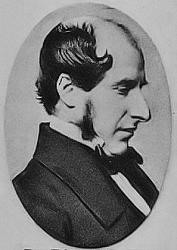
1816 - 1876 Person Name: Rev. Edward Francis Rimbault, 1816-1876 Topics: Renouncing All for Christ Composer of "HAPPY DAY" in Hymnal and Liturgies of the Moravian Church Edward Francis Rimbault PhD LLD United Kingdom 1816-1876. Born in Soho, London, England, son of an organist and composer of French descent, he was taught music by his father., Samuel Wesley, and Wiliam Crotch. At age 16 he became organist of the Swiss Church in Soho. He later became organist at various churches, including St Peter’s, Vere Street, and St John’s Wood Presbyterian Church. He edited many collections of music, journals, and publications of music, and arranged music compositions. In addition to editing or arranging contemporary operas, he had a strong interest in editing or arranging earlier English music. He studied the musical treatises in the library of Archbishop Tenison, one of the oldest public libraries in London. In 1838, At age 22 he began lecturing about the history of English music, and was in much demand due to the interest aroused. He did editorial work for the Percy Society, the Camden Society, the Motet Society, and the Handel Society. For the latter he edited the “Messiah”, “Saul”, and “Samson” He was elected a Fellow of the Society of Antiquaries, and was granted membership in the Academy of Music in Stockholm, Sweden. Gottingen University also conferred upon him a PhD. His reputation was such that he was offered a teaching position at Harvard University in the U.S., which he turned down. In 1848 he was given an honorary degree by the University of Oxford. In 1849 he published a collection of English nursery rhymes and the tunes to which they were sung. Rimbault authored 76 books, a few named here include : “Bibliotheca madrigaliana” (1847); “The pianoforte” (1860); “Early English organ builders and their works” (1865). In 1855 he co-authored “The organ- its history and construction” with John Hopkins. He did a small amount of composing as well. He wrote an operetta in 1838, and a musical drama. He also composed a large number of pianoforte scores for operas by others. He was an admirable harmonium player. Traveling to various auctions for years, he accumulated a rare collection of books. After his death his extensive collection was auctioned off in 1877, with many items going to the British Library. About 300 items were sold to an individual, and upon his death in 1888, the ‘Drexel collection’ was bequeathed to the Lenox Library (precursor of the New York Public Library). Today, the collection is part of the Music Division of the NY Public Library for the Performing Arts. He was an author, editor, arranger, composer, lithographer, translator, scribe, adapter, and bookseller. He died at London, England. No information found regarding a family.
John Perry
Edward F. Rimbault
Anonymous
Topics: Renouncing All for Christ Composer of "GAMBOLD" in Hymnal and Liturgies of the Moravian Church In some hymnals, the editors noted that a hymn's author is unknown to them, and so this artificial "person" entry is used to reflect that fact. Obviously, the hymns attributed to "Author Unknown" "Unknown" or "Anonymous" could have been written by many people over a span of many centuries.
Anonymous
John Wesley
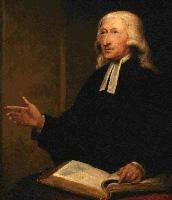
1703 - 1791 Person Name: Rev. John Wesley, 1703-91 Topics: Renouncing All for Christ Author of "My soul before thee prostrate lies" in Hymnal and Liturgies of the Moravian Church John Wesley, the son of Samuel, and brother of Charles Wesley, was born at Epworth, June 17, 1703. He was educated at the Charterhouse, London, and at Christ Church, Oxford. He became a Fellow of Lincoln College, Oxford, and graduated M.A. in 1726. At Oxford, he was one of the small band consisting of George Whitefield, Hames Hervey, Charles Wesley, and a few others, who were even then known for their piety; they were deridingly called "Methodists." After his ordination he went, in 1735, on a mission to Georgia. The mission was not successful, and he returned to England in 1738. From that time, his life was one of great labour, preaching the Gospel, and publishing his commentaries and other theological works. He died in London, in 1791, in his eighty-eighth year. His prose works are very numerous, but he did not write many useful hymns. It is to him, however, and not to his brother Charles, that we are indebted for the translations from the German.
--Annotations of the Hymnal, Charles Hutchins, M.A., 1872
======================
John Wesley, M.A., was born at Epworth Rectory in 1703, and, like the rest of the family, received his early education from his mother. He narrowly escaped perishing in the fire which destroyed the rectory house in 1709, and his deliverance made a life-long impression upon him. In 1714 he was nominated on the foundation of Charterhouse by his father's patron, the Duke of Buckingham, and remained at that school until 1720, when he went up, with a scholarship, from Charterhouse to Christ Church, Oxford. Having taken his degree, he received Holy Orders from the Bishop of Oxford (Dr. Potter) in 1725. In 1726 he was elected Fellow of Lincoln College, and remained at Oxford until 1727, when he returned into Lincolnshire to assist his father as curate at Epworth and Wroot. In 1729 he was summoned back to Oxford by his firm friend, Dr. Morley, Rector of Lincoln, to assist in the College tuition. There he found already established the little band of "Oxford Methodists" who immediately placed themselves under his direction. In 1735 he went, as a Missionary of the Society for the Propagation of the Gospel, to Georgia, where a new colony had been founded under the governorship of General Oglethorpe. On his voyage out he was deeply impressed with the piety and Christian courage of some German fellow travellers, Moravians. During his short ministry in Georgia he met with many discouragements, and returned home saddened and dissatisfied both with himself and his work; but in London he again fell in with the Moravians, especially with Peter Bohler; and one memorable night (May 24, 1738) he went to a meeting in Aldersgate Street, where some one was reading Luther's preface to the Epistle to the Romans. There, "About a quarter before nine, while he was describing the change which God works in the heart through faith in Christ, I felt my heart strangely warmed. I felt I did trust in Christ, Christ alone, for salvation; and an assurance was given me, that He had taken away my sins, even mine, and saved me from the law of sin and death." From that moment his future course was sealed; and for more than half a century he laboured, through evil report and good report, to spread what he believed to be the everlasting Gospel, travelling more miles, preaching more sermons, publishing more books of a practical sort, and making more converts than any man of his day, or perhaps of any day, and dying at last, March 2, 1791, in harness, at the patriarchal age of 88.
The popular conception of the division of labour between the two brothers in the Revival, is that John was the preacher, and Charles the hymnwriter. But this is not strictly accurate. On the one hand Charles was also a great preacher, second only to his brother and George Whitefield in the effects which he produced. On the other hand, John by no means relegated to Charles the exclusive task of supplying the people with their hymns. John Wesley was not the sort of man to depute any part of his work entirely to another: and this part was, in his opinion, one of vital importance. With that wonderful instinct for gauging the popular mind, which was one element in his success, he saw at once that hymns might be utilized, not only for raising the devotion, but also for instructing, and establishing the faith of his disciples. He intended the hymns to be not merely a constituent part of public worship, but also a kind of creed in verse. They were to be "a body of experimental and practical divinity." "In what other publication," he asks in his Preface to the Wesleyan Hymn Book, 1780 (Preface, Oct. 20,1779), "have you so distinct and full an account of Scriptural Christianity; such a declaration of the heights and depths of religion, speculative and practical; so strong cautions against the most plausible errors, particularly those now most prevalent; and so clear directions for making your calling and election sure; for perfecting holiness in the fear of God?" The part which he actually took in writing the hymns, it is not easy to ascertain; but it is certain that more than thirty translations from the German, French and Spanish (chiefly from the German) were exclusively his; and there are some original hymns, admittedly his composition, which are not unworthy to stand by the side of his brother's. His translations from the German especially have had a wide circulation. Although somewhat free as translations they embody the fire and energy of the originals.
It has been the common practice, however for a hundred years or more to ascribe all translations from the German to John Wesley, as he only of the two brothers knew that language; and to assign to Charles Wesley all the original hymns except such as are traceable to John Wesley through his Journals and other works.
The list of 482 original hymns by John and Charles Wesley listed in this Dictionary of Hymnology have formed an important part of Methodist hymnody and show the enormous influence of the Wesleys on the English hymnody of the nineteenth century.
-- Excerpts from John Julian, Dictionary of Hymnology (1907)
===================
See also in:
Hymn Writers of the Church
John Wesley
Johann Crüger
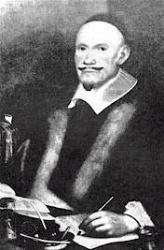
1598 - 1662 Person Name: J. Crüger Topics: Renouncing All for Christ Composer of "LORD, TO THEE I MAKE CONFESSION" in Christian Hymns Johann Crüger (b. Grossbriesen, near Guben, Prussia, Germany, 1598; d. Berlin, Germany, 1662) Crüger attended the Jesuit College at Olmutz and the Poets' School in Regensburg, and later studied theology at the University of Wittenberg. He moved to Berlin in 1615, where he published music for the rest of his life. In 1622 he became the Lutheran cantor at the St. Nicholas Church and a teacher for the Gray Cloister. He wrote music instruction manuals, the best known of which is Synopsis musica (1630), and tirelessly promoted congregational singing. With his tunes he often included elaborate accompaniment for various instruments. Crüger's hymn collection, Neues vollkomliches Gesangbuch (1640), was one of the first hymnals to include figured bass accompaniment (musical shorthand) with the chorale melody rather than full harmonization written out. It included eighteen of Crüger's tunes. His next publication, Praxis Pietatis Melica (1644), is considered one of the most important collections of German hymnody in the seventeenth century. It was reprinted forty-four times in the following hundred years. Another of his publications, Geistliche Kirchen Melodien (1649), is a collection arranged for four voices, two descanting instruments, and keyboard and bass accompaniment. Crüger also published a complete psalter, Psalmodia sacra (1657), which included the Lobwasser translation set to all the Genevan tunes.
Bert Polman
===============================
Crüger, Johann, was born April 9, 1598, at Gross-Breese, near Guben, Brandenburg. After passing through the schools at Guben, Sorau and Breslau, the Jesuit College at Olmütz, and the Poets' school at Regensburg, he made a tour in Austria, and, in 1615, settled at Berlin. There, save for a short residence at the University of Wittenberg, in 1620, he employed himself as a private tutor till 1622. In 1622 he was appointed Cantor of St. Nicholas's Church at Berlin, and also one of the masters of the Greyfriars Gymnasium. He died at Berlin Feb. 23, 1662. Crüger wrote no hymns, although in some American hymnals he appears as "Johann Krüger, 1610,” as the author of the supposed original of C. Wesley's "Hearts of stone relent, relent" (q.v.). He was one of the most distinguished musicians of his time. Of his hymn tunes, which are generally noble and simple in style, some 20 are still in use, the best known probably being that to "Nun danket alle Gott" (q.v.), which is set to No. 379 in Hymns Ancient & Modern, ed. 1875. His claim to notice in this work is as editor and contributor to several of the most important German hymnological works of the 16th century, and these are most conveniently treated of under his name. (The principal authorities on his works are Dr. J. F. Bachmann's Zur Geschichte der Berliner Gesangbücher 1857; his Vortrag on P. Gerhard, 1863; and his edition of Gerhardt's Geistliche Lieder, 1866. Besides these there are the notices in Bode, and in R. Eitner's Monatshefte für Musik-Geschichte, 1873 and 1880). These works are:—
1. Newes vollkömmliches Gesangbuch, Augspur-gischer Confession, &c, Berlin, 1640 [Library of St. Nicholas's Church, Berlin], with 248 hymns, very few being published for the first time.
2. Praxis pietatis melica. Das ist: Ubung der Gottseligkeit in Christlichen und trostreichen Gesängen. The history of this, the most important work of the century, is still obscure. The 1st edition has been variously dated 1640 and 1644, while Crüger, in the preface to No. 3, says that the 3rd edition appeared in 1648. A considerable correspondence with German collectors and librarians has failed to bring to light any of the editions which Koch, iv. 102, 103, quotes as 1644, 1647, 1649, 1650, 1651, 1652, 1653. The imperfect edition noted below as probably that of 1648 is the earliest Berlin edition we have been able to find. The imperfect edition, probably ix. of 1659, formerly in the hands of Dr. Schneider of Schleswig [see Mützell, 1858, No. 264] was inaccessible. The earliest perfect Berlin edition we have found is 1653.
The edition printed at Frankfurt in 1656 by Caspar Röteln was probably a reprint of a Berlin edition, c. 1656. The editions printed at Frankfurt-am-Main by B. C. Wust (of which the 1666 is in the preface described as the 3rd) are in considerable measure independent works.
In the forty-five Berlin and over a dozen Frankfurt editions of this work many of the hymns of P. Gerhardt, J. Franck, P. J. Spener, and others, appear for the first time, and therein also appear many of the best melodies of the period.
3. Geistliche Kirchen-Melodien, &c, Leipzig, 1649 [Library of St. Katherine's Church, Brandenburg]. This contains the first stanzas only of 161 hymns, with music in four vocal and two instrumental parts. It is the earliest source of the first stanzas of various hymns by Gerhardt, Franck, &c.
4. D. M. Luther's und anderer vornehmen geisU reichen und gelehrten Manner Geistliche Lieder und Psalmen, &c, Berlin, 1653 [Hamburg Town Library], with 375 hymns. This was edited by C. Runge, the publisher, and to it Crüger contributed some 37 melodies. It was prepared at the request of Luise Henriette (q.v.), as a book for the joint use of the Lutherans and the Re¬formed, and is the earliest source of the hymns ascribed to her, and of the complete versions of many hymns by Gerhardt and Franck.
5. Psalmodia Sacra, &c, Berlin, 1658 [Royal Library, Berlin]. The first section of this work is in an ed. of A. Lobwasser's German Psalter; the second, with a similar title to No. 4, and the date 1657, is practically a recast of No. 4,146 of those in 1653 being omitted, and the rest of the 319 hymns principally taken from the Praxis of 1656 and the hymn-books of the Bohemian Brethren. New eds. appeared in 1676, 1700, 1704, 1711, and 1736.
[Rev. James Mearns, M.A.]
-- Excerpt from John Julian, Dictionary of Hymnology (1907)
=======================
Crüger, Johann, p. 271, ii. Dr. J. Zahn, now of Neuendettelsau, in Bavaria, has recently acquired a copy of the 5th ed., Berlin, 1653, of the Praxis.
--John Julian, Dictionary of Hymnology, Appendix, Part II (1907)
Johann Crüger
Benjamin Carr
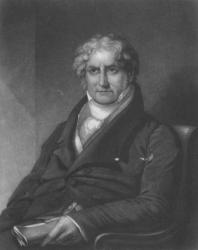
1768 - 1831 Person Name: Benjamin Carr, 1769-1831 Topics: Renouncing All for Christ Composer of "SPANISH HYMN" in Hymnal and Liturgies of the Moravian Church
Benjamin Carr
Théodore Monod
1836 - 1921 Person Name: Theodore Monod Topics: Renouncing All for Christ Author of "O the bitter shame and sorrow" in The Hymnal Monod, Theodore, son of F. Monod, Pastor in the French Reformed Church, was born in Paris, Nov. 6, 1836, and educated for the ministry at Western Theological Seminary, Allegheny, Pennsylvania. He entered the ministry in 1860, and has been many years a Pastor in Paris.
--John Julian, Dictionary of Hymnology, Appendix, Part II (1907)
Théodore Monod
Charles Vincent
1852 - 1934 Person Name: Charles J. Vincent Topics: Renouncing All for Christ Composer of "ST. JUDE" in The Hymnal Vincent, Charles; b. Sept. 19, 1852, Houghton-le-Spring, Durham, d. Feb. 28, 1934, Monte Carlo; English organist. Full name Charles John Vincent, Jr.
Charles Vincent
Spencer Lane
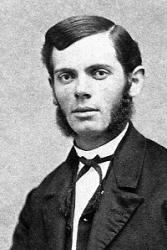
1843 - 1903 Person Name: Spencer Lane, 1843-1903 Topics: Renouncing All for Christ Composer of "PENITENCE" in Hymnal and Liturgies of the Moravian Church Spencer Lane USA 1843-1903. Born at Tilton, NH, he served in the 8th NH Infantry during the American Civil War. After the war, he studied at the New England Conservatory and taught vocal and instrumental music at Oneida and Utica, NY. He married Isabel F. (no information on children was found). He later moved to Woonsocket, RI, where he ran a music store and served as organist and directed the choir for the St. James Episcopal Church for 13 years. He moved to Monson, MA, then to Richmond, VA, and in 1896 to Baltimore, MD. In Baltimore he worked for the music firm of Sanders & Stayman and was music director at the All Saints Protestant Episcopal Church. While at Woonsocket, his pastor gave him the hymns for an evening service, one of whose tune he didn’t care for, so he composed another tune for it, ‘Penitence’. That is his only hymn contribution. He was an author and music composer: “My beloved, I’ll think of thee”, “A dream – grand march”, others. He died at Reedville, VA.
John Perry
Spencer Lane
Christian Friedrich Richter
1676 - 1711 Person Name: Chr. F. Richter, 1676-1711 Topics: Renouncing All for Christ Author of "My soul before thee prostrate lies" in Hymnal and Liturgies of the Moravian Church Richter, Christian Friedrich, son of Sigismund Richter, Rath and Chancellor to Count von Promnitz at Sorau, in Brandenburg, was born at Sorau, Oct. 5, 1676. At the University of Halle he was first a student of medicine and then of theology. In 1698, A. H. Francke appointed him Inspector of the Paedagogium, and then made him, in 1699, physician in general to all his Institutions. In company with his younger brother, Dr. Christian Sigismund Richter, he made many chemical experiments, for which he prepared himself by special prayer; and invented many compounds which came into extensive use under the name of the “Halle Medicines," the most famous being the Essentia dulcis, which was a preparation of gold. He died at Halle, Oct. 5, 1711 (Koch, iv. 354, &c).
Richter was one of the most important hymnwriters among the Pietists of the earlier Halle school; and his hymns possess the defects as well as the excellences of his school. They are emotional, and develop the idea of the spiritual union with Christ as the Bridegroom of the soul, with a minuteness that is hardly reverent (e.g. No. xi. below). They are also frequently not clearly thought out, and consequently somewhat obscure. Various of them are in unusual metres, and were wedded to tunes not very devotional in character. Apart from these defects there are various of his hymns worthy of note for their genuine, fervent piety, their childlike spirit of love to God, and the depth of Christian experience embodied in them. They appeared principally in the various Pietistic hymn-books of the period, especially in Freylinghausen's Gesang-Buch, 1704 and 1714, and were collected and appended (as his Geistliche Lieder) to an essay edited by his brother (named above) and published at Halle, in 1718, as Erbauliche Betrachtungen vom Ur sprung und Adel der Seelen.
Richter's hymns …which have passed into English are:—
i. Gott den ich als Liebe kenne. For the Sick. Included in Freylinghausen's Neues geistreiches Gesang-Buch, 1714, No. 647, in 7 stanzas of 8 lines, repeated, 1718, as above, p. 420, entitled, "Hymn in Sickness." According to Ehmann, in his edition of Gottfried Arnold, 1856, p. xii., it had previously appeared in Arnold's Heilsamer Rath und Unterricht für Kranke und Sterbende, 2nd edition, 1709. It is in the Unverfälschter Liedersegen, 1851, No. 603. Translated as :—
God! whom I as love have known. A full and very good translation by Miss Winkworth, in her Lyra Germanica, 1st Ser., 1855, p. 236. Repeated, abridged, in L. Rehfuess's Church at Sea, 1868, p. 53. A cento, in 5 stanzas of 4 lines, taken from st. v., vi., iii., and beginning, "Let my soul beneath her load,” is No. 398, in the Unitarian Hymns of the Spirit, Boston, U. S. A., 1864.
Another translation is: O God, Whose attributes shine forth in turn." By Miss Cox, 1864, p. 191.
ii. Heine Armuth macht mich schreien. Supplication, or Longing for Christ. In Freylinghausen's Gesang-Buch, 1704, No. 662, in 7 st. of 6 1. Repeated, 1718, as above, p. 381, and in the Unverfälschter Liedersegen, 1851, No. 769. Translated as:—
Unto Him my spirit crieth . A good translation of st. i., ii., vi., by A. T. Russell, in his Psalms & Hymns, 1851.
iii. Stilles Lamm und Friedefürst. Sanctification. A hymn on the Following of Christ the Lamb of God, and founded on Rev. xiv. 4. In Freylinghausen's Neues geistreiches Gesang-Buch 1714, No. 432, in 8 st. of 5 1. Repeated in 1718, as above, p. 364, entitled. "On the name Agneta, which may be derived from Agnus, which in German is called a Lamb." In Burg's Gesang-Buch, Breslau, 1746, No. 922. Tr. as:—
Thou Lamb of God, Thou Prince of Peace . A free tr., omitting st. iii., vii., by J. Wesley, in his Psalms & Hymns, Charlestown, 1736-7, p. 51, and Hymns & Sacred Poems, 1739 (P. Works, 1868-72, i.,p. 129). Included in the Wesleyan Hymn Book, 1780, No. 329 (1875, No. 338), and recently in the Methodist New Congregational Hymn Book, 1863, Mercer's Church Psalter & Hymn Book, 1857 and 1864, Holy Song, 1869, the American Methodist Episcopal Hymn Book 1849, and others.
Another tr. is: "Holy Lamb and Prince of Peace." By J. Gambold, as No. 38 in the Moravian Hymn Book, 1742 (1886, No. 486).
Eight others of his hymns have been tr. into English, viz:--
iv. Die sanfte Bewegung, die liebliche Kraft. Whitsuntide. In Freylinghausen's Gesang-Buch, 1704, No. 454, in 9 st.; and in 1718 as above, p. 393, entitled, "Of the Joy in the Holy Ghost." Tr. as: "This Impulse so gentle, this Movement so sweet," as No. 551, in pt. i., of the Moravian Hymn Book, 1754.
v. Es glänzet der Christen inwendigem Leben. The Life of Faith. In Freylinghausen's Gesang-Buch, 1704, No. 515, in 8 stanzas; and in 1718, as above, p. 398, entitled, "On the hidden life of believers." Repeated in the Unverfälschter Liedersegen, 1851, No. 410. It is Richter's finest hymn, and was (says Koch, viii. 249) a great favourite with Dr. F. Schleiermacher. It is founded on Col. iii. 3, 4, and gives a picture of what the inner life of a Christian should be: described from Richter's own experience. The trs. are: (1) "The Christian's Life inward displays its bright splendour." As No. 620, in pt. i. of the Moravian Hymn Book, 1754. (2) "All fair within those children of the light." By Mrs. Bevan, 1858, p. 26.
vi. Hüter! wird die Nacht der Sunden. Morning. A fine hymn, for use especially in Advent, and founded on Isaiah xxi. 11. In Freylinghausen's Gesang-Buch, 1704, No. 599, in 9 st.: 1718, as above, p. 401, and in the Unverfälschter Liedersegen, 1851, No. 460. Tr. as: (1) "Watchman! is the Night retiring." By H. J. Buckoll, 1842, p. 45. (2) "O Watchman, will the night of sin." By Miss Winkworth, 1855, p. 1. Repeated in Miss Warner's Hymns of the Church Militant , 1858, the Gilman-Schaff Library of Religious Poetry , 1881, &c.
vii. Jesu, gib mir deine Fülle. Supplication. A prayer to Christ as the Great Physician. In Freylinghausen's Gesang-Buch, 1704, No. 66, in 7 st., st. vii. being entitled "Answer." In 1718, as above, p. 406, entitled, "On Patience." In Burg's Gesang-Buch, Breslau, 1746, No. 289. Tr. as:— "Jesu grant Thou me Thy Fulness." In the Supplement to German Psalmody, ed. 1765, p. 47.
viii. Jesus ist das schönste Licht. Love to Christ. On St. John xii. 36. In Freylinghausen's Gesang-Buch, 1704, No. 349, in 9 st.: and in 1718, as above, p. 379, entitled, "On Desire towards God and Christ." In the Berlin Geistlich Lieder, ed. 1863, No. 808. Tr. as:— "Jesus is my light most fair," as No. 630, in pt. i. of the Moravian Hymn Book, 1754 (1886, No. 450).
ix. Mein Salomo dein freundliches Regieren. Peace in Believing. A fine hymn, founded on St. John i. 14. In Freylinghausen's Neues geistreiches Gesang-Buch, 1714, No. 512, in 11 st. In 1718, as above, p. 416; and in the Unverfälschter Liedersegen, 1851, No. 424. Tr. as:— (1) "My Solomon! thy kind and gracious Sceptre," as No. 622, in pt. i., of the Moravian Hymn Book, 1754. In 1789, altered to "Jesus, my King, Thy kind and gracious sceptre" (1886, No. 384). (2) "Jesus, my King! Thy mild and kind control." By Dr. Bomberger, in Schaff s Kirchenfreund , 1849, p.337.
x. O Liebe die den Himmel hat zerissen. Christmas. In Freylinghausen's Neues geistreiches Gesang-Buch, 1714, No. 34, in 9 st.: and in 1718, as above, p. 414, entitled, "On the Incarnation of the Son of God." In the Unverfälschter Liedersegen, 1851, No. 52. Translated as:-- "Oh! love that did the heavens rend asunder." By Miss Manington, 1864, p. 35.
xi. O wie selig sind die Seelen. Love to Christ. Founded on Hosea ii. 19, 20, and Eph. v. 25. In Freylinghausen's Gesang-Buch., 1704, No. 512, in 10 st.: and in 1718, as above, p. 396, entitled, "On the high dignity of believers." In Porst's Gesang-Buch, ed. 1855, No. 412. It was (says Koch, viii. 297) originated by a dream Richter had about 1700, that in the hospital at Halle he would find a truly Christ-like soul. After searching all the wards he found an old neglected patient in a garret, with whom he conversed, and whom he found to be the person he was seeking. Inspired by her relations of her inner experience, he embodied her thoughts in this fine hymn. Tr. as:— "O what joy for them is stored." By Mrs. Bevan, 1858, p. 68. [Rev. James Mearns, M.A.]
--John Julian, Dictionary of Hymnology (1907)
Christian Friedrich Richter
Pages




