You help make Hymnary.org possible. More than 10 million people from 200+ countries found hymns, liturgical resources and encouragement on Hymnary.org in 2025, including you. Every visit affirms the global impact of this ministry.

If Hymnary has been meaningful to you this year, would you take a moment today to help sustain it? A gift of any size—paired with a note of encouragement if you wish—directly supports the server costs, research work and curation that keep this resource freely available to the world.

Give securely online today, or mail a check to:
Hymnary.org
Calvin University
3201 Burton Street SE
Grand Rapids, MI 49546

Thank you for your partnership, and may the hope of Advent fill your heart.

Person Results

Topics:the+psalms+of+david
In:people

Planning worship? Check out our sister site, ZeteoSearch.org, for 20+ additional resources related to your search.
Showing 21 - 30 of 129Results Per Page: 102050

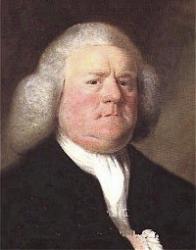
William Boyce

1711 - 1779 Person Name: Dr. Boyce Topics: The Psalms of David Day XXXI - Morning Composer of "[Blessed be the Lord my strength]" in The Church Service Book William Boyce (baptised 1711 – d. 7 February 1779) was an English composer and organist. See also in: Wikipedia

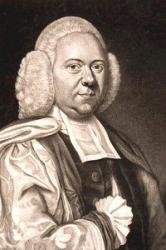
John Warrington Hatton

1710 - 1793 Person Name: John Hatton Topics: Atonement; Biblical Names and Places David; Biblical Names and Places Israel; Biblical Names and Places Jesse; Biblical Names and Places Seba; Biblical Names and Places Sheba; Biblical Names and Places Tarshish; Church Year Advent; Church Year Ascension of the Lord; Church Year Christ the King; Church Year Epiphany; Doxologies; Earth; Elements of Worship Gathering; Elements of Worship Lord's Supper; Elements of Worship Praise and Adoration; Elements of Worship Sending; God as King; God's Armor; God's Glory; God's law; Mission; New Creation; Occasional Services Civic / National Occasions; Peace; Poverty; Royal Psalms; Rulers; Salvation; Social Justice; The Needy; Truth; Year A, Advent, 2nd Sunday; Year A, B, C, Epiphany, Epiphany of our Lord (January 6 or Sunday before Epiphany) Composer of "DUKE STREET" in Psalms for All Seasons John Warrington Hatton (b. Warrington, England, c. 1710; d, St. Helen's, Lancaster, England, 1793) was christened in Warrington, Lancashire, England. He supposedly lived on Duke Street in Lancashire, from where his famous tune name comes. Very little is known about Hatton, but he was most likely a Presbyterian, and the story goes that he was killed in a stagecoach accident. Bert Polman

Thomas Helmore

1811 - 1890 Person Name: Rev. T. Helmore Topics: The Psalms of David Day XXVI - Morning Composer of "[Thy testimonies are wonderful]" in The Church Service Book A graduate of Magdalen College, Oxford, England, Thomas Helmore (b. Kidderminster, Worcestershire, England, 1811; d. Westminster, London, England, 1890) was ordained a priest in the Church of England, but his main contribution to the church was in music. He was precentor at St. Mark's College, Chelsea (1842-1877), and master of the choristers in the Chapel Royal for many years. He promoted unaccompanied choral services and played an important part in the revival of plainchant in the Anglican Church. Helmore was involved in various publications of hymns, chants, and carols, including A Manual of Plainsong (1850) and The Hymnal Noted (with John Mason Neale). Bert Polman

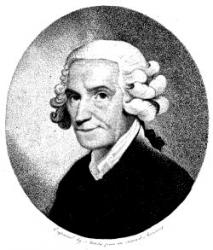
William Crotch

1775 - 1847 Person Name: Dr. W. Crotch Topics: The Psalms of David Day XXII - Morning Composer of "[O give thanks unto the Lord, for he is gracious]" in The Church Service Book William Crotch (5 July 1775 – 29 December 1847) was an English composer, organist and artist. Born in Norwich, Norfolk to a master carpenter he showed early musical talent as a child prodigy. The three and a half year old Master William Crotch was taken to London by his ambitious mother, where he not only played on the organ of the Chapel Royal in St James's Palace, but for King George III. The London Magazine of April 1779 records: He appears to be fondest of solemn tunes and church musick, particularly the 104th Psalm. As soon as he has finished a regular tune, or part of a tune, or played some little fancy notes of his own, he stops, and has some of the pranks of a wanton boy; some of the company then generally give him a cake, an apple, or an orange, to induce him to play again... Crotch was later to observe that this experience led him to become a rather spoiled child, excessively indulged so that he would perform. He was for a time organist at Christ Church, Oxford, from which he was later to graduate with a Bachelor of Music degree. His composition The Captivity of Judah was played at Trinity Hall, Cambridge, on 4 June 1789; his most successful composition in adulthood was the oratorio Palestine (1812). He may have composed the Westminster Chimes in 1793. In 1797 Crotch was given a professorship at Oxford University, and in 1799 he acquired a doctorate in music. While at Oxford, he became acquainted with the musician and artist John Malchair, and took up sketching. He followed Malchair's style in recording the exact time and date of each of his pictures, and when he met John Constable in London in 1805, he passed the habit along to the more famous artist. In 1834, to commemorate the installation of the Duke of Wellington as chancellor of the University of Oxford, Crotch penned a second oratorio titled The Captivity of Judah. The 1834 work bears little resemblance to the oratorio he wrote as a child in 1789. In 1822, Crotch was appointed to the Royal Academy of Music as its first Principal, but resigned ten years later.[2] He spent his last years at his son's house in Taunton, Somerset, where he died suddenly in 1847. Among his notable pupils were William Sterndale Bennett, Lucy Anderson, Stephen Codman, George Job Elvey, Cipriani Potter, and Charles Kensington Salaman --en.wikipedia.org/

William Vincent Wallace

1812 - 1865 Person Name: W. V. Wallace Topics: The Psalms of David Day XVII - Morning Composer of "[Her foundations are upon the holy hills]" in The Church Service Book

William Hayes

1706 - 1777 Person Name: Dr. W. Hayes Topics: The Psalms of David Day XVIII - Evening Composer of "[O come, let us sing unto the Lord]" in The Church Service Book William Hayes (26 January 1708 (baptised) – 27 July 1777) was an English composer, organist, singer and conductor. Hayes was born in Gloucester. He trained at Gloucester Cathedral and spent the early part of his working life as organist of St Mary’s, Shrewsbury (1729) and Worcester Cathedral (1731). The majority of his career was spent at Oxford where he was appointed organist of Magdalen College in 1734, and established his credentials with the degrees of B.Mus in 1735 and D.Mus in 1749. (He was painted by John Cornish in his doctoral robes around 1749.) In 1741 he was unanimously elected Professor of Music and organist of the University Church. He presided over the city’s concert life for the next 30 years, and was instrumental in the building of the Holywell Music Room in Oxford in 1748, the oldest purpose-built music room in Europe. He was one of the earliest members of the Royal Society of Musicians, and in 1765 was elected a ‘privileged member’ of the Noblemen’s and Gentlemen’s Catch Club. He died in Oxford, aged 69. William Hayes was an enthusiastic Handelian, and one of the most active conductors of his oratorios and other large-scale works outside London. His wide knowledge of Handel left a strong impression on his own music, but by no means dominated it. As a composer he tended towards genres largely ignored by Handel—English chamber cantatas, organ-accompanied anthems and convivial vocal music—and his vocal works show an English preference for non-da capo aria forms. Hayes also cultivated a self-consciously ‘learned’ polyphonic style (perhaps inspired by his antiquarian interests) which can be seen in his many canons, full-anthems, and the strict fugal movements of his instrumental works. Nevertheless, several of his late trio sonatas show that he was not deaf to newly emerging Classical styles. Although he published virtually none of his instrumental music, his vocal works were extremely popular, and the printed editions were subscribed to by large numbers of amateur and professional musicians. Substantial works like his ode The Passions, the one-act oratorio The Fall of Jericho, and his Six Cantatas demonstrate that Hayes was one of the finest English composers of the eighteenth century. As a writer, his Art of Composing Music includes the first published description of aleatoric composition—music composed by chance—albeit deliberately satirical in intent. In his Remarks he reveals much about his aesthetic outlook: in particular that he valued the music of Handel and Corelli over that of Rameau, Benedetto Marcello and Geminiani. Finally, the Anecdotes offer insights into the organization of provincial music festivals in the mid-eighteenth century. Hayes bequeathed his important and wide-ranging music library to his son Philip Hayes; the manuscripts of both father and son eventually passed to the Bodleian Library, Oxford, in 1801. Sacred works The Fall of Jericho, oratorio, c. 1740–50 Sixteen Psalms (London, 1773) David, oratorio, completed by Philip Hayes around 20 anthems and service music, in Cathedral Music in Score, edited by Philip Hayes (Oxford, 1795) --en.wikipedia.org/wiki

Herbert Stanley Oakeley

1830 - 1903 Person Name: Sir H. S. Oakeley Topics: The Psalms of David Day XV - Evening Composer of "[Hear my law O my people]" in The Church Service Book

Robert Prescott Stewart

1825 - 1894 Person Name: Sir Robert Stewart Topics: The Psalms of David Day XXVIII - Morning Composer of "[Lord, remember David]" in The Church Service Book

Walter Bond Gilbert

1829 - 1910 Person Name: Dr. W. B. Gilbert Topics: The Psalms of David Day XXVIII - Morning Composer of "[Lord, remember David]" in The Church Service Book Walter Bond Gilbert DMus United Kingdom 1829-1910. Born at Exeter, Devon, England, he studied music under Alfred Angel, Samuel Wesley and Henry Bishop. He attended New College, Oxford and the University of Toronto, Canada. He was organist in Devon at Topsham in 1847, Bideford in 1849, Kent at Tonbridge in 1854, Old Colliegiate Church, Maidstone in 1859, Lee in 1866, Boston, Lincolnshirein 1868, and Trinity Chapel in New York City in 1869-1897. He taught music at Tonbridge School, helped found the College of Organists, edited the America Episcopal Hymnal, and wrote a number of monographs, including “Antiquities of Maidstone”. He continued to write church music, producing services, oratorios (including “The Restoration of Israel and St. John, 1857), organ works, and anthems. He died at Headington, Oxford, England. John Perry

James Nares

1715 - 1783 Person Name: Dr. J. Nares Topics: The Psalms of David Day VIII - Evening Composer of "[Blessed is he that considereth the poor and needy]" in The Church Service Book Born: April 19, 1715, Stanwell, Middlesex, England. Died: February 10, 1783. Buried: St. Margaret’s, Westminster, England. After his family moved to Oxford, Nares became a chorister in the Chapel Royal. He later became deputy organist at St. George’s Chapel, Windsor; organist in York Cathedral (1734); and organist in the Royal Chapel and composer to the king (1756). He received a doctorate of music degree from Cambridge University in 1756. In 1770, the Catch Club awarded him a prize for his glee To All Lovers of Harmony. Sources: Frost, p. 683 Nutter, p. 462 http://www.hymntime.com/tch/bio/n/a/r/nares_j.htm ==================== http://en.wikipedia.org/wiki/James_Nares

Pages


Export as CSV
It looks like you are using an ad-blocker. Ad revenue helps keep us running. Please consider white-listing Hymnary.org or getting Hymnary Pro to eliminate ads entirely and help support Hymnary.org.