You help make Hymnary.org possible. More than 10 million people from 200+ countries found hymns, liturgical resources and encouragement on Hymnary.org in 2025, including you. Every visit affirms the global impact of this ministry.

If Hymnary has been meaningful to you this year, would you take a moment today to help sustain it? A gift of any size—paired with a note of encouragement if you wish—directly supports the server costs, research work and curation that keep this resource freely available to the world.

Give securely online today, or mail a check to:
Hymnary.org
Calvin University
3201 Burton Street SE
Grand Rapids, MI 49546

Thank you for your partnership, and may the hope of Advent fill your heart.

Person Results

Topics:the+second+coming+of+christ
In:people

Planning worship? Check out our sister site, ZeteoSearch.org, for 20+ additional resources related to your search.
Showing 21 - 30 of 250Results Per Page: 102050

Anonymous

Person Name: Anon. Topics: Second Coming of Christ Author of "Rejoice, rejoice, Emmanuel [Immanuel]" in The Lutheran Hymnary In some hymnals, the editors noted that a hymn's author is unknown to them, and so this artificial "person" entry is used to reflect that fact. Obviously, the hymns attributed to "Author Unknown" "Unknown" or "Anonymous" could have been written by many people over a span of many centuries.

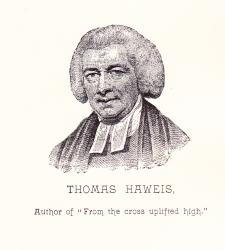
Thomas Haweis

1734 - 1820 Topics: The Christian Year Advent; Christian Year Advent; Freedom; Healing; Heaven(s)/Paradise; Hosanna; Humility; Jesus Christ Life of; Jesus Christ Saviour; Jesus Christ Signs and Wonders; Justice; Peace (World); Poverty; Prisoner(s); Redemption; Satan/Demonic Forces/Devil; Second Coming; Sin; Advent 1 Year A; Advent 2 Year A; Advent 3 Year B; Advent 4 Year B; Baptism of Jesus Year B; Palm/Passion Sunday Year B; Easter 2 Year B; Proper 18 Year B; Advent 3 Year C; Advent 4 Year C; Epiphany 3 Year C; Palm/Passion Sunday Year C; Easter 2 Year C Composer of "RICHMOND" in Voices United Thomas Haweis (b. Redruth, Cornwall, England, 1734; d. Bath, England, 1820) Initially apprenticed to a surgeon and pharmacist, Haweis decided to study for the ministry at Oxford and was ordained in the Church of England in 1757. He served as curate of St. Mary Magdalen Church, Oxford, but was removed by the bishop from that position because of his Methodist leanings. He also was an assistant to Martin Madan at Locke Hospital, London. In 1764 he became rector of All Saints Church in Aldwinkle, Northamptonshire, and later served as administrator at Trevecca College, Wales, a school founded by the Countess of Huntingdon, whom Haweis served as chaplain. After completing advanced studies at Cambridge, he published a Bible commentary and a volume on church history. Haweis was strongly interested in missions and helped to found the London Mission Society. His hymn texts and tunes were published in Carmino Christo, or Hymns to the Savior (1792, expanded 1808). Bert Polman ============================ Haweis, Thomas, LL.B., M.D., born at Truro, Cornwall, 1732. After practising for a time as a Physician, he entered Christ's College, Cambridge, where he graduated. Taking Holy Orders, he became Assistant Preacher to M. Madan at the Lock Hospital, London, and subsequently Rector of All Saints, Aldwincle, Northamptonshire. He was also Chaplain to Lady Huntingdon, and for several years officiated at her Chapel in Bath. He died at Bath, Feb. 11, 1820. He published several prose works, including A History of the Church, A Translation of the New Testament, and A Commentary on the Holy Bible. His hymns, a few of which are of more than ordinary merit, were published in his Carmina Christo; or, Hymns to the Saviour. Designed for the Use and Comfort of Those who worship the Lamb that was slain. Bath, S. Hayward, 1792 (139 hymns), enlarged. London, 1808 (256 hymns). In 1794, or sometime after, but before the enlarged edition was published, two hymns "For the Fast-day, Feb. 28, 1794," were added to the first edition. These were, "Big with events, another year," and "Still o'er the deep the cannon's roar." The most popular and widely used of his hymns are, "Behold the Lamb of God, Who bore," &c.; "Enthroned on high, Almighty Lord"; and “O Thou from Whom all goodness flows." The rest, all being from Carmina Christo, first edition 1792, are:— 1. Dark was the night and cold the ground. Gethsemane. 2. From the cross uplifted high. Christ in Glory. 3. Great Spirit, by Whose mighty power. Whitsuntide. 4. Submissive to Thy will, my God. Resignation. 5. The happy morn is come. Easter. 6. Thou Lamb of God, that on the tree. Good Friday. The hymn, "Thy Head, the crown of thorns that wears," in Stryker & Main's Church Praise Book, N. Y., 1882, begins with st. ii. of this hymn. 7. To Thee, my God and Saviour, My heart, &c. Praise for Redemption. --John Julian, Dictionary of Hymnology (1907)

Thomas Kelly

1769 - 1855 Person Name: T. Kelly Topics: Second Coming of Christ Author of "Hark! ten thousand harps and voices" in The Lutheran Hymnary Kelly, Thomas, B.A., son of Thomas Kelly, a Judge of the Irish Court of Common Pleas, was born in Dublin, July 13, 1769, and educated at Trinity College, Dublin. He was designed for the Bar, and entered the Temple, London, with that intention; but having undergone a very marked spiritual change he took Holy Orders in 1792. His earnest evangelical preaching in Dublin led Archbishop Fowler to inhibit him and his companion preacher, Rowland Hill, from preaching in the city. For some time he preached in two unconsecrated buildings in Dublin, Plunket Street, and the Bethesda, and then, having seceded from the Established Church, he erected places of worship at Athy, Portarlington, Wexford, &c, in which he conducted divine worship and preached. He died May 14, 1854. Miller, in his Singers & Songs of the Church, 1869, p. 338 (from which some of the foregoing details are taken), says:— "Mr. Kelly was a man of great and varied learning, skilled in the Oriental tongues, and an excellent Bible critic. He was possessed also of musical talent, and composed and published a work that was received witli favour, consisting of music adapted to every form of metre in his hymn-book. Naturally of an amiable disposition and thorough in his Christian piety, Mr. Kelly became the friend of good men, and the advocate of every worthy, benevolent, and religious cause. He was admired alike for his zeal and his humility; and his liberality found ample scope in Ireland, especially during the year of famine." Kelly's hymns, 765 in all, were composed and published over a period of 51 years, as follows:— (1) A Collection of Psalms and Hymns extracted from Various Authors, by Thomas Kelly, A.B., Dublin, 1802. This work contains 247 hymns by various authors, and an Appendix of 33 original hymns by Kelly. (2) Hymns on Various Passages of Scripture, Dublin, 1804. Of this work several editions were published: 1st, 1804; 2nd, 1806; 3rd, 1809; 4th, 1812. This last edition was published in two divisions, one as Hymns on Various Passages of Scripture, and the second as Hymns adapted for Social Worship. In 1815 Kelly issued Hymns by Thomas Kelly, not before Published. The 5th edition, 1820, included the two divisions of 1812, and the new hymns of 1815, as one work. To the later editions of 1820, 1826, 1836, 1840, 1846, and 1853, new hymns were added, until the last published by M. Moses, of Dublin, 1853, contained the total of 765. As a hymn-writer Kelly was most successful. As a rule his strength appears in hymns of Praise and in metres not generally adopted by the older hymn writers. His "Come, see the place where Jesus lay" (from "He's gone, see where His body lay"),"From Egypt lately come"; “Look, ye saints, the sight is glorious"; "On the mountain's top appearing"; "The Head that once was crowned with thorns"; "Through the day Thy love has spared us"; and “We sing the praise of Him Who died," rank with the first hymns in the English language. Several of his hymns of great merit still remain unknown through so many modern editors being apparently adverse to original investigation. In addition to the hymns named and others, which are annotated under their respective first lines, the following are also in common use:— i. From the Psalms and Hymns, 1802:— 1. Grant us, Lord, Thy gracious presence. Commencement of Divine Worship. 2. Jesus, Immortal King, go on [display]. Missions. 3. Saviour, through the desert lead us. Divine Guidance Desired. 4. The day of rest once more [again] comes round. Sunday. 5. We've no abiding city here. Seeking Heaven. ii. From the Hymns on Varous Passages of Scripture, first edition, 1804 :— 6. Boundless glory, Lord, be thine. Praise for the Gospel. 7. By whom shall Jacob now arise? Epiphany. 8. Glory, glory to our King. Praise to Christ as King. 9. How pleasant is the sound of praise. Praise for Redemption. 10. How sweet to leave the world awhile. In Retirement, or For a Retreat. 11. Inform I long had bowed the knee. Jesus, the Saviour, or Praise for Salvation. 12. It is finished! sinners, hear it. Good Friday. 13. Jesus, the Shepherd of the sheep. The Good Shepherd. 14. Let reason vainly boast her power. Death. 15. Poor and afflicted, Lord, are Thine. Affliction. 16. Praise we Him to Whose kind favour. Close of Service. 11. Spared a little longer. Safety in God. 18. Stricken, smitten, and afflicted. Passiontide. ii. From the Hymns, &c, second edition, 1806:— 19. Far from us be grief and sadness. Joy of Believers. 20. Give us room that we may dwell. Missions. 21. Glory, glory everlasting. Praise of Jesus. 22. God has.turned my grief to gladness. Joy after Sorrow. 23. Happy they who trust in Jesus. Peace in Jesus. 24. Hark, the notes of angels singing. Angels praising Jesus. 25. Hark! 'tis a martial sound. Christian Life a Warfare. 26. I hear a sound [voice] that comes from far. The Gospel Message. 27. Jesus is gone up on high. Divine Worship. 28. Now [O] may the Gospel's conquering power. Home Missions. In the 1853 edition of the Hymns it begins “O may the Gospel's conqu'ring force." 29. O Zion, when I think on thee. Desiring Heaven. 30. Praise the Saviour, ye who know Him. Praise of Jesus. 31. See from Zion's sacred mountain. The Fountain of Life. 32. The atoning work is done. Jesus the High Priest. 33. Zion is Jehovah's dwelling. The Church of God. 34. Zion stands by hills surrounded. The Safety of the Church. 35. Zion's King shall reign victorious. Missions. iv. From the Hymns, &c, 3rd edition, 1809:— 36. Behold the Temple of the Lord. The Church a Spiritual Temple. 37. Blessed Fountain, full of grace. Fountain for Sin. 38. Brethren, come, our Saviour bids us. Holy Communion. 39. Fly, ye seasons, fly still faster. Second Advent Desired. 40. God of Israel, we adore Thee. Evening. 41. Gracious Lord, my heart is fixed. Trust and Peace. 42. Hark, a voice! it comes from heaven. Death. 43. Hark, that shout of rapt'rous joy. Second Advent. 44. If our warfare be laborious. Labour and Rest . 45. Lo, He comes, let all adore Him. Missions. 46. Nothing know we of the season. Time of Second Advent uncertain. 47. O had I the wings of a dove. Holiness and Heaven desired. 48. O where is now that glowing love. Despondency. 49. Our Father sits on yonder throne. God the Father. 50. Ours is a rich and royal Feast. Holy Communion. 51. Shepherd of the chosen number. Safety in the Good Shepherd. 52. We're bound for yonder land. Life, a Voyage. 53. Welcome sight! the Lord descending. The Advent. 54. What is life? 'tis but a vapour. Death anticipated. 55. Who is this that comes from Edom? Ascension. 56. Why those fears ? Behold 'tis Jesus. Stilling the Sea. 57. Without blood is no remission. Passiontide. 58. Yes, we trust the day is breaking. Missions. v. FromHymns: Not before Published, 1815:— 59. Behold the Lamb with glory crowned. Exaltation of Christ. 60. God is love, His word has said it. God is Love. 61. God of our salvation, hear us. Opening or Close of Divine Worship. 62. In Thy Name, O Lord, assembling. Commencement of Divine Worship. 63. Keep us, Lord, O [and] keep us ever. Divine Worship. 64. Let sinners saved give thanks, and sing. Praise for Salvation. 65. Praise the Lord Who died to save us. Passiontide. 66. Salvation is of God alone. God the Author of Salvation. 67. Saviour, come, Thy [saints] friends await Thee [are waiting] . Second Advent desired. 68. Sweet were the sounds that reached our ears. Divine Mercy. 69. We'll sing of the Shepherd that died. The Lost Sheep. 70. When we cannot see our way. Trust and Peace. 71. Who is this that calms the ocean? Stilling the Sea. vi. From the Hymns on F. Passages of Scripture, &c, eds. 1820 and 1826 :-— 72. Grace is the sweetest sound. Divine Grace. 73. Now let a great effectual door. Missions. 74. Now may the mighty arm awake. Missions. 75. Now may the Spirit from above. Home Missions. 76. Sing, sing His lofty praise. Praise of Jesus. 77. Sound, 6ound the truth abroad. Missions. 78. Speed Thy servants, Saviour, speed them. Departure of Missionaries. vii. From the Hymns on Various Passages, &c, 1836:— 79. Come, O Lord, the heavens rending. Prayer for Blessings. 80. The night is far spent, the day is at hand. The Second Advent. viii. From the Hymns on Various Passages, &c, circa 1845:— 81. Joyful be the hours today. Sunday. 82. Lord, behold us few and weak. Opening of Divine Service. 83. Meet Thy people, Saviour, meet us. Meetings for Prayer. 84. Saviour, send a blessing to us. Prayer for Blessings. 85. Sing of Jesus, sing for ever. Praise of Jesus. ix. From the Hymns on Various Passages, &c, 1853:— 86. Precious volume, what thou doest. Holy Scripture. 87. Unfold to us, O Lord, unfold. Divine aid to reading Holy Scripture. All these hymns, together with those annotated under their respective first lines are in the 1853 edition of Kelly's Hymns published in Dublin by M. Moses, and in London by Simpkin, Marshall & Co. Kelly's musical editions are issued by the same publishers. -- John Julian, Dictionary of Hymnology (1907) ================== Kelly, Thomas, p. 615, i. Other hymns in common use are: 1. Behold the Man! How glorious He. (1809.) Good Friday. 2. Jesus the [Thou] Shepherd of the Sheep. (1804.) Good Shepherd. 3. Saved ourselves by Jesu's blood. (1802.) For a Revival. 4. Saviour, 'tis to [unto] Thee. (1853*.) Lent. 5. See the vineyard lately planted. (1806.) Missions. Sometimes given as "See, O Lord, the vineyard planted." 6. Sing aloud to God our strength. (1809.) Praise to the Father. 7. Sing, sing His lofty praise. (1820.) Praise to Jesus. Sometimes as "Hail our eternal King" (p. 615, No. 76). 8. Sing of Him Who bore our guilt. (1853*.) Praise to Jesus. 9. Sing we praise to God above, God our Saviour, &c. (1815.) Praise for Divine Mercy. 10. Sing we praise to God above, Sing we praise, &c. (1853*.) Praise. 11. Sons of Zion, raise your songs. (1820-26) The Exalted Saviour. 12. The Lord Himself will keep. (1809.) From “We're bound for yonder land" (sec p. 615, No. 52.) 13. The God [Lord] of glory dwells on high. (1809.) Humility and Love of Christ. 14. The people of the Lord Are on their way, &c. (1820.) Life a Pilgrimage. 15. Thus saith God of His Anointed. (1809.) Missions. 16. 'Tis to us no cause of sorrow. (1815.) Resignation. 17. To the Ark away, or perish. (1815.) Safety in Jesus only. 18. To our Lord a throne is given. (1838.) Christ the King. 19. Trust ye in the Lord for ever. (1853*.) Trust in God. 20. We'll sing in spite of scorn. (1806.) Christmas. From this "The long-expected morn" is taken. 21. What tongue can tell, what fancy paint. (1806.) Saints in Glory 22. What were Sinai's awful wonders. (1809.) Advent. 23. Whence those sounds symphonious? (1815.) Christmas. 24. While in the [this] world we still [yet] remain. (1806.) Communion of Saints. 25. Yes, 'tis a rough and thorny road. (1809.) Resignation. Sometimes given as "Though rough and thorny be the way." The dates given above are those of the various editions of Kelly's Hymns. The date 1853* indicates that the hymn is in the 1853 ed. of the Hymns, but had also appeared in a previous edition which we have not seen. --John Julian, Dictionary of Hymnology, Appendix, Part II (1907)

Godfrey Thring

1823 - 1903 Topics: The Christian Year Reign of Christ; Adoration and Praise; Christian Year Passion/Palm Sunday; Christian Year Holy Week; Christian Year Ascension; Christian Year Christ the King/Reign of Christ; Eternal Life; Heaven(s)/Paradise; Jesus Christ Adoration and Praise; Jesus Christ Ascension and Reign; Jesus Christ Atonement; Jesus Christ Creator; Jesus Christ Exaltation; Jesus Christ Images of; Jesus Christ Kingship, Conqueror; Jesus Christ Lamb of God; Jesus Christ Lord of Life; Jesus Christ Praise; Jesus Christ Reign; Jesus Christ Saviour; Jesus Christ Second Coming; Life; Music and Singing; New Creation; Peace (World); Processionals (Opening of Worship); Recessionals; Redemption; Saints; Salvation; Second Coming; Testimony; Time; Victory; Worship; Easter 1 Year A; Easter 2 Year A; Ascension Year A; Easter 7 Year A; Proper 19 Year A; All Saints Year A; Reign of Christ Year A; Easter 6 Year B; Ascension Year B; Easter 7 Year B; Proper 22 Year B; Reign of Christ Year B; Easter 4 Year C; Ascension Year C; Reign of Christ Year C Author, v. 2 of "Crown Him with Many Crowns" in Voices United Godfrey Thring (b. Alford, Somersetshire, England, 1823; d. Shamley Green, Guilford, Surrey, England, 1903) was born in the parsonage of Alford, where his father was rector. Educated at Balliol College, Oxford, England, he was ordained a priest in the Church of England in 1847. After serving in several other parishes, Thring re­turned to Alford and Hornblotten in 1858 to succeed his father as rector, a position he retained until his own retirement in 1893. He was also associated with Wells Cathedral (1867-1893). After 1861 Thring wrote many hymns and published several hymnals, including Hymns Congregational (1866), Hymns and Sacred Lyrics (1874), and the respect­ed A Church of England Hymn Book Adapted to the Daily Services of the Church Throughout the Year (1880), which was enlarged as The Church of England Hymn Book (1882). Bert Polman ================ Thring, Godfrey, B.A., son of the Rev. J. G. D. Thring, of Alford, Somerset, was born at Alford, March 25, 1823, and educated at Shrewsbury School, and at Balliol College, Oxford, B.A. in 1845. On taking Holy Orders he was curate of Stratfield-Turgis, 1846-50; of Strathfieldsaye, 1850-53; and of other parishes to 1858, when he became rector of Alford-with-Hornblotton, Somerset. R.D. 1867-76. In 1876 he was preferred as prebend of East Harptree in Wells cathedral. Prebendary Thring's poetical works are:— Hymns Congregational and Others, 1866; Hymns and Verses, 1866; and Hymns and Sacred Lyrics, 1874. In 1880 he published A Church of England Hymnbook Adapted to the Daily Services of the Church throughout the Year; and in 1882, a revised and much improved edition of the same as The Church of England Hymn Book, &c. A great many of Prebendary Thring's hymns are annotated under their respective first lines; the rest in common use include:— 1. Beneath the Church's hallowed shade. Consecration of a Burial Ground. Written in 1870. This is one of four hymns set to music by Dr. Dykes, and first published by Novello & Co., 1873. It was also included (but without music) in the author's Hymns & Sacred Lyrics, 1874, p. 170, and in his Collection, 1882. 2. Blessed Saviour, Thou hast taught us. Quinquagesima. Written in 1866, and first published in the author's Hymns Congregational and Others, 1866. It was republished in his Hymns & Sacred Lyrics, 1874; and his Collection, 1882. It is based upon the Epistle for Quinquagesima. 3. Blot out our sins of old. Lent. Written in 1862, and first published in Hymns Congregational and Others

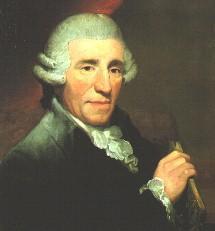
Joseph Haydn

1732 - 1809 Person Name: Josef Haydn Topics: Christ Second Coming of Composer of "AUSTRIAN HYMN" in The Psalter Franz Joseph Haydn (b. Rohrau, Austria, 1732; d. Vienna, Austria, 1809) Haydn's life was relatively uneventful, but his artistic legacy was truly astounding. He began his musical career as a choirboy in St. Stephen's Cathedral, Vienna, spent some years in that city making a precarious living as a music teacher and composer, and then served as music director for the Esterhazy family from 1761 to 1790. Haydn became a most productive and widely respected composer of symphonies, chamber music, and piano sonatas. In his retirement years he took two extended tours to England, which resulted in his "London" symphonies and (because of G. F. Handel's influence) in oratorios. Haydn's church music includes six great Masses and a few original hymn tunes. Hymnal editors have also arranged hymn tunes from various themes in Haydn's music. Bert Polman

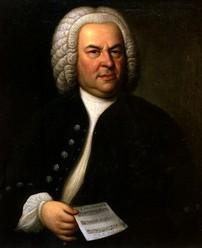
Johann Sebastian Bach

1685 - 1750 Person Name: J. S. Bach Topics: Advent; Christ; Jesus Christ; Judgment; Kingdom; Prophecy; Second Coming; Son of God; The Lord Jesus Christ Second Coming; Watchfulness Harmonizer of "WACHET AUF" in Great Songs of the Church (Revised) Johann Sebastian Bach was born at Eisenach into a musical family and in a town steeped in Reformation history, he received early musical training from his father and older brother, and elementary education in the classical school Luther had earlier attended. Throughout his life he made extraordinary efforts to learn from other musicians. At 15 he walked to Lüneburg to work as a chorister and study at the convent school of St. Michael. From there he walked 30 miles to Hamburg to hear Johann Reinken, and 60 miles to Celle to become familiar with French composition and performance traditions. Once he obtained a month's leave from his job to hear Buxtehude, but stayed nearly four months. He arranged compositions from Vivaldi and other Italian masters. His own compositions spanned almost every musical form then known (Opera was the notable exception). In his own time, Bach was highly regarded as organist and teacher, his compositions being circulated as models of contrapuntal technique. Four of his children achieved careers as composers; Haydn, Mozart, Beethoven, Mendelssohn, Schumann, Brahms, and Chopin are only a few of the best known of the musicians that confessed a major debt to Bach's work in their own musical development. Mendelssohn began re-introducing Bach's music into the concert repertoire, where it has come to attract admiration and even veneration for its own sake. After 20 years of successful work in several posts, Bach became cantor of the Thomas-schule in Leipzig, and remained there for the remaining 27 years of his life, concentrating on church music for the Lutheran service: over 200 cantatas, four passion settings, a Mass, and hundreds of chorale settings, harmonizations, preludes, and arrangements. He edited the tunes for Schemelli's Musicalisches Gesangbuch, contributing 16 original tunes. His choral harmonizations remain a staple for studies of composition and harmony. Additional melodies from his works have been adapted as hymn tunes. --John Julian, Dictionary of Hymnology (1907)

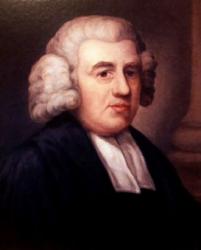
John Newton

1725 - 1807 Topics: Christ Second Coming and Judgment of Author of "Day of judgment! day of wonders!" in Trinity Hymnal John Newton (b. London, England, 1725; d. London, 1807) was born into a Christian home, but his godly mother died when he was seven, and he joined his father at sea when he was eleven. His licentious and tumul­tuous sailing life included a flogging for attempted desertion from the Royal Navy and captivity by a slave trader in West Africa. After his escape he himself became the captain of a slave ship. Several factors contributed to Newton's conversion: a near-drowning in 1748, the piety of his friend Mary Catlett, (whom he married in 1750), and his reading of Thomas à Kempis' Imitation of Christ. In 1754 he gave up the slave trade and, in association with William Wilberforce, eventually became an ardent abolitionist. After becoming a tide-surveyor in Liverpool, England, Newton came under the influence of George Whitefield and John and Charles Wesley and began to study for the ministry. He was ordained in the Church of England and served in Olney (1764-1780) and St. Mary Woolnoth, London (1780-1807). His legacy to the Christian church includes his hymns as well as his collaboration with William Cowper (PHH 434) in publishing Olney Hymns (1779), to which Newton contributed 280 hymns, including “Amazing Grace.” Bert Polman ================== Newton, John, who was born in London, July 24, 1725, and died there Dec. 21, 1807, occupied an unique position among the founders of the Evangelical School, due as much to the romance of his young life and the striking history of his conversion, as to his force of character. His mother, a pious Dissenter, stored his childish mind with Scripture, but died when he was seven years old. At the age of eleven, after two years' schooling, during which he learned the rudiments of Latin, he went to sea with his father. His life at sea teems with wonderful escapes, vivid dreams, and sailor recklessness. He grew into an abandoned and godless sailor. The religious fits of his boyhood changed into settled infidelity, through the study of Shaftesbury and the instruction of one of his comrades. Disappointing repeatedly the plans of his father, he was flogged as a deserter from the navy, and for fifteen months lived, half-starved and ill-treated, in abject degradation under a slave-dealer in Africa. The one restraining influence of his life was his faithful love for his future wife, Mary Catlett, formed when he was seventeen, and she only in her fourteenth year. A chance reading of Thomas à Kempis sowed the seed of his conversion; which quickened under the awful contemplations of a night spent in steering a water-logged vessel in the face of apparent death (1748). He was then twenty-three. The six following years, during which he commanded a slave ship, matured his Christian belief. Nine years more, spent chiefly at Liverpool, in intercourse with Whitefield, Wesley, and Nonconformists, in the study of Hebrew and Greek, in exercises of devotion and occasional preaching among the Dissenters, elapsed before his ordination to the curacy of Olney, Bucks (1764). The Olney period was the most fruitful of his life. His zeal in pastoral visiting, preaching and prayer-meetings was unwearied. He formed his lifelong friendship with Cowper, and became the spiritual father of Scott the commentator. At Olney his best works—-Omicron's Letters (1774); Olney Hymns (1779); Cardiphonia, written from Olney, though published 1781—were composed. As rector of St. Mary Woolnoth, London, in the centre of the Evangelical movement (1780-1807) his zeal was as ardent as before. In 1805, when no longer able to read his text, his reply when pressed to discontinue preaching, was, "What, shall the old African blasphemer stop while he can speak!" The story of his sins and his conversion, published by himself, and the subject of lifelong allusion, was the base of his influence; but it would have been little but for the vigour of his mind (shown even in Africa by his reading Euclid drawing its figures on the sand), his warm heart, candour, tolerance, and piety. These qualities gained him the friendship of Hannah More, Cecil, Wilberforce, and others; and his renown as a guide in experimental religion made him the centre of a host of inquirers, with whom he maintained patient, loving, and generally judicious correspondence, of which a monument remains in the often beautiful letters of Cardiphonia. As a hymnwriter, Montgomery says that he was distanced by Cowper. But Lord Selborne's contrast of the "manliness" of Newton and the "tenderness" of Cowper is far juster. A comparison of the hymns of both in The Book of Praise will show no great inequality between them. Amid much that is bald, tame, and matter-of-fact, his rich acquaintance with Scripture, knowledge of the heart, directness and force, and a certain sailor imagination, tell strongly. The one splendid hymn of praise, "Glorious things of thee are spoken," in the Olney collection, is his. "One there is above all others" has a depth of realizing love, sustained excellence of expression, and ease of development. "How sweet the name of Jesus sounds" is in Scriptural richness superior, and in structure, cadence, and almost tenderness, equal to Cowper's "Oh! for a closer walk with God." The most characteristic hymns are those which depict in the language of intense humiliation his mourning for the abiding sins of his regenerate life, and the sense of the withdrawal of God's face, coincident with the never-failing conviction of acceptance in The Beloved. The feeling may be seen in the speeches, writings, and diaries of his whole life. [Rev. H. Leigh Bennett, M.A.] A large number of Newton's hymns have some personal history connected with them, or were associated with circumstances of importance. These are annotated under their respective first lines. Of the rest, the known history of which is confined to the fact that they appeared in the Olney Hymns, 1779, the following are in common use:— 1. Be still, my heart, these anxious cares. Conflict. 2. Begone, unbelief, my Saviour is near. Trust. 3. By the poor widow's oil and meal. Providence. 4. Chief Shepherd of Thy chosen sheep. On behalf of Ministers. 5. Darkness overspreads us here. Hope. 6. Does the Gospel-word proclaim. Rest in Christ. 7. Fix my heart and eyes on Thine. True Happiness. 8. From Egypt lately freed. The Pilgrim's Song. 9. He Who on earth as man was Known. Christ the Rock. 10. How blest are they to whom the Lord. Gospel Privileges. 11. How blest the righteous are. Death of the Righteous. 12. How lost was my [our] condition. Christ the Physician. 13. How tedious and tasteless the hours. Fellowship with Christ. 14. How welcome to the saints [soul] when pressed. Sunday. 15. Hungry, and faint, and poor. Before Sermon. 16. In mercy, not in wrath, rebuke. Pleading for Mercy. 17. In themselves, as weak as worms. Power of Prayer. 18. Incarnate God, the soul that knows. The Believer's Safety. 19. Jesus, Who bought us with His blood. The God of Israel. "Teach us, 0 Lord, aright to plead," is from this hymn. 20. Joy is a [the] fruit that will not grow. Joy. 21. Let hearts and tongues unite. Close of the Year. From this "Now, through another year," is taken. 22. Let us adore the grace that seeks. New Year. 23. Mary to her [the] Saviour's tomb. Easter. 24. Mercy, 0 Thou Son of David. Blind Bartimeus. 25. My harp untun'd and laid aside. Hoping for a Revival. From this "While I to grief my soul gave way" is taken. 26. Nay, I cannot let thee go. Prayer. Sometimes, "Lord, I cannot let Thee go." 27. Now may He Who from the dead. After Sermon. 28. 0 happy they who know the Lord, With whom He deigns to dwell. Gospel Privilege. 29. O Lord, how vile am I. Lent. 30. On man in His own Image made. Adam. 31. 0 speak that gracious word again. Peace through Pardon. 32. Our Lord, Who knows full well. The Importunate Widow. Sometimes altered to "Jesus, Who knows full well," and again, "The Lord, Who truly knows." 33. Physician of my sin-sick soul. Lent. 34. Pleasing spring again is here. Spring. 35. Poor, weak, and worthless, though I am. Jesus the Friend. 36. Prepare a thankful song. Praise to Jesus. 37. Refreshed by the bread and wine. Holy Communion. Sometimes given as "Refreshed by sacred bread and wine." 38. Rejoice, believer, in the Lord. Sometimes “Let us rejoice in Christ the Lord." Perseverance. 39. Salvation, what a glorious plan. Salvation. 40. Saviour, shine and cheer my soul. Trust in Jesus. The cento "Once I thought my mountain strong," is from this hymn. 41. Saviour, visit Thy plantation. Prayer for the Church. 42. See another year [week] is gone. Uncertainty of Life. 43. See the corn again in ear. Harvest. 44. Sinner, art thou still secure? Preparation for the Future. 45. Sinners, hear the [thy] Saviour's call. Invitation. 46. Sovereign grace has power alone. The two Malefactors. 47. Stop, poor sinner, stop and think. Caution and Alarm. 48. Sweeter sounds than music knows. Christmas. 49. Sweet was the time when first I felt. Joy in Believing. 50. Ten thousand talents once I owed. Forgiveness and Peace. 51. The grass and flowers, which clothe the field. Hay-time. 52. The peace which God alone reveals. Close of Service. 53. Thy promise, Lord, and Thy command. Before Sermon. 54. Time, by moments, steals away. The New Year. 55. To Thee our wants are known. Close of Divine Service. 56. We seek a rest beyond the skies. Heaven anticipated. 57. When any turn from Zion's way. Jesus only. 58. When Israel, by divine command. God, the Guide and Sustainer of Life. 59. With Israel's God who can compare? After Sermon. 60. Yes, since God Himself has said it. Confidence. 61. Zion, the city of our God. Journeying Zionward. -- John Julian, Dictionary of Hymnology (1907) ================= Newton, J., p. 803, i. Another hymn in common use from the Olney Hymns, 1779, is "Let me dwell on Golgotha" (Holy Communion). --John Julian, Dictionary of Hymnology, Appendix, Part II (1907) ----- John Newton was born in London, July 24, 1725. His mother died when he was seven years old. In his eleventh year he accompanied his father, a sea captain, on a voyage. For several years his life was one of dissipation and crime. He was disgraced while in the navy. Afterwards he engaged in the slave trade. Returning to England in 1748, the vessel was nearly wrecked in a storm. This peril forced solemn reflection upon him, and from that time he was a changed man. It was six years, however, before he relinquished the slave trade, which was not then regarded as an unlawful occupation. But in 1754, he gave up sea-faring life, and holding some favourable civil position, began also religious work. In 1764, in his thirty-ninth year, he entered upon a regular ministry as the Curate of Olney. In this position he had intimate intercourse with Cowper, and with him produced the "Olney Hymns." In 1779, Newton became Rector of S. Mary Woolnoth, in London, in which position he became more widely known. It was here he died, Dec. 21, 1807, His published works are quite numerous, consisting of sermons, letters, devotional aids, and hymns. He calls his hymns "The fruit and expression of his own experience." --Annotations of the Hymnal, Charles Hutchins, M.A. 1872 See also in: Hymn Writers of the Church =======================

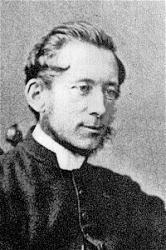
John Bacchus Dykes

1823 - 1876 Person Name: John B. Dykes Topics: The Second Coming of Christ Composer of "ST. OSWALD" in Redemption Hymnal As a young child John Bacchus Dykes (b. Kingston-upon-Hull' England, 1823; d. Ticehurst, Sussex, England, 1876) took violin and piano lessons. At the age of ten he became the organist of St. John's in Hull, where his grandfather was vicar. After receiving a classics degree from St. Catherine College, Cambridge, England, he was ordained in the Church of England in 1847. In 1849 he became the precentor and choir director at Durham Cathedral, where he introduced reforms in the choir by insisting on consistent attendance, increasing rehearsals, and initiating music festivals. He served the parish of St. Oswald in Durham from 1862 until the year of his death. To the chagrin of his bishop, Dykes favored the high church practices associated with the Oxford Movement (choir robes, incense, and the like). A number of his three hundred hymn tunes are still respected as durable examples of Victorian hymnody. Most of his tunes were first published in Chope's Congregational Hymn and Tune Book (1857) and in early editions of the famous British hymnal, Hymns Ancient and Modern. Bert Polman

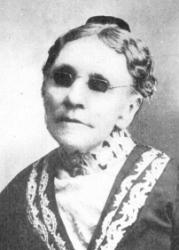
Fanny Crosby

1820 - 1915 Person Name: Fanny J Crosby Topics: The Second Coming of Christ Author of "When the Trump of the Great Archangel" in Redemption Hymnal Pseudonymns: A.V., Mrs. A. E. Andrews, Mrs. E. A. Andrews, Mrs. E. L. Andrews, James L. Black, Henrietta E. Blair, Charles Bruce, Robert Bruce, Leah Carlton, Eleanor Craddock, Lyman G. Cuyler, D.H.W., Ella Dare, Ellen Dare, Mrs. Ellen Douglass, Lizzie Edwards. Miss Grace Elliot, Grace J. Frances, Victoria Frances, Jennie Garnett, Frank Gould, H. D. K., Frances Hope, Annie L. James, Martha J. Lankton [Langton], Grace Lindsey, Maud Marion, Sallie Martin, Wilson Meade, Alice Monteith, Martha C. Oliver, Mrs. N. D. Plume, Kate Smiley, Sallie Smith, J. L. Sterling, John Sterling, Julia Sterling, Anna C. Storey, Victoria Stuart, Ida Scott Taylor, Mary R. Tilden, Mrs. J. B. Thresher, Hope Tryaway, Grace Tureman, Carrie M. Wilson, W.H.D. Frances Jane Crosby, the daughter of John and Mercy Crosby, was born in Southeast, Putnam County, N. Y., March 24, 1820. She became blind at the age of six weeks from maltreatment of her eyes during a spell of sickness. When she was eight years old she moved with her parents to Ridgefield, Conn., the family remaining there four years. At the age of fifteen she entered the New York Institution for the Blind, where she received a good education. She became a teacher in the institution in 1847, and continued her work until March 1, 1858. She taught English grammar, rhetoric and American history. This was the great developing period in her life. During the vacations of 1852 and 1853, spent at North Reading, Mass., she wrote the words to many songs for Dr. Geo. F. Root, then the teacher of music at the blind institution. Among them were, "Hazel Dell,", "The Honeysuckle Glen," "Rosalie, the Prairie Flower," "Music in the Air," "Proud World, Good-bye, I'm Going Home," "All Together", "Never Forget the Dear Ones," and others. Subsequently she wrote the words for the cantatas of The Flower Queen and The Pilgrim Fathers, all of which were very popular in their day, though it was not generally known at the time that she was the author. While teaching at the institution she met Presidents Van Buren and Tyler, Hon. Henry Clay, Governor Wm. H. Seward, General Winfield Scott, and other distinguished characters of American history. Concerning Mr. Clay, she gives the following: "When Mr. Clay came to the institution during his last visit to New York, I was selected to welcome him with a poem. Six months before he had lost a son at the battle of Monterey, and I had sent him some verses. In my address I carefully avoided any allusion to them, in order not to wound him. When I had finished he drew my arm in his, and, addressing the audience, said through his tears: 'This is not the first poem for which I am indebted to this lady. Six months ago she sent me some lines on the death of my dear son.' Both of us were overcome for a few moments. Soon, by a splendid effort, Mr. Clay recovered himself, but I could not control my tears." In connection with her meeting these notable men, we might add that Miss Fanny Crosby had the honor of being the first woman whose voice was heard publicly in the Senate Chamber at Washington. She read a poem there on one occasion. In addition to the thousands of hymns that she has written (about eight thousand poems in all), many of which have not been set to music, she has published four volumes of verses. The first was issued in 1844 and was entitled The Blind Girl, and Other Poems, a second volume, Monterey, and Other Poems, followed in 1849, and the third, A Wreath of Columbia's Flowers, in 1858. The fourth, Bells at Evening and Other Verses, with a biographical sketch by Rev. Robert Lowry, and a fine half-tone portrait, in 1897, the sales of which have reached a fourth edition. The book is published by The Biglow & Main Co., New York. Though these show the poetical bent of her mind, they have little to do with her world-wide fame. It is as a writer of Sunday-school songs and gospel hymns that she is known wherever the English language is spoken, and, in fact, wherever any other language is heard. Fanny was married March 5, 1858, to Alex. Van Alstyne, who was also a scholar in the same institution in which she was educated. She began to write Sunday-school hymns for Wm. B. Bradbury in 1864. Her first hymn, "We are going, we are going To a home beyond the skies", was written at the Ponton Hotel on Franklin Street, New York City, on February 5th of that year. This hymn was sung at Mr. Bradbury's funeral in January, 1868. Since 1864 she supported herself by writing hymns. She resided in New York City nearly all her life, where, she says, she is "a member of the Old John Street M. E. Church in good standing." She spent regular hours on certain days at the office of The Biglow & Main Co., the firm for which she did most of her writing, and for whom she has composed over four thousand hymns. Her hymns have been in great demand and have been used by many of our most popular composers, among whom may be mentioned Wm. B. Bradbury, Geo. F. Root, W. H. Doane, Rev. Robert Lowry, Ira D. Sankey, J. R. Sweney, W. J. Kirkpatrick, H. P. Main, H. P. Danks, Philip Phillips, B. G. Unseld, and others. She could compose at any time and did not need to wait for any special inspiration, and her best hymns have come on the spur of the moment. She always composed with an open book in her hand, generally a copy of Golden Hymns, held closely over her eyes, bottom side up. She learned to play on the guitar and piano while at the institution, and has a clear soprano voice. She also received a technical training in music, and for this reason she could, and did, compose airs for some of her hymns. One of these is, "Jesus, dear, I come to Thee, Thou hast said I may," both words and music of which are wonderfully sweet. "Safe in the arms of Jesus", probably one of her best known hymns, was her own favorite. Fanny loved her work, and was happy in it. She was always ready either to sympathize or join in a mirthful conversation, as the case may be. The secret of this contentment dates from her first composition at the age of eight years. "It has been the motto of my life," she says. It is: "O what a happy soul am I! Although I cannot see, I am resolved that in this world Contented I will be;" This has continued to be her philosophy. She says that had it not been for her affliction she might not have so good an education, nor so great an influence, and certainly not so fine a memory. She knows a great many portions of the Bible by heart, and had committed to memory the first four books of the Old Testament, and also the four Gospels before she was ten years of age. Her scope of subjects is wide, embracing everything from a contemplation of heaven, as in "The Bright Forever" and "The Blessed Homeland", to an appeal to the work of this world, as in "To the Work" and "Rescue the Perishing." The most of Fanny's published hymns have appeared under the name of Fanny J. Crosby or Mrs. Yan Alstyne, but quite a large number have appeared under the nom de plumes of Grace J. Frances, Mrs. C. M. Wilson, Lizzie Edwards, Ella Dale, Henrietta E. Blair, Rose Atherton, Maud Marion, Leah Carlton, nearly two hundred different names. -Biographies of Gospel Song and Hymn Writers (excerpts) ======================= Van Alstyne, Frances Jane, née Crosby, a member of the Methodist Episcopal Church, was born at South East, Putnam County, New York, March 24, 1823. When six weeks old she lost her sight. About 1835 she entered the New York City Institution for the Blind. On completing her training she became a teacher therein from 1847 to 1858. In 1858 she was married to Alexander Van Alstyne, a musician, who was also blind. Her first poem was published in 1831; and her first volumes of verse as A Blind Girl, and Other Poems, 1844; Monteresy, and Other Poems, 1849; and A Wreath of Columbia's Flowers, 1858. Her first hymn was "We are going, we are going" (Death and Burial), which was written for Mr. Bradbury and published in the Golden Censer, 1864. From 1853 to 1858 she wrote 20 songs, which were set to music by G. F. Root. Her songs and hymns number some 2,000 or more, and have been published mainly in several of the popular American Sunday school collections, and often under a nom de plume. About 60 have come into common use in Great Britain. The majority of these are taken from the following American collections:— i. From The Shining Star, 1864. 1. Softly on the breath of evening. Evening. ii. From Fresh Laurels, 1867. 2. Beautiful Mansions, home of the blest. Heaven. 3. Jesus the Water of Life has given. The Water of Life. 4. Light and Comfort of my soul. In Affliction. 5. There's a cry from Macedonia. Missions. 6. We are marching on with shield and banner bright. Sunday School Anniversary. iii. From Musical Leaves, 1868. 7. 0 what are you going to do, brother? Youth for God. iv. From Sabbath Carols, 1868. 8. Dark is the night, and cold the wind is blowing. Affliction anticipated. 9. Lord, at Thy mercy seat, Humbly I fall. Lent. v. From Silver Spray, 1868. 10. If I come to Jesus, He will make me glad. Peace in Jesus. 11. 'Twill not be long—our journey here. Heaven anticipated. vi. From Notes of Joy, 1869. 12. Little beams of rosy light. The Divine Father. 13. Press on! press on! a glorious throng. Pressing towards the Prize. vii. From Bright Jewels, 1869. 14. Christ the Lord is risen today, He is risen indeed. Easter. 15. Holy, holy, holy is the Lord! Sing 0 ye people, &c. Holiness of God. 16. Jesus, keep me near the Cross. Near the Cross of Christ. 17. Saviour, bless a little child. A Child's Prayer. Written Feb. 6, 1869. viii. From Songs of Devotion, 1870. 18. Pass me not, 0 gentle Saviour. Lent. Written in 1868. 19. Rescue the perishing, care for the dying. Home Missions. ix. From Pure Gold, 1871. 20. Great is Jehovah. King of kings. Greatness of God. 21. I would be Thy little lamb. The Good Shepherd. 22. Lead me to Jesus, lead me to Jesus. Desiring Jesus. 23. To the work, to the work, we are servants of God. Home Missions. 24. Why labour for treasures that rust and decay? The Fadeless Crown. x. From the Royal Diadem, 1873. 25. I am Jesus' little friend. For Infant Schools. 26. Jesus I love Thee. Loving Jesus. 27. Mourner, wheresoe'er thou art. To the Sorrowing and Penitent. Written Oct. 3, 1871. 28. Never be faint or weary. Joy in Jesus. 29. Only a step to Jesus. Invitation. xi. From Winnowed Hymns, 1873-4. 30. Loving Saviour, hear my cry. Lent. xii. From Echoes of Zion, 1874. 31. Say, where is thy refuge, my brother? Home Missions. xiii. From Songs of Grace and Glory, 1874. 32. Thou my everlasting Portion. Christ the Portion of His People. xiv. From Brightest and Best, 1875. 33. All the way my Saviour leads me. Jesus the Guide. 34. I am Thine, O Lord: I have heard Thy voice. Holiness desired. 35. O come to the Saviour, believe in His name. Invitation. Written, Sep. 7, 1874. 36. O how sweet when we mingle. Communion of Saints. Written in 1866. 37. O my Saviour, hear me. Prayer to Jesus for blessing and love. 38. Only Jesus feels and knows. Jesus the Divine Friend. 39. Revive Thy work, O Lord. Home Missions. 40. Saviour, more than life to me. Jesus All and in All. 41. To God be the glory, great things He hath done. Praise for Redemption. xv. From Calvary Songs, 1875. 42. Come, O come with thy broken heart. Invitation. xvi. From Gospel Music, 1876. 43. Here from the world we turn. Divine Worship. 44. When Jesus comes to reward His servants. Watching, xvii. From Welcome Tidings, 1877. 45. O hear my cry, be gracious now to me. For Pardon and Peace. xviii. From The Fountain of Song, 1877. 46. Lord, my trust I repose on Thee. Trusting in Jesus. xix. From Good as Gold, 1880. 47. In Thy cleft, O Rock of Ages. Safety in Jesus. 48. Sound the alarm ! let the watchman cry. Home Missions. 49. Tenderly He leads us. Christ the Leader. 50. 'Tis the blessed hour of prayer. The Hour of Prayer. In addition to these hymns, all of which are in common use in Great Britain (mainly through I. D. Sankey's Sacred Songs and Solos, the Methodist Sunday School Hymn Book, the Silver Street Sunday Scholars Companion, and other collections for Sunday schools), there are also "A blessing for you, will you take it?" (Pardon through Jesus); "My song shall be of Jesus" (Praise of Jesus); “Now, just a word for Jesus"(Home Missions); "Onward, upward, Christian soldier" (Pressing Heavenward); 44 Sinner, how thy heart is troubled" (Invitation); "'Tis a goodly, pleasant land" (Heaven anticipated); and "When the dewy light was fading" (Death anticipated). All of these are in I. D. Sankey's Sacred Songs & Solos. Mrs. Van Alstyne's most popular composition is "Safe in the arms of Jesus" (Safety in Jesus). This was written in 1868, at the request of Mr. W. H. Doane, to his well-known melody with which it is inseparably associated, and published in Bright Jewels, 1869. Mrs. Van Alstyne's hymns have sometimes been published anonymously; but the greater part are signed by a bewildering number of initials. The combined sales of the volumes of songs and hymns named above have amounted in English-speaking countries to millions of copies. Notwithstanding the immense circulation thus given to Mrs. Van Alstyne's hymns, they are, with few exceptions, very weak and poor, their simplicity and earnestness being their redeeming features. Their popularity is largely due to the melodies to which they are wedded. Since the above was in type we have found that the following are also in common use in Great Britain:— 51. Suppose the little cowslip. Value of Little Things. 52. Sweet hour of prayer. The Hour of Prayer. These are in Bradbury's Golden Chain, 1861. 53. Never lose the golden rule. Love to our Neighbours. In Bradbury's Golden Censer, 1864. 54. I will not be afraid at night. Trust in God. In Bradbury's Fresh Laurels, 1867. 55. Praise Him, praise Him, Jesus our, &c. Praise of Jesus. In Biglow & Main's Bright Jewels, 1869. 56. More like Jesus would I be. More like Jesus. In Perkins & Taylor's Songs of Salvation, 1870. 57. Behold me standing at the door. Christ at the Door. In Biglow & Main's Christian Songs, 1872. 58. If I come to Jesus. Jesus the Children's Guide. 59. Jesus, Lord, I come to Thee. Trust in Jesus. 60. Let me learn of Jesus. Jesus the Children's Friend. 61. Singing for Jesus, O singing for Jesus. Singing for Jesus. 62. There is a Name divinely sweet Holy Name of Jesus. Of these hymns Nos. 58-62 we have not been able to trace. --Excerpts from John Julian, Dictionary of Hymnology (1907 ================ Van Alstyne, Frances J., p. 1203, ii. From the American collections of recent date we find that Mrs. Van Alstyne is still actively engaged in hymn-writing. In the Funk and Wagnalls Company Gloria Deo, 1903, there are about 30 of her hymns, most of which are new. They are all signed, and some are dated, but we have not space to quote the first lines and subjects, as this hymnal is not an official collection of any denomination. Another name, "Mrs. S. K. Bourne" is credited in the same hymnal with about 40 new hymns. If this signature is not another pen-name of Mrs. Van Alstyne's (and these pen-names and initials of hers are very numerous), we can only say that she has a very successful understudy in "Mrs. S. K. Bourne." --John Julian, Dictionary of Hymnology, New Supplement (1907)

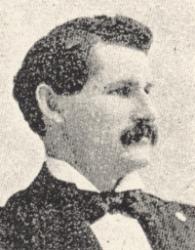
James M. Black

1856 - 1938 Person Name: J M Black Topics: The Second Coming of Christ Author of "When the Roll is called up yonder" in Redemption Hymnal James Milton Black USA 1856-1938 Born in South Hill, NY, Black was an American hymn composer, choir leader and Sunday school teacher. He worked, lived,and died in Williamsport, PA. An active member, he worked at the Pine Tree Methodist Episcopal Church there. He married Lucy Love Levan. He started his music career with John Howard of New York and Daniel B. Towner of the Moody Bible Institute in Chicago. He edited a dozen gospel song books and wrote nearly 1500 songs. He also served on the commission for the 1905 Methodist Hymnal. John Perry

Pages


Export as CSV
It looks like you are using an ad-blocker. Ad revenue helps keep us running. Please consider white-listing Hymnary.org or getting Hymnary Pro to eliminate ads entirely and help support Hymnary.org.