You help make Hymnary.org possible. More than 10 million people from 200+ countries found hymns, liturgical resources and encouragement on Hymnary.org in 2025, including you. Every visit affirms the global impact of this ministry.

If Hymnary has been meaningful to you this year, would you take a moment today to help sustain it? A gift of any size—paired with a note of encouragement if you wish—directly supports the server costs, research work and curation that keep this resource freely available to the world.

Give securely online today, or mail a check to:
Hymnary.org
Calvin University
3201 Burton Street SE
Grand Rapids, MI 49546

Thank you for your partnership, and may the hope of Advent fill your heart.

Person Results

Topics:works+of+god+
In:people

Planning worship? Check out our sister site, ZeteoSearch.org, for 20+ additional resources related to your search.
Showing 21 - 30 of 692Results Per Page: 102050

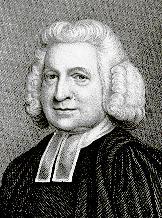
Charles Wesley

1707 - 1788 Person Name: Charles Wesley, 1707-1788 Topics: Christ, the Lord Jesus Advocate; Christ, the Lord Jesus Atoning Work of; God: His Being, Word and Works God the Son: His Suffering and Death Author of "All ye that pass by" in The Book of Praise Charles Wesley, M.A. was the great hymn-writer of the Wesley family, perhaps, taking quantity and quality into consideration, the great hymn-writer of all ages. Charles Wesley was the youngest son and 18th child of Samuel and Susanna Wesley, and was born at Epworth Rectory, Dec. 18, 1707. In 1716 he went to Westminster School, being provided with a home and board by his elder brother Samuel, then usher at the school, until 1721, when he was elected King's Scholar, and as such received his board and education free. In 1726 Charles Wesley was elected to a Westminster studentship at Christ Church, Oxford, where he took his degree in 1729, and became a college tutor. In the early part of the same year his religious impressions were much deepened, and he became one of the first band of "Oxford Methodists." In 1735 he went with his brother John to Georgia, as secretary to General Oglethorpe, having before he set out received Deacon's and Priest's Orders on two successive Sundays. His stay in Georgia was very short; he returned to England in 1736, and in 1737 came under the influence of Count Zinzendorf and the Moravians, especially of that remarkable man who had so large a share in moulding John Wesley's career, Peter Bonier, and also of a Mr. Bray, a brazier in Little Britain. On Whitsunday, 1737, [sic. 1738] he "found rest to his soul," and in 1738 he became curate to his friend, Mr. Stonehouse, Vicar of Islington, but the opposition of the churchwardens was so great that the Vicar consented that he "should preach in his church no more." Henceforth his work was identified with that of his brother John, and he became an indefatigable itinerant and field preacher. On April 8, 1749, he married Miss Sarah Gwynne. His marriage, unlike that of his brother John, was a most happy one; his wife was accustomed to accompany him on his evangelistic journeys, which were as frequent as ever until the year 1756," when he ceased to itinerate, and mainly devoted himself to the care of the Societies in London and Bristol. Bristol was his headquarters until 1771, when he removed with his family to London, and, besides attending to the Societies, devoted himself much, as he had done in his youth, to the spiritual care of prisoners in Newgate. He had long been troubled about the relations of Methodism to the Church of England, and strongly disapproved of his brother John's "ordinations." Wesley-like, he expressed his disapproval in the most outspoken fashion, but, as in the case of Samuel at an earlier period, the differences between the brothers never led to a breach of friendship. He died in London, March 29, 1788, and was buried in Marylebone churchyard. His brother John was deeply grieved because he would not consent to be interred in the burial-ground of the City Road Chapel, where he had prepared a grave for himself, but Charles said, "I have lived, and I die, in the Communion of the Church of England, and I will be buried in the yard of my parish church." Eight clergymen of the Church of England bore his pall. He had a large family, four of whom survived him; three sons, who all became distinguished in the musical world, and one daughter, who inherited some of her father's poetical genius. The widow and orphans were treated with the greatest kindness and generosity by John Wesley. As a hymn-writer Charles Wesley was unique. He is said to have written no less than 6500 hymns, and though, of course, in so vast a number some are of unequal merit, it is perfectly marvellous how many there are which rise to the highest degree of excellence. His feelings on every occasion of importance, whether private or public, found their best expression in a hymn. His own conversion, his own marriage, the earthquake panic, the rumours of an invasion from France, the defeat of Prince Charles Edward at Culloden, the Gordon riots, every Festival of the Christian Church, every doctrine of the Christian Faith, striking scenes in Scripture history, striking scenes which came within his own view, the deaths of friends as they passed away, one by one, before him, all furnished occasions for the exercise of his divine gift. Nor must we forget his hymns for little children, a branch of sacred poetry in which the mantle of Dr. Watts seems to have fallen upon him. It would be simply impossible within our space to enumerate even those of the hymns which have become really classical. The saying that a really good hymn is as rare an appearance as that of a comet is falsified by the work of Charles Wesley; for hymns, which are really good in every respect, flowed from his pen in quick succession, and death alone stopped the course of the perennial stream. It has been the common practice, however for a hundred years or more to ascribe all translations from the German to John Wesley, as he only of the two brothers knew that language; and to assign to Charles Wesley all the original hymns except such as are traceable to John Wesley through his Journals and other works. The list of 482 original hymns by John and Charles Wesley listed in this Dictionary of Hymnology have formed an important part of Methodist hymnody and show the enormous influence of the Wesleys on the English hymnody of the nineteenth century. -- Excerpts from John Julian, Dictionary of Hymnology (1907) ================== Charles Wesley, the son of Samuel Wesley, was born at Epworth, Dec. 18, 1707. He was educated at Westminster School and afterwards at Christ Church, Oxford, where he graduated M.A. In 1735, he took Orders and immediately proceeded with his brother John to Georgia, both being employed as missionaries of the S.P.G. He returned to England in 1736. For many years he engaged with his brother in preaching the Gospel. He died March 29, 1788. To Charles Wesley has been justly assigned the appellation of the "Bard of Methodism." His prominence in hymn writing may be judged from the fact that in the "Wesleyan Hymn Book," 623 of the 770 hymns were written by him; and he published more than thirty poetical works, written either by himself alone, or in conjunction with his brother. The number of his separate hymns is at least five thousand. --Annotations of the Hymnal, Charles Hutchins, M.A., 1872.

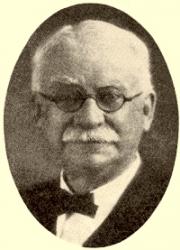
Winfred Douglas

1867 - 1944 Person Name: C. Winfred Douglas, 1867-1944 Topics: City of God; Comfort; Complacency; Courage; Daily Life and Work; Discipleship; Eternal Life; Heaven; Kingdom/Reign of God; Lamb Of God; Love for Others; New Creation; Second Coming; Social Concern; Strength; Suffering Harmonizer of "MORNING SONG" in Gather (3rd ed.) Charles Winfred Douglas (b. Oswego, NY, 1867; d. Santa Rosa, CA, 1944), an influential leader in Episcopalian liturgical and musical life. Educated at Syracuse University and St. Andrews Divinity School, Syracuse, New York, he moved to Colorado for his health. There he studied at St. Matthew's Hall, Denver, and founded the Mission of the Transfiguration in Evergreen (1897). Ordained a priest in the Episcopal Church in 1899, he also studied in France, Germany and England, where he spent time with the Benedictines of Solesmes on the Island of Wight from 1903 to 1906. For much of his life, Douglas served as director of music at the Community of St. Mary in Peekskill, New York, and had associations with cathedrals in Denver, Colorado, and Fond du Lac, Wisconsin. He promoted chanting and plainsong in the Episcopal Church through workshops and publications such as The American Psalter (1929), the Plainsong Psalter (1932), and the Monastic Diurnal (1932). His writings include program notes for the Denver Symphony Orchestra, various hymn preludes; organ, as well as the book, Church Music in History and Practice (1937). He was editor of both the Hymnal 1916 and its significant successor, Hymnal 1940, of the Episcopal Church. Douglas's other achievements include a thorough knowledge of the life and culture of Hopi and Navajo natives, among whom he lived for a number of years. Bert Polman

William Penfro Rowlands

1860 - 1937 Topics: Love Of God; Heaven; Indwelling of the Holy Spirit; Love; The Work of Christ Composer of "BLAENWERN" in The Sing! Hymnal

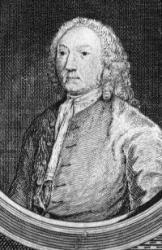
William Knapp

1698 - 1768 Person Name: William Knapp, 1698 - 1768 Topics: Christ, the Lord Jesus Advocate; Christ, the Lord Jesus Atoning Work of; God: His Being, Word and Works God the Son: His Suffering and Death Composer of "WAREHAM" in The Book of Praise Born: 1698, Ware­ham, Dor­set­shire, Eng­land. Died: Sep­tem­ber 26, 1768, Poole, Dor­set­shire, Eng­land. Buried: Poole, Dor­set­shire, Eng­land.

Joseph P. Holbrook

1822 - 1888 Topics: Christian Activity; Aspirations For Grace; Aspirations For Holiness; Assurance Desired; Baptism; Character Depraved from Birth; Character New Birth Essential to Good; Christ Confessing; Christians Debt of; Christians Duties of; Christians Evangelists; Christians Graces of; Christians Saved by Grace; Deliverance From Sin; Faith Act of; Faith Walking by; God Love and Mercy; Gospel Freeness of ; Gospel Preaching of; Gospel Prevalence and Power of; Gospel Sanctifying and Saving; Grace Justifying; Grace Restoring; Grace Sovereign ; Heart Claimed of God; Heart Good, Perfect, Pure and Upright; Holiness Of Christians; The Holy Spirit; Humility; Joy Prayer for; Man Sinful and Lost Condition; Pardon Sought; Parents and Children; Penitence; Praise For Work of Redemption; Prayer Confession in; Prayer For Grace and Salvation; Prayer For Pardon; Regeneration; Repentance; Revival; The Righteous Contrasted with the Wicked; Sin Confession of; Sin Conviction of; Sin Hatred of; Sin Original; Sin Salvation from; Sin Washed away; Thanksgiving For God's Mercies; Truth; Worship Sincerity in Composer of "REFUGE" in The Psalter Joseph P. Holbrook was a tune writer in the parlor music style, and used the popular melodies of Mason and Hastings, Bradbury and Root, Greatorex and Kingsley in his collections. He furnished settings for the choir hymns in Songs for the Sanctuary in his Quartet and chorus Choir (New York, 1871, and sought more recogniation than had been given him in a hymnal of his own, Worship in Song (New York, 1880); a book that found no welcome. from The English hymn: its development and use in worship By Louis FitzGerald Benson

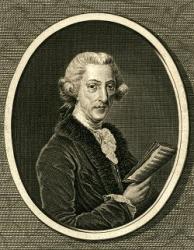
Thomas Augustine Arne

1710 - 1778 Person Name: Dr. Thomas A. Arne Topics: Activity; Christ The Lamb; Word of God; Works; Living the Saintly Life Activity and Service Composer of "ARLINGTON" in The Hymnal Dr. Thomas Augustine Arne was born March 12, 1710, in London; became early celebrated as a composer, and established his reputation by settling Milton's "Comus" to music - light, airy, and original; he composed many songs, and nearly all his attempts were successful; died March 5, 1778, aged 68. A Dictionary of Musical Information by John W. Moore, Boston: Oliver, Ditson & Company, 1876

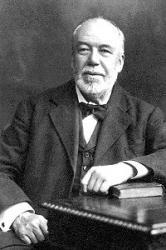
A. H. Mann

1850 - 1929 Person Name: A.H. Mann, 1850 - 1929 Topics: Christ, the Lord Jesus Exaltation of; God: His Being, Word and Works God the Son: His Nativity: Christmas Harmonizer of "IRBY" in The Book of Praise Arthur Henry ‘Daddy’ Mann MusB MusD United Kingdom 1850-1929. Born at Norwich, Norfolk, England, he graduated from New College, Oxford. He married Sarah Ransford, and they had five children: Sarah, Francis, Arthur, John, and Mary. Arthur died in infancy. Mann was a chorister and assistant organist at Norwich Cathedral, then, after short stints playing the organ at St Peter’s, Wolverhampton (1870-71); St. Michael’s Tettenhall Parish Church (1871-75); and Beverley Minster (1875-76); he became organist at King’s College Chapel, Cambridge (1876-1929), Cambridge University organist (1897-1929), and music master and organist at the Leys School, Cambridge (1894-1922). In addition to composing an oratorio and some hymn tunes, he was music editor of the Church of England Hymnal (1894). In 1918 he directed the music and first service of “Nine lessons & carols” at King’s College Chapel. He was an arranger, author, composer, and editor. His wife, Sarah, died in 1918. He died at Cambridge, England. John Perry

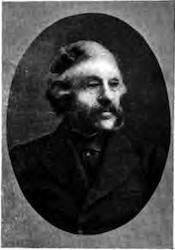
George James Webb

1803 - 1887 Person Name: George J. Webb Topics: God Works of Composer of "WEBB" in The Psalter George James Webb, b. 1803,England; d. 1887, Orange, N. J. Evangelical Lutheran Hymnal, 1908

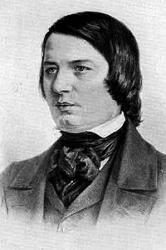
Robert Schumann

1810 - 1856 Topics: Doubt; Trust in God; God's Work His Decrees; God Sovereignty of ; Mystery of God's Ways Composer of "CANONBURY" in Trinity Hymnal (Rev. ed.) Robert Alexander Schumann DM Germany 1810-1856. Born at Swickau, Saxony, Germany, the last child of a novelist, bookseller, and publisher, he began composing music at age seven. He received general music instruction at the local high school and worked to create his own compositions. Some of his works were considered admirable for his age. He even composed music congruent to the personalities of friends, who took note of the anomaly. He studied famous poets and philosophers and was impressed with the works of other famous composers of the time. After his father’s death in 1826, he went to Leipzig to study law (to meet the terms of his inheritance). In 1829 he continued law studies in Heidelberg, where he became a lifelong member of Corps Saxo-Borussia Heidelberg. In 1830 he left the study of law to return to music, intending to pursue a career as a virtuoso pianist. His teacher, Friedrich Wieck, assured him he could become the finest pianist in Europe, but an injury to his right hand (from a practicing method) ended that dream. He then focused his energies on composition, and studied under Heinrich Dorn, a German composer and conductor of the Leipzig opera. Schumann visited relatives in Zwickau and Schneeberg and performed at a concert given by Clara Wieck, age 13 at the time. In 1834 he published ‘A new journal for music’, praising some past composers and deriding others. He met Felix Mendelssohn at Wieck’s house in Leigzig and lauded the greatness of his compositions, along with those of Johannes Brahms. He also wrote a work, hoping to use proceeds from its sale towards a monument for Beethoven, whom he highly admired. He composed symphonies, operas, orchestral and chamber works, and also wrote biographies. Until 1840 he wrote strictly for piano, but then began composing for orchestra and voice. That year he composed 168 songs. He also receive a Doctorate degree from the University of Jena that year. An aesthete and influential music critic, he was one of the most regarded composers of the Romantic era. He published his works in the ‘New journal for music’, which he co-founded. In 1840, against the wishes of his father, he married Clara Wieck, daughter of his former teacher, and they had four children: Marie, Julie, Eugenie, and Felix. Clara also composed music and had a considerable concert career, the earnings from which formed a substantial part of her father’s fortune. In 1841 he wrote 2 of his 4 symphonies. In 1843 he was awarded a professorship in the Conservatory of Music, which Mendelssohn had founded in Leipzig that same year, When he and Clara went to Russia for her performances, he was questioned as to whether he also was a musician. He harbored resentment for her success as a pianist, which exceeded his ability as a pianist and reputation as a composer. From 1844-1853 he was engaged in setting Goethe’s Faust to music, but he began having persistent nervous prostration and developed neurasthenia (nervous fears of things, like metal objects and drugs). In 1846 he felt he had recovered and began traveling to Vienna, Prague, and Berlin, where he was received with enthusiasm. His only opera was written in 1848, and an orchestral work in 1849. In 1850 he succeeded Ferdinand Hiller as musical director at Dusseldorf, but was a poor conductor and soon aroused the opposition of the musicians, claiming he was impossible on the platform. From 1850-1854 he composed a wide variety of genres, but critics have considered his works during this period inferior to earlier works. In 1851 he visited Switzerland, Belgium, and returned to Leipzig. That year he finished his fourth symphony. He then went to Dusseldorf and began editing his complete works and making an anthology on the subject of music. He again was plagued with imaginary voices (angels, ghosts or demons) and in 1854 jumped off a bridge into the Rhine River, but was rescued by boatmen and taken home. For the last two years of his life, after the attempted suicide, Schumann was confined to a sanitarium in Endenich near Bonn, at his own request, and his wife was not allowed to see him. She finally saw him two days before he died, but he was unable to speak. He was diagnosed with psychotic melancholia, but died of pneumonia without recovering from the mental illness. Speculations as to the cause of his late term maladies was that he may have suffered from syphilis, contracted early in life, and treated with mercury, unknown as a neurological poison at the time. A report on his autopsy said he had a tumor at the base of the brain. It is also surmised he may have had bipolar disorder, accounting for mood swings and changes in his productivity. From the time of his death Clara devoted herself to the performance and interpretation of her husband’s works. John Perry

W. Stillman Martin

1862 - 1935 Topics: Trust in God; God's Work Providence; Consolation; God Faithfulness of; God Love and Grace of Composer of "GOD CARES" in Trinity Hymnal (Rev. ed.) Born: March 8, 1862, Rowley, Massachusetts. Died: December 16, 1935, Atlanta, Georgia. Buried: Westview Cemetery, Atlanta, Georgia. Husband of hymnist Civilla Martin, Stillman attended Harvard University and was ordained a Baptist minister, though he later switched to the Disciples of Christ denomination. In 1916, he became a professor of Bible studies at Atlantic Christian College in Wilson, North Carolina. Three years later, he moved to Atlanta, Georgia. It was from there he went all over America to run Bible conferences and evangelistic meetings. Sources: Hustad, p. 282 http://www.hymntime.com/tch/bio/m/a/r/t/martin_ws.htm

Pages


Export as CSV
It looks like you are using an ad-blocker. Ad revenue helps keep us running. Please consider white-listing Hymnary.org or getting Hymnary Pro to eliminate ads entirely and help support Hymnary.org.