You help make Hymnary.org possible. More than 10 million people from 200+ countries found hymns, liturgical resources and encouragement on Hymnary.org in 2025, including you. Every visit affirms the global impact of this ministry.

If Hymnary has been meaningful to you this year, would you take a moment today to help sustain it? A gift of any size—paired with a note of encouragement if you wish—directly supports the server costs, research work and curation that keep this resource freely available to the world.

Give securely online today, or mail a check to:
Hymnary.org
Calvin University
3201 Burton Street SE
Grand Rapids, MI 49546

Thank you for your partnership, and may the hope of Advent fill your heart.

Person Results

Tune Identifier:"^bangor_tansur$"
In:people

Planning worship? Check out our sister site, ZeteoSearch.org, for 20+ additional resources related to your search.
Showing 21 - 30 of 52Results Per Page: 102050

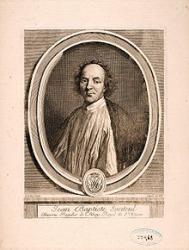
Jean-Baptiste de Santeul

1630 - 1697 Person Name: Jean B. Santeuil Author of "O Zion, Open Wide Thy Gates" in The Cyber Hymnal Santeüil, Jean-Baptiste de, was born in Paris of a good family on May 12, 1630. He was one of the regular Canons of St. Victor, at Paris, and, under the name of Santolius Victorinus, was distinguished as a writer of Latin poetry. Many of his hymns appeared in the Cluniac Breviary 1686, and the Paris Breviaries 1680 and 1736, and several have been translated into English, and are in common use in Great Britain and America. He was very jocose in disposition and singular in his habits. When on a journey he died at Dijon, Aug. 5, 1697. His Hymni Sacri et Novi were published at Paris in 1689, and again, enlarged, in 1698. [George Arthur Crawford, M.A.] --John Julian, Dictionary of Hymnology (1907)

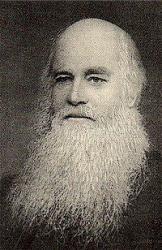
James G. Deck

1802 - 1884 Author of "The veil is rent! Lo! Jesus stands" in Hymns Deck, James George, eldest son of John Deck, of Bury St. Edmunds, was born in 1802 and educated for the army, and became an officer in the Indian service. Retiring from the army, and having joined the Plymouth Brethren, he undertook, in 1843, the charge of a congregation of that body, at Wellington, Somerset. In 1852 be went abroad and settled in New Zealand. His hymns were published in Hymns for the Poor of the Flock, 1837-1838; Psalms and Hymns, &c, London, Walther (containing those in the former collection), 1842; the Wellington Hymn Book, 1857; Hymns and Spiritual Songs, 1860. Of his hymns now in use outside his own denomination, the greater part appeared in the 1837-1838 book, and are found in his brother-in-law's (Dr. Walker's) Cheltenham Psalms & Hymns, 1855. His compositions are marked by directness of aim, simplicity of language, and great earnestness. The rhythm is good, and an expressive tenderness pervades many of them. Although dealing mainly with the "Second Advent," there are several on other subjects which are of more than average merit. In a collected form they were published in his Hymns and Sacred Poems, Melbourne, H. Seelenmeyer, 1876. The more important of his hymns are annotated under their respective first lines. Of the rest we have:— i. From Hymns for the Poor of the Flock, 1838. 1. Behold yon bright and countless throng. All Saints. Repeated in Maurice's Choral Hymnbook, 1861. 2. How long, O Lord our Saviour. Second Advent desired. In the Parish Hymnbook., 1803 and 1875, this is altered to "How long, O Lord, Beloved." 3. Jesus, spotless Lamb of God. Good Friday. 4. Lord Jesus, are we [we are] one with Thee? One with Christ. In Walker's Psalms and Hymns, 1855-1880, and several American hymn-books. 5. Lord, we are Thine, our God Thou art. One with Christ. Originally in 4 st. of 8 1., it appeared, in a re-written form in 3 st. in Walker's Psalms and Hymns, 1855, as " Lord, we are Thine, in Thee we live." 6. 0 happy day when first we felt. The Day of Peace. 7. 0 Jesus Christ, the Saviour. Jesus All in All. In Walker's Psalms and Hymns, it begins: "0 Jesus Christ, our Saviour." 8. 0 Jesus, gracious Saviour." The Advocate. 9. 0 Lord, when we the path retrace. Christ our Example. 10. 0 Lord, who now art seated. Christ in glory. 11. Saviour, haste; our souls are waiting. Second Advent desired. This is given in Walker's Psalms and Hymns, in a rewritten form as "Saviour, hasten Thine appearing." 12. Soon shall our Master come. Waiting for Christ. 13. There is a place of endless joy. Heaven. 14. We're not of the world that fadeth away. Christ's Sheep. 15. When along life's thorny road. Passiontide. ii. From Appendix, to the 1841 edition of the Hymns for the Poor of the Flock. 16. Lamb of God, our souls adore Thee. Praise to Christ. Sometimes it begins with st. ii.," Lamb of God, Thy Father's bosom." 17. Lamb of God, Thou now art seated. 2nd Part. of No. 10. iii. From Psalms and Hymns, in Two Parts, Lond., D. Waither, 1842. 18. Again we meet in Jesus' name. Divine Worship. 19. Great Captain of Salvation. Burial. In the Irish Church Hymnal, and other collections. 20. Jesus, Thy name indeed is sweet. Hope of the Resurrection. 21. O blessed Jesus, Lamb of God. Praise to Jesus. 22. 0 Lamb of God, still keep me [us]. Christ's Presence desired. This hymn is somewhat popular in America. 23. 0 Lord, in nothing would I boast. Christ All in All. 24. Oft we, alas! forget the love. Holy Communion. 25. The veil is rent! lo, Jesus stands [our souls draw near]. The Intercessor. 26. We bless our Saviour's name. Thanksgiving for Forgiveness. iv. From Psalms and Hymns for Public and Social Worship (Dr. Walker's Collection), 1855. 27. Father, to seek Thy face. Public Worship. 28. Jesus, [I] we rest in [on] Thee. Joy in Forgiveness. 29. 0 Lord, 'tis joy to look above. Joy in the service of Christ. 30. Thou hast stood here, Lord Jesus. Burial. 31. 'Twas Thy love, 0 God, that knew us. Praise to God. 32. When first o'erwhelm ed with sin and shame. Peace with God. All these hymns, except No. 1, are given in Dr. Walker's Collection, 1855-1880, and most of them are also found in other collections. -- John Julian, Dictionary of Hymnology (1907) ====================== Deck, James George, p. 285, ii. He died circa 1884. His hymn, noted on p. 286, No. 28, "Jesus [I] we rest in [on] Thee," should be dated 1842. Additional hymns in common use are:—(1) "Lord Jesus, when I think of Thee," 1856 (Jesus, All and in All); (2) "The day of glory, bearing," 1838 (Passiontide). --John Julian, Dictionary of Hymnology, Appendix, Part II (1907) ==================== Deck, J. G., pp. 285, ii.; 1559, ii. Miss M. O. Deck, of Motueka, Nelson, New Zealand, informs us that her father, Mr. J. G. Deck, died at the village of Motueka, near Nelson, N.Z., on the 14th of August, 1884. --John Julian, Dictionary of Hymnology, New Supplement (1907) ==================== James Deck wrote of his youth, "I hoped there were no God," yet his mother's training pursued after him. "She read to me of Jesus, Of all his grace and love." After his conversion, the study of scripture revealed the doctrinal error of his Anglican upbringing. Forsaking all, he set his heart to follow God "at any cost." Later, his son testified this determination was "a trust never disappointed." - Psalms and Hymns and Spiritual Songs (2018)

Edward Caswall

1814 - 1878 Translator (from Latin) of "O Zion, Open Wide Thy Gates" in The Cyber Hymnal Edward Caswall was born in 1814, at Yately, in Hampshire, where his father was a clergyman. In 1832, he went to Brasenose College, Oxford, and in 1836, took a second-class in classics. His humorous work, "The Art of Pluck," was published in 1835; it is still selling at Oxford, having passed through many editions. In 1838, he was ordained Deacon, and in 1839, Priest. He became perpetural Curate of Stratford-sub-Castle in 1840. In 1841, he resigned his incumbency and visited Ireland. In 1847, he joined the Church of Rome. In 1850, he was admitted into the Congregation of the Oratory at Birmingham, where he has since remained. He has published several works in prose and poetry. --Annotations of the Hymnal, Charles Hutchins, M.A. 1872 ===================== Caswall, Edward, M.A., son of the Rev. R. C. Caswall, sometime Vicar of Yately, Hampshire, born at Yately, July 15, 1814, and educated at Brasenose College, Oxford, graduating in honours in 1836. Taking Holy Orders in 1838, he became in 1840 Incumbent of Stratford-sub-Castle, near Salisbury, and resigned the same in 1847. In 1850 (Mrs. Caswall having died in 1849) he was received into the Roman Catholic communion, and joined Dr. Newman at the Oratory, Edgbaston. His life thenceforth, although void of stirring incidents, was marked by earnest devotion to his clerical duties and a loving interest in the poor, the sick, and in little children. His original poems and hymns were mostly written at the Oratory. He died at Edgbaston, Jan. 2, 1878, and was buried on Jan. 7 at Redwall, near Bromsgrove, by his leader and friend Cardinal Newman. Caswall's translations of Latin hymns from the Roman Breviary and other sources have a wider circulation in modern hymnals than those of any other translator, Dr. Neale alone excepted. This is owing to his general faithfulness to the originals, and the purity of his rhythm, the latter feature specially adapting his hymns to music, and for congregational purposes. His original compositions, although marked by considerable poetical ability, are not extensive in their use, their doctrinal teaching being against their general adoption outside the Roman communion. His hymns appeared in:— (1) Lyra Catholica, which contained 197 translations from the Roman Breviary, Missal, and other sources. First ed. London, James Burns, 1849. This was reprinted in New York in 1851, with several hymns from other sources added thereto. This edition is quoted in the indices to some American hymn-books as Lyra Cath., as in Beecher's Plymouth Collection, 1855, and others. (2) Masque of Mary, and Other Poems, having in addition to the opening poem and a few miscellaneous pieces, 53 translations, and 51 hymns. 1st ed. Lon., Burns and Lambert, 1858. (3) A May Pageant and Other Poems, including 10 original hymns. Lon., Burns and Lambert, 1865. (4) Hymns and Poems, being the three preceding volumes embodied in one, with many of the hymns rewritten or revised, together with elaborate indices. 1st ed. Lon., Burns, Oates & Co., 1873. Of his original hymns about 20 are given in the Roman Catholic Crown of Jesus Hymn Book, N.D; there are also several in the Hymns for the Year, N.D., and other Roman Catholic collections. --John Julian, Dictionary of Hymnology (1907) ====================== Caswall, E. , p. 214, ii. Additional original hymns by Caswall are in the Arundel Hymns, 1902, and other collections. The following are from the Masque of Mary, &c, 1858:— 1. Christian soul, dost thou desire. After Holy Communion. 2. Come, let me for a moment cast. Holy Communion. 3. O Jesu Christ [Lord], remember. Holy Communion. 4. Oft, my soul, thyself remind. Man's Chief End. 5. Sleep, Holy Babe. Christmas. Appeared in the Rambler, June 1850, p. 528. Sometimes given as "Sleep, Jesus, sleep." 6. The glory of summer. Autumn. 7. This is the image of the queen. B. V. M. His "See! amid the winter's snow,” p. 1037, i., was published in Easy Hymn Tunes, 1851, p. 36. In addition the following, mainly altered texts or centos of his translations are also in common use:— 1. A regal throne, for Christ's dear sake. From "Riches and regal throne," p. 870, ii. 2. Come, Holy Ghost, Thy grace inspire. From "Spirit of grace and union," p. 945, i. 3. Hail! ocean star, p. 99, ii,, as 1873. In the Birmingham Oratory Hymn Book, 1850, p. 158. 4. Lovely flow'rs of martyrs, hail. This is the 1849 text. His 1873 text is "Flowers of martyrdom," p. 947, i. 5. None of all the noble cities. From "Bethlehem! of noblest cities," p. 946, ii. 6. O Jesu, Saviour of the World. From “Jesu, Redeemer of the world," p. 228, ii. 7. 0 Lady, high in glory raised. From "O Lady, high in glory, Whose," p. 945, i. The Parochial Hymn Book, 1880, has also the following original hymns by Caswall. As their use is confined to this collection, we give the numbers only:— IS os. 1, 2, 3, 159 (Poems, 1873, p. 453), 209 (1873, p. 288), 299, 324 (1873, p. 323), 357, 402, 554, 555, 558, 569 (1873, p. 334). These are from his Masque of Mary 1858. Nos. 156, 207 (1873, p. 296), 208 (1873, p. 297), 518. These are from his May Pageant, 1865. As several of these hymns do not begin with the original first lines, the original texts are indicated as found in his Poems, 1873. [Rev. James Mearns, M.A.] --John Julian, Dictionary of Hymnology, New Supplement (1907)

William Tans'ur

1699 - 1783 Composer of "BANGOR" in Psalter Hymnal (Gray) William Tansur, b. about 1700, Dunchurch of Barnes; d. 1783, St. Neots Evangelical Lutheran Hymnal, 1908 Also known as Tansur; Tanzer; le Tansur

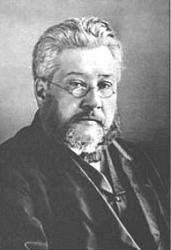
C. H. Spurgeon

1834 - 1892 Person Name: Charles H. Spurgeon Author of "The Foes of Zion Quake for Fright" in The Cyber Hymnal Spurgeon, Charles Haddon, the world-famous preacher, was born June 19, 1834, at Kelvedon, in Essex, where his father was Congregational minister. He was educated at Colchester, and at an Agricultural College at Maidstone, after which he was for a few years usher in schools at Newmarket and Cambridge. In 1851 he became minister of a small Baptist church at Waterbeach, near Cambridge, and soon attained great popularity. In 1854 he removed to New Park Street, London, the place where Drs. Gill and Rippon had formerly ministered, and ere long the thronging of people to hear him led, first, to the temporary occupation of Exeter Hall, and of the Surrey Music Hall, and then to the erection of the great Metropolitan Tabernacle, where he still ministers. Mr. Spurgeon is chiefly known as a preacher and as the author of many vols. of sermons, expositions, and other homiletical literature; but he is also a hymn writer, and the compiler of a well-known hymn book. This book was prepared, in 1866, primarily for the use of the congregation at the Tabernacle. Hence its title Our Own Hymnbook, a collection of Psalms & Hymns for public, social, and private worship. It contains 220 versions of the Psalms, and 910 hymns. Of Mr. Spurgeon's contributions noted below, only one, "Sweetly the holy hymn," can be regarded as possessing any particular merit. The others do not rise above respectable mediocrity. His psalm-versions and hymns, all dated 1866, are:— 1. Amidst us our Beloved stands. Holy Communion. 2. Behold, O Lord, my days are made. Ps. xxxix. 3. Blessed is the man that feareth. Ps. cxii. 4. Here, O ye faithful, see. Holy Baptism. 5. I will exalt Thee, Lord of hosts. Ps. xxx. 6. Jesus, poorest of the poor. Ps. xli. 7. Lord, I would dwell with Thee. Ps. xv. 8. Lord, make my conversation chaste. Ps. lxviii. 9. Lord, Thy church without a pastor. Election of a Minister. 10. Make haste, O Lord, my soul to bless. Ps. lxx. 11. O God, be Thou no longer still. Ps. lxxxiii. 12. O God, Thou hast cast off Thy saints. Ps. lx. 13. Our ears have heard, O glorious God. Ps. xliv. 14. Praise the Lord with exultation, My whole heart, &c. Ps. cxi. 15. Risen Lord, Thou hast received. Election of a Minister. 16. Sweetly the holy hymn. Prayer Meetings. 17. The foes of Zion quake for fright. Ps. liii. 18. The Holy Ghost is here. Prayer. 19. The Kings of earth are in the hands. Ps. lxxxii. 20. Thy strength, 0 Lord, makes glad our King. Ps. xxi. In addition to these Mr. Spurgeon re-wrote or added to the hymns of others, as "Come ye who bow to sovereign grace"; "Great King of Zion, now"; "O God, before whose radiant throne"; and "Woe's me that I in Mesech am"; and composed two Graces for before, and two for after Meat. [Rev. W. R. Stevenson, M.A.] -- John Julian, Dictionary of Hymnology (1907)

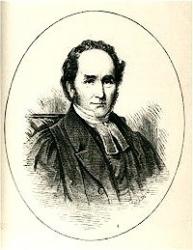
W. H. Havergal

1793 - 1870 Person Name: William Henry Havergal, 1793 - 1870 Adapter of "BANGOR" in The Hymn Book of the Anglican Church of Canada and the United Church of Canada Havergal, William Henry, M.A, son of William Havergal, was born at High Wycombe, Buckinghamshire, 1793, and was educated at St. Edmund's Hall, Oxford (B.A. 1815, M.A. 1819). On taking Holy Orders he became in 1829 Rector of Astley, Worcestershire; in 1842, Rector of St. Nicholas, Worcester; and in 1860, Rector of Shareshill, near Wolverhampton. He was also Hon. Canon in Worcester Cathedral from 1845. He died April 18, 1870. His hymns, about 100 in all, were in many instances written for special services in his own church, and printed as leaflets. Several were included in W. Carus Wilson's Book of General Psalmody, 1840 (2nd ed., 1842); and in Metrical Psalms & Hymns for Singing in Churches, Worcester, Deighton, 1849, commonly known as the Worcester Diocesan Hymn Book, and of which he was the Editor. In Life Echoes, 1883, his hymns are given with those of Miss Havergal. Of those in common use the greater part are in Mercer, and Snepp's Songs of Grace & Glory. Although his hymns are all good, and two or three are excellent, it is not as a hymnwriter but as a musician that Canon Havergal is best known. His musical works and compositions included, in addition to numerous individual hymn tunes and chants, the Gresham Prize Service, 1836; the Gresham Prize Anthem, 1845; Old Church Psalmody, 1849; History of the Old 100th Psalm tune, 1854, &c. He also reprinted Ravenscroft’s Psalter of 1611. His hymns in common use include:— 1. Blessed Jesus, lord and Brother. School Festivals, 1833. Published in Life Echoes, 1883. 2. Brighter than meridian splendour. Christ the glory of His Church. 1830. Published in W. C. Wilson's Book of General Psalms, 1840; the Worcester Psalms & Hymns, 1849, &c. 3. Christians, awake to joy and praise. Christmas Carol, c. 1860. Printed on broadsheet, with music by the author, and sold on behalf of the Lancashire Cotton Distress Fund. 4. Come, Shepherds, come, 'tis just a year. Christmas Carol. 1860. Published in Snepp's Songs of Grace & Glory, 5. For ever and for ever, Lord. Missions, 1866, for the Church Mission Society. Published in Snepp's Songs of Grace & Glory, 1872, and the Life Echoes, 1883. 6. Hallelujah, Lord, our voices. Sunday. 1828. Published in W. C. Wilson's Book of General Psalms, 1840; the Worcester Psalms & Hymns, 1849; Life Echoes, 1883, &c. 7. Heralds of the Lord of glory. Missions. First sung in Astley Church, Sep. 23, 1827. Published in Miss Havergal's Starlight through the Shadows, 1880; Snepp's Songs of Grace & Glory, 1872, &c. 8. Hosanna, raise the pealing hymn. Praise to Christ, 1833, and first sung in Astley Church, June 9, 1833. Published in W. C. Wilson's Book of General Psalmody, 1840; the Worcester Psalms & Hymns, 1849; Life Echoes 1883, &c. 9. How vast the field of souls. Missions. 1858. Printed for Shareshill Church Miss. Anniversary, 1863, and published in Snepp's Songs of Grace & Glory, 1872, and the Life Echoes, 1883. 10. In doubt and dread dismay. Missions. Written in 1837, and published in W. C. Wilson's Book of General Psalmody, 1840; the Worcester Psalms & Hymns, 1849, &c. 11. Jerusalem the golden, The home of saints shall be. Heaven. Published in Life Echoes, 1883. 12. My times are in Thy hand, Their best, &c. 1860. Published in Snepp's Songs of Grace & Glory, 1872, the Records of the author's life and work, and Life Echoes, 1883. The editor of the Records says (p. 159) "this hymn has been much appreciated, and well illustrates the devotional and cheerful spirit of the writer." 13. No dawn of holy light. Sunday. 1825. Printed in 1831 on a leaflet, and published in W. C. Wilson's Book of General Psalmody, 1840; the Worcester Psalms & Hymns, 1849; Life Echoes, 1883, &c. 14. Our faithful God hath sent us. Harvest. Written at Shareshill in 1863, for a Harvest Festival. Published in Snepp's Songs of Grace & Glory 1872, and Life Echoes, 1883. 15. Shout, 0 earth! from silence waking. Praise to Jesus for Redemption. 1841. Published in the Worcester Psalms & Hymns, 1849; Snepp's Songs of Grace & Glory, 1872, &c. 16. So happy all the day. Christmas Carol, c. 1834. Published in Snepp's Songs of Grace & Glory, 1872. 17. Soon the trumpet of salvation. Missions. 1826. Published in Snepp's Songs of Grace & Glory, 1872. 18. To praise our Shepherd's [Saviour's] care. The Good Shepherd. Written after witnessing the death of Elizabeth Edwards, aged 12, of St. Nicholas, Worcester, and printed as a leaflet. Published in W. C. Wilson's Book of General Psalmody, 1840; the Worcester Psalms & Hymns, 1849; Life Echoes, &c, 1883. The author also published a Memoir of the child. 19. Widely 'midst the slumbering nations. Missions. 1828. Published in the Worcester Psalms & Hymns, 1849; Snepp's Songs of Grace & Glory, 1872, &c. In addition to these hymns, his carols, "How grand, and how bright," "Our festal morn is come," and others are annotated under their respective first lines. Most of these carols and hymns were reprinted in Christmas Carols & Sacred Songs, Chiefly by the Rev. W. H. Havergal, London, Nisbet, 1869. --John Julian, Dictionary of Hymnology (1907) ===================== Havergal, W. H., p. 498, i. Other hymns are: — 1. Lord, if judgments now are waking. Second Advent. Published in W. Carus Wilson's Book of General Psalmody, 1840; in Kennedy, 1863, &c. 2. Remember, Lord, Thy word of old displayed. Missions. "Composed for a special prayer-meeting for missionary labourers, held in the author's schoolroom, in the parish of St. Nicholas's, Worcester." (W. F. Stevenson's Hymns for Church and Home, 1873, where the original text is also given.) It must be noted that No. 17, at p. 498, ii., "Soon the trumpet of salvation," was first published in A Collection of Original Airs adapted to Hymns, &c, 1826. --John Julian, Dictionary of Hymnology, Appendix, Part II (1907)

Thomas Tiplady

1882 - 1967 Author of "Creator of the Countless Stars" in Hymns from Lambeth (Revised and Enlarged ed.) Tiplady, Thomas. Was Director of the Lambeth Mission in South London, which was maintained under the auspices of the Methodist Church. --The Hymn Society, DNAH Archives ============================== Thomas Tiplady is the Director of the Lambeth Mission in South London which is maintained under the auspices of the Methodist Church. There for thirty-seven years he has ministered among the poor of that section of the great British metropolis. It has been a ministry with many unique features among them a moving picture program at the "Ideal" which has become an institution in itself. Out of this work in London have come several volumes of hymns written originially for use in the services at the Mission. Several of these hymns are to be found in American hymnbooks. He is a member of the Hymn Society of America; and has had close relationship with the Society and its members. --Eleven Ecumenical Hymns, 1954. Used by permission.

Joseph Dacre Carlyle

1759 - 1804 Person Name: Rev. J. D. Carlyle Author of "Lord, when we bend before thy throne" in The Book of Common Praise Joseph Dacre Carlyle was born at Carlisle, in 1759. He became Professor of Arabic in the University of Cambridge, in 1794, and afterwards Vicar of Newcastle-on-Tyne. He was the author of several works. His death occurred in 1804. --Annotations of the Hymnal, Charles Hutchins, M.A., 1872 ====================== Carlyle, Joseph Dacre, B.D., some time Professor of Arabic in the University of Cambridge, and afterwards Vicar of Newcastle-on-Tyne, was born at Carlisle, June 4, 1758. In 1799 he accompanied the Earl of Elgin to Constantinople with the object of exploring the literary treasures of the public Library of that city. He extended his journey into Asia Minor, and the islands and shores of the Archipelago. He died at Newcastle, April 12, 1804. Amongst his manuscripts were Poems, suggested chiefly by Scenes in Asia Minor, Syria, &c. These were published under that title, in 1805, by Susanna Maria Carlyle. His hymns, which appeared in J. Fawcett's Psalms & Hymns, Carlisle, 1802, include, "Lord, when we bend before Thy throne "—his most popular production; a paraphrase of the Lord's Prayer,"Father of heaven, Whose gracious hand"; and "Lord, when we creation scan." His works include Specimens of Arabian Poetry, 1796. --John Julian, Dictionary of Hymnology (1907)

Mather Byles

1706 - 1788 Author of "When Wild Confusion Wrecks The Air" in The Cyber Hymnal Byles, Mather, D.D., born 1706, educated at Harvard, 1725, died 1788. He was an eminent Congregational Minister of Boston, and, for his time and place, an elegant scholar. He corresponded with, and was well thought of by the English wits and literati. His Toryism brought him into trouble at the Revolution, causing him, in his own words, to be “guarded, reguarded, and disregarded." His Sermons wore published at various dates from 1729 to 1771, and his Poems in 1727, 1736, and 1744. Of the Appendix to Tate and Brady, published by S. Kneeland in 1760, he edited hymns 77 to 100 inclusive, of which hymns 78, 79, and 80 seem to be his own. Part of No. 78, beginning with st. vii., "When wild confusion wrecks the air," is a Judgment hymn, and has been included in Belknap's Selection, 1795, and later in the Plymouth Collection, 1855, No. 1111, the Baptist Praise Book, 1871, and others. His hymns are unknown to English collections. [Rev. F. M. Bird, M.A.] -- John Julian, Dictionary of Hymnology (1907)

Harriet Martineau

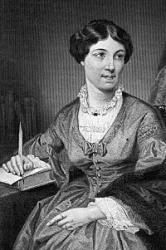
1802 - 1876 Person Name: H. M. Alterer of "Come, Spirit, come; for here below" in Welsh and English Hymns and Anthems Martineau, Harriet, was born at Norwich, June 12, 1802, and died at Ambleside, June 27, 1876. Best known as the writer of Illustrations of Political Economy, Retrospect of Western Travel; two novels, Deerbrook and The Hour and the Man; Eastern Life, Past and Present; a History of the Thirty Years’ Peace, and various other works. Her first publication was a book of Devotional Exercises, with hymns appended to each Exercise, and her hymns also belong to what she speaks of in the Autobiography as her "Unitarian" period. Five of them appeared in A Collection of Hymns for Christian Worship, printed in 1831 for the congregation of Eustace Street, Dublin, and edited by her brother, the Rev. James Martineau. 1. All men are equal in their birth. Human Equality. 2. Lord Jesus! come; for here. Jesus desired. Sometimes given as(1) "Come, Jesus, come, for here"; (2) and "Thy kingdom come, for here." 3. The floods of grief have spread around. In Affliction. 4. What hope was thine, O Christ! when grace. Peace. 5. When Samuel heard, in still midnight . Samuel. The Rev. J. R. Beard's Collection 1837, contains 1, 2, 4 and 5, and:— 6. The sun had set, the infant slept. Gethsemane. The Rev. W. J. Fox's Hymns and Anthems, 1841, contains No. 1, and 7. Beneath this starry arch. Progress . [Rev. Valentine D. Davis, B.A.] -- John Julian, Dictionary of Hymnology (1907)

Pages


Export as CSV
It looks like you are using an ad-blocker. Ad revenue helps keep us running. Please consider white-listing Hymnary.org or getting Hymnary Pro to eliminate ads entirely and help support Hymnary.org.